
Customer Stories
Projects Our Customers Trusted Us With
Three projects, told the way they actually ran: what the part had to do, what went wrong first, what we changed, and how the result was proven. Customers are named only where they have agreed to it.
Evidence over adjectives. That is how we tell a project story.
None of these started with a clean brief. Each customer arrived with something that had already failed somewhere — a mass budget, a heat treatment, a cosmetic standard — and the useful work began with naming that failure precisely.
The constraint on the part chose the route. A leak rate, an approved sample, a measured dimension: a result only means something when the method that produced it is named alongside it.
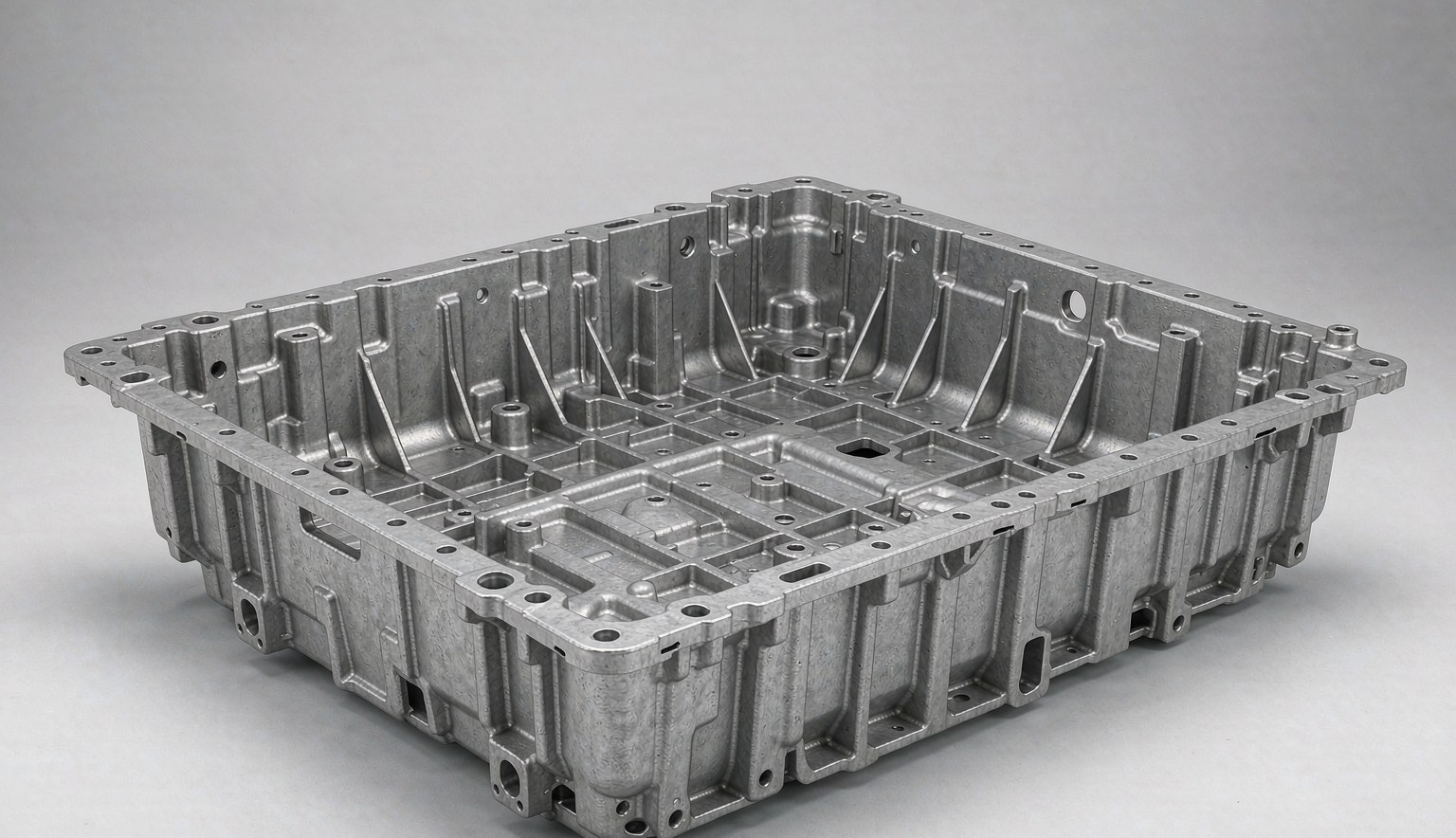
A steel battery tray became one aluminium casting
- Customer
- Electric vehicle platform team, Europe
- Part
- Integrated battery tray, structural enclosure
- Material
- A356-T6 aluminium alloy
- Process
- Vacuum high-pressure die casting, then CNC
- Volume
- Trial from 200 pieces
- Standard
- IP68 sealed, ±0.05 mm faces
What made it hard
Four problems arrived together: sealing faces leaked after machining; T6 heat treatment pulled against later weldability; flatness collapsed after T6; and one part carried the whole supply risk. Solving one tended to make another worse.
What we changed
The decisive move was on gas, not on machining. We moved the fill to vacuum-assisted casting with rotary degassing, then attacked distortion through cooling — spot chills, balanced feeding and a fixtured straightening datum through stress relief.
How it was proven
Every part went through helium and air-decay leak testing at 30–50 kPa against a limit below 5×10⁻³ mbar·L/s. Flatness on the sealing faces was held to ±0.05 mm, and porosity was brought under 0.15%.
The programme moved to a single-piece aluminium tray, trialled from 200 pieces — one die removed the tolerance stack along with most of the mass.
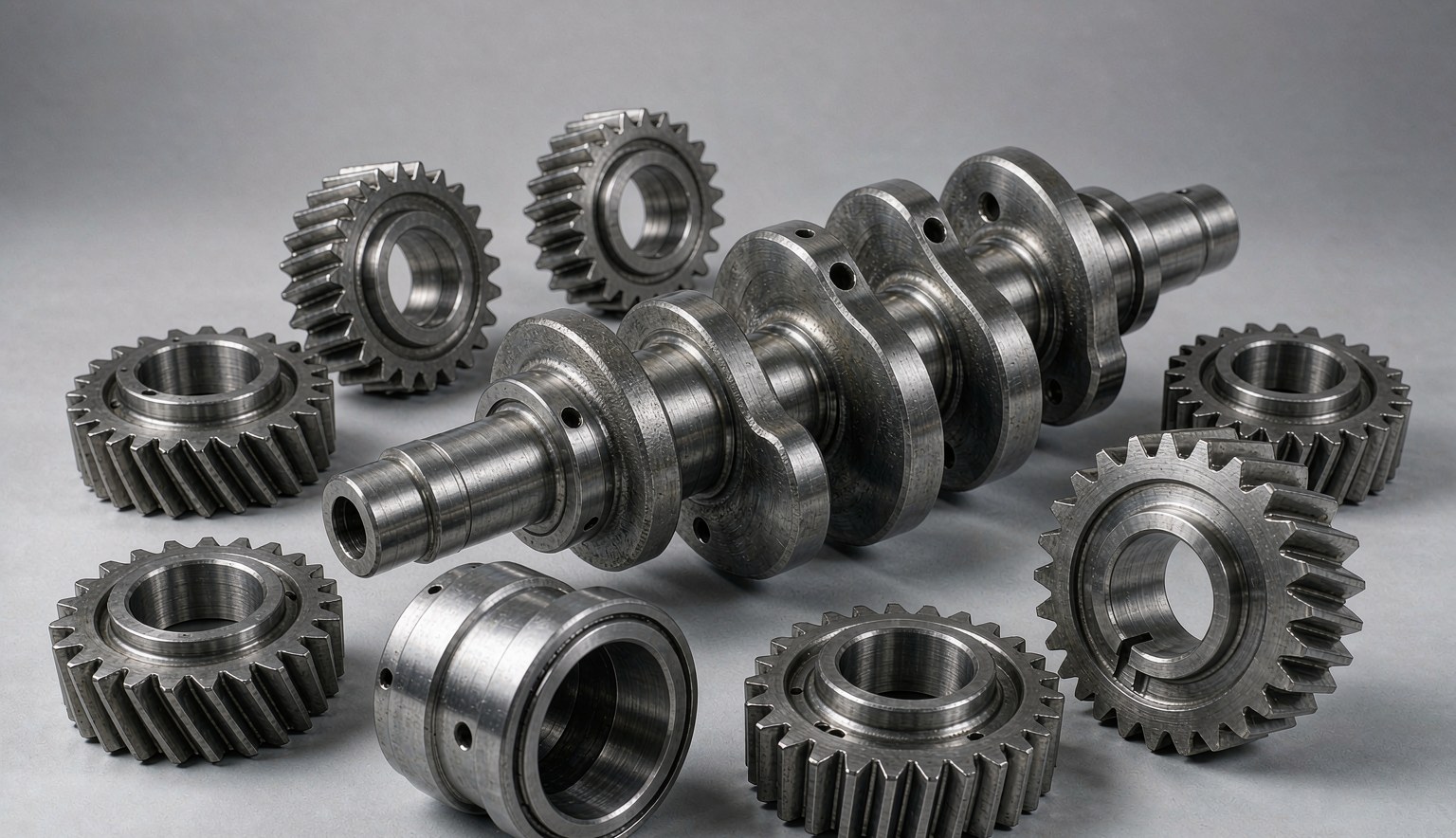
Driveline components for a German car programme
- Customer
- Automotive manufacturer, Germany
- Parts
- Crankshafts, gears, bearing housings
- Material
- High-strength, wear-resistant alloy steel
- Process
- CNC machining with heat treatment
- Outcome
- Samples approved, supply ongoing
- Control
- Incoming · in-process · final
What made it hard
On hardened alloy steel the machining and the heat treatment are one decision, not two. Cut too much before treatment and the part distorts past allowance; leave too much and the finishing pass must remove a hardened skin without moving the geometry you just built.
How the work ran
The two engineering teams worked from the customer's drawings through technical exchanges, then on site — material, process route and inspection criteria decided before any metal was cut. Samples were made, tested, corrected and re-made across several rounds, reviewed on a fixed rhythm so a shop-floor problem reached the customer as an open item with a date.
After the trial rounds the parts met the requirement and were approved, and the programme moved into supply. The detail of what was machined stays with the customer.
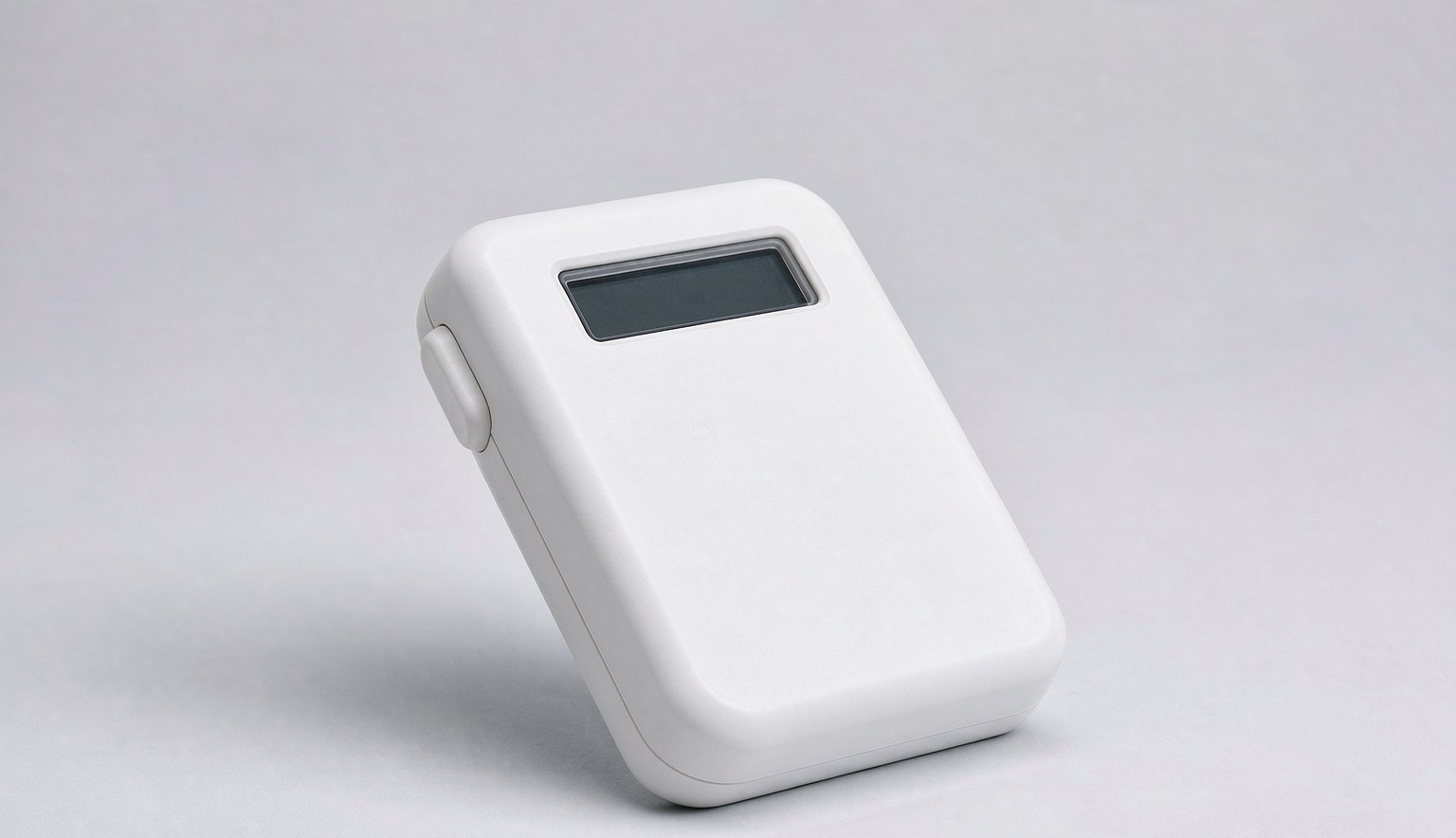
Housings for a portable medical instrument
- Customer
- Medical device manufacturer
- Parts
- Instrument housing and internals
- Material
- PC and ABS engineering grades
- Process
- Injection moulding, matte finish
- Path
- Trial batch, then volume
- Finish
- Deep matte, no glare
What made it hard
The housing had to be matte — not for looks alone. A glossy housing reflects room light into the display and the operator's eye, a real problem on a handheld clinic device. But a matte texture hides flow marks less forgivingly than a polished surface, so the cosmetic standard and the mould finish had to be agreed together.
How the work ran
Engineering put forward changes on wall sections, gate position and material grade, aimed at getting the cosmetic surface and the internal dimensions from the same tool. Samples followed; the mould was corrected through more than one trial and signed off against the agreed appearance standard rather than a verbal description.
The project started with a trial batch and was structured to move into volume once the parts were verified — the sequence we recommend for any new instrument housing.
What these three have in common
Three different industries. One way of working.
The surface details differ; the discipline underneath does not.
They arrived mid-problem
None started with a clean brief. Each came with something that had already failed, and the useful work began with naming that failure precisely.
The constraint chose the route
Vacuum casting was chosen because of gas. The heat treatment set the machining allowance. The matte finish set the mould. The part decided the process.
Proof was a test, not a claim
A leak rate, an approved sample, a measured dimension. A result only means something when the method that produced it is named alongside it.
About Goldcattle
One supplier for every process your part moves through
The stories above show three processes in action. Behind them is one manufacturer running all six core processes under a single quality system — so your part is engineered, not handed off.
Xiamen Goldcattle Plastic & Metal Products Co., Ltd. is a global OEM/ODM manufacturer founded in 1998. We build custom parts from drawing to volume across CNC machining, injection moulding, die casting, mold making, 3D printing and sheet metal fabrication.
All six core processes are performed in-house under one ISO 9001:2015 quality system, with CMM verification and full inspection across incoming, in-process and finished stages. That is how a leaking face, a warped enclosure or a cosmetic standard becomes a solved, repeatable process.
- Founded
- 1998
- Core processes
- 6, in-house
- Machines
- 100+ across 6
- Clients
- 500+
- Completed projects
- 1,000+
- Quality system
- ISO 9001:2015
CNC Machining
3-, 4- and 5-axis milling & turning, ±0.01 mm typical, ±0.005 mm on qualified features.
Learn moreInjection Moulding
Engineering plastics including PC and ABS, with agreed cosmetic textures and tight internal tolerances.
Learn moreDie Casting
Vacuum high-pressure aluminium casting for thin-walled structural parts with verified leak-tightness.
Learn moreMold Making
In-house tooling built and maintained for the moulded and cast parts we produce.
Learn more3D Printing
Rapid prototypes and low-volume functional parts to validate geometry before tooling.
Learn moreSheet Metal Fabrication
Cutting, bending and finishing for enclosures and structural sheet components.
Learn moreHave a drawing and a constraint that will not hold? Let our engineers take a look.
Request a Quote / DFM Review Explore All CapabilitiesStart a Project Conversation
Tell us what has already gone wrong
Most useful projects start with a problem someone else could not solve. Send the drawing, the material and the constraint that is causing trouble — a leak, a warped face, a cosmetic standard, a tolerance that will not hold. We will tell you whether we have met that constraint before.
Request a Quote / DFM Review