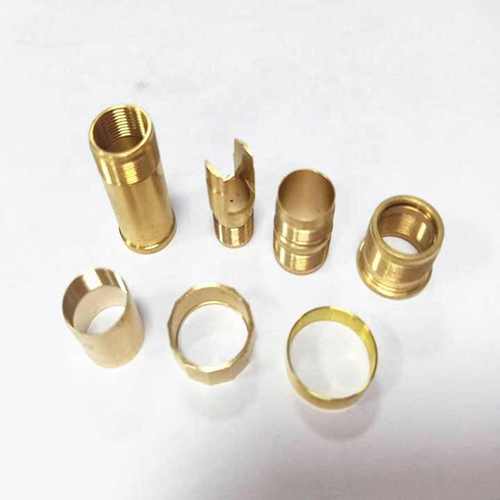
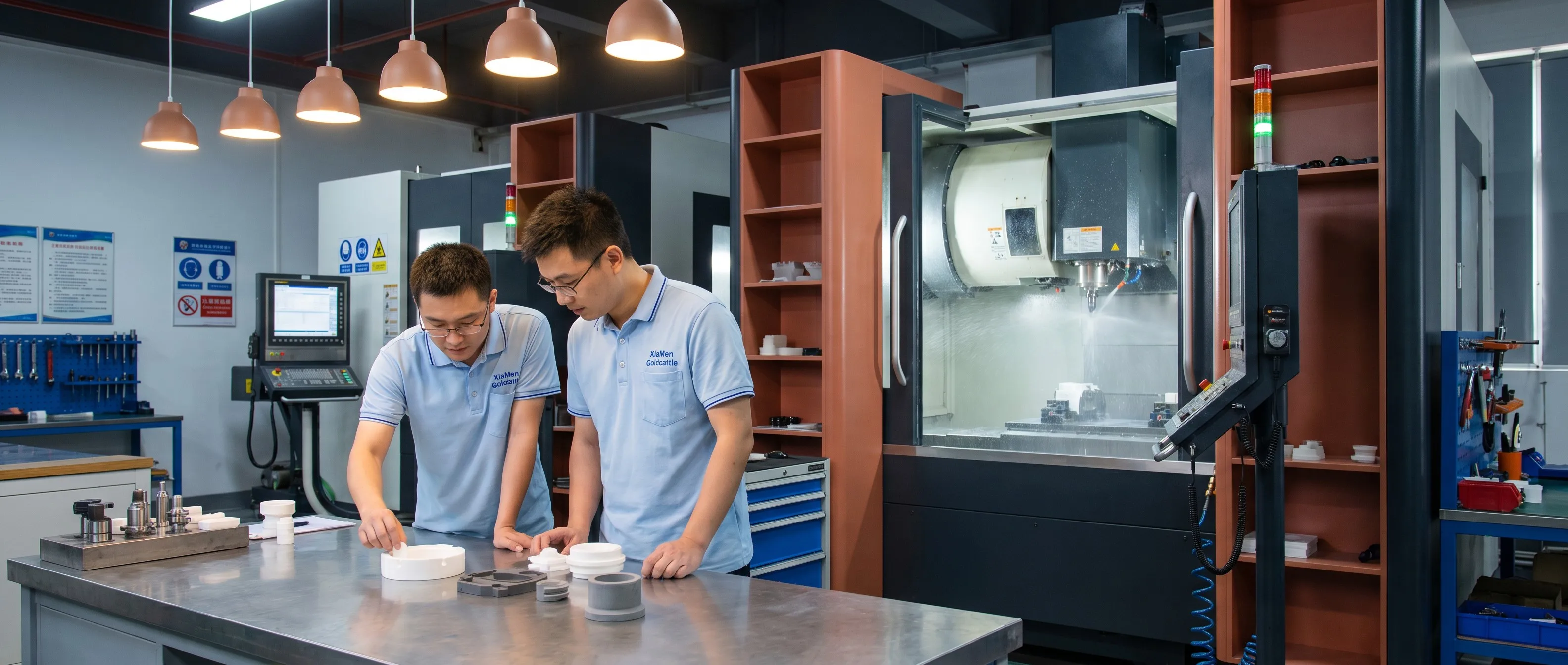
Ceramic CNC Machining Services for Precision Components
Diamond-Tool Machining of Alumina, Zirconia, Silicon Carbide and Macor — from Prototype to Production Volume
Advanced ceramics require specialized diamond tooling, controlled feed rates and careful workholding. Xiamen Goldcattle provides CNC machining of technical ceramics with ±0.01mm tolerance and Ra 0.2–0.8 μm surface finish for semiconductor, medical, aerospace and electronics applications.
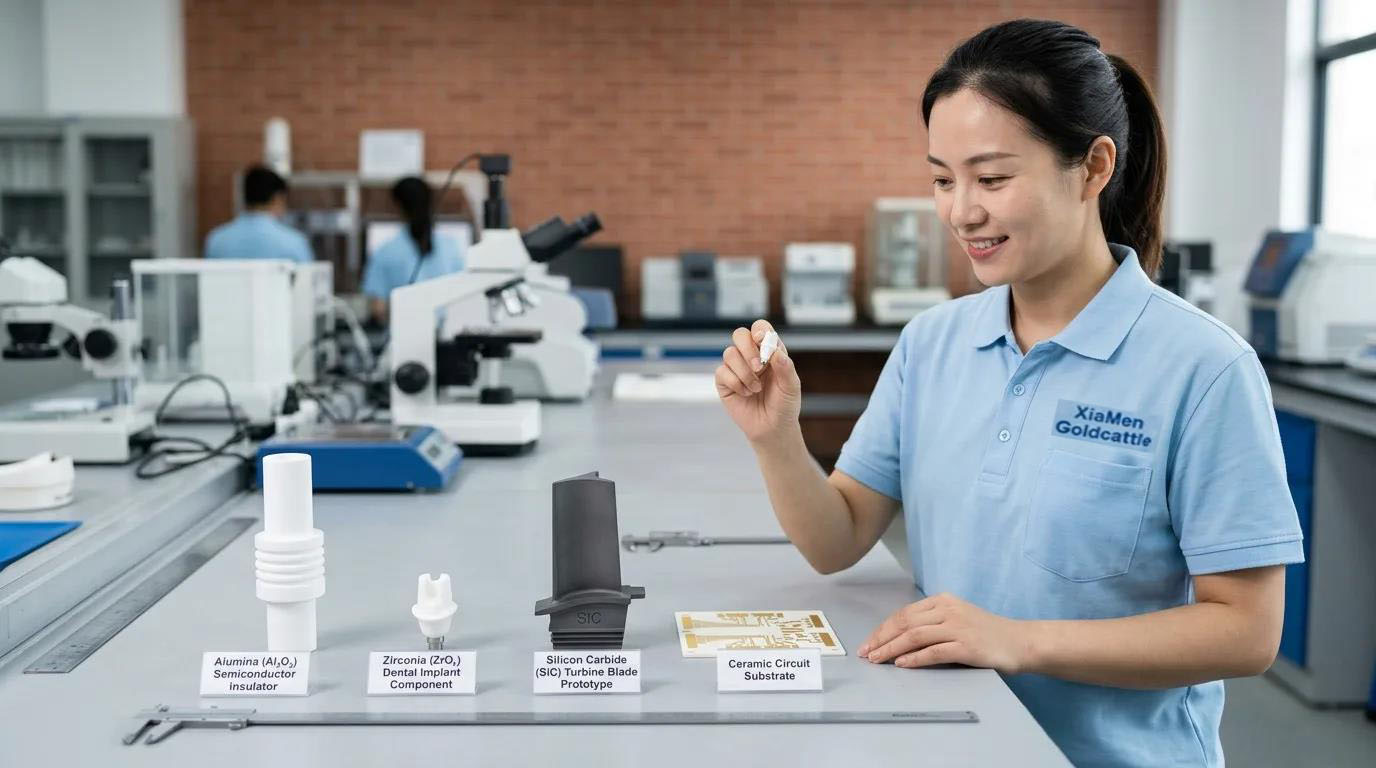
- Semiconductor equipment — wafer handling, vacuum fixtures, insulating substrates
- Medical implants — zirconia dental crowns, surgical instrument tips
- Aerospace components — thermal insulators, turbine blade features
- Electronic insulators — high-voltage bushings, circuit substrates
- Precision wear parts — pump seals, valve seats, guide rollers
Why Ceramic Machining Is Different from Metal
Technical ceramics present three fundamental challenges that make standard metal CNC workflows unsuitable:
| Challenge | Ceramic Property | Consequence | Required Solution |
|---|---|---|---|
| Extreme hardness | HRA 88–92 (alumina) vs HRA 60–65 (steel) | Carbide tools wear out in minutes | PCD/SCD diamond tooling only |
| Brittleness | Fracture toughness 1.5–4 MPa·m½ vs 20 for aluminum | Part cracks under excessive force or vibration | Low feed rates, soft workholding, negative rake angle |
| Low thermal conductivity | Heat concentrates at cut zone, no dissipation path | Thermal shock causes delayed cracking | Oil mist cooling, not flood coolant |
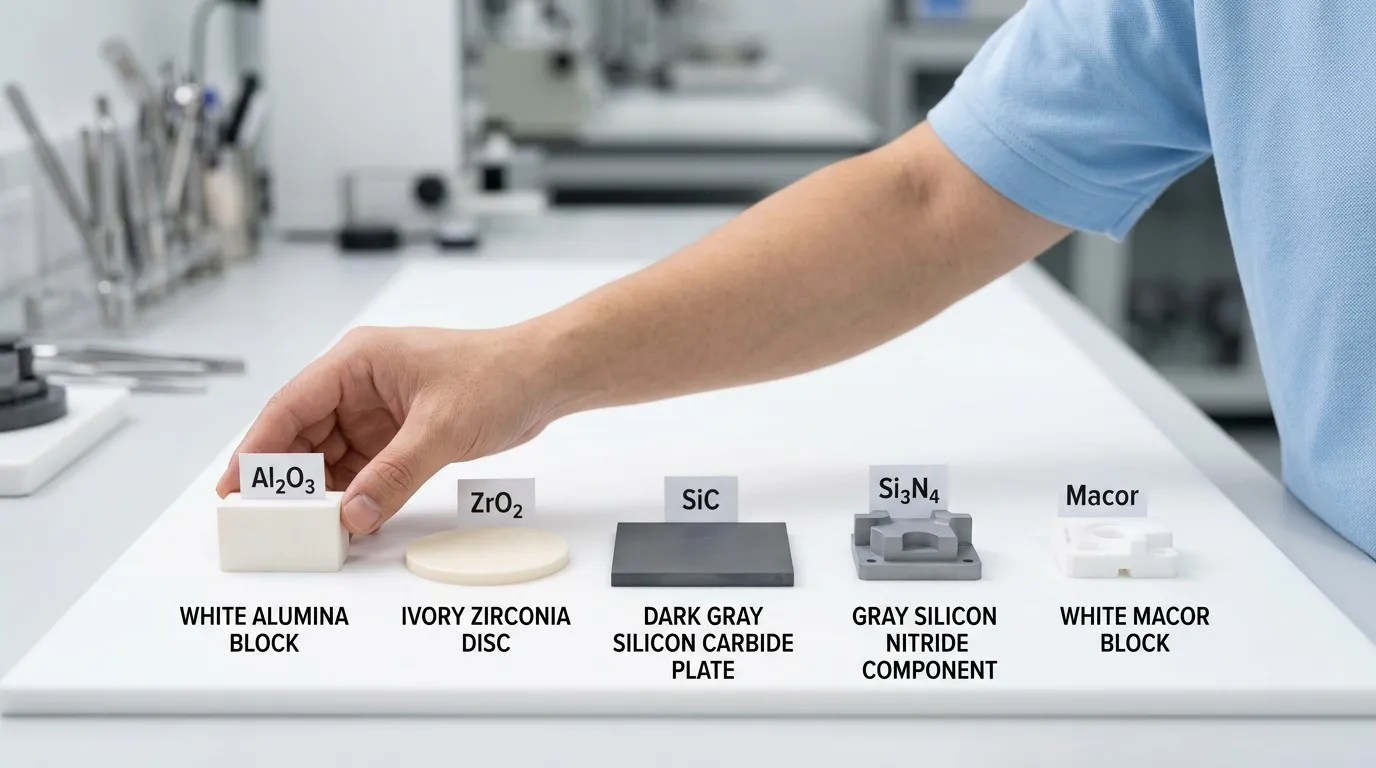
Ceramic Materials We Machine
Each ceramic type offers distinct properties. Selecting the right material for your application is the first step toward an efficient machining process and optimal part performance.
| Material | Primary Application | Hardness | Toughness | Relative Cost |
|---|---|---|---|---|
| Alumina (Al₂O₃) | Electrical insulators, wear parts, sensor housings | HRA 88–92 | Medium | $$ |
| Zirconia (ZrO₂) | Medical implants, dental crowns, cutting tools | HRA 85–90 | High | $$$ |
| Silicon Carbide (SiC) | Semiconductor fixtures, heat exchangers, nozzles | HRA 92+ | Medium | $$$$ |
| Silicon Nitride (Si₃N₄) | Aerospace bearings, turbine tips, cutting inserts | HRA 90–93 | High | $$$$ |
| Macor | Prototype components, vacuum feedthroughs, fixtures | Machinable | Good | $$ |
Material Decision Guide
Choose Alumina If You Need
Electrical insulation, wear resistance at moderate cost, chemical stability, high-temperature capability up to 1600°C, wide availability of grades (95%, 99%, 99.5% purity).
Choose Zirconia If You Need
Biocompatibility for medical implants, high fracture toughness (resists cracking), tooth-color matching for dental, superior bending strength over alumina, thermal shock resistance.
Choose Silicon Carbide If You Need
Extreme hardness and wear resistance, semiconductor wafer processing, superior thermal conductivity among ceramics, chemical inertness in corrosive environments, high-temperature structural strength.
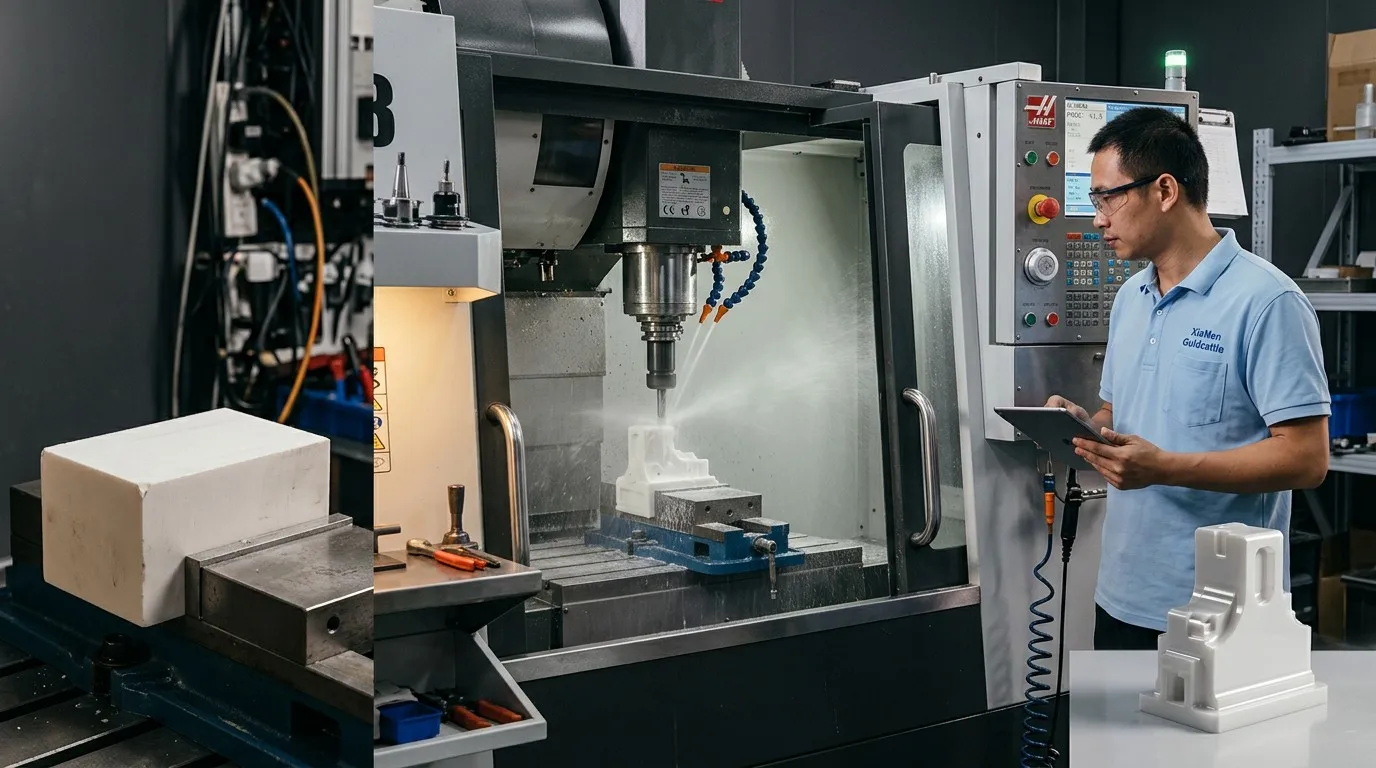
Ceramic Machining Process & Key Parameters
Every ceramic part follows four critical stages. Understanding the parameters at each stage helps buyers interpret cost and lead-time estimates.
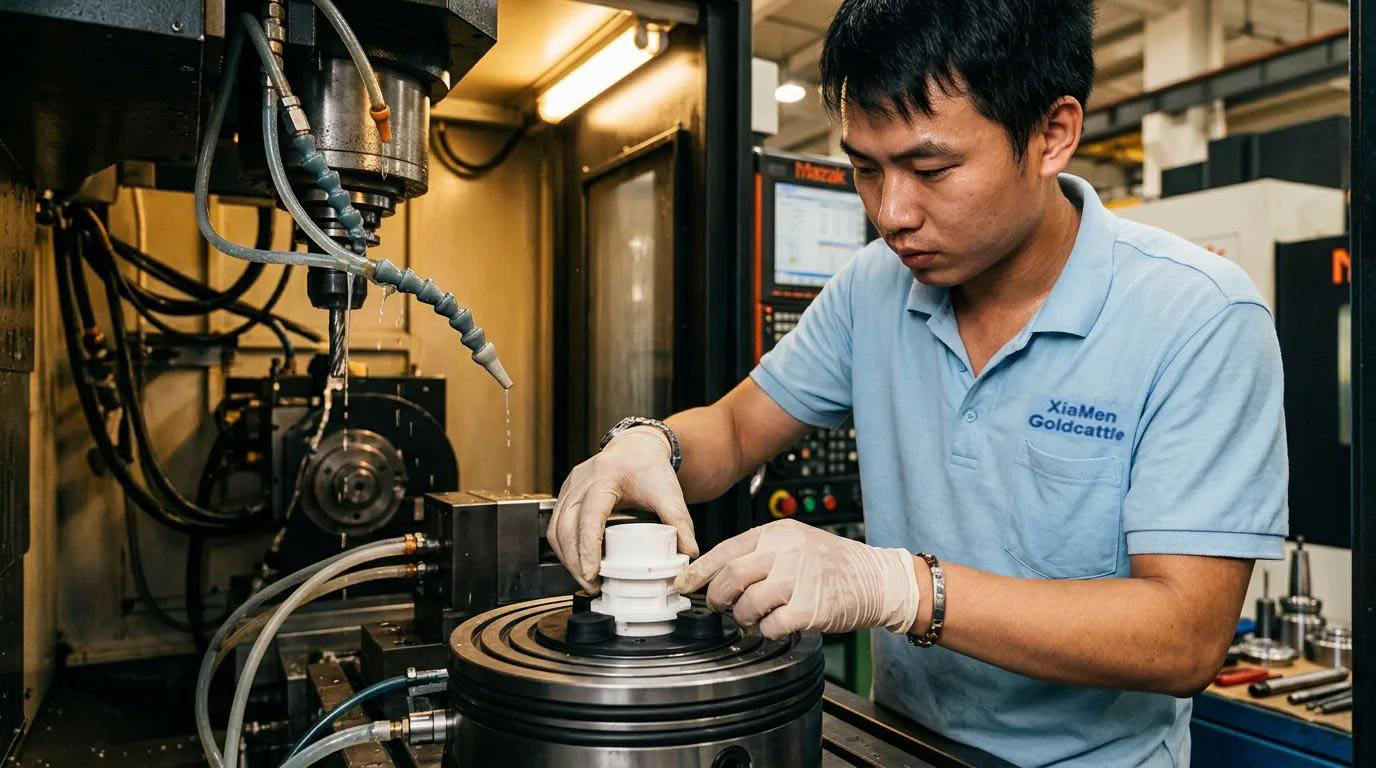
| Stage | Tool Type | Key Parameter | Typical Value (Alumina) | Buyer Impact |
|---|---|---|---|---|
| Roughing | PCD endmill, negative rake 10–15° | Depth of cut | 0.1–0.2 mm per pass | Thin cuts reduce crack risk — deeper cuts lower cycle time but risk part failure |
| Finishing | SCD single-crystal diamond | Feed rate | 50–150 mm/min | Slow feed ensures clean edges — pushing speed 10% higher caused 3-part crack batch in practice |
| Spindle Speed | Diamond tool rated RPM | Rotation | 8,000–12,000 RPM | Slower than metal (15–20K RPM) — excessive speed causes tool vibration and edge chipping |
| Coolant Delivery | Oil mist system | Nozzle position | 1–2 mm from cut zone | Flood coolant causes thermal shock — oil mist cools and lubricates without cracking |
Achievable Tolerance & Surface Finish
| Feature Category | Typical Tolerance | Process Required | Cost Impact |
|---|---|---|---|
| General features | ±0.05 mm | PCD roughing + SCD finishing | Baseline |
| Precision features | ±0.02 mm | SCD finishing + fine grinding | +30–50% |
| Critical features | ±0.01 mm | SCD finishing + precision grinding + polishing | +80–120% |
| Surface Process | Achievable Finish | Typical Application |
|---|---|---|
| Standard grinding | Ra 1.6 μm | General insulators, housings, fixtures |
| Fine grinding | Ra 0.8 μm | Wear parts, valve seats, guide surfaces |
| Polishing | Ra 0.2 μm | Medical implants, optical surfaces, sealing faces |
Industry Applications
Semiconductor Industry
Medical Industry
Aerospace Industry
Electronics Industry
Ceramic vs Metal: When to Choose Ceramic CNC Machining
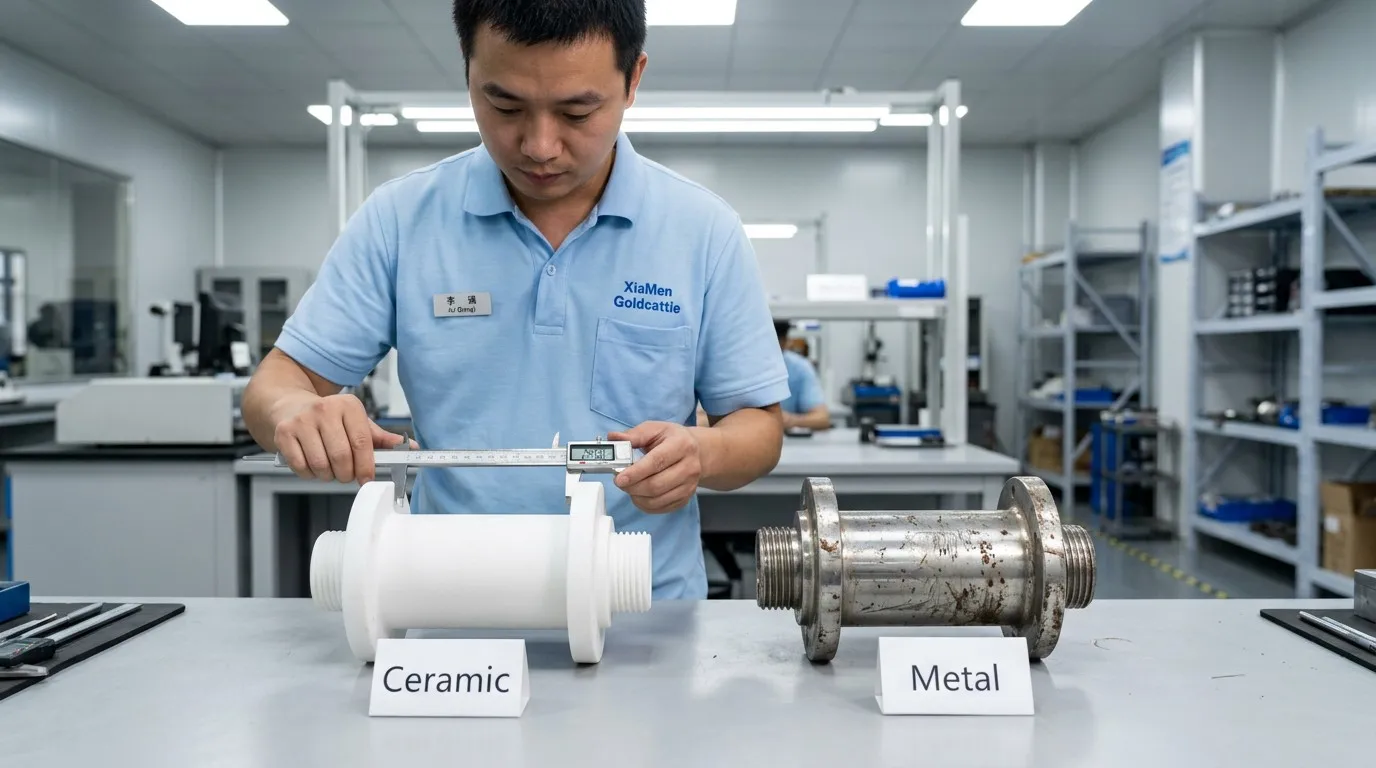
| Factor | Ceramic | Metal |
|---|---|---|
| Hardness | Excellent (HRA 88+) | Good (HRA 60–65 typical) |
| Wear resistance | Excellent — 3–10x service life vs metal | Moderate — requires coatings for durability |
| Thermal resistance | Excellent — stable above 1000°C | Moderate — most alloys soften below 800°C |
| Electrical insulation | Excellent — inherent dielectric property | Poor — requires separate insulating components |
| Toughness | Lower — brittle, requires careful design | Higher — ductile, absorbs impact |
| Machining cost | Higher — diamond tooling, slower feeds | Lower — carbide tools, faster feeds |
- Electrical insulation in high-voltage or RF environments
- Temperature stability above 800°C where metals creep or soften
- Wear resistance that outlasts metal by 3–10x in abrasive media
- Chemical inertness in corrosive or plasma environments
- Biocompatibility for medical implants (zirconia Y-TZP)
- Non-magnetic behavior for MRI-compatible components
Case Studies: Ceramic Machining Results
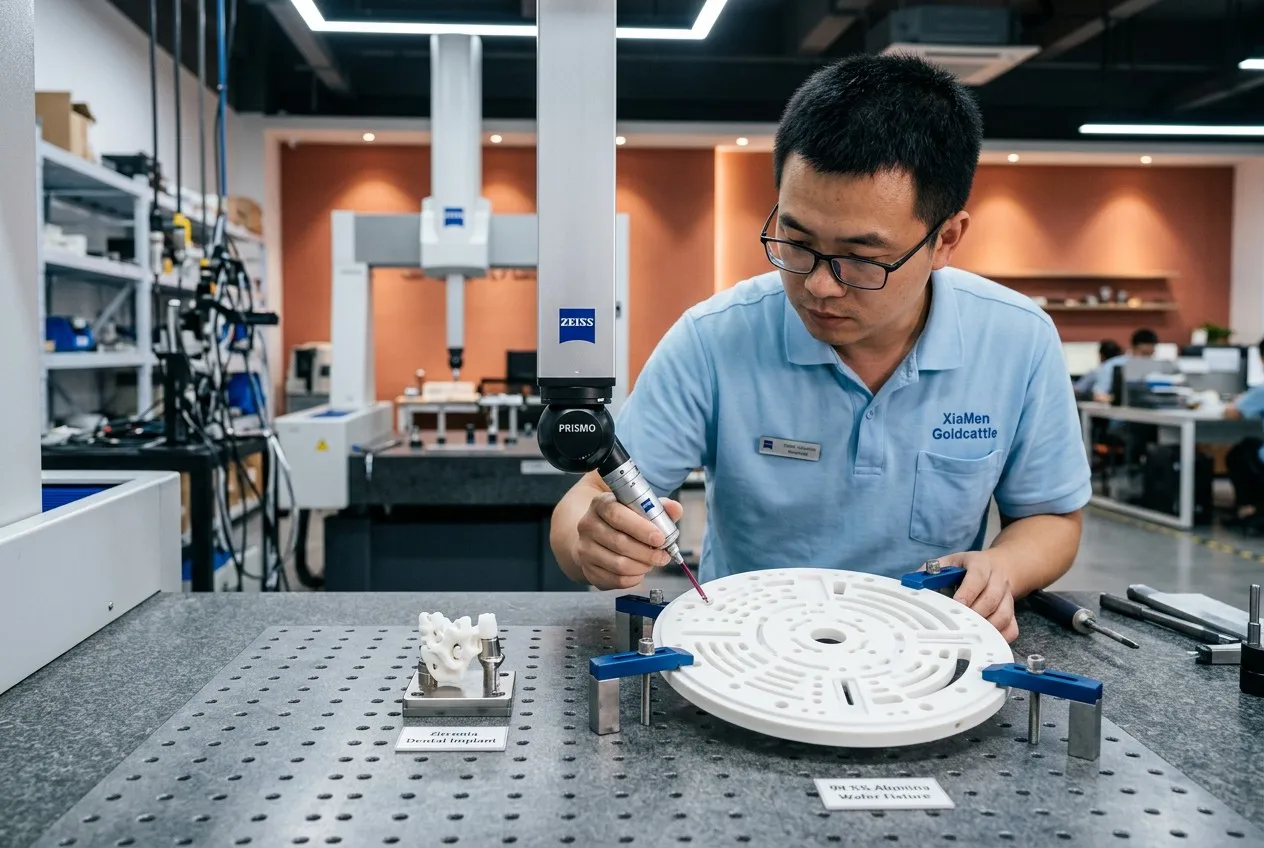
Case 1: Y-TZP Zirconia Dental Implant Component
Case 2: 99.5% Alumina Semiconductor Wafer Fixture
Xiamen Goldcattle — Ceramic Machining OEM Partner
Goldcattle operates specialized ceramic CNC equipment alongside metal CNC milling, turning and injection molding — enabling ceramic-to-metal assembly integration without coordinating across multiple vendors.
| Capability | Specification |
|---|---|
| Ceramic CNC Machining | 5-axis diamond tooling, work envelope 400×300×200mm |
| Tolerance | ±0.01mm precision, ±0.05mm standard |
| Surface Finish | Ra 0.2–1.6 μm (grinding + polishing) |
| Materials | Alumina, Zirconia (Y-TZP / Mg-PSZ), SiC, Si₃N₄, Macor |
| MOQ | 1 piece (prototype) to 5,000+ (production) |
| QC Standard | ISO 9001:2015 — FAI + material certificate + final COC |
Quality Assurance for Ceramic Components
Inspection Equipment
Documents Available
Ceramic CNC Machining FAQ
Submit Your Ceramic CNC Machining RFQ
Upload your drawing files and receive DFM review, material recommendation and manufacturing feasibility analysis within 24 hours.
Accepted File Formats
What You Receive
Technical ceramics (alumina, zirconia, silicon carbide, silicon nitride, Macor) can be CNC machined using diamond tooling (PCD for roughing, SCD for finishing). Key parameters: feed 50–150 mm/min, depth 0.1–0.2mm, oil mist cooling. Achievable tolerance ±0.01mm, surface finish Ra 0.2–0.8 μm. Ceramics outperform metal in hardness, wear resistance, thermal stability and electrical insulation, but cost 2–5x more to machine due to diamond tooling and slow feeds. Xiamen Goldcattle offers 5-axis ceramic CNC machining with ISO 9001:2015 QC and 10–20 day lead time.
Ceramic CNC Machining Specifications
| Parameter | Specification |
|---|---|
| Materials | Alumina, Zirconia (Y-TZP / Mg-PSZ), Silicon Carbide, Silicon Nitride, Macor |
| Tooling | PCD diamond (roughing) — SCD diamond (finishing) |
| Tolerance Range | ±0.01mm (precision) — ±0.05mm (standard) |
| Surface Finish | Ra 0.2–1.6 μm |
| Coolant Method | Oil mist (ISO 46 viscosity) — positioned 1–2mm from cut zone |
| Workholding | Vacuum chuck (flat parts) — Custom jig + rubber pads (complex shapes) |
| MOQ | 1–5,000+ pieces |
| Typical Lead Time | 10–20 days (standard) — 5–7 days (expedited) |
| QC Standard | ISO 9001:2015 — FAI + material cert + final COC |