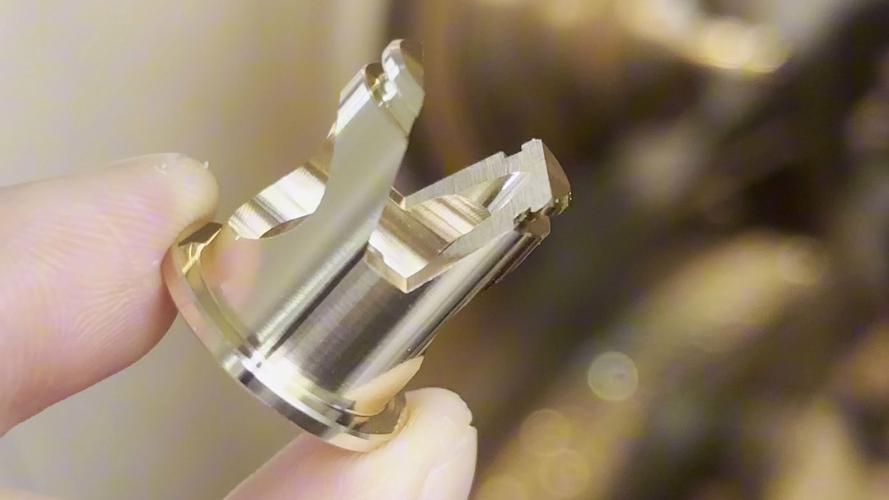
Titanium CNC Machining Capability Snapshot
| Certified Grades | Ti-6Al-4V ELI (ASTM F136) • Ti-6Al-7Nb (ASTM F2068) • CP-Ti Gr.2 • Beta-Ti |
| Precision | Up to ±0.005 mm |
| Surface Finish | Ra 0.2–3.2 μm (Mirror to As-machined) |
| MOQ | 1 Piece (Prototype & Validation) |
| Lead Time | 5–12 Working Days |
| Traceability | Material Cert • Heat No. • CMM Report per shipment |
| Quality System | ISO9001 • ISO13485 Process Alignment |
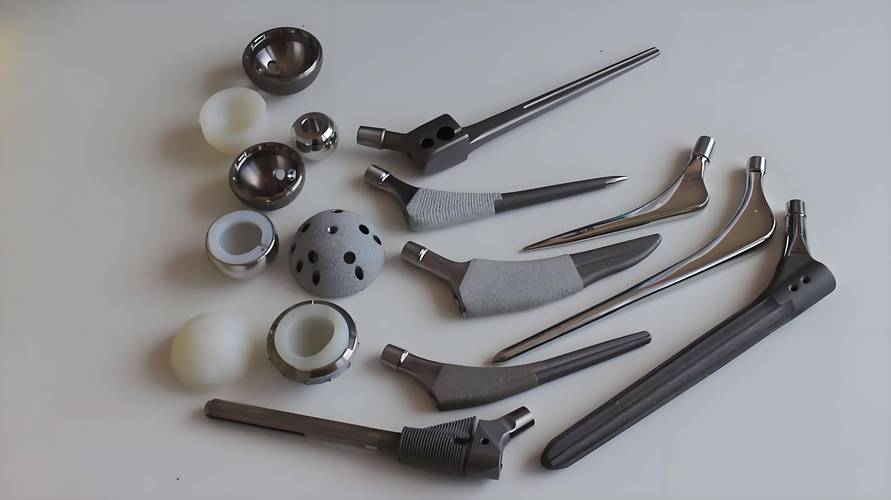
| Applications | Orthopedic • Dental • Surgical Instruments • Spinal |
Medical Manufacturing Challenges We Address
Biocompatibility Compliance
Problem: Regulatory bodies require documented material traceability from melt to finished implant.
Approach: ASTM F136 / F2068 certified bar stock with full heat number and mill certification documentation.
Outcome: Audit-ready traceability chain from raw material certificate to final CMM inspection report.
Thin-Wall Feature Integrity
Problem: Implant geometries with 0.5 mm wall sections deflect under cutting forces, compromising dimensional accuracy.
Approach: Optimized fixture support with progressive feed reduction and flood coolant for thermal stability.
Outcome: Feature deviation controlled within ±0.005 mm on sections below 0.8 mm wall thickness.
Surface Biocompatibility
Problem: Surface roughness beyond Ra 0.4 μm increases bacterial adhesion risk on implant interfaces.
Approach: Progressive finishing from Ra 1.6 μm roughing to Ra 0.2 μm mirror polish with biocompatible surface validation.
Outcome: Implant surfaces consistently achieving Ra ≤0.4 μm on all patient-contact features.
Regulatory Documentation
Problem: Multiple document formats required across markets (FDA, CE, MDR) create version control complexity.
Approach: Unified documentation architecture with cross-referenced material certs, inspection reports, and compliance declarations.
Outcome: Single-source documentation package accepted by FDA, CE, and Japanese MDR regulatory frameworks.
Manufacturing Process
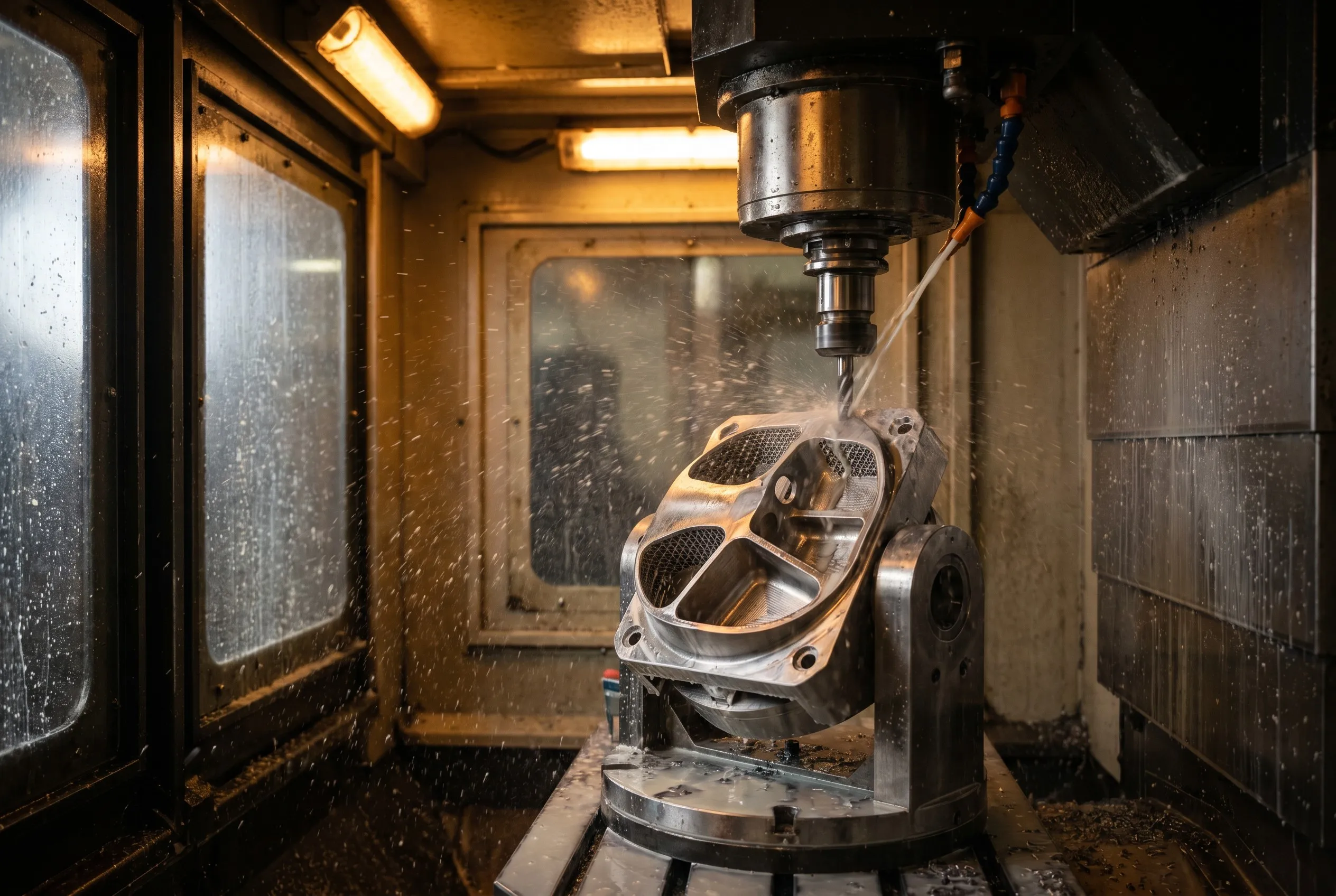
Each titanium medical component follows a documented 6-stage workflow from certified material input to inspected final delivery.
Medical Titanium Alloy Selection Guide
Alloy choice directly affects biocompatibility, mechanical performance, and regulatory approval pathway. Below is a decision framework for common medical grades.
| Grade | Standard | Strength | Biocompatibility | Typical Application |
|---|---|---|---|---|
| CP-Ti Grade 2 | ASTM F67 | Low (275 MPa) | Excellent | Dental abutments, bone screws |
| Ti-6Al-4V ELI | ASTM F136 | High (860 MPa) | Excellent (ELI) | Orthopedic implants, spinal fixation |
| Ti-6Al-7Nb | ASTM F2068 | High (900 MPa) | Excellent | Hip stems, fracture fixation |
| Beta-Ti (Ti-15Mo) | ASTM F2066 | Very High | Good | Elastic orthodontic wires, stents |
Ti-6Al-4V ELI (F136) vs. Ti-6Al-7Nb (F2068): Decision Framework
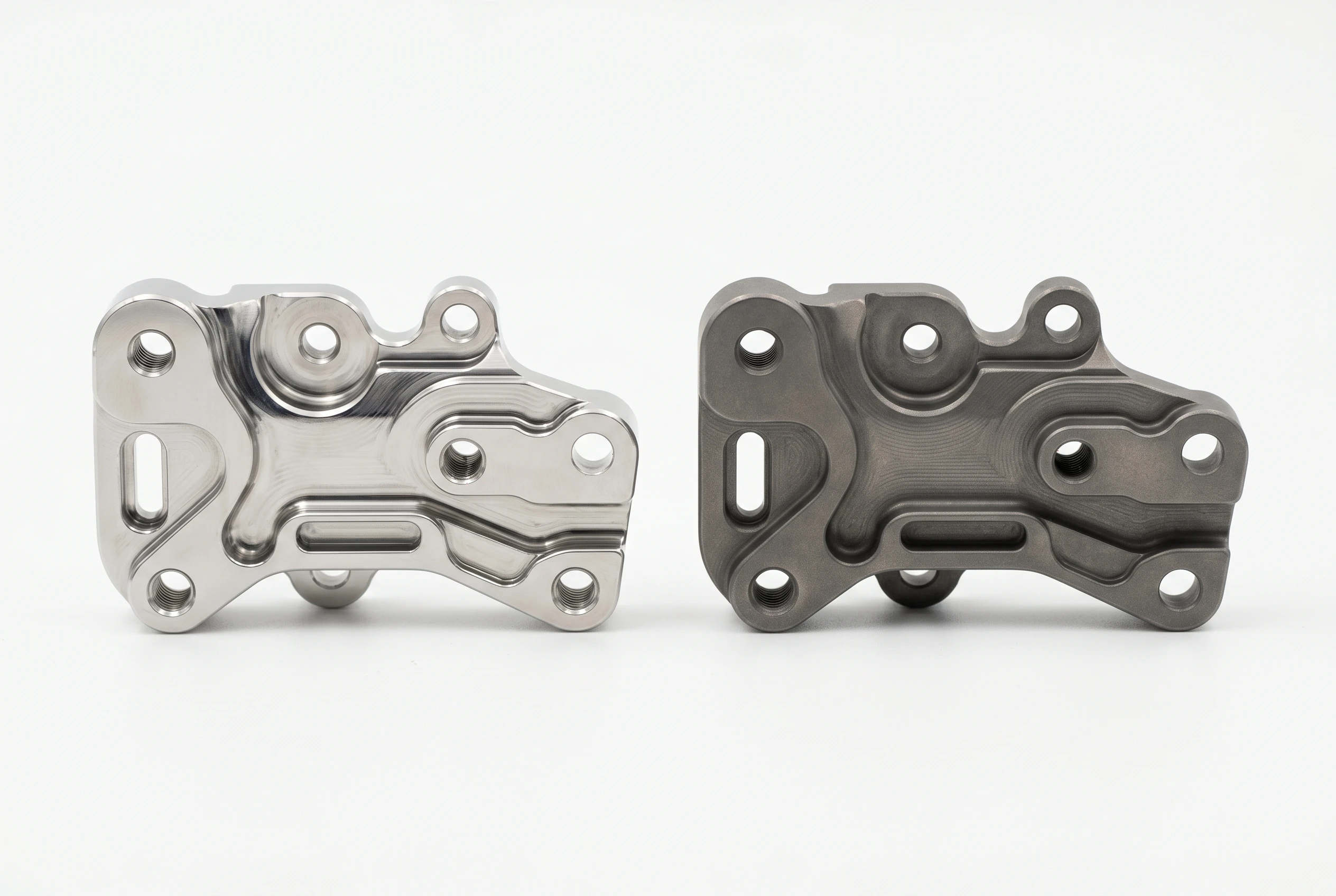
Ti-6Al-4V ELI (ASTM F136) — Standard Implant Alloy
- Most widely documented and FDA-recognized implant grade
- Reduced interstitial oxygen content (ELI variant) improves ductility
- Excellent fatigue resistance for long-term cyclic loading
- Well-established regulatory precedent across FDA, CE, and MDR submissions
- Preferred for load-bearing orthopedic and spinal applications
Ti-6Al-7Nb (ASTM F2068) — Vanadium-Free Alternative
- Eliminates vanadium concern for long-term tissue interaction
- Higher strength-to-weight ratio than F136 equivalent geometries
- Preferred in European markets with evolving vanadium regulations
- Narrower regulatory precedent — newer standard with fewer historical submissions
- Selected for high-stress hip and femoral replacement components
Technical Parameters
| Parameter | Specification |
|---|---|
| Dimensional Tolerance | ±0.005 mm (Precision) / ±0.02 mm (Standard) |
| Surface Roughness (As-Machined) | Ra 0.8–3.2 μm |
| Mirror Polish Capability | Ra ≤0.2 μm (Patient-contact surfaces) |
| Thin-Wall Minimum | 0.5 mm (Supported fixture) |
| Max Part Envelope (5-Axis) | 500 × 400 × 300 mm |
| Anodizing Thickness | 5–15 μm (Type II, gold/blue tones) |
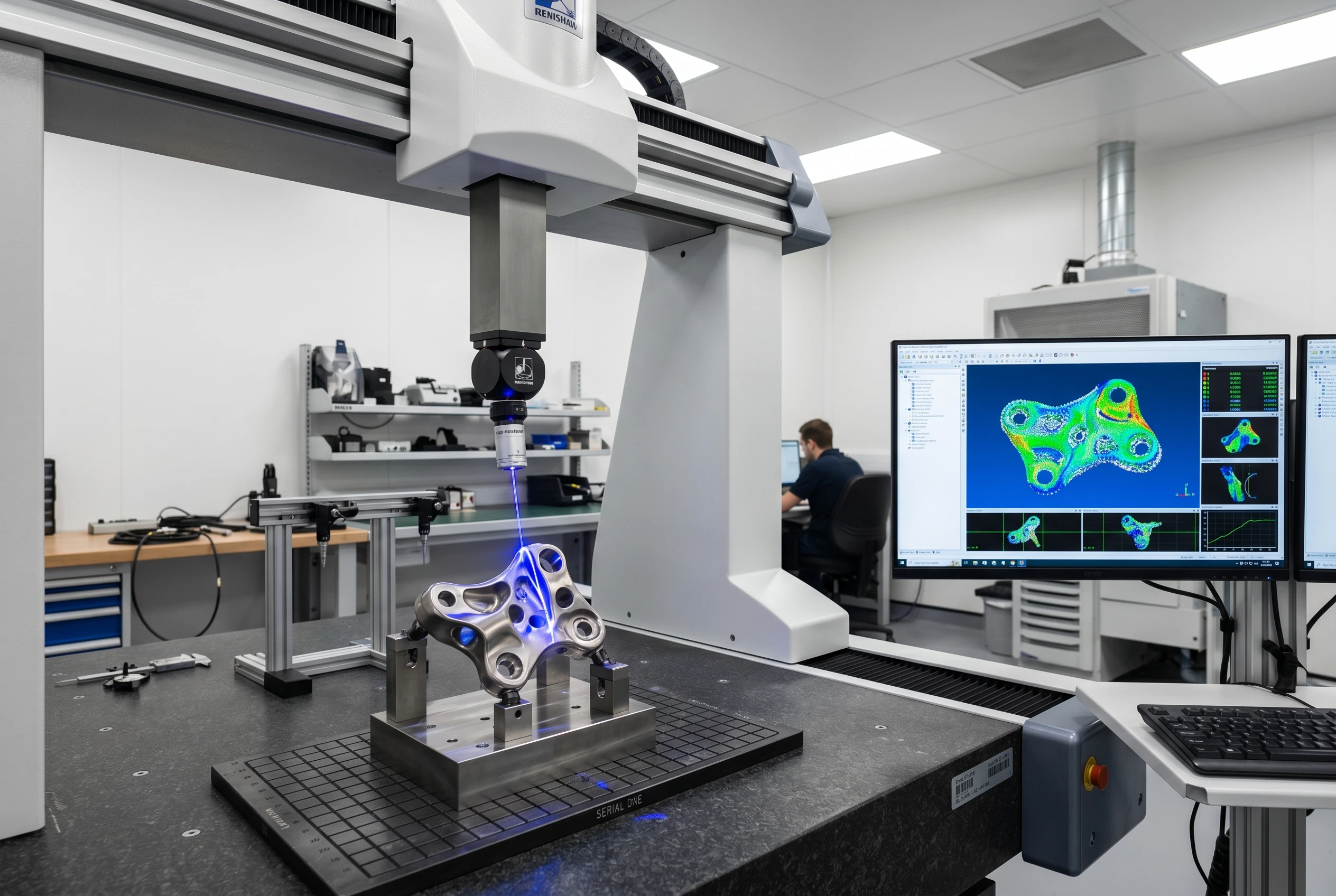
Process Annotation: Titanium requires dedicated carbide tooling with through-tool coolant delivery. Reduced cutting speeds (40–80 m/min) compared to aluminum prevent thermal damage. Flood coolant with high-pressure through-spindle delivery maintains cutting zone temperature below 200°C, preventing alpha-case formation on machined surfaces.
Inspection Protocol: CMM dimensional verification before and after surface treatment. Anodizing changes effective dimensions by coating thickness (5–15 μm). Pre-treatment machining compensates this offset on patient-contact features. Full inspection report with material cert cross-reference included per shipment.
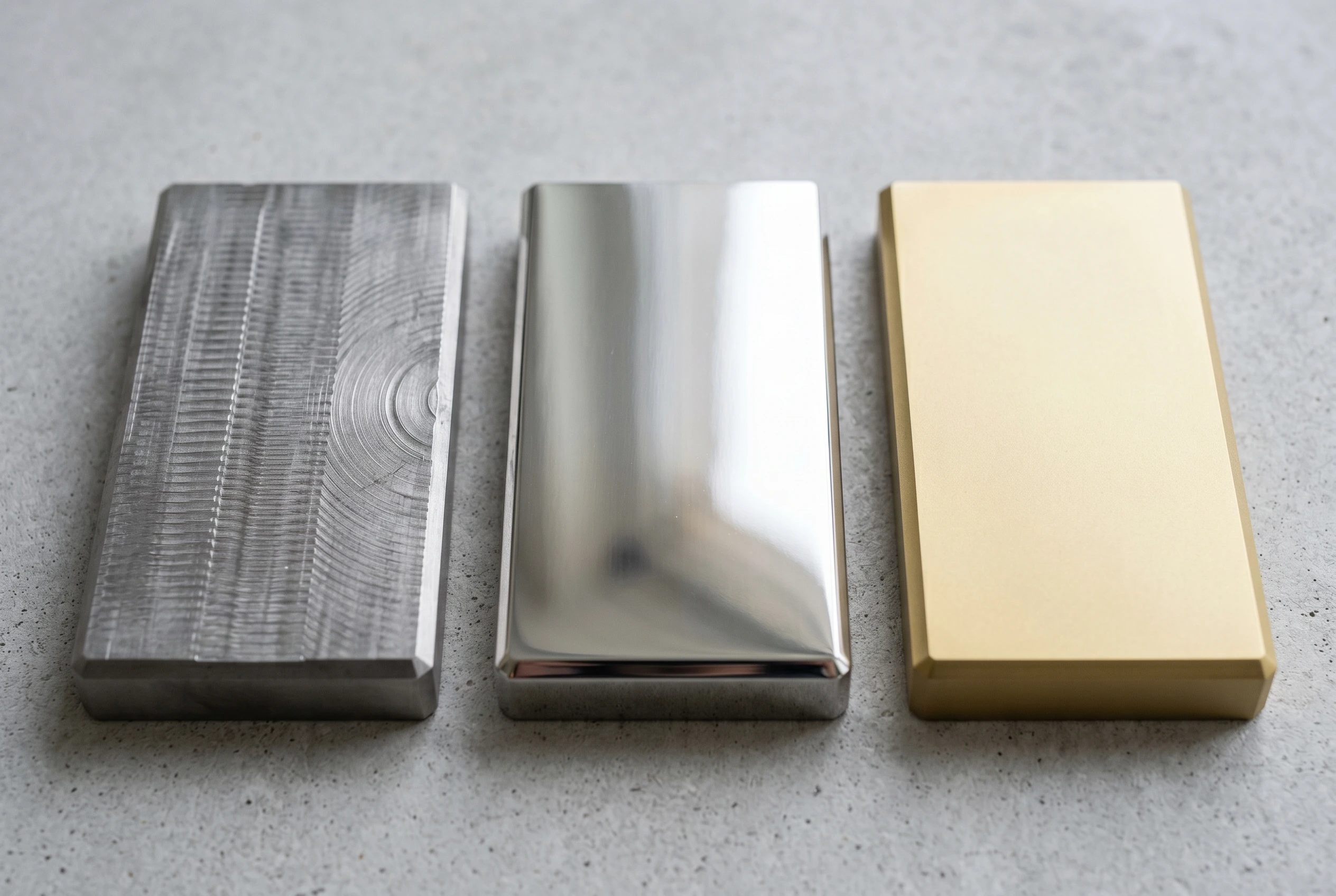
Common Challenges in Medical Titanium Machining
Alpha-Case Formation
Cause: Oxygen absorption above 600°C creates brittle alpha-phase surface layer that compromises fatigue life.
Control: Flood coolant with through-tool delivery. Cutting speeds kept below thermal threshold. Post-machining pickling verification per ASTM B600.
Surface Contamination
Cause: Tool wear debris, ferrous particle embedding, and coolant residue on patient-contact surfaces.
Control: Dedicated titanium-only toolpaths, non-ferrous fixture hardware, and validated cleaning protocol per ISO13485 process requirements.
Burr Formation
Cause: Titanium ductility produces persistent burrs at hole exits and pocket edges that resist standard deburring approaches.
Control: Progressive finishing strategy with decreasing feed rates, reverse-pass deburring cycle, and edge break specification to 0.1 mm max.
Dimensional Drift
Cause: Low thermal conductivity (7 W/m·K vs. aluminum at 167) causes localized heat accumulation shifting tool contact point.
Control: Temperature-monitored machining environment, intermittent measurement checkpoints, and stabilized workholding with thermal compensation offsets.
Industry Solutions
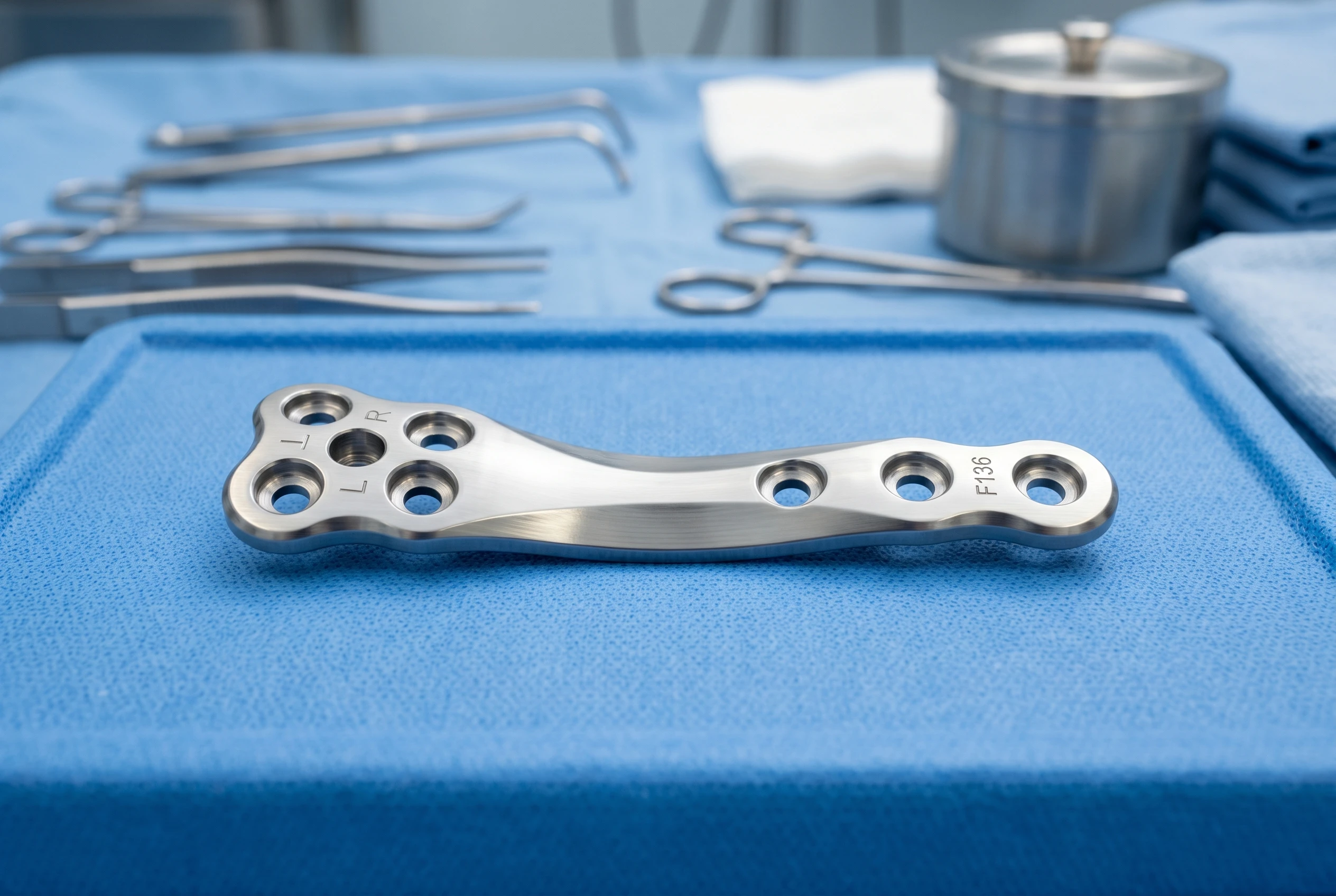
Orthopedic Implants
- Spinal fixation plates & rods (F136)
- Fracture fixation screws & plates
- Joint replacement components
- Trauma fixation hardware
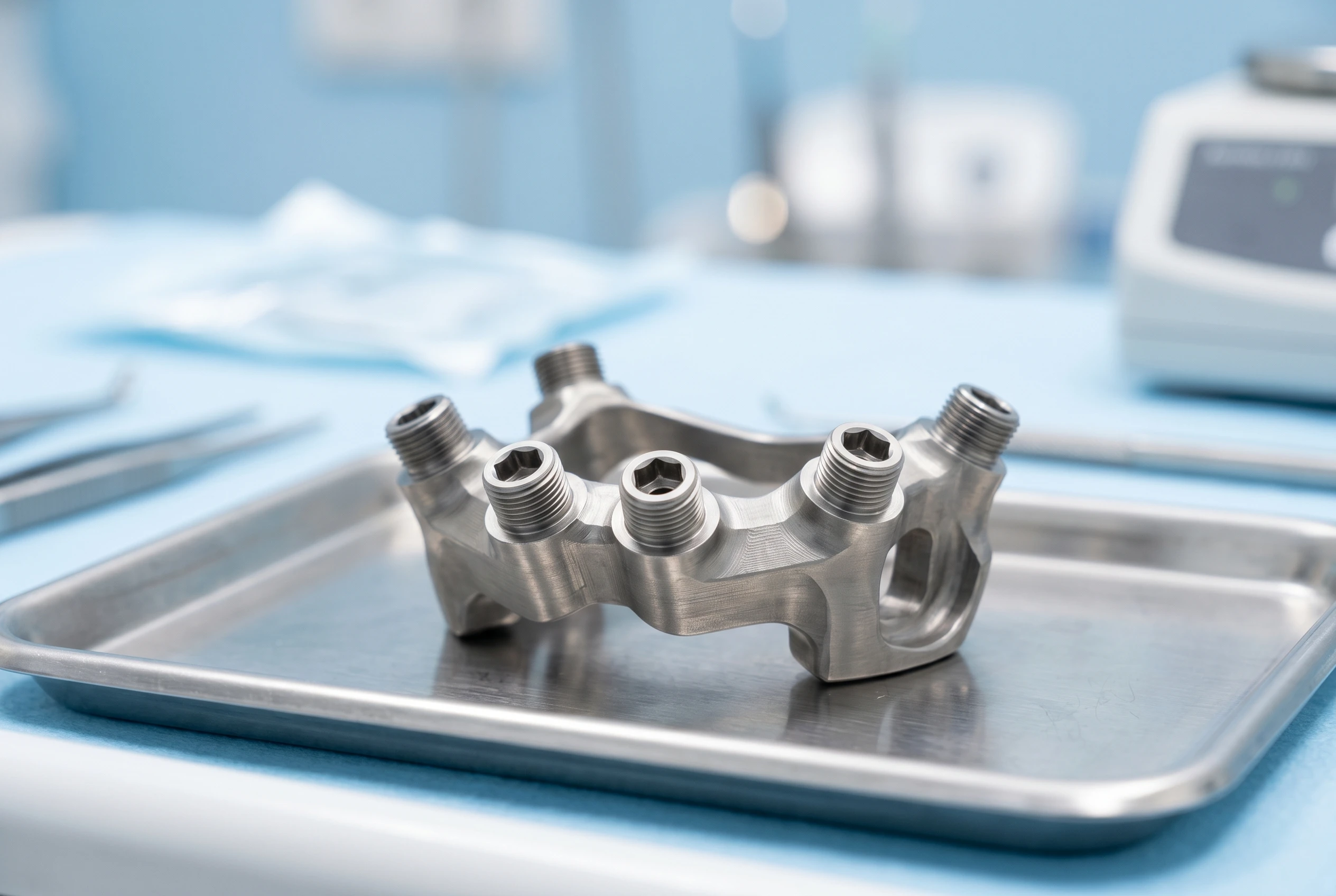
Dental Implants
- Implant frameworks & abutments
- Prosthesis attachment structures
- Orthodontic anchorage devices
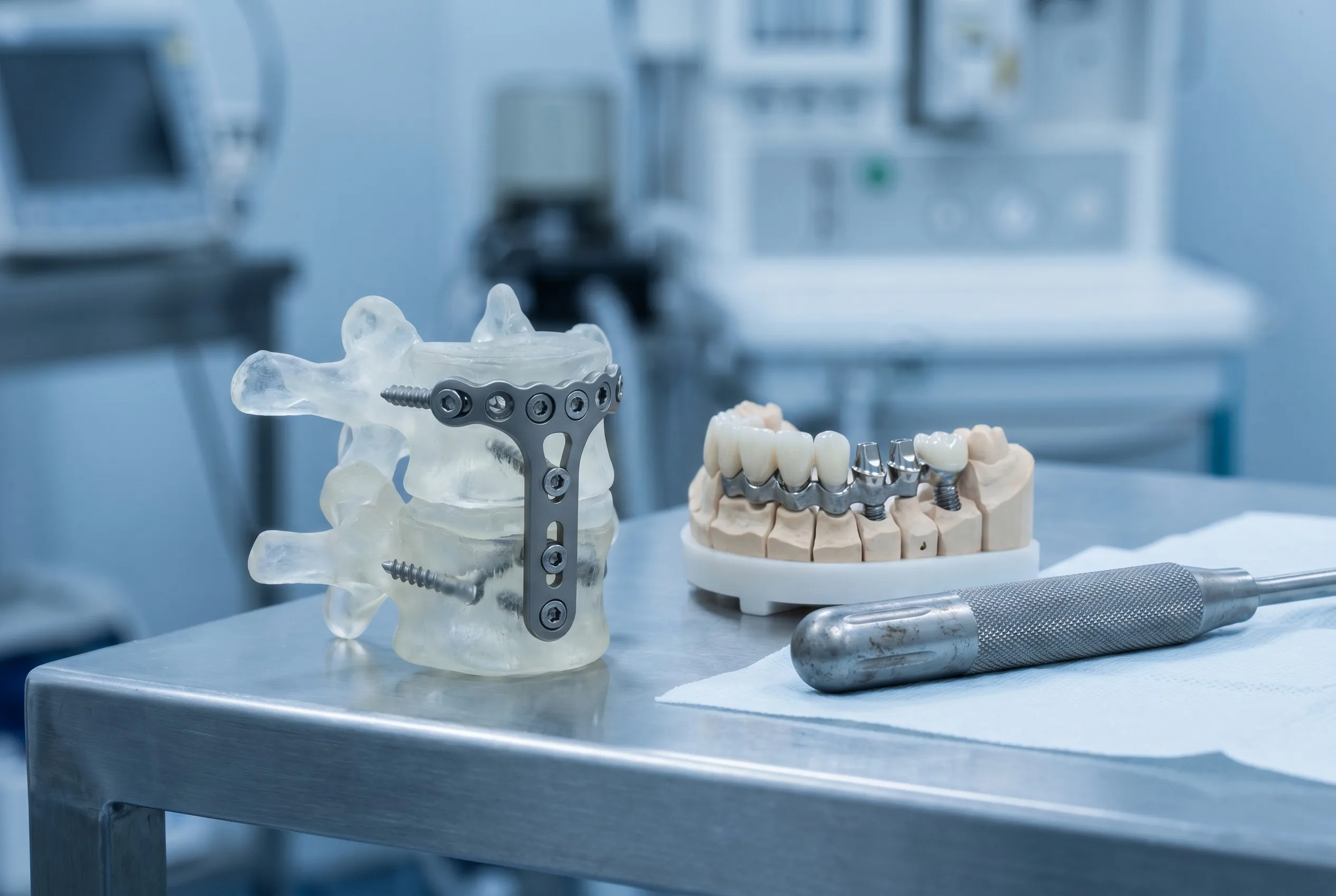
Surgical Instruments
- Handpiece housings & grips
- Micro-burr guides & cannulas
- Instrument frames & handles
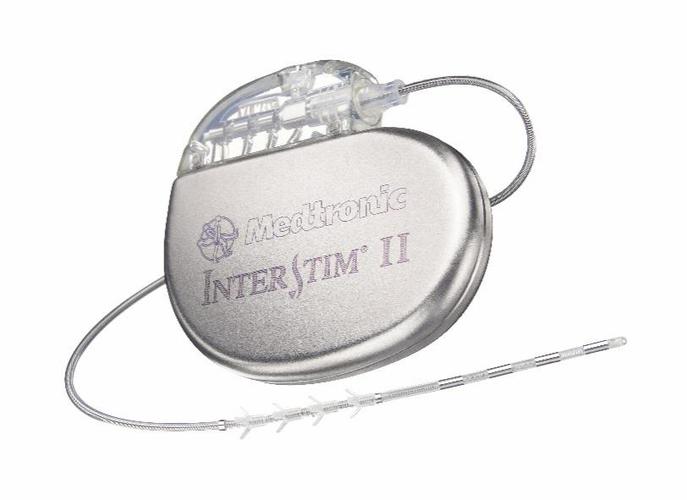
Cardiovascular & Neuro
- Pacemaker enclosures (CP-Ti Gr.2)
- Stent delivery components
- Neurostimulator housings
Design for Manufacturing Support
Medical component development requires specialized review beyond standard manufacturing feasibility. Our team evaluates your design for clinical compliance risks before production begins.
Match alloy to application class and regulatory requirements
Surface spec vs. bacterial adhesion risk assessment
Identify features requiring precision vs. standard control
Pre-align documentation to FDA/CE/MDR submission format
Thin-wall support strategy and alpha-case prevention
Project Case Studies
Spinal Fixation Plate — Ti-6Al-4V ELI (ASTM F136)
Client required a multi-hole fixation plate with patient-contact surface roughness Ra ≤0.4 μm and ±0.005 mm positional accuracy on screw-hole pattern for surgical alignment precision.
F136-certified bar stock with full traceability. 5-axis simultaneous machining completed in single setup for positional consistency. Progressive mirror finishing on patient-contact surfaces achieving Ra 0.2 μm.
Screw-hole positional accuracy verified at ±0.003 mm. Surface roughness confirmed at Ra 0.2 μm on patient-contact faces. Full documentation package delivered: material cert, heat trace, and CMM dimensional report.
Dental Implant Framework — Ti-6Al-4V ELI (ASTM F136)
Complex framework geometry with micro-thread features (0.3 mm pitch) and thin connecting arms (0.6 mm) required high-precision machining without feature deformation.
5-axis machining with custom fixture providing progressive support for thin-wall sections. Single-setup completion eliminated repositioning error accumulation. Thread tapping with dedicated titanium tooling and calibrated torque control.
Micro-thread dimensions verified within ±0.008 mm. Thin-arm wall thickness maintained within specification. Framework assembled to specification on client test fixture.
Surgical Instrument Handle — CP-Ti Grade 2 (ASTM F67)
Ergonomic handle geometry with textured grip features and internal bore for instrument shaft. Multiple surface finish zones: polished patient-contact and textured surgeon-grip areas.
CP-Ti Gr.2 for enhanced formability. Multi-stage finishing: roughing for textured grip zone (Ra 3.2 μm), progressive polishing for patient-contact surfaces (Ra 0.4 μm). Gold anodizing (Type II) for instrument identification marking.
Dual-surface specification achieved in single machining workflow. Grip texture maintained for ergonomic function. Gold anodized markings visible under surgical lighting. Full documentation package with material cert and biocompatibility declaration.
Frequently Asked Questions
Ti-6Al-4V ELI (ASTM F136) offers the best machinability-to-strength ratio for load-bearing implants. CP-Ti Grade 2 (ASTM F67) is preferred for dental and formability-focused applications. Ti-6Al-7Nb (ASTM F2068) is selected when vanadium-free composition is required.
F136 (Ti-6Al-4V ELI) for established FDA precedent and load-bearing orthopedic/spinal applications. F2068 (Ti-6Al-7Nb) for European regulatory preference and high-stress hip/femoral components where vanadium elimination is advantageous.
Standard: ±0.02 mm. Precision: ±0.005 mm on critical features. Tighter achievable with multi-pass finishing and temperature-controlled machining environment on specific geometries.
Yes. Ti-6Al-4V serves both sectors. Medical-grade ELI variant has reduced interstitial oxygen for ductility. Aerospace-grade variant (ASTM B265) has higher oxygen allowance for strength. Different specification strands — material certification must match application domain.
Type II anodizing (5–15 μm, gold/blue tones) available for instrument identification and non-contact surfaces. Type III hard anodize not recommended for patient-contact features. All anodizing verified per ASTM B600 for biocompatibility compliance.
2D: PDF, DWG, DXF. 3D: STEP, IGES, SolidWorks. Physical samples accepted for reverse engineering with CMM digitization. Medical drawing packages must include dimensioned patient-contact features with tolerance specifications.
Standard geometry: 5–7 days. Complex thin-wall or multi-axis: 10–14 days. Expedited service available for surgical scheduling or regulatory submission deadlines.
As-machined (Ra 0.8–3.2), polished (Ra 0.2–0.4 mirror), anodized Type II (gold/blue, 5–15 μm), and bead-blasted for textured grip zones. Patient-contact surfaces consistently achieve Ra ≤0.4 μm.
ASTM F136/F2068 certified bar stock with full mill certification and heat number traceability. Dedicated titanium-only toolpaths prevent ferrous contamination. Process validation per ISO13485 framework with documented cleaning and surface verification protocols.
Yes. MOQ starts at 1 piece. CNC machining is inherently low-volume friendly. Production scheduling from 1 to 5,000+ unit runs with reserved capacity for scheduled deliveries and validated first-article inspection protocols.
About Xiamen Goldcattle
ISO9001-certified precision manufacturer with ISO13485 process alignment for medical device components. Specializing in certified titanium CNC machining for global OEM clients across orthopedic, dental, and surgical instrument sectors.
Custom Manufacturing Workflow
From drawing submission to certified delivery: Material Verification (ASTM cert & heat number) → CNC Programming (toolpath & fixture optimization) → Machining (3/5-axis & turning) → Surface Finishing (progressive Ra reduction) → CMM Inspection (full dimensional verification) → Documentation & Ship (cert package with traceability). Each stage includes documented checkpoints per ISO13485-aligned process requirements.
Titanium CNC Machining for Medical Devices — Service Summary
| Company | Xiamen Goldcattle Metal Product Co., Ltd. |
| Service | Titanium CNC Machining (3-axis & 5-axis) |
| Certified Grades | Ti-6Al-4V ELI (F136) • Ti-6Al-7Nb (F2068) • CP-Ti Gr.2 (F67) • Beta-Ti |
| Precision | ±0.005 mm |
| Surface Finish | Ra 0.2–3.2 μm • Mirror • Anodized • Textured |
| MOQ | 1 Piece |
| Traceability | Material Cert • Heat No. • CMM Report per shipment |
| Applications | Orthopedic • Dental • Surgical • Cardiovascular |
| Certification | ISO9001 • ISO13485 Process Alignment |