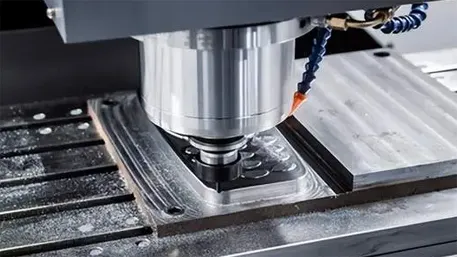
In automotive manufacturing and aftermarket development, a CNC machined component is either a precision-fit part or it is scrap. For suspension brackets, wheel adapters, sensor mounts, and performance upgrade components, the margin between proper assembly and installation failure is measured in microns.
Goldcattle provides custom CNC automotive part manufacturing — from DFM analysis and rapid prototyping to low-volume production and documented quality verification. We work with aluminum, stainless steel, titanium, and engineering plastics, delivering precision components that meet the fitment and durability requirements of demanding automotive applications.
What Are Custom CNC Machined Automotive Parts?
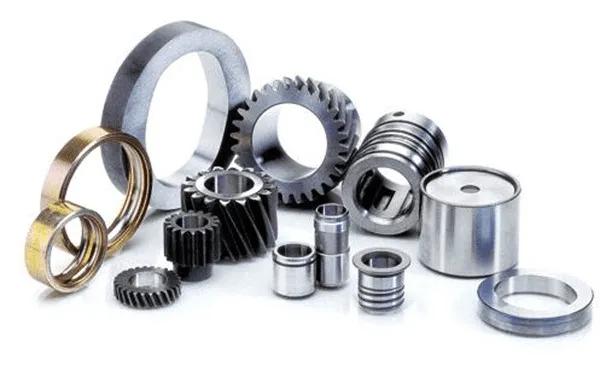
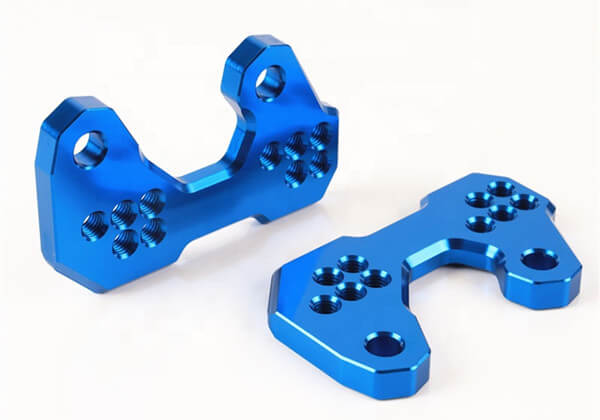
Custom CNC machined automotive parts are precision-manufactured components produced through computer-controlled machining — including milling, turning, and multi-axis operations — to replace or upgrade vehicle components with exact dimensional specifications. Unlike mass-produced stamped or cast parts, CNC machined automotive components are manufactured from solid material stock (bar, plate, or billet), enabling tight tolerances and design flexibility without dedicated stamping or casting tooling.
In the automotive context, complex structural components and concept-to-production parts typically require tolerances ranging from ±0.05 mm to ±0.01 mm — achievable through precision CNC processes with proper fixturing, tool management, and quality verification.
In summary, custom CNC machined automotive parts are precision-manufactured components that replace or upgrade vehicle parts with exact dimensional control — produced from solid material through computer-controlled machining processes that achieve the fitment accuracy and repeatability required for automotive applications.
Why CNC Machining for Automotive Components?
For automotive engineers and procurement teams, selecting CNC machining over casting, stamping, or forging for component manufacturing involves evaluating four interdependent factors: precision, flexibility, material options, and production volume suitability.
| Advantage | Engineering Mechanism | Automotive Application Impact |
|---|---|---|
| Precision & Fitment Accuracy | CNC machining from solid material maintains dimensional accuracy without the shrinkage or distortion variables inherent in casting or forging; bolt patterns, bearing seats, and mounting interfaces are machined to verified tolerances | Parts install without modification — eliminating shimming, reaming, or rework during assembly |
| Design Flexibility | No dedicated tooling (stamping dies, casting molds) required; design changes are implemented through CAM reprogramming — not retooling | Prototype-to-production timeline shortened from months to days; design iterations possible without sunk tooling cost |
| Material Versatility | CNC machining can process virtually all automotive-grade engineering metals and plastics — aluminum alloys, stainless steels, titanium, and high-performance polymers — each with optimized cutting strategies | Material selection can be matched precisely to mechanical, thermal, and corrosion requirements — not limited by casting fluidity or stamping formability constraints |
| Low-Volume Production Efficiency | CNC machining eliminates the high upfront cost of casting or stamping tooling; per-part cost is driven by machining time rather than tooling amortization | Economical for prototype, pilot, and low-to-medium volume production — particularly for aftermarket and motorsport applications where annual volumes are in the 50–10,000 unit range |
In performance-critical applications — suspension components, wheel adapters, and sensor mounting systems — CNC machining is preferred because it avoids the porosity, shrinkage voids, or microstructural inconsistencies that can be present in cast parts and compromise mechanical integrity under cyclic loading.
In summary, CNC machining is selected for automotive components when precision fitment, design flexibility, material versatility, and cost-effective low-volume production are the primary requirements — making it the manufacturing method of choice for aftermarket parts, motorsport components, and prototype development where dedicated casting or stamping tooling would be economically impractical.
Common CNC Machined Automotive Components
Across the automotive aftermarket and performance sectors, several component categories consistently demand CNC-level precision due to their fitment, structural, or functional requirements.
Suspension & Chassis Components
| Component Type | Typical Application | Preferred Materials | Critical Requirements |
|---|---|---|---|
| Control arm adapters | Suspension geometry correction; lifted/lowered vehicles | 6061-T6 or 7075-T6 aluminum | ±0.05mm bore position tolerance; bearing press-fit integrity; fatigue resistance |
| Wheel spacers & adapters | Track width adjustment; bolt pattern conversion | 6061-T6 aluminum; anodized finish | Concentricity ≤0.05mm; flatness ≤0.05mm on mounting faces |
| Subframe connectors | Chassis stiffening; structural reinforcement | 7075-T6 aluminum or 4130 chromoly steel | Weld compatibility; dimensional accuracy across multi-point mounts |
In automotive manufacturing, steering and chassis components like suspension control arms have extremely strict tolerance requirements. Any deviation will affect vehicle tracking, acceleration, and contact surface positioning under load.
Drivetrain & Performance Components
| Component Type | Typical Application | Preferred Materials | Critical Requirements |
|---|---|---|---|
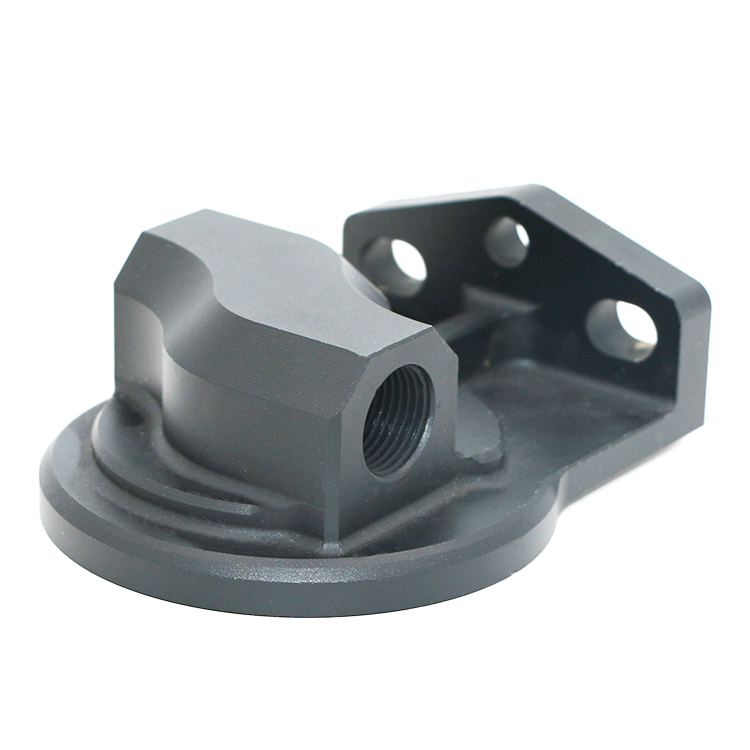
| Billet engine mounts | Performance engine swaps; custom chassis integration | 6061-T6 aluminum; optional anodized finish | ±0.1mm bolt pattern accuracy; vibration isolation compatibility |
| Throttle body adapters | Intake system modification; forced induction plumbing | 6061-T6 aluminum | Surface finish Ra ≤0.8μm on sealing faces; port matching to ±0.1mm |
EV & Sensor Integration Components
| Component Type | Typical Application | Preferred Materials | Critical Requirements |
|---|---|---|---|
| LiDAR/sensor mounts | ADAS retrofitting; autonomous system integration; motorsport data acquisition | 6061 aluminum or engineering plastics | ±0.05mm positional accuracy; vibration-resistant design; corrosion resistance |
| Battery tray brackets | EV conversion; auxiliary power system mounting | 6061-T6 aluminum | Structural integrity under battery weight; electrical isolation; corrosion resistance |
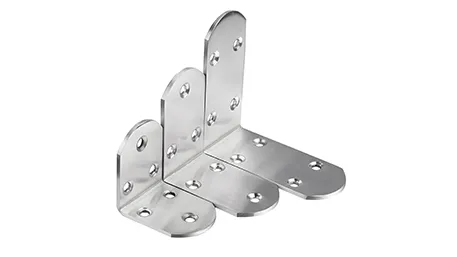
With the rapid growth of the electric vehicle and ADAS markets, demand for custom precision machined aluminum brackets, LiDAR sensor mounts and other parts in EV conversion continues to rise.
Prototype & Development Components
CNC machining is the primary manufacturing method for automotive prototype components — enabling single-unit to low-volume production of parts for design validation, fitment checking, and functional testing before committing to production tooling for casting or stamping. Typical prototype applications include engine brackets, transmission adapters, suspension links, and custom housings.
In summary, the most common CNC machined automotive component categories — suspension and chassis adapters, drivetrain and performance parts, EV and sensor integration brackets, and prototype development components — each require specific material grades and verified positional tolerances that determine whether the installed part meets its functional requirements without modification.
Material Selection for Automotive CNC Components
Material selection for automotive CNC components must balance mechanical strength, weight, corrosion resistance, machinability, and cost — with the relative priority of each factor depending on the part’s function and operating environment.
| Material | Grade | Key Properties | Typical Automotive Application | CNC Machining Considerations |
|---|---|---|---|---|
| Aluminum | 6061-T6 | Excellent strength-to-weight ratio; good corrosion resistance; anodizable; weldable | Suspension adapters, wheel spacers, engine mounts, brackets, EV structural components | Low tool wear, high material removal rates, excellent chip evacuation — the most cost-effective automotive CNC material |
| Aluminum | 7075-T6 | Higher strength than 6061; comparable to mild steel; good fatigue resistance | High-stress structural components, motorsport parts, aerospace-grade automotive applications | Harder than 6061; increased tool wear; higher raw material cost offset by superior strength-to-weight performance |
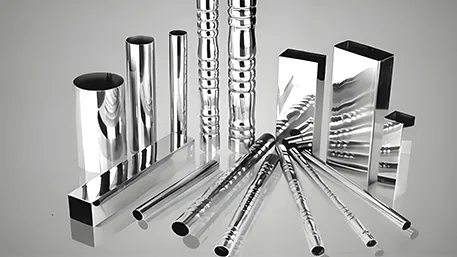
| Stainless Steel | 304 | High corrosion resistance; good strength; non-magnetic | Exhaust components, exterior brackets, marine/motorsport hardware | Work-hardening tendency demands consistent feed rates; higher cutting forces required |
| Stainless Steel | 316 | Superior corrosion resistance vs. 304; high-temperature strength retention | Marine environment components; high-temperature exhaust applications | Similar to 304 but with slightly reduced machinability; tool wear management critical |
| Titanium | Ti-6Al-4V (Grade 5) | Highest strength-to-weight ratio among automotive metals; biocompatible; corrosion resistant; high-temperature performance | Motorsport components, high-performance suspension, aerospace-grade automotive applications | Low thermal conductivity concentrates heat at cutting edge; requires sharp carbide tooling, conservative speeds/feeds |
| Engineering Plastics | POM (Delrin/Acetal), Nylon | Low friction; self-lubricating; vibration damping; electrical insulation | Bushings, spacers, sensor mounts, interior brackets | Dimensionally stable when machined; moisture absorption must be accounted for in nylon parts |
Most CNC machining for automotive applications involves aluminum alloys, stainless steel, and rigid plastics. Aluminum supports higher spindle speeds with low cutting resistance and favorable strength-to-weight ratio, while stainless steel provides corrosion resistance and structural durability in high-load conditions — though its work-hardening tendency demands closer machining control.
In summary, automotive CNC material selection balances strength, weight, corrosion resistance, and cost — with 6061-T6 aluminum serving as the default choice for most aftermarket components, 7075-T6 and titanium reserved for high-stress performance applications, and stainless steel specified where corrosion resistance in harsh environments is paramount.
Tolerance & Fitment Accuracy for Automotive Components
For automotive components that must bolt directly to a vehicle, fitment accuracy is the defining quality metric. A bracket with correct dimensions but incorrect positional tolerance on the bolt pattern is functionally a failed part — it will not install without modification.
| Tolerance Level | Range | Typical Automotive Application | Cost Driver |
|---|---|---|---|
| Standard | ±0.1 mm | Non-critical brackets, covers, interior mounts | Baseline machining cost |
| Precision | ±0.05 mm | General suspension components, engine accessories | Moderate cost — standard for most automotive CNC parts |
| High Precision | ±0.01 mm | Bearing seats, bolt patterns, alignment-critical features | Increased machining time and inspection; tighter tool management required |
| Ultra-Precision | ±0.005 mm | Fuel system components, precision sensor mounts | Specialized equipment and extended cycle time |
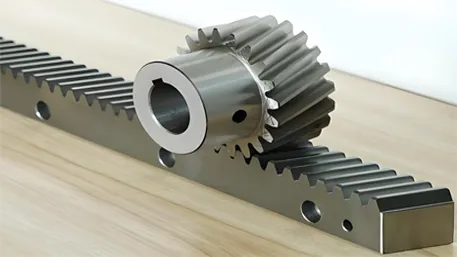
In automotive parts manufacturing, ±0.005mm tolerance is an ultra-high precision level, suitable for small precision parts manufactured by Swiss-type CNC lathes (such as fuel injection components) and racing-grade sensor mounts. In the automotive industry, core components such as transmission gears and steering system parts require ±0.01mm tooth profile tolerance to ensure smooth meshing under load — if the tolerance exceeds the standard, it will lead to excessive vibration, noise and even gear wear failure.
Production Metrics: Batch Consistency
Batch-to-batch repeatability — the ability to produce identical dimensions consistently across every part in a production run — is what separates an occasional supplier from a manufacturing partner automotive brands can rely on.
- Cavity/cycle consistency: Automated process monitoring and multi-channel controls enable consistent quality from prototype to production
- ISO 9001 / IATF 16949-aligned QC systems: Documented quality management ensures repeatable quality across production batches
- SPC monitoring: In-process inspection with automatic offset compensation maintains dimensional stability throughout production runs — essential when producing 400,000+ automotive parts annually for regulated markets
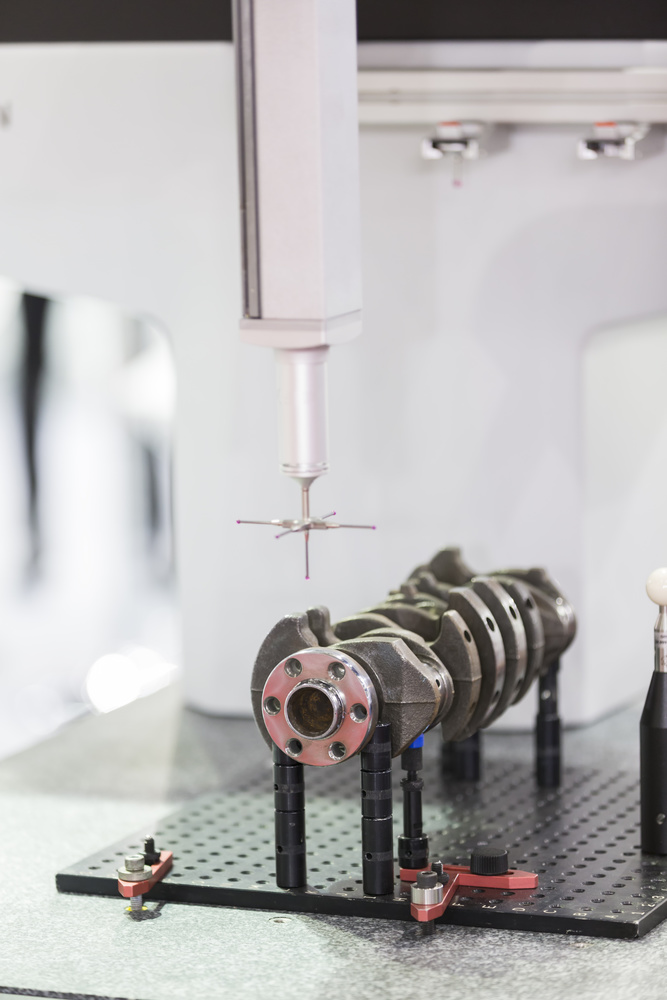
- GD&T verification: CMM-based GD&T inspection on individual components ensures proper fitment for final assembly, verifying compliance with profile and position tolerances
In summary, automotive CNC part tolerances range from ±0.1mm for non-critical features to ±0.005mm for ultra-precision applications — but for production buyers, the more important metric is batch-to-batch repeatability, which depends on process monitoring, IATF 16949-aligned quality systems, and GD&T-compliant inspection procedures rather than machine specifications alone.
Manufacturing Capabilities — Prototype to Production
Rapid Prototyping for Automotive Components
Our prototyping service is structured for speed without sacrificing precision — enabling automotive engineers and product developers to validate design, fitment, and function before committing to production quantities:
- Prototype delivery: 3–7 working days for single-unit to small-batch prototypes
- Materials: Full range of production-grade materials available for prototyping — 6061/7075 aluminum, stainless steel, titanium, engineering plastics — ensuring that prototype validation data translates directly to production
- DFM feedback: Detailed DFM report delivered with prototype — identifying tolerance risks, suggesting design optimizations, and providing production cost estimates
Low-Volume Production Capability
Low-volume CNC production bridges the gap between prototyping and mass production, delivering precise parts in small quantities without costly tooling or excess stock:
- Volume range: Typically 50–10,000 units — covering pilot batches, limited series production, and annual aftermarket program volumes
- Production scalability: The same CNC process used for prototyping can be directly applied to bridge production or ongoing low-volume supply, ensuring process continuity from first article to final batch
- Lead time: Confirmed delivery dates provided at order confirmation; expedited options available for time-critical motorsport and development programs
From Prototype to Production — Process Flow
| Stage | Activity | Deliverable | Timeline |
|---|---|---|---|
| 1. Design Review & DFM | CAD file analysis; tolerance and manufacturability review; material recommendation | DFM report with optimization suggestions | 24–48 hours |
| 2. Prototype Machining | Single-unit or small-batch CNC machining; production-grade materials | Prototype parts for fitment validation | 3–7 working days |
| 3. Fitment Verification | Dimensional inspection; customer test-fitting feedback | Inspection report; design revision if required | Per customer schedule |
| 4. Production Machining | Full production run with in-process quality monitoring | Production parts with batch QC documentation | Per order quantity |
| 5. Documentation & Delivery | CMM dimensional report; material certification; shipment | Complete QC documentation package | With shipment |
In summary, automotive CNC component manufacturing from prototype to production requires an integrated five-stage workflow — DFM analysis, prototype machining, fitment verification, production machining, and documented delivery — with process continuity across all stages ensuring that validated prototype quality translates directly to production batch consistency.
Engineering Challenges in Automotive CNC Part Manufacturing
| Challenge | Root Cause | Commercial Impact | Our Solution |
|---|---|---|---|
| Fitment failure — bolt pattern mismatch | Tolerance stack-up across multiple hole positions; datum shift during multi-setup machining; thermal expansion during machining | Parts cannot be installed without modification; customer return; negative reviews | Single-setup machining where geometry permits; CMM verification of bolt pattern positions; GD&T positional tolerance verification per ASME Y14.5 |
| Bearing seat tolerance deviation | Tool deflection during boring; insufficient process control for press-fit tolerances; inconsistent boring bar setup | Bearing fails to press-fit correctly; excessive play or interference; premature bearing failure | Dedicated boring process with verified tool offsets; in-process bore measurement with automatic offset compensation; 100% bore diameter verification |
| Vibration fatigue in suspension components | Inadequate material grade for cyclic loading; stress concentration at sharp internal corners; insufficient surface finish at fillet radii | Component fatigue failure after extended service; potential safety hazard; product liability risk | Material selection (7075-T6 or titanium where 6061 insufficient); optimized fillet radii in CAM programming; surface finish Ra ≤0.8μm at stress-critical features |
| Corrosion in exterior-mounted components | Inadequate surface treatment specification; galvanic corrosion between dissimilar metals at mounting interfaces | Part degradation; seized fasteners; perceived product quality failure | Anodizing (Type II or Type III hard anodize) for aluminum components; 316 stainless steel for severe environments; installation guidance for isolating dissimilar metals |
| Thin-wall section collapse | Excessive cutting force on walls below 1.5mm thickness; resonance between cutting frequency and part natural frequency | Part distortion or breakage during machining; inconsistent wall thickness | Optimized step-over and depth of cut for thin-wall sections; custom soft jaws for vibration damping; light finishing passes with sharp tooling |
| Thread integrity in aluminum | Thread galling during tapping; insufficient thread engagement length; incorrect tap drill diameter | Stripped threads during installation; fastener failure in service | Thread milling (preferred over tapping) for critical threads; verified thread engagement depth; thread gauge inspection on production parts |
The key factor distinguishing experienced automotive CNC machining suppliers from general machine shops is not equipment ownership — it is the systematic engineering approach to managing fitment accuracy, bearing seat tolerances, vibration fatigue, corrosion protection, thin-wall stability, and thread integrity that determines whether automotive components meet their functional requirements across production batches and service life.
Quality Control & Documentation for Automotive Components
For automotive component buyers — whether aftermarket brands, motorsport teams, or OEM-tier suppliers — documented quality control is not negotiable. A CMM report is the evidence that what was ordered is what was delivered.
| Quality Stage | Method | What We Verify | Acceptance Criteria |
|---|---|---|---|
| Incoming material | Mill certificate review; optional spectrometer verification | Material grade conformance | Per material specification and purchase order |
| In-process | Tool wear monitoring; in-process probing with automatic offset compensation | Dimensional stability during production; tool condition | Per control plan; process capability Cpk ≥1.33 |
| First article inspection (FAI) | CMM dimensional report with GD&T verification per ASME Y14.5 | All drawing dimensions and tolerances; positional, profile, and runout callouts | Per customer drawing |
| Final batch | AQL sampling per ISO 2859; surface finish verification; thread gauge inspection | Dimensional conformance; surface quality; thread integrity | Per customer specification |
| Documentation package | CMM dimensional report; material certification; surface finish data | Traceable quality record for customer receiving inspection | Delivered with every order |
For automotive supply chain compliance, our quality management system operates under ISO 9001 framework with documented procedures aligned to IATF 16949 requirements, ensuring the process controls, defect prevention, and traceability required by automotive supply chains. We also support PPAP documentation packages for customers requiring formal production part approval.
In summary, automotive CNC component quality control requires four integrated layers — incoming material verification, in-process dimensional monitoring, CMM-based first article inspection with GD&T verification, and final batch inspection with documented quality records — ensuring that every production batch delivers the fitment accuracy and mechanical integrity required for automotive applications.
Case Study — Custom 7075 Aluminum Suspension Bracket Set
Project: Custom CNC Machined Suspension Adapter Bracket Set for Motorsport Application
Industry: Automotive — Motorsport / Performance Aftermarket
Material: 7075-T6 Aluminum with Type III Hard Anodize
Challenge: The customer — a motorsport parts brand — required a set of suspension geometry correction brackets that would maintain precise bolt pattern alignment (±0.05mm positional tolerance across 4 mounting holes on 120mm PCD) while reducing weight by 40% compared to the steel OEM equivalent. Material had to withstand cyclic loading from track use and corrosion from varied weather conditions. Initial batch of 200 sets; annual volume 2,000–3,000 sets across multiple vehicle platforms.
Our Solution:
- Recommended 7075-T6 aluminum for its strength-to-weight ratio — achieving the 40% weight reduction target while maintaining structural integrity
- Programmed single-setup 5-axis machining to machine all four mounting holes and both mounting faces in one clamping — eliminating datum shift that could compromise bolt pattern positional tolerance
- Applied Type III hard anodize (MIL-A-8625 Type III) for surface hardness and corrosion resistance — validated through salt spray testing
- Implemented CMM verification with GD&T positional tolerance report for every batch — measuring bolt pattern accuracy and face flatness on statistical sampling basis
- Delivered full production batch with documentation package including material certifications, CMM reports, and surface treatment conformance data
Results:
- Bolt pattern positional tolerance: held to ±0.03mm average across 200 sets (better than ±0.05mm requirement)
- Mounting face flatness: ≤0.04mm (better than ≤0.05mm requirement)
- Weight reduction: 42% vs. OEM steel equivalent (exceeding 40% target)
- Installation report: Zero fitment issues reported across all 200 installed sets
- Customer outcome: Repeat order for second vehicle platform within 90 days; annual program expanded to 3,000+ sets
This project demonstrates the core value proposition of custom CNC machining for automotive components: when material selection, process design, and quality verification are engineered together — not treated as independent steps — the result is a precision part that installs without modification, performs reliably under demanding conditions, and supports repeat production across vehicle platforms.
FAQ — Custom Automotive CNC Machined Parts
Q1: What are custom CNC machined automotive parts?
Custom CNC machined automotive parts are precision-manufactured metal or plastic components produced through computer-controlled machining — including milling, turning, and multi-axis operations — to replace or upgrade vehicle parts with exact dimensional specifications. Unlike mass-produced stamped or cast parts, they are machined from solid material stock, enabling tight tolerances and design flexibility. They are commonly used for aftermarket upgrades, performance modifications, motorsport components, and prototype development.
Q2: What tolerances can automotive CNC machining achieve?
Standard automotive CNC machining achieves ±0.05mm on general features. Precision machining achieves ±0.01mm on bolt patterns, bearing seats, and alignment-critical features. Ultra-precision machining with specialized equipment and Swiss-type lathes can achieve ±0.005mm for components like fuel system parts and precision sensor mounts. The most important metric for production buyers is not single-part precision but batch-to-batch repeatability — the ability to maintain these tolerances consistently across every part in a production run.
Q3: What materials are best for CNC machined automotive parts?
The most common materials are 6061-T6 aluminum (excellent strength-to-weight ratio, corrosion resistance, cost-effective — the default choice for most aftermarket components), 7075-T6 aluminum (higher strength for high-stress and motorsport applications), 304/316 stainless steel (corrosion resistance for exhaust and marine environments), and Ti-6Al-4V titanium (highest strength-to-weight ratio for premium motorsport components). Engineering plastics such as POM and nylon are used for bushings, spacers, and sensor mounts.
Q4: How do you ensure automotive CNC parts fit correctly on vehicles?
Fitment accuracy is ensured through CMM dimensional verification on bolt patterns, mounting faces, and alignment features — with GD&T positional tolerance verification per ASME Y14.5. Single-setup machining (where geometry permits) eliminates the datum shift that causes bolt pattern misalignment when parts are transferred between machines. Our quality system verifies dimensional conformance with documented inspection reports before shipment.
Q5: What is the typical lead time for custom automotive CNC parts?
Prototypes are delivered within 3–7 working days. Low-volume production lead time depends on part complexity, material availability, and order quantity — confirmed delivery dates are provided at the quoting stage. Expedited options are available for time-critical motorsport and development programs.
Q6: Can you do both prototyping and production for automotive parts?
Yes. We provide rapid prototyping (single-unit to small-batch, 3–7 working days) and low-volume production (50–10,000 units) using the same CNC processes. This ensures process continuity — the validated prototype quality translates directly to production batch consistency. Our service covers the complete workflow from DFM analysis through prototype validation to production delivery with full QC documentation.
Q7: What quality documentation do you provide with automotive CNC parts?
We provide CMM dimensional inspection reports with GD&T verification per ASME Y14.5, material certifications (mill certificates), surface finish data, and full conformity documentation. For automotive supply chain customers, we also support PPAP documentation packages. Our quality management system operates under an ISO 9001 framework with documented procedures aligned to IATF 16949 requirements.
Q8: What is the minimum order quantity for custom automotive CNC parts?
Prototypes can be produced as single units (1–10 pcs). Low-volume production typically starts at 50 units, with volume production reaching 10,000+ units annually. Our flexible production model supports single prototypes, pilot batches, and annual production programs without the minimum order quantities required by casting or stamping processes.
Ready to manufacture your custom automotive CNC parts?
Upload your CAD file for a free DFM review.
- → Receive manufacturability analysis within 24–48 hours
- → Prototype delivery in 3–7 working days
- → Low-volume production with documented QC data