A practical sourcing guide for finding, evaluating and qualifying a CNC manufacturer for prototypes, low-volume production and mass production.
Quick Answer: How Do I Find a CNC Factory for Custom Parts?
Start by defining the part's material, quantity, critical tolerances, geometry, surface finish and inspection requirements. Then shortlist manufacturers with relevant CNC equipment and experience, verify their quality and production capabilities, request comparable quotes using the same drawing package, evaluate the sample, and only then move to production.
| Step | What to Do |
|---|---|
| 1 | Prepare your 3D CAD and 2D drawing |
| 2 | Define material and quantity |
| 3 | Identify critical tolerances |
| 4 | Shortlist suitable factories |
| 5 | Verify equipment and quality |
| 6 | Send the same RFQ to suppliers |
| 7 | Compare quote + lead time + capability |
| 8 | Test with a sample (first article) |
| 9 | Approve production |
| 10 | Start recurring orders |
1. Define Your Custom Part Before Looking for a CNC Factory
Finding a CNC factory is easy; finding one that consistently manufactures your exact part is harder. The right supplier must match your material, geometry, tolerances, quantity, surface finish, inspection requirements and delivery schedule. Before contacting any factory, build a complete technical package.
Part Information to Prepare
- 3D CAD model (STEP / IGES / Parasolid / SolidWorks)
- 2D drawing with dimensions, tolerances and GD&T
- Material specification (e.g. Aluminum 6061-T6, not just "aluminum")
- Quantity and annual volume
- Critical tolerances and datum references
- Surface finish and any heat treatment
- Application and operating environment
- Inspection requirements (CMM, FAI, material certificate)
- Packaging and shipping expectations
The more complete your technical package is, the more comparable supplier quotations become. A common sourcing failure is sending the same CAD to several shops that then make different assumptions about material grade, finishing, inspection scope and tolerance interpretation — so the "quotes" are not actually for the same part.
2. Where Can You Find CNC Machining Factories?
Several channels exist. None of them replace qualification — any supplier found through any channel must still be verified against your requirements.
| Channel | Best For | Pros | Risks |
|---|---|---|---|
| Direct factory websites | Long-term supplier | Direct communication | Requires verification |
| Alibaba | Large supplier pool | Easy RFQ | Supplier quality varies |
| Made-in-China | Supplier discovery | Many manufacturers | Need qualification |
| RFQ platforms | Multiple quotes | Easy comparison | Less direct control |
| Industrial sourcing networks | Complex projects | Supplier matching | May add intermediary |
| Trade shows | Serious sourcing | Face-to-face | Time / travel cost |
3. How to Tell Whether You're Dealing With a Factory or Trading Company
A trading company is not inherently bad — it can be useful for sourcing, consolidation and logistics. But buyers should understand who actually manufactures, inspects and controls the parts. Ask these questions to find out.
| Question | Why It Matters |
|---|---|
| Where are the machines located? | Verify actual production |
| Can you provide factory photos / video? | Physical verification |
| Which processes are in-house? | Understand supply chain |
| Who performs QC? | Quality responsibility |
| Can I speak to an engineer? | Technical competence |
| Can you show similar production? | Capability proof |
| Can you support a factory audit? | Verification |
| What happens if a process is outsourced? | Risk control |
4. Match the CNC Factory to Your Part
The goal is not "find a CNC factory" but "find a CNC factory that fits this part." Use a capability-matching matrix against your requirements.
| Your Requirement | What the Factory Should Demonstrate |
|---|---|
| 5-axis complex geometry | 5-axis machining centers |
| Tight tolerance | Relevant process + inspection capability |
| Large aluminum parts | Machine envelope (worktable size) |
| Small precision parts | Small-part tooling and inspection |
| PEEK / engineering plastics | Polymer machining experience |
| Stainless steel | Relevant cutting experience |
| Large volume | Production capacity |
| Prototype | Low-volume workflow |
| Cosmetic parts | Surface finishing capability |
| Medical parts | Appropriate quality / documentation |
| Automotive | Production consistency / PPAP if required |
5. How to Verify a CNC Factory Before Ordering
Use a structured checklist across manufacturing, quality, engineering and commercial dimensions.
Manufacturing
- Machine list (type, axis, make)
- CNC axis capability (3 / 4 / 5-axis)
- Machine size / work envelope
- Relevant material experience
- Similar part examples
- Production capacity
Quality
- ISO certification
- Inspection equipment
- CMM availability
- FAI (First Article Inspection)
- Material certificates
- Traceability system
Engineering
- DFM review
- Drawing review
- Tolerance review
- Material recommendations
Commercial
- MOQ
- Lead time
- Payment terms
- Packaging
- Shipping method
Before You Place an Order, Verify These 10 Things
- Real manufacturing location
- Relevant CNC equipment
- Material capability
- Actual tolerance capability
- Inspection capability
- Quality certification
- Similar project experience
- Production capacity
- Lead time
- Communication and engineering support
6. Send a Complete CNC RFQ Package
A complete RFQ lets suppliers quote the same part. Include the following.
| Item | Example |
|---|---|
| 3D CAD | STEP / IGES / Parasolid / SolidWorks |
| 2D drawing | Dimensions + tolerances + GD&T |
| Material | Aluminum 6061-T6 |
| Quantity | 20 pcs prototype / 500 pcs / 5,000 pcs annual |
| Surface finish | Type II anodizing, black |
| Inspection | CMM for critical dimensions |
| Target delivery | Prototype within 10 business days |
7. Bad RFQ vs Good RFQ
Bad RFQ
"Need 100 aluminum parts. Please quote."
- What aluminum grade?
- What dimensions?
- What tolerance?
- What finish?
- Inspection required?
- What delivery date?
Good RFQ
- Material: Aluminum 6061-T6
- Quantity: 100 pcs
- 2D drawing: Rev B
- Critical tolerance: ±0.02 mm
- Finish: Clear anodizing
- Inspection: CMM for critical dims
- Delivery: 15 business days
8. Compare CNC Factory Quotes Correctly
Three quotes are only comparable when suppliers quote against the same technical requirements. Build a landed-cost comparison instead of comparing unit price alone.
| Cost Factor | Supplier A | Supplier B | Supplier C |
|---|---|---|---|
| Unit price | |||
| Tooling / fixture | |||
| Surface finish | |||
| Inspection | |||
| Packaging | |||
| Shipping | |||
| Lead time | |||
| Material certification | |||
| Sample | |||
| Total landed cost |
9. Always Qualify a New CNC Factory With a Prototype or First Article
Your sample should verify:
- Dimensions and critical tolerances
- Surface finish
- Material and grade
- Assembly fit and function
- Packaging and labeling
- Inspection documentation (FAI / CMM report)
- Actual lead time vs. quoted
10. Do You Need to Visit the CNC Factory?
Verification depth should scale with project value and risk — not be an absolute yes or no.
| Situation | Recommended Verification |
|---|---|
| Prototype / small batch | Video + sample + documents |
| Repeat production | Sample + quality review |
| High-value project | Factory audit recommended |
| Complex aerospace / medical | Stronger qualification |
| Long-term strategic supplier | On-site or third-party audit |
11. Common Risks When Sourcing CNC Parts
The point is not that any region is risky, but that specific failure modes occur when requirements are unclear. Watch for:
How to Reduce These Risks
Write a complete drawing package, agree critical tolerances in writing, require material certificates, request CMM / FAI reports, qualify with a prototype, confirm lead time against real capacity, and verify certifications against the issuing body.
Looking for a CNC Factory for Your Custom Parts?
Xiamen Goldcattle — Custom CNC Machining
Xiamen Goldcattle provides custom CNC machining from prototype to production, with 3 / 4 / 5-axis machining, CNC turning, Swiss-type machining, EDM and grinding. The company states 26+ years of manufacturing experience, 100+ machines, 35+ materials and precision capability up to ±0.005 mm.
Website: xmgoldcattle.com · Email: charlie@plasticmetalparts.com · Tel: +86-18150097490 · Contact: Charlie Cheer
Capabilities at a Glance
| Requirement | Goldcattle |
|---|---|
| Custom parts | ✓ |
| Prototype | ✓ |
| Low volume | ✓ |
| Production | ✓ |
| 3-axis | ✓ |
| 5-axis | ✓ |
| CNC turning | ✓ |
| EDM / grinding | ✓ |
| Metals | ✓ |
| Engineering plastics | ✓ |
| DFM | ✓ |
| FAI / PPAP | ✓ |
| CAD RFQ | ✓ |
What If Your Part Shouldn't Be CNC Machined?
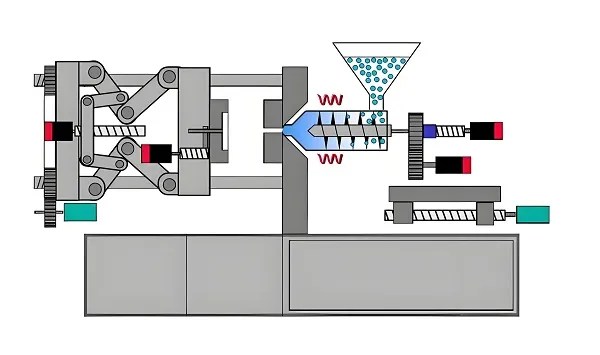
Sometimes CNC is not the best production process. Goldcattle runs CNC, injection molding, die casting, sheet metal, 3D printing and mold making under one manufacturing system — so the recommendation can follow the part, not the machine.
- 1–100 parts → CNC machining
- 1,000+ plastic parts → Injection molding
- 1,000+ thin-wall metal parts → Die casting
- Prototype → 3D printing
- Sheet enclosure → Sheet metal
Upload your CAD and let our engineers recommend the appropriate process for your quantity and material.
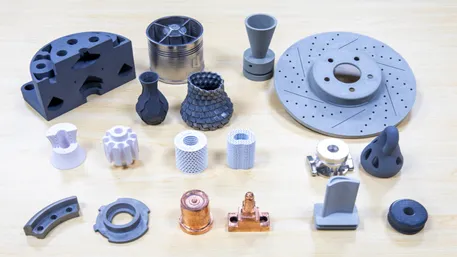
Custom Part Examples We Commonly See
Aluminum CNC Housing
Material: 6061 · Process: 3/5-axis milling · Finish: anodizing · Application: electronics enclosure.
Precision Shaft
Material: 304 SS · Process: CNC turning · Tolerance: ±0.01 mm · Application: drivetrain.
Automotive Bracket
Material: aluminum · Process: milling + tapping · Finish: powder coat · Application: chassis.
PEEK Component
Material: PEEK · Process: CNC milling · Application: medical / semiconductor.
Stainless Medical Part
Material: 316L · Process: 5-axis · Inspection: CMM + FAI · Application: instruments.
5-Axis Aerospace Part
Material: 7075 · Process: 5-axis milling · Tolerance: ±0.005 mm · Application: flight hardware.
Robot Joint Component
Material: aluminum / steel · Process: milling + turning · Application: automation.
Heat Sink
Material: aluminum · Process: CNC milling · Finish: clear anodizing · Application: thermal.
Can We Manufacture Your Part?
Check your project against Goldcattle's typical scope, then upload your CAD for a free DFM review.
| Dimension | Typical Range |
|---|---|
| Material | Aluminum · Stainless Steel · Titanium · Brass · Copper · PEEK · Engineering plastics · Other |
| Quantity | 1–10 · 10–100 · 100–1,000 · 1,000+ |
| Geometry | Simple · Complex · 5-axis · Thin wall |
| Tolerance | ±0.1 · ±0.05 · ±0.01 · ±0.005 mm |
Frequently Asked Questions
How do I find a real CNC factory instead of a trading company?
Ask where the machines are located, request factory photos or video, confirm which processes are in-house, and verify who performs QC. A factory can usually show its floor, equipment list and engineering team; a pure trader cannot.
What should I send a CNC factory for a quote?
A 3D CAD model (STEP/IGES/Parasolid/SolidWorks), a 2D drawing with dimensions and tolerances, the exact material grade, quantity, surface finish, inspection requirements and target delivery date.
How many CNC suppliers should I contact?
Three is a practical number for comparison. Too few limits leverage; too many dilutes the effort to brief each one properly, and inconsistent briefs produce non-comparable quotes.
How do I compare CNC factory quotes?
Compare total landed cost against the same technical package — unit price plus tooling, finishing, inspection, packaging, shipping and lead time — not the headline unit price alone.
Should I order a sample before mass production?
Yes. A prototype or first article verifies dimensions, finish, material, function, packaging and lead time before you commit to volume. It is the single most effective qualification step.
How do I verify CNC machining tolerances?
Request the supplier's measured capability (CMM report / FAI) against your critical dimensions, and agree the tolerance and datum scheme in writing before production.
How do I know whether a CNC factory has the right equipment?
Ask for the machine list with make, axis count and work envelope, and match it to your part's geometry, size and material. For 5-axis features, confirm 5-axis centers specifically.
What CNC machining capabilities should I look for?
3/4/5-axis milling, CNC turning, Swiss-type, EDM and grinding cover most custom parts. Add inspection (CMM/FAI), DFM support and material experience relevant to your part.
Can a CNC factory handle both prototypes and mass production?
Many can, but verify it explicitly. Prototyping and volume production have different workflows, tooling and quality-control needs; confirm the supplier supports both for your quantity range.
How long does it usually take to get a CNC machining quote?
For a complete package, a qualified supplier typically returns a DFM-reviewed quote within a few business days. Incomplete drawings extend the cycle because assumptions must be clarified first.
Can one factory handle CNC machining, finishing and assembly?
Yes, when those processes are in-house or tightly controlled. Confirm who owns quality at each step — consolidated production reduces handoff risk, but only if inspection is applied at every stage.
Can Goldcattle manufacture from my CAD drawing?
Yes. Xiamen Goldcattle accepts STEP, IGES, X_T and SolidWorks files with a 2D PDF drawing, provides DFM review, and returns a quotation based on your material, tolerance and quantity. See manufacturing services →
Ready to Find Out If We Can Make Your Part?
Send us your CAD files, 2D drawing, material, quantity and tolerances. Our engineers will review your project and recommend the right manufacturing method.
Upload CAD & Request a Quote