
Production Injection Molding Tooling for Long-Run Production
Your design is validated. Now you need tooling that delivers the same part, cavity after cavity, shift after shift, for the life of the program. We design, machine and validate hardened steel production molds — built for stable, high-yield output and a predictable cost per part.
- ISO 9001:2015certified system
- 100+ machinessix processes in-house
- 500+ clients1,000+ projects
- 100+ countriesserved worldwide
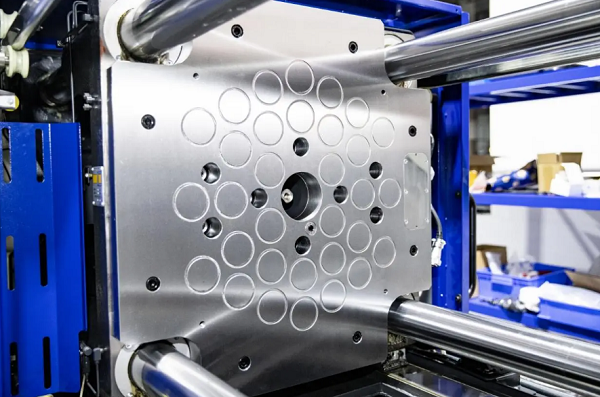
- 1Validated Design
- 2Production DFM
- 3Steel Selection
- 4Mold Design
- 5Precision Tool Manufacturing
- 6T0 / T1 Validation
- 7Production Release
- 8Maintenance & Tool Life
When Should You Invest in Production Tooling?
Production tooling is the right call when the part is settled and the program has a future. If any of the situations below describe your project, hardened steel tooling will almost always beat rapid or bridge tooling on total cost and output stability.
Volume clears the ceiling
Annual demand sits in the tens of thousands and climbs. At that point the per-part savings from a hardened, multi-cavity tool outweigh the higher upfront cost many times over.
The design is frozen
The part has passed validation and is unlikely to change. Production tooling is wasted on a design still in motion — that is what rapid and bridge tooling are for.
Consistency drives the spec
Tight, repeatable tolerances across every cavity matter — for fit, function or assembly downstream. Cavity-to-cavity uniformity is engineered in, not hoped for.
Unit economics depend on yield
Cycle time, scrap rate and consistent fill decide whether the program is profitable. Stable tooling and a locked process protect margin at scale.
Multi-year program horizon
You can amortize the tool across years of production. A longer horizon justifies a better steel, more cavities and a hot runner — every upgrade that pays back over volume, not in the first month.
Rapid Tooling vs Production Tooling
They are not competitors — they are stages. Rapid and bridge tooling validate; production tooling scales. The table shows where each earns its place so you do not over-spend too early or under-build too late.
| Factor | Rapid / Bridge Tooling | Production Tooling |
|---|---|---|
| Annual volume | Low to pilot (hundreds–low tens of thousands) | High and growing (tens of thousands+) |
| Design stability | May still change | Frozen and validated |
| Tool life need | Short run, low shots | Millions of shots, planned |
| Mold steel | P20, aluminum, softer grades | H13, S136, NAK80, 718H |
| Cavitation | Single, few cavities | Multi, family, hot runner, stack |
| Runner system | Cold runner, simpler | Hot runner where volume justifies |
| Lead time | Days to a few weeks | Weeks, with sampling |
| Unit cost target | Higher per part | Lowest per part at volume |
| Risk if design changes | Low — cheap to redo | High — invest only when sure |
Still validating the part or unsure of volume? Explore rapid and bridge tooling on our injection molding services page → — they are the lower-risk first step before you commit to hardened steel.
Choosing the Right Mold Steel
Production molds are most often built from a small set of proven tool steels. The grade sets hardness, polish, corrosion resistance and — with maintenance — how long the tool holds tolerance. Shot-life figures below are planning ranges, not guarantees; the real number depends on resin, fillers, cycle and care.
| Steel | Hardness (approx.) | Where it earns its place | Planning shot-life | Notes |
|---|---|---|---|---|
| P20 | 28–35 HRC | Low-volume, pre-hardened, easy to machine | Lower-volume runs | Cost-effective where abrasiveness is low |
| H13 | 44–52 HRC | General production, filled/abrasive resins, hot halves | High — into millions | The production workhorse; hardened inserts on wear faces |
| S136 (420 SS) | 40–52 HRC | Corrosive resins, medical, optical, clear parts | High — into millions | Stainless; resists corrosion and supports polish |
| NAK80 | ~40 HRC | Mirror-polish, cosmetic, lens, optical parts | High — into millions | Pre-hardened, excellent polishability |
| 718H | 33–38 HRC | Large molds, good surface, pre-hardened | Medium–high | Easier machining for big tools |
Steel Follows the Application — Not "Strongest Wins"
Over-specifying the steel wastes money on a harder, slower, more expensive tool. Under-specifying risks wear, drift and unplanned downtime. The right grade is the one matched to what the part and the program actually demand. We weigh these factors together:
Volume & abrasiveness
High volume with glass- or mineral-filled resin pushes toward H13 with hardened inserts. Low, clean-volume runs do fine on pre-hardened steel.
Temperature & corrosion
Hot halves and corrosive or PVC-type resins call for heat- and corrosion-resistant grades such as H13 or S136 stainless.
Tolerance & finish
Tight tolerances need stable, low-wear steel; optical or cosmetic surfaces need polish-friendly grades like NAK80 or S136.
Maintenance plan
How the tool will be serviced decides how much margin the steel needs. A documented PM plan lets a good grade outlast a tougher one left unserviced.
Part size & cavitation
Large tools favor machinable pre-hardened grades; small, high-cavity tools favor hardened, wear-resistant steel.
Total cost, not sticker
We recommend the grade that minimizes cost per good part over the program — steel, cycles, scrap and maintenance included.
Production Tooling Configurations
The configuration decides how many good parts leave the machine per hour and how the tooling cost spreads. Each option answers a different problem — we model them against your forecast before quoting.
Single-cavity
Choose when volume is moderate, the part is large, or you are confirming process before scaling. Lowest tool cost, simplest maintenance.
Multi-cavity
Choose for high-volume small parts. More parts per shot spreads fixed cost and cuts unit price — the workhorse of production molding.
Family mold
Choose when several related parts share a program and volume per part is modest. One tool, one setup, consolidated production.
Hot runner
Choose for steady high volume. No sprue/runner scrap, shorter cycles, better consistency — higher tool cost recovered in material and cycle savings.
Stack mold
Choose when you need double output per machine cycle but are limited by platen size or tonnage. Two parting planes, two shots' worth of cavities, one machine — a capacity lever when floor space or machines are the constraint.
What Makes a Production Mold Stable
A mold is stable when the same inputs produce the same part, every cavity, every shift. Stability is designed into six modules — not discovered after the first rejects.
Cooling
Balanced, symmetric circuits keep every cavity at a uniform temperature. Uniform heat means less warp, shorter cycles and consistent shrink — the single biggest lever on stability.
Gate & runner
Gate type and location control fill pattern, weld lines and packing pressure. Get them right and every cavity fills the same way.
Venting
Adequate vents prevent burn marks and short shots. Trapped gas is a leading cause of intermittent, hard-to-diagnose rejects.
Ejection
Reliable, well-placed ejection releases parts without marks, sticking or damage — and without slowing the cycle.
Slides & lifters
For undercuts, action reliability decides uptime. Robust slides and lifters with monitored wear keep the tool running, not stuck in repair.
Parting line
A precise parting-line fit seals the cavity and controls flash. Flash is the first sign a tool is drifting out of tolerance.
Cavity-to-Cavity Consistency
"Consistent" is a claim we verify, not a promise we print. Multi-cavity molds are only as good as the worst cavity, so we prove uniformity before release.
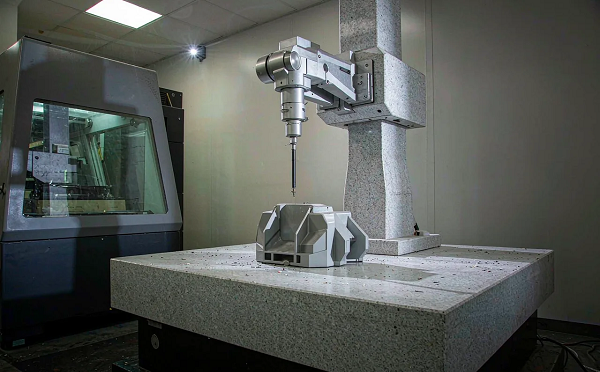
CMM gate-to-gate
Every cavity is measured on the coordinate measuring machine against the drawing. We report the spread, not just one good cavity, so you see real consistency.
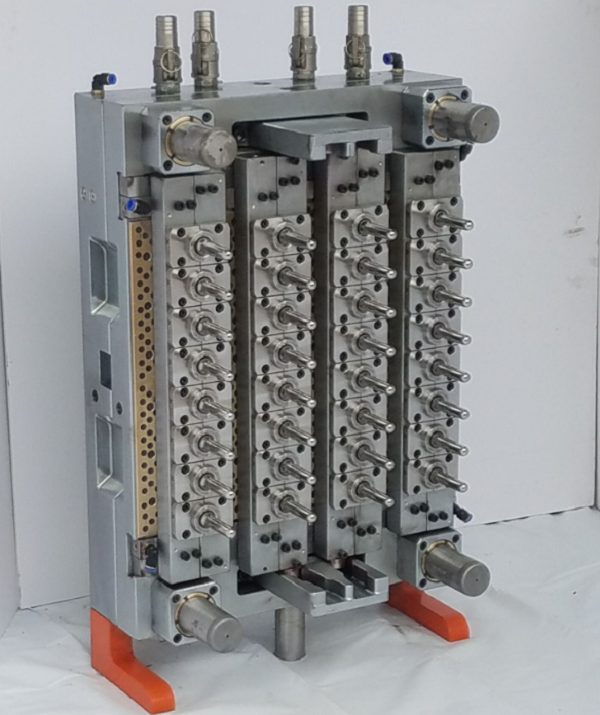
Fill & pack balance
Gate and runner design balances fill and packing across cavities, so no cavity is starved or over-packed — the root cause of cavity-to-cavity variation.
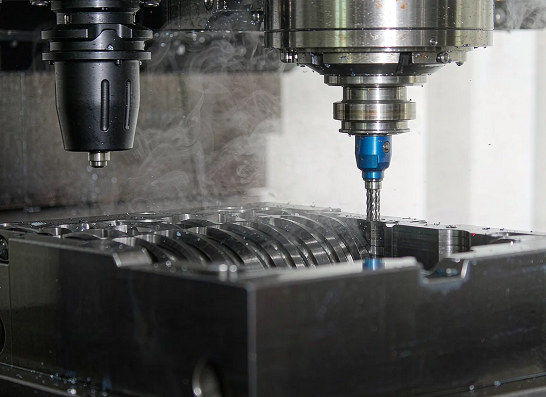
Machining & cooling symmetry
One program, calibrated equipment and symmetric cooling produce cavities that start identical and stay identical — consistency designed in, not adjusted out.
Our Production Tooling Process
Seven stages take you from a frozen design to a released, maintained production tool — compressed from the longer mold-development path because the part is already validated.
- 1
Production DFM & quote
We review the part for moldability at volume, recommend steel and configuration, and quote the tool and the part.
- 2
Steel & configuration sign-off
You approve the grade, cavitation and runner type against your forecast — the decisions that set unit cost.
- 3
Mold design & flow analysis
Full 3D mold design with fill, pack and warp simulation to de-risk before metal is cut.
- 4
Precision tool manufacturing
CNC machining of cavities, cores and frames to the tolerance your part demands, then heat treatment and surfacing.
- 5
Fitting, polishing, assembly
Hand-fitting, polishing and full assembly with slides, ejectors and hot runner where specified.
- 6
T0 / T1 sampling & correction
First shots sampled, measured and corrected until the part matches the drawing cavity-to-cavity.
- 7
Production release & PM plan
Tool released with a documented preventive maintenance plan and spare wear parts where the program justifies them.
Risks We Engineer Out
Long runs punish small problems. Each failure mode below has a designed-in answer, so it does not become a line-side emergency.
| Failure mode | What it costs you | How we engineer it out |
|---|---|---|
| Wear | Drift, scrap, early tool death | Correct steel grade, hardened inserts, surface treatment on wear faces |
| Dimensional drift | Out-of-spec parts slip through | Preventive maintenance, wear-part monitoring, periodic CMM audit |
| Cycle creep | Rising cost per part | Balanced cooling design and locked machine parameters |
| Flash | Rework, rejects, downtime | Precise parting-line fit, correct clamp tonnage, vent control |
| Unplanned downtime | Missed shipments | PM schedule, spare inserts/pins, documented service procedure |
Mold Maintenance & Life Management
Tool life is decided more by care than by the steel grade. Every production tool ships with a maintenance plan so it stays in tolerance for the life of the program.
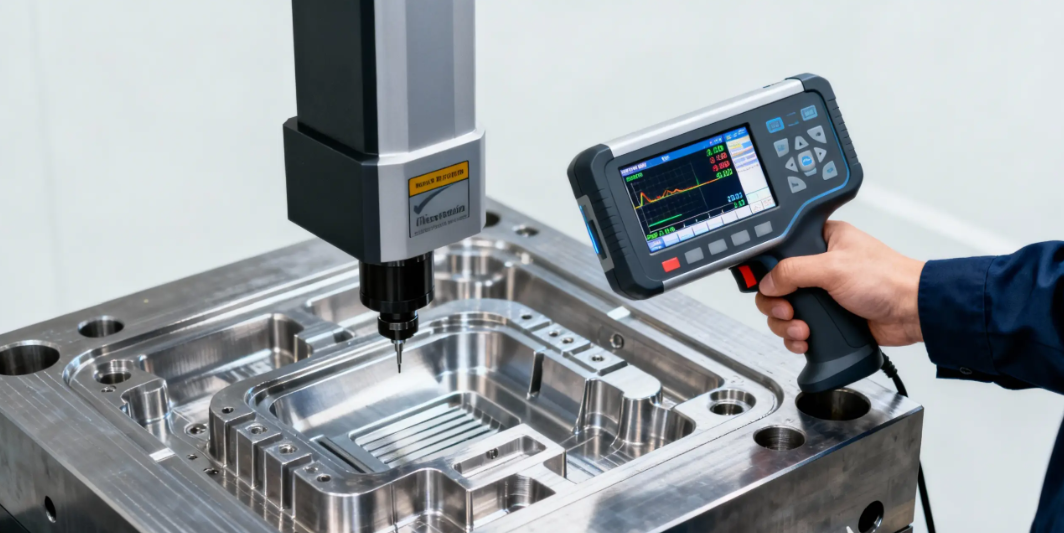
Preventive schedule
Cleaning, lubrication, ejector and vent checks at shot-count intervals — before wear becomes a defect.
Spare wear parts
Inserts, pins and rings supplied where the program justifies them, so a worn part is swapped, not waited on.
Rework & refurb
When a cavity drifts, we rework or re-texture rather than scrap the tool — extending life at a fraction of replacement cost.
Shot-life tracking
Logged production against planned life, so you see wear coming and plan, instead of reacting to a failure.
Storage & handover
Controlled storage and a documented PM procedure mean the tool runs the same whether we service it or your team does.
We run it or train you
We maintain the tool in our shop, or hand over the full procedure and spares so you own the lifecycle.
Production Tooling Case Study
A representative example of the kind of program we run. Figures below describe a real program type; confirm with us against your actual part and volume before quoting.
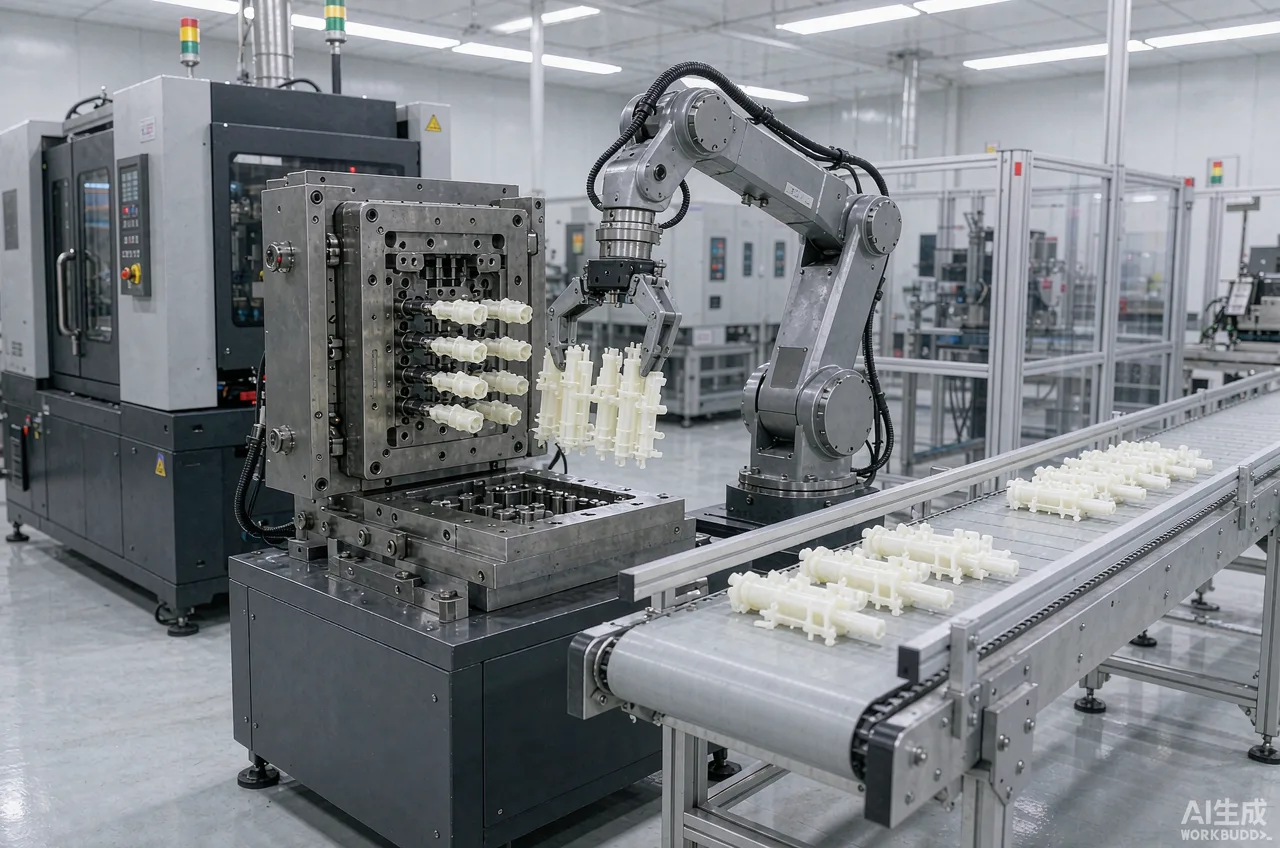
8-cavity automotive connector — high-volume program
- Part: precision automotive connector, tight dimensional spec across cavities
- Tool: 8-cavity hardened steel (H13) production mold with hot runner
- Volume: millions of parts per year across a multi-year program
- Approach: flow analysis before cutting, balanced fill/pack, CMM gate-to-gate at T1, locked process window
- Result: rejection driven below 1% after tool correction and process lock-in; stable cycle and yield sustained through the run
The point is not the number — it is the method: simulate, measure every cavity, lock the process, then maintain. That is what keeps a production tool stable at volume.
When Production Tooling May Be Premature
We will tell you when not to buy production tooling. If any of these fit, a lighter tool protects your budget and your timeline — you can step up once the program earns it.
Design still moving
If the part is not frozen, a rapid or bridge tool lets you iterate cheaply instead of re-cutting hardened steel.
Volume uncertain
When the forecast is a guess, start light. Bridge tooling covers the gap until demand is real.
Bridge to production
Need parts now but production tooling is weeks out? Bridge tooling buys time without over-committing.
Not sure which stage you are in? Review rapid and bridge tooling on our injection molding services page → and we will help you pick the right entry point.
Production Tooling — Frequently Asked Questions
When does production tooling make more sense than rapid tooling?
Once annual volume clears the bridge or rapid tooling ceiling (commonly tens of thousands of parts per year and rising), the design is frozen, and unit cost, cycle time and cavity-to-cavity consistency drive the economics. If you are still iterating or volume is uncertain, rapid or bridge tooling is the lower-risk first step.
Which mold steel should I choose for filled or abrasive resins?
Abrasive fills such as glass, talc or mineral loadings call for a hardened hot-work steel such as H13, often with hardened inserts or surface treatment on wear surfaces. The choice is matched to volume, abrasiveness, temperature, tolerance, finish, corrosion and maintenance — not "strongest is best."
How many cavities should a production mold have?
Cavitation is set by annual volume, target cycle time, machine tonnage and part size. Multi-cavity molds spread fixed tool cost across more parts per shot, but pay back only when volume justifies the larger tool and longer sampling. We model this against your forecast before quoting.
Is a hot runner system worth the extra tooling cost?
For steady high-volume runs a hot runner removes sprue and runner scrap, shortens cycle time and improves consistency, so the higher tool cost is usually recovered in material and cycle savings. For low volume or frequent changes, a cold runner is simpler and cheaper to maintain.
What tolerance can a production injection mold hold?
Molded tolerance depends on resin, shrinkage, gate location and process window. We lock the process and verify cavity-to-cavity consistency with CMM so parts hold the dimensions on your drawing. Tight tolerances are planned into gate, cooling and ejection from the start.
How long does a production mold last?
Shot life is project-dependent. As a planning estimate, hardened steel production molds are selected for runs well into the millions of shots, while pre-hardened grades suit lower volumes. The real driver of life is maintenance — a preventive schedule and spare parts keep a mold in tolerance far longer than the grade alone.
Do you maintain the mold after production release?
Yes. Every production tool ships with a preventive maintenance plan and — where the program justifies — spare inserts and pins. We can run the maintenance in our shop or hand over a documented procedure so your team services the tool in-house.
What do you need to quote production tooling?
A 3D model (STEP/STP/IGES/X_T/SLDPRT) and a 2D drawing with material, critical tolerances, surface finish and annual volume forecast. Tell us the resin, any fillers, target machine tonnage if known, and whether the design is frozen. The more we know about the program horizon, the better we can recommend steel, cavitation and runner type.
Plan Your Production Tooling
Send the part model and drawing with your resin, volume forecast and whether the design is frozen. We return a production DFM review, a steel and configuration recommendation, and a tool-and-part quote — so you commit to hardened steel only when the program earns it.