Precision PEEK CNC Machining for High-Temperature and Demanding Applications
From prototype to production, we machine PEEK (polyetheretherketone) components to drawing — unfilled, glass-filled, and carbon-filled grades — for semiconductor, analytical, medical, and industrial equipment that must perform where metals and commodity plastics fail.
At a Glance
What Is PEEK (Polyetheretherketone)?
PEEK is a semi-crystalline high-performance thermoplastic. Compared with commodity engineering plastics, it offers a notably higher continuous-service temperature, strong chemical resistance, low moisture absorption, and good mechanical strength that holds up as temperature rises. It is also electrically insulating in its unfilled form and can be made static-dissipative or conductive with carbon filler.
Those properties are why equipment designers reach for PEEK in places where POM, nylon, or PTFE would soften, creep, or degrade — and where metal would add weight, galvanic-corrosion risk, or unwanted conductivity. Like any material, its performance is grade-dependent, so grade selection is the first engineering decision, not an afterthought.
Why buyers specify PEEK
- Temperature: retains useful properties well above where most plastics fail; suitable for sustained elevated-temperature service under moderate load.
- Chemical resistance: resists a broad range of solvents, acids, and bases encountered in lab, semiconductor, and process equipment.
- Low outgassing / purity: valued in semiconductor and analytical environments where contamination control matters.
- Wear & friction: carbon-filled grades perform well in bearing and bushing roles.
- Weight: roughly one-sixth the density of steel, easing rotating and moving assemblies.
PEEK Grades We Machine
Property figures below are typical published material data and vary by grade, supplier, and test condition. Treat them as a starting point and verify against your service requirements.
| Grade | Filler | Density (g/cm³, typ.) | Continuous use temp (°C, typ.) | Best suited for |
|---|---|---|---|---|
| Unfilled PEEK | None (natural) | ~1.32 | Up to ~250 (moderate load) | Electrical insulation, purity-critical, chemical, semiconductor; best surface finish. |
| PEEK-GF30 | 30% glass fiber | ~1.49 | Up to ~260 (moderate load) | Dimensional stability, stiffness, creep resistance; abrasive to tooling. |
| PEEK-CF30 | 30% carbon fiber | ~1.44 | Up to ~260 (moderate load) | Wear parts, bushings, static-dissipative/conductive needs; highest stiffness. |
Not sure which grade fits? Send your operating temperature, load, chemical exposure, and tolerance, and we will recommend a grade during DFM review rather than guessing.
Why PEEK Is Challenging to Machine
PEEK is machinable, but it behaves differently from metals and from brittle plastics. The difficulties are predictable and manageable with the right process window:
Stringy chips & heat
PEEK tends to produce gummy, stringy swarf and localizes heat at the cutting edge. Sharp tools, appropriate coolant, and parameter control prevent melting and built-up edge.
Abrasive fillers
Glass- and carbon-filled grades accelerate tool wear. Tool choice and wear budgeting matter more than on unfilled stock.
Static buildup
Carbon-filled PEEK can generate static at the cut. Fixturing and handling need to account for it, especially in clean environments.
Thermal drift
Parts can move as they warm during roughing. Balanced stock removal and verification cuts protect tight tolerances.
Springback & fixturing
Semi-crystalline stock can shift under clamping. Rigid, well-distributed fixturing keeps features true.
Surface & burrs
Sharp edges and clean deburring are essential for sealing and semiconductor-cleanliness applications.
How PEEK Parts Are Machined
Process window we use
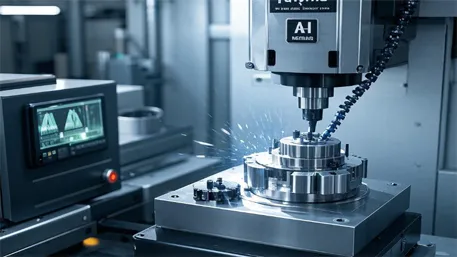
- Equipment: 3-, 4-, and 5-axis CNC milling and turning, selected by geometry.
- Tooling: sharp carbide geometries with polished flutes to shed chips and limit heat.
- Parameters: tuned to keep cutting temperatures low — sufficient feed to shear cleanly rather than rub.
- Coolant: applied where needed to stabilize dimensions and surface quality.
- Roughing → semi-finish → verify → finish: staged removal controls residual stress and drift.
- Deburr & clean: edge break, burr removal, and optional cleaning per cleanliness spec.
PEEK Tolerance and GD&T
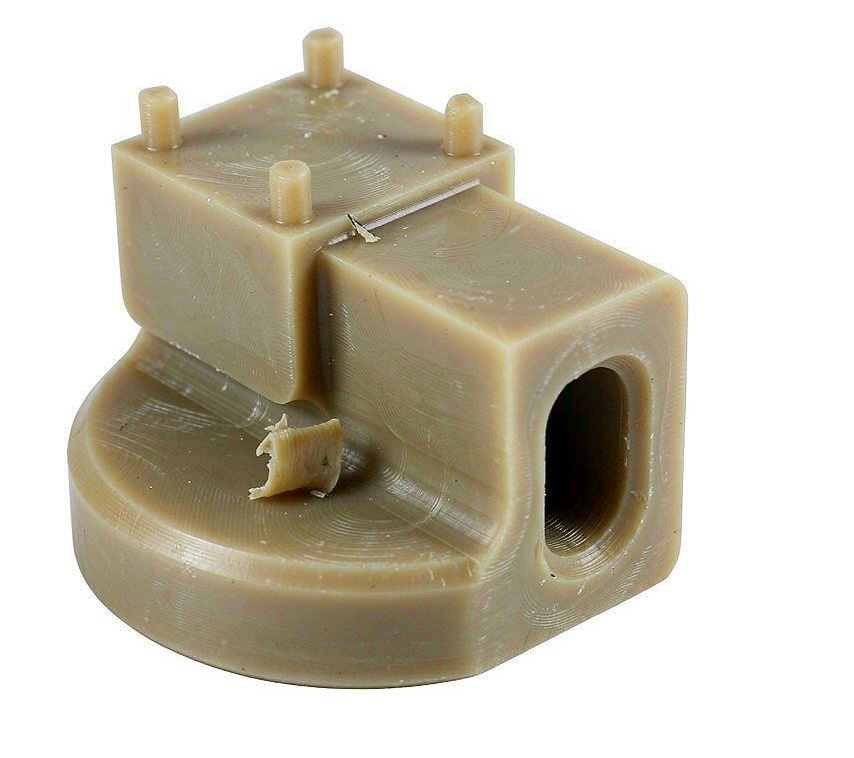
Our typical CNC tolerance on PEEK is ±0.01 mm, with ±0.005 mm achievable on qualified features where geometry and measurement support it. Surface finish as-machined commonly lands around Ra 0.8–3.2 µm, with finer finishes available where specified. GD&T is interpreted per ASME Y14.5 / ISO 1101 on your drawing.
Because PEEK is temperature- and moisture-sensitive, we recommend specifying tolerances only where function requires them and calling out datum references clearly — this protects both cost and yield.
PEEK DFM Guidelines
Wall thickness
Keep structural walls reasonable for the grade; very thin sections are prone to deflection and post-machining movement.
Radii & edges
Generous internal radii reduce stress concentration and improve tool life. Specify edge breaks instead of razor edges.
Holes & depth
Deep small holes are feasible but slow; indicate tolerance only on critical bores to avoid unnecessary cost.
Threads
Internal threads are cut or chased; for soft unfilled PEEK, consider inserts where repeated assembly is expected.
Tolerances
Apply tight tolerances only to functional features. Looser, clearly marked references reduce scrap and lead time.
Flatness & datum
Define primary datums consistently; we confirm flatness and parallelism during first-article inspection.
Surface Finish and Deburring
As-machined PEEK already yields a clean, low-friction surface. We provide edge breaking and burr removal as standard. Where the application calls for it — for example semiconductor or food-contact contexts — we add cleaning and packaging controls per your specification. Note that anodizing or plating used on metals does not apply to PEEK; cosmetic or functional surface changes rely on machining, bead blasting, or coating only where compatible.
CMM Inspection of PEEK Parts
Measurement you can document
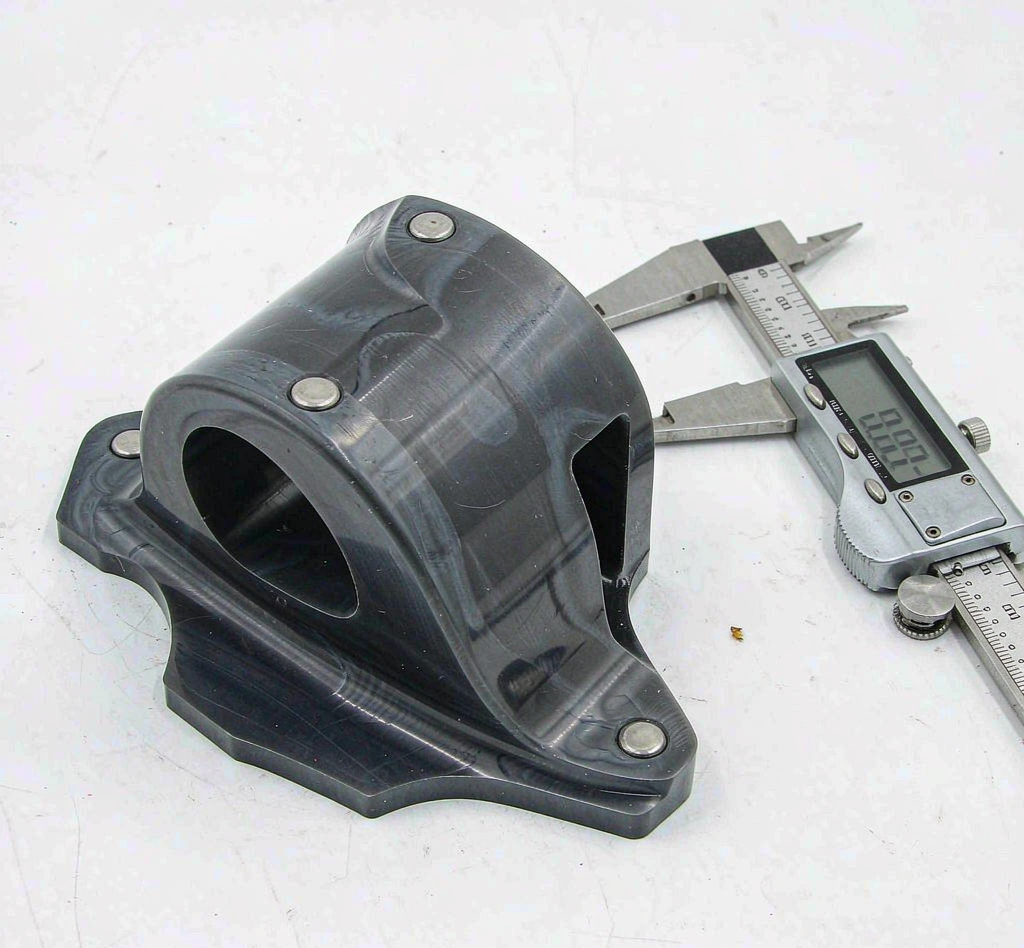
- First-article inspection (FAI) against the drawing.
- In-process checks on critical and tight-tolerance features.
- Final CMM measurement for dimensional verification where geometry requires it.
- Inspection reports mapped to your referenced datums and tolerances.
For stable, low-volume plastic parts, measurement is planned around the features that actually affect fit and function rather than over-inspecting every dimension.
Material Traceability for PEEK
Every order is tied to its material lot and processing records under our ISO 9001:2015 quality system. For regulated or high-reliability programs we can supply the material (mill) certificate and processing history so you can trace a finished part back to its stock and batch.
Quality Documents You Receive
| Document | What it covers |
|---|---|
| Material certificate | Grade, lot, and supplier material data for the stock used. |
| Certificate of conformance (CoC) | Statement that parts were produced and inspected to the drawing and purchase order. |
| Inspection / FAI report | Measured results for critical dimensions and tolerances. |
| ISO 9001:2015 reference | Our quality system under which the work was performed. |
| RoHS / REACH (where applicable) | Compliance statements available on request for relevant programs. |
We hold ISO 9001:2015 and support process controls aligned with IATF 16949 and AS9100 requirements; we do not represent uncertified aerospace or medical approvals that we do not hold.
Where PEEK Parts Are Used
Semiconductor equipment leads demand, where purity, temperature, and dimensional stability converge.
Semiconductor
Wafer-handling components, chamber parts, test sockets, insulators, and CMP-related parts where low outgassing and cleanability matter.
Analytical & instruments
Valve bodies, manifolds, sample paths, and insulating mounts exposed to solvents and heat.
Medical & lab devices
Instrument components and device parts where sterilizability and chemical resistance are required. For regulated device programs we confirm the applicable material standard with you before production.
Aerospace & defense
Lightweight insulators, brackets, and bushings where weight and temperature resistance are valued.
Oil & gas / process
Seals, insulators, and downhole-adjacent components resisting chemicals and heat.
Industrial & automotive
Wear parts, fixtures, EV components, and under-hood pieces needing thermal and chemical stability.
Common PEEK Part Types
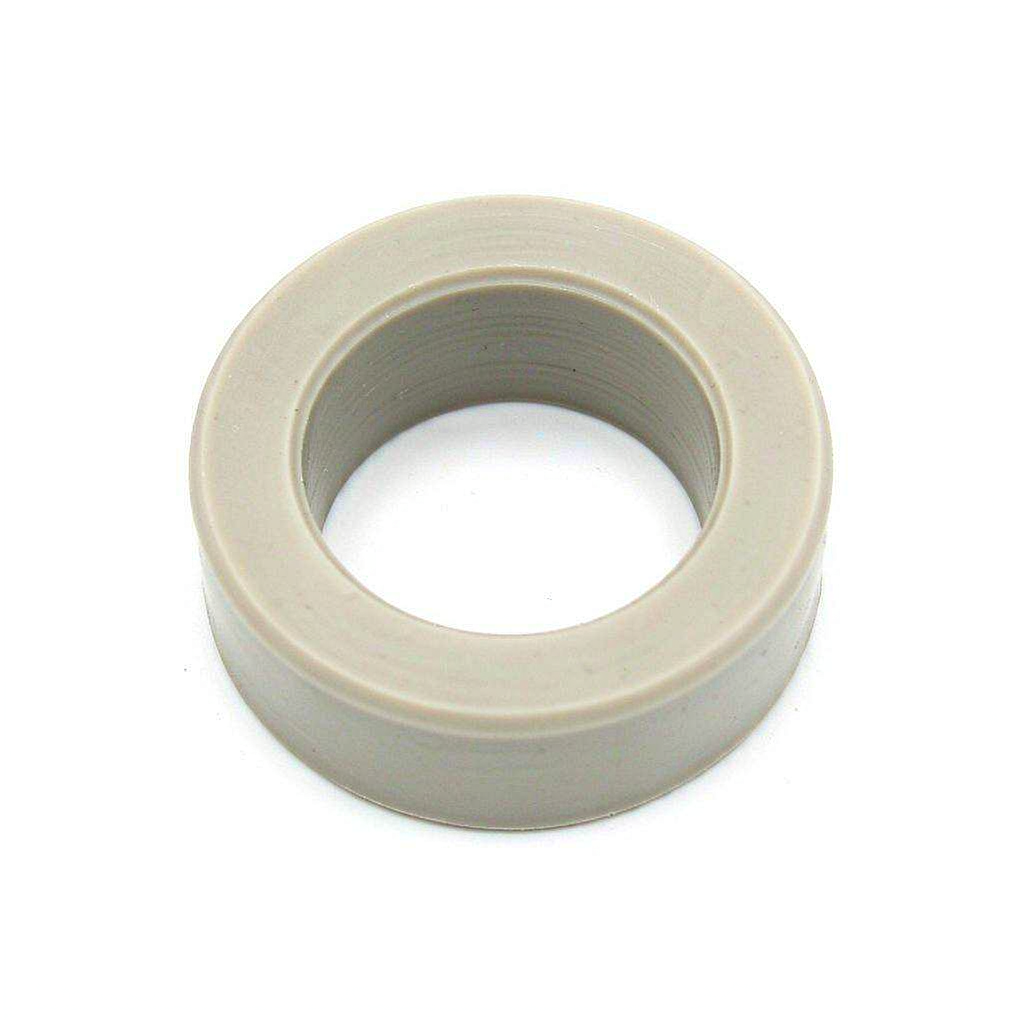
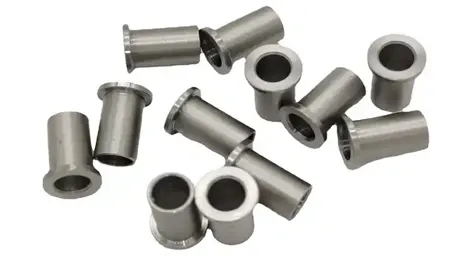
- Bushings, bearings, and wear rings (often carbon-filled)
- Electrical insulators and standoffs
- Manifolds, spacers, and fixtures
- Wafer-handling components and test sockets
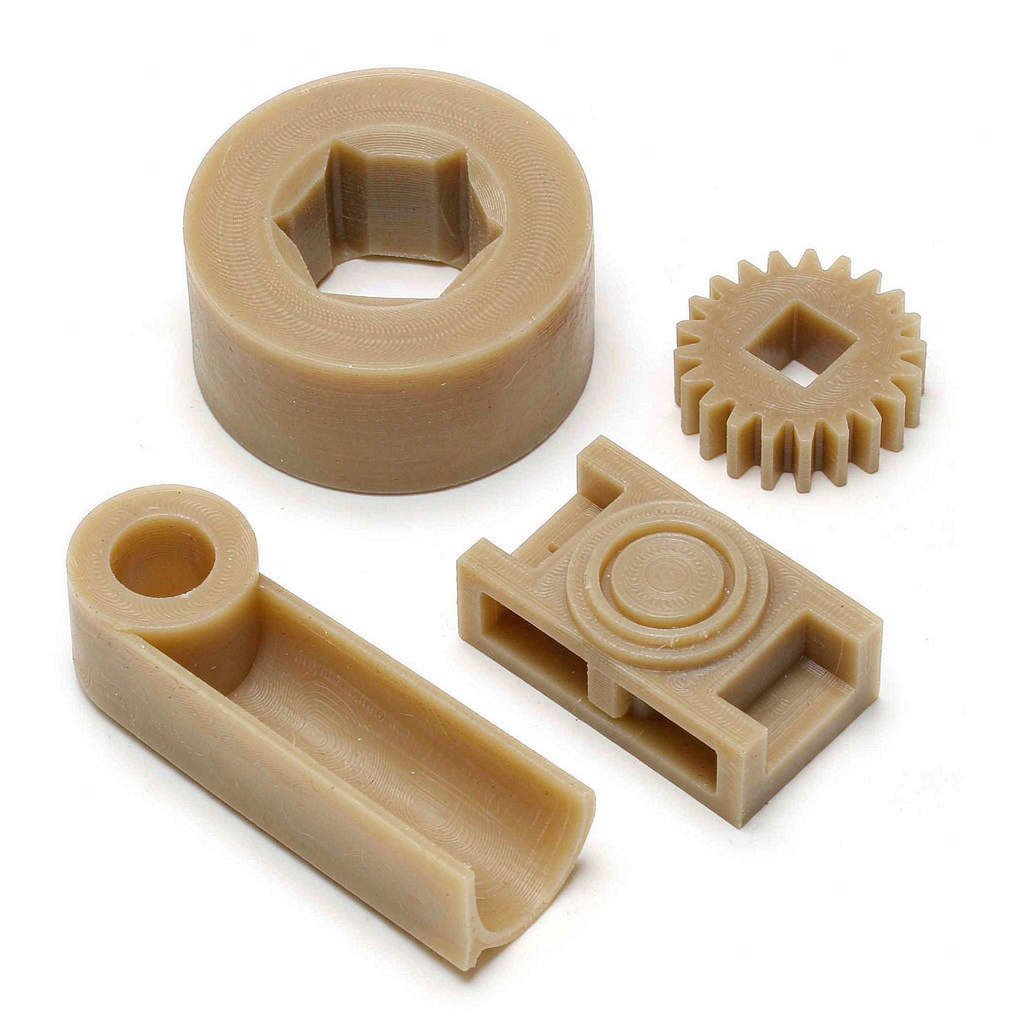
- Prototype housings and custom washers
- Rollers, connectors, and gripper elements
If your part is not listed, send the drawing — PEEK is versatile enough to cover most custom geometries that do not require a casting or molding-specific feature.
PEEK vs Alternative Materials
| Material | Temperature | Mechanical / wear | Chemical | When PEEK wins |
|---|---|---|---|---|
| PTFE | Good | Soft, creeps | Excellent | When you need load-bearing strength and wear resistance PTFE lacks. |
| POM (acetal) | Lower | Stiff, low wear | Moderate | Hot or chemically aggressive environments beyond POM's range. |
| PEI (Ultem) | High | Strong, brittle-ish | Good | When chemical resistance or wear exceeds PEI, or ESD/conductive grade is needed. |
| PPS | High | Stiff, brittle | Excellent | When toughness, impact, or machinability of complex shapes is required. |
| Aluminum / steel | Very high | Very strong | Variable | When weight, electrical insulation, or corrosion/galvanic concerns favor plastic. |
CNC Machining vs Injection Molding for PEEK
| Factor | CNC Machining | Injection Molding |
|---|---|---|
| Volume | Prototype to mid-volume; no tooling | High volume to amortize tooling |
| Lead time | Days (3–7 for prototypes) | Weeks (tool design, build, trial) |
| Geometry | Complex, tight tolerance, fast iteration | Best for repeated identical parts at scale |
| Cost | Lower start-up; higher per-part at scale | Higher start-up; lower per-part at scale |
| Best for | Validation, spares, low/batch runs | Mass production of a locked design |
For most custom PEEK requests we see — especially first articles, spares, and low-volume equipment parts — CNC machining is the faster, lower-risk path. We will tell you plainly when molding would actually save you money.
What Makes PEEK Parts Expensive?
PEEK material cost is higher than commodity plastics, and filled grades add machining wear. Beyond material, cost is driven by part size and blank utilization, tolerance tightness, inspection and documentation scope, surface/cleanliness requirements, and lead-time urgency. The biggest avoidable cost is over-specifying tolerances and finishes — a focused DFM review usually trims both price and lead time.
Case Study: PEEK Semiconductor Wafer-Handling Component
A semiconductor-equipment customer needed a wafer-handling spacer in unfilled PEEK with tight flatness and clean, burr-free edges. The priorities were dimensional stability, low particle generation, and fast iteration on a pre-production design.
We machined the part from held stock, controlled clamping to prevent drift, verified flatness on first article, and applied cleaning and packaging per the specified cleanliness level. Prototypes were delivered within the standard 3–7 working-day window, letting the customer validate fit before scaling.
Details are generalized to protect customer confidentiality; specifics are shared under NDA.
When PEEK May Not Be Right
Consider an alternative before specifying PEEK if:
- Cost is the dominant constraint at high volume — POM, PPS, or molding may be more economical.
- You need optical clarity — PEEK is opaque; consider clear polymers where see-through matters.
- Sustained very high load at temperature — confirm creep and strength data; metal may be required.
- Painting or adhesive bonding is critical — PEEK's low surface energy needs surface treatment.
- Long-term outdoor UV exposure — evaluate stabilized or alternative materials for weathering.
- Ultra-tight tolerance under thermal cycling — plan for thermal expansion in the design stage.
PEEK RFQ Checklist
Send as much of this as you can; the rest we clarify during DFM review.
What to include in your request
- 3D model (STEP/IGES) and 2D drawing with tolerances
- PEEK grade (or let us recommend one)
- Quantity and required delivery date
- Service environment: temperature, load, chemical exposure
- Surface finish, cleanliness, and documentation needs
- Any certification or compliance requirements
Upload your drawing and our applications team will return a quote with DFM feedback.
Frequently Asked Questions
What tolerance can you hold on machined PEEK parts?
Typical CNC tolerance on PEEK is ±0.01 mm, with ±0.005 mm achievable on qualified features. Final capability depends on part geometry, grade, and feature size; we confirm on your drawing during DFM review.
Which PEEK grades do you machine?
We machine unfilled (natural) PEEK, 30% glass-filled PEEK (PEEK-GF30), and 30% carbon-filled PEEK (PEEK-CF30), plus other customer-specified grades. Grade selection is driven by temperature, wear, stiffness, and electrical requirements.
What is your minimum order quantity for PEEK parts?
Minimum order quantity is 1 piece. Prototypes and pre-production samples are accepted, so you can validate fit and function before committing to volume.
How fast can you deliver PEEK prototypes?
Prototype lead time is typically 3–7 working days, low-volume 7–20 working days, and mass production 15–25 working days, subject to material availability and inspection scope.
Can you machine PEEK for semiconductor applications?
Yes. PEEK is widely used for wafer-handling, chamber, and test components in semiconductor equipment. We follow the cleanliness, traceability, and documentation requirements stated in your drawing and purchase order.
Do you provide material certification for PEEK?
Yes. Available documentation includes material (mill) certificate, certificate of conformance, first-article / inspection report, and reference to our ISO 9001:2015 quality system. RoHS/REACH statements can be supplied where applicable.
Should I choose CNC machining or injection molding for PEEK?
Choose CNC machining for prototypes, low-to-mid volume, and complex or tight-tolerance geometry without tooling cost. Choose injection molding when volume is high enough to justify tooling lead time and expense.
Is PEEK suitable for high-temperature use?
PEEK grades are commonly specified for continuous service in the roughly 200–250 °C range depending on grade and mechanical load, with higher short-term peaks. Confirm the exact rating against your service temperature, load, and chemical environment.
What file formats do you accept for a PEEK RFQ?
We accept STEP, IGES, DWG, DXF, and PDF. A 3D model (STEP/IGES) with tolerances and material grade specified is preferred for the fastest, most accurate quote.
Do you keep PEEK stock on hand?
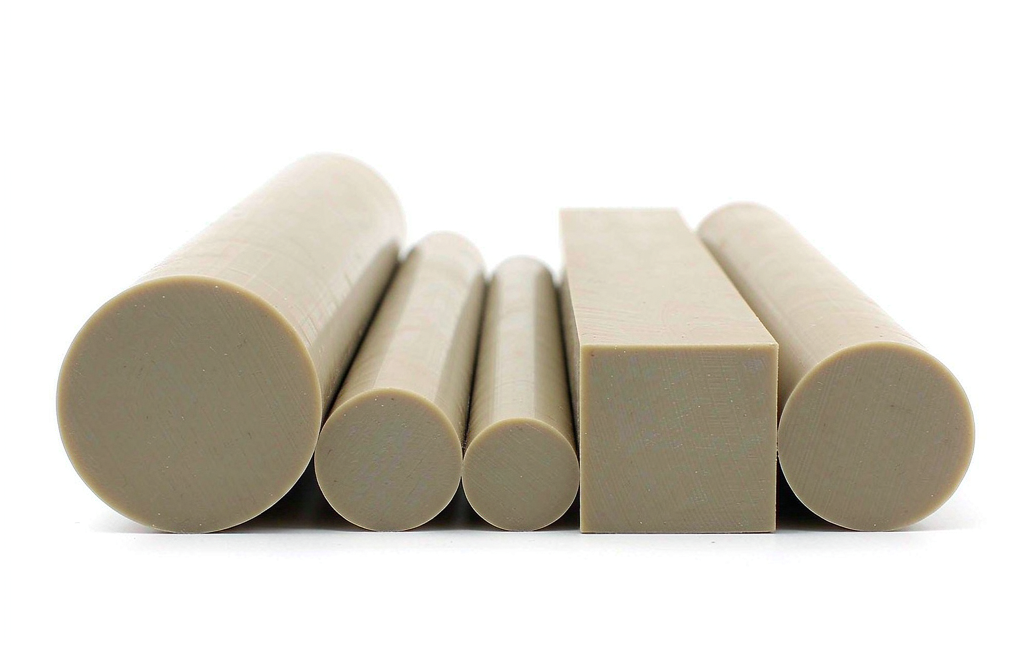
We source and hold common PEEK stock forms—rod, plate, and tube—for typical grades to shorten lead times. Please confirm the specific grade and quantity when requesting a quote, as some grades are ordered to requirement.
Need PEEK Parts Machined From Your Drawing?
Send your model and requirements. We will confirm grade, tolerance, and lead time, and return a quote with practical DFM feedback.

Engineer Zhang supports material selection, DFM, and tolerance planning for custom PEEK and other engineering-plastic CNC parts, helping equipment teams move from drawing to verified prototype. Founded in 1998, Xiamen Goldcattle is a one-stop OEM/ODM manufacturer operating CNC machining, injection molding, mold making, 3D printing, die casting, and sheet metal fabrication under an ISO 9001:2015 quality system.