Medical Device CNC Machined Parts
Precision-machined components for surgical instruments, diagnostic equipment, orthopedic and dental systems, and other healthcare applications — machined to your drawing from specified biocompatible metals and engineering plastics, with controlled tolerances, inspection, and full material traceability.
What Are Medical Device CNC Machined Parts?
What medical CNC parts can be machined?
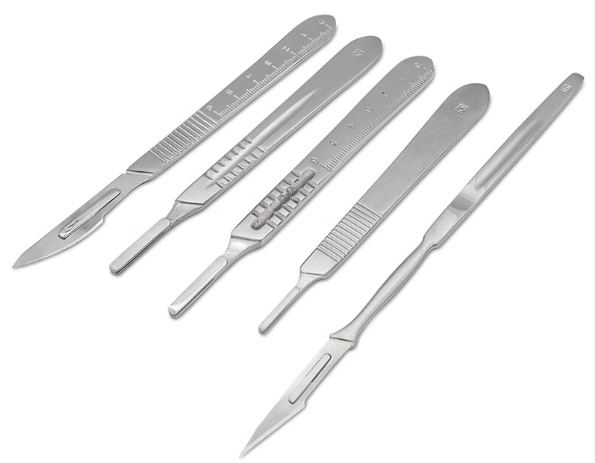
Surgical Instrument Components
Handles, joints, clamps, cutters, guide components.
Orthopedic Components
Trial parts, fixation components, surgical guides.
Diagnostic Equipment Parts
Imaging and lab equipment mechanisms, housings.
Dental Components
Implant-related and prosthetic machined parts.
Medical Robot Components
Joints, brackets, end-effector and arm parts.
Device Housings
Enclosures, brackets, structural frames.
Precision Fixtures
Assembly, inspection and production tooling.
Fluid-Handling Parts
Manifolds, valves, pumps, connectors.
Component Manufacturer vs Finished Medical Device Manufacturer
This distinction matters for every regulatory and quality conversation. We state it clearly so procurement and quality teams know exactly where our responsibility begins and ends.
Goldcattle's role
- Manufacture components to your drawing, material specification and quality requirements.
- Provide material certificates, inspection data and traceability records for the parts we make.
- Operate under our ISO 9001-based quality system, with medical projects handled to customer-specified controls.
- Protect your IP under NDA.
Finished-device manufacturer's role
- Own the device design, risk file, and regulatory submission (e.g., FDA, MDR).
- Validate the finished device and its intended use.
- Determine which components fall under which regulatory definition.
- Hold the applicable quality-system registration for the finished device.
Important
A CNC supplier may manufacture a component according to a customer's drawing without being the manufacturer of the finished medical device. Regulatory obligations depend on the supplier's role, the product, the contract structure, and the applicable jurisdiction. We support your quality and documentation needs; the regulatory status of the finished device remains with its manufacturer.
What Medical Devices Use CNC Machined Parts?
Medical CNC components appear across the device spectrum. Below are the main categories we support, each with the part examples buyers typically specify.
Surgical Instruments
Handles, joints, clamps, cutting-tool components, retractors, and guide components for handheld and minimally invasive tools.
Orthopedic Devices
Fixation components, instrument parts, trial components, and structural parts in implant-grade titanium and stainless steel.
Dental Equipment
Dental instrument components, implant-related machining, prosthetic components, and surgical tooling.
Diagnostic Equipment
Analyzer components, fixtures, housings, and precision mechanical parts for imaging and lab systems.
Medical Robotics
Joints, brackets, end-effector components, and housings for robotic surgical and automation systems.
Laboratory / Life-Science
Fluid components, sample-handling parts, and precision fixtures for lab and life-science instruments.
Medical CNC Machined Part Types
| Part Type | Typical Materials | CNC Process |
|---|---|---|
| Surgical Instrument Components | 316L / Ti-6Al-4V | Milling / Turning |
| Medical Housings | Aluminum / PC | Milling |
| Orthopedic Components | Titanium / 316L | 5-Axis |
| Dental Components | Ti / 316L / PEEK | Milling / Turning |
| Precision Shafts | 316L / Ti | Turning |
| Fluid Manifolds | 316L / PEEK | Milling |
| Robotic Joints | Aluminum / Ti | 5-Axis |
| Surgical Fixtures | Aluminum / Stainless | Milling |
Materials for Medical Device CNC Machining
Material suitability depends on the specific medical application, grade, applicable standard, and regulatory requirements. We machine customer-specified grades and can advise on machinability and finishing.
316L Stainless Steel
Low-carbon austenitic stainless steel with corrosion resistance, sterilizability, and proven use in surgical instruments, diagnostic equipment, and structural medical components. Suitable for passivation and electropolishing.
Titanium (Gr 5 / Ti-6Al-4V, Gr 2, ELI)
High strength-to-weight ratio and corrosion resistance. Ti-6Al-4V (and ELI grade) is widely used for orthopedic and implant-related components and lightweight structural parts. Machined with rigid setup and controlled parameters.
Aluminum (6061-T6, 7075-T6)
High strength-to-weight ratio and easy anodizing. Common for MRI/CT scanner frames, enclosure brackets, housings, and equipment structures where patient contact is not required.
Medical PEEK (Unfilled, 30% CF)
Lightweight, radiolucent, and chemical-resistant. Used for surgical trial components, fluidic manifolds, and bushings. Alternative to metal where non-magnetic or radiolucent properties are needed.
Engineering plastics
POM, PEI (Ultem), PC, ABS, and Nylon are machined for non-patient-contact components, fixtures, and specialties where low friction, dimensional stability, impact resistance, or transparency are required. Grade selection follows the application and any applicable standard.
Material selection matrix
| Material | Main strength | Typical medical use |
|---|---|---|
| 316L Stainless Steel | Corrosion resistance / durability | Instruments, equipment |
| Ti-6Al-4V | High strength-to-weight | Orthopedic / implant-related |
| Aluminum | Lightweight / machinable | Housings / equipment |
| PEEK | High temp / chemical resistance | Specialty components |
| POM | Low friction / stability | Mechanical components |
| PC | Impact / transparency | Housings / covers |
Material × Process matrix
| Material | 3-Axis | 5-Axis | Turning | Post-processing |
|---|---|---|---|---|
| 316L | ✓ | ✓ | ✓ | Passivation / Electropolishing |
| Ti-6Al-4V | ✓ | ✓ | ✓ | Project-specific |
| Aluminum | ✓ | ✓ | ✓ | Anodizing |
| PEEK | ✓ | ✓ | ✓ | Project-specific |
| POM | ✓ | ✓ | ✓ | Project-specific |
Not sure which material fits your medical application and service conditions? Send us the drawing and the operating environment — we will review machinability, tolerance, and finishing before quoting.
Why Is CNC Machining Used for Medical Device Components?
Beyond "high precision," CNC brings specific, verifiable advantages for medical parts where fit, function, and repeatability are controlled by the drawing.
Complex Geometry
Bores, channels, angled features, slots, and threads are machined directly from the 3D model.
Tight Dimensional Control
Critical fits, interfaces, and functions are held to the tolerances called out on the drawing.
Multi-Axis Machining
Fewer setups and less repositioning reduce accumulated error on multi-face parts.
Repeatability
Controlled processes support the path from prototype to pilot to production.
Material Flexibility
Metals and engineering plastics are handled on the same controlled workflow.
Established Standards
Wrought material pedigrees and inspection methods are well understood for audits.
5-Axis CNC Machining for Medical Parts
Five-axis machining is valuable for medical components with complex surfaces, multiple orientations, small features, and tight access — it can reduce setups and improve tool access for suitable geometries. We apply 3-axis, 3+2 indexing, or simultaneous 5-axis based on what the drawing actually requires.
- Complex contoured surfaces (e.g., surgical tooling, orthopedic guides).
- Slender or miniature features (e.g., minimally invasive connectors, needles).
- One-datum accuracy across multiple faces.
Accurate, not automatic
Five-axis machining can reduce setups and improve tool access for suitable medical components; final accuracy depends on machine condition, workholding, process planning, and inspection — not on the axis count alone. We confirm achievability against your drawing before quoting.
Our Medical CNC Manufacturing Process
Every step names what is controlled — so the part, the paperwork, and the traceability move together.
Medical CNC DFM guidelines (what helps us help you)
- Provide a 3D model (STEP/IGES) plus a 2D drawing with tolerances and datums.
- Reserve the tightest tolerances for critical-to-function features only.
- Avoid unnecessarily thin walls and deep, blind, micro features where feasible.
- Specify surface finish (Ra) only where it affects function or cleaning.
- State the sterilization and cleaning environment up front.
Medical CNC Quality Requirements
Quality checks are selected to the part and its application — not applied as a fixed blanket. Typical checks for medical components include:
Material Verification
Certificate review and incoming inspection against the specified grade.
Dimensional Inspection
Key dimensions measured against the drawing.
GD&T
Geometric tolerances per the drawing's datum scheme.
CMM Inspection
Coordinate measurement of critical and contoured geometry.
FAI
First Article Inspection to validate the process before volume.
Final Inspection
Visual, edge, and critical-feature verification before shipment.
Critical-to-Quality (CTQ) features
Medical quality focus is on the features that affect fit, function, and cleanliness — not a single tolerance number. Typical CTQ features:
Mating diameter
Bone-contact interface
Instrument pivot
Alignment surface
Sealing surface
Hole position
Thread
Surface roughness
From drawing to released part
This is more informative than a bare "CMM accuracy" claim: it shows how a critical feature is planned, measured, and documented.
Material Traceability for Medical CNC Parts
Traceability links the finished part back to its raw material and through every production step. We maintain batch-linked records so a part can be traced end to end.
Records available on request include: Material Certificate / MTC / MTR, lot number, heat number, part number, revision, production batch, and inspection record.
Traceability is provided according to project requirements, customer specifications, and applicable regulatory needs — we confirm the exact documentation set with you at RFQ.
Medical CNC Quality Documentation
| Document | Purpose |
|---|---|
| Material Certificate | Material verification (MTC / MTR) |
| Dimensional Report | Part dimensions vs drawing |
| CMM Report | Critical geometry / GD&T |
| FAI / FAIR | First article validation |
| CoC | Certificate of Conformance |
| Surface Roughness Report | Surface requirement evidence |
| Traceability Record | Batch / material linkage |
| Calibration Record | Measurement-system evidence |
| Process Record | Manufacturing history |
Documentation is provided according to project requirements, customer specifications, and applicable regulatory needs — not every order automatically receives the full document set. Tell us what your quality file requires.
Burr-Free Machining, Cleaning & Packaging
Burr-Free Parts
Edges are controlled and burrs removed from holes and internal channels where required. For medical components, small burrs can affect assembly, contamination control, handling, and functional performance.
Cleaning
Cutting-fluid removal, particulate control, and visual cleanliness. Ultrasonic cleaning is applied where the process calls for it.
Packaging
Individual protection, anti-scratch packaging, sealed bags where specified, and batch identification for controlled handling.
Medical Surface Finishing
| Material | Finishing options |
|---|---|
| Stainless Steel | Passivation (ASTM A967), electropolishing, polishing |
| Titanium | Polishing, blasting, anodizing, other customer-specified processes |
| Aluminum | Anodizing (Type II / III), passivation where applicable |
| Engineering Plastics | Project-specific per function |
Surface treatment is selected according to the device's functional, cleaning, corrosion, and regulatory requirements. Passivation improves corrosion resistance but does not, by itself, make a material "medical-grade" — that is determined by grade, standard, and intended use.
ISO 13485, ISO 9001 & FDA QMSR
We keep compliance language precise so procurement and quality teams can rely on it.
ISO 9001
General quality management system. Our operations are built on an ISO 9001-based quality system.
ISO 13485
The medical-device-specific quality management standard. We handle medical projects to customer-specified quality and documentation requirements.
FDA QMSR
U.S. quality-system regulation (21 CFR Part 820, revised effective 2026-02-02) aligned with ISO 13485:2016. It applies to manufacturers of finished medical devices; scope depends on role and product.
What we state — and what we do not
We do not describe a component CNC supplier as "FDA approved," and we do not label materials generically as "FDA-approved medical materials." Regulatory status belongs to the finished device and its manufacturer. We support your project with the documentation and controls your quality file requires.
Medical claims matrix (how we keep statements defensible)
| Statement | How we handle it |
|---|---|
| ISO 9001 | Stated where a valid certificate applies |
| ISO 13485 | Referenced as the standard; claim certification only with a valid certificate and scope |
| "FDA compliant" | Used only with a specific, stated basis |
| "FDA approved" (for a CNC supplier) | Not used — applies to finished devices, not component suppliers |
| "Medical-grade material" | Only with a specified grade / standard |
| "Biocompatible" | Only with a specific material / application basis |
| "Implant manufacturing" | Only with actual project and quality-system basis |
| "Full traceability" | Provided where we can supply the linked records |
CNC Machining vs 3D Printing for Medical Components
| Factor | CNC Machining | 3D Printing |
|---|---|---|
| Dimensional interfaces | Strong, from wrought stock | Process-dependent |
| Surface finish | Usually better | Often requires finishing |
| Material | Wrought metal / plastic | Powder / filament / resin |
| Complex internal geometry | Limited | Strong |
| Prototype speed | Fast | Very fast |
| Production suitability | Mature, repeatable | Application-specific |
| Material traceability | Straightforward | Process-specific |
| Best use | Precision components | Complex prototypes / specialized AM |
CNC is often preferred when the component requires tight machined interfaces, established material standards, or repeatable low-volume production.
CNC vs Injection Molding for Medical Parts
CNC machining
Best for prototypes, low-to-mid volume, and parts where tight machined interfaces and material pedigree matter. No tooling lead time.
Injection molding
Best for high-volume plastic parts after the design is validated. Requires tooling; suited to stable, repeated geometries. Material options →
A common path: prototype and validation via CNC, then move to molding at volume when the design is locked.
From Medical Prototype to Production
Medical customers usually do not jump to high volume. The typical path protects design and process before scale:
Medical CNC Case Study (Illustrative)
This is an illustrative project example showing how a medical part moves through our process. It is not a claim of a specific customer result or regulatory outcome.
Surgical instrument handle — 316L
- Requirement: tight mating diameter, burr-free bores, passivated surface.
- Process: CNC turning + milling, deburring, passivation (ASTM A967).
- Quality: material certificate, dimensional report, CMM on critical features, FAI before volume.
- Traceability: heat/lot linked to production batch and inspection record.
The same workflow applies to titanium orthopedic components, PEEK trial parts, and aluminum housings — scaled to the part's critical features.
Why Choose Goldcattle for Medical CNC Parts
OEM/ODM since 1998
A global OEM/ODM manufacturer providing one-stop custom parts solutions to customers worldwide.
In-house capacity
100+ machines across CNC, injection molding, die casting, and supporting processes — no uncontrolled outsourcing of core work.
ISO 9001-based QMS
Documented quality system with inspection, FAI, and traceability supporting medical projects.
Material traceability
MTR/lot/heat records linked to each production batch.
IP protection
NDA support and controlled handling of your drawings and designs.
Prototype to production
Prototype machining from 3–7 working days (project-specific), scaling to volume.
How Much Does Medical CNC Machining Cost?
We do not publish a fixed price because medical part cost is driven by the project. The main factors:
- Material grade and form (titanium and specialty plastics cost more than aluminum).
- Geometry complexity and machining time.
- 5-axis or multi-setup requirements.
- Tolerance and surface-finish strictness.
- Inspection scope (CMM, FAI) and documentation set.
- Finishing (passivation, electropolishing, anodizing).
- Quantity and packaging.
Medical CNC parts can carry a higher total unit cost than general industrial parts because quality documentation, inspection, and traceability add process requirements. The trade-off is a part you can qualify, audit, and defend.
How Long Does Medical CNC Machining Take?
Lead time follows the project, not a single number. Typical stages:
Prototype machining typically runs 3–7 working days; production lead time depends on volume, inspection, and documentation scope. We confirm a project-specific timeline at quotation.
How to Choose a Medical CNC Supplier
Before qualifying a supplier, verify the items below. We are glad to walk through each one for your project.
Legal Entity
Confirm the manufacturer's registered company and credentials.
QMS
Understand the quality system and what it covers.
Material Traceability
Ask for MTR/lot/heat linkage examples.
CMM & Reports
Request sample inspection reports.
Medical Experience
Relevant part types and applications.
FAI & Docs
First-article and documentation workflow.
Sample Order
Validate with a small pilot before volume.
Outsourced Control
Know what is made in-house vs subcontracted.
IP Protection
NDA and controlled file handling.
See our broader medical CNC guide for the full supplier-selection discussion: CNC Machining for Medical Devices →
Related Medical CNC Pages
This page is the entry point for medical CNC at Goldcattle. Explore specific material and metal-part guides:
Need Medical Device CNC Machined Parts?
Send your CAD file, drawing, material specification, quantity, and quality requirements. Our engineering team reviews the part, machining process, inspection scope, and documentation needs before quoting.
We respect your IP. All CAD files are handled under non-disclosure on request.
Frequently Asked Questions
What are medical device CNC machined parts?
Precision components manufactured from metals and engineering plastics for medical devices, surgical instruments, diagnostic equipment, and related systems, with controlled tolerances, inspection, and traceability per the drawing and application.
What medical devices use CNC machined components?
Surgical instruments, orthopedic and dental devices, diagnostic and lab equipment, medical robotics, and device housings or fixtures all use CNC machined components.
What materials are used for medical CNC parts?
Commonly 316L stainless steel, titanium (Gr 5 / ELI), aluminum (6061/7075), PEEK, and engineering plastics such as POM, PEI, PC, and nylon. Material choice follows the application and applicable standard.
Is 316L suitable for medical CNC machining?
Yes. 316L is widely used for surgical instruments, diagnostic equipment, and structural components due to corrosion resistance and sterilizability. Suitability still depends on the specific part and standard.
Is titanium suitable for medical device components?
Yes. Ti-6Al-4V and ELI grades are used for orthopedic and implant-related components and lightweight structures. Titanium is more difficult to machine and is handled with controlled parameters.
What is Ti-6Al-4V ELI?
An extra-low-interstitial grade of Ti-6Al-4V with tighter impurity limits, used where enhanced fracture toughness and biocompatibility are required. Suitability is confirmed against the application and standard.
Can CNC machining be used for orthopedic components?
Yes. Titanium and 316L orthopedic and implant-related components are machined to customer drawings and specifications; final implant qualification remains the finished-device manufacturer's responsibility.
Can CNC machining be used for surgical instruments?
Yes. Handles, joints, clamps, cutters, and guides are typical CNC machined surgical instrument components, often requiring tight fits and burr-free edges.
What tolerances can medical CNC machining achieve?
Standard precision is around ±0.01 mm, with critical features down to ±0.005 mm under controlled conditions. Surface roughness Ra 0.4 μm is available. Achievability is confirmed against your drawing.
Does medical CNC machining require CMM inspection?
CMM is used for critical and contoured geometry; the inspection scope is set by the part, the drawing, and your quality requirements — not applied uniformly to every feature.
What quality documents should a medical CNC supplier provide?
Typical documents include material certificate (MTC/MTR), dimensional report, CMM report, FAI/FAIR, CoC, surface roughness report, and traceability/process records — provided per project requirements.
What is material traceability?
The ability to link a finished part back to its raw material (heat/lot, material certificate), through the work order and production batch, to inspection and shipment.
Does a medical CNC supplier need ISO 13485?
Requirements depend on the product, role, and customer controls. ISO 13485 is the medical-device quality-management standard; we handle medical projects to customer-specified quality and documentation requirements. Claim certification only with a valid certificate and scope.
What is the difference between ISO 9001 and ISO 13485?
ISO 9001 is a general quality-management standard. ISO 13485 is the medical-device-specific quality-management standard with additional controls for the medical sector.
What is FDA QMSR?
The U.S. Quality Management System Regulation (21 CFR Part 820, revised effective 2026-02-02) aligns with ISO 13485:2016. It applies to manufacturers of finished medical devices; scope depends on the supplier's role and product.
Does a CNC supplier need FDA approval?
A component CNC supplier is generally not the "FDA approved" finished-device manufacturer. Regulatory status belongs to the finished device and its manufacturer; we support your project with the required documentation and controls.
How much does medical CNC machining cost?
Cost depends on material, complexity, 5-axis need, tolerance, inspection, documentation, finishing, and quantity. Medical parts may carry higher total cost due to quality and traceability requirements. We quote per project.
How long does medical CNC machining take?
Prototype machining typically runs 3–7 working days; production lead time depends on volume, inspection, and documentation. We confirm a project-specific timeline at quotation.