Automotive Supplier Qualification & Manufacturing
Automotive Die Casting Manufacturer in China
Custom aluminum and zinc high-pressure die casting for automotive components — from tooling and prototype validation to CNC machining, finishing, inspection and PPAP-supported production supply.
- Aluminum & Zinc HPDC
- In-House Tooling
- CNC Post-Machining
- Automotive Quality System
- PPAP / FAI Support
- Lot-Level Traceability
Why Choose Goldcattle for Automotive Die Casting?
Automotive buyers screen suppliers before they buy. The table below answers the qualification questions a purchasing or quality engineer asks in the first pass — no marketing filler.
| Buyer Question | Goldcattle Evidence |
|---|---|
| Where are you located? | Xiamen, China |
| Manufacturer or trader? | In-house production (tooling, casting, CNC, finishing) |
| Materials | Aluminum & zinc (magnesium on qualified projects) |
| Process | High-pressure die casting, vacuum-assisted option, CNC finishing |
| Tooling | Designed and built in-house |
| Machining | In-house CNC for critical faces, holes, threads |
| Quality system | ISO 9001:2015 certified; IATF 16949-aligned QMS |
| PPAP / FAI | Supported according to customer / program requirement |
| Traceability | Lot-level — batch, machine, shift and cavity logged |
| Prototype → production | Available, with DFM and tool-trial gates |
| RFQ basis | CAD + 2D drawing review with DFM feedback |
What Automotive Die Casting Parts Do We Manufacture?
We focus on precision small- to medium-size automotive die castings (typical part weight up to ~8 kg), where sealing surfaces, critical holes and dimensional stability matter more than raw tonnage.
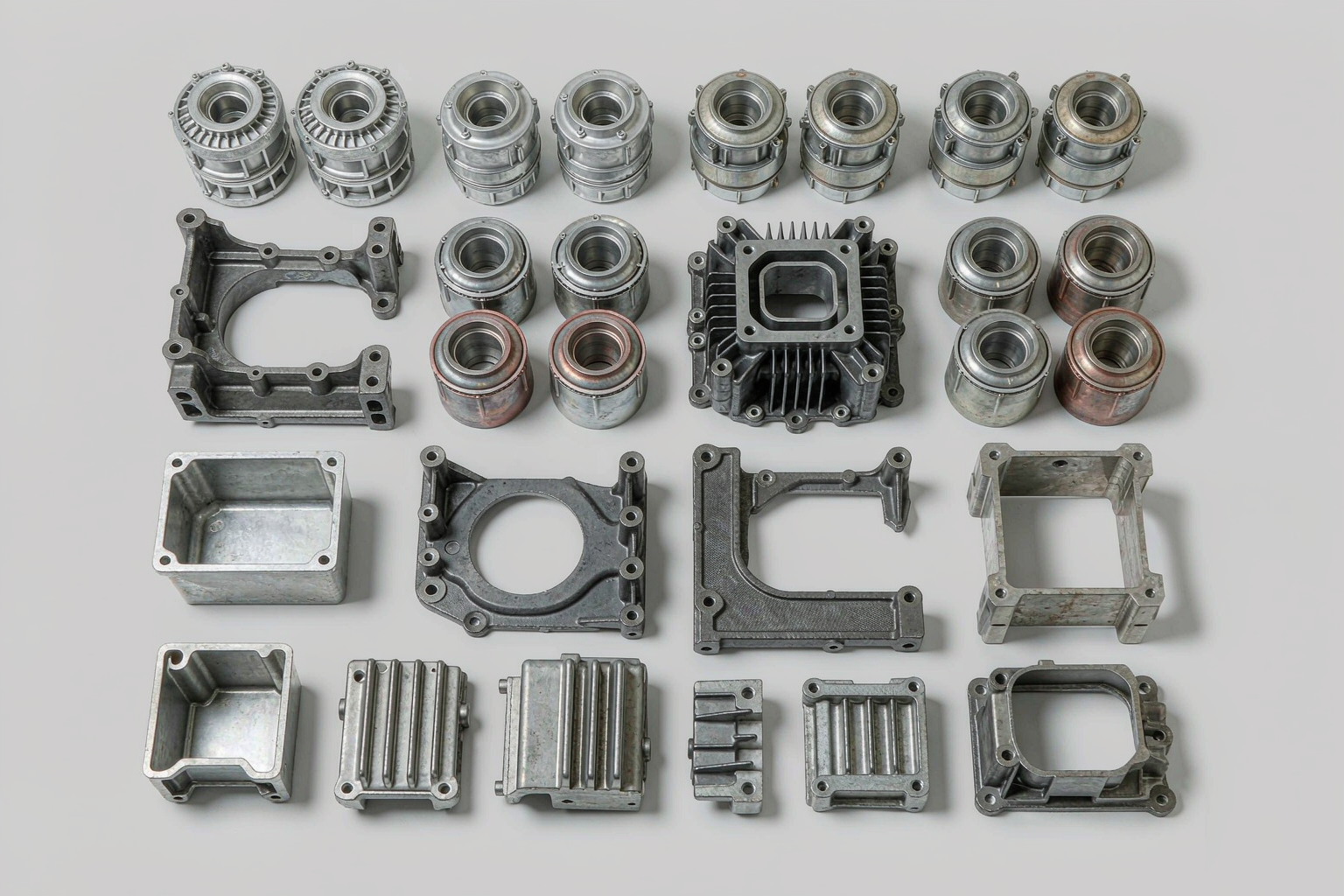
Powertrain
- Transmission / gearbox housings
- Motor housings
- Pump housings
- Valve bodies & covers
Thermal Management
- Water-pump housings
- Coolant components
- Heat-related enclosures
- Manifold bodies
ADAS / Electronics
- Sensor & radar housings
- Camera housings
- ECU / control housings
- Connector bodies
Chassis / Structural
- Brackets & mounts
- Supports
- Structural housings
- Functional fixtures
Automotive & EV Die Casting
EV lightweighting and thermal / electrical systems are a major sourcing theme. We support both traditional and electrified programs — without over-claiming gigacasting capability we do not operate.
Traditional Automotive
- Transmission & pump housings
- Engine-related covers
- Oil pans & valve covers
- Mounting brackets
Electrified (EV / Hybrid)
- E-motor housings
- Inverter & PDU enclosures
- Battery-related components
- Thermal-management parts
We do not market gigacasting or 6,000T+ structural castings. Our strength is precision small- to medium-size functional parts — clearly scoped so your sourcing risk stays low.
Automotive Die Casting Materials
Final alloy selection depends on strength, thermal properties, corrosion environment, machinability, wall thickness, heat treatment and your specification — not a single "best" grade.
Aluminum
Primary
- ADC12
- A380
- A383
- AlSi10MnMg
General-purpose housings, thermal and structural parts.
Zinc
Primary
- Zamak 3
- Zamak 5
Small precision parts, brackets, connectors, appearance pieces.
Magnesium
Project basis
- AZ91D
- AM60B
Available for qualified projects — confirm alloy supply and process with engineering.
| Requirement | Material Direction |
|---|---|
| General-purpose automotive housing | ADC12 / A380-type |
| Machinability priority | Appropriate Al-Si alloy |
| Structural lightweighting | Al-Si-Mg systems where applicable |
| Thermal components | Alloy selected for conductivity + process |
| Small precision / appearance | Zinc (Zamak 3 / 5) |
Automotive Die Casting Processes
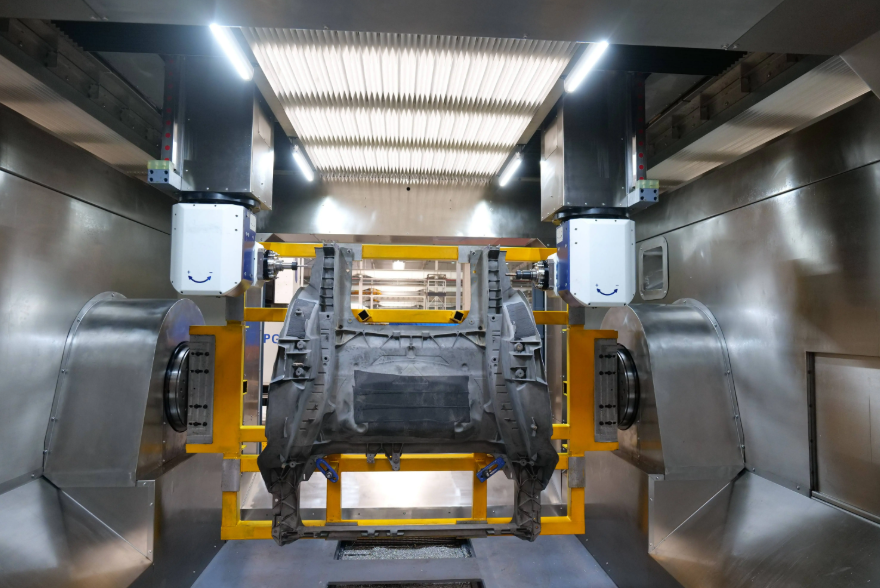
High-Pressure Die Casting (HPDC)
In-house HPDC machines spanning 280T–2500T. Near-net-shape bodies for housings, brackets and enclosures.
Vacuum-Assisted Die Casting
Available for pressure-tight parts (coolant paths, transmission / battery housings) where gas evacuation reduces porosity risk.
CNC Post-Machining
Establishes final functional interfaces — sealing faces, bores, threads, datums — after casting.
Process Flow
- Customer drawing / CAD
- DFM review
- Flow / filling analysis
- Tool design
- Tool manufacturing
- T0 / T1 trial
- First article
- Process validation
- Die casting production
- CNC machining
- Surface treatment
- Inspection
- PPAP / documentation
- Production release
Automotive Die Casting DFM Guide
Sealing surfaces, critical holes and datum features should be identified at DFM stage — not "fixed" after the casting exists. Key review points we return to you:
Porosity Control in Automotive Die Casting
Many automotive parts demand pressure tightness, fatigue performance and dimensional stability. Porosity control is built into the process chain — not a single inspection step.
- Alloy control
- Mold-flow analysis
- Gate / overflow design
- Vacuum / venting strategy
- Injection parameter control
- Process monitoring
- X-ray / CT if required
- Leak test if required
Not every automotive die casting requires X-ray or vacuum die casting. The required controls are set by part function, pressure requirement, customer specification and application risk.
Leak Testing & Pressure Integrity
For fluid-carrying and pressure-containing components, leak verification protects your assembly line from escapes.
- Coolant components & water-pump housings
- Hydraulic & transmission housings
- Thermal-management & fluid manifolds
- Battery / EV thermal path components
Air-pressure decay and helium leak testing are arranged according to project and customer requirements; specific in-house equipment is confirmed at quotation.
CNC Machining of Automotive Die Cast Parts
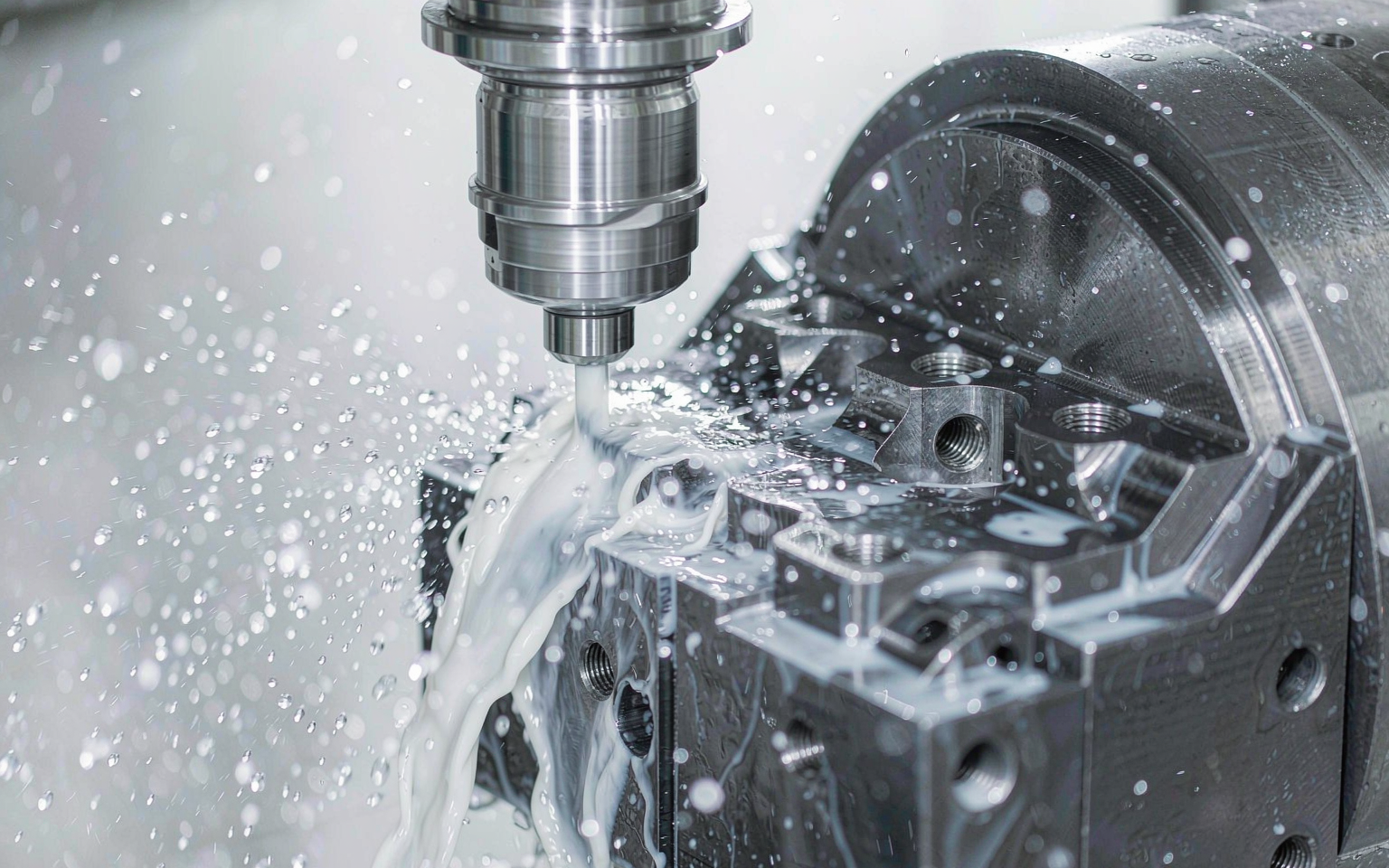
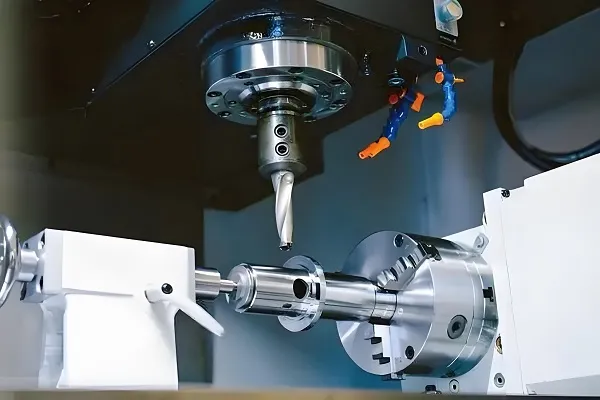
Die casting gives the near-net-shape body; CNC machining establishes the final functional interfaces.
What CNC adds
- Mounting holes & bores
- Threads
- Sealing faces
- Bearing seats
Why it matters
- Datum accuracy
- Precision mating surfaces
- Flatness of sealing planes
- Repeatability across batches
Secondary Flow
- Die casting
- Trim / deburr
- CNC roughing
- CNC finishing
- CMM
Automotive Die Casting Tooling
In-house tooling is a core differentiator — it keeps lead time, revision control and cost in our hands.
Tool Design
CAD, mold-flow and thermal simulation before steel is cut.
Flow Analysis
Filling / solidification prediction to pre-empt shrink & porosity.
Tool Manufacturing
Die steel selection, cooling channels, slides / inserts.
T0 / T1 Trials
Tool proofing with dimensional and functional feedback.
Tool Maintenance
Planned upkeep, spare inserts, modification approval.
Tool Ownership
Ownership, storage, export rights and modification terms defined up front.
Automotive Quality Management
Automotive buyers verify system + process + evidence. We present the automotive quality core tools rather than a single certificate logo.
Quality System
ISO 9001:2015 certified. IATF 16949-aligned QMS — our processes follow automotive QMS structure. (Certificate scope is confirmed against current certification; we do not claim a third-party IATF 16949 certificate unless verified.)
APQP
Advanced product quality planning across the program lifecycle.
PFMEA
Process failure-mode analysis on casting & machining risks.
Control Plan
Defined controls at each operation, including critical characteristics.
MSA
Measurement system analysis for gauge capability.
SPC
Statistical process control on key dimensions & process.
PPAP
Production part approval — level set by customer requirement.
IATF 16949 is the automotive QMS standard built on ISO 9001 for the automotive supply chain. Required PPAP level and any OEM customer-specific requirements (CSR) follow your program — we align our submission package to them.
Automotive Die Casting Inspection
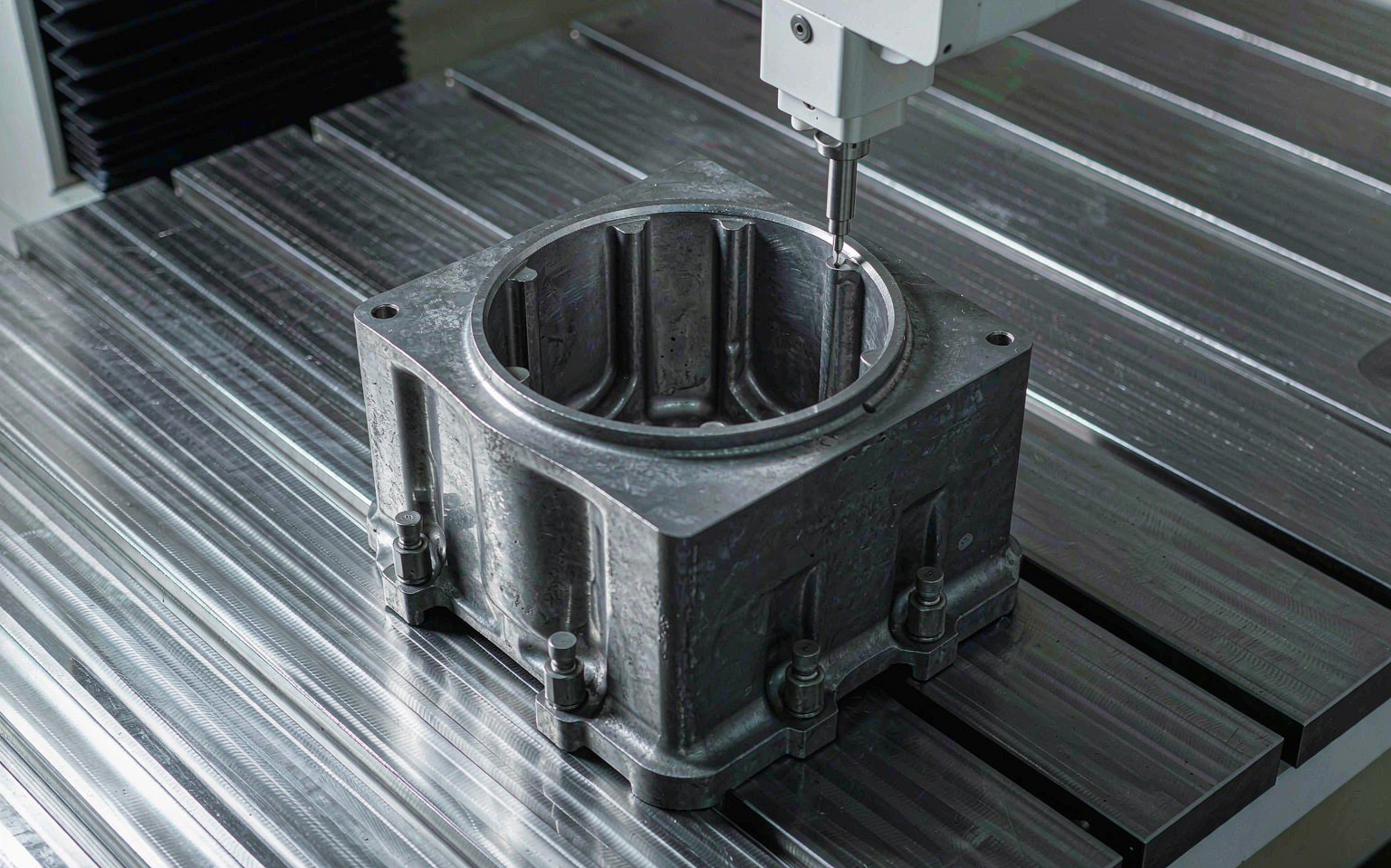
Dimensional
- CMM reporting
- First article (FAI)
- Critical-feature checks
Material
- Spectrometer chemistry
- Mechanical test reports
- Lot certificate
NDT / Integrity
- X-ray / CT where required
- Leak testing where required
- Porosity review
Cleanliness
- Burr & chip control
- Washing / drying
- Particle check where required
Evidence > claim: automotive Tier 1 / Tier 2 buyers expect CMM, FAI, material and (where applicable) porosity / leak reports — these are built into our documentation flow.
Material Traceability
Lot-level traceability is logged so a field escape can be traced back to source.
- Ingot lot
- Material certificate
- Melting / batch
- Die casting machine
- Mold / cavity
- Shift / date
- CNC batch
- Inspection
- Shipment batch
PPAP Documentation
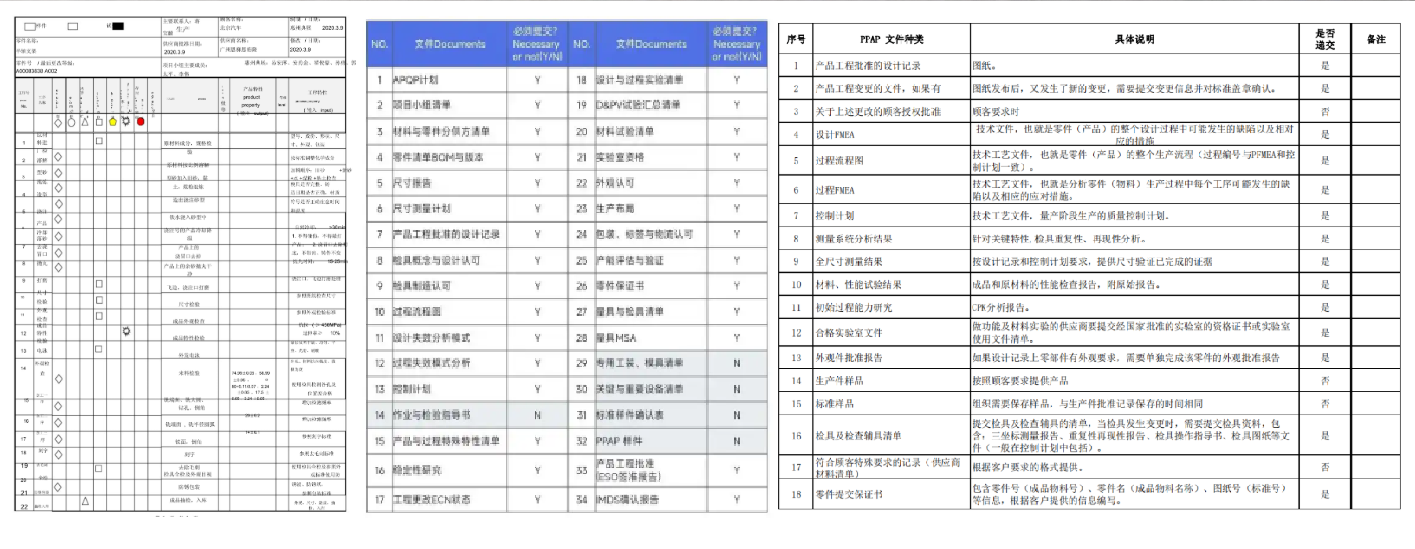
PPAP proves the process can consistently make conforming parts under actual production conditions. We assemble the typical elements your program requires:
- Part submission warrant
- Design records
- Process flow diagram
- PFMEA
- Control plan
- MSA studies
- Dimensional results
- Material / performance results
- Initial process studies (SPC)
- Qualified lab documentation
- Sample production parts
- FAI report
The required PPAP level (e.g. Level 3) and any OEM customer-specific requirements are set by your customer / program — we align the submission to that, not a one-size-fits-all default.
Prototype → Pilot → PPAP → SOP
Automotive programs are gated, not a single sample sign-off. A typical path:
- CAD
- DFM
- Flow simulation
- Tooling
- T0
- T1
- FAI
- PPAP
- Pilot run
- Run-at-rate (if required)
- SOP
- Mass production
Pilot production and run-at-rate activities may be required depending on customer and program requirements — confirmed during quoting, not assumed.
Automotive Die Casting Cost Factors
For automotive projects, tooling and unit cost should be evaluated together with yield, cycle time, quality risk and annual volume — not unit price alone.
- Tooling design & build
- Part weight & alloy
- Machine tonnage
- Cycle time & cavities
- Scrap / yield
- CNC machining scope
- Surface finish
- Inspection & NDT
- PPAP / quality documentation
- Annual volume
Why Lowest Unit Price Is Not Always Lowest Cost
A part at $2.20 with 4% scrap, rework and weak traceability can cost more over a program than a $2.35 part with lower scrap, stable process and documented PPAP. Total cost of ownership — scrap, delivery predictability, quality risk — decides the real winner.
Automotive Die Casting Lead Time
Automotive lead time is dominated by tooling, validation and PPAP — not by the casting cycle alone. Typical planning range after design approval:
| Stage | Typical Planning Range |
|---|---|
| DFM & flow analysis | Within quotation window |
| Tool design & build | Project-dependent |
| T0 / T1 & correction | Per tool complexity |
| PPAP & pilot | Per customer requirement |
| SOP / mass production | After approval |
Short "5-day sample / 4–6-week production" figures from general industrial die casting do not represent automotive programs with tooling, PPAP and pilot gates. Confirm realistic timing against your drawing and scope.
How to Qualify a Chinese Automotive Die Casting Manufacturer
Sourcing from China is about landed cost + quality + lead time + supply risk. Use this checklist before placing a production order:
- Legal entity & factory verification
- Die casting machine capability (tonnage, process)
- Material capability (Al / Zn / Mg)
- Quality lab & CMM
- PPAP & traceability maturity
- Quality system status (ISO 9001 / IATF alignment)
- In-house tooling & ownership terms
- Secondary CNC & finishing
- Sample & reference programs
- Outsourcing exposure
Automotive Supplier Qualification Scorecard
A weighted framework to compare Chinese automotive die casting suppliers before a production order. Use it against our responses above.
| Qualification Area | Weight |
|---|---|
| Legal / factory verification | 10% |
| Die casting capability | 15% |
| Tooling | 10% |
| CNC / secondary processing | 10% |
| Quality system | 15% |
| PPAP / APQP | 15% |
| Inspection | 10% |
| Traceability | 5% |
| Production capacity | 5% |
| Communication / project management | 5% |
This scorecard is a buyer-side evaluation tool — it helps you compare suppliers objectively, not a self-rating we assign ourselves.
Automotive Die Casting Case Studies
Capability examples structured the way a quality engineer reads them — material, process, requirement, secondary work, inspection. (Representative of program types; confirm current references under NDA.)
Automotive Motor Housing
- Material: ADC12 / AlSi10MnMg
- Process: HPDC, in-house mold
- Critical: sealing faces & bores, leak tightness
- Secondary: CNC machining
- Inspection: CMM, leak test, dimensional report
- PPAP: level per customer requirement
Transmission / Pump Housing
- Material: Aluminum (grade per spec)
- Process: HPDC
- Critical: pressure tightness, flatness
- Secondary: CNC + surface finish
- Inspection: CMM, leak test
- PPAP: level per customer requirement
Sensor / Connector Housing
- Material: Zinc (Zamak 3 / 5)
- Process: HPDC, thin-wall
- Critical: dimensional stability, appearance
- Secondary: CNC, plating where applicable
- Inspection: CMM, visual
- PPAP: level per customer requirement
Why Choose Goldcattle?
One-Stop, In-House
Tooling → die casting → CNC → finishing → inspection → packaging under one roof.
Automotive-Quality Mindset
DFM, PFMEA, control plan, PPAP support and lot-level traceability as standard workflow.
Honest Scope
We state what we do and verify — precision small/medium parts, not gigacasting claims.
Engineering English
DFM feedback and project communication in English for OEM / Tier 1 / Tier 2 programs.
Request an Automotive Die Casting Quote
Send your 3D CAD (.STEP / .IGES), 2D drawing, annual volume, alloy requirement and critical quality needs. We review casting design, tooling strategy, CNC requirements and PPAP scope before quoting.
Xiamen Goldcattle Plastic & Metal Products Co., Ltd. — Founded in 1998. ISO 9001:2015 certified; IATF 16949-aligned QMS.
FAQ
What is automotive die casting?
High-pressure die casting of aluminum / zinc components for vehicles — housings, brackets, enclosures — made to automotive quality and traceability requirements.
What automotive parts can be die cast?
Motor / transmission / pump housings, sensor & connector bodies, brackets, thermal-management and EV enclosures, among others.
Which aluminum alloys are used?
Commonly ADC12, A380, A383 and AlSi10MnMg; final grade is selected against strength, thermal and corrosion needs.
Can zinc die casting be used for automotive parts?
Yes — Zamak 3 / 5 for small precision parts, brackets, connectors and appearance pieces.
What is HPDC?
High-pressure die casting: molten metal injected into a steel die under high pressure for near-net-shape production.
Can you CNC machine die cast parts?
Yes — in-house CNC establishes sealing faces, holes, threads and datums after casting.
How do you control porosity?
Alloy control, mold-flow analysis, gate / overflow design, vacuum / venting strategy, parameter control, process monitoring and NDT where required.
Can parts be leak tested?
Yes — air-pressure decay and helium leak testing are arranged per project and customer requirement.
Can you provide X-ray inspection?
X-ray / CT is arranged where the part function and customer specification require it.
What is PPAP?
Production Part Approval Process — evidence that the process can consistently make conforming parts under production conditions.
What PPAP level do you support?
The level (e.g. Level 3) is set by your customer / OEM requirement; we align the submission package accordingly.
Does a supplier need IATF 16949?
IATF 16949 is the automotive QMS standard. We run an IATF 16949-aligned QMS on an ISO 9001:2015 certified base; certificate scope is confirmed against current certification.
ISO 9001 vs IATF 16949?
ISO 9001 is the general QMS; IATF 16949 adds automotive-specific requirements for the supply chain.
What quality documents should a supplier provide?
FAI, CMM reports, material certificate, control plan, PFMEA, PPAP package and traceability records as applicable.
Can you support FAI and APQP?
Yes — FAI and APQP are part of our automotive program workflow.
How long does tooling take?
Tooling timing depends on complexity and validation scope; confirmed after DFM and design approval, not a fixed short number.
How much does automotive die casting cost in China?
Driven by tooling, weight, alloy, tonnage, cavities, yield, machining, finishing, inspection and volume — evaluate total cost of ownership, not unit price alone.
Can you supply OEM / Tier 1 / Tier 2?
We support automotive programs and can align PPAP / documentation to OEM and Tier-1 / Tier-2 customer-specific requirements.
How do I qualify a Chinese die casting supplier?
Verify legal entity, machines, materials, quality lab, PPAP maturity, traceability and tooling ownership — see our qualification checklist above.