
Stainless Steel 316L
CNC Machining Services
Precision CNC machining of 316L stainless steel parts for medical, marine, pharmaceutical, chemical, and industrial applications. Free DFM review. 24-hour quotation. Global delivery.
Stainless Steel 316L CNC Machining — Quick Answers
Stainless Steel 316L CNC machining produces precision components for chloride-exposed, corrosion-critical, and cleanliness-sensitive applications. 316L's molybdenum addition provides superior pitting resistance compared to 304, making it the preferred grade for medical instruments, marine hardware, pharmaceutical processing, and chemical plant equipment. Goldcattle machines 316L across 3/4/5-axis milling, turning, and Swiss-type platforms with tolerance to ±0.005 mm and surface finishes down to Ra 0.2 µm.
316L CNC Machining Capability Snapshot
Core parameters for your purchasing decision — from material grades to inspection methods.
| Capability | Goldcattle 316L Machining |
|---|---|
| Material Grades | 316L / 316 / 316Ti / 317L / 904L |
| CNC Milling | 3 / 4 / 5-axis (DMG MORI DMU 50) |
| CNC Turning | Ø2–320 mm, live tooling |
| Swiss-Type Turning | Ø0.5–20 mm, L/D up to 20:1 |
| Typical Tolerance | Up to ±0.005 mm* |
| Surface Finish | Ra 0.2–3.2 µm (application dependent) |
| Surface Treatments | Passivation / Electropolishing / Polishing / Bead Blasting / Brushing |
| Inspection | CMM (Zeiss Prismo) / Full dimensional report / Visual |
| Material Certification | EN 10204 3.1 per batch |
| Prototype | 1 piece, 7–10 business days |
| Production | Up to 100,000+ pcs |
| Lead Time | 7–20 business days (complexity dependent) |
*Actual achievable tolerance depends on part geometry, feature size, datum structure, material condition, and drawing requirements.
Why Choose 316L for CNC Machined Parts?
Engineering properties that drive material selection — not marketing claims.
Excellent Corrosion Resistance
Strong resistance to chloride-containing environments and general corrosion. Suitable for marine, chemical, and coastal installations.
Superior Pitting Resistance
Molybdenum addition (2–3%) improves resistance to localized pitting compared with 304/304L. Critical for saltwater and chemical exposure.
High Cleanliness
Low-carbon 316L is well suited to applications where contamination and surface cleanliness matter — pharmaceutical, food, and medical environments.
Good Mechanical Performance
Useful balance of strength, toughness, and corrosion resistance. Weldable without significant carbide precipitation due to low carbon content.
Suitable for Critical Applications
Widely used for medical, marine, pharmaceutical, chemical, and food-processing equipment where performance and reliability cannot be compromised.
316L vs 304 Stainless Steel for CNC Machining
Many engineers searching for 316L machining are actually choosing between these two grades. Here is the decision framework.
| Property | 316L | 304 |
|---|---|---|
| Corrosion Resistance | Higher | Good |
| Chloride Resistance | Better | Moderate |
| Pitting Resistance | Better (Mo addition) | Lower |
| Machinability | Moderate | Good |
| Weldability | Excellent (low C) | Good |
| Marine Applications | Excellent | Limited |
| Medical Applications | Excellent | Common |
| Chemical Processing | Excellent | Good |
| Typical Cost | Higher | Lower |
Choose 316L when chloride exposure, corrosion resistance, surface cleanliness, or medical/chemical requirements are more important than minimum material cost.
CNC Machining Challenges of 316L Stainless Steel
Understanding why 316L demands controlled machining — and how we address each factor.
Work Hardening
316L can work-harden rapidly when cutting parameters are poorly controlled. Dull tools or excessive engagement increase surface hardness, making subsequent passes more difficult and accelerating tool failure.
Heat Generation
316L's relatively low thermal conductivity concentrates heat near the cutting zone rather than dissipating it through the chip. Excessive heat accelerates tool wear and can affect surface integrity if not managed.
Tool Wear
Improper speeds, feeds, tooling selection, or chip evacuation can accelerate tool wear. Stringy chips and built-up edge are common when parameters are not optimized for austenitic stainless steel.
Surface Integrity
Thin walls, deep cavities, and tight-tolerance features require controlled cutting forces and fixturing. Vibration, chatter, and deflection compromise dimensional accuracy and surface finish on delicate geometries.
How We Machine 316L Stainless Steel
We do not just machine 316L — we control the factors that make it challenging.
Tool Selection
Carbide tools optimized for stainless steel machining — geometry and coating selected for 316L's work-hardening behavior.
Cutting Strategy
Controlled feed rates, depths of cut, and trochoidal paths to reduce work hardening and maintain consistent tool engagement.
Chip Evacuation
High-flow coolant and optimized tool paths for stable chip removal. Prevents stringy chip re-cutting and built-up edge.
Fixturing
Custom soft jaws and support strategies for thin-wall components. Reduces vibration and deflection on walls down to 0.4 mm.
Finishing
Controlled finishing passes for dimensional stability and surface quality. Progressive Ra reduction to meet application requirements.
Our 316L CNC Machining Process
Five documented stages from material verification to inspected shipment.
Material Verification
Verify grade, heat/lot information, and material certification per EN 10204 3.1.
DFM Review
Review wall thickness, internal radii, threads, holes, deep cavities, and tolerances against 316L behavior.
CNC Machining
Select milling, turning, Swiss-type, or 5-axis machining according to part geometry and tolerance requirements.
Surface Treatment
Passivation, electropolishing, polishing, bead blasting, or brushing according to application requirements.
Final Inspection
Zeiss CMM dimensional inspection, surface verification, and documentation before shipment.
316L Stainless Steel Surface Finishes
Post-machining surface treatments specifically relevant to 316L — not generic finishing options.
| Finish | Typical Purpose | Relevance to 316L |
|---|---|---|
| Passivation | Improve corrosion resistance, remove free iron | Standard post-machining treatment — ASTM A967 / AMS 2700 |
| Electropolishing | Reduce surface roughness, improve cleanability | Critical for pharmaceutical & medical — removes micro-peaks, deburrs |
| Mechanical Polishing | Smooth / cosmetic / functional surfaces | Mirror finish to Ra <0.05 µm for optical or decorative applications |
| Bead Blasting | Uniform matte appearance | Hides tool marks, provides consistent aesthetic on visible surfaces |
| Brushing | Directional satin finish | Premium tactile finish for consumer-facing hardware |
Passivation vs Electropolishing
These two treatments are the most common post-machining decisions for 316L parts — and they serve different purposes.
Passivation
Improves the passive chromium oxide layer without substantially changing the part geometry. Removes free iron from the machining process. Standard treatment for most 316L components. Compliant with ASTM A967 and AMS 2700.
Electropolishing
Removes a controlled amount of material from the surface, improving smoothness, cleanability, and corrosion resistance. Also deburrs micro-edges. Preferred for pharmaceutical, medical, and food-contact applications where surface cleanliness is critical.
316L Stainless Steel Material Specifications
Key designations and properties — not a complete material datasheet, but the parameters most relevant to CNC machining decisions.
| Property | 316L |
|---|---|
| UNS | S31603 |
| EN Designation | 1.4404 |
| AISI | 316L |
| Applicable ASTM | A276 / A479 / A240 / A312 (per product form) |
| AMS (bar/forgings) | 5653* / 5648 (per form & condition) |
| Corrosion Resistance | Excellent |
| Magnetic Response | Generally low in annealed condition |
| Machinability | Moderate |
| Weldability | Excellent (low carbon) |
Material specifications available according to part requirements, including applicable ASTM, AMS, EN, and UNS designations. The AMS specification (e.g., 5653) applies to specific product forms and conditions — it should not be assumed for all 316L products. Confirm the required material specification during the quotation stage.
316L CNC Machining Tolerances & Capabilities
What we can achieve — stated honestly with the variables that affect it.
| Capability | Goldcattle |
|---|---|
| CNC Milling | 3 / 4 / 5-axis (DMG MORI DMU 50) |
| CNC Turning | Precision turning Ø2–320 mm |
| Swiss Turning | Small-diameter parts Ø0.5–20 mm |
| 5-Axis Simultaneous | Complex geometries, single setup |
| Typical Precision | Up to ±0.005 mm* |
| Surface Finish | Ra 0.2–3.2 µm (application dependent) |
| Min Wall Thickness | 0.4 mm achieved (drill guide case) |
| Inspection | Zeiss Prismo CMM / Dimensional report |
| Material Certification | EN 10204 3.1 per batch |
| Prototype | 1 piece |
| Production | Up to 100,000+ pcs |
| Lead Time | 7–20 business days |
*Actual achievable tolerance depends on part geometry, feature size, datum structure, material condition, and drawing requirements. We provide tolerance feasibility assessment as part of every DFM review.
316L CNC Machining Design Guidelines
Practical design considerations that affect cost, quality, and lead time for 316L parts.
Minimum Wall Thickness
Thin walls can deform or vibrate during machining. We recommend ≥0.5 mm for standard features, with 0.4 mm achievable using custom fixturing and controlled cutting parameters.
Internal Corner Radii
Use practical radii (≥0.5 mm) to improve tool access and reduce machining time. Sharp internal corners require smaller tools, slower speeds, and multiple passes.
Deep Pockets
Deep narrow cavities require special tooling and chip evacuation strategies. Keep pocket depth-to-width ratio ≤4:1 where possible for cost-effective machining.
Threads
Specify thread standard, depth, and class clearly. 316L's work hardening behavior requires controlled tapping and thread milling parameters to maintain accuracy.
Tight Tolerances
Apply tight tolerances only to functional features to reduce unnecessary machining cost. General tolerances per ISO 2768-m are standard; tighter by request.
Surface Finish
Specify Ra requirements only where functional or cosmetic performance requires them. As-machined Ra 1.6–3.2 µm is standard; finer finishes add process steps and cost.
316L CNC Machined Parts by Industry
Where 316L's properties matter — with specific part examples, not generic industry labels.
316L CNC Machined Parts for Medical Applications
- Surgical instruments
- Orthopedic components
- Bone fixation components
- Drill guides
- Medical device housings
- Surgical fixtures
- Precision medical hardware
CNC machined 316L components for medical device and surgical applications — with full material traceability per EN 10204 3.1.
316L CNC Machining for Marine Hardware
- Marine fittings
- Valve components
- Pump components
- Fasteners and brackets
- Shaft components
- Hydraulic components
- Connector bodies
316L is often selected where stainless steel components are exposed to chloride-containing marine environments.
Need higher corrosion resistance for aggressive environments? Compare 316L with duplex stainless steel or super austenitic grades.
316L Parts for Pharmaceutical & Chemical Processing
- Process equipment components
- Valve and pump parts
- Fittings and manifolds
- Housings and brackets
- Connectors
For pharmaceutical applications, surface treatment + cleanability matter more than corrosion resistance alone. Electropolished 316L provides the lowest particle adhesion and easiest cleaning.
316L CNC Machining Case Studies
Documented projects — not generic stock photos. Every case includes measurable outcomes.
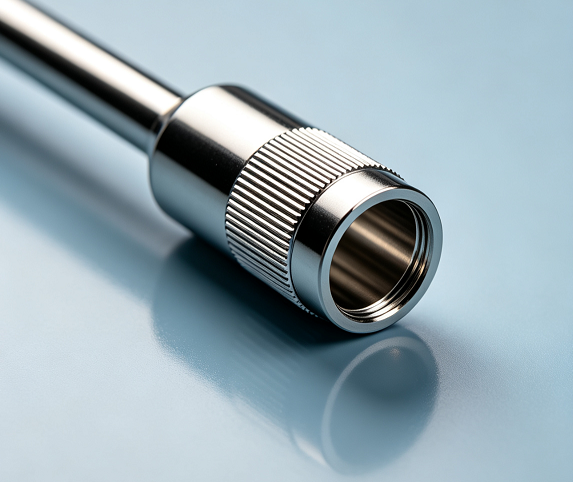
SS 316L Orthopedic Drill Guide, Thin-Wall
Custom soft-jaw fixturing eliminated chatter on 0.4 mm walls. Electropolished to Ra 0.2 µm. Full material traceability per EN 10204 3.1.
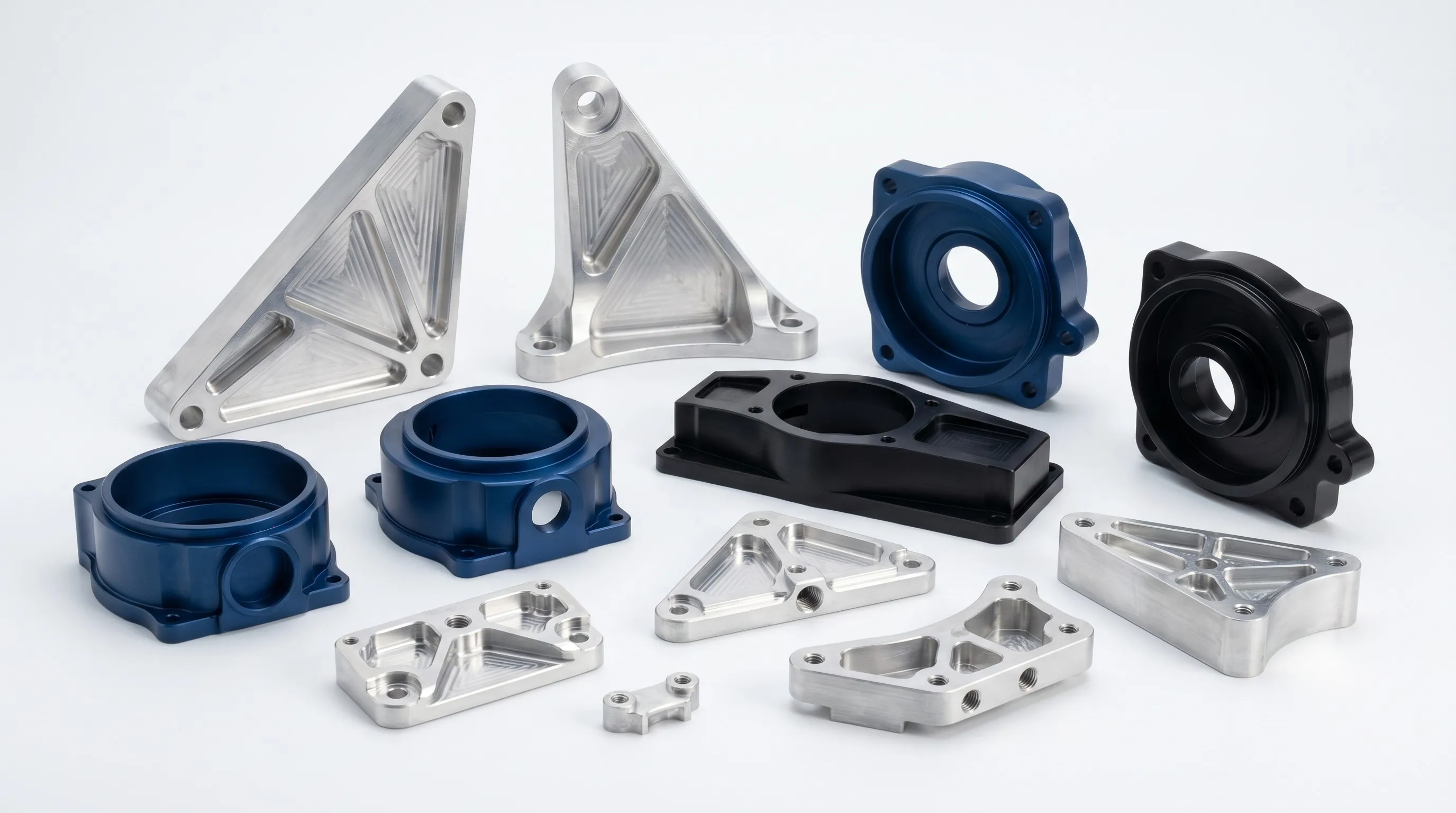
316L Seawater Valve Body, Precision Bore
Bore concentricity ±0.01 mm for sealing integrity. Passivated per ASTM A967. Full dimensional report per shipment.
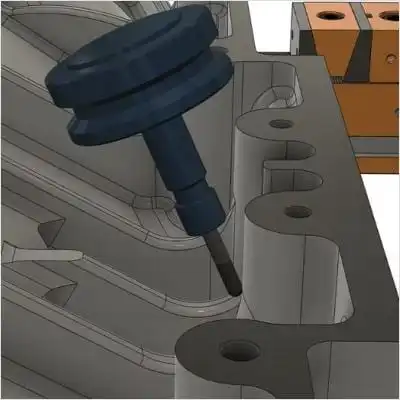
316L Electropolished Manifold, Multi-Port
Electropolished to Ra 0.3 µm for cleanability and low particle adhesion. Port positions verified by CMM with full dimensional report.
316L vs 304 vs 17-4 PH
A practical decision table for the three most common stainless steel grades in CNC machining.
| Requirement | Recommended Grade |
|---|---|
| General corrosion resistance | 304 |
| Chloride / marine environment | 316L |
| Medical / clean applications | 316L |
| Higher strength requirement | 17-4 PH |
| General-purpose machining | 304 |
| High-strength stainless components | 17-4 PH |
| Pharmaceutical surface cleanliness | 316L |
| Weldability without post-weld treatment | 316L |
Not sure which stainless steel grade is right for your part? Send us the drawing and application requirements for a material recommendation.
What Affects the Cost of CNC Machined 316L Parts?
Understanding cost drivers helps you make informed design decisions — not estimates based on guesswork.
Material Cost
316L costs more than many common stainless grades such as 304. Material form (bar, plate, tube) also affects pricing.
Machining Time
316L's moderate machinability and work hardening behavior can increase cycle time compared to free-machining grades.
Tool Wear
316L machining may require higher tooling and process-control costs due to abrasive behavior and chip characteristics.
Tolerance
Tighter tolerances increase setup, machining, and inspection requirements. Apply precision only where functionally needed.
Surface Treatment
Passivation and electropolishing add processing steps. Electropolishing is more cost-impactful but delivers superior cleanability.
Quantity
Higher production volumes typically reduce setup cost per piece. Prototype pricing includes one-time fixturing and programming.
Complexity
5-axis geometry, deep cavities, thin walls, and difficult internal features increase programming, fixturing, and cycle time.
Certification
EN 10204 3.1 material certificates are standard. Additional documentation (FAI per AS9102, specific test reports) adds cost.
Quality Control & Material Traceability
Every 316L part ships with documented verification — not promises.
Material Verification
Grade, heat/lot, and EN 10204 3.1 certificate verified before machining begins.
CMM Dimensional Report
Zeiss Prismo CMM (±0.0005 mm accuracy). Full dimensional report shipped with every order.
FAI per AS9102
First-article inspection on every new setup. Available for aerospace and medical traceability requirements.
ISO 9001:2015
Certified quality management system. SGS / RoHS / REACH compliance across supply chain.
Frequently Asked Questions
Questions purchasing managers actually ask — not generic material trivia.
Request a Quote for Custom 316L Parts
Upload your CAD files for a free DFM analysis, material recommendation, and transparent quotation — typically within 24 hours.
Drag & drop or click to get a free machining review and quote in 24h.
Supported: STEP · STP · IGES · Parasolid · SLDPRT · PDF Choose File & Get Quote →No MOQ · Prototype to 100,000+ production · NDA available · ISO 9001:2015 certified
Stainless Steel 316L CNC Machining — Service Summary
| Company | Xiamen Goldcattle Plastic & Metal Products Co., Ltd. |
| Service | Stainless Steel 316L CNC Machining |
| Material Grades | 316L · 316 · 316Ti · 317L · 904L |
| Processes | 3/4/5-axis milling · Turning · Swiss-type · 5-axis simultaneous |
| Tolerance | Up to ±0.005 mm (geometry dependent) |
| Surface Finish | Ra 0.2–3.2 µm · Passivation · Electropolishing · Polishing · Blasting · Brushing |
| MOQ | 1 Piece (prototype) |
| Production Volume | Up to 100,000+ pcs |
| Lead Time | 7–20 business days |
| Applications | Medical · Marine · Pharmaceutical · Chemical · Industrial |
| Material Certification | EN 10204 3.1 per batch |
| Inspection | Zeiss Prismo CMM · Full dimensional report |
| Quality System | ISO 9001:2015 · SGS · RoHS · REACH |
| Parent Page | CNC Machining Services |