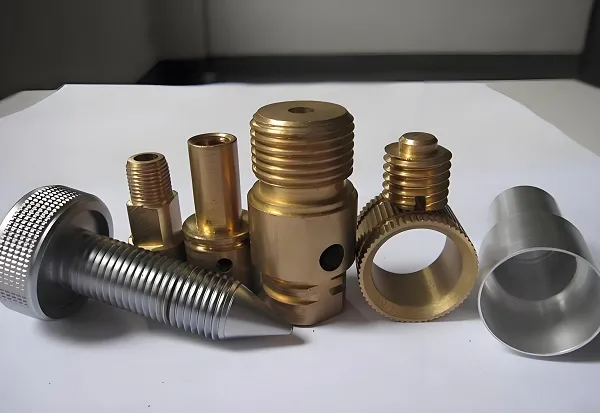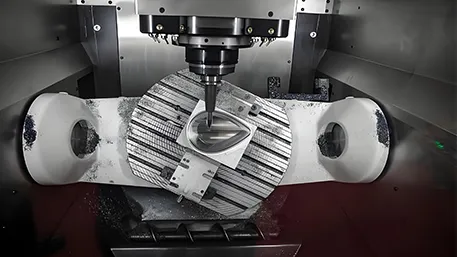
Custom CNC-Machined Cold Plates & Liquid Cooling Components
Precision-machined aluminum and copper cold plate bodies, coolant channels, cover plates and manifolds made to your drawings. Each part is reviewed for channel geometry, remaining wall thickness, thermal interface flatness and the agreed sealing route.
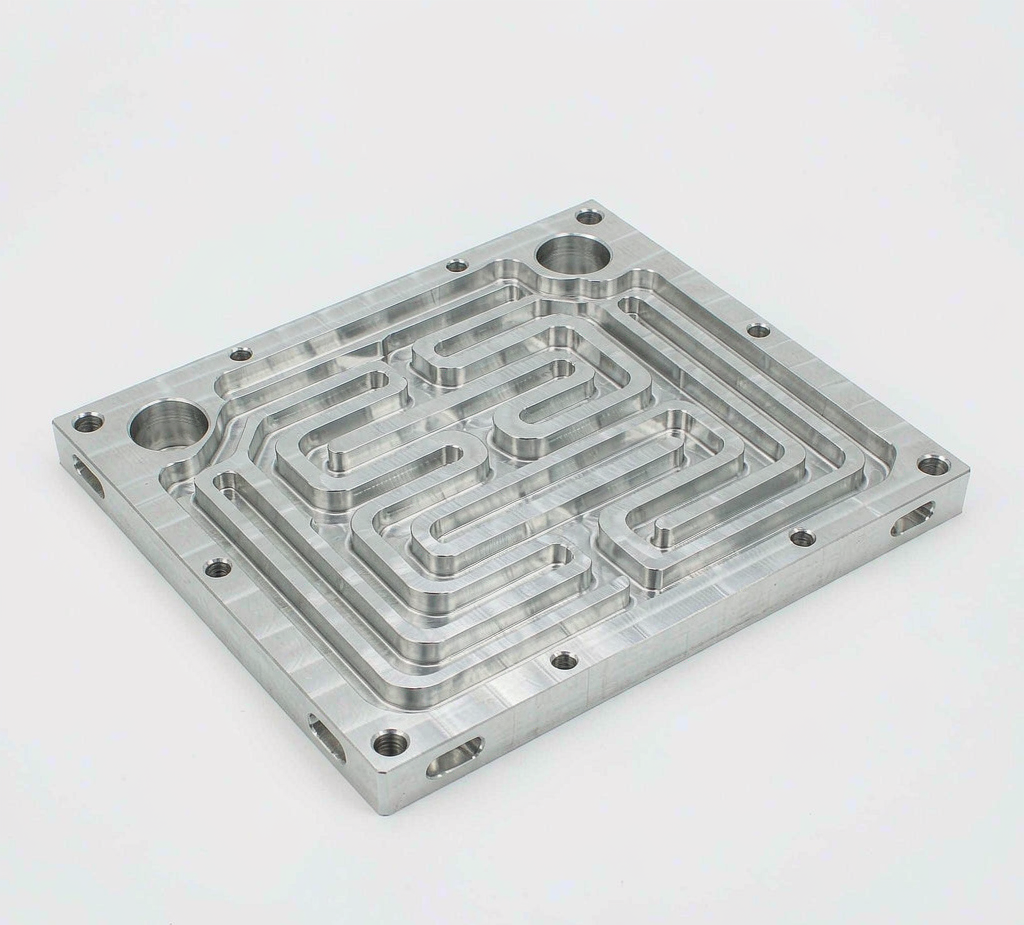
What does a custom cold plate CNC machining supplier make? A specialist machines the metal parts of a liquid cold plate: the aluminum or copper body, the milled coolant channels, the cover plate, fluid manifolds, port blocks and thermal mounting faces. Each part is built to the customer's drawing and reviewed for channel layout, material, minimum remaining wall thickness and inspection needs. Goldcattle supplies these machined components. Full sealed cold plate assembly, leak and flow testing, thermal validation, thermal design and CFD are separate scopes confirmed by project, not standard in-house services.
01 · What we machine for cold plates
You can order cold plate components one part at a time. We review each against your drawing before we confirm we can make it. The categories below describe work we can assess; they are not a stock catalogue of finished cold plates.
Cold plate bodies
Machined aluminum or copper base bodies with pockets, ports, mounting holes and features for the coolant circuit.
Channel plates
Plates with milled internal coolant channels: serpentine, parallel, multi-pass or manifold layouts to your design.
Cover plates
Machined covers with O-ring grooves, bolt patterns and sealing faces that close the channel circuit.
Manifolds & ports
Fluid manifold blocks, inlet and outlet port blocks, and connection features with threaded ports and internal passages.
Thermal mounting plates
Contact plates and mounting interfaces with controlled flatness and hole positions for the heat source.
Aluminum & copper
Aluminum 6061 and selected copper grades, chosen per part. We confirm grade and condition against your drawing.
02 · Cold plate structures are not all the same
Buyers often call every liquid cooling plate a "cold plate". The way the channel is closed changes the process, the cost and who does the work. Knowing the route matters when you request a quote.
Swipe the table to see all columns.
| Structure | How it is made | Our scope |
|---|---|---|
| CNC milled + bolted cover | Milled channel sealed with a bolted cover and O-ring | We machine the parts; sealing and testing by agreement |
| Friction stir welded (FSW) | Milled channel closed by a welded cover | Reviewed by project; not a standard in-house step |
| Vacuum brazed | Multi-part plate bonded to form internal channels | Reviewed by project; not a standard in-house step |
| Tube embedded | Metal tube pressed into a machined groove | Reviewed by project; not a standard in-house step |
The first route fits prototypes and low volumes because it can be opened for inspection. Joining routes can distort the plate, so the final thermal face may need machining after joining. We confirm which steps we perform for your project; we do not assume every route is ours.
03 · Applications we build components for
Engineers often search by the equipment they are building, not by a part name. Each area below lists the features that usually matter. This is a selection guide, not a claim that we supply complete cooling systems.
Inverters & modules
IGBT and SiC module cold plates. Focus: heat-load distribution, mounting flatness and coolant compatibility.
Laser equipment
Laser and optical module plates. Focus: local heat flux, contact-face flatness and cleanliness.
Battery & BESS
Battery and energy-storage cooling plates. Focus: temperature uniformity, plate distortion and unit cost.
Servers & accelerators
Direct-to-chip plates for CPUs and GPUs. Focus: contact face, flow distribution, pressure drop and space limits.
Process equipment
Precision equipment and test plates. Focus: stability, cleanliness, internal particles and batch consistency.
Drive systems
Inverter and servo drive plates. Focus: thermal load, pressure drop and mounting interface.
04 · Material selection for cold plates
Aluminum and copper are the common choices. Conductivity is only one part of the decision; heat flux, coolant, weight, cost, plate size, joining method and corrosion all matter.
Swipe the table to see all columns.
| Material | Strengths | Limits & use |
|---|---|---|
| Aluminum 6061-T6 | Light, good machinability, moderate cost | Lower conductivity than copper; many larger plates and power parts |
| Aluminum 6061-T651 | Stress-relieved plate stock | Consider distortion after large-area channel milling |
| Copper C110 | High thermal conductivity | Heavier and costlier; high heat-flux spots such as CPUs and lasers |
| Stainless steel | Corrosion resistance for some fluids | Lower conductivity; special compatibility cases only |
05 · Machining the coolant channels
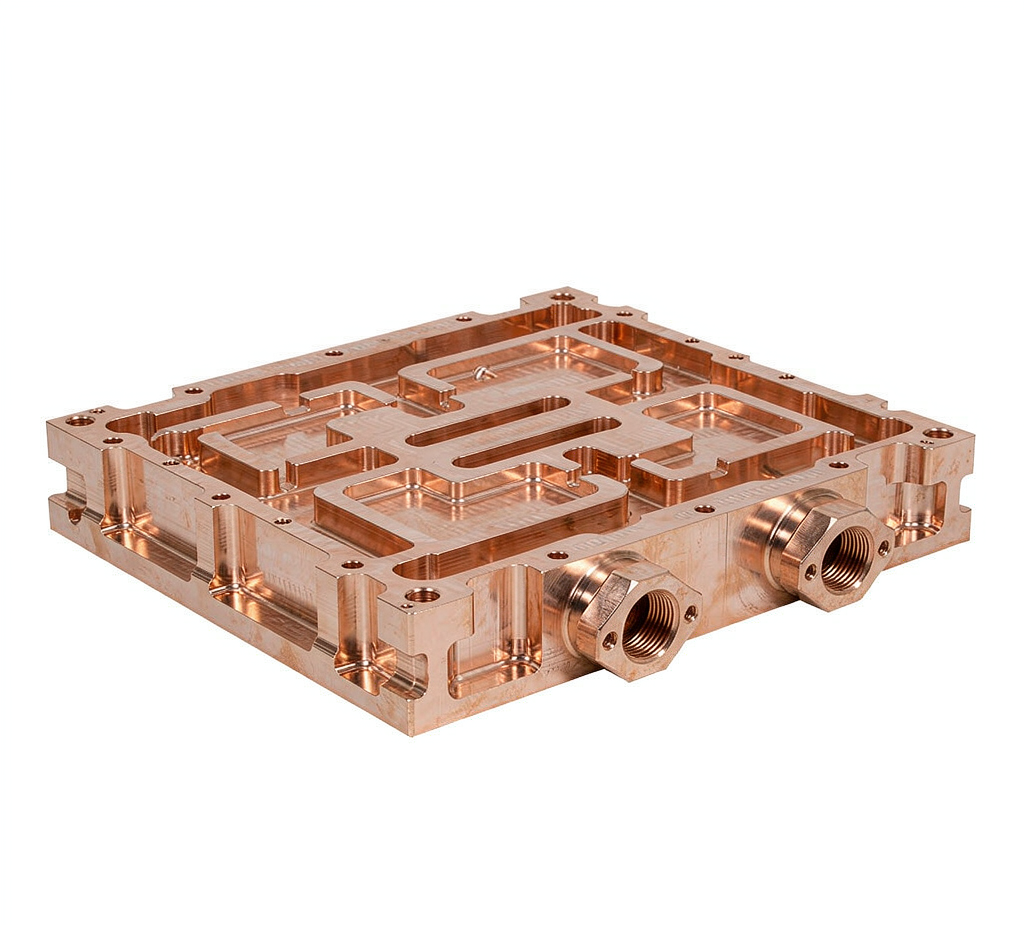
The channel is the core of a cold plate. Its layout drives flow, pressure drop and how clean the plate can be made inside.
Swipe the table to see all columns.
| Channel type | Feature | Design concern |
|---|---|---|
| Serpentine | One continuous path | Overall length and pressure drop |
| Parallel | Multiple side-by-side paths | Even flow distribution |
| Multi-pass | Several return paths | Temperature spread and pressure drop |
| Microchannel | Very fine channels | Machining accuracy, clogging and cleaning |
| Manifold | Distribution and collection zones | Flow split, ports and internal shape |
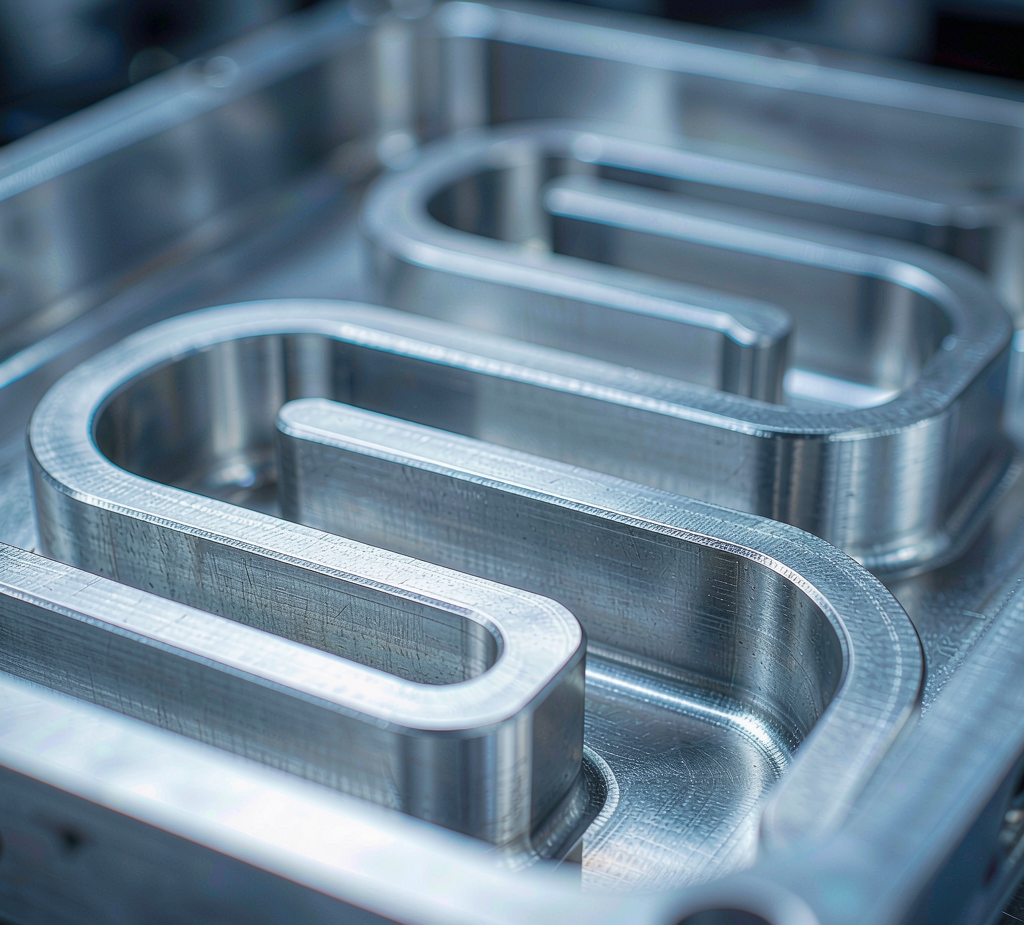
Finer channels are not automatically better. Small channels can raise flow resistance and are more sensitive to burrs and trapped particles. We review tool access, cutter size, remaining wall thickness and how the channel will be cleaned. Thermal simulation and flow optimization stay with the design side unless a separate scope is agreed.
06 · Thermal interface flatness and finish
The area that touches the heat source needs a controlled contact face. Not every surface of the plate needs the same flatness, so the drawing should name the contact area and its requirement.
- Thermal contact area — define exactly which face touches the heat source.
- Flatness and roughness — set per the contact need, not one value for the whole plate.
- Mounting datum — state the datum used for the contact face.
- Interface material — note the thermal pad or compound the design uses.
- Finish direction — specify it when the design requires a direction.
Joining steps such as welding or brazing can bend the plate. For those routes, the final contact-face requirement should be checked on the finished assembly, not only on the machined body before joining. We agree the inspection stage with you.
07 · Sealing, cover plates and joining
How the channel is closed is as important as how it is cut. We machine the sealing features and control their dimensions, then define which closing and test steps belong to the project.
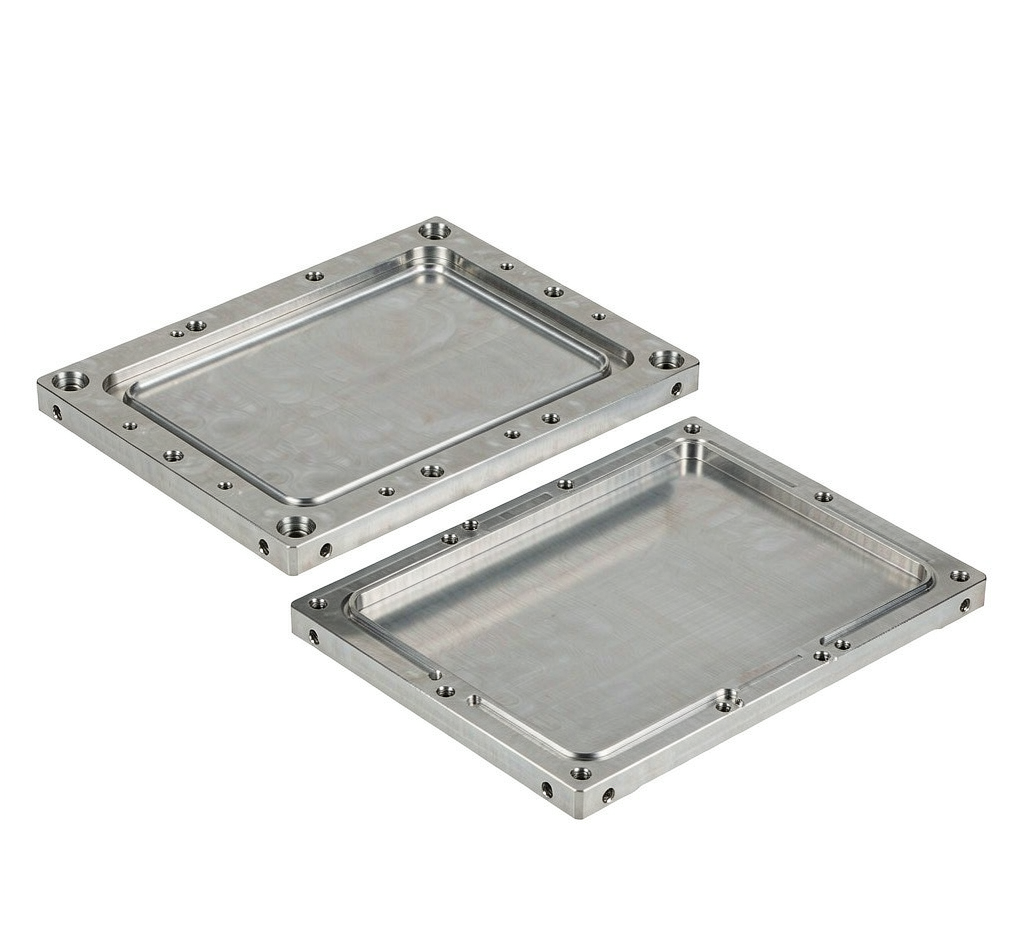
- O-ring groove — width, depth and finish follow the seal data, not a rule of thumb.
- Cover bolt pattern — position and torque pattern per drawing.
- Sealing face — flatness and finish are checked against the drawing.
- Internal burrs — channels are cleaned after machining so passages stay open.
- Joining route — bolted, welded or brazed, confirmed before we quote.
08 · Inspection and testing
Cold plate quality has several levels. Correct dimensions alone do not prove a plate will seal or cool well. We separate what we inspect on the machined part from what needs agreed test equipment.
Swipe the table to see all columns.
| Level | Typical checks | Status |
|---|---|---|
| Dimensional | Channel width and depth, wall thickness, port location, contact-face flatness, O-ring groove | Machined-part inspection |
| Internal channel | Leftover chips, burrs, blockage, channel connection | Cleaning and visual or agreed method |
| Pressure & leak | Pressure test, pressure decay, bubble or helium leak test | Agreed method, equipment and criteria |
| Flow & pressure drop | Flow rate, inlet and outlet pressure, differential pressure | Test bench by project |
| Thermal performance | Thermal resistance, surface temperature, uniformity | Special thermal test conditions by project |
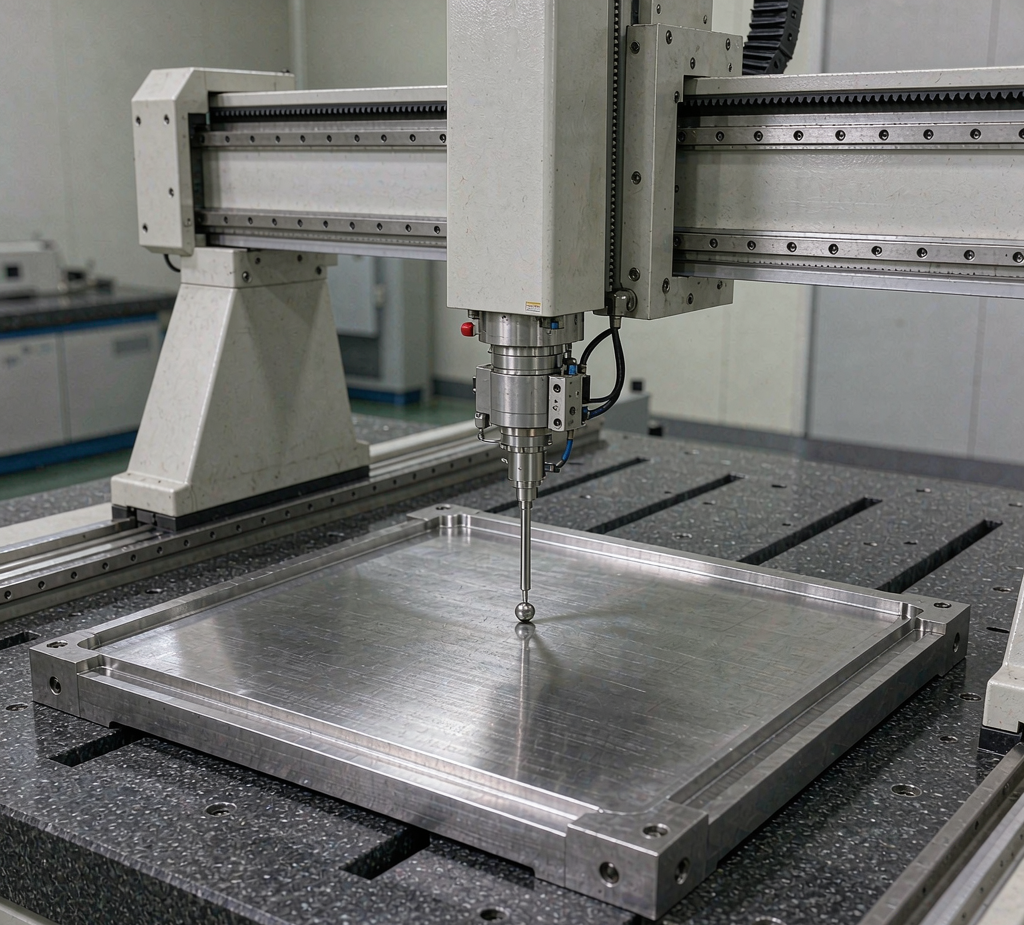
Leak testing is not one single method. Pressure, bubble, pressure-decay and helium tests suit different needs. A request that only says "leak test required" is not enough; the medium, pressure, time, allowed leak rate and acceptance rule must be defined. We confirm the real test scope with you rather than assume it.
09 · Typical CNC cold plate workflow
The steps below show how a machined cold plate component usually moves from drawing to part. Joining and performance test steps are marked as agreed scopes, because they are not automatic in-house work.
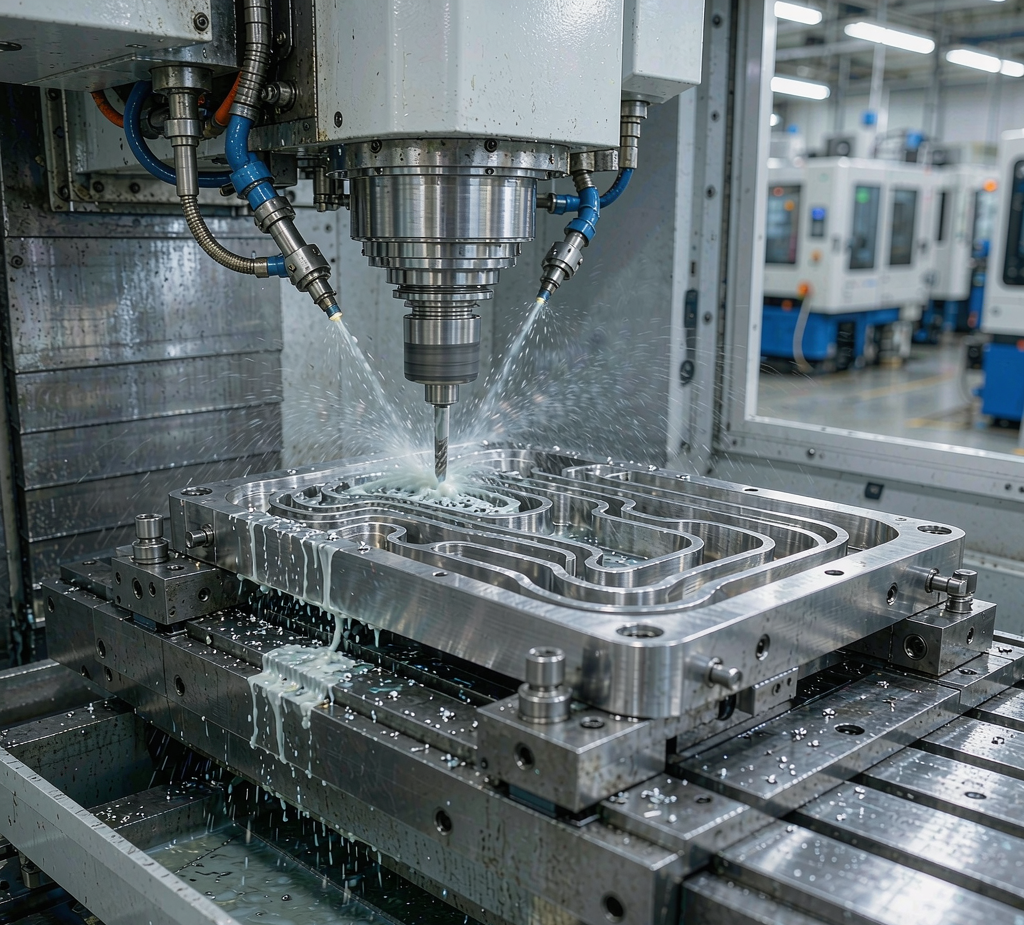
- Drawing and specification review our scope
Confirm material, contact area, channels, wall thickness, ports, sealing and inspection needs. - Material preparation our scope
Check grade, condition, size and material documents. - CNC channel machining our scope
Machine channels, pockets, holes and internal features. - Cover and sealing features our scope
Machine cover, O-ring groove, threads and sealing faces. - Deburring and internal cleaning our scope
Remove burrs and chips so passages stay open and clean. - Joining or assembly by agreement
Bolted, welded or brazed closing, per the confirmed route. - Post-joining machining by agreement
Restore contact face and key dimensions if joining caused distortion. - Final inspection and required testing by agreement
Dimensions, flatness, and any leak, flow or thermal tests specified. - Final cleaning and packaging our scope
Clean, dry, protect ports and pack to requirement.
Send your drawing for a machining review. We check the channel layout, material, wall thickness and inspection needs before we quote, and raise any questions with you first.
Frequently asked questions
What is a CNC machined cold plate?
A CNC machined cold plate is a metal plate with channels cut into it so coolant can flow and carry heat away from a component. Goldcattle machines cold plate bodies, coolant channels, cover plates, manifolds and mounting interfaces from customer drawings. We machine the parts; complete sealed assembly and thermal testing are separate, agreed scopes.
What cold plate parts can you machine?
We machine cold plate bodies, channel plates, cover plates, fluid manifolds, inlet and outlet port blocks, and thermal mounting plates. Work is reviewed from your drawing before we confirm it. These are machined components we can assess; they are not a stock catalogue of complete liquid cold plates.
Do you manufacture complete liquid cold plates?
At this stage we make the machined components, not a fully sealed and tested liquid cold plate assembly. Work such as vacuum brazing, friction stir welding, final sealing, leak testing, flow testing and thermal validation is reviewed by project. We confirm the real process and test scope with you before we quote or promise anything.
Should I choose aluminum or copper for a cold plate?
Aluminum 6061 is light, machines well and costs less, so it suits many larger plates and battery or power electronics parts. Copper carries heat better but is heavier and costs more, so it suits high heat-flux spots such as CPUs, GPUs and lasers. The right choice depends on heat load, weight, coolant, corrosion and cost.
What coolant channel types can you machine?
Common layouts we review include serpentine channels, parallel channels, multi-pass channels, manifold channels and microchannels. Channel choice affects flow distribution, pressure drop and cleaning. Smaller channels are not always better; they can raise flow resistance and are more sensitive to burrs and leftover particles.
Why does remaining wall thickness matter?
The wall between a coolant channel and the thermal contact face must stay thick enough for the design. If it is too thin, the tool can break through, the plate can deform, and pressure strength and flatness can suffer. Your drawing should state the minimum wall thickness in critical areas, not only the total plate thickness.
Can you control the thermal contact face flatness?
We machine and inspect the thermal contact area against the flatness and roughness on your drawing. We do not quote one blanket flatness number for every plate, because the result depends on material, size, wall thickness and the joining steps used. Where joining can cause distortion, final machining is agreed with you.
Can you machine O-ring grooves and cover plates?
Yes. We machine O-ring grooves, bolt patterns, sealing faces and cover plates to drawing. Groove width, depth and finish follow the seal specification, not a rule of thumb. We control the machined dimensions and sealing faces. We do not promise a finished assembly will not leak before the agreed sealing and test steps are complete.
Can you do leak, flow and thermal testing?
These are separate services and are not claimed as standard in-house tests. If a project needs pressure, leak, flow or thermal validation, we confirm the real equipment, method and acceptance criteria first, or agree a qualified partner. Machined-part dimensional inspection alone does not prove a cold plate's sealing or thermal performance.
Do you provide thermal design or CFD simulation?
We review the manufacturability of the channel design you supply, including tool access, wall thickness and finishing. We do not offer thermal design, CFD simulation or flow optimization as an in-house service. Where the thermal design is already set, we focus on machining it accurately and repeatably.
What should I send for a cold plate quote?
Send a 3D CAD model and a 2D drawing with dimensions, tolerances and datums. Add the material grade, channel layout, minimum wall thickness, port and sealing details, quantity and inspection needs. For thermal parts, also share heat load, coolant, flow rate and any pressure or leak test requirements. Mark the drawing revision.
Do you support prototypes and repeat production?
Yes. Prototype orders start from one piece. After a sample is approved, repeat batches follow the same drawing revision, first article and inspection plan. Material, process or revision changes go through a control step, so later orders stay aligned with the first approved part.
Have a cold plate component to manufacture?
Send your 3D CAD model, technical drawing and material choice. Include the channel layout, minimum wall thickness, sealing and inspection needs, and any heat, flow or test data. We review the machining route and confirm the real scope before we quote. STEP · STP · IGES · DWG · DXF · PDF. NDA on request.
Xiamen Goldcattle Plastic & Metal Products Co., Ltd. · Founded in 1998 · manufacturing to your drawings and samples.