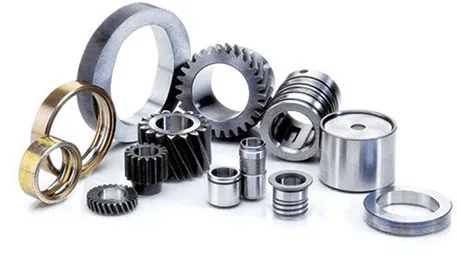
Custom Components for Packaging Machinery & Material Handling Equipment
Goldcattle manufactures custom metal and engineering plastic components for packaging lines, conveyor equipment and automated material handling systems. From shafts, bushings and mounting plates to guides, pucks, gripper components and machine brackets, work is produced to customer drawings with engineering review and production inspection.
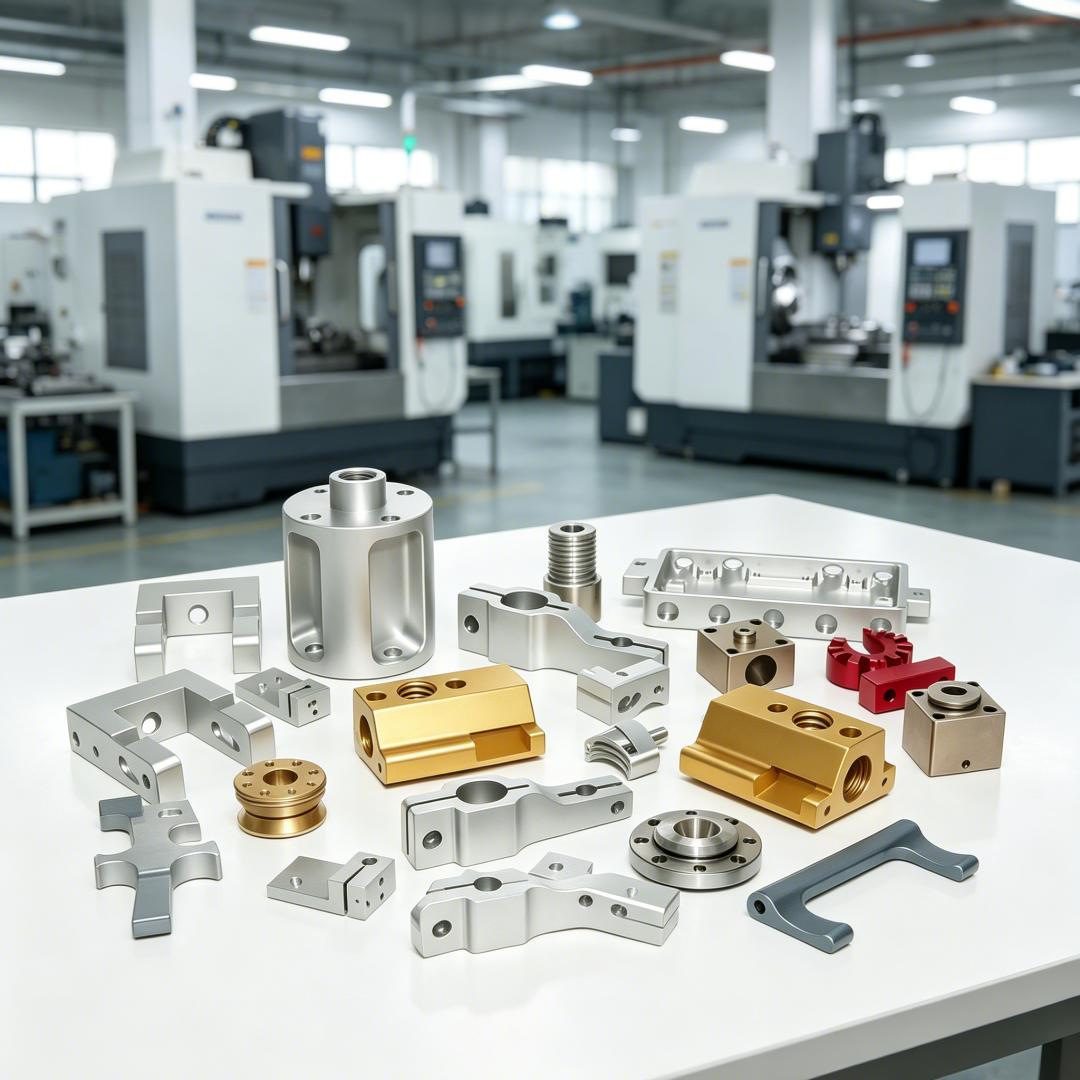
At a glance
Goldcattle supplies custom mechanical components for packaging machinery and material handling equipment, not standard packaging consumables or complete conveyor systems. The strongest fit is drawing-based metal and engineering plastic parts: product guides and blocks, pucks, gripper fingers, pushers, shafts, hubs, bushings, transfer plates, stops, brackets and mounting plates. Every quote includes a review of the mating interface, material, critical dimensions, wear condition and inspection method.
Custom Components for Packaging Machinery
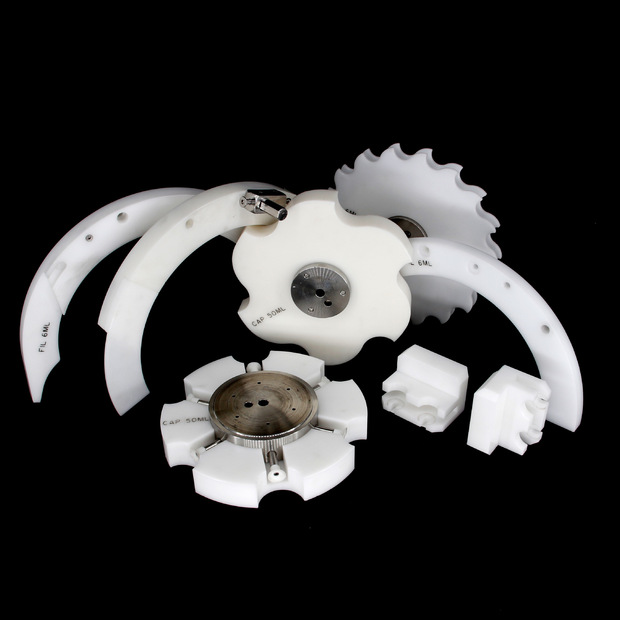
Packaging machine buyers usually need parts that position a product, guide it through a station, hold it during motion or adapt the machine to a new product format. The list below is organized by machine function, not by material alone.
| Component family | Typical parts | What the buyer checks |
|---|---|---|
| Star wheels & segments | Full star wheels, replaceable segments, pocketed indexing parts | Pocket profile, pitch, center bore, repeat positioning and bottle or container clearance. |
| Product guides & guide blocks | Side guides, guide rails, locator blocks, inlet and outlet guide components | Guide clearance, mounting position, product contact surface and adjustment range. |
| Packaging pucks | Product carriers, locating pucks, pocketed support blocks | Pocket geometry, fit to the product, stability during transfer and repeat seating. |
| Gripper fingers & pushers | Gripper fingers, clamp pads, pusher blocks, transfer pushers | Contact geometry, force interface, wear, product protection and repeat motion. |
| Filling & dosing components | Nozzle mounts, connector blocks, valve bodies, manifold adapters | Port positions, sealing surfaces, material compatibility and cleanability where required. |
| Format change parts | Changeover plates, locating plates, adapters, mounting fixtures | Mounting holes, flatness, datum fit, interchangeability and version control. |
Custom Components for Material Handling Equipment
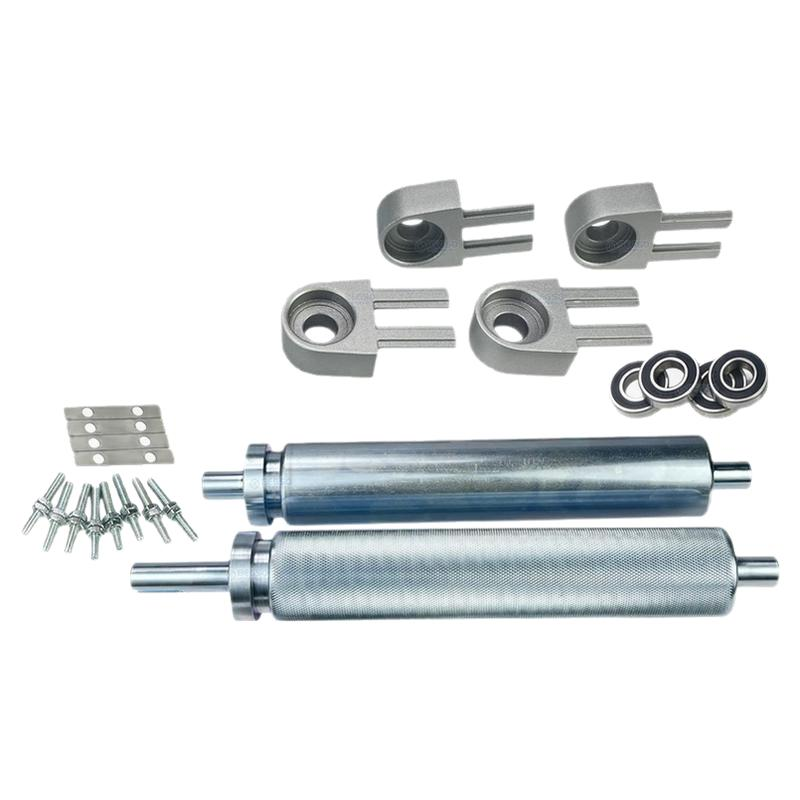
Conveyor and handling parts are selected for rotation support, sliding wear, load transfer, product transfer and structural mounting. This section covers the mechanical parts Goldcattle can evaluate under drawing or sample review.
| Component family | Typical parts | What the buyer checks |
|---|---|---|
| Roller shafts & axles | Conveyor roller shafts, support axles, drive shafts, turned spindles | Shaft diameter, length, straightness, bearing seat, runout and mounting fit. |
| Hubs & bushings | Roller hubs, wear bushings, plain bearings, adapters and spacers | ID, OD, length, fit, coaxiality and wear allowance. |
| Plastic guide & wear blocks | Sliding guides, wear strips, friction blocks, polymer side guides | Wear rate, friction condition, contact material, load and dimensional stability. |
| Transfer plates | Transition plates, transfer tongues, gap plates, alignment plates | Flatness, gap to adjacent surface, alignment and product support continuity. |
| Stops & pusher components | Stop blocks, diverters, pushers, sorter connectors, positioning stops | Impact load, repeat position, contact surface and mounting strength. |
| Mounting & support brackets | Conveyor brackets, equipment supports, sensor brackets, welded or bent supports | Hole position, flatness, bend angle, load path and assembly stability. |
Equipment Applications We Support
The page supports suppliers and manufacturers of equipment that moves, positions, fills, seals or labels products. Relevant applications include:
Nozzle mounts, connector blocks, mounting plates and manifold adapters for filler stations.
Clamp parts, locating components, bushings and tooling supports for capping stations.
Positioning brackets, guide components, sensor mounts and mounting adapters.
Guides, rollers, mounting brackets and machine housings for seal and wrap stations.
Shafts, hubs, bushings, wear blocks, transfer plates and diverter components.
Transition plates, stops, pushers, support brackets and product positioning parts.
Metal & Engineering Plastic Materials
Material selection should follow function: stiffness, wear, friction, chemical contact, temperature, moisture, weight and finish. The table below lists common starting points; the exact grade must be confirmed on the drawing or RFQ.
| Material | Typical characteristics | Typical component use |
|---|---|---|
| Aluminum | Light, easy to machine, suitable for structures and plates; finish can be anodized when specified. | Mounting plates, brackets, guide blocks, pucks and machine supports. |
| Stainless steel | Good corrosion resistance and strength; selected for cleaners, wet areas or demanding loads. | Shafts, fasteners, filling components, brackets and contact parts. |
| Brass | Machinable, suitable for certain bearing and electrical-adjacent components. | Bushings, adapters, connectors and selected wear parts. |
| POM / Acetal | Dimensionally stable, machinable and often used for sliding or locating plastic parts. | Guide blocks, pucks, locator blocks and wear components. |
| Nylon / PA | Strong and wear-resistant; moisture absorption can affect dimensions. | Gripper components, structural supports and selected sliding parts. |
| PEEK | High-performance plastic for demanding temperature, chemical or strength conditions. | Specialized machine parts where lower-cost plastics are not sufficient. |
Manufacturing Processes Used Under One Review
Goldcattle coordinates several manufacturing routes. The process is chosen after geometry, material, volume and function are reviewed. This section is a capability map, not a guarantee that every process applies to every part.
| Process | Packaging machine use | Material handling use |
|---|---|---|
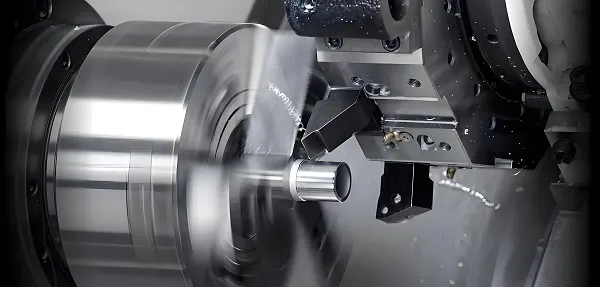
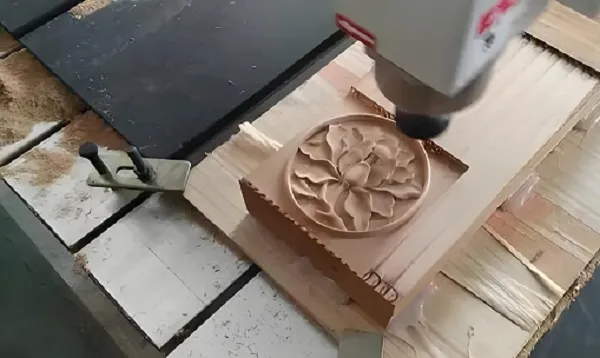
| CNC machining | Guides, star wheel segments, shafts, mounting plates and precision locating parts. | Shafts, hubs, bushings, guide blocks and brackets. |
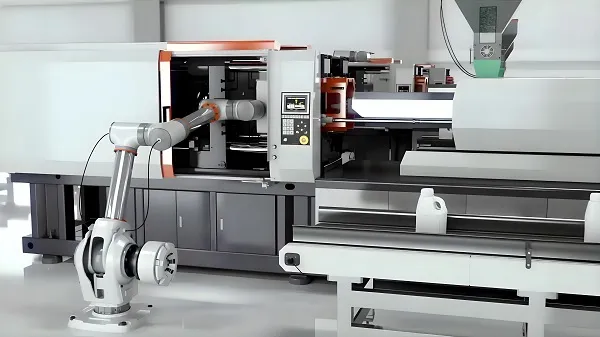
| Injection molding | Stable plastic guides, pucks, gripper components and protective covers. | Custom polymer sliders, wear components and molded structural parts. |
| Mold making | Tooling for repeated plastic packaging components after volume review. | Tooling for repeated handling-system plastic parts. |
| 3D printing | Changeover prototypes, assembly-fit samples and selected functional checks. | Layout samples and low-volume guide or positioning concepts. |
| Die casting | Project-specific metal housings and support components. | Project-specific metal mounting seats and structural parts. |
| Sheet metal | Covers, supports, guard plates and mounting structures. | Support plates, protective structures and equipment brackets. |
For general metal and plastic production routes, see CNC machining services and injection molding services. The related industrial automation parts page covers general fixtures, brackets and motion components; this page focuses on packaging and conveyor functions.
Critical Dimensions, Functional Fit & Wear Requirements
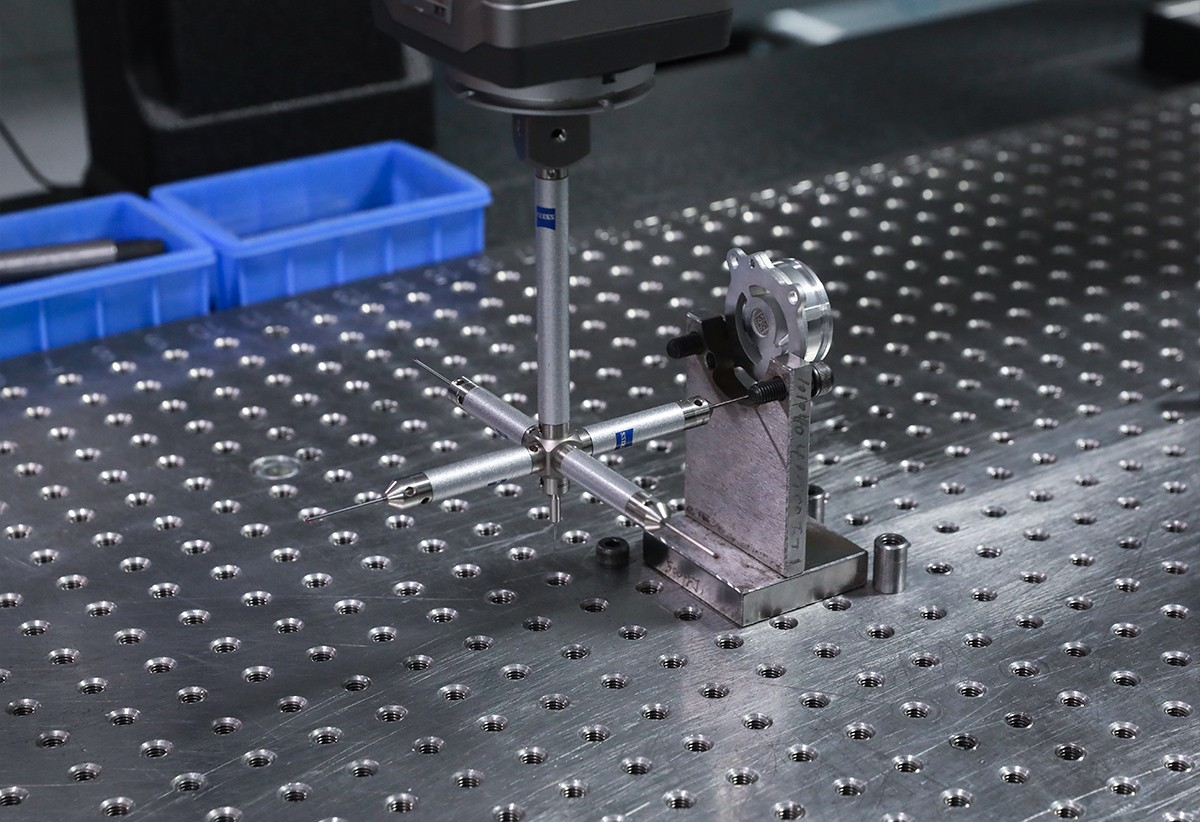
A part can meet its individual dimensions but still fail in the machine. The engineering review checks the features that affect positioning, rotation, transfer, gripping and repeated assembly.
| Part type | Key dimensions or conditions | Why it matters |
|---|---|---|
| Star wheels | Pocket profile, pitch, center bore | Controls container location and repeat indexing. |
| Guide blocks | Guide clearance, mounting position, contact face | Affects product travel, jamming and side loading. |
| Pucks | Product pocket geometry, seating fit, repeat location | Determines product stability during transfer. |
| Shafts | Diameter, straightness, runout, bearing seat | Controls rotation stability and bearing life. |
| Bushings | ID, OD, length, fit, coaxiality | Affects shaft alignment, wear and backlash. |
| Transfer plates | Flatness, gap, alignment, support edge | Keeps product movement smooth between stations. |
| Gripper fingers | Contact geometry, force interface, wear face | Controls grip and protects the product surface. |
| Brackets & plates | Hole position, flatness, bend angle, load path | Determines assembly fit and structural stability. |
When a product format changes, the replacement guide, puck, star wheel or adapter must match the new product envelope while retaining the original machine datum. Confirm the pocket size, guide spacing, locating reference and repeat seating condition.
State whether the part slides, rotates, strikes, grips or supports a load. Working speed, contact material, cleaning chemicals, lubrication and expected maintenance interval all affect material choice. Service life cannot be promised from material alone.
Material, Hygiene & Quality Documentation Review
Packaging equipment may serve food, beverage, cosmetics or pharmaceutical production. Compliance depends on the part's contact level and the required material documentation. Goldcattle reviews these requirements before production; it does not classify every part as food-contact safe by default.
Part contacts the product directly. Material grade, additives, finished surface and contact conditions require review.
Part may affect product through splashes, runoff or normal use. State the expected environment and cleaning conditions.
Machine frame, bracket, shaft or cover that does not touch the product. Standard engineering and inspection requirements still apply.
Material grade, supplier certificate, traceability, finish specification and any required test or declaration must be identified on the RFQ.
Inspection & Production Consistency
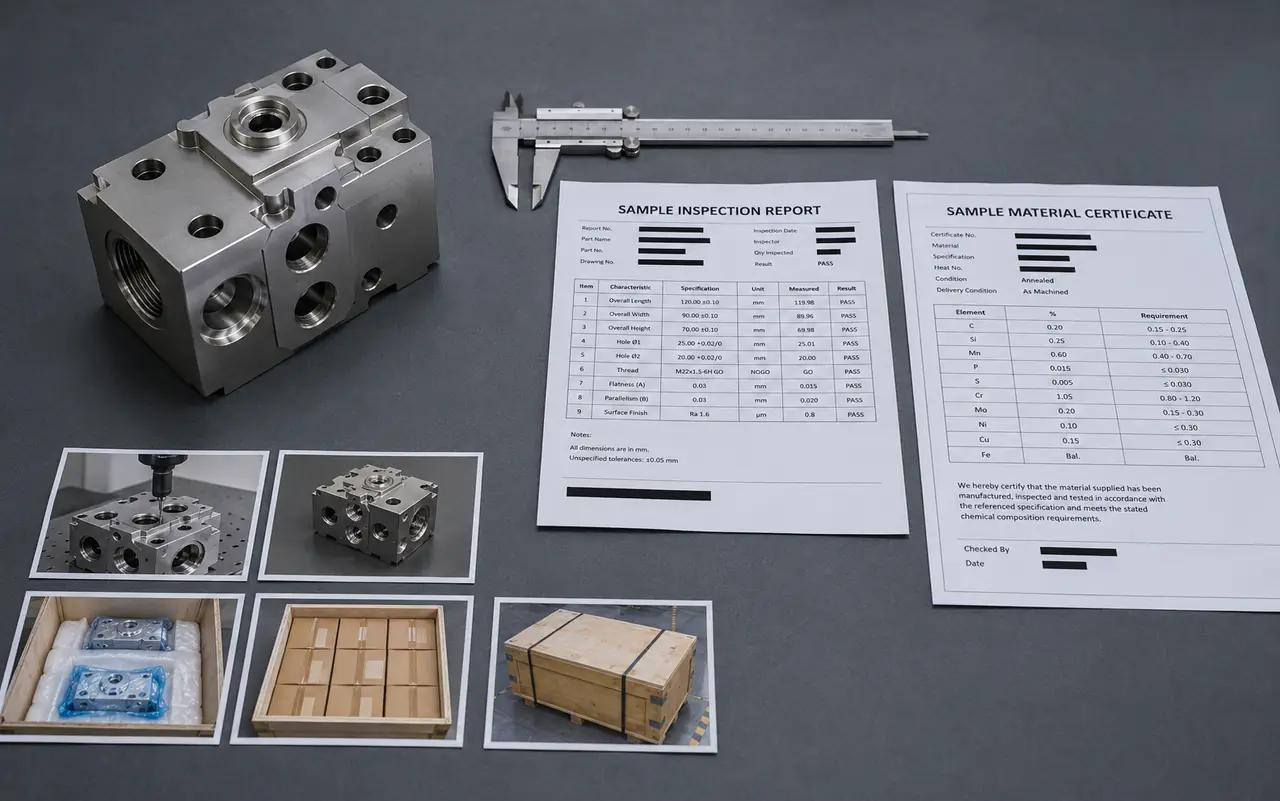
Repeat orders must carry the same drawing revision, material, finish and inspection level forward. The quality route below is used where the drawing or RFQ requires it.
Datums, critical features, fits, tolerances, finish and inspection method are checked before machining or molding.
Selected features are measured against the drawing before repeat production or batch release.
Material grade, condition and lot or heat record are retained where the project requires traceability.
Inspection results are recorded for critical dimensions, fits and specified geometric features.
Changes to drawing, material, finish or process are reviewed before a repeat order is produced.
Production parts are checked against the approved process, inspection plan and purchase order.
Request a Custom Component Quote
A clear RFQ helps the engineering team review fit, material, wear and inspection before quoting. Include the basic part information and, where available, the machine condition in which the part works.
- Component category: guide, shaft, bushing, puck, bracket, plate or other
- Equipment type: filling, capping, labeling, sealing, conveyor, sorting or transfer
- Material and grade, finish specification and required quantity
- CAD model or PDF drawing: STEP, IGES, DWG or PDF
- Prototype, first article or repeat production requirement
- Machine model, part number and drawing revision
- Mating component and installation interface
- Operating load, working speed and wear condition
- Food-contact class: direct, indirect or non-contact
- Inspection: CMM, FAI, material certificate or dimensional report
Packaging & Material Handling Components FAQ
Who manufactures custom packaging machinery components?
Where can I source custom material handling parts?
Can CNC machining produce packaging machine change parts?
What materials are used for conveyor and packaging components?
Can you produce custom star wheels and timing screws?
How do you choose materials for food packaging machinery parts?
How are conveyor shafts and bushings inspected?
Can custom packaging machine parts be produced in small batches?
What information is required for replacement parts?
Can one manufacturer supply metal and plastic packaging components?
Need a Packaging or Material Handling Component Quoted?
Send your drawing, 3D model and machine application. Goldcattle can review the functional fit, material, critical dimensions, wear condition and inspection route before recommending CNC machining, molding or another process.
Submit Your Drawing / Request a QuoteDrawing review · Engineering fit check · Prototype to repeat production
Review quality and certifications →