
Alloy Steel CNC Machining Services
Custom CNC machined alloy steel parts for shafts, gears, pins, bushings, tooling and other load-bearing components. We support drawing-based manufacturing from prototype quantities to repeat production, with CNC milling, turning, multi-axis machining, heat treatment and dimensional inspection.
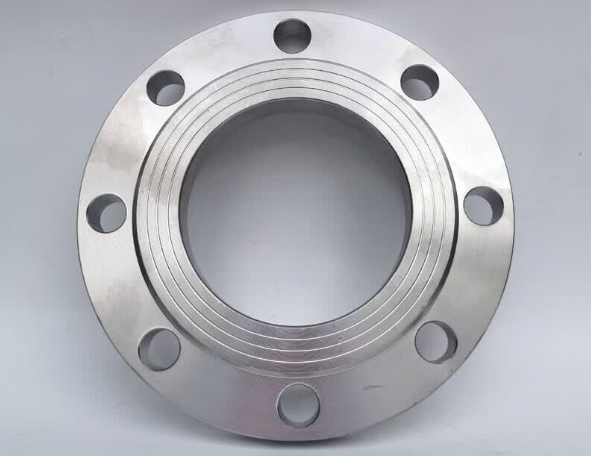
Alloy steel CNC machining — at a glance
A snapshot of what we cover on this page. Detailed capability, tolerance, heat-treatment and inspection statements are below.
Custom alloy steel CNC machined parts
Representative part types we are asked to machine. Every program is quoted from your drawing, alloy grade, heat-treatment condition, volume and inspection requirements.
CNC Machined Shafts
Bearing seat concentricity, keyway alignment, stepped diameter transitions.
Gears & Gear Components
Tooth profile, runout, surface condition for case hardening.
Bushings & Sleeves
ID concentricity, OD finish, controlled wall thickness.
Pins
Diameter tolerance, surface finish, hardness for wear resistance.
Couplings
Bore concentricity, bolt pattern accuracy, balanced machining.
Hydraulic & Pneumatic Components
Port geometry, sealing surface finish, pressure-bearing features.
Fixtures & Tooling Parts
Locating features, datum surfaces, repeatability under load.
Structural Mechanical Components
Flatness, parallelism, mounting face accuracy.
Other Drawing-Based Parts
Send your drawing. We will confirm the alloy grade, heat-treatment route and inspection scope before quoting.
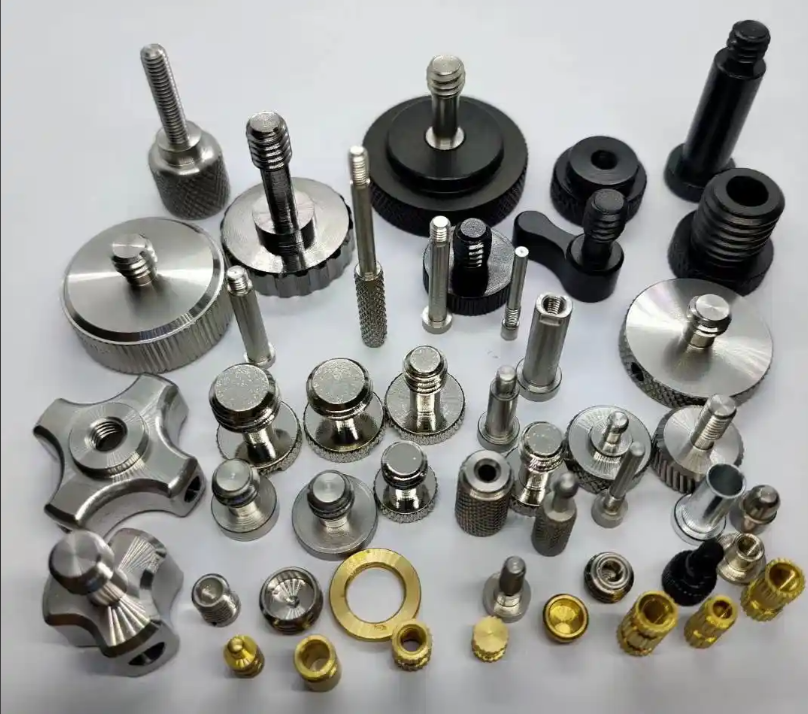
Why choose alloy steel for CNC machined parts?
Alloy steels are the workhorse material for load-bearing mechanical parts because their properties can be tuned through grade selection and heat treatment.
High Strength
Alloy steels carry higher tensile and yield strength than plain carbon steel at comparable section sizes, and remain stable under static and dynamic load.
- Shafts, drive components, structural brackets
- High-load mechanical assemblies
Toughness
The right grade in the right heat-treated condition provides impact resistance, fatigue life and damage tolerance for parts that see shock or cyclic loading.
- Heavily loaded shafts and gears
- Service environments with shock or vibration
Wear Resistance
Through-hardening and case-hardening routes produce surfaces that resist wear, galling and contact fatigue for gears, pins, bushings and sliding components.
- Gears, splines, cam profiles
- Sliding or rolling contact surfaces
Heat-Treatment Flexibility
The same grade can be supplied in annealed, normalized, quenched and tempered, or case-hardened condition to match the service requirement.
- Process-friendly delivery for rough machining
- Final performance set by heat treatment and finishing
The appropriate grade depends on load, hardness target, heat treatment, geometry, machinability and service environment — not on a single property. Confirm the final requirement with your engineering team before locking the alloy.
Alloy steel grades we machine
Five standard grades cover the majority of alloy steel machined-part programs we run. Each grade is shown with the property it is normally selected for and the part types it is typically used in.
4140
Good balance of strength, toughness, machinability and heat-treat response. The default alloy steel for shafts, pins, gears and fixtures.
4130
Strength-to-weight with good weldability, often used where sections are thinner or where the part will be welded into an assembly.
4340
Higher through-hardening and toughness than 4140. Used where duty is heavy and the section is thick.
8620
Case-hardening capability — tough core with a hard, wear-resistant surface after carburizing. Standard for surface-loaded gears and splines.
42CrMo4
EN-grade equivalent commonly used in European mechanical specifications. High strength with good fatigue resistance.
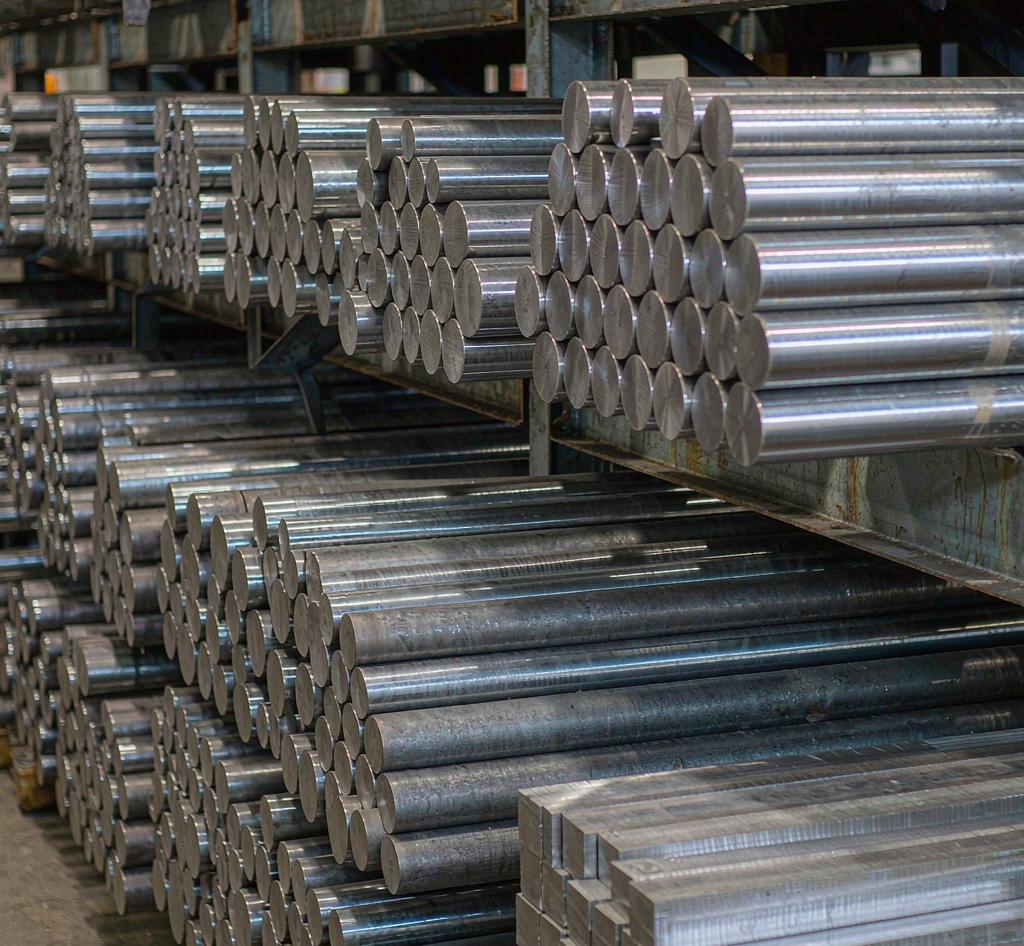
About other materials often grouped with alloy steel. 17-4 PH belongs in the stainless / precipitation-hardening material family. D2, H13 and M2 belong in the tool steel family. Those grades are intentionally not covered on this page; if your drawing calls for any of them, we will treat it as a different material program and quote accordingly.
Which alloy steel grade should you choose?
A starting point. The final grade is confirmed with your engineering team against load case, hardness target, heat-treatment route, geometry and inspection requirement.
The default alloy steel for shafts, pins, gears, fixtures and general mechanical components.
Heavier duty, thicker sections, drive components where impact and fatigue resistance matter.
Gears, splines, cam profiles and wear components where a hard case sits on a tough core.
Brackets, structural components, weldments and thin-wall sleeves where weight and weld quality matter.
European-spec mechanical components, drives and gear carriers where the EN reference applies.
The right grade depends on the full requirement, not on one number. Final selection should consider service environment, applicable industry requirements, weldability, machinability in the chosen delivery condition, and the heat-treatment route that follows rough machining.
Alloy steel CNC machining capabilities
The processes available for alloy steel parts at Goldcattle. Axis capability and equipment configuration depend on part size, geometry and material condition; specifics are confirmed per project.
CNC Milling
For prismatic parts, pockets, slots, drilling patterns and complex profiles on flat or boxed components.
- Brackets, housings, fixtures, blocks
- Multi-face parts with critical datums
- 3-axis milling as the default route
CNC Turning
For rotational parts where OD/ID, concentric features and length-to-diameter ratio matter.
- Shafts, pins, bushings, sleeves
- Stepped diameters, threads, grooves
- Live tooling for off-centre features
4-Axis & 5-Axis Machining
For multi-face parts, complex geometries and features that are difficult to reach with 3-axis setups.
- Reduced setups, better datum control
- Complex contours, angled features, undercuts
- Used where access or accuracy requires it
Drilling, Threading & Secondary Operations
For precision holes, threads, bores and other secondary features that complete the part.
- Drilling, reaming, tapping, thread milling
- Boring, counterbore, spotface
Alloy steel CNC machining tolerances
Tolerance is not a single number. The achievable tolerance depends on the drawing, the alloy grade, the heat-treatment condition, the geometry and the agreed inspection method.
Tolerance is determined according to the part drawing, alloy grade, heat-treatment condition, geometry and inspection requirements. Tolerances down to ±0.005 mm may be supported on qualified features after engineering review.
Where a feature is tighter than the process can reliably hold, we flag it at DFM and propose a design change or a secondary operation before tooling starts. For the full tolerance and inspection framework we apply across materials, see our Tight-Tolerance CNC Machining Services page.
GD&T features we work to on alloy steel parts include:
- Dimensional tolerance — linear, diametrical, length
- Position — true position of holes, bosses and features
- Concentricity / coaxiality — bearing seats, bores, journals
- Flatness, parallelism, perpendicularity — mounting faces, sealing surfaces
- Surface finish — for bearing seats, sealing faces, sliding surfaces
Heat treatment for alloy steel parts
Alloy steel performance is set as much by the heat-treatment route as by the grade. The standard sequence is rough machine in a machinable condition, then heat treat, then finish machine and grind.
Annealing
Softens the material and refines grain structure. Improves machinability and reduces hardness for rough machining.
- Full anneal for best machinability
- Stress-relief anneal for dimensional stability
Normalizing
Refines grain and improves mechanical-property consistency across the section.
- Forged or rolled alloy steel bar stock
- Pre-condition before further heat treatment
Quenching & Tempering
Through-hardening route that sets strength and toughness. The tempering temperature is selected to hit the required hardness range.
- 4140, 4340, 42CrMo4
- Oil or polymer quench depending on section size
Carburizing & Case Hardening
Adds carbon to the surface, then hardens. Produces a hard, wear-resistant case with a tough core — used for gears, splines and cam profiles.
- Standard for 8620
- Available on other grades where the spec allows
The standard alloy steel machining workflow
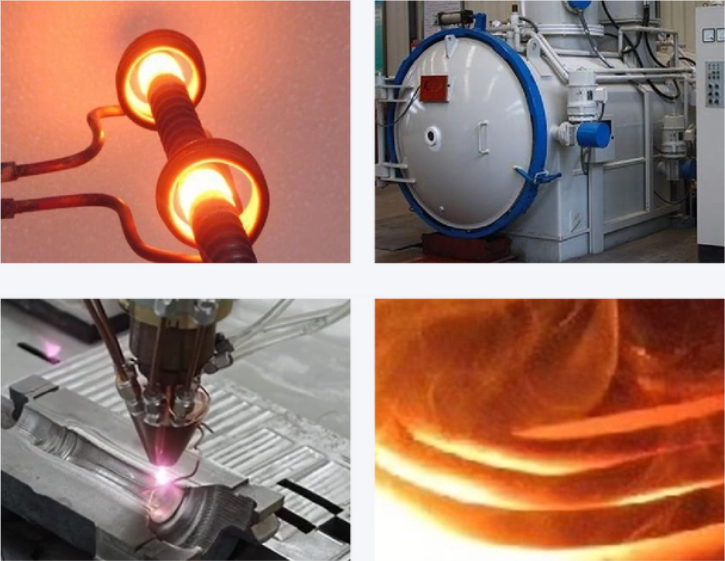
Managing alloy steel distortion after heat treatment
Heat treatment can change dimensions or induce distortion, particularly in thin sections, long shafts and asymmetrical components. Machining allowance, part orientation, stress relief and the sequence of roughing, heat treatment and finishing should therefore be considered during process planning — not after the part has already moved.
What we check
- Critical dimensions across features
- Runout on shafts and turned features
- Flatness and parallelism on mounting faces
- Concentricity on bearing seats and bores
- Hardness on agreed locations
- Grinding allowance left for finish machining
How we plan
- Allow sufficient stock for finish machining after heat treatment
- Use stress relief where geometry is distortion-prone
- Hold the roughing → heat treatment → finishing sequence
- Fixture with awareness of expected movement
- Confirm heat-treatment scope with the project before quoting
- Re-inspect after heat treatment, before finish machining
Heat treatment is rarely the place to save time. Trying to skip a roughing allowance or to machine final features before heat treatment almost always means reworking parts or scrapping them. We plan the sequence with you at DFM so the part reaches drawing tolerance after heat treatment, not in spite of it.
Surface finishing options
Surface condition is part of the drawing. The right finish depends on the function of the surface, not on the steel itself.
Standard finish directly from the CNC tool. Visible tool marks, suitable for non-critical surfaces, internal features and mounting faces that will be hidden.
Default — no extra finishing operation.Cylindrical or surface grinding for bearing seats, sealing surfaces and precision fits. Polishing where surface roughness is specified.
Used for functional surfaces that need to hold tolerance and finish.Black oxide, phosphate, zinc plating, nickel plating or other finishes per drawing — applied after machining and grinding.
Confirm coating requirement and sequence at RFQ.Design for alloy steel CNC machining
The drawings that produce the best alloy steel parts are clear about which features matter, what the material condition is, and what the heat-treatment route will be. Five things to specify.
Have a drawing but not sure about the alloy grade or heat treatment?
Send the CAD model and your service environment. We will confirm the alloy, the heat-treatment sequence and the tolerance we can hold against your drawing — before you commit to tooling.
Alloy steel machining applications
Where alloy steel parts typically go. Application suitability depends on material grade, heat treatment, loading conditions and applicable industry requirements.
| Industry | Example parts | Typical alloy grades |
|---|---|---|
| Automotive | Shafts, transmission components, brackets, hubs | 4140, 4340, 8620 |
| Industrial Machinery | Gears, pins, bushings, couplings, drive components | 4140, 42CrMo4, 4340 |
| Hydraulic & Pneumatic | Valve components, shafts, fittings, cylinder parts | 4140, 42CrMo4 |
| Automation & Robotics | Drive components, mounting parts, structural brackets | 4130, 4140 |
| Energy | High-load mechanical components, drive shafts | 4140, 4340, 42CrMo4 |
| Tooling | Fixtures, tooling components, structural inserts | 4140 |
About aerospace and other regulated industries: alloy steel is used in a number of regulated applications, and we support drawing-based manufacturing for them. Industry-specific documentation, material traceability and validation scope are agreed per project rather than assumed from a generic capability statement.
Alloy steel vs stainless steel vs carbon steel for CNC machining
The right material is a function of load, corrosion environment, wear and cost. The table below is a starting point, not a recommendation — confirm with your engineering team.
| Requirement | Alloy steel | Stainless steel | Carbon steel |
|---|---|---|---|
| High strength | Grade- and heat-treatment dependent | Grade-dependent | Limited by section size and heat treatment |
| Heat-treat response | Excellent in standard grades | Grade-dependent; often not the main route | Good in plain carbon grades |
| Corrosion resistance | Limited — coatings usually required | Usually better — grade-dependent | Lower — coatings almost always required |
| Wear resistance | Good to excellent after through- or case-hardening | Grade-dependent | Moderate; heat treatment helps |
| Machinability | Good in annealed condition; harder in hardened condition | Work-hardening tendency on some grades | Generally good in low-carbon grades |
| Cost | Medium | Medium to high | Lower |
| Typical use | Shafts, gears, load-bearing mechanical parts | Corrosion-exposed parts, food / medical hardware | General mechanical parts, brackets, frames |
For stainless steel CNC machining we cover 304, 316L and 17-4 PH in our dedicated stainless steel CNC machining page. If your drawing sits between two material families, send the CAD model and we will help you pick.
Alloy steel CNC machining process
Nine steps from drawing to shipment. The order matters as much as the operations themselves.
Drawing & CAD review
Geometry, tolerances, GD&T, datum strategy, material condition, heat-treatment notes.
Material & heat-treatment review
Alloy grade, delivery condition, required hardness, sequence of operations.
Process planning
Stock allowance, fixturing, roughing / finishing split, inspection points.
CNC rough machining
Material removal with machining allowance left on critical features for heat treatment.
Heat treatment
Coordinated per the agreed route — anneal, normalize, Q&T or carburize / case harden.
Finish machining
Bring features to drawing tolerance after heat treatment, with the agreed stock left.
Surface treatment / grinding
Grinding, polishing, surface coatings per drawing.
Dimensional inspection
CMM, calibrated 2D equipment, surface finish, hardness checks on agreed features.
Packaging & shipment
Protection appropriate to alloy steel parts (oil, VCI, foam, crate) and agreed Incoterm.
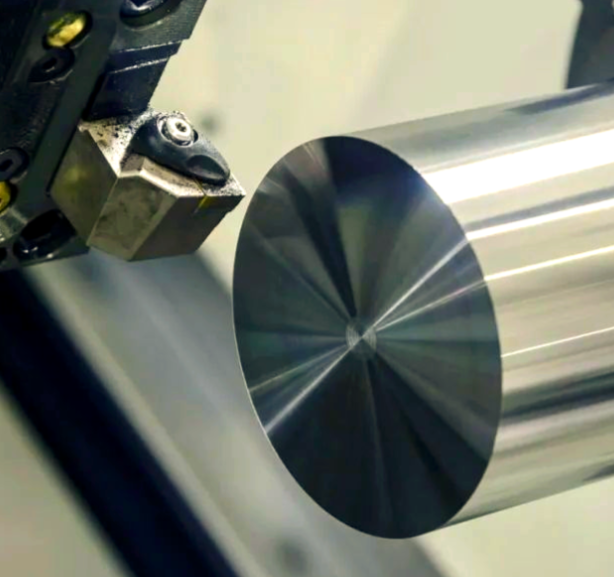
The value of process planning on alloy steel is that it forces the right decisions early: which features to finish before heat treatment, which after, and where to leave stock. Doing that on the first article is what separates a part that meets drawing the first time from one that has to be reworked.
We confirm the sequence with you at DFM rather than at first article inspection, so the schedule is realistic from the quotation onwards.
Quality control & inspection for alloy steel parts
Inspection scope is agreed per project. We state what is checked in the quotation, and only claim what is actually performed for your order.
Material Verification
Alloy grade and condition confirmed against the order. Material certificate from mill or distributor is retained where the requirement calls for it.
- Material grade as ordered
- Heat-treatment condition on receipt
- Certificate retained per project requirement
In-Process Inspection
Process parameters and key dimensions are recorded during production. Tool condition and feature fit are checked against the plan.
- Critical dimensions during roughing
- Re-inspection after heat treatment
- Setup checks on multi-operation parts
Final Inspection
Per the agreed scope, using equipment matched to the features being measured.
- CMM for complex geometry
- Calibrated micrometer, caliper, height gauge
- Thread gauges, surface finish, hardness
Documentation
Documentation level is set at RFQ and reflects what your program actually needs.
- Inspection report on agreed features
- Material certificate (mill or distributor)
- Heat-treatment documentation where coordinated
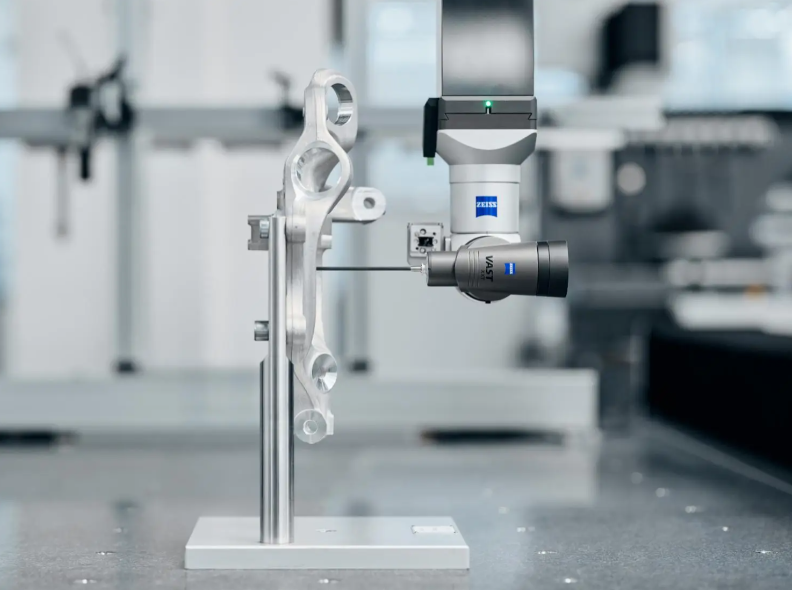
What we do not promise. Not every part receives full dimensional inspection on every feature, and inspection scope is not automatically identical across programs. Capability data, PPAP-style documentation and full feature-level CMM reports are quoted when your program needs them, not assumed by default.
Representative alloy steel project
A representative project type, described without client identification. Specific results are always project-specific.
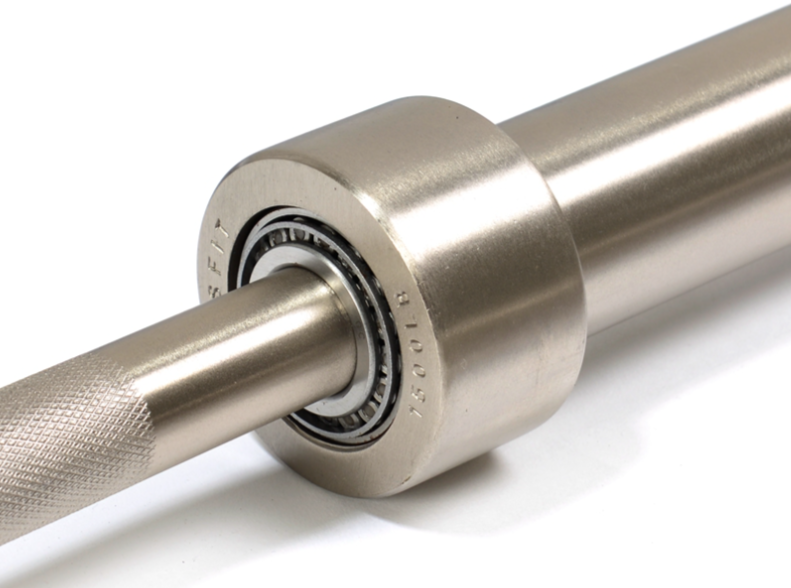
4140 precision shaft — heat-treated and ground for industrial machinery
The value in this type of program is not a single tolerance number. It is that the distortion risk, the heat-treatment sequence and the finishing allowance were planned into the first article — so rework was a finishing step, not a re-quote.
Project descriptions are anonymized and representative. Specific alloy grade, heat-treatment condition, hardness range, tolerance outcomes and lead time vary with geometry, material, volume and inspection scope; we quote against your drawings rather than publishing representative values.
Frequently asked questions
What alloy steel grades can you CNC machine?
On this page we machine AISI / SAE 4140, 4130, 4340, 8620 and the EN-grade equivalent 42CrMo4. These cover the most common alloy steel applications for shafts, gears, pins, bushings, couplings and structural parts. Other categories — stainless steels such as 17-4 PH, and tool steels such as D2, H13 and M2 — are handled in their dedicated material pages rather than under alloy steel.
Can you CNC machine 4140 steel?
Yes. 4140 is one of our standard alloy steel grades. The appropriate delivery condition (annealed, pre-hardened, or quenched and tempered) is confirmed before quoting so we plan machining allowance and tool selection correctly.
Can you CNC machine hardened alloy steel?
We can machine material in pre-hardened or quenched and tempered condition. Harder delivery conditions require harder tooling, more conservative cutting parameters and tighter process control, and we will tell you before quoting whether the requested condition is workable for your geometry and tolerance.
What is the difference between 4140 and 4340?
4140 is the workhorse grade — a good balance of strength, toughness and machinability, used widely for shafts, pins, gears and fixtures. 4340 contains more nickel and delivers higher through-hardening and toughness, so it is used for heavier loading and more demanding duty. The right choice depends on load, hardness target and service environment rather than on either grade being universally better.
Is 8620 suitable for CNC machined gears?
8620 is well suited to gears that need a hard, wear-resistant case with a tough core. It is supplied in a carburizing or pre-hardened condition and is normally case-hardened after rough machining. We can machine 8620 in either delivery condition and coordinate the heat treatment route with your drawing requirements.
Should alloy steel be heat treated before or after machining?
The standard sequence is rough machine in a machinable condition (annealed or pre-hardened), heat treat to the required hardness, then finish machine and grind. Heat treatment after final machining tends to move dimensions out of tolerance. Some surface treatments, such as case hardening, are designed to be the final step on specific features — those exceptions are reviewed per drawing.
Can you provide material certificates?
Material certificates from the mill or distributor are available on request and are quoted into the order when required. The certificate scope and traceability requirement (heat number, batch, individual part) is agreed at RFQ.
What tolerance can you achieve when machining alloy steel?
Tolerance is determined by the part drawing, alloy grade, heat-treatment condition, geometry and inspection requirement. Tolerances down to ±0.005 mm may be supported on qualified features after engineering review. For features that are tighter than the process can reliably hold, we flag the issue at DFM and propose a design change or a secondary operation before tooling starts.
What files do you need for an alloy steel CNC machining quote?
A 3D CAD file in STEP, STP or IGES, a 2D drawing showing tolerances and critical features, the alloy grade and required heat-treatment condition, target quantity per order and per year, the surface finish requirement, any inspection or documentation requirement, and your target date for first samples.
Can you handle prototype and production quantities?
Yes. We support short prototype runs through repeat production volumes, all under the same ISO 9001:2015 quality system. Lead time, inspection scope and documentation level are quoted per project rather than assumed from a generic tier.
Technical note: achievable tolerances, surface finish, hardness outcomes, distortion behaviour and lead time depend on the specific alloy grade, delivery condition, heat-treatment route, geometry, quantity and inspection scope of your project. Nothing on this page should be read as a guaranteed process capability or a certification of conformity; those are stated in the quotation and inspection documentation agreed for your order.
Request an alloy steel CNC machining quote
Send your CAD model, drawing, alloy grade, heat-treatment condition, quantity and inspection requirement. Our engineering team can review the manufacturing requirements and provide a production quote.
Accepted files: STEP · STP · IGES · DWG · PDF