Vertical Turning Center (VTC) Machining: Applications, Advantages & Part Selection
A practical guide to what a vertical turning center does, why some large and heavy rotational parts are better handled vertically, how VTC machining compares with horizontal turning, and when to ask a supplier for it.
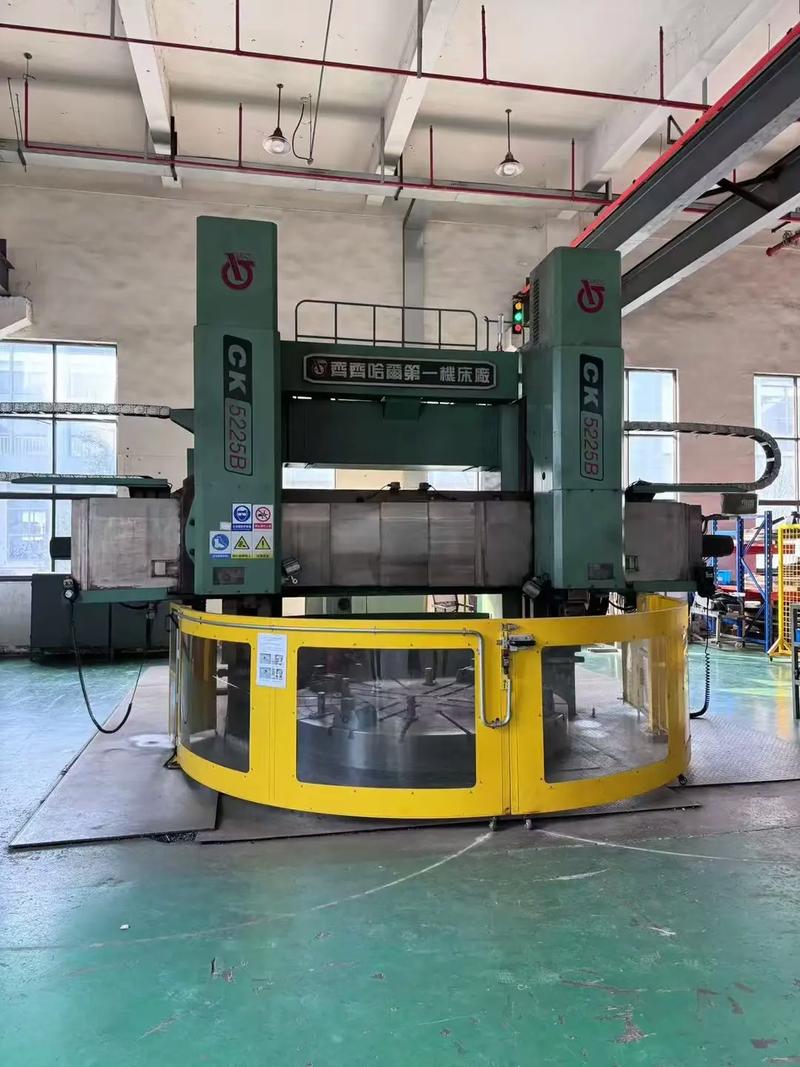
A vertical turning center (VTC) is a CNC turning machine in which the workpiece is mounted on a horizontal table or chuck and rotates around a vertical spindle axis. This configuration is particularly useful for large-diameter, heavy or short cylindrical components, because gravity helps seat the workpiece against the chuck or fixture.
Best suited for: large-diameter parts, heavy workpieces, short cylindrical components, ring-shaped components, flanges, bearing housings, wheels and hubs, and large discs.
The question behind most searches here is not "what does the abbreviation mean". It is: does my part belong on a vertical turning center, and should I ask my CNC supplier about it? This page answers that question, and keeps the scope deliberately narrow. If you are looking for general turning services, materials or tolerances, the CNC turning services page covers the service side.
What Is a Vertical Turning Center?
A vertical turning center is a CNC turning machine with one defining feature: the spindle axis is vertical. The workpiece sits on a horizontal worktable or chuck, and the cutting tool approaches it from the side through a turret. The machine turns parts that are typically large in diameter and relatively short in axial length.
That single orientation choice changes three practical things. First, the workpiece is seated on a flat table, so gravity holds it in place instead of working against a horizontal setup. Second, large-diameter parts are easier to load and clamp because they rest on a surface rather than hanging off a spindle. Third, chips and coolant fall away from the cutting zone more directly, which helps when the cut is removing a lot of material.
A VTC is still a turning machine. It produces the same family of features — diameters, faces, grooves, tapers, threads and bores — but it is chosen for the parts, not for the feature list.
How Does a Vertical Turning Center Work?
Six core elements do the work. The rest of the machine exists to keep these six stable under heavy cutting.
Workholding System
The chuck or fixture supports the workpiece on the horizontal table.
Vertical Spindle
Rotates the workpiece around a vertical axis.
Turret
Carries turning tools and, depending on machine configuration, driven tooling.
X and Z Axes
Control tool position relative to the workpiece.
CNC Control
Executes the programmed toolpaths.
Coolant & Chip Management
Matters most on large parts with heavy material removal.
Why Use a Vertical Turning Center?
Four practical reasons explain most VTC selections. None of them is "a VTC is more accurate" — accuracy claims belong to the specific machine, not to the orientation.
Gravity-Assisted Workholding
Large, heavy workpieces seat more stably against the chuck or fixture during clamping and cutting.
Better Access for Large Diameters
Suitable for parts with a large diameter and relatively short axial length.
Reduced Handling Difficulty
Heavy parts avoid the complex horizontal support and handling logic some horizontal machines require.
Suitable for Heavy Material Removal
Castings, forgings, large steel parts and large aluminum components.
What Parts Are Best Suited for Vertical Turning?
These are the shapes that show up on vertical turning centers. If your part looks like one of these, a VTC is worth asking about.
Vertical Turning Center vs. Horizontal Turning Center
The comparison that matters to buyers is not "which machine is newer". It is which orientation fits the part geometry, weight and handling.
| Factor | Vertical Turning Center | Horizontal Turning Center |
|---|---|---|
| Spindle orientation | Vertical | Horizontal |
| Large-diameter parts | Excellent fit | Often less convenient |
| Heavy workpieces | Strong use case | Application dependent |
| Long shafts | Less suitable | Excellent fit |
| Short cylindrical parts | Excellent fit | Excellent fit |
| Large rings / flanges | Excellent fit | Possible, geometry dependent |
| Gravity during workholding | Helpful | Different loading behavior |
| Typical applications | Large discs, hubs, rings, housings | Shafts, pins, bushings, long cylindrical parts |
When Should You Choose a Vertical Turning Center?
Run the part through this sequence. Answering yes through the chain points toward a VTC.
Long shafts and slender cylindrical components are usually better suited to horizontal turning configurations.
What Materials Can Be Machined on a VTC?
The material list is short on purpose — it is the list that actually appears on vertical turning centers for large components.
Vertical Turning Center Machining Process
A VTC job follows the same disciplined route as any CNC work — with extra attention to workholding for large and heavy parts.
Depending on machine configuration, a VTC may integrate additional operations beyond basic turning. Do not assume every VTC does milling and drilling — confirm live-tooling and multitasking capability for the specific part.
Industries That Use Vertical Turning Centers
Each industry listed here uses a VTC for a reason related to its parts, not because the machine is fashionable.
Energy
Large-diameter flanges, rings and valve components where stable workholding and large swing capacity matter.
Heavy Equipment
Large rotational housings and structural components with heavy material removal.
Automotive & Commercial Vehicles
Wheels, hubs and large brake or drivetrain components.
Aerospace
Large rings and housings where material and traceability requirements are controlled.
Pumps & Valves
Large bodies and covers with accurate bore and face relationships.
Industrial Machinery
Large discs, housings and fixtures machined as part of machine builds.
Marine
Large rotational components where corrosion-resistant materials and stable clamping matter.
Rail
Wheels and large rotational components with repeatable geometry requirements.
When Is a Vertical Turning Center Not the Best Choice?
VTCs earn their place on specific parts. On others, a different machine does the job better — and a good supplier says so.
Consider another route for
- Long shafts — horizontal turning is usually more suitable.
- Slender parts — support and rigidity need careful review.
- Small high-volume components — other turning routes may be more efficient at scale.
- Complex multi-sided geometry — a turn-mill or multi-tasking machine may fit better.
The honest answer is part of the engineering review. If a horizontal machine or a turn-mill route serves your part better, that is what should be recommended.
Does VTC Machining Reduce Cost or Lead Time?
There is no honest fixed percentage for "VTC is X% cheaper". What can be said is a logic chain.
What Should You Ask a CNC Supplier About VTC Machining?
Ten questions that turn a "we can do it" answer into something you can verify.
VTC Machining at Xiamen Goldcattle
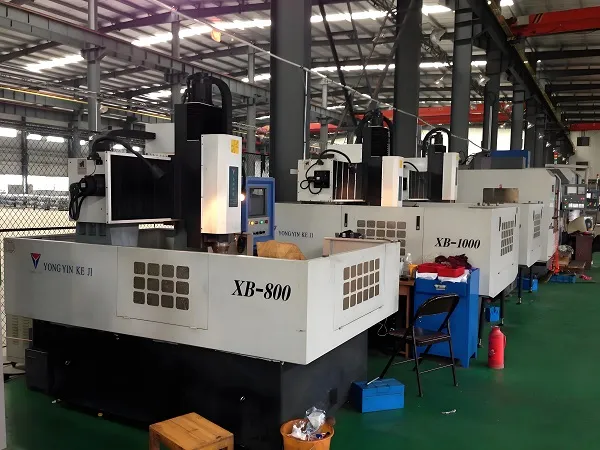
We do not sell vertical turning centers. We run CNC turning equipment — including vertical configurations for suitable large rotational parts — to manufacture components from customer drawings.
- Drawing-based manufacturing from CAD or 2D drawings
- Rotational parts including flanges, hubs, rings and housings
- Materials per specification: steels, stainless, cast iron, aluminum
- Prototype through low-volume to production quantities
- Workholding and fixture review at DFM stage
- Dimensional inspection per drawing*
- CMM and inspection reporting where specified*
- ISO 9001:2015 quality system
Machine-specific limits — turning diameter, workpiece weight, swing and spindle data — are confirmed at quotation for your part, not published as generic claims.
Frequently Asked Questions
What is a vertical turning center?
A vertical turning center (VTC) is a CNC turning machine in which the workpiece is mounted on a horizontal table or chuck and rotates around a vertical spindle axis. This setup is particularly useful for large-diameter, heavy or short cylindrical components.
What is a vertical turning center used for?
VTCs are used for large-diameter and heavy rotational parts such as flanges, rings, hubs, bearing housings, large discs, and pump or valve components where stable workholding and large swing capacity matter.
What parts are best for vertical turning?
Large flanges, bearing housings, wheels and hubs, large rings, pump and valve components, large industrial housings and heavy rotational components are typical VTC parts.
What is the difference between vertical and horizontal turning?
A VTC holds the workpiece on a horizontal table with a vertical spindle axis, which suits large-diameter and heavy parts. A horizontal turning center holds the workpiece along a horizontal axis, which suits long shafts and slender cylindrical parts.
Is a VTC the same as a CNC lathe?
A vertical turning center is a type of CNC turning machine. The term emphasizes the vertical spindle and workpiece orientation and its suitability for particular part geometries and handling requirements.
Can vertical turning centers machine large parts?
Yes. Large-diameter and heavy workpieces are where vertical turning centers are strongest, because gravity helps seat the workpiece against the chuck or fixture.
What materials can be machined on a VTC?
Carbon steel, alloy steel, stainless steel, cast iron, aluminum, brass and nickel alloys are commonly machined on vertical turning centers, depending on the component and application.
Is vertical turning suitable for long shafts?
Long shafts and slender cylindrical components are usually better suited to horizontal turning configurations, which support length more naturally.
Can a VTC perform milling and drilling?
Depending on the machine configuration, a VTC may integrate additional operations beyond basic turning, such as drilling or milling with driven tooling. Confirm the machine's live-tooling and multitasking capability for your specific part.
How much does VTC machining cost?
VTC machining cost depends on cycle time, setup, tooling, material removal, quantity, inspection requirements and whether the part fits the machine. For a suitable large component, VTC can reduce handling and workholding complexity, which may lower cost or lead time compared with a less suitable configuration.
Have a Large Rotational Part to Machine?
Send the drawing or 3D model. Our engineering team will review the geometry, weight and workholding, and confirm whether a vertical turning center — or another turning route — fits your part best.