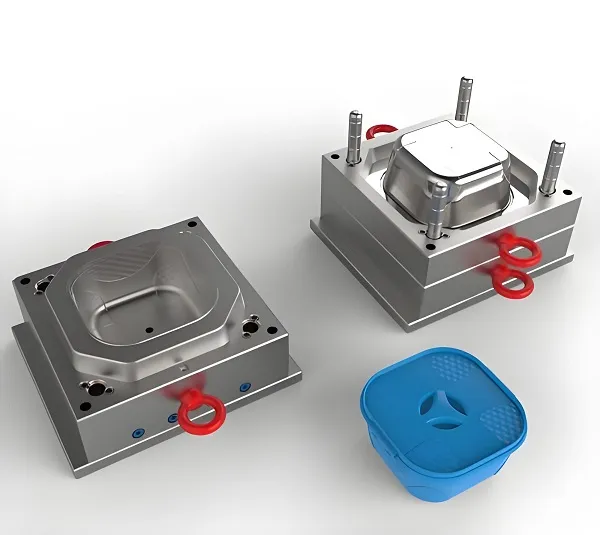
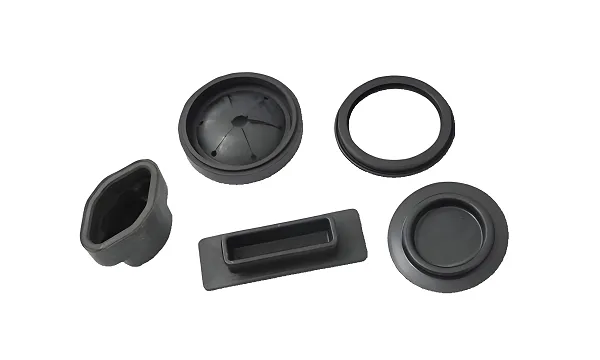
ABS, PC, Nylon & POM Injection Molding in China
Choose the resin by what the part needs to do — not by the material name alone. A practical material-selection and molding guide for ABS, polycarbonate, nylon and acetal, built around how buyers actually specify, tool and qualify parts.
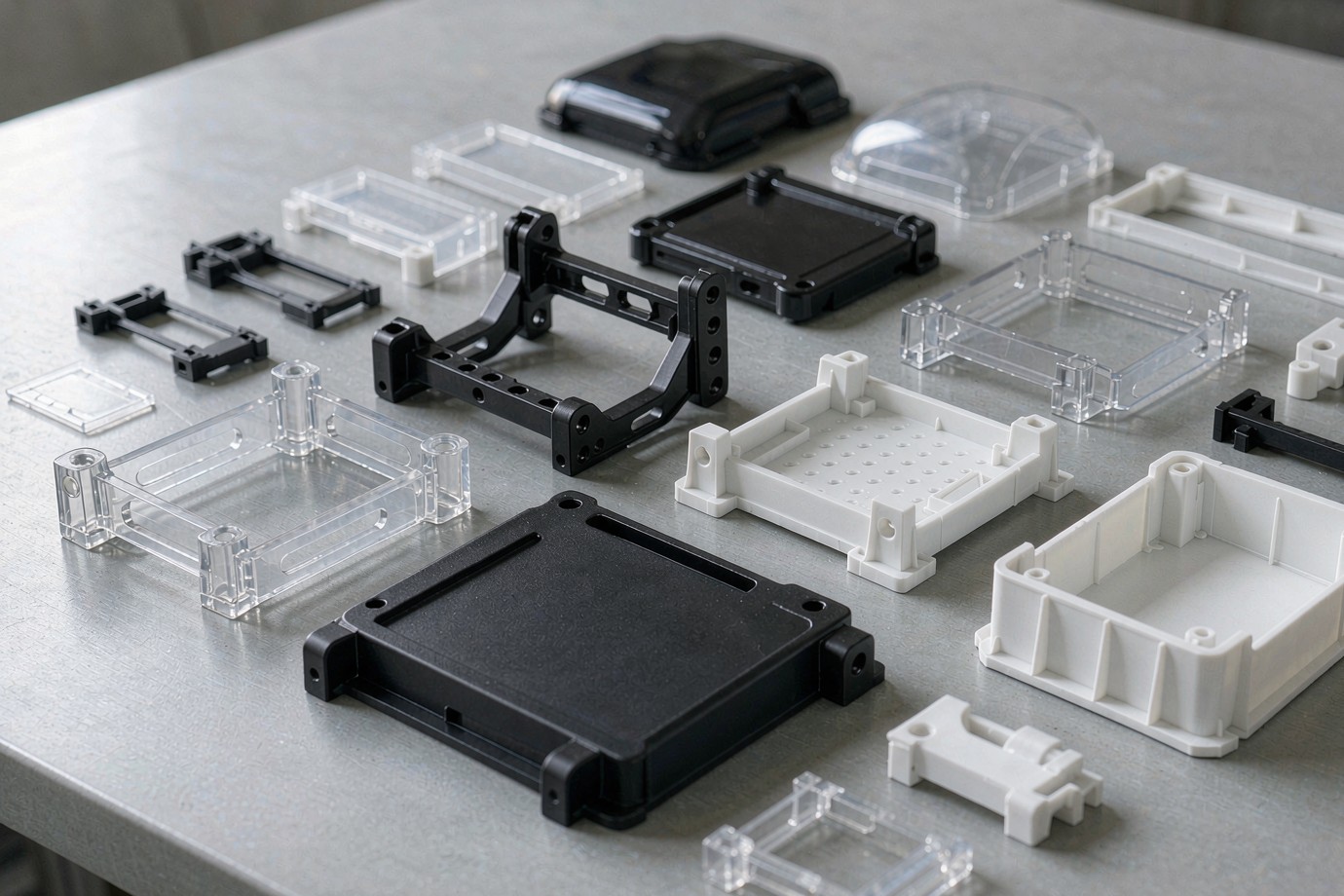
Before opening a tool, answer the question the part actually poses. The table below maps a common requirement to a starting resin. It is a triage, not a substitute for a grade-specific check — use it to open the conversation, then confirm with the deep dives and the decision path.
| If your part must… | Start with | Watch out for |
|---|---|---|
| Be transparent and impact-resistant | PC | Chemical stress cracking |
| Be low-cost, opaque, easy to mold and paint | ABS | Lower heat resistance |
| Absorb impact, flex fatigue or wear, tolerate some moisture | Nylon (PA) | Moisture-driven size change |
| Hold tight dimensions, run low-friction, resist creep | POM | Higher, anisotropic shrinkage |
| Combine stiffness with dimensional stability | Glass-filled PA or POM | Warpage and mold abrasion |
Choose by Function, Not by Name
The most common material mistake is picking a resin because it is familiar — "we always use ABS" — and then fighting the part through production. Resin choice should follow the job: what load the part sees, what temperature it lives in, whether it must be clear, whether it slides against something, and how tightly it must hold dimension. A housing, a gear and a transparent cover are three different problems even if they are all "plastic."
Once the function is clear, the order of decisions is consistent: material family → specific grade → part geometry and tolerance → mold and gate design → process and quality plan. Getting the family right early avoids a late tooling change, which is where most cost and delay hide. The deeper sections of this page walk that chain for each of the four resins.
The Four Resins at a Glance
These four cover the large majority of engineering-plastic injection molding outside of specialty polymers. They split into two behavioural groups — amorphous (ABS, PC) and semi-crystalline (Nylon, POM) — and that split, more than the name, drives shrinkage, warpage and mold design.
| Resin | Class | Typical use | Planning shrinkage | Key trade-off |
|---|---|---|---|---|
| ABS | Amorphous | Enclosures, housings, trims | ~0.5–0.7% | Cheap and easy; not clear, modest heat |
| PC | Amorphous | Covers, lenses, shields | ~0.5–0.7% | Clear and tough; stress-crack prone |
| Nylon (PA6/PA66) | Semi-crystalline | Gears, clips, wear parts | ~1.0–2.0% | Tough and fatigue-resistant; moisture |
| POM (Acetal) | Semi-crystalline | Precision gears, bushings | ~1.8–3.0% | Stable and low-friction; high shrink |
How to Read a Material Spec: Material → Grade → Application
A useful specification names three things, in this order:
Family
"ABS" or "Nylon" tells you the behaviour class. It is a starting point, not a part number.
Commercial grade
"PC, 10% glass-filled, UV-stabilized, FR" is a real specification. Grade decides modulus, heat, flame rating and mold behaviour.
Service condition
Temperature, chemical, load and regulatory environment decide which grade is actually acceptable.
On the drawing and purchase order, write the grade, not just the family. "ABS" on a PO leaves the molder free to substitute a grade with different shrinkage or heat performance — and the part may not fit. A controlled grade with lot traceability is what keeps the second order identical to the first.
ABS: When It Earns Its Place
Acrylonitrile butadiene styrene is the default engineering plastic for a reason: it is easy to mold, dimensionally predictable, takes paint and texture well, and is inexpensive. It pairs good stiffness with decent impact and a smooth surface that suits consumer and industrial enclosures.
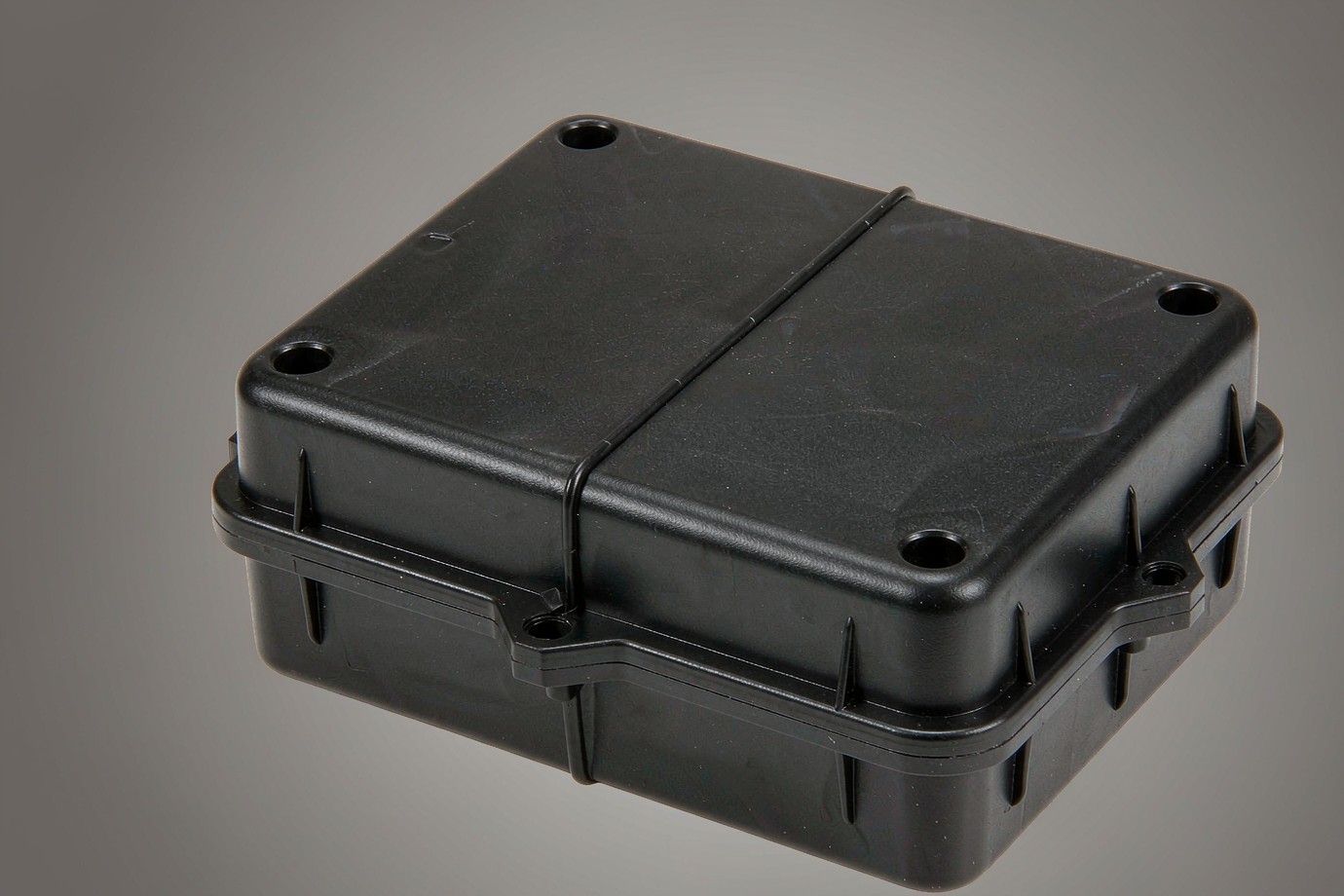
Where it fits. Indoor housings, appliance and electronics bodies, trims and brackets where cost and surface finish lead. Where it struggles. Continuous outdoor UV without stabilization, high heat, and contact with some solvents and strong chemicals. It is opaque, so it cannot serve a transparent requirement. For a deeper ABS-specific dive, see our custom ABS plastic molding page.
Polycarbonate (PC): Clarity, Impact and Heat
Polycarbonate is the choice when a part must be transparent and tough, or when it must survive higher heat than ABS allows. Its impact strength is exceptional, and it holds shape at temperatures where ABS would soften. That combination puts it in covers, lenses, guards and transparent shields.
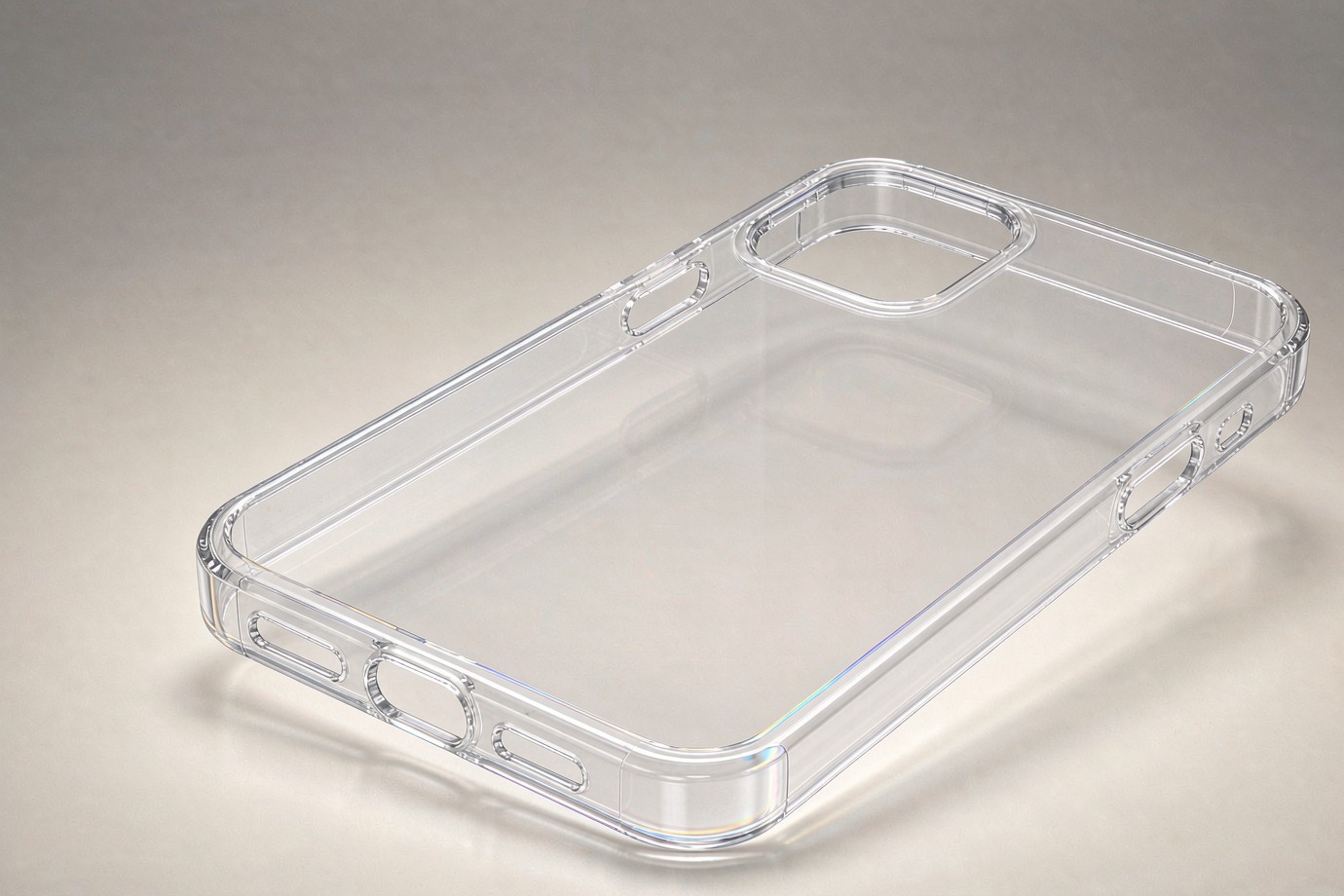
Where it fits. Transparent or tinted parts needing impact and heat resistance. Where it struggles. PC is prone to stress cracking when exposed to certain chemicals and to high sustained stress at gate or boss areas; it is also very hygroscopic and must be dried thoroughly. UV-stabilized grades handle outdoor use. Do not assume a generic "PC" is flame-rated — that requires a specific FR grade documented by UL94.
Nylon (PA): Toughness, Moisture and Friction
Nylon — polyamide, usually PA6 or PA66 — is the workhorse for parts that move or take repeated load. It absorbs impact, resists fatigue and wears well against metal and itself, which is why it appears in gears, clips, cable ties and bearing surfaces.
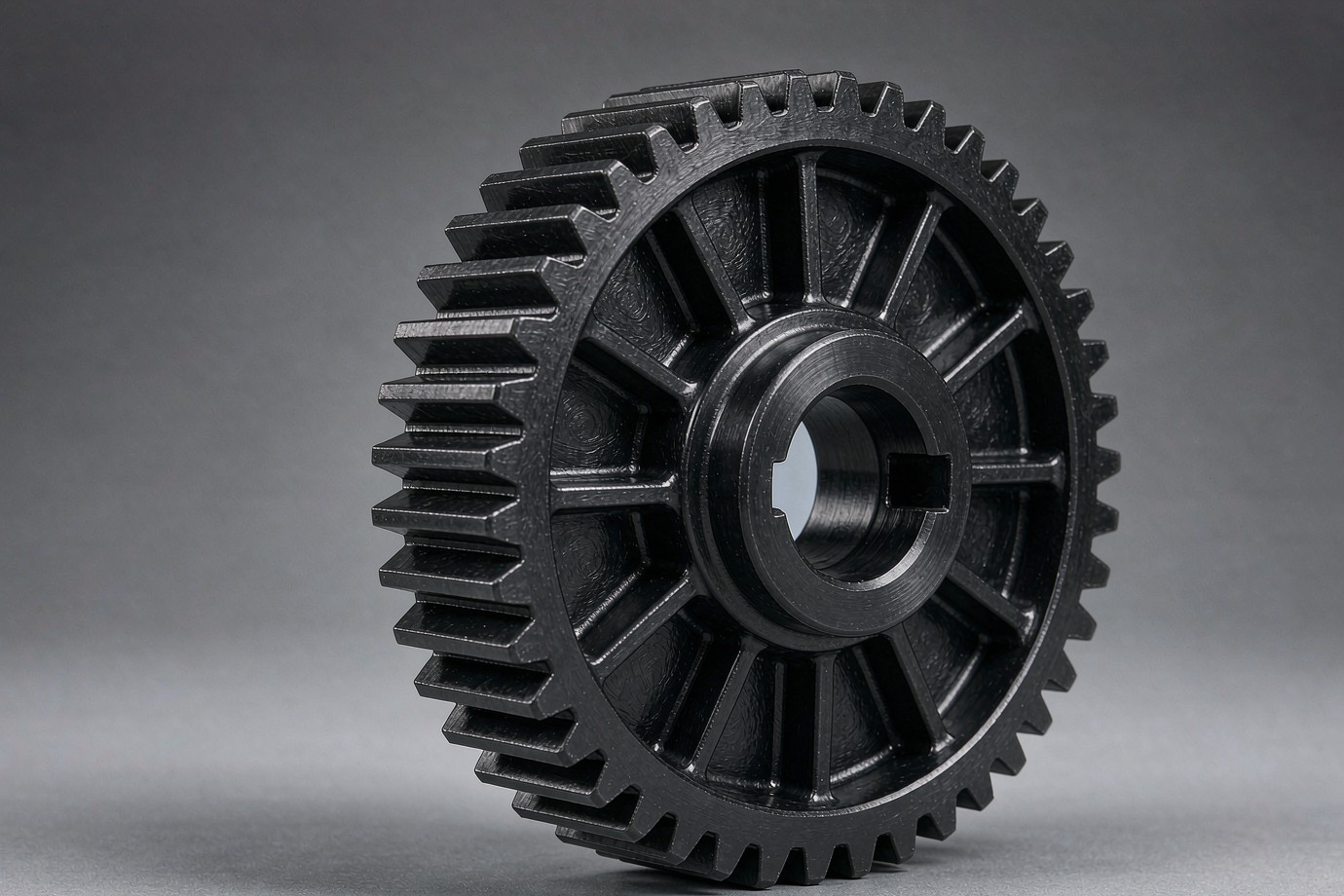
The moisture caveat. Nylon absorbs water from the air. As it conditions, dimensions grow slightly and impact rises while stiffness falls. For tight-tolerance parts, design against the conditioned state and confirm the critical dimension method with the molder. The shrinkage caveat. PA shrinkage is higher and more variable than ABS/PC; glass filling improves dimensional stability but increases warpage and mould abrasion, so the tool needs hardened steel.
Acetal (POM): Precision, Low Friction, Creep Resistance
POM, commonly called acetal or Delrin-style resin, is the precision player. It holds dimension tightly, slides with very low friction, resists creep under load and shrugs off many fuels and solvents. That makes it the natural choice for small gears, bushings, zipper components and valve parts.
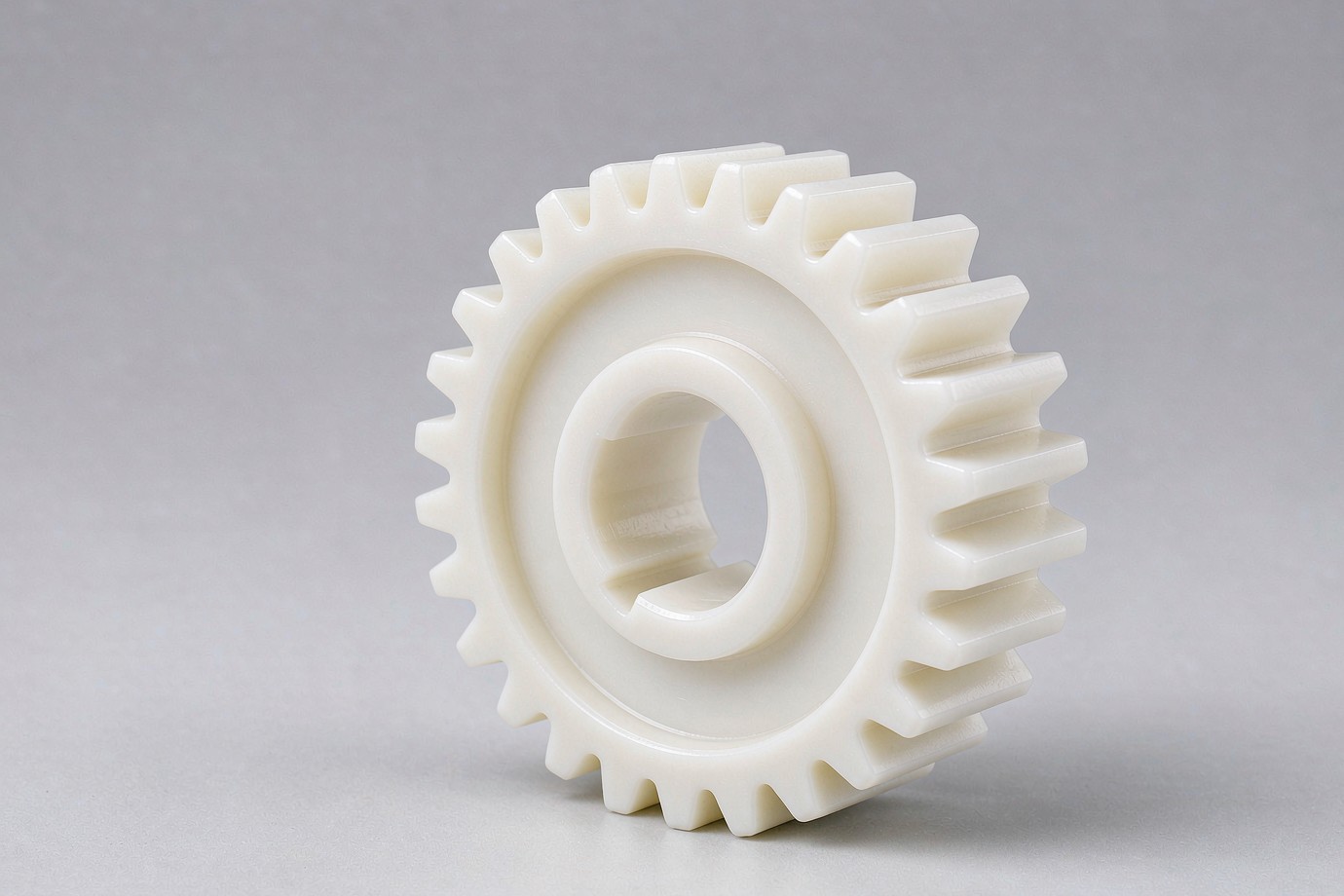
Where it fits. Precision, low-wear, tight-tolerance motion parts. Where it struggles. POM shrinkage is the highest of the four and somewhat anisotropic, so the mold and gate must be designed for it; it is also not a good outdoor UV performer without stabilization. Compared with nylon, POM wins on dimensional stability and friction; nylon wins on impact and cost.
ABS vs PC: Which One?
Both are amorphous and mould predictably, so the decision is usually about clarity, heat and chemical environment rather than moulding difficulty. If a part is clear, PC (or a clear blend). If it is a painted housing, ABS.
ABS vs Nylon
This is a stiffness-versus-toughness-and-wear trade. ABS is the better "structure" material; nylon is the better "moving or loaded" material. The moisture and shrinkage behaviour of nylon is the main reason teams stay on ABS until the application forces the change.
PC vs Nylon
These two rarely compete directly because one is clear-and-stiff and the other is opaque-and-tough. When both could work, the deciding factors are usually clarity (PC) versus wear and fatigue life (nylon).
Nylon vs POM
Both are semi-crystalline engineering plastics, so they share moisture sensitivity and mould-design care. The split is precision-and-friction (POM) versus toughness-and-cost (nylon). Small precision gears and bushings tend to land on POM; larger loaded or impact parts tend to land on nylon.
Amorphous vs Semi-Crystalline — and What It Means for Molding
This split explains more moulding behaviour than any single number. Amorphous resins (ABS, PC) cool without forming a sharp crystal structure: lower, more uniform shrinkage, less warpage, better dimensional stability, but often lower chemical and temperature resistance at the high end. Semi-crystalline resins (PA, POM) form crystals as they solidify: higher and more directional shrinkage, more warpage risk, but better wear, creep and chemical resistance.
Modified and Glass-Filled Grades
Most production parts use a modified grade, not a neat resin:
+GF (e.g. PA66-GF30)
Raises stiffness and heat deflection, improves dimensional stability. Cost: more warpage, lower impact, and abrasive flow that wears the mold — use hardened steel.
FR grades
Carry a UL94 rating documented on the certificate. Required for many electrical enclosures; confirm the exact rating per grade.
Outdoor use
Needed when the part sees sunlight for long periods; otherwise ABS and POM degrade in appearance and properties.
Toughened
Improves low-temperature impact at some cost to stiffness and heat.
Every modifier shifts moulding behaviour — shrinkage, flow, warpage, abrasion — so the grade, not the family, is what the tool is designed around.
Drying and Moisture Control
Moisture in the pellet turns into steam at melt temperature: splay marks, bubbles, surface defects, and — for PC and nylon — hydrolysis that actually cuts the molecular chain and weakens the part. Drying is not optional for these resins.
| Resin | Drying need | Why it matters |
|---|---|---|
| PC | High | Very hygroscopic; hydrolysis weakens the melt |
| Nylon (PA) | High | Very hygroscopic; also affects as-molded dimensions |
| ABS | Moderate | Some moisture; splay if skipped |
| POM | Lower | Less hygroscopic, but store per spec |
Material-Specific Molding DFM
Good plastic DFM starts from the resin's shrinkage and flow, not just the shape:
Even walls
Uneven walls cause sink, voids and warpage. Keep thickness consistent; where a section must be thicker, blend gradually.
Design to grade
Semi-crystalline parts need more shrinkage allowance and stable, symmetric geometry. Tolerances are set against the grade.
Place with care
Weld lines form where flow fronts meet; keep them away from stressed or cosmetic-critical areas.
Proportion them
Ribs typically 0.5–0.7× the wall; oversized ribs cause sink. Bosses need proper gating and wall support.
For a broader molding capability view, see our injection molding services and injection mold making in China.
Mold and Tooling Setup
The mold is where resin behaviour becomes part geometry. Key choices:
| Element | What it controls | Note for these resins |
|---|---|---|
| Steel | Life, finish, abrasion resistance | Glass-filled grades need hardened steel (e.g. through-hardened or H13) |
| Gate type | Flow, weld lines, stress | Pin, fan, submarine or hot-tip; pick for part shape and cosmetics |
| Runner | Scrap, cycle, balance | Hot runners cut waste for volume; cold runners suit lower runs |
| Cooling | Cycle, warpage | Uniform cooling is critical for semi-crystalline shrinkage control |
| Surface | Appearance, release | Textured faces need more draft; SPI finishes set the look |
Multi-cavity and family molds are common for these resins; balancing fill across cavities is part of the tooling quote, not an afterthought.
Quality, Traceability and Substitution Control
This is where "which plastic" becomes "which part, consistently." Three controls matter to a buyer:
Grade, not family
Material certificates confirm the actual commercial grade and, where applicable, RoHS/REACH compliance and UL94 rating.
Track the run
Resin lot, tool, machine and parameters are recorded so a repeat order matches the first.
Spec-locked
A generic "ABS" on the PO invites silent substitution. Lock the grade and require approval for any change.
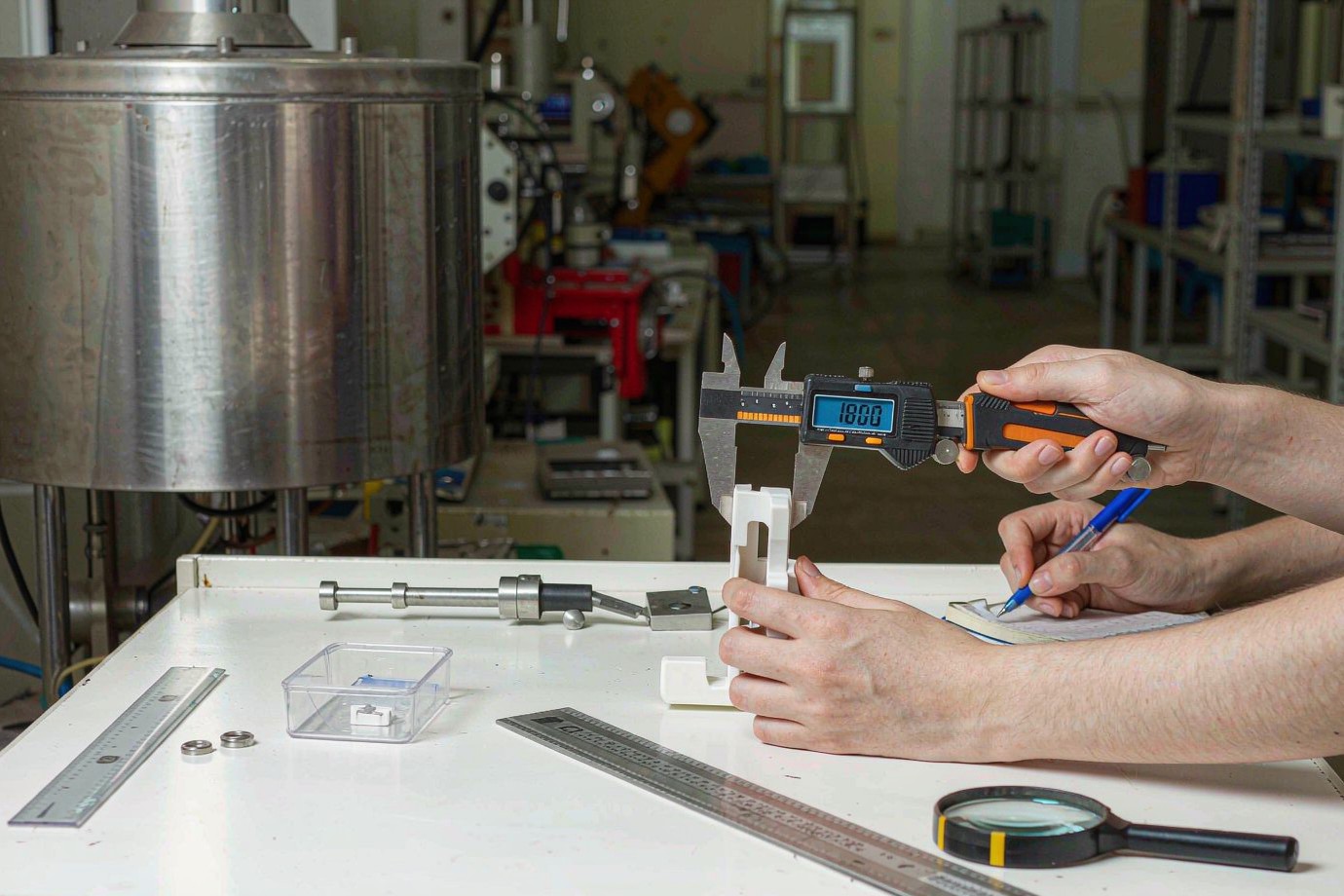
From RFQ to First Article: How a China Partner Runs It
A clean molding program follows a predictable path. Knowing it helps you write a better RFQ and avoid surprises:
RFQ inputs
Model, drawing, resin or function, quantity, critical tolerances, compliance.
Material recommendation
Family and grade chosen from function and environment.
DFM review
Walls, gates, shrinkage, tolerances and moldability checked.
Tooling quote
Mold design, steel, cavities and lead time scoped.
T1 samples + FAI
First shots with first article inspection and dimensional report.
Production
Approved tool runs with monitored process and lot traceability.
RFQ checklist. 3D model (STEP/IGES) and 2D drawing · target resin family or a function description · annual and per-order quantity · critical dimensions and tolerances · surface finish and texture · regulatory or compliance needs · target market. Send it through the form and we will return a material + DFM review with the quotation.
Send Your RFQ & Material SpecReal Cases
ABS enclosure for industrial electronics
- ResinUV-stabilized ABS
- WhyCost, easy moulding, paintable surface
- ResultStable walls, clean parting line, on-target cost
A standard enclosure where ABS's process ease and finish outweighed PC's clarity, which the part did not need.
PA66-GF30 bracket replacing die-cast metal
- ResinNylon PA66, 30% glass-filled
- WhyWeight saving, corrosion resistance, fatigue
- ResultHardened tool, controlled warpage, verified dimensions
A semi-crystalline part where grade and mold steel were chosen together to manage shrinkage and abrasion.
POM precision gear for office equipment
- ResinAcetal (POM)
- WhyDimensional stability, low friction, creep resistance
- ResultTight tolerance held, smooth moulded surface
A case where POM's precision and wear behaviour beat nylon's lower cost for a small moving part.
Which Material? A Decision Path
Use this path as a fast filter, then confirm against the deep dives and the RFQ review. It favours the simplest resin that meets the function.
Frequently Asked Questions
Which engineering plastic should I choose for my part?
Is ABS or PC better for injection molding?
Does nylon (PA) absorb water and change size?
Do ABS, PC, Nylon and POM need drying before molding?
What shrinkage should I design for?
Can you recommend a grade and control material substitution?
Are RoHS, REACH and UL94 supported?
What do you need to quote an injection molded part?
How do you control dimensional quality?
Not Sure Which Resin Fits Your Part?
Send the drawing and tell us what the part must do — load, temperature, clarity, wear and compliance. Our engineering team will recommend a grade, run a DFM review and return findings with your quotation.
Get a Material & DFM Review Or explore injection molding services →Material and DFM feedback is returned with the quote — typically within one business day for standard parts.