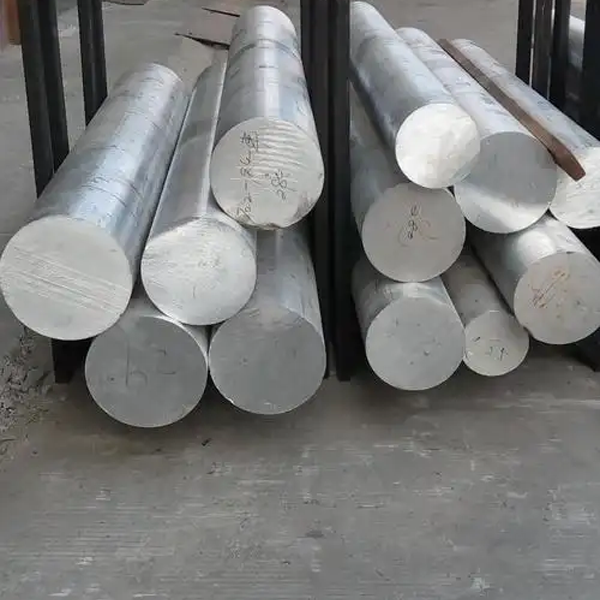
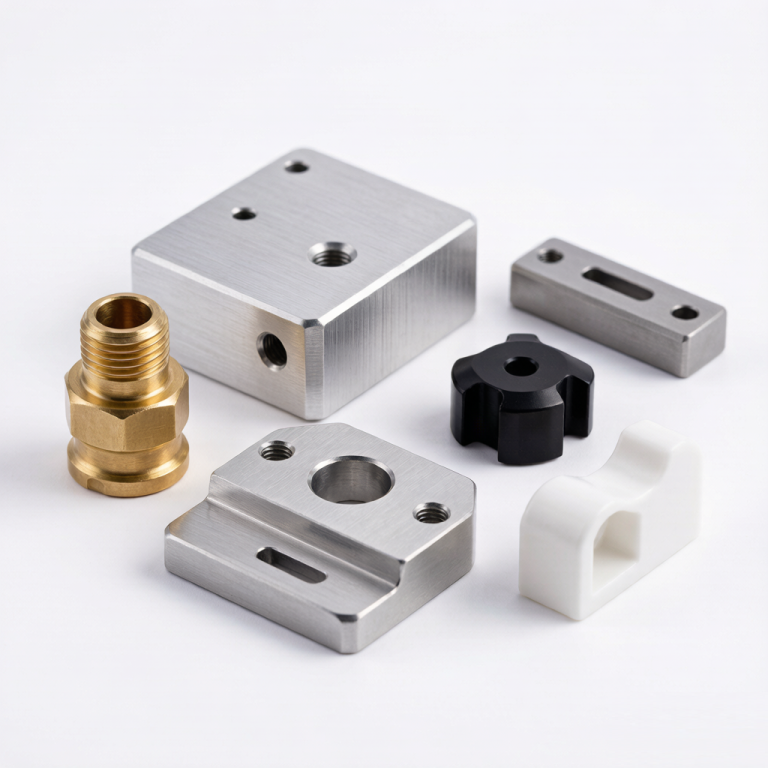
Factory-based custom injection mold engineering and manufacturing for overseas OEM buyers — from DFM review and tooling design to CNC machining, EDM, mold assembly, T1 sampling and production-ready tool delivery.
ACCEPTED FILES: STEP · IGES · STL · PDF · DWG · DXF
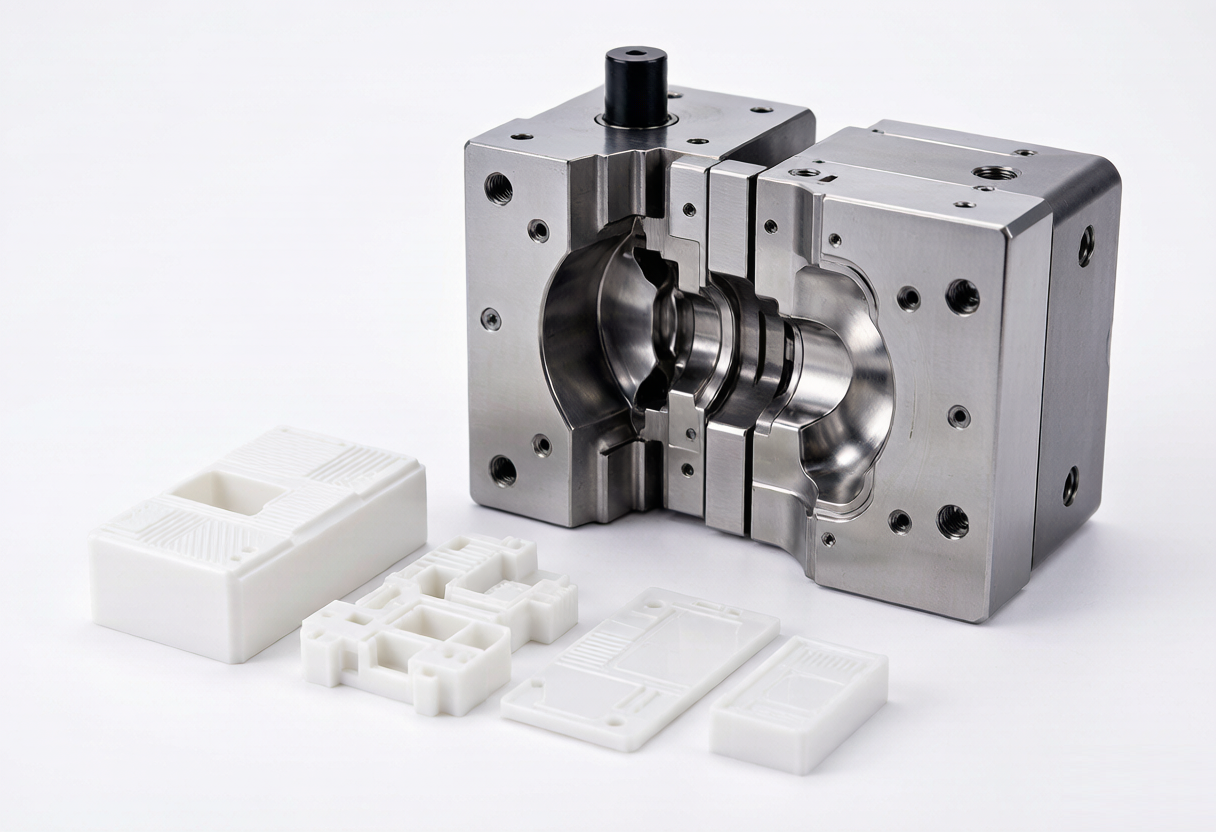 DFM Before Steel
Most buyers searching "injection mold making China" are not asking "what is a mold." They are choosing a manufacturing partner who can design the tool, prove it before steel is cut, run a credible T1, and hand off a tool that holds up in production. That is what this page is built around.
Supplier Selection
Factory verification, tool room, real mold photos and case evidence — not a polished brochure. You should be able to confirm the maker is a real mold builder.
Engineering & Tooling
DFM review, mold concept, 3D design, steel selection, CNC / EDM machining, fitting and assembly — the full tooling chain handled in one accountable organization.
Validation & Handoff
T0 / T1 / T2 trials, dimensional inspection, mold ownership, maintenance and production handoff so the tool performs when volume starts.
Custom Injection Mold Manufacturing from DFM to T1 Validation
A reliable mold is decided long before the first cavity is cut. The path below is what separates a tooling supplier from a tooling partner.
What Is Injection Mold Making?
Injection mold making is the process of engineering and manufacturing a reusable tooling system that forms a plastic component during injection molding. It is a discipline of its own, distinct from running the press.
| Injection Mold Making | Injection Molding |
|---|---|
| Tool design & engineering | Part production |
| Mold steel & components | Plastic resin |
| Core / cavity machining | Injection cycle |
| Runner / gate design | Filling & packing |
| Cooling channels | Cooling cycle |
| Ejection system | Part removal |
| T1 validation | Production repeatability |
Keeping these separate matters: a buyer evaluating a mold maker is buying engineering and tooling capability, not press time. This page focuses on the tool; the production process is covered on our injection molding service page.
Why Source Injection Mold Making from China?
The reason is not "cheaper at any cost." It is an integrated, mature tooling supply chain that supports serious OEM programs — when the supplier is genuinely capable.
Integrated Tooling Supply Chain
Mold steel, standard components, CNC, EDM, heat treatment and polishing are concentrated in established clusters, shortening the chain from design to first trial.
Engineering Capability
Experienced tool designers, mold makers, CNC programmers, EDM specialists and fitters support complex structures such as sliders, lifters and multi-cavity tools.
Production Continuity
Mold making can connect directly with injection molding, secondary operations and assembly — one accountable organization for tool and parts.
China Is Not Automatically the Best Choice
Supplier capability matters more than country alone. For extremely low annual volume, frequent design changes or programs needing very local maintenance, other options may fit better. Evaluate the project, not the flag.
How to Verify an Injection Mold Maker in China
A polished website does not prove mold-making capability. Before committing, ask for evidence across the full tooling chain.
Ask specifically for tooling design, machining, EDM, fitting, trial and measurement evidence. The lowest quote from an unverified broker is usually the most expensive tool you will ever buy.
Types of Injection Molds We Manufacture
Each mold type answers a different buying question. The right structure depends on volume, geometry and budget — not a default template.
Single-Cavity Mold
Best for prototypes, low volume and product validation where speed and flexibility matter more than cycle cost.
Multi-Cavity Mold
Higher output and lower cost per part for production programs with stable annual volume.
Family Mold
Related parts molded in one tool for synchronized production and simpler inventory.
Two-Plate / Three-Plate
Two-plate for standard layouts; three-plate for complex gating and sequential part separation.
Hot / Cold Runner
Hot runner reduces waste for high volume; cold runner keeps tooling simpler and material changes easier.
Slider / Lifter Mold
Creates side features and undercuts that a simple two-plate tool cannot release.
Insert & Overmolding
Combines metals or multiple resins into one molded part for functional or cosmetic value.
Unscrewing / High-Precision
Threads, tight tolerances and demanding surfaces handled with dedicated mechanisms and tooling.
Which Should You Choose?
We recommend structure and runner type during DFM, based on part geometry, volume and budget — not a default.
How Many Cavities Should Your Mold Have?
Cavity count is an economic decision, not a status symbol. More cavities is not automatically better.
| Cavities | Typical Use |
|---|---|
| 1-Cavity | Prototype / low volume / validation |
| 2-Cavity | Small production runs |
| 4-Cavity | Medium volume programs |
| 8+ Cavity | High-volume programs |
| Family Mold | Related parts / synchronized production |
Cavity count should be evaluated against annual volume, machine capacity, cycle time, part balance, tooling budget and production economics. We help you size it during the quoting stage.
Injection Mold DFM Review Before Steel Cutting
The goal of DFM is to identify tooling and production risks before machining begins — cheaper and faster to fix on the screen than in hardened steel.
Parting Line
Where the two halves meet — affects flash, appearance and tool cost.
Draft Angle
Enables clean ejection and longer tool life.
Wall Thickness
Balanced walls prevent sink, warpage and short shots.
Ribs & Bosses
Reinforce without trapping stress or sinks.
Undercuts
Determine sliders, lifters or side actions.
Gate & Ejection
Gate location drives weld lines, packing and vestige.
Cooling & Venting
Thermal balance controls cycle and warpage.
Shrinkage
Material-specific allowance built into the cavity.
Texture & Finish
Surface requirements affect steel and polish route.
Injection Mold DFM Checklist
A practical DFM pass we run before tooling approval. Use it to compare suppliers.
Gate, Runner, Cooling and Venting Design
Mold making is not simply milling a cavity. Flow design decides whether a tool runs cleanly at volume.
Gate Design
Location and type control filling, weld lines, packing, cosmetics and gate vestige. A poor gate can ruin an otherwise good part.
Runner System
Cold runner for simplicity and easy material changes; hot runner for lower waste and optimized cycle on the right programs.
Cooling System
Channels, baffles and bubblers manage thermal balance — the main lever on cycle time and warpage.
Venting
Air evacuation prevents burn marks, short shots and trapped-gas defects at the last place the cavity fills.
Hot Runner vs Cold Runner Injection Molds
There is no universal winner. The best runner system depends on resin, part geometry, volume, appearance and tooling budget.
| Factor | Hot Runner | Cold Runner |
|---|---|---|
| Material Waste | Lower | Higher |
| Tooling Cost | Higher | Lower |
| Cycle | Potentially optimized | Standard |
| Maintenance | More complex | Simpler |
| High Volume | Often attractive | Depends |
| Material Changes | More difficult | Easier |
Injection Mold Steel Selection
Steel choice is a trade-off between mold life, resin, cosmetics, corrosion and budget. There is no single "best" steel.
| Steel | Typical Use |
|---|---|
| P20 | General production tooling |
| 718 | General use with better polishability |
| S136 | Corrosion resistance / high cosmetic requirements |
| H13 | High wear / demanding applications |
| NAK80 | High-quality surface applications |
Steel is selected against expected mold life, resin abrasiveness, cosmetic requirements, corrosion exposure, production volume and maintenance expectations — confirmed during DFM, not guessed.
Injection Mold Life and Tool Classes
Tool life depends on steel, resin, cycle conditions, maintenance, part geometry and production volume — not a single number you can paste on every quote.
Prototype / Short-Run Tool
Optimized for speed and validation; lower shot target, faster to revise.
Production Tool
Balanced steel and structure for stable serial production.
High-Volume Tool
Higher-grade steel, hardened components and maintenance plan for long campaigns.
Representative industry benchmarks such as 100K / 500K / 1M shots describe tool classes, not promises. Final life depends on design, material and care; confirm against your program in the quotation.
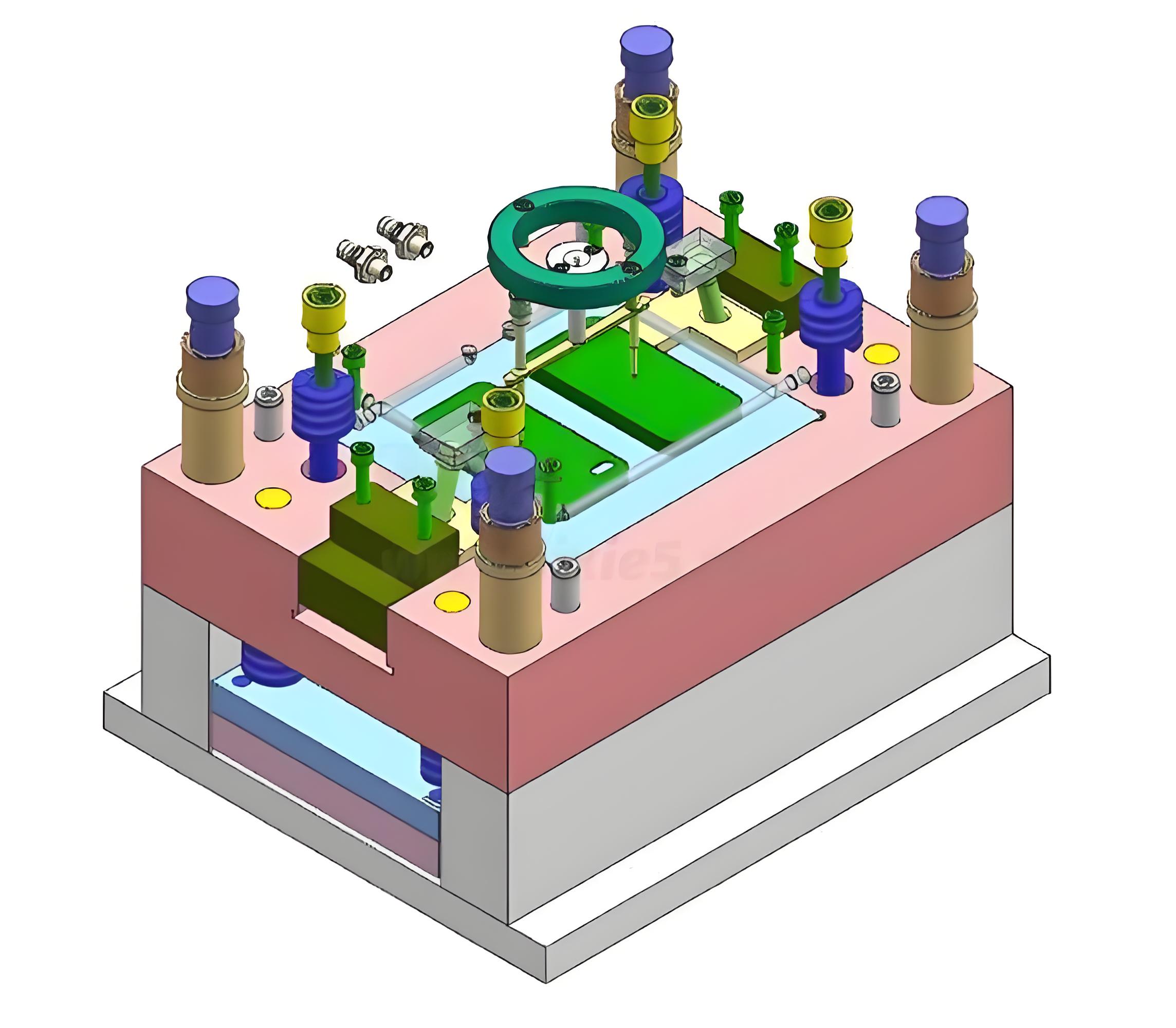
Injection Mold Components and Structure
Understanding the structure helps you read a mold quote and ask the right questions.
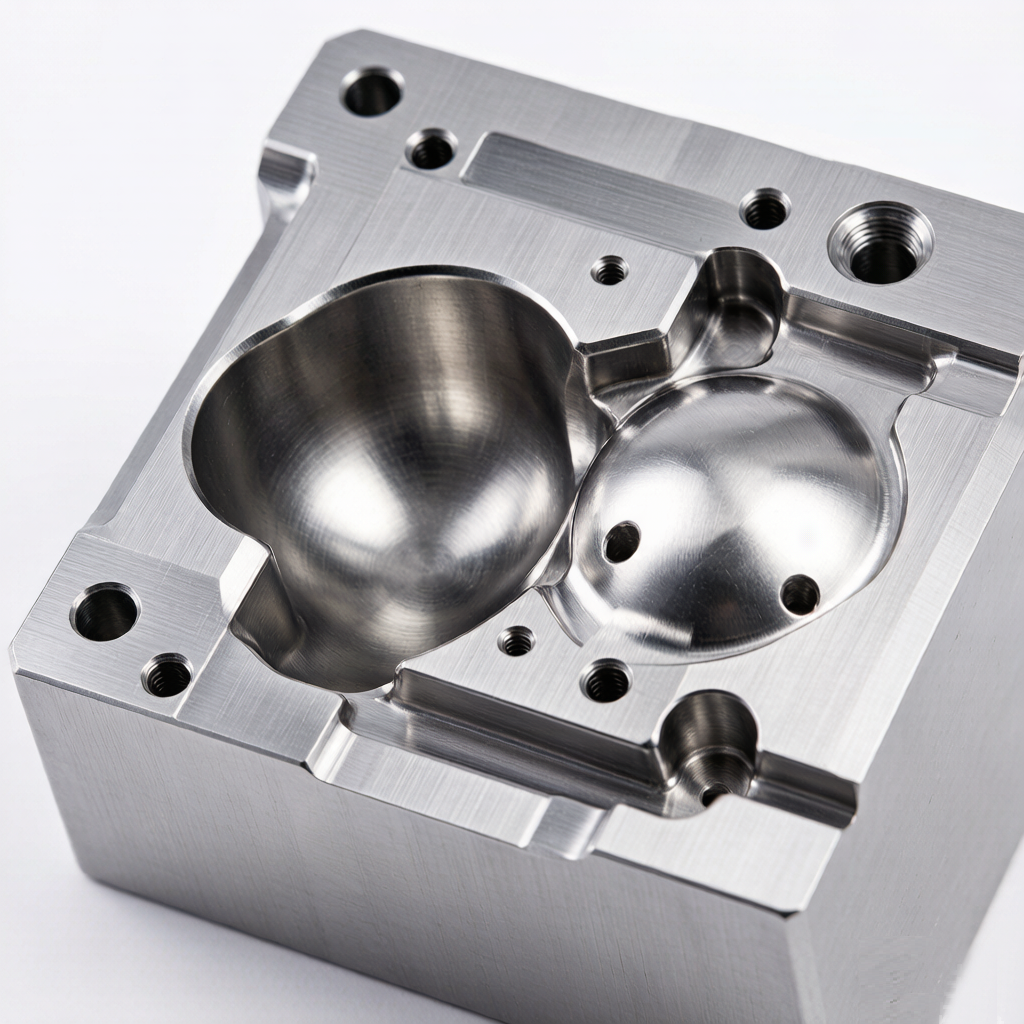
Our Injection Mold Making Process in China
A complete tooling chain — from first review to packed shipment. Stages reflect a typical program and are adjusted to your part and volume.
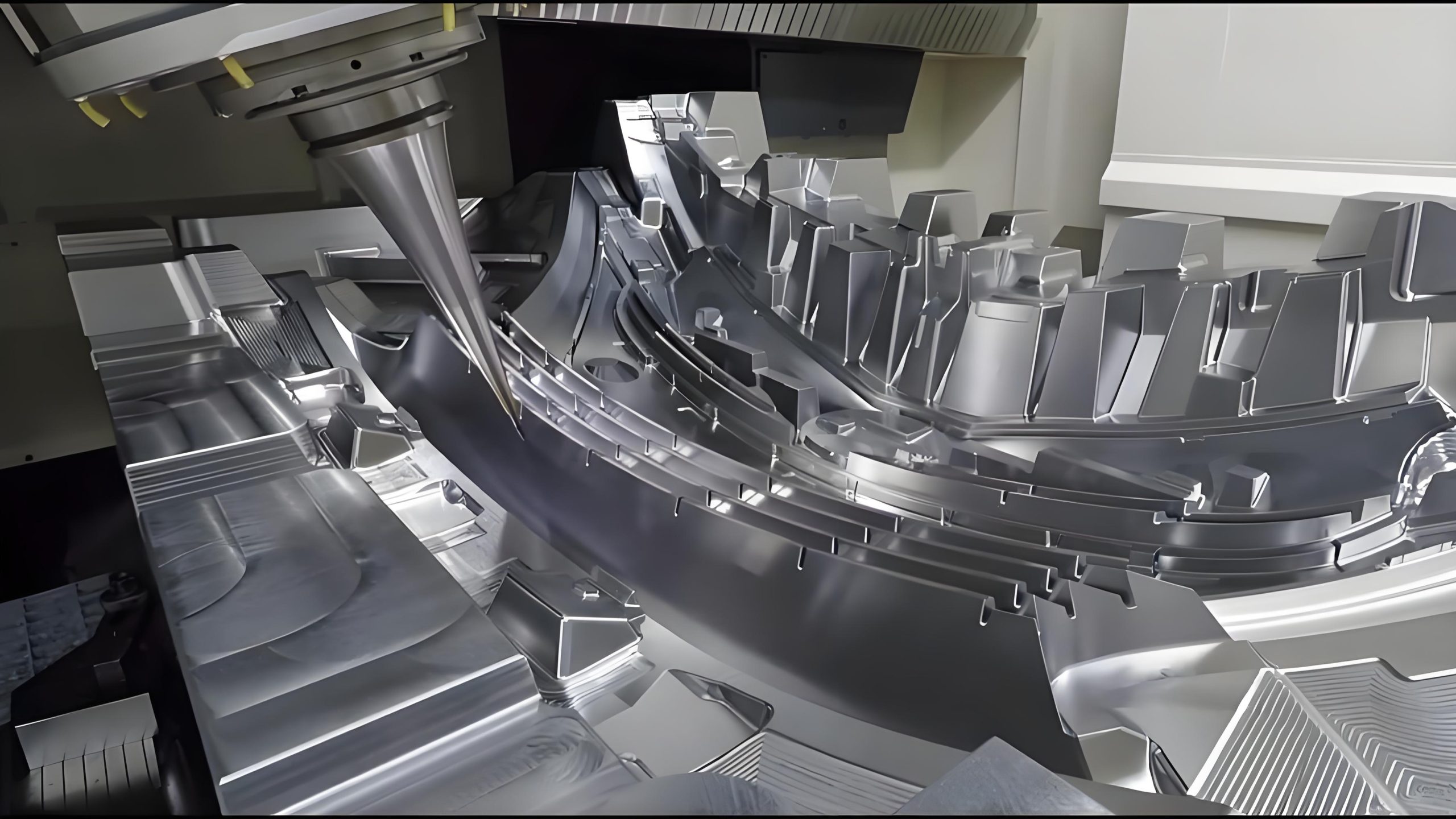
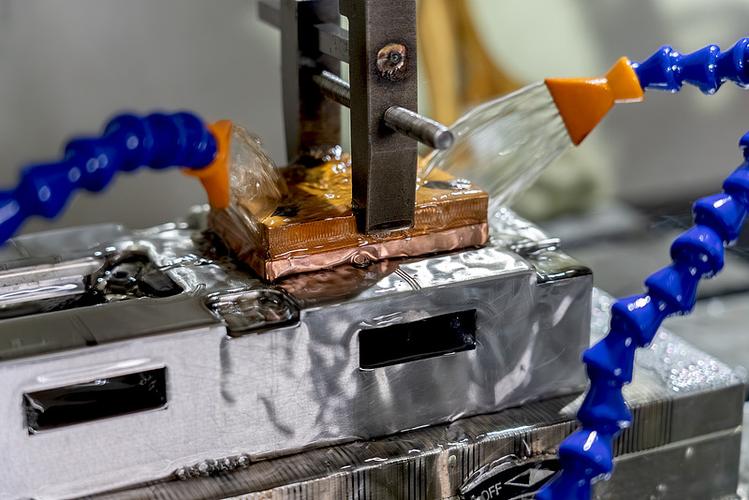
CNC, EDM, Wire EDM and Mold Fitting
Each process solves a different geometry problem. Knowing which equipment handles what tells you whether a shop can actually build your tool.
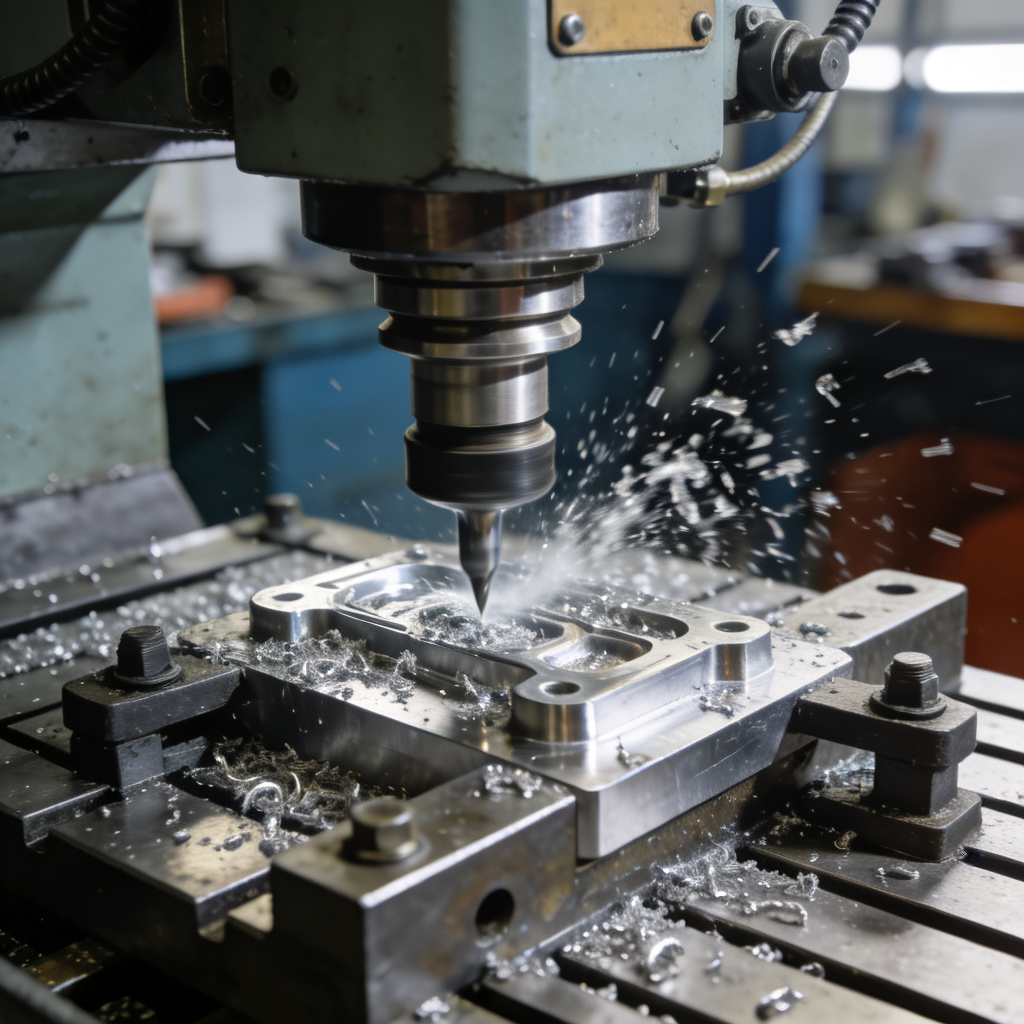
CNC Machining
Mold base, cavity, core and inserts — the structural backbone of the tool.
EDM
Deep ribs, sharp features, hardened steel and complex cavities milling cannot reach.
Wire EDM
Precise profiles, inserts, thin features and tight geometries.
Grinding & Fitting
Flatness, dimensional precision, surface quality and final assembly.
T0, T1 and T2 Mold Trials
Trials are where the tool is proven. We do not promise "T1 always passes" — real development sometimes needs correction, and honest trials beat optimistic claims.
T0 — First Trial
Checks mold movement, basic filling, ejection and major defects. A learning run, not a validation.
T1 — Formal Validation
Checks dimensions, appearance, fit, shrinkage, warpage, weld lines, flash and assembly against the drawing.
T2 — Re-Validation
Confirms corrections after modification, moving toward a production-ready tool.
Common T1 Mold Problems and Corrections
A key distinction: some T1 problems are mold issues (steel correction), others are process issues (parameters). Not every defect means cutting steel again.
| Symptom | Mold Issue vs Process Issue |
|---|---|
| Sink Marks | Wall / gate / cooling (mold) or packing / pressure (process) |
| Warpage | Cooling balance (mold) or cycle / temp (process) |
| Flash | Parting / clamp (mold) or pressure (process) |
| Short Shot | Gate / venting (mold) or fill (process) |
| Weld Lines | Gate location (mold) or temp / speed (process) |
| Burn Marks | Venting (mold) or speed (process) |
| Ejection Problems | Draft / ejection (mold) or timing (process) |
| Dimensional Variation | Shrinkage / steel (mold) or process window (process) |
We separate process tuning from steel correction before deciding what to change. That discipline is what protects your tooling budget.
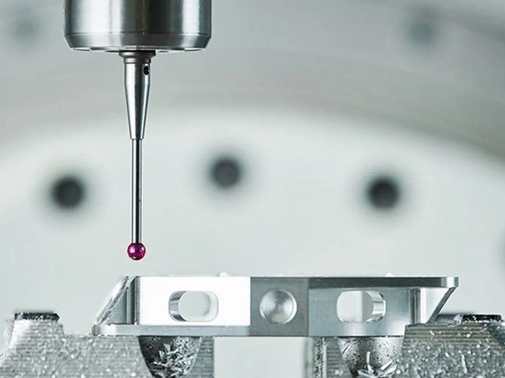
Mold and T1 Sample Inspection
Mold inspection, part inspection and production validation are different checks — conflating them hides risk.
| Stage | What Is Checked |
|---|---|
| Mold Inspection | Cavity / core dimensions, fit and movement |
| T1 Inspection | Part dimensions against drawing |
| Assembly Validation | Fit and function of the molded part |
| Production Validation | Repeatability and process stability |
Injection Mold Ownership, Storage and Transfer
For overseas buyers, tool ownership is a real commercial question — not a footnote.
Who Owns the Mold
Customer-owned tooling. Ownership follows the agreed quotation and purchase contract.
Storage & Maintenance
Molds can be stored and maintained between production runs under a recorded plan.
Transfer
Molds can be transferred to another factory when the contract allows — a practical question we answer clearly.
Repair & Modification
Revision, repair and modification supported across the tool life.
End-of-Life
Disposal or refurbishment handled per agreement when a program ends.
Production Handoff
Tool released into stable production with documentation and inspection records.
Injection Mold Maintenance and Repair
Maintenance is what keeps a tool running — a differentiator many suppliers skip. For repeat production, it protects your uptime.
Cleaning & Lubrication
Routine care of parting, ejector and motion surfaces.
Cooling Channel Care
Descaling and flow checks to protect cycle time.
Slider / Lifter Service
Inspection and adjustment of moving elements.
Gate / Runner Check
Wear and vestige control at the entry point.
Shot & Repair Records
Logged history reduces unexpected tooling downtime.
Corrosion Protection
Storage treatment for idle tools between runs.
How Much Does Injection Mold Making Cost in China?
A single price range is misleading because tooling cost is driven by many factors. Understand the drivers, then evaluate total cost — not just the first quote.
Part & Tool Factors
Part size, complexity, cavities, steel, hot/cold runner, sliders/lifters, inserts, finish and tolerance.
Life & Volume
Target tool life, expected annual volume and tooling standard shape the build.
Validation Scope
T1 / sampling requirements and documentation level affect effort and cost.
| Low Initial Price | Production-Ready Tool |
|---|---|
| Low upfront cost | Optimized lifecycle cost |
| Lower-grade steel may be used | Steel selected for life |
| Minimal DFM | Risk reviewed before tooling |
| Basic trial | T1 / T2 validation |
| May need more repair | Designed for repeatability |
| Limited documentation | Better tooling records |
The cheapest mold quote is not necessarily the lowest-cost tooling solution. A low tooling price can cost more through repeated corrections, poor cycle performance or weak maintenance support.
Injection Mold Making Lead Time
Lead time is the sum of stages — and varies widely with complexity. The ranges below are typical planning references; your program's actual timeline is confirmed at quotation.
| Stage | Typical Time* |
|---|---|
| DFM | 2–4 days |
| Mold Design | 5–10 days |
| Steel Procurement | 5–10 days |
| Machining | 10–20 days |
| EDM / Wire EDM | 5–10 days |
| Assembly | 3–5 days |
| T1 | 3–5 days |
| Modification | Per correction |
* Typical planning ranges based on industry benchmarks; final schedule depends on part complexity, steel availability and validation scope. We provide a project-specific timeline with the quote.
Injection Mold Applications
Tooling is selected around the part's function and the industry's demands. We describe applications only where we have relevant capability and case experience.
Automotive
Interior components, lighting parts, housings and brackets with tight appearance and durability requirements.
Electronics
Enclosures, connectors and switch components where fit and cosmetics matter.
Medical
Housings and precision plastic components, with appropriate documentation where applicable.
Consumer Products
Handles, covers and housings for everyday goods.
Industrial Equipment
Housings, brackets and covers for machinery and fixtures.
New Energy
Battery components, electrical housings and cooling-related parts.
Custom Injection Mold Case Studies
Generic capability claims mean little without specifics. These are representative tooling projects described by material, structure, application, challenge and outcome.
2-Cavity Electronics Enclosure Mold
Challenge: Tight cosmetic requirements on a textured surface.
Solution: Gate and cooling optimization with texture route planned before steel.
Automotive Multi-Cavity Mold
Challenge: Stable output at production volume.
Solution: Balanced cavities and cooling for consistent cycle and fit.
Precision POM Gear Mold
Challenge: Dimensional control on a precision gear.
Solution: Shrinkage allowance and measurement built into validation.
What Should You Include in a Mold RFQ?
The more complete your RFQ, the more accurate the quote and the fewer surprises at T1.
Required
- 3D part CAD (STEP / IGES)
- 2D drawing with tolerances
- Material and resin grade
- Annual volume
- Target tool life
- Target delivery
Recommended / Helpful
- Surface finish and part color
- Critical dimensions and assembly needs
- Preferred mold standard
- Existing sample or reference mold
- Production location and target cycle time
- Need injection molding after tooling? (Yes / No / Not sure)
New Mold or Existing Mold Transfer?
New product → new mold. Existing tool in poor condition → repair / modification. Supplier change → mold transfer + inspection. Part revision → mold modification or new insert. If you are not starting from zero, tell us — it changes the plan.
Frequently Asked Questions
How much does injection mold making cost in China?
Tooling cost is driven by part size, complexity, cavities, steel, runner type, sliders/lifters, finish, tolerance, target life and validation scope. We quote on your specific part rather than a generic range, and we focus on total lifecycle cost, not just the first price.
How long does it take to make an injection mold in China?
A typical program runs through DFM, design, steel procurement, machining, EDM, assembly and T1. Planning ranges total roughly 4–8 weeks for many tools, but complex multi-cavity or high-precision tools take longer. Your confirmed timeline comes with the quote.
How do I find a reliable injection mold maker in China?
Verify the factory: tool room, CNC/EDM equipment, mold trial capability, inspection equipment, real mold photos and case studies. Ask for evidence of engineering and DFM, not just a brochure. A low quote from an unverified broker is a risk.
What mold steel should I choose?
It depends on expected life, resin abrasiveness, cosmetics, corrosion exposure and budget. P20/718 suit general production, S136 for corrosion and cosmetics, H13 for wear, NAK80 for high surface quality. We recommend during DFM.
How many cavities should my mold have?
Match cavities to annual volume, machine capacity, cycle time and budget. 1 cavity for validation, multi-cavity for volume. More cavities is not automatically better — it raises tooling cost and complexity.
What is the difference between hot runner and cold runner molds?
Hot runner lowers material waste and can optimize cycle for high volume but costs more and is more complex to maintain. Cold runner is simpler and easier for material changes. The right choice depends on resin, geometry, volume and budget.
What is DFM in injection mold making?
DFM (Design for Manufacturability) reviews parting line, draft, wall thickness, ribs, undercuts, gate, cooling and venting before steel is cut, so tooling and production risks are found on screen — cheaper and faster than in hardened steel.
What happens during a T1 mold trial?
T1 is the formal first validation: dimensions, appearance, fit, shrinkage, warpage, weld lines, flash and assembly are checked against the drawing. It confirms whether correction is needed before production release.
How many mold trials are usually required?
It varies. Some tools pass cleanly; others need T2 after correction. We separate process tuning from steel correction to avoid unnecessary rework, but we do not promise T1 always passes.
Can you modify the mold after T1?
Yes. Corrections after T1 are normal — steel modification where the design requires it, or process tuning where parameters are the cause. We document what changed and why.
Who owns the injection mold?
Customer-owned tooling. Ownership follows the agreed quotation and purchase contract. We store, maintain and can transfer the mold when the contract allows.
Can you store and maintain the mold?
Yes. Between production runs we can store the tool and run a recorded maintenance plan — cleaning, lubrication, cooling care and shot records — to reduce unexpected downtime.
Can I transfer my existing mold to your factory?
Yes, where the contract allows. We start with a tool condition review and inspection, then plan repair, modification or trial before releasing it into production.
Can you make molds and produce the plastic parts?
Yes. Mold making plus injection molding in one organization is often the most valuable combination — one accountable partner from tool to parts.
What CAD files are needed for a mold quote?
3D CAD (STEP / IGES / STL), 2D drawing with tolerances, material, annual volume, target tool life and delivery. Reference samples or existing molds help. The more complete the RFQ, the more accurate the quote.
Do you provide mold inspection reports?
Yes. Mold inspection, T1 part inspection and assembly/production validation are documented. Inspection equipment is used for dimensional verification; specific reports are provided per project scope.
Can you manufacture molds for automotive / electronics / medical parts?
We support these applications where we have relevant capability and case experience, including enclosures, connectors, automotive components and precision parts. Tell us your industry and requirements so we can confirm fit.
How do I verify a China injection mold manufacturer?
Ask for factory location, equipment, tool room, trial capability, inspection, steel traceability, real mold photos, case studies and engineering staff. Verify capability, not just price — supplier capability matters more than country alone.
Why Goldcattle for Custom Injection Mold Projects?
Founded in 1998, with in-house CNC / EDM tooling, material range, prototype support, T1 validation, inspection and injection molding integration — best suited for buyers who need both tooling and downstream manufacturing support.