CNC Machining Supplier Audit Checklist: What to Verify Before Approval
A buyer-side audit checklist for evaluating a CNC machining supplier in China — built around evidence, not certificates. It helps you confirm that a supplier can consistently produce parts that meet your material, drawing, tolerance, inspection and delivery requirements.
This page presents the full checklist inline across 11 modules with required evidence, a 100-point weighted scoring method, and the critical findings that should block approval. Use it during remote screening, on-site audits, sample validation and production release.
This checklist is shown in full on this page. Use your browser's print / save-as-PDF to keep a working copy — Goldcattle does not host downloadable files on this site.
What This Checklist Covers
Eleven modules from legal identity to commercial and data risk — each with the question to ask, the evidence to request and the risk if it is missing.
How to use the modules: the depth of any single module should match part risk. Low-risk parts can start with document review and sample validation; complex, high-value or regulated parts need on-site verification and focused review of the relevant modules.
The Audit Checklist
Each module lists the audit question, the evidence to request, how to verify it, the risk level, and the finding/action to record.
Can the supplier's legal identity and business scope support the contract?
Chinese legal name, unified social credit code, registration status, actual production address; consistency of quoting, contracting and invoicing entities.
Cross-check the business license against the quoted and contracted entity; confirm the production address is real.
Record any entity mismatch, address gap or unexplained invoicing party; assign owner and closure evidence.
Do the machines, axes, work envelope, tooling and available capacity match your part?
Machine models and axis counts, work envelope, tooling/holding, condition and load; evidence of relevant processes (e.g. 5-axis, turn-mill).
Match capability to the actual part geometry, tolerance and volume — not just a machine count.
Flag missing capability for critical features; confirm whether it is in-house or subcontracted.
Is the drawing, material, tolerance, GD&T and surface requirement correctly understood?
Drawing version control, material spec, tolerance and GD&T review, key characteristics, fixturing, sequence, deburr and finish requirements.
Confirm the supplier reviewed the latest revision and can state how critical features will be held.
Record misinterpreted tolerances or missing DFM feedback; require clarification before quoting.
Is there a functioning quality system, not just a certificate on the wall?
Certificate holder, scope and validity; document control, inspection responsibility, internal audit and nonconformance handling records.
Confirm the certificate covers the relevant processes and that records show the system runs, not just exists.
Flag scope gaps, expired certificates or absent operating records; request corrective evidence.
Can the supplied material be tied to the certificate and the production order?
Material grade and condition, heat/lot number, mill certificate, and linkage to the production order and parts.
Match the certificate's heat/lot to the actual batch; a certificate that cannot be linked proves nothing.
Record any broken traceability chain; block approval if material evidence is required and missing.
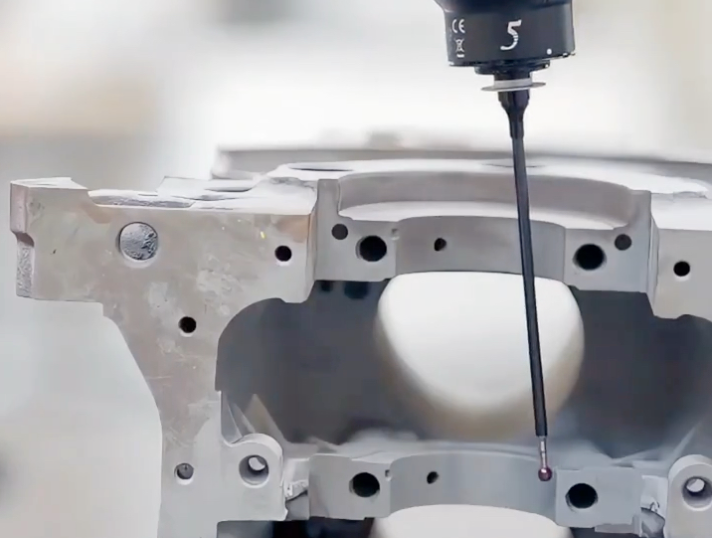
Can critical dimensions actually be measured and accepted against the drawing?
CMM and gauges fit for purpose, calibration records, FAI / first-article report, in-process and final inspection.
Compare measured results with the drawing and agreed acceptance; confirm gauge calibration is current.
Flag missing FAI, uncalibrated equipment or unverified critical dims; require re-inspection evidence.
Which processes are in-house, and how are subcontracted ones controlled?
Heat treatment, anodizing, plating, passivation, grinding — own vs external; approval and acceptance of subcontracted work.
Confirm the supplier can state who performs each step and how quality is accepted at hand-off.
Record unclear responsibility for special processes; require subcontractor controls.
Are defects identified, isolated and resolved with verified root cause?
Identification, segregation, disposition approval, root-cause analysis, corrective action and effectiveness verification.
Review closed cases for real root cause and verified effectiveness, not just "handled."
Flag absent or superficial CAPA; require a sample closed-loop case.
Were samples made and approved the way production will be run?
Sample build method, inspection results, customer approval status, and controls preventing unapproved changes at production start.
Confirm material, process and drawing revision at PPAP / production start match the approved sample.
Record deviations between sample and planned production; require re-validation evidence.
Can the supplier deliver repeatedly at the promised volume and lead time?
Load, scheduling, maintenance, subcontract lead time, packaging spec, shipment inspection and delay-escalation process.
Assess against your volume and required dates; review how delays are communicated and contained.
Record capacity or packaging gaps; set expectations and verification at first shipments.
Are contract, payment, IP and drawing confidentiality clearly defined?
Contracting entity, receiving account, quote scope, change responsibility, tooling ownership, drawing confidentiality and data handling.
Confirm the invoicing entity, IP terms and how customer design files are accessed and stored.
Record unexplained payment-entity differences or weak confidentiality; resolve before release.
100-Point Weighted Scoring
Weights reflect how directly each module affects part conformity. Adjust weights only with a documented reason for the specific project.
| Module | Weight |
|---|---|
| 01 · Legal Entity & Business Scope | 10 |
| 02 · CNC Capability & Equipment | 15 |
| 03 · Engineering & DFM | 10 |
| 04 · Quality System & Certification | 10 |
| 05 · Material Verification & Traceability | 10 |
| 06 · Metrology, FAI & Inspection | 15 |
| 07 · Special Processes & Subcontracting | 5 |
| 08 · Nonconformance & Corrective Action | 5 |
| 09 · Sample-to-Production Validation | 10 |
| 10 · Capacity, Delivery & Packaging | 5 |
| 11 · Commercial Risk, IP & Data Security | 5 |
| Total | 100 |
How Scoring and Critical Findings Work
Score each applicable module, then apply the critical-finding rules before any approval decision.
No evidence, or current practice does not meet the requirement.
Some evidence, but inconsistent, incomplete records or open issues.
Applicable evidence, process in place, results consistent with the requirement.
N/A handling
If a module genuinely does not apply to the project, mark it N/A and exclude it from the score denominator. Do not score an inapplicable item as 2 — that inflates the result.
Critical findings override the score
Any of the following triggers a Hold / Further Investigation regardless of the total score:
- Legal entity or contract responsibility cannot be reasonably verified.
- The supplier cannot demonstrate the critical manufacturing processes the project requires.
- The project requires material traceability or critical inspection, but the supplier cannot provide the necessary evidence.
- There is an unexplained payment-entity discrepancy, abnormal evidence, or refusal to address a key finding that affects product conformity.
The score is a screening and comparison tool, not a certification, and does not by itself guarantee future order conformance.
How to Use the Checklist Before a Purchase Order
Different stages need different depth. Match the effort to part risk.
Remote screening
Document review — certificates, capabilities, sample reports — to shortlist suppliers before engagement.
On-site audit
For complex or high-value parts: verify equipment, records, flow and samples directly at the plant.
Sample validation
Confirm the supplier can make and inspect parts that meet the drawing before committing volume.
Production approval
At PPAP / production start, verify material, process and revision match the approved sample.
Periodic re-audit
Re-check critical modules on a schedule or after significant process, ownership or scope changes.
CNC-Specific Questions and Evidence
These modules carry the most weight for custom machined parts — verify them with the most care.
| Focus area | What strong evidence looks like |
|---|---|
| Equipment & capacity | Machine models/axes matched to part geometry and volume, with realistic load data. |
| DFM & tolerances | Documented review of the latest drawing revision and a stated plan for critical features. |
| Material traceability | Heat/lot number linked from mill certificate to production order and parts. |
| Metrology & FAI | Calibrated CMM/gauges and a first-article report compared to the drawing. |
| Subcontracting | Clear statement of in-house vs external steps and how hand-offs are accepted. |
What to Do After the Audit
An audit only creates value if findings are tracked to closure and the decision is documented.
Note gaps, risk level, owner and due date for each item.
Get root cause and corrective action for Major/Critical items.
Check the evidence that the action worked, not just that it was planned.
Approve to sample, approve to production, or Hold / Further Investigation.
When to Use an Independent Audit
Your own team can handle many reviews; some situations justify third-party support.
Use your engineering or quality team for document review, sample validation and routine re-audits. Consider an independent or third-party on-site audit when the part is safety-related or regulated, when your team cannot travel, when the required processes need specialist verification, or when a critical finding needs impartial confirmation. An independent audit adds evidence — it does not replace your own approval responsibility or the customer's acceptance criteria.
Frequently Asked Questions
Is an on-site audit always required to verify a CNC supplier?
Not always. For low-risk, non-regulated parts, a remote document review plus sample validation may be enough. An on-site audit is recommended for complex, high-value, safety-related or regulated parts, or when the project requires verification of processes that documents alone cannot prove. The depth should match the risk.
Is an ISO 9001 certificate enough to approve a supplier?
ISO 9001 is a baseline quality-system certificate; it is not proof that a supplier can meet the specific material, tolerance, inspection or delivery requirements of your part. Verify process evidence — drawings, control plans, inspection records and samples — against your actual specification.
When should First Article Inspection (FAI) be done?
FAI is typically performed before production release, especially for new, complex or high-consequence parts, to confirm the first parts meet the drawing and acceptance criteria. For aerospace programs where required, AS9102 defines the first-article inspection format. Whether FAI is mandatory depends on the project and customer requirement, not on a generic rule.
How do I verify materials and material certificates?
Confirm that the material grade, condition, heat or lot number and mill certificate can be tied to the specific production order and parts. A certificate that exists but cannot be linked to the batch it covers does not demonstrate traceability. Check the certificate scope, issuing body and validity period.
What do the 0/1/2 scores mean?
0 = Not demonstrated (no evidence or current practice does not meet the requirement). 1 = Partially demonstrated (some evidence but inconsistent, incomplete records or open issues). 2 = Demonstrated and effective (applicable evidence, process in place, results consistent with the project requirement). Items that do not apply are marked N/A and excluded from the score denominator.
Can a high audit score approve a supplier by itself?
No. The score is a screening and comparison tool, not a certification. Certain findings — such as unverifiable legal entity, missing critical-process evidence, missing required material or inspection evidence, or unexplained payment discrepancies — trigger a Hold / Further Investigation regardless of the total score.
Need a CNC part made to your specification?
Send the drawing, material, tolerances and inspection requirements. Our engineering team reviews capability, process route and quality evidence against your specification.
- Capability and DFM review matched to your part
- Material traceability and inspection planned up front
- Sample validation and documented acceptance

Reviewed the audit checklist structure and scoring method on 2026-10-14. This is a buyer-side informational tool, not a formal ISO 9001 audit instrument or certification. Weights, ratings and findings should be adapted to each project's risk and the customer's own requirements.