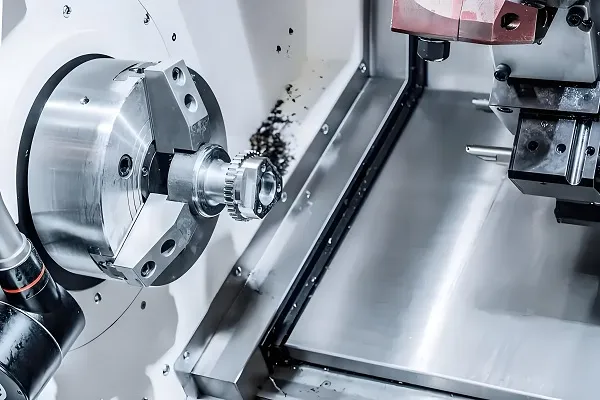
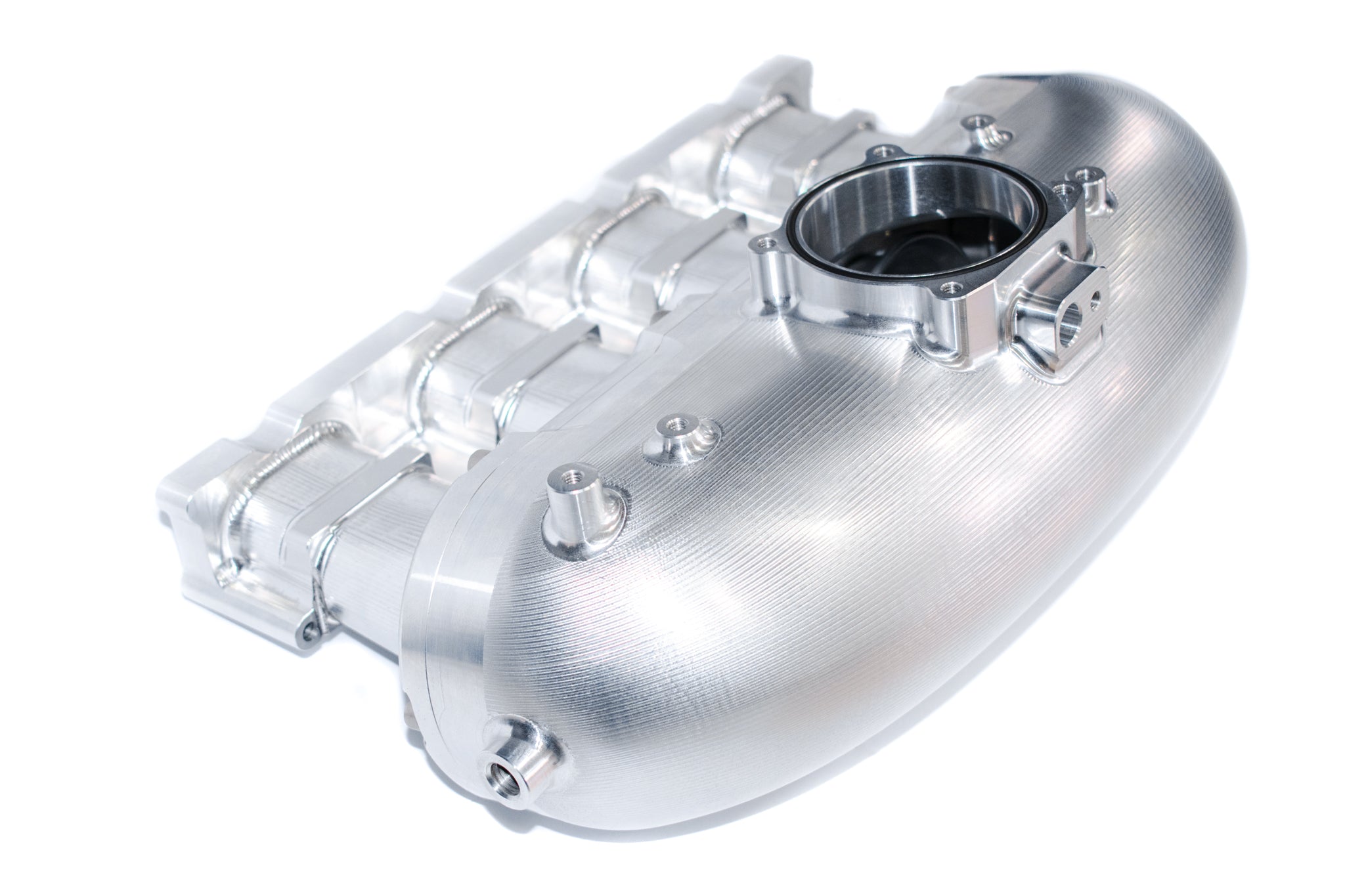
Custom CNC intake manifolds are precision-machined air distribution components designed to improve airflow efficiency, throttle response, and engine performance. Compared with conventional cast manifolds, CNC-machined billet manifolds offer greater design flexibility, tighter tolerances, and optimized runner geometry for performance, racing, and specialized automotive applications.
Optimized Airflow
CNC Precision
Performance Tuning
What Is a CNC Intake Manifold?
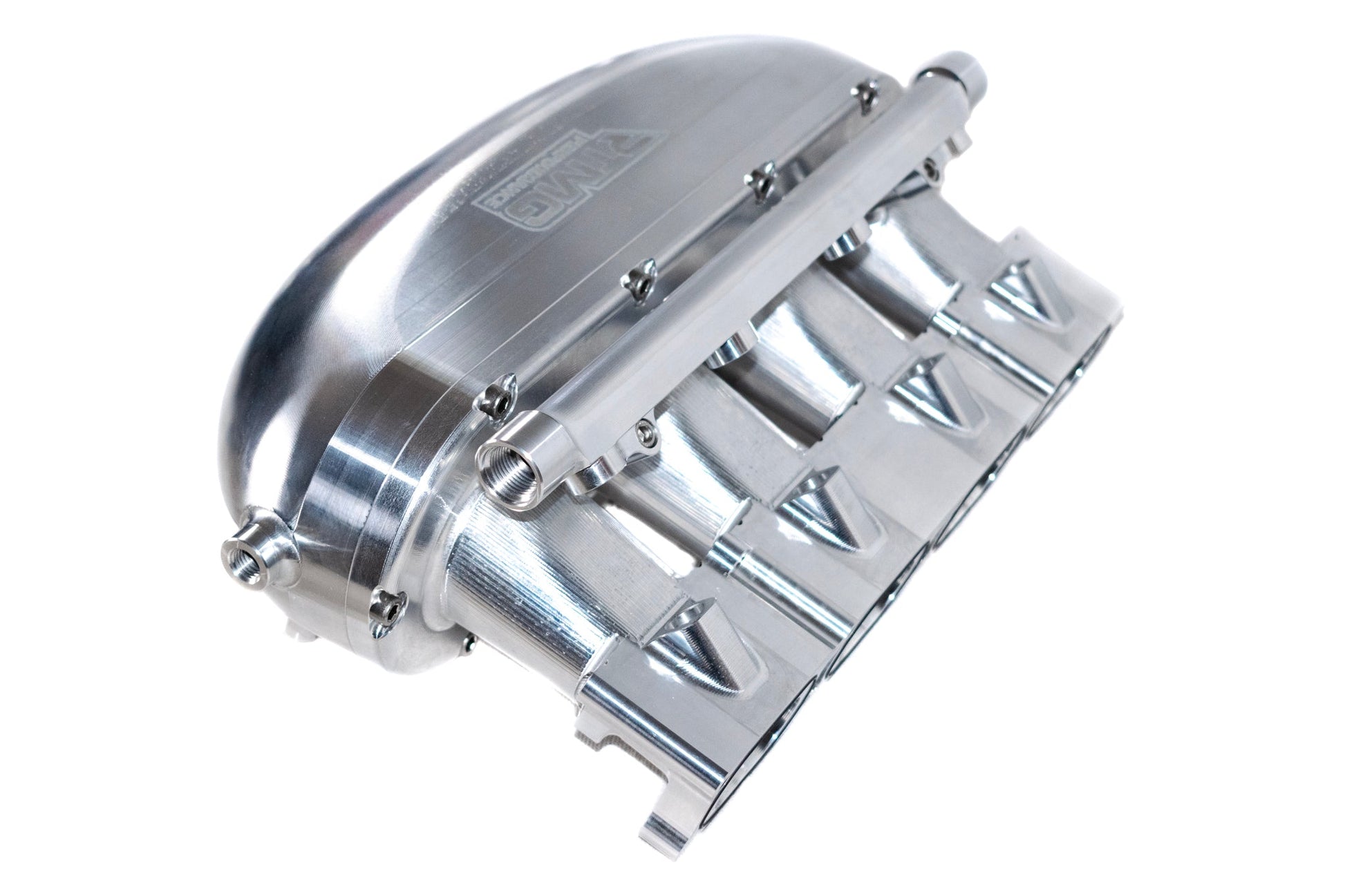
A CNC intake manifold is a precision-engineered component that sits on top of your engine, responsible for distributing filtered air evenly to each cylinder’s intake port. Unlike generic factory parts, custom CNC-machined versions are built to match your specific engine platform and performance goals.
By ensuring equal airflow to every cylinder, these components eliminate flow imbalances that can limit power output, improve combustion efficiency, and unlock measurable gains in horsepower and torque across your engine’s RPM range.
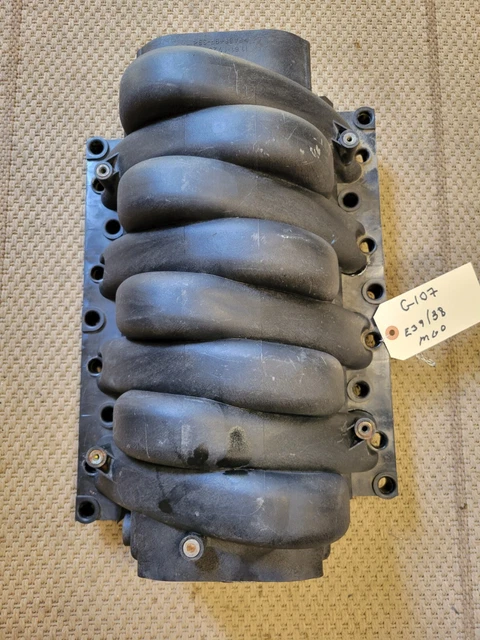
Why Choose CNC Billet vs. Cast Intake Manifolds?
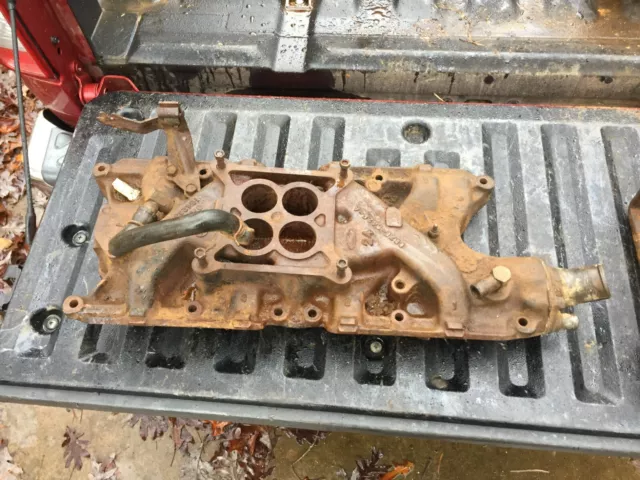
One of the most common questions from performance builders is whether to invest in a CNC billet manifold or stick with a traditional cast version. The choice depends on your goals, but for custom or performance applications, billet offers clear advantages:
| CNC Billet Manifold | Traditional Cast Manifold |
|---|---|
| Fully custom design, no tooling limitations | Limited to fixed mold designs |
| Fast prototype turnaround for custom builds | High upfront mold cost, long setup time |
| Tight tolerances for perfect port alignment | Moderate accuracy, potential porosity issues |
| Optimized for performance tuning and custom engines | Best for mass production, standard applications |
How Manifold Design Impacts Engine Performance
The design of your intake manifold directly impacts how your engine performs. Every dimension is tuned to match your engine’s characteristics and intended use:
- Runner Length: Longer runners generally improve low-end torque, while shorter runners favor high-RPM airflow and peak horsepower, allowing us to tune for your powerband.
- Plenum Volume: The size of the central plenum chamber is matched to your engine’s displacement and RPM range to maintain consistent air pressure.
- Air Velocity: We optimize port geometry to maintain optimal air velocity, ensuring fuel atomization and consistent cylinder-to-cylinder airflow.
- Pressure Drop: Minimizing flow restrictions reduces pressure drop, allowing your engine to breathe easier and make more power without extra effort.
Materials for Custom CNC Intake Manifolds
We work with the most common materials for performance intake manifolds, each selected to match your application’s requirements for strength, weight, and cost:
| Material | Key Benefits | Best For |
|---|---|---|
| 6061 Aluminum | Excellent machinability, good strength, cost-effective | Street performance, daily driven builds |
| 7075 Aluminum | Higher strength, better fatigue resistance | Racing, high-boost turbo applications |
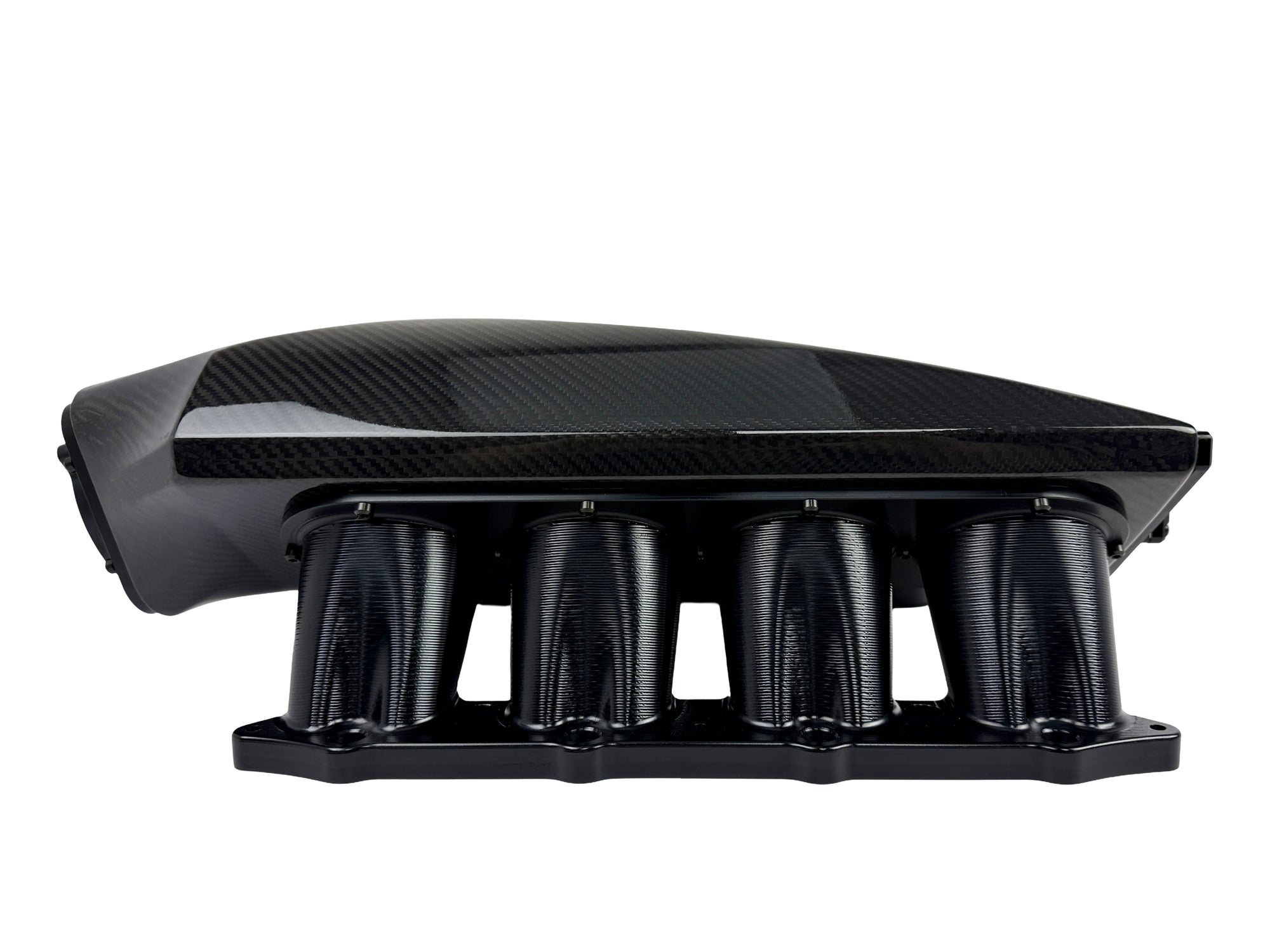
| Carbon Fiber | Ultra-lightweight, heat insulation properties | Top-tier motorsport, weight-sensitive builds |
Our Manufacturing Capabilities
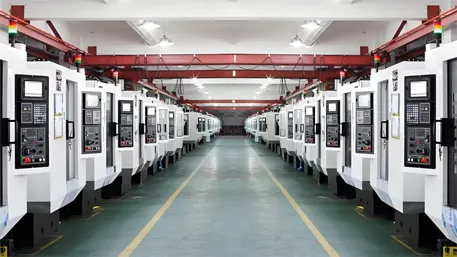
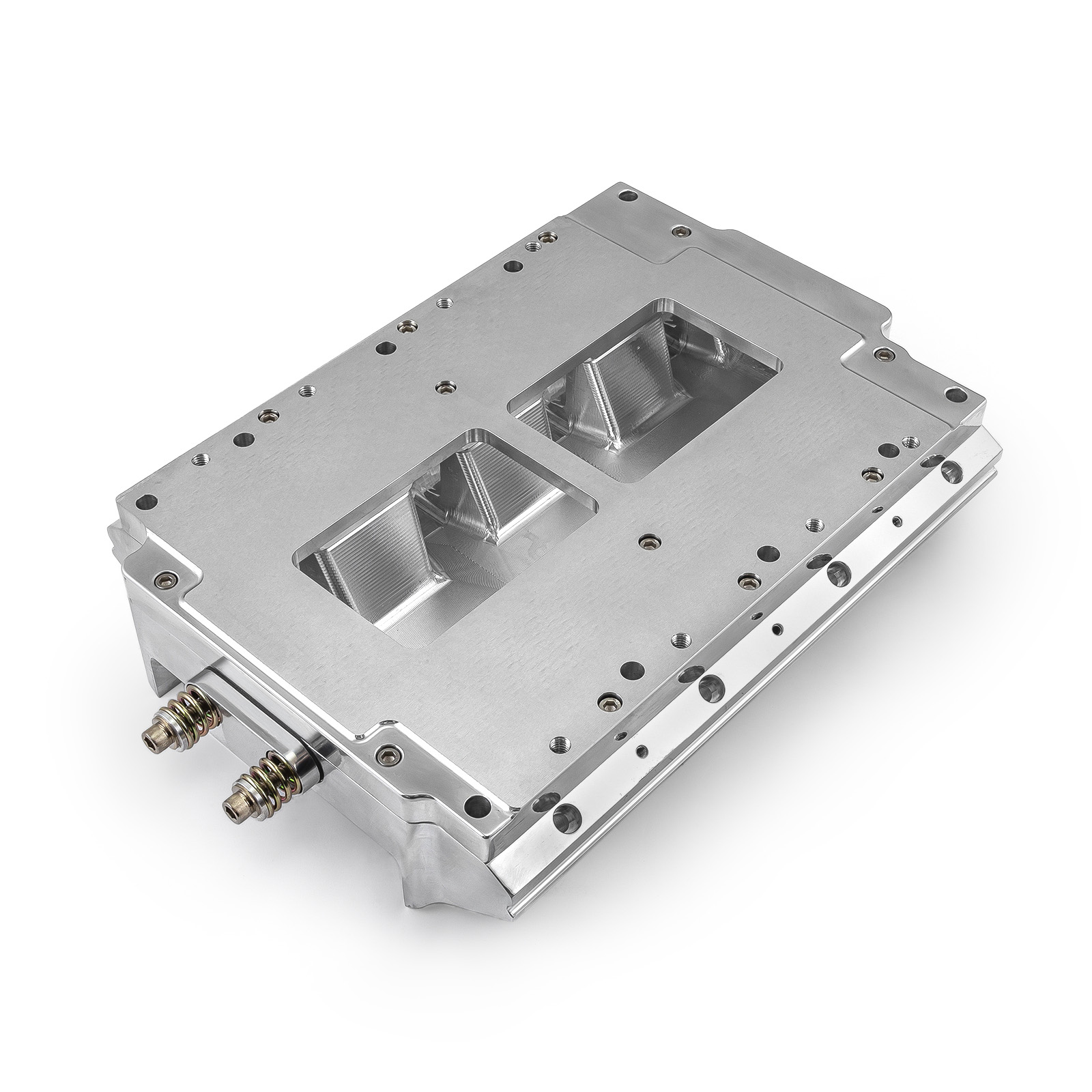
With 5-axis CNC machining and specialized automotive CNC expertise, we deliver custom manifolds that meet the strictest requirements of performance and racing builds:
| Machining Technology | 5-axis CNC, full 3D contour machining |
| Precision Tolerance | ±0.005mm for critical port and flange dimensions |
| Post Processing | TIG welding, polishing, anodizing, surface coating |
| Quality Control | CMM inspection, pressure leak testing, airflow validation |
Engineering Challenges in Manifold Manufacturing
Building a high-performance intake manifold is not just about cutting metal. Our engineering team addresses unique challenges to ensure your part delivers on its performance promise:
- Airflow Consistency: We balance runner geometry to ensure every cylinder receives exactly the same amount of air, eliminating power-robbing imbalances.
- Welding Distortion: Precision welding techniques prevent heat distortion that could misalign ports or compromise sealing surfaces.
- Port Alignment: Perfect port alignment with the cylinder head is critical to avoid flow disruption that can reduce volumetric efficiency.
- Leak Prevention: Every manifold undergoes pressure testing to ensure zero leaks, even under high boost pressure in turbo applications.
Engineering Case Study
Challenge
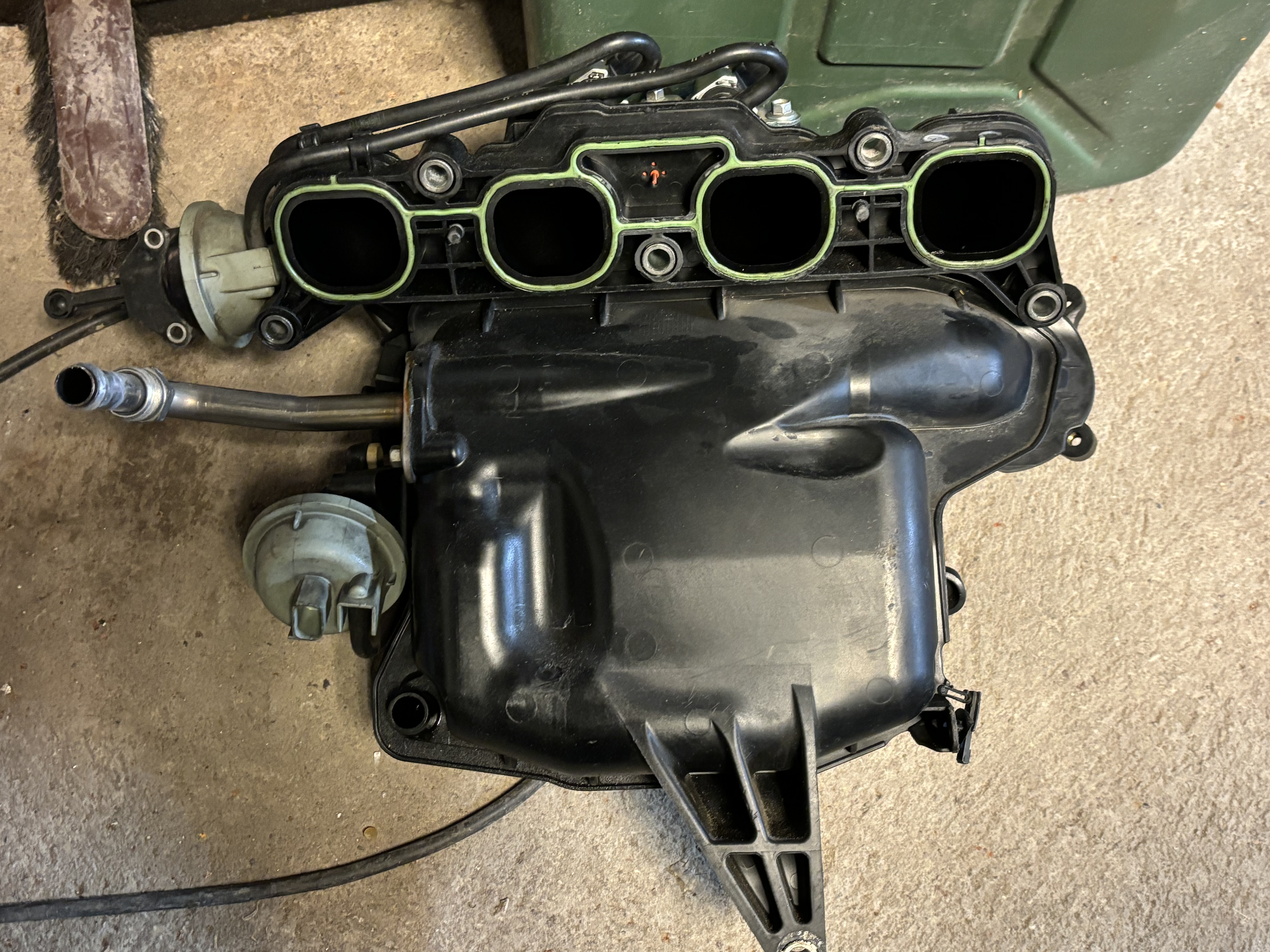
A turbocharged racing team was experiencing significant airflow imbalance in their 4-cylinder engine, leading to inconsistent cylinder temperatures and limited power output at high RPM.
Solution
We used 5-axis CNC machining to create a custom billet manifold with optimized runner taper and length, paired with a properly sized plenum to match the engine’s turbo airflow requirements.
Result
The new manifold reduced flow pressure drop by 12%, balanced cylinder-to-cylinder airflow to within 1% variation, and unlocked an extra 18 horsepower at peak RPM without any other engine changes.
Common Applications
Our custom CNC intake manifolds are trusted across a wide range of performance and specialized engine applications:
Performance Street Cars
Daily driven performance builds with improved throttle response
Circle Track & Road Racing
Racing builds requiring consistent, reliable power output
Turbo & Supercharged Systems
Boosted applications requiring leak-free, high-strength components
Classic Engine Retrofit
Upgrading older engines with modern performance parts
Custom Engine Swaps
Custom fitment for engine swap projects with unique packaging
Specialized Industrial Engines
Custom industrial and marine engine components
What Information We Need for Your Quotation
To provide you with an accurate, fast quote for your custom intake manifold, please prepare the following information. This helps us evaluate manufacturability and deliver a precise price within 24 hours:
- Engine model and platform details
- 2D/3D CAD files or sketches of your design
- Flange specifications and port dimensions
- Preferred material grade (6061, 7075, or carbon fiber)
- Order quantity and delivery timeline
Frequently Asked Questions
What is a billet intake manifold?
A billet intake manifold is machined from a solid block of aluminum, rather than cast from molten metal. This allows for much more precise, custom designs and tighter tolerances than traditional cast parts, making them ideal for performance applications.
What’s the difference between CNC and cast intake manifolds?
CNC billet manifolds offer custom design flexibility, faster prototype turnaround, tighter tolerances, and better performance tuning options. Cast manifolds are cheaper for mass production but limited to fixed designs and less accurate for performance builds.
Aluminum vs carbon fiber intake manifolds: which is better?
Aluminum is the most common choice, offering a great balance of strength, cost, and machinability. Carbon fiber is lighter and offers better heat insulation, but it’s more expensive and typically reserved for top-tier motorsport applications where weight is critical.
Can you prototype custom intake manifolds?
Yes. Our CNC machining process allows us to build custom prototypes without any expensive tooling, making it easy to test new designs for one-off builds, engine swaps, or racing projects.
How do you test airflow for custom manifolds?
We use flow bench testing and CFD simulation to validate airflow performance, ensuring balanced flow across all cylinders and minimal pressure drop. Every part also undergoes pressure testing to confirm there are no leaks.
What engine platforms do you support?
We can build custom manifolds for any engine platform, from common domestic and import performance engines to custom one-off builds, race engines, and even specialized industrial or marine engines.