Custom CNC Machined Nylon Parts for Industrial Applications
Nylon is easy to cut and hard to hold to size. It takes in water from the air. It moves when it gets warm. It can hold stress from cutting. This page explains how we plan, machine and check nylon parts, so the size on your drawing is the size you receive.
At a glance
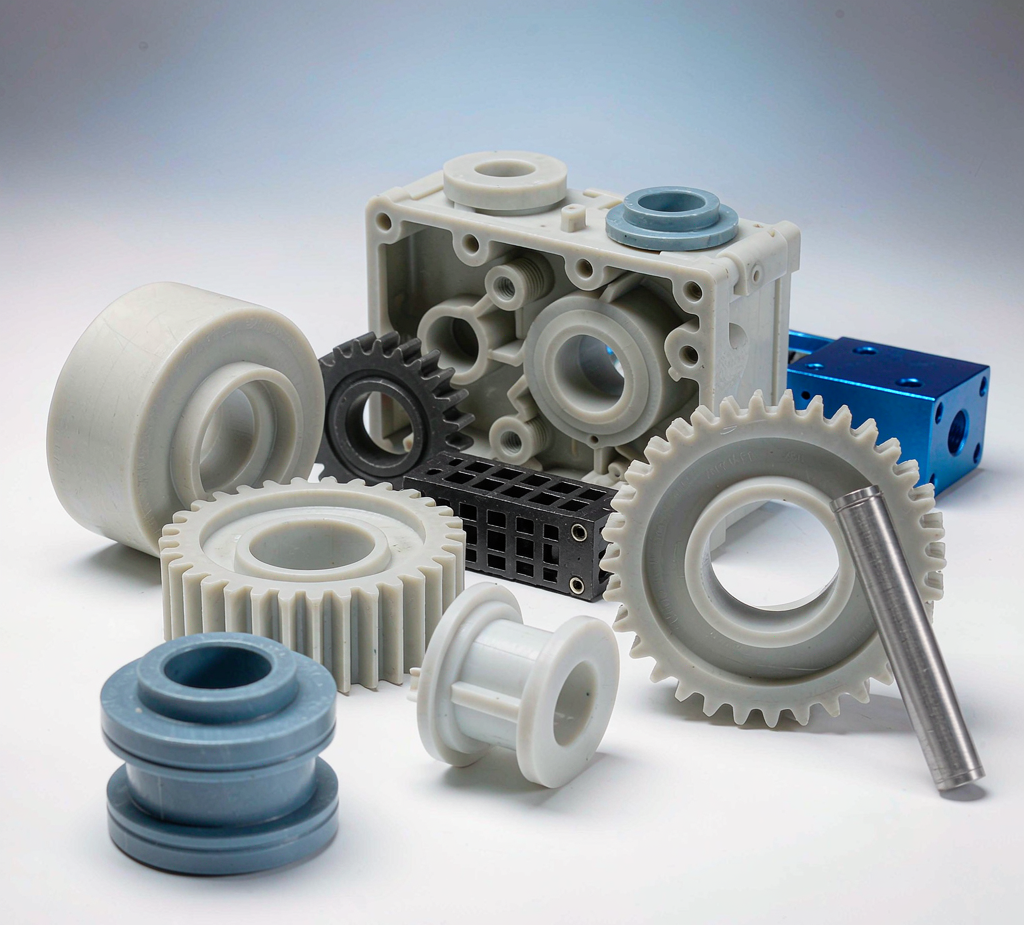
CNC machined nylon parts are custom parts cut from solid nylon stock on a mill or a lathe. The method suits gears, bushings, rollers, guide blocks, spacers, insulators and housings. Nylon is light, tough and wears well. It also takes in water and can change size. So the drawing, the grade, the moisture state and the measurement conditions all need to be agreed before cutting starts.
What This Page Covers
This page covers one process. That process is cutting nylon parts on CNC machines. It is not a general guide to nylon as a material. Our Custom Nylon Plastic Parts page covers the wider service. That page includes injection molding, 3D printing and a material overview.
We work from your 2D drawing. A 3D model in STEP or IGES helps when you have one. Each part is planned against the drawing. We do not sell a catalogue of standard nylon parts.
The parts on this page come from solid stock. That is rod, plate or tube. This matters. A machined part and a molded part of the same shape do not act the same way. Machining cuts through the material structure. A molded part has flow direction, weld lines and a gate mark. We treat the two as different jobs.
Where we draw the line
- We do not promise one fixed tolerance for every nylon part. Nylon changes size with water and heat.
- We do not claim that annealing stops moisture uptake. Stress relief lowers cutting stress. It does not change the material.
- We do not publish fatigue life, defect rates or cycle counts without a test plan and real test data.
- We do not quote a grade change without a reason. Load, speed, heat, fluids and cleaning agents come first.
- We do confirm the grade, the key sizes, the measurement conditions and the inspection method in writing before we quote.
Six Part Families We Machine
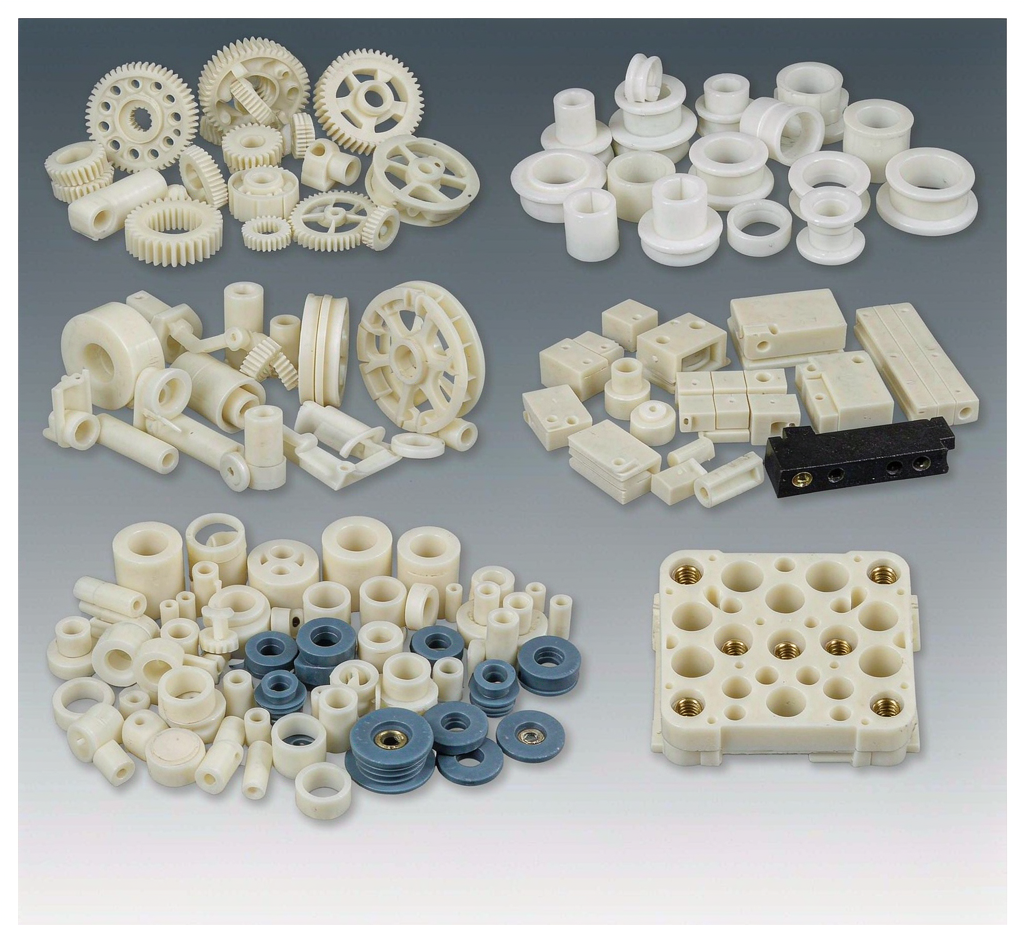
The groups below describe assembly problems, not a stock list. Each one changes which sizes matter most. A gear needs a good bore and a true tooth form. A guide block needs flat faces and a stable width. A spacer needs a controlled thickness.
| Part family | What it does in the machine | What we watch when cutting |
|---|---|---|
| Nylon gears and sprockets | Drive a shaft or a chain at low noise and low weight | Bore fit, tooth form, face runout, keyway or pin hole |
| Nylon bushings and bearings | Support a shaft with low friction and no metal contact | Bore size, wall thickness, flange face, roundness |
| Nylon rollers, wheels and sheaves | Carry a belt, a cable or a moving load | Groove shape, concentricity, side face, balance |
| Nylon guide blocks and wear parts | Guide a slide and take the rubbing wear | Flatness, slot width, corner radii, surface finish |
| Nylon spacers, washers and insulators | Set a gap, carry a light load or break an electrical path | Thickness, parallelism, hole position, edge burrs |
| Custom nylon housings | Hold several parts in one placed and pocketed body | Datum scheme, pocket depth, hole pitch, insert seats |
If your part is a metal bracket for a sensor, see our CNC Machined Sensor Mounts page. That is a different job with different tolerances.
Nylon Grades and Stock Forms
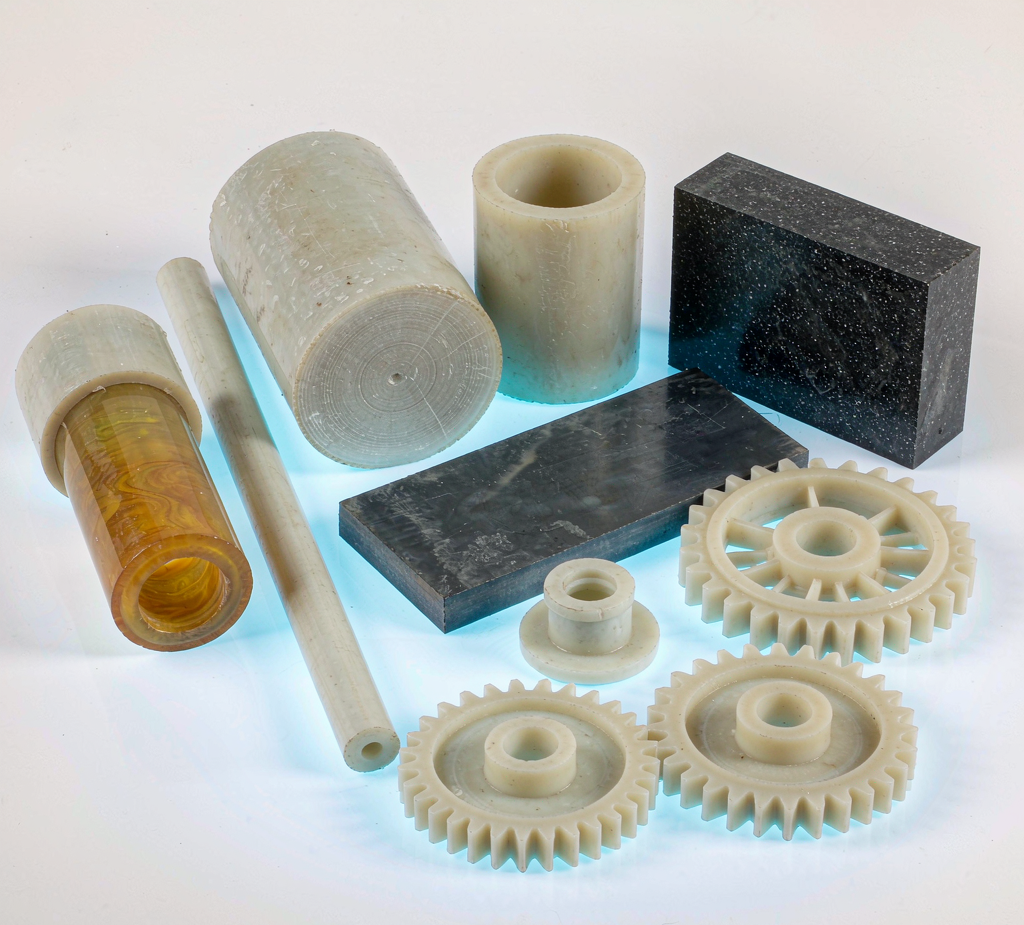
A grade name is a family, not one fixed resin. PA6 from one maker is not the same as PA6 from another. We confirm the maker, the grade code and the data sheet with you before cutting. This matters for food contact, electrical work and any document you need.
| Grade | Where it fits | What to check first |
|---|---|---|
| PA6 | General machined parts, guides and covers | Moisture uptake and part size after machining |
| PA66 | Parts that see more load or more heat | Grade code, stiffness and water uptake |
| PA12 | Parts that need steadier size in humid air | Cost, strength and available stock sizes |
| MC Nylon / cast PA6 | Large gears, thick blocks and big rollers | Blank size, internal stress and section thickness |
| Glass-filled nylon | Stiffer parts and higher load at small size | Tool wear, fibre exposure and surface finish |
| Oil or MoS2-filled nylon | Slow sliding parts where lubrication is hard | Filler type, colour and wear behaviour |
We do not list fixed strength or temperature numbers here. Those values depend on the exact grade, the test method and the moisture state of the sample. Ask for the data sheet of the grade we plan to use. Our Materials Hub gives the wider material background.
When Nylon Is Not the Best Choice
Good sourcing advice sometimes means a different plastic. Nylon takes in water. It swells. It can lose stiffness in warm, wet air. If your part must hold a tight fit in those conditions, another material may serve you better.
| Material | Use it when | Trade-off |
|---|---|---|
| POM / acetal | Size must stay steady in wet or washdown conditions | Lower impact strength than nylon in some uses |
| UHMW-PE | Sliding wear with water, grit or abrasive contact | Softer, and harder to hold a tight machined fit |
| PEEK | High heat, harsh fluids or repeated steam cleaning | Much higher material cost |
| PTFE / PVDF | Strong acids or aggressive chemical contact | Creep, or a harder machining process |
Moisture and Dimensional Stability
This is the main reason a nylon part can measure correctly in our shop and then fail a fit check at your plant. Nylon takes in water from the air. The part grows. It can also give water back in dry air and shrink. The change depends on the grade, the wall thickness and the air around the part.
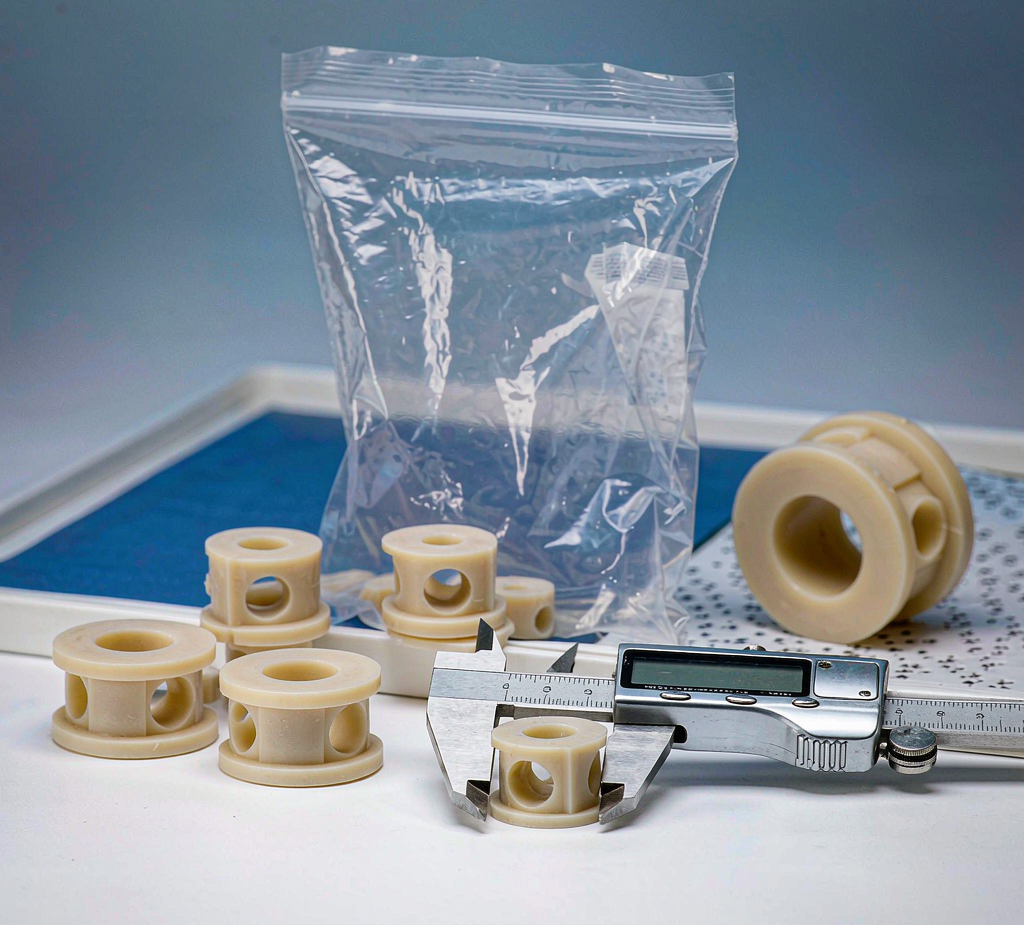
- Agree the material state. We record the grade, the stock form and how the blank was stored. Before cutting
- Control cutting heat. Sharp tools, a clear chip path and light passes keep the part cool. During cutting
- Fix the measurement condition. We agree the temperature, the time after cutting and the gauge to use. At inspection
- Pack for the trip. Sealed packing keeps the part close to the state we measured. Before shipping
Test methods do exist. ISO 62 and ASTM D570 cover water absorption. ISO 15512 covers moisture content in plastics. These are test methods, not a blanket certificate. We do not claim that every order is tested to them. If you need a specific test, name it at enquiry. We will agree the sample, the condition and the report format.
Machining Nylon Without Distortion or Burrs
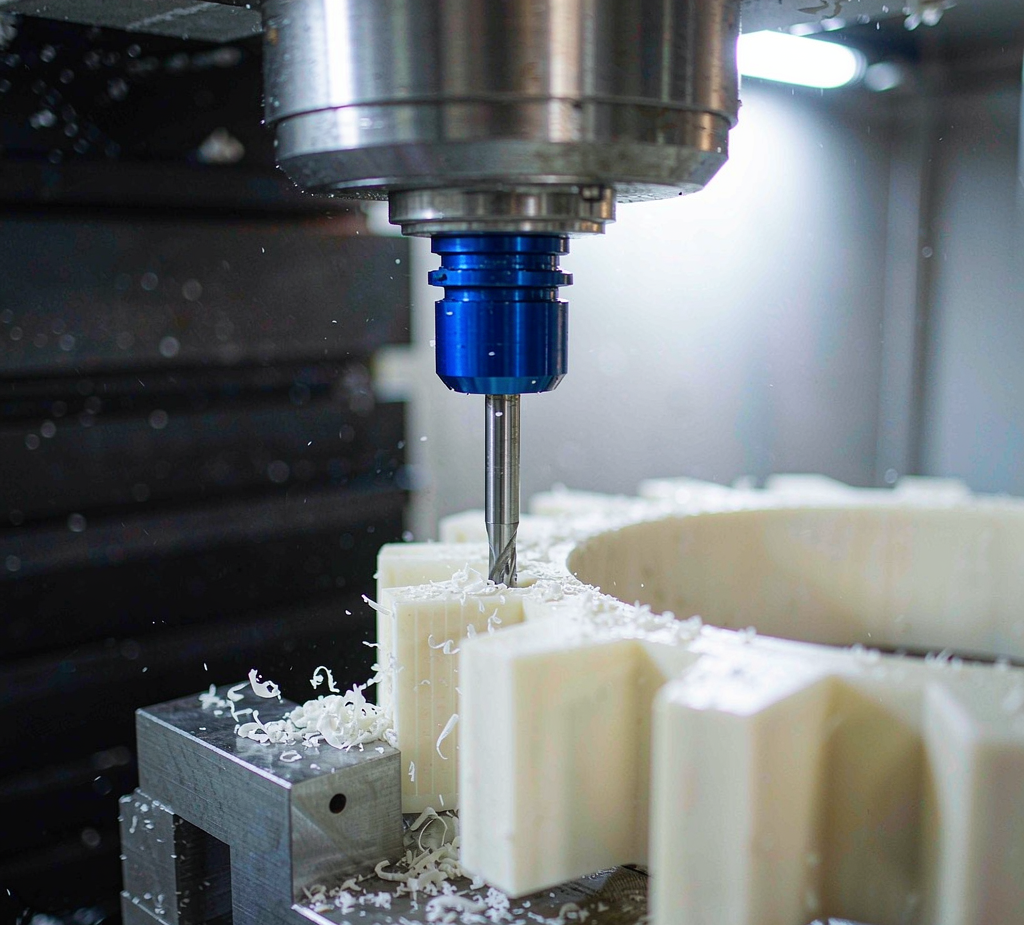
Nylon cuts fast, but it does not behave like steel. It is soft, it holds heat and it bends away from a dull tool. Long stringy chips can wrap around a cutter. Fuzzy burrs can hide on a bore edge. The setup matters as much as the tool path.
Sharp, polished cutters
A sharp edge shears the nylon. A dull edge rubs it and makes heat. We use polished flutes and a large chip space.
Keep the part cool
Light passes and a clear chip path help. We check the part temperature before a finishing pass on a tight size.
Hold without squeezing
Soft jaws and wide contact spread the load. A tight clamp can bend a thin wall, which then springs back after release.
Break the string
Long chips can wrap a tool and mark the surface. We set the feed, the tool path and air flow to clear them.
A planned deburr step
Nylon leaves soft burrs on bores and slots. We agree where they are not allowed and how those edges are finished.
Surface as drawn
We check the finish on the sealing or sliding face named in the drawing. A general surface claim is not enough.
Glass-Filled Nylon, Threads and Metal Inserts
Filled nylon and threaded features cause most of the problems we see on a first order. Both need a decision at the drawing stage, not a fix after the parts are cut.
| Feature | What changes | What we agree first |
|---|---|---|
| Glass-filled nylon | Glass fibre wears the tool edge. Fibres can show on a cut face. Properties can differ with fibre direction. | Filler level, tool material, surface need and which faces are visible |
| Cut threads in nylon | Nylon is soft. A thread can strip if it is assembled many times. Drill size changes the thread fit. | Thread size and class, drill size, engagement length and gauge method |
| Brass or steel inserts | An insert takes the wear of repeated assembly. It also adds a press or heat step. | Insert type, seat size, pull-out need and assembly torque |
| Long parts and thin walls | The part can bow during cutting and after release. | Support plan, cutting order and which condition is measured |
We can press in, heat-set or mold in inserts where the process allows. We do not assume a plain nylon thread will survive your assembly cycle. Tell us the torque and the number of assemblies at enquiry. That single fact often changes the design.
Design for Machining: Our Review
Before a price goes out, we read the drawing against the way the part will be held and cut. This is a short engineering review. It is not a sales step. It often saves a tool change or a second setup.
| Drawing feature | What we check | Common outcome |
|---|---|---|
| Thin walls | Wall height, support and clamping load | Add a rib, or cut in two setups |
| Deep holes | Depth to diameter ratio and chip exit | Peck cycle, or a hole from both sides |
| Small inside radii | Smallest cutter that can reach the corner | Open the radius to a standard tool size |
| Long parts | Stock straightness and stress in the blank | Cast stock, or a stress-relief step |
| Threads | Thread class, drill size and gauge access | Cut thread or metal insert |
| Precision fits | Mating part, working temperature and moisture state | Set the key size and the measurement condition |
If a feature cannot be held to the drawing, we say so before the order. We suggest a change and explain the reason. For wider CNC background, see our CNC machining services page and our tight tolerance machining page.
Tolerances, Inspection and Records
We do not put one tolerance number on a nylon page. A number without a material state means little. A bore can measure well on a cool morning and fail on a humid afternoon. That is the nature of the material, not a machining fault.
What do we agree before we quote a tolerance?
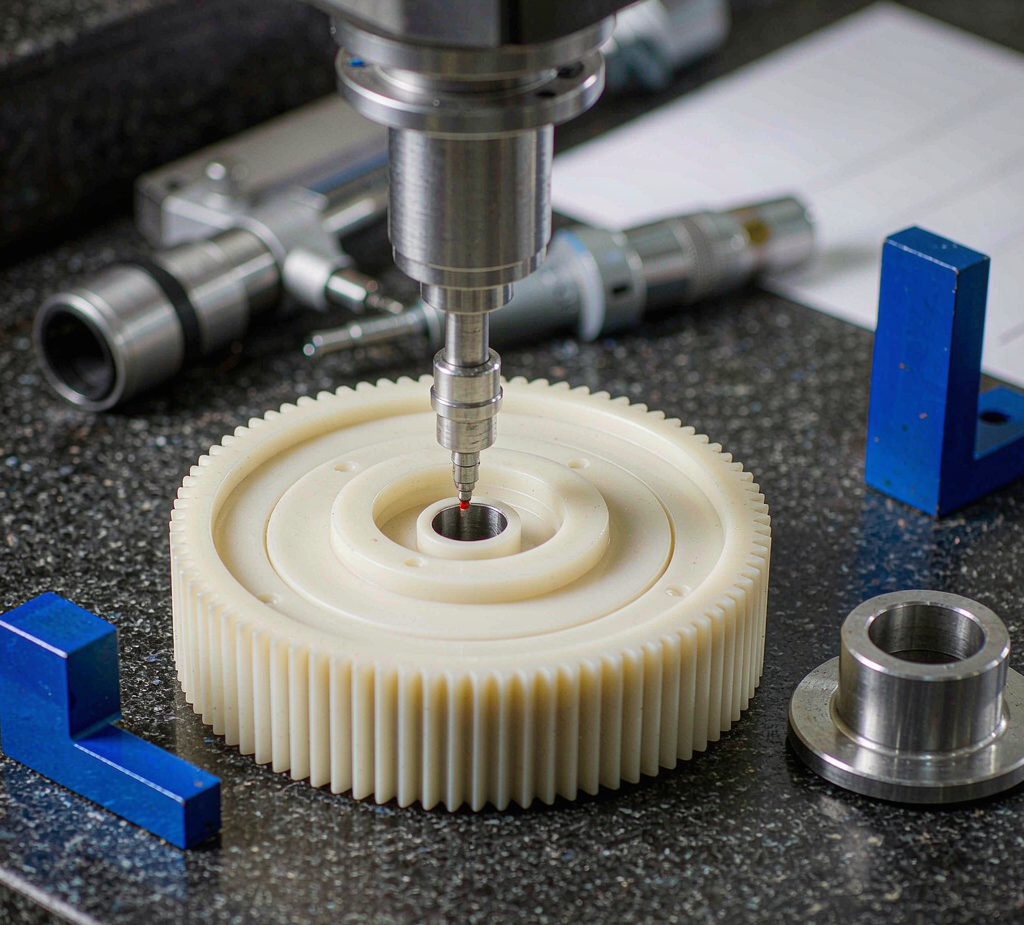
We agree the key sizes from the drawing. We agree the nylon grade and its moisture state. We agree the room temperature and the time between cutting and measuring. We agree the gauge and the method. We also agree which sizes get a written record.
A tight size on a non-functional face adds cost without helping the assembly. We would rather spend that effort on the bore or the fit face.
We can supply a dimensional report when it is agreed. A first article inspection can be planned for a repeat order. Tell us the format you need at enquiry. We do not claim that every order carries a full report by default. Our CNC turning and multi-axis machining pages show the wider equipment background.
Who Buys These Parts
Nylon parts usually replace metal for one of three reasons. They lower weight. They cut noise. They run without grease against a mating face. The buyers below tend to ask about wear, fit and moisture rather than about machine brands.
Machine OEMs
Gears, guide blocks and wear strips for moving assemblies.
Material handling builders
Rollers, sheaves and bushings in dusty or washed lines.
Automotive and EV parts
Light spacers, insulators and low-noise drive parts.
Equipment OEMs
Insulating standoffs, washers and covers near live parts.
Packaging and food lines
Wear parts where grease and metal flakes are a problem.
Spare parts teams
One-off replacements made from a sample or an old drawing.
For electrical parts, the plastic is an insulator, not a certified electrical component. If you need a flame rating or a dielectric value, send the required level and test method. We then check a named resin grade against it. We do not add those claims to a general nylon part.
CNC, Injection Molding or 3D Printing
These three routes can all make a nylon part. They do not give the same part. The right choice depends on quantity, size, accuracy and how settled the design is.
| Route | Best fit | Limits to plan for |
|---|---|---|
| CNC machining | One piece to repeat batches, large parts, tight fits and solid stock | Material waste on big blanks, and moisture control |
| Injection molding | High volumes after the tool is built | Tool cost, lead time and design changes after tooling |
| SLS or MJF printing | Small numbers of complex shapes with no tool | Surface texture, porosity and different strength by build direction |
We look at the drawing and the volumes before we suggest a route. For molded nylon, see our injection molding services page. For printed nylon, see our 3D printing services page. A metal machining guide shows how different the planning is for metal.
What to Send for a Quote
A clear enquiry gets a clear answer. The items below are the ones that change the process plan. You do not need all of them at the first contact. The drawing and the working conditions come first.
Frequently Asked Questions
What are CNC machined nylon parts?
CNC machined nylon parts are custom parts cut from nylon rod, plate or tube. We use milling machines and lathes. Common parts are gears, bushings, rollers, guide blocks, spacers and housings. We make each part from your drawing. We do not hold a stock catalogue of standard nylon parts.
Who makes custom CNC machined nylon parts?
Goldcattle makes custom CNC machined nylon parts from customer drawings. We are an OEM and ODM manufacturer in Xiamen, China. We cut nylon parts for industrial machines, conveyors, vehicles and electrical equipment. Send a 2D drawing and a 3D model for a quote.
Does nylon absorb moisture, and does that change the size of a part?
Yes. Nylon takes in water from the air and can swell. The amount depends on the grade, the part shape and the air around it. We agree the material state and the measurement conditions before we quote. One fixed tolerance number does not cover every nylon order.
Can annealing stop nylon from absorbing moisture?
No. Annealing or stress relief can lower the stress left in a part by cutting. It does not change the fact that nylon takes in water. Moisture control needs the right grade, controlled storage, an agreed measurement condition and suitable packing.
Which nylon grade should I choose?
PA6 is a common general grade. PA66 is stiffer and handles more heat. PA12 takes in less water and stays more stable in size. Cast nylon, often called MC Nylon, suits large and thick parts. Glass-filled nylon is stiffer but wears cutting tools faster. The right grade depends on load, speed, heat, water contact and the documents you need.
What is the difference between cast nylon and extruded nylon?
Cast nylon is made in large rods, plates and tubes. It suits big parts and thick sections, and it tends to hold less internal stress. Extruded nylon is common in smaller rod and plate sizes. It suits many standard parts. We confirm the stock form at engineering review.
When should I use POM instead of nylon?
Use POM, also called acetal, when a part must keep its size in wet conditions. POM takes in much less water than nylon. Nylon often works better where impact strength and wear matter. For high heat or harsh chemicals, PEEK, PTFE or PVDF may fit better. Send the working conditions and we will check.
How do you hold tolerance on a nylon part?
We set the key sizes from your drawing and the way the part fits. We then plan the cutting order, the tools, the clamping and the inspection method. We record the grade, the material state and the room temperature at measurement. A blanket tolerance figure on nylon means little without those conditions.
Can you machine threads and fit metal inserts into nylon parts?
Yes, when the drawing calls for them. Cut threads in nylon need the right drill size, sharp tools and a check of thread fit. For repeated assembly, brass or stainless inserts often last longer. We can press in, heat-set or mold in inserts where the process allows. Tell us the insert type and assembly torque at enquiry.
Is CNC, injection molding or 3D printing better for nylon parts?
CNC suits low volumes, large parts and tight fits. Injection molding suits high volumes once the tool is built. SLS or MJF 3D printing suits complex shapes in small numbers, but the surface and strength are different. We look at quantity, size, accuracy and your drawing before we suggest a route.
What should I send to get a quote?
Send the 2D drawing and 3D model, the nylon grade or the working conditions, the key sizes and fits, the first order quantity and repeat quantity, the surface finish, any thread or insert details, and any test or document needs. Tell us if the part works in water, oil, heat or outdoors.
Questions Buyers Ask Before an RFQ
My last nylon parts grew in storage. What changed?
Most often the parts took in water after machining. Ask what grade was used, how the blanks were stored and at what condition the parts were measured. Then agree a packing method and a fit check on the real mating part. A size check on the day of packing is not the same as a fit check three months later.
Related: moisture and size · inspection conditions
Can you copy an old part if I have no drawing?
We can work from a sample part. We measure it and build a drawing for your approval. Tell us how the part failed and which size matters most. A worn sample will not give a reliable fit size, so we mark the dimensions we infer from it.
Approve the new drawing before we cut. That step protects both sides.
Do I need cast nylon for a large roller?
Often yes, but not always. A large thick section can hold stress in extruded stock. Cast stock comes in bigger sizes and tends to be more stable in thick parts. We check the blank size, the wall thickness and the fit before we choose.
Related: stock forms
Will a glass-filled nylon part be stronger in every direction?
No. Fibres follow the flow of the stock. Stiffness can differ with direction, and a cut face can show fibres. Glass-filled nylon also wears cutting tools faster. We review the load path, the visible faces and the tool plan before we accept the grade.
Related: filled nylon
Related Capability Pages
This page covers one material and one process. The pages below cover the wider process, material and precision background.
Submit Your Nylon Part Drawing
Send the drawing, the grade or working conditions, the quantity and the mating part details. Our engineers review the stock form, the cutting plan, the moisture state, the key sizes and the inspection method. Then we quote a process we can hold.
Drawings are handled under our standard confidentiality procedure. An NDA can be arranged before files are exchanged.