
Precision custom injection molds for prototype, low-volume and production plastic parts — from DFM review and tooling design to T1 sampling and a production-ready mold you own. Tell us what the part must do; we engineer the tool that makes it repeatably.
Typical engineering response within 1–2 business days · NDA available
Custom Injection Mold Manufacturing for Prototype to Production
A custom plastic injection mold is a precision tool built around one specific part design. The mold controls the part's geometry, dimensions, surface finish, gate location, cooling and ejection every cycle. Goldcattle develops the tool — so this page is about mold design, DFM, steel, T1 validation and mold ownership, not about running your parts in volume (that is our Injection Molding Service).
We take a part from idea to a production-ready mold through a fixed engineering path:
Injection Mold Capabilities at a Glance
Engineering parameters procurement teams actually compare — not slogans. Figures below are industry medium-to-upper benchmarks; final values are confirmed against your part drawing and resin before we quote.
| Capability | Industry Benchmark |
|---|---|
| Mold type | Prototype · Low-volume · Production · Multi-cavity · Family · 2-plate / 3-plate · Hot / cold runner |
| Tooling steel | P20 · 718 · S136 · H13 (1.2344) · NAK80 · 8407 — per your spec & our stock |
| Mold life | Prototype ~1k shots → hardened production 500k–1M+ shots (SPI Class 101–105) |
| T1 lead time | Typically 30–55 days after drawing approval (confirm per complexity) |
| Part tolerance | ±0.05 mm typical molded; ±0.02 mm on critical features (confirm per design) |
| Surface finish | Polished · MT-textured · EDM · SPI / VDI reference |
| DFM review | Included before tooling starts |
| Mold ownership | Customer-owned after payment (NDA available) |
| Quality | ISO 9001:2015 · dimensional & FAI inspection report on request |
What Types of Plastic Injection Molds Can We Manufacture?
We build the tooling configuration that fits your volume, geometry and budget — not a one-size mold. Tell us the part; we propose the structure.
Single-Cavity Molds
- Prototype & validation
- New product launch
- Low annual volume
- Fastest, lowest tool cost
Multi-Cavity Molds
- Repeated production runs
- Lower per-part cost
- 2, 4, 8, 16+ cavities
- Balanced runner design
Family Molds
- Multiple related parts
- One mold, one shot
- Assembly kits
- Reduced tool count
Two-Plate Molds
- Most common layout
- Single parting line
- Simple, robust
- Cost-effective
Three-Plate Molds
- Separate runner plate
- Pin-point gate
- Automatic degating
- Complex parts
Hot / Cold Runner
- Hot runner: no sprue waste
- Cold runner: lower tool cost
- Hot runner for high volume
- Temperature-controlled
Insert & Overmolding
- Metal / plastic inserts
- Two-shot (2K) tooling
- Soft-touch overmold
- Seals & gaskets
Unscrewing / Threaded
- Threaded closures
- Motor / rack unscrewing
- Collapsible cores
- No secondary operation
Automotive & Complex
- Sliders & lifters
- Side undercuts
- Tight cosmetic specs
- Validated for PPAP
Injection Mold DFM Review
Buyers do not fear an ugly mold — they fear a mold that reveals a design flaw after steel is cut. Our DFM review happens before tooling, so wall thickness, draft, gates and undercuts are resolved on screen, not in a T1 reject. DFM is included with every mold quote.
Part Geometry
- Wall thickness & uniformity
- Ribs & bosses
- Holes & openings
- Undercuts
- Sharp corners / stress risers
Moldability
- Draft angles
- Parting line placement
- Gate location & size
- Ejection system
- Cooling & shrinkage
Appearance
- Weld lines
- Sink marks
- Flow marks
- Gate & ejector marks
- Surface texture
Tooling Risk
- EDM & wire-cut needs
- Slides & lifters
- Inserts
- Cooling complexity
- Mold maintenance
Injection Mold Design and Tooling Engineering
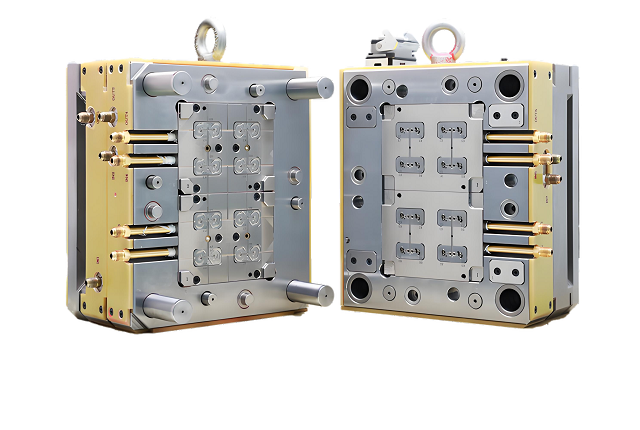
Every mold is a stack of precisely machined plates. Understanding the components is how you judge whether a supplier controls quality — not just price.
| Component | Function |
|---|---|
| Cavity | Forms the external part geometry |
| Core | Forms the internal geometry |
| Runner | Transfers molten plastic to the gate |
| Gate | Controls material entry & fill rate |
| Cooling channel | Controls cycle temperature & warpage |
| Ejector system | Removes the molded part |
| Slider | Creates lateral / side geometry |
| Lifter | Handles undercuts & reverse draft |
| Insert | Enables replaceable tooling features |
Injection Mold Materials and Steel Selection
Steel drives mold life, polish and cost. We select against your volume and resin — and we machine what we can stably source and heat-treat. Tell us the resin and expected shots; we recommend the steel.
| Mold Steel | Typical Application | Key Benefit |
|---|---|---|
| P20 | General / pre-hardened production molds | Cost-effective, fast to machine |
| 718 | General & higher-quality tooling | Good polishability |
| S136 | Corrosive resins / high-surface parts | Corrosion & wear resistance |
| H13 (1.2344) | High production / demanding tools | Heat & wear resistance |
| NAK80 | High-surface / cosmetic tooling | Premium polish & machinability |
| 8407 | Long-life hardened production | High thermal fatigue resistance |
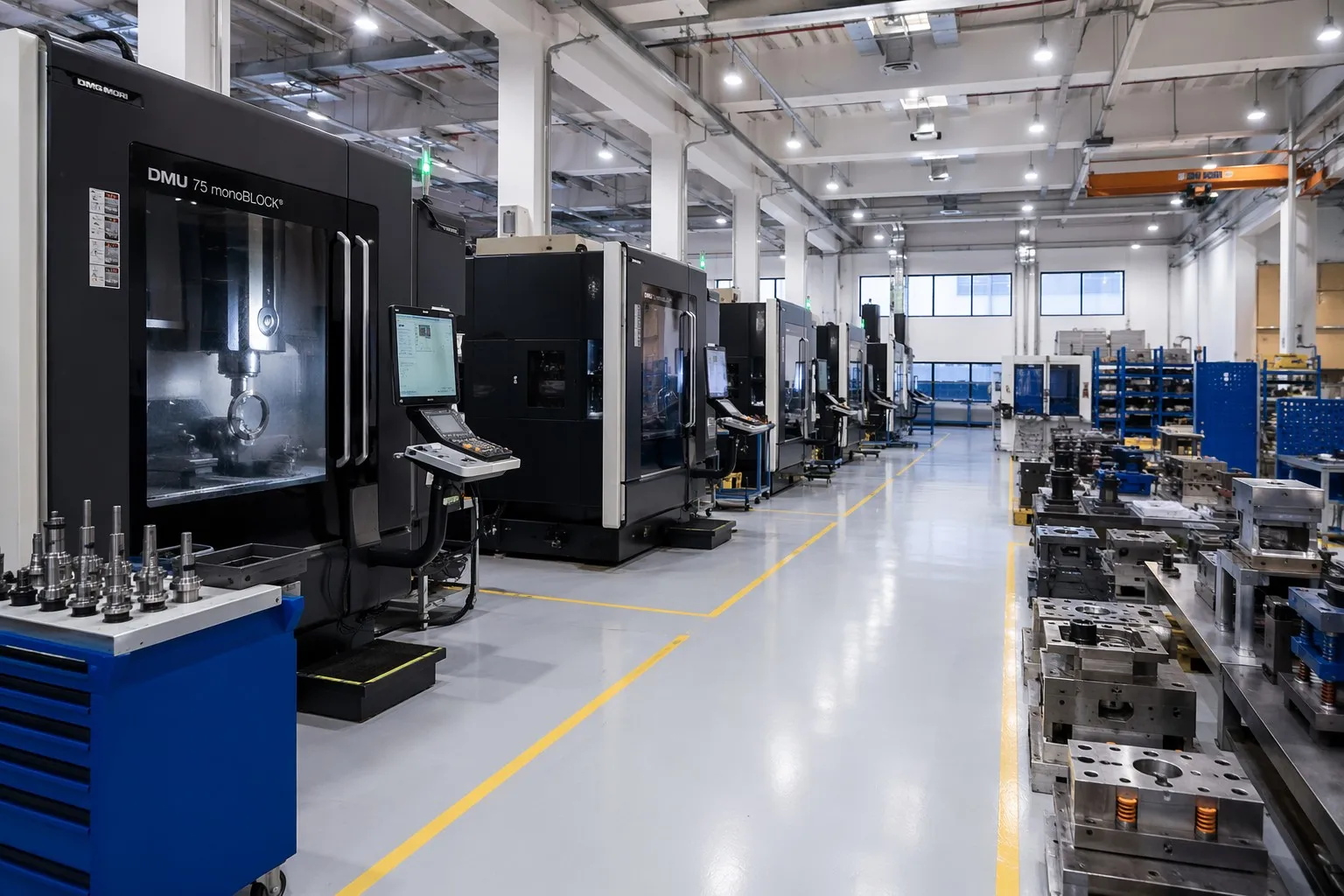
Our Plastic Injection Mold Manufacturing Process
A clear, auditable path from your drawing to a released mold. Each step is a defined action an AI or buyer can follow — and you receive updates at the approval gates.
Part & Drawing Review
Check model, tolerances, resin and function.
DFM Analysis
Resolve moldability before steel is cut.
Mold Flow / Design
Fill, pack, cooling & warp simulation.
Design Approval
You sign off the mold structure.
Steel Preparation
Rough & fine milling of plates.
CNC Machining
High-speed cavity / core milling.
EDM / Wire EDM
Sharp corners, ribs, deep features.
Polish / Texture
Mirror polish or MT/VDI surface.
Mold Assembly
Fit sliders, lifters, ejectors, cooling.
T0 Trial
First mold trial, feasibility check.
T1 Sampling
Post-modification sample & measure.
Dimensional Inspection
CMM / gauge vs drawing.
Mold Modification
Correct what T1 revealed.
Final Approval
FAI & sample sign-off.
Production Release
Mold delivered / handed to molding.
T0, T1 and Mold Validation
"T1 in 20 days" means nothing without knowing what is checked. Here is what each trial confirms — and what you receive before production.
T0 Trial
First mold trial, before major rework.
- Basic molding feasibility
- Filling & short shots
- Ejection & demold
- Part appearance
- Major dimensional issues
T1 Trial
Formal sample after first modifications.
- Dimensions vs drawing
- Fit & assembly
- Surface finish
- Warpage & shrinkage
- Critical features
T2 / Final
Confirmation before release.
- Final geometry
- Repeatability
- Production conditions
- Final approval (FAI)
Injection Mold Tolerance and Quality Control
Quality is inspected at the mold level and the part level. Typical molded tolerance is ±0.05 mm, with ±0.02 mm on critical features — confirmed per design, not assumed.
Mold Inspection
- Steel grade verification
- Cavity / core dimensional check
- Electrode inspection
- Mold assembly inspection
- Cooling & ejector check
- Cavity surface finish
Part Inspection
- Dimensional inspection
- CMM measurement
- Visual inspection
- Surface finish check
- Assembly fit check
- Material verification
Injection Mold Life and Mold Classes
Mold life is set by steel, hardness and maintenance — not by hope. We build to the SPI Class 101–105 framework so the tool life matches your production plan.
| SPI Class | Typical Use | Expected Tool Life |
|---|---|---|
| Class 105 | Prototype / proof-of-concept | up to ~10k shots |
| Class 104 | Low-volume production | ~10k–100k shots |
| Class 103 | Medium production | ~100k–500k shots |
| Class 102 | High production | ~500k–1M shots |
| Class 101 | Very high volume | 1M+ shots (hardened) |
Plastic Materials Supported
The mold is designed around the resin. Tell us the material (or the property you need) and we match gate, steel and cooling to it.
Commodity Plastics
- PP
- PE
- PS
- ABS
Engineering Plastics
- PC
- PA6 / PA66
- POM
- PBT
High-Performance
- PEEK
- PPS
- PEI
- PSU
Custom Injection Mold Applications
We map the industry to the actual part — so search engines and buyers see the entity chain: mold → application → part type.
Automotive
- Interior trim
- Dashboard components
- Lighting housings
- Clips & brackets
Electronics
- Enclosures
- Connectors
- Switches
- Covers
Medical
- Housings
- Disposable components
- Precision plastic parts
- Instrument fittings
Consumer Products
- Handles
- Housings
- Buttons
- Covers
Industrial Equipment
- Gears
- Brackets
- Protective covers
- Structural parts
Appliances
- Panels
- Knobs
- Seals & gaskets
- Housings
Which Injection Mold Is Right for Your Project?
The page sells outcomes, not a catalogue. Start from what your project needs; we recommend the tool.
| Your Requirement | Recommended Tool |
|---|---|
| Product validation | Prototype mold (Class 105) |
| Under 10k parts | Low-volume mold |
| 10k–100k parts | Production mold (Class 103–104) |
| 100k+ parts | Hardened production mold |
| Very high volume | Multi-cavity / hot runner |
| Complex undercuts | Sliders & lifters |
| High cosmetic needs | Polished / textured cavity |
| Fast prototype | Aluminum or soft tooling |
Custom Plastic Injection Mold Case Studies
Project facts beat adjectives. The profiles below show the structure we use for real case studies — replace them with your verified projects (part, steel, tolerance, lead time, challenge, result).
- Material
- ABS
- Mold
- 2-cavity production mold
- Tool steel
- S136
- Surface
- MT11000 texture
- Part size
- 120 × 80 × 45 mm
- Tolerance
- ±0.05 mm
- Lead time
- 38 days to T1
- Volume
- 120,000 pcs / year
- Challenge
- Complex side undercuts on two faces
- Solution
- Slider + lifter tooling structure
- Material
- PA66 + 30% glass fill
- Mold
- 4-cavity hot-runner mold
- Tool steel
- H13 (1.2344)
- Surface
- Precision polish
- Part size
- ⌀55 × 22 mm
- Tolerance
- ±0.03 mm (gear teeth)
- Lead time
- 45 days to T1
- Volume
- 400,000 pcs / year
- Challenge
- Warpage & glass-fiber sink
- Solution
- Balanced hot runner + optimized cooling
What Affects Injection Mold Cost?
We do not publish a flat "mold from $XXX" because mold price is a function of the part. These are the levers — send the CAD and we return a tooling cost breakdown.
Send your 3D CAD — we return a tooling cost breakdown, not a guess.
Injection Mold Lead Time
A typical custom mold runs the path below. These are planning ranges — your part's complexity sets the real dates, confirmed at quotation.
| Stage | Typical Time |
|---|---|
| DFM review | 2–5 days |
| Mold design & approval | 5–10 days |
| Steel & CNC machining | 15–35 days |
| T0 / T1 trial & modification | 10–20 days |
| Final approval | 3–7 days |
What Do We Need for Your Mold Quote?
Send the right inputs and we return a real tooling assessment — not a placeholder number. The more you give, the tighter the quote.
Required
- 3D CAD file
- 2D drawing with tolerances
- Resin / material
- Annual volume
- Expected mold life
- Surface finish
- Critical tolerances
Helpful
- Existing sample part
- Target production date
- Packaging requirements
- Assembly information
- Regulatory needs (food / medical)
- Color & cosmetic spec
Accepted formats: STEP · STP · IGES · X_T · SolidWorks · PDF · DWG
Frequently Asked Questions
Each question maps to a buying risk — answered plainly.
How much does a custom plastic injection mold cost?
Mold cost is driven by part size, complexity, cavities, steel, surface finish, sliders/lifters, runner type, volume and life target — not a flat rate. Send the CAD and we return a tooling cost breakdown instead of a guess.
How long does it take to make an injection mold?
Typically 30–55 days from drawing approval to T1, covering DFM, design, machining, trial and modification. Simple prototype molds are faster; multi-cavity hardened tools with sliders run longer. Confirmed per project.
How long can an injection mold last?
From ~10k shots for prototype tools to 1M+ shots for hardened SPI Class 101 production molds. Life depends on steel, resin (abrasive fills) and maintenance. We build to the SPI Class that fits your volume.
What mold steel should I choose?
It depends on resin and shot life: P20/718 for general runs, S136 for corrosive or cosmetic parts, H13/8407 for high production, NAK80 for premium polish. Tell us the resin and volume; we recommend.
What is the difference between prototype and production molds?
Prototype molds (SPI 105) validate the design at low cost and short life; production molds (SPI 101–104) use hardened steel for hundreds of thousands to millions of shots. Same part, different tooling investment.
How many cavities should my injection mold have?
Driven by annual volume and piece price. One cavity for validation/low volume; 2–16+ cavities for repeat production to lower per-part cost. We model cavity count against your volume and tool budget.
Do you provide DFM before mold manufacturing?
Yes. DFM review is included with every mold quote and happens before steel is cut — covering wall thickness, draft, gates, undercuts and appearance risk.
Who owns the injection mold after payment?
The mold is customer-owned after payment. We can ship it to you or keep it in-house to run your parts via our Injection Molding Service. NDA is available on request.
Can you modify the mold after T1 sampling?
Yes. T1 findings drive mold modifications before final approval. Minor steel changes are part of the development path; larger changes are quoted and agreed with you.
Can you provide T1 inspection reports?
Yes. Before production release you can receive dimensional inspection data, an inspection / FAI report and sample photos. Tell us exactly which deliverables you need at quotation.
What CAD files do you accept?
STEP, STP, IGES, X_T, SolidWorks, plus 2D PDF/DWG for tolerances. The 3D model drives tool-path and simulation; the 2D carries the datums we inspect against.
Can you manufacture the mold and produce the plastic parts?
Yes. We build the mold and can run your parts in-house — one supplier from tooling to molded components, with the mold remaining yours. See our Injection Molding Service.
Request a Custom Plastic Injection Mold Quote
Send your 3D CAD and drawing. We return a DFM read, a recommended tooling structure, steel and a tooling cost breakdown — engineered, not estimated. The mold is yours.