Custom Plastic Pallet Inserts Manufacturer
Injection Molded Plastic Pallet Components for Logistics, Warehousing and Industrial Packaging
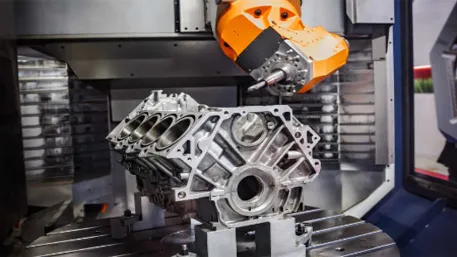
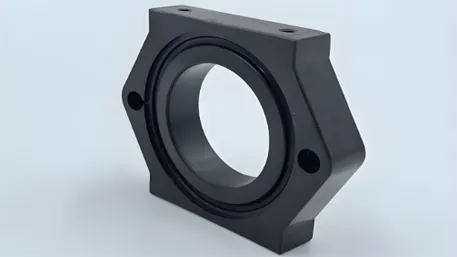
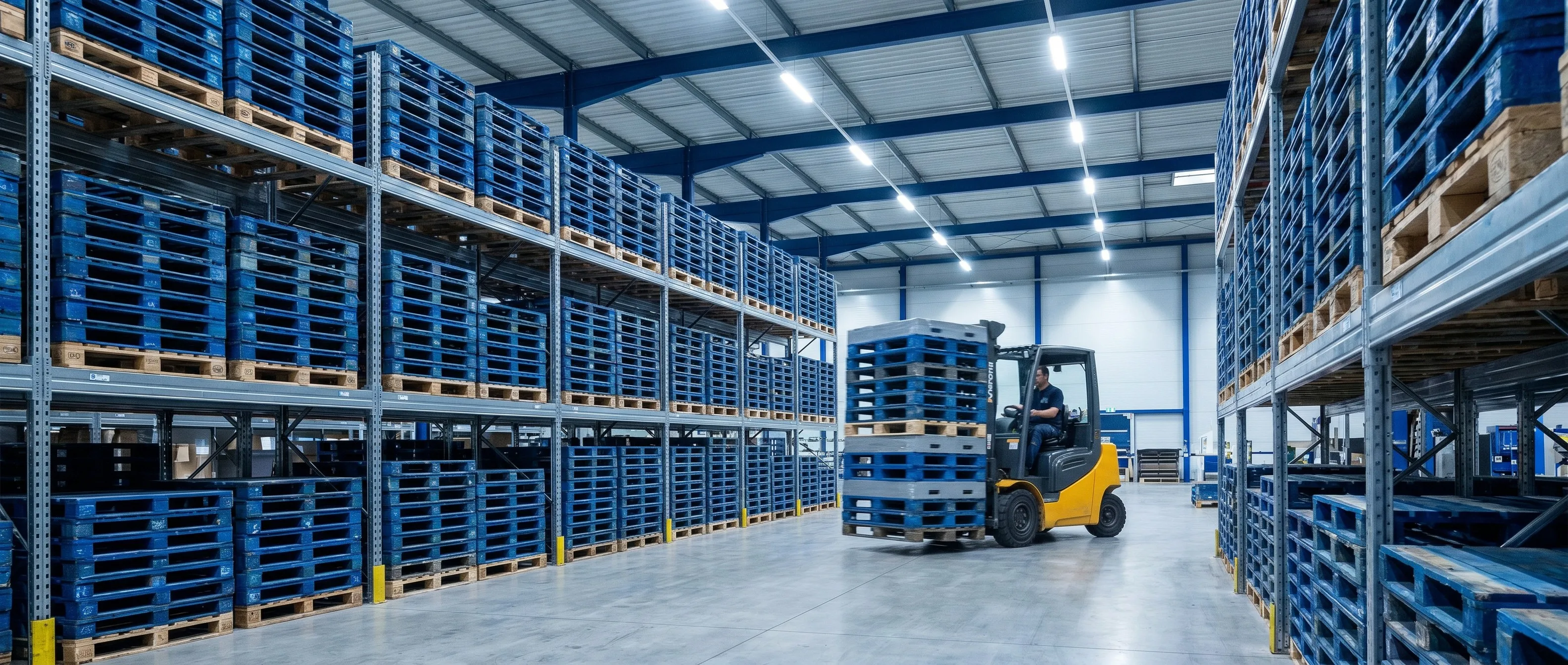
Xiamen Goldcattle manufactures custom injection-molded pallet inserts that reinforce load capacity, extend service life and protect cargo during transit. From standard HDPE deck panels to glass-filled nylon heavy-duty structural blocks, we support volumes from 500-piece pilot runs to 200,000+ annual production — with in-house mold design and multi-cavity tooling to keep unit cost competitive at scale.
- Warehouse pallet systems — rack decks and storage platforms
- Returnable packaging — reusable export containers
- Food-grade logistics pallets — hygienic HDPE components
- Automotive logistics containers — reinforced structural blocks
Applications: Where Pallet Inserts Are Used
Four sectors dominate global pallet insert demand. Each requires distinct material grades, surface finishes and structural profiles — selecting the right specification directly impacts service life and replacement cost.
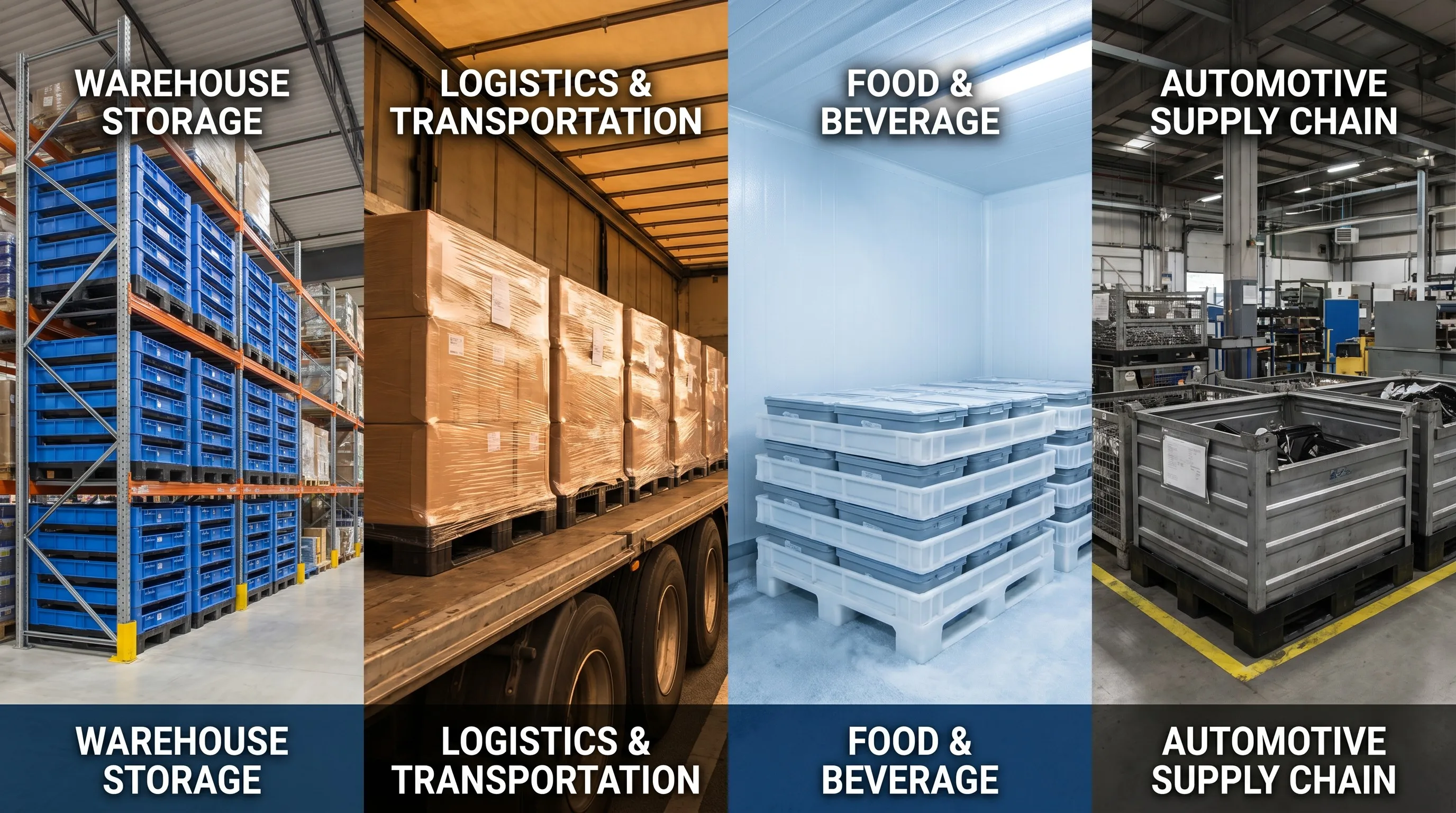
Warehouse Storage Systems
Logistics & Transportation
Food & Beverage Industry
Automotive Supply Chain
Material Selection Guide
The right polymer determines load capacity, hygiene compliance, weather resistance and unit cost. Below are the five grades most frequently specified by logistics OEM buyers, with application fit and key property data.
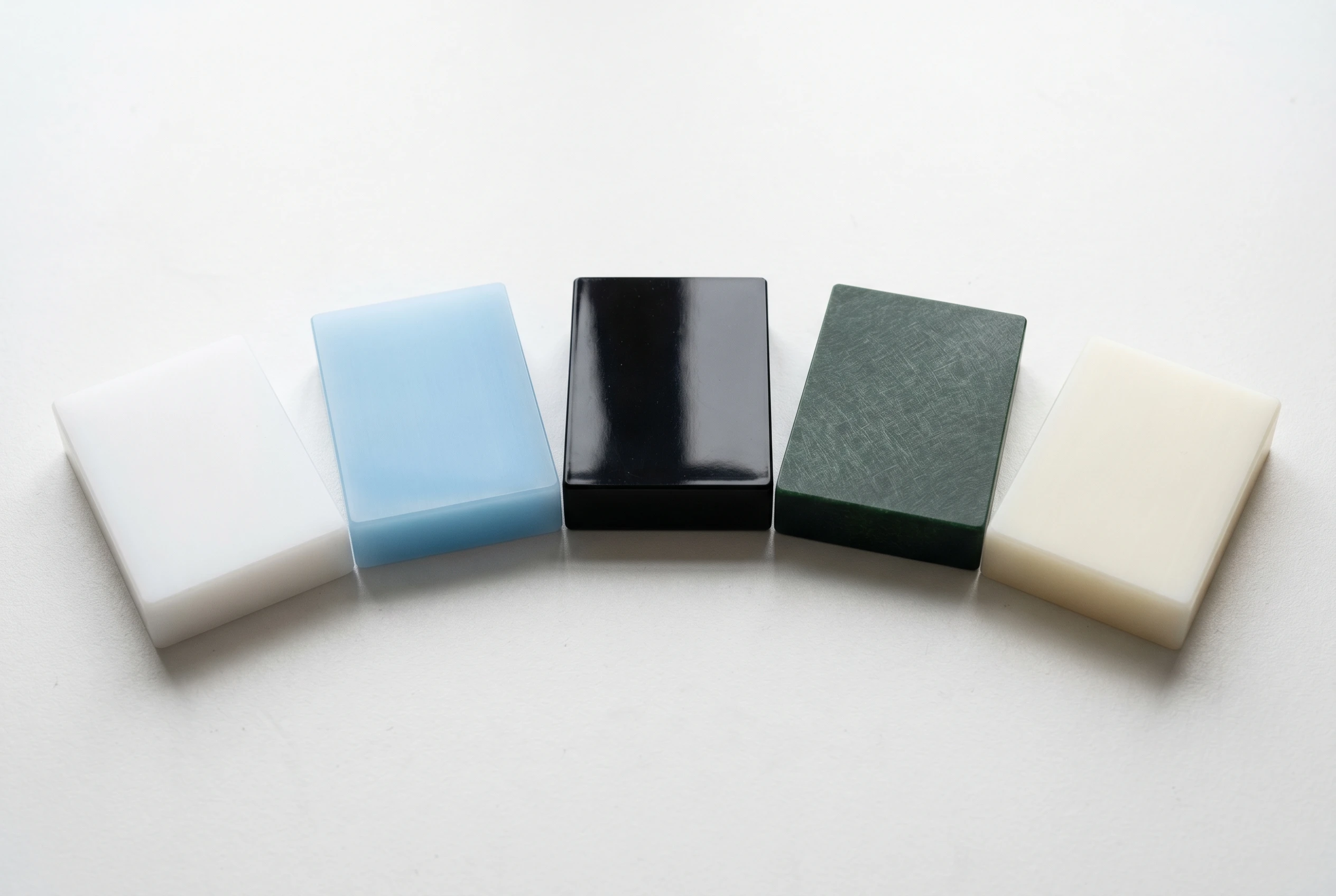
| Material | Best For | Key Advantage | Static Load | Temp Range | Relative Cost |
|---|---|---|---|---|---|
| HDPE | Export pallets, food-grade | Impact resistant, hygienic | 1–3 Tons | -30°C to +80°C | Low |
| PP | Standard logistics | Cost effective, lightweight | 1–2 Tons | -20°C to +100°C | Very Low |
| ABS | Industrial systems | Higher rigidity, dimensional stability | 2–4 Tons | -20°C to +80°C | Moderate |
| PA6-GF30 | Heavy-load applications | High strength, reinforced | 3–5 Tons | -40°C to +120°C | Higher |
| UHMWPE | Wear-resistant systems | Long service life, low friction | 2–4 Tons | -200°C to +80°C | High |
Decision Guide: Choose the Right Material
Choose HDPE If You Need
Impact resistance for export and transit environments, food-grade compliance (FDA/EU), UV stability for outdoor storage, easy cleaning and non-absorbent surface for wash-down areas.
Choose PP If You Need
Lowest material cost for high-volume standard inserts, adequate strength for light-to-medium loads (up to 2T static), higher temperature tolerance for hot-fill environments, lightweight design for air-freight pallets.
Choose PA6-GF30 If You Need
Maximum load capacity (up to 5T static) for heavy-duty warehouse racks, structural rib reinforcement for multi-stack pallets, extreme temperature tolerance for cold-chain logistics, long service life (5–10 years continuous use).
Load Capacity & Performance Data
Procurement decisions for pallet components hinge on three performance numbers: static load limit, dynamic load limit and expected service life. Below is typical performance data by material grade — actual values vary by insert geometry, wall thickness and rib design.
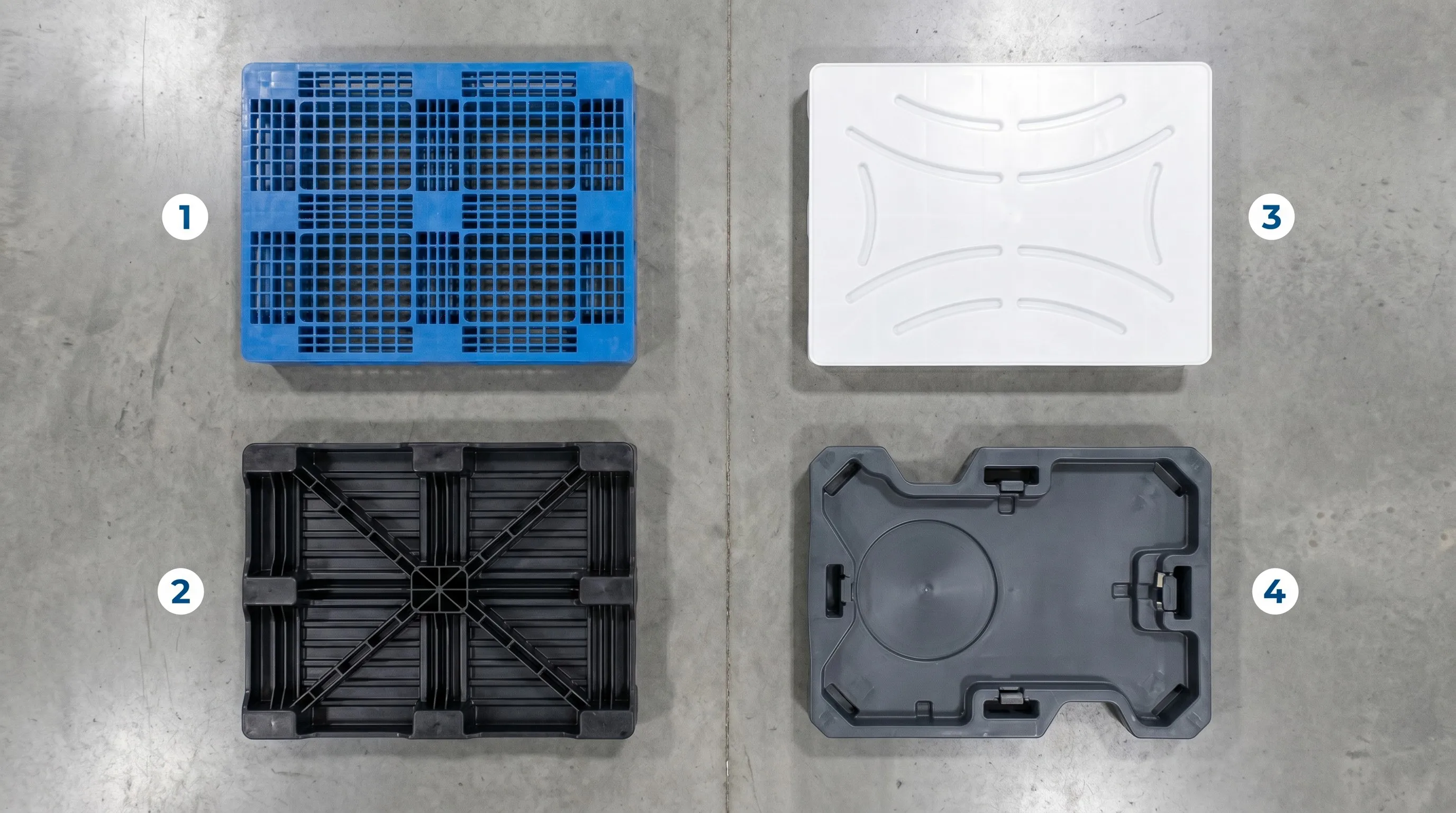
| Property | HDPE Insert | PP Insert | ABS Insert | PA6-GF30 Insert |
|---|---|---|---|---|
| Static Load Capacity | 1–3 Tons | 1–2 Tons | 2–4 Tons | 3–5 Tons |
| Dynamic Load Capacity | 0.5–1.5 Tons | 0.5–1 Ton | 1–2 Tons | 1.5–3 Tons |
| Temperature Range | -30°C to +80°C | -20°C to +100°C | -20°C to +80°C | -40°C to +120°C |
| Impact Resistance | High | Moderate | Moderate | High |
| Service Life (indoor) | 3–7 Years | 3–5 Years | 4–8 Years | 5–10 Years |
| UV Resistance | Good (with stabilizer) | Moderate | Low | Good |
| Water Absorption | <0.01% | <0.01% | 0.2–0.4% | 0.5–1.2% |
Design Parameters That Affect Load Capacity
| Parameter | Effect on Load Capacity | Typical Value | Design Note |
|---|---|---|---|
| Wall Thickness | Direct — thicker walls carry more | 3–12 mm | ≥5mm recommended for heavy-duty |
| Rib Height / Thickness | +30–50% capacity per 3mm rib increase | Ribs 3–6mm high, 2–4mm thick | Structural ribs on underside are most cost-efficient |
| Rib Pattern | Grid pattern superior to radial | 6–12mm spacing | Grid ribs distribute load evenly across deck surface |
| Insert-to-Pallet Fit | Loose fit reduces effective load by 15–25% | ±0.5mm tolerance on perimeter | Snap-fit or friction-fit design maximizes load transfer |
| Material Grade | PA6-GF30 carries 2–3× more than HDPE | Per application requirement | Glass-filled grades offset thinner wall designs |
Plastic vs Metal Pallet Inserts: Which to Choose?
Many logistics operations still use welded steel inserts — but plastic alternatives outperform metal in five of seven key procurement criteria. Understanding this trade-off is essential for total-cost-of-ownership decisions.
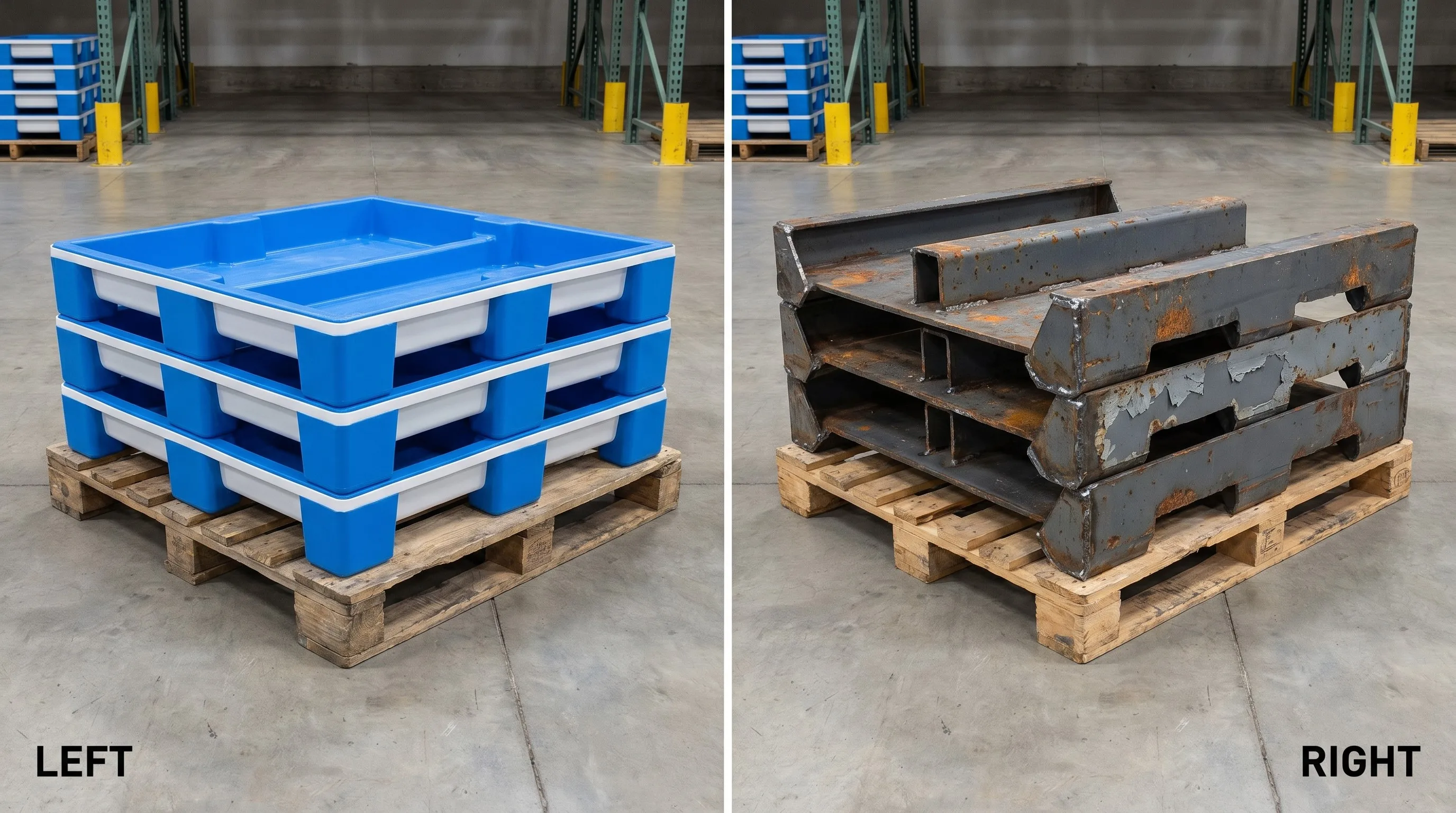
| Factor | Plastic Inserts | Metal Inserts |
|---|---|---|
| Weight | Light (0.3–1.5 kg each) | Heavy (2–5 kg each) |
| Corrosion Resistance | Inherent — no rust ever | Rusts in humid/wet environments |
| Unit Cost at Scale | Low ($0.80–$3 per piece) | Moderate ($2–$8 per piece) |
| Tooling Investment | Higher (mold $3K–$12K) | Lower (welding fixture $500–$2K) |
| Impact Resistance | Excellent — absorbs shock | Poor — deforms permanently |
| Service Life (outdoor) | 5–10 years without degradation | 2–5 years before rust damage |
| Hygiene Compliance | Food-grade HDPE available | Not suitable for food contact |
| Customization | Easy — mold change allows full geometry | Limited — welding constraints |
When to Choose Plastic
Volume > 2,000 pcs/year
Mold investment amortizes quickly. At 10,000+ annual volume, plastic unit cost is 40–60% lower than welded metal.
Wet / Outdoor / Food Environments
Plastic never rusts. HDPE and PP meet FDA food-contact regulations. No paint chipping, no metal contamination risk.
Weight-Sensitive Logistics
Each plastic insert weighs 60–80% less than its metal equivalent — reducing per-pallet freight cost and enabling air-cargo compatibility.
Manufacturing Process: From Drawing to Delivery
The production workflow for pallet inserts compresses into four stages. Unlike the original page which devoted 60% of content to generic injection molding theory, this section focuses on decision-relevant milestones and lead-time checkpoints.
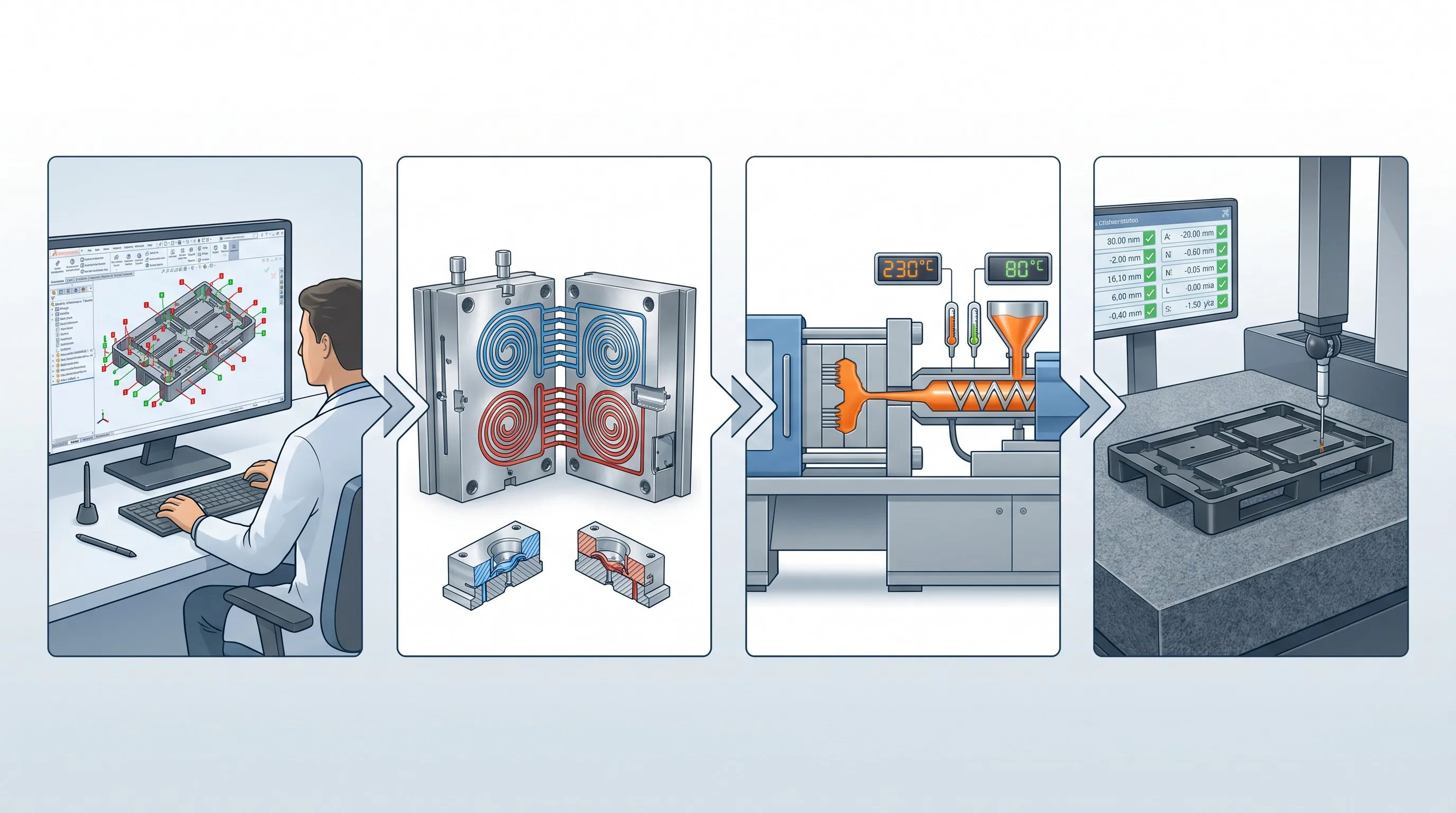
Production Milestones & Lead Time
| Stage | Duration | Output | Customer Action Point |
|---|---|---|---|
| DFM Report | 1–2 days | Design recommendations + material proposal | Review and approve modifications |
| Mold Fabrication | 15–25 days | Production-ready mold with trial samples | Approve sample dimensions and appearance |
| T1 / T2 Sampling | 3–5 days | 10–20 pcs first article for validation | Fit test on actual pallet and approve production |
| Mass Production | 7–15 days (per batch) | Full batch with COC and dimensional report | Receive and validate against spec |
Case Studies
Two recent projects demonstrate how material choice and rib optimization directly impact pallet performance and procurement economics.
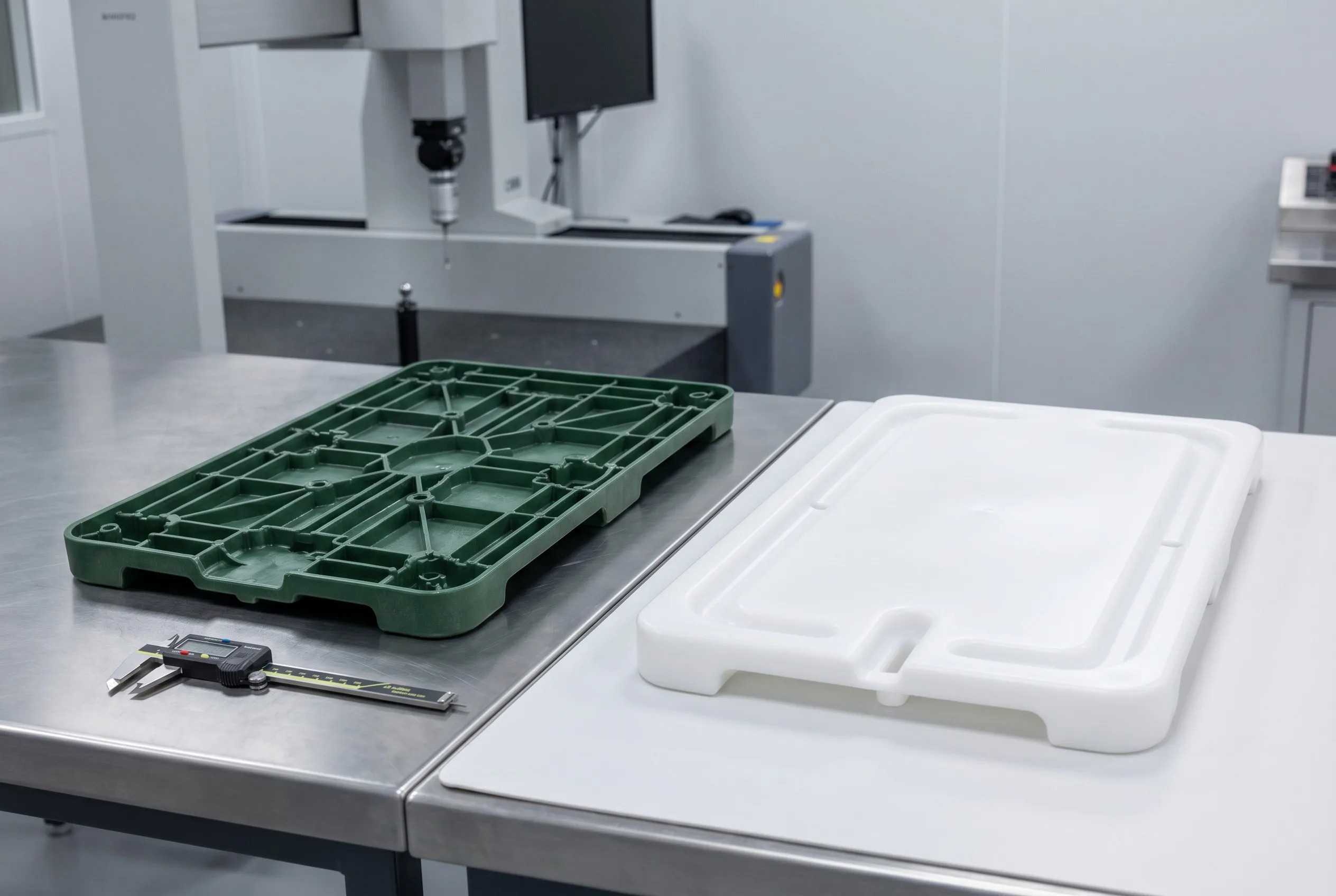
Heavy-Duty Warehouse Pallet Insert
Food-Grade Pallet Component
Why Choose Goldcattle as Your Pallet Insert Partner
Goldcattle operates injection molding presses from 80T to 650T alongside CNC machining, stamping and sheet metal fabrication — meaning your pallet insert project moves from design review through mold build to mass production under one roof, without supplier coordination overhead.
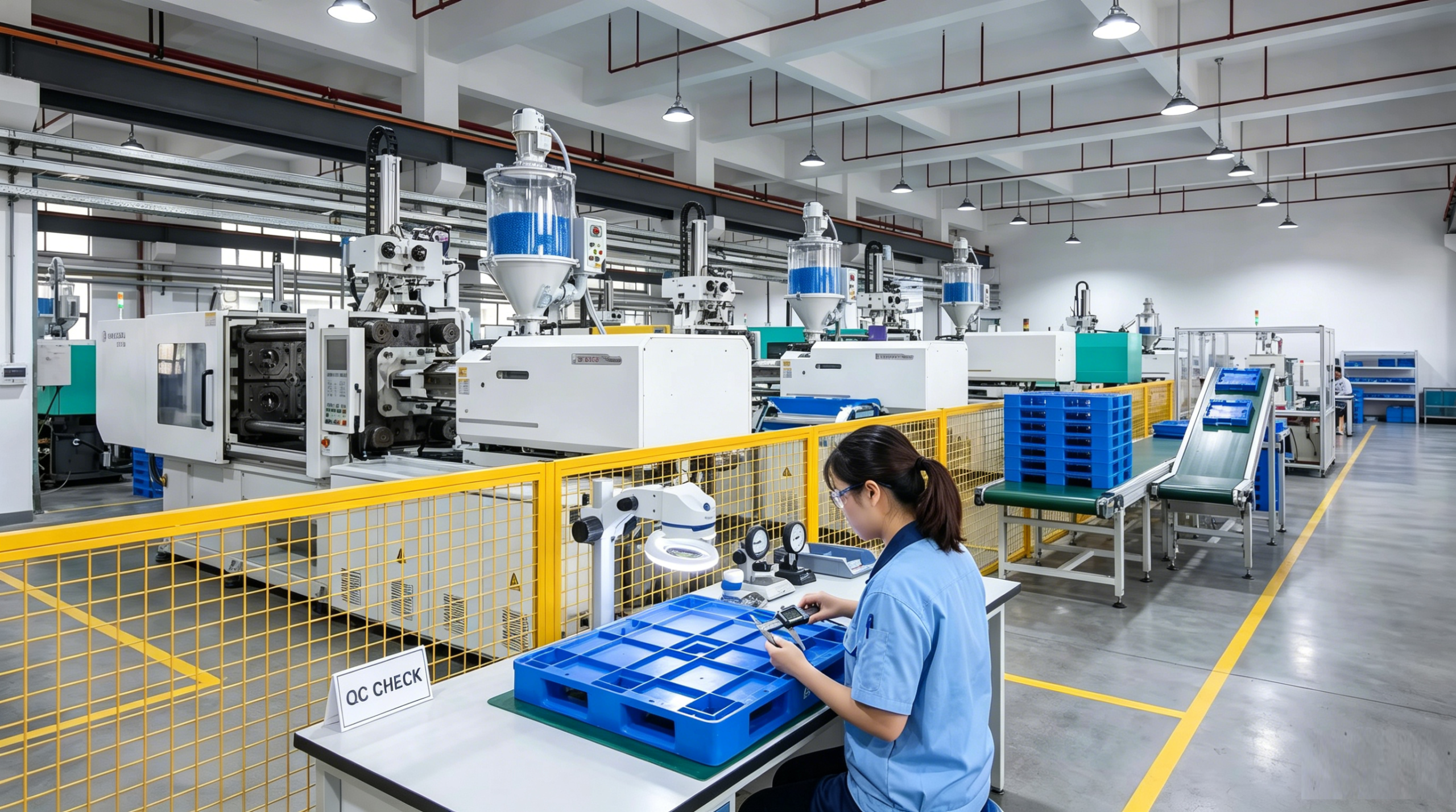
OEM Manufacturing Capabilities
| Capability | Specification |
|---|---|
| Press Capacity | 80T – 650T (8 injection machines) |
| Cavity Count | 1–4 cavities per mold |
| Material Grades | HDPE, PP, ABS, PA6-GF30, UHMWPE, POM |
| Wall Thickness Range | 1.5 – 12 mm |
| Max Part Size | 500 × 400 × 150 mm |
| Surface Options | Smooth, textured, drainage-channel, anti-slip pattern |
| Color Customization | Masterbatch color matching, Pantone reference |
| QC Standard | ISO 9001:2015, FAI + SPC + Final COC |
| Certifications | ISO 9001, FDA-compliant materials available, RoHS |
Request a Pallet Insert Quotation
Submit your requirements and receive a comprehensive quotation covering tooling, production and delivery within 24 hours for standard specifications.
Upload Your Files
What You Receive
Get Your Pallet Insert Quotation in 24 Hours
Send drawings or specifications → receive DFM review, material recommendation and full pricing.
Frequently Asked Questions
Structured Data Summary
| Property | Value |
|---|---|
| Service Type | Custom Plastic Pallet Inserts Manufacturing |
| Manufacturing Process | Injection Molding (80T–650T presses) |
| Material Grades | HDPE, PP, ABS, PA6-GF30, UHMWPE, POM |
| Static Load Range | 1 – 5 Tons (by material and geometry) |
| Dynamic Load Range | 0.5 – 3 Tons |
| Temperature Range | -40°C to +120°C (PA6-GF30 grade) |
| Wall Thickness | 1.5 – 12 mm |
| MOQ | 500 pcs (mass production) / 100 pcs (prototype) |
| Lead Time | 15–30 days (tooling + production) |
| Tooling Service | OEM mold design + multi-cavity fabrication |
| Food-Grade Option | FDA-compliant HDPE available |
| QC Standard | ISO 9001:2015, FAI + SPC + Final COC |
| Manufacturer | Xiamen Goldcattle Precision Industry Co., Ltd. |