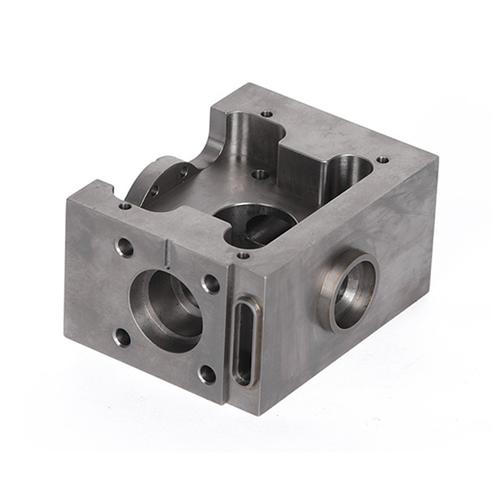
Produce production-grade plastic parts in smaller quantities without committing to full-scale hardened tooling before demand is proven. From aluminum bridge tooling to pilot production and a clear path to scale.
Accepted: STEP, IGES, STL, PDF, DWG
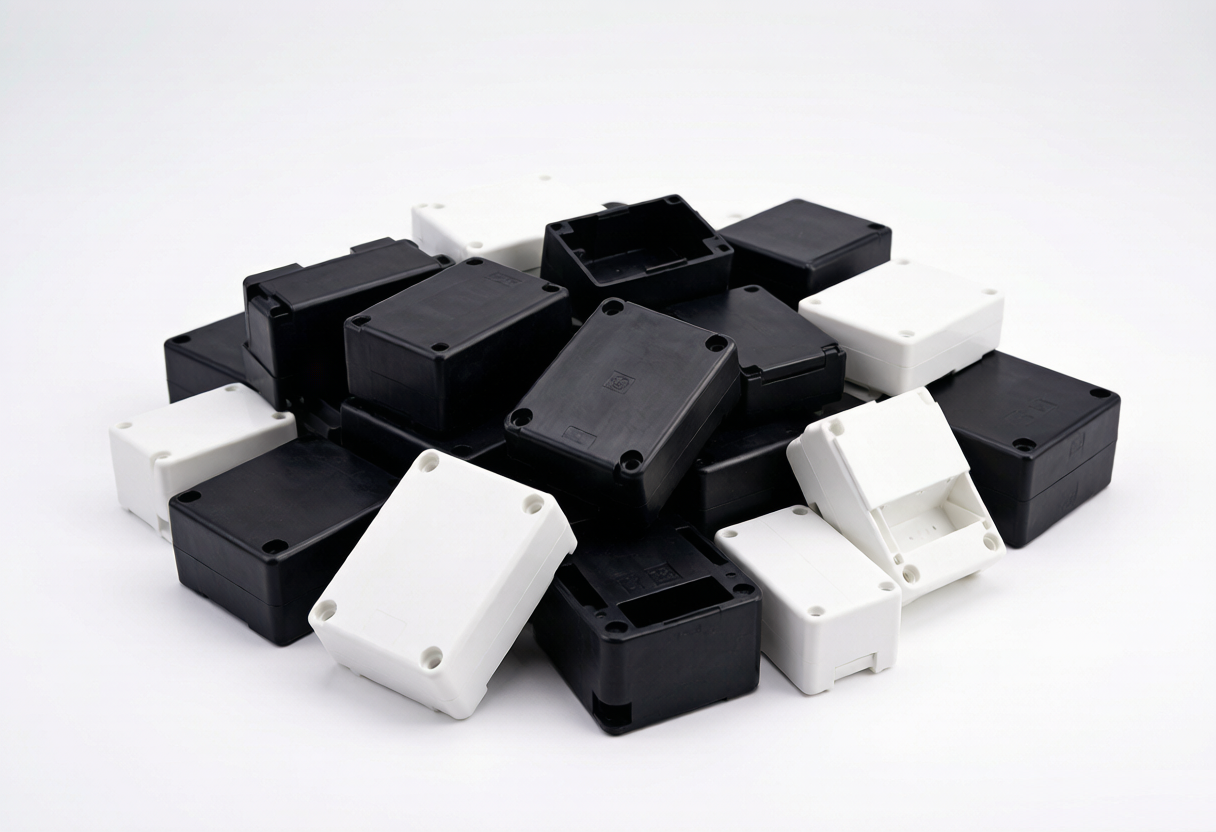 500–10,000+ parts typical
Production-Grade Plastic Parts Without Full-Scale Tooling Investment
Low-volume injection molding lets you mold parts from the same resin, on the same process, and to the same quality standards as mass production — but with a tooling investment scaled to your current demand.
Same Resin as Production
Validate mechanical, thermal, chemical and cosmetic properties with the real material.
Same Molding Process
Capture shrinkage, warpage, weld lines and gate vestige exactly as they will appear later.
Same Quality Standards
First-article inspection, dimensional reports and material certificates apply regardless of quantity.
Who Is Low Volume Injection Molding For?
Low-volume injection molding is for buyers who need real molded parts in quantities too large for prototype methods, but too small or uncertain to justify a hardened production tool.
Product Validation
Hundreds of real parts for functional, environmental or assembly testing before design freeze.
Market Testing
Small launch batches to gauge demand before committing to high-volume tooling.
Pilot Production
A pre-production run on the real resin and process used later at scale.
New Product Launch
Initial inventory for a new SKU when demand is still ramping up.
Spare / Replacement Parts
Annual demand is modest but recurring; tooling should last without over-investment.
Niche Products
Products with stable but limited volumes where a multi-cavity steel mold is not economical.
What Does “Low Volume” Mean in Injection Molding?
There is no universal quantity that defines low volume. In practice it means the project is too small or uncertain to justify a conventional high-volume production tool, but too large for prototype-only methods to remain economical.
| Project Stage | Typical Range* | Common Approach |
|---|---|---|
| Prototype | 1–100 pcs | CNC / 3D printing |
| Validation | 100–500 pcs | Prototype or soft tooling |
| Low Volume | 500–10,000 pcs | Aluminum / soft steel tooling |
| Extended Low Volume | 10,000–25,000+ pcs | P20 / production-intent tooling |
| Mass Production | 25,000+ pcs | Hardened production tooling |
* Decision examples, not fixed industry standards. Actual recommendation depends on part geometry, resin, tolerance and budget.
Why Not Start With a Full Production Mold?
Starting With a Hardened Production Tool
- High upfront tooling investment
- Longer tooling lead time
- Design locked early
- Market feedback arrives after tooling is committed
- Mold modifications add cost and time
Starting With Low-Volume Tooling
- Lower initial tooling investment
- Small production run to test demand
- Functional and market validation
- Design improvements applied before production tooling
- Clear path from bridge tool to production mold
Low Volume Injection Molding Tooling Options
The right tooling balances initial investment, part quality, tool life and the ability to scale. Quantity alone does not determine the material choice.
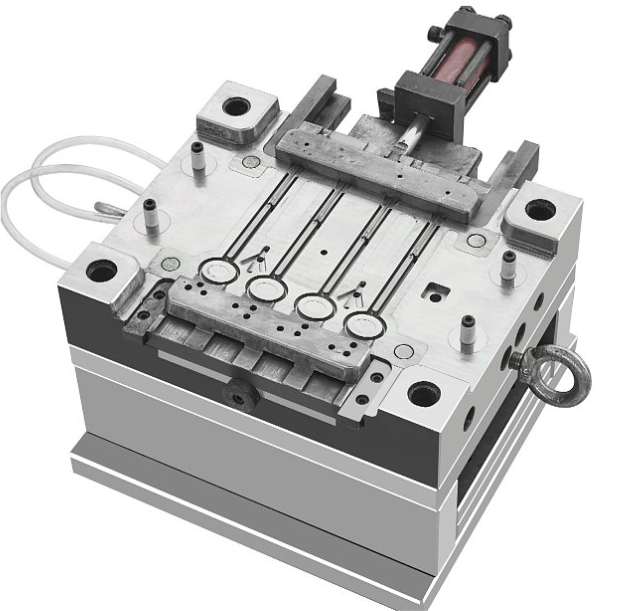
Aluminum Tooling
Best for prototypes, pilot runs and projects where design may still change. Aluminum machines faster and is easier to modify than steel.
- Lower upfront investment
- Relatively fast to manufacture
- Easier mold modification
- Good for non-abrasive resins
Pre-Hardened / Soft Steel Tooling
A middle-ground option when volumes are higher, resins are more demanding, or the project may extend beyond a pure pilot phase.
- Longer tool life than aluminum
- More wear resistance
- Can bridge to production
- Moderate tooling investment
Hardened Production Tool
Once the design and demand are validated, a hardened production tool delivers the lowest part cost and longest life at volume.
- High-volume economics
- Long tool life
- Stable repeatability
- Designed for mass production
* Ranges depend on part geometry, resin abrasiveness, cavity count and maintenance. We recommend tooling direction only after reviewing CAD and volume data.
Aluminum vs Soft Steel vs Hardened Steel Tooling
| Project Situation | Recommended Tooling Direction |
|---|---|
| Design still changing | Aluminum / prototype tooling |
| 500–2,000 parts | Aluminum or soft tooling |
| 2,000–10,000 parts | Aluminum / P20 depending on part and resin |
| 10,000+ repeat volume | P20 / production-intent tooling |
| High-volume confirmed demand | Hardened production tooling |
| Abrasive resin (glass-filled, etc.) | More durable tooling required |
| Long-term production expected | Production tooling |
Note: Quantity cannot alone determine mold steel. Material, geometry, resin wear, injection pressure, required tool life and maintenance all influence the decision. Glass-filled and high-temperature resins wear soft tooling faster and must be evaluated case by case.
Bridge Tooling for Low Volume Production
Bridge tooling is an intermediate production strategy: real molded parts while demand, design or final production tooling is still being validated.
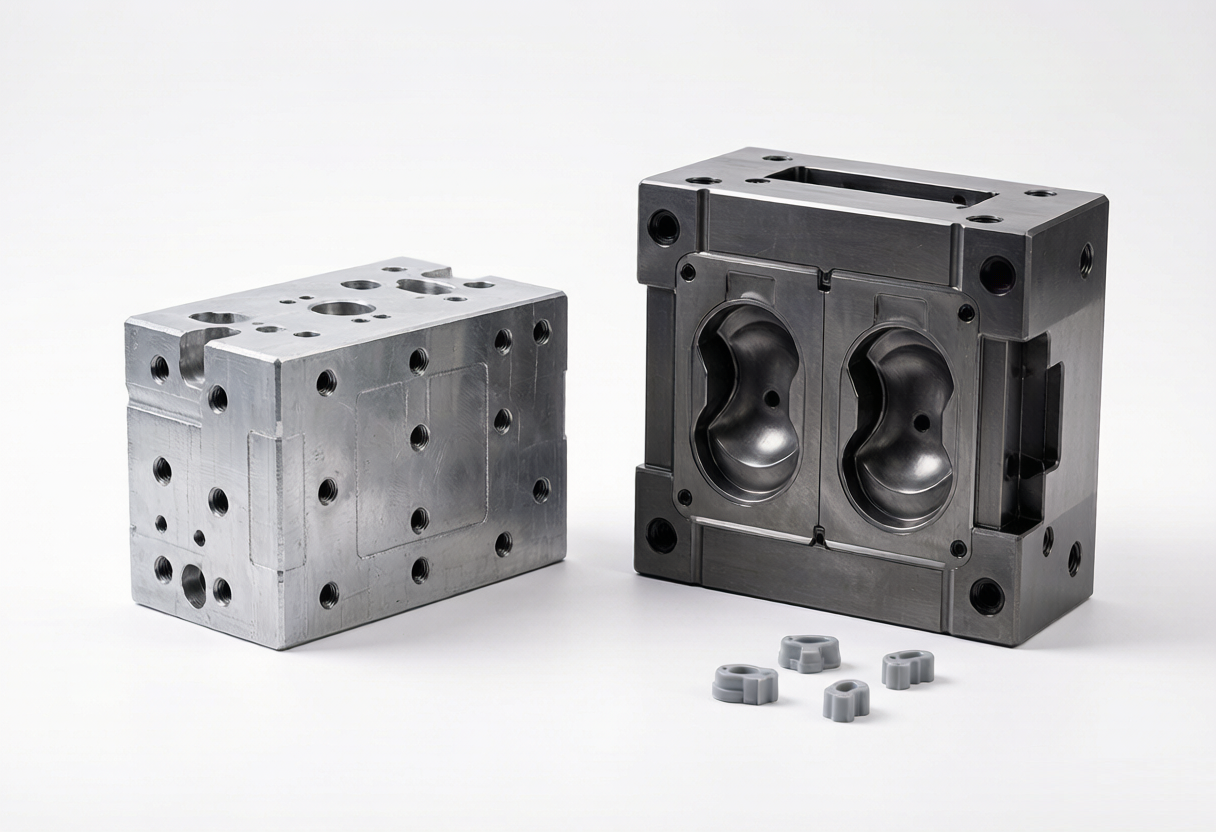
Why Bridge Tooling Matters
It lets you put real production-grade parts in the market or in test programs without absorbing the full cost and lead time of a hardened production tool. When the design and demand are proven, the validated molding concept can be carried forward into the production mold.
- Reduce financial exposure before demand is proven
- Validate resin choice, shrinkage and assembly
- Build sales and marketing samples from real parts
- Design for insert carryover into production tooling
Low Volume Injection Molding vs CNC vs 3D Printing
Low-volume injection molding becomes attractive when the tooling investment can be spread across enough parts to offset the higher upfront cost, while still delivering true molded-part behavior.
| Requirement | 3D Printing | CNC Machining | Low-Volume Injection Molding |
|---|---|---|---|
| 1–10 parts | Excellent | Excellent | Usually inefficient |
| 10–100 parts | Excellent | Strong | Depends on geometry |
| 100–1,000 parts | Depends | Higher unit cost | Strong |
| 1,000–10,000 parts | Often expensive | Higher unit cost | Strong |
| Production-grade resin | Depends | Yes | Yes |
| Final injection-molded behavior | No | No | Yes |
| Tooling cost | Low | Low | Higher |
| Unit cost at volume | Can remain high | Can remain high | Decreases |
| Complex molded geometry | Excellent | Tool-access dependent | Excellent |
When Low Volume Injection Molding Is Not the Best Choice
Telling buyers when not to use a service builds credibility. Low-volume injection molding is not the right answer for every project.
Only 1–10 Parts Needed
CNC machining or 3D printing is usually faster and more economical.
Geometry Changes Weekly
Do not cut steel or aluminum until the design is stable enough to justify tooling.
Very Simple Plastic Shapes
Simple blocks or brackets may be produced faster by machining.
Extremely High Annual Volume
Re-evaluate full production tooling for the lowest part cost.
Highly Abrasive Resin
Glass-filled or high-wear resins may wear low-cost soft tooling too quickly.
Ultra-Tight Tolerance
Some critical dimensions may need post-mold CNC rather than molding alone.
Minimum Order Quantities and Production Volumes
MOQ is not a fixed number. It is determined by tooling cost, resin quantity, machine setup, production economics and your requirements.
| Project Type | Typical Approach |
|---|---|
| Prototype | 1–100 pcs (often CNC / 3D printing) |
| Validation | 100–500 pcs (soft or prototype tooling) |
| Small Batch | 500–5,000 pcs (aluminum / bridge tooling) |
| Low-Volume Production | 5,000–10,000+ pcs (soft steel / P20) |
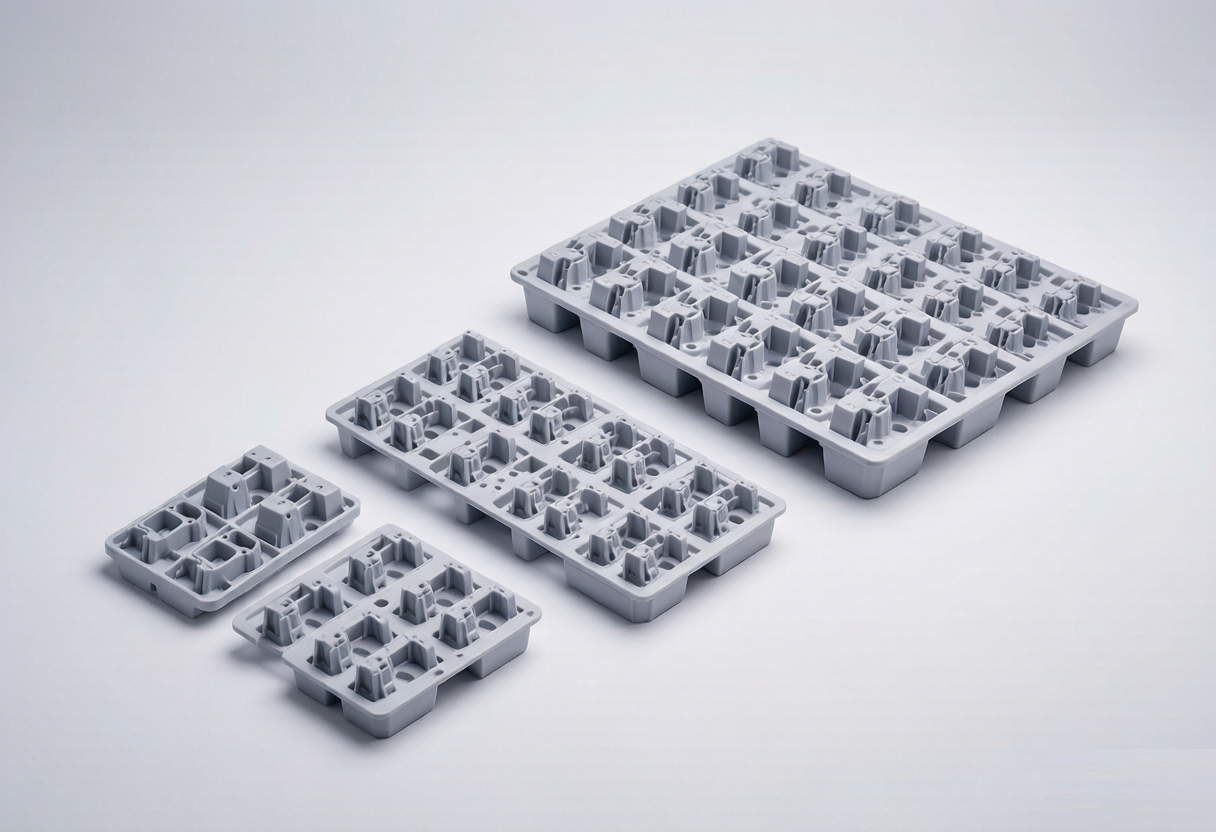
At Goldcattle, we evaluate each project individually. A small aluminum mold for a simple part may be viable at a few hundred pieces, while a complex multi-cavity steel tool only makes sense at much higher volumes.
Low Volume Injection Molding Cost
Total project cost is the sum of tooling, parts production, finishing, inspection, packaging and shipping. Unit cost drops as quantity rises because the tooling investment is amortized across more parts.
Tooling Cost
The largest upfront cost. Driven by part size, complexity, cavity count, steel/aluminum choice, hot/cold runner, slides and surface finish.
Part Cost
Part weight, cycle time, resin price, machine size and runner waste all affect the per-piece production cost.
Secondary & Other Costs
Includes finishing, inspection, material certificates, packaging and international shipping to your destination.
Why We Don't Publish a Fixed Mold Price
Published ranges like “$1,000–$15,000” cover too wide a design space to be useful. A simple single-cavity aluminum mold for a small housing is not comparable to a multi-cavity P20 tool with slides and hot runner. We quote after reviewing CAD, resin, volume and quality requirements.
Cheap Mold vs Production-Ready Mold
The cheapest mold quote is not always the lowest total cost. A low-price mold that requires repeated repairs, has poor cycle performance or cannot scale can become expensive over the project life.
| Low Initial Price | Production-Ready Tool |
|---|---|
| Low upfront cost | Optimized lifecycle cost |
| Lower-grade or softer tooling | Steel selected for expected life |
| Minimal DFM review | Risk reviewed before cutting steel |
| Basic trial | T1 / T2 validation |
| May need more repair | Designed for repeatability |
| Limited documentation | Tooling records and maintenance plan |
| Lower initial price | Better total cost of ownership |
How Quantity Changes Tooling Amortization
The effective unit cost of injection molding includes the tooling cost divided by quantity. At low volumes the tooling dominates; at higher volumes the part cost dominates.
Illustrative only. The actual crossover depends on part size, geometry, resin and tooling strategy.
How Long Can a Low-Volume Mold Last?
Tool life depends on material, resin chemistry, injection pressure, cycle conditions, cooling, maintenance and part geometry. We help you match expected life to expected volume.
| Tooling | Typical Role | Tool Life |
|---|---|---|
| Prototype / resin insert | Very low volume, form/fit | Project-specific |
| Aluminum | Pilot / low volume | Project-specific |
| P20 / Pre-hardened steel | Extended low volume | Project-specific |
| Hardened steel | Production | Project-specific |
We do not quote generic “X shots” guarantees without reviewing resin, geometry and processing assumptions. Abrasive or high-temperature resins reduce tool life and may require hardened tooling even at lower volumes.
Low Volume Injection Molding Materials
Use the same resin you intend to use in production. That is one of the main reasons to choose low-volume injection molding over 3D printing or CNC for validation.
Glass-filled and other reinforced grades are available where the part design and tooling material can support them. Material choice is confirmed during DFM.
Design for Low-Cost Injection Tooling
The goal of low-volume DFM is to control tooling investment while preserving function. Simplify tooling, avoid unnecessary side actions and design with future production in mind.
Recommended Practices
- Favor a simple, straight parting line
- Minimize slides and lifters
- Use adequate draft angles
- Avoid excessive deep cores
- Use standard mold inserts
- Keep wall thickness reasonably uniform
- Design critical inserts to carry into production tooling
What to Avoid
- Unnecessary cosmetic complexity
- Tight tolerances that do not affect function
- Undercuts without release strategy
- Sharp internal corners
- Multi-cavity layouts before demand is proven
- Tooling that cannot be modified if design changes
Cavity Count for Small-Batch Injection Molding
Low-volume projects usually benefit from fewer cavities. More cavities reduce output cost only when volume is high enough to justify the added tooling complexity and investment.
| Cavity Count | When It Fits |
|---|---|
| 1-Cavity | Very low demand, prototypes, design uncertainty, minimum tooling investment |
| 2-Cavity | Moderate quantity, balanced tooling cost and output |
| 4+ Cavity | Higher production demand, stable design, tooling economics support the added investment |
T1 Sampling and Production Validation
T1 is the first validation shot on the completed mold. It confirms dimensions, appearance, shrinkage, warpage, assembly and material behavior before low-volume production starts.
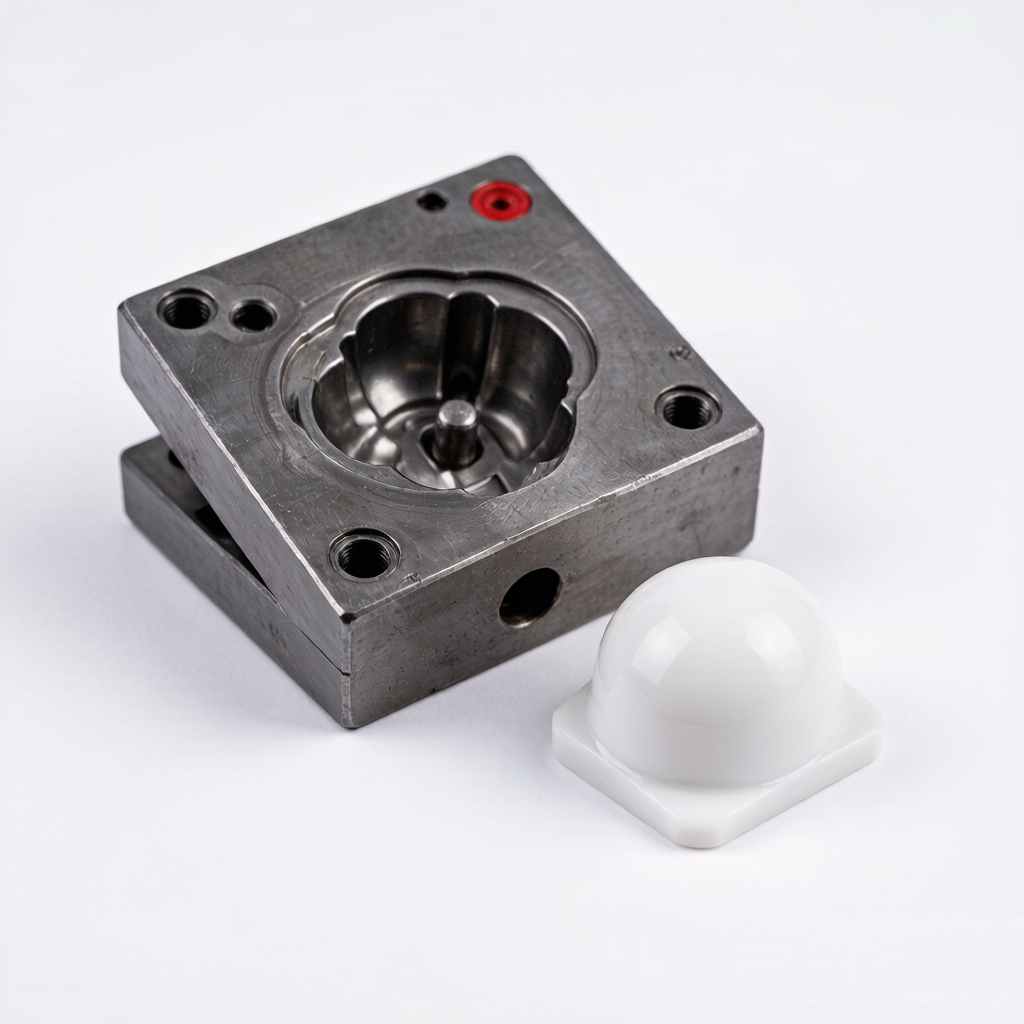
Some T1 issues can be corrected by adjusting injection parameters, cooling, pressure or temperature. Others require steel modification. We distinguish between process issues and mold issues before recommending changes.
Quality Control for Low-Volume Plastic Parts
Low volume does not mean low quality. The same agreed quality requirements should apply whether you order 300 or 30,000 parts.
First Article Inspection
Dimensional, visual and functional review of the first production shots against the approved T1 sample.
In-Process Checks
Part weight, visual defects, assembly fit and critical dimensions monitored during the run.
Final Inspection
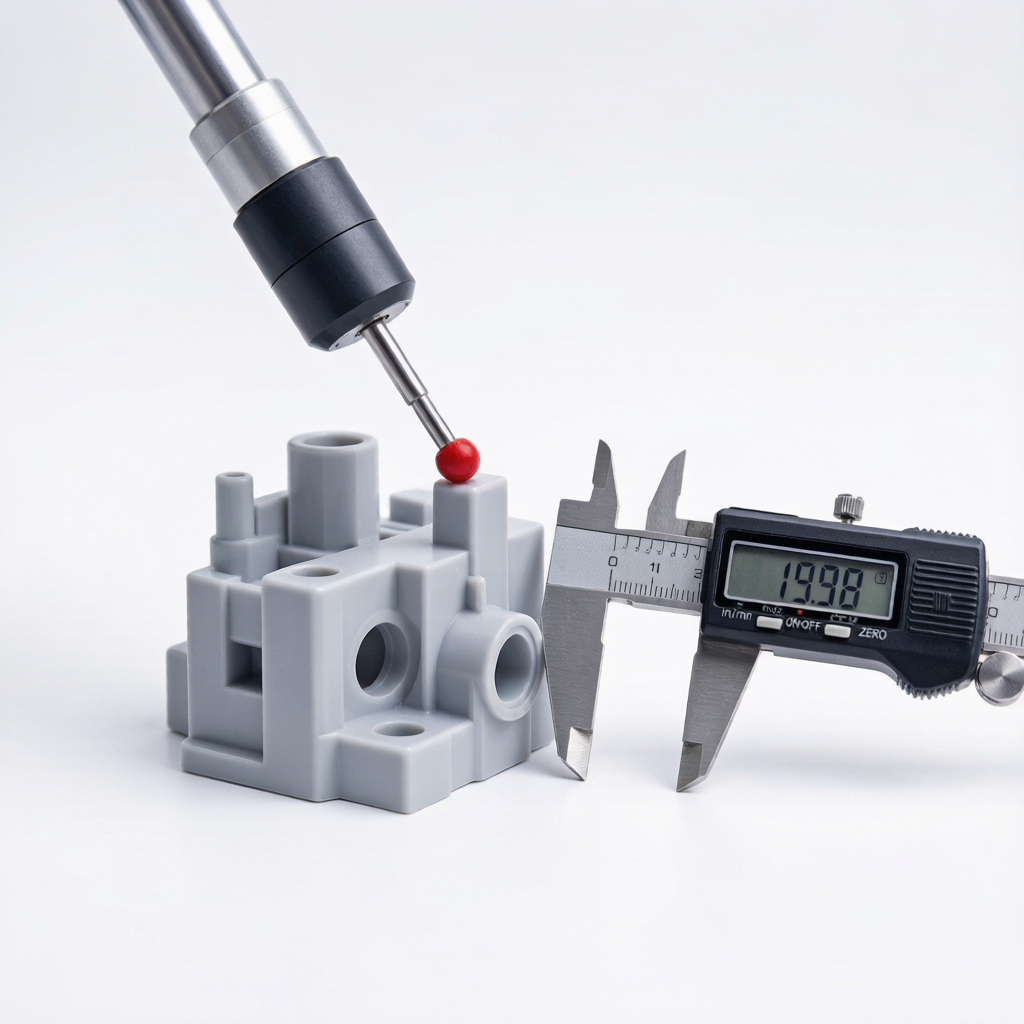
CMM / optical measurement where required, material verification and packaging review before shipment.
Low Volume Injection Molding Applications
Product Development
Real-material prototypes and pre-production units for testing and iteration.
Consumer Electronics
Enclosures, covers and handheld devices for limited launches.
Industrial Equipment
Housings, brackets and replacement components with modest annual demand.
Robotics
Custom covers, cable guides and structural brackets in small batches.
Automotive Service Parts
Replacement or aftermarket components where volume is stable but limited.
Medical / Clinical
Only where applicable regulatory and quality requirements are met.
Low Volume Injection Molding Case Studies
Each case demonstrates volume, material, tooling choice and outcome. Customer names and trademarks are omitted; these are general capability illustrations.
500 PC ABS Electronics Housings
Challenge: Design still under validation; needed production-grade parts without high tooling risk.
Solution: Low-cost aluminum mold with textured surface, T1 validation, 500 parts delivered for field testing.
2,000 PC/ABS Enclosures
Challenge: Needed a balance between tooling investment and part output for a new product launch.
Solution: Soft-steel tooling with snap fits and PCB bosses, T1 approval, parts passed assembly testing.
8,000 POM Wear Components
Challenge: POM is wear-resistant and demands tooling that can maintain tolerance over the run.
Solution: Pre-hardened steel tooling selected based on resin and cycle requirements; T1 and in-process inspection completed.
Why Source Low-Volume Injection Molding from China?
When China Makes Sense
- Integrated mold-making, CNC, EDM and molding supply chain
- Tooling ecosystem can reduce upfront mold investment
- Wide material availability
- Engineering support from RFQ to T1
- Clear scaling path from bridge tool to production
- Export experience to North America and Europe
What to Watch
- Supplier verification: factory, tool room, trial capability
- Communication and time-zone coordination
- Total landed cost, not mold price alone
- Quality system and inspection evidence
- Mold ownership, storage and maintenance terms
China is most attractive when tooling, molding, finishing and logistics are evaluated as a complete project — not by mold price alone.
How to Choose a Chinese Low-Volume Injection Molding Supplier
A polished website does not prove molding capability. Ask for evidence across the full project cycle.
| Check | Why It Matters |
|---|---|
| Own mold-making capability? | Controls tooling cost and lead time; easier modification. |
| Low-volume tooling options? | Can they build aluminum / soft-steel / bridge tools? |
| T1 sampling process? | How are first shots validated and approved? |
| Can they modify the mold? | Design changes are common in low-volume programs. |
| Scaling to production? | Can the same supplier handle mass production later? |
| Material certificates / inspection? | Evidence of quality, not just claims. |
| Mold ownership and storage? | Who owns the tool, and where is it kept between runs? |
| Real case studies? | Look for volume, material, tooling and outcome details. |
Low Volume Today, Production Tomorrow
Many buyers do not stay at 500 pieces forever. Plan the tooling so that today's bridge mold does not block tomorrow's production mold.
Design for Carryover
- Interchangeable inserts for key features
- Scalable cavity strategy
- Standardized mold base where possible
- Validated gate concept
- Documented shrinkage and process data
Common Transition Path
Use the bridge tool to establish the molding process and part approval. Then transfer the proven design into a hardened production tool, often with more cavities, once annual volume justifies the investment.
What Affects Low Volume Injection Molding Cost?
Understanding the cost drivers helps you compare quotes on an equal basis and avoid surprises.
Part Size
Larger parts need larger molds, bigger machines and more resin.
Complexity
Undercuts, deep ribs, thin walls and tight tolerances increase tooling and processing cost.
Cavity Count
More cavities raise tooling cost but lower part cost at volume.
Mold Steel
Aluminum is cheaper upfront; hardened steel costs more but lasts longer.
Runner System
Hot runners reduce waste but add cost and complexity.
Slides / Lifters
Side actions add machining, fitting and maintenance cost.
Surface Finish
High-gloss, texture or specific cosmetic requirements add polishing and handling steps.
Inspection & Packaging
CMM reports, material certs, special packaging and shipping affect total landed cost.
Annual Volume
Higher volume spreads tooling cost and can justify more durable tooling.
What Do We Need for Your Low-Volume Molding Quote?
The two most important inputs are your initial production quantity and expected annual volume. These determine tooling strategy.
Required / Strongly Recommended
- 3D part CAD (STEP / IGES / STL)
- 2D drawing with critical dimensions
- Plastic material or application requirements
- Initial production quantity
- Expected annual volume
- Target tool life
- Target lead time
Helpful Details
- Surface finish and color
- Assembly requirements
- Critical tolerances
- Preferred mold standard
- Production after tooling? Yes / No / Not sure
- T1 samples required?
- Reference images or existing samples
Frequently Asked Questions
What is low-volume plastic injection molding?
It is the production of injection-molded plastic parts in quantities too small or uncertain to justify a full-scale production tool, typically using aluminum, soft steel or bridge tooling.
How many parts are considered low volume?
There is no fixed number. Many projects fall between 500 and 10,000 parts, but the right definition depends on tooling economics, part geometry and resin.
What is the minimum order quantity?
MOQ is project-specific. It depends on tooling type, resin minimums, machine setup and production economics. A simple aluminum mold may be viable at a few hundred pieces.
Is low-volume injection molding cheaper than 3D printing?
It can be cheaper per part once the quantity is high enough to amortize the tooling cost. Below that crossover, 3D printing or CNC may be more economical.
Is it cheaper than CNC machining?
For simple geometries and very low quantities, CNC can be competitive. For molded features, undercuts or higher volumes, low-volume molding often wins.
How much does low-volume tooling cost?
Tooling cost depends on part size, complexity, cavity count, steel/aluminum choice, runner system, slides and surface finish. We quote after reviewing CAD and requirements.
Should I use an aluminum mold or steel mold?
Aluminum is usually best for prototypes, pilots and uncertain demand. Steel is better for longer runs, abrasive resins or projects that may scale to production.
How long does low-volume injection molding take?
Lead time depends on design, tooling material, machining load and T1 iterations. Typical ranges are provided in the formal quotation after project review.
How many parts can an aluminum mold produce?
Tool life depends on resin, part geometry, injection pressure, cooling and maintenance. We match expected life to expected volume during quoting.
Can low-volume parts use production-grade resin?
Yes. Using the same resin planned for production is one of the main advantages of low-volume injection molding.
Can you make a prototype mold before a production mold?
Yes. Bridge or prototype tooling lets you validate design and demand before investing in a hardened production mold.
What is bridge tooling?
Bridge tooling is an intermediate mold used to produce real parts while demand, design or final production tooling is still being validated.
Can the low-volume mold be upgraded to production?
Sometimes inserts, gate concepts and process data can carry over. In other cases a new production tool is more economical. We design for carryover where possible.
Can I modify the mold after T1?
Yes, most molds can be modified. Aluminum and soft steel are generally easier and less expensive to modify than hardened production steel.
Can you produce 500 / 1,000 / 5,000 parts?
Yes, these quantities are typical for low-volume programs. The right tooling and unit economics are confirmed after reviewing your part and requirements.
Can low-volume molding be used for electronics enclosures?
Yes, electronics housings and enclosures are common low-volume applications, often using ABS or PC/ABS.
Can you provide material certificates and inspection reports?
Yes, material certificates, first-article inspection and dimensional reports can be provided where agreed in the quotation.
Is China suitable for low-volume injection molding?
China can be suitable when the supplier has real mold-making capability, clear T1 processes and export experience. Evaluate total landed cost, not just mold price.
What information is needed for a quote?
3D CAD, 2D drawing, material, initial quantity, annual volume, target lead time and quality requirements. See the RFQ section above for the full list.