Low-Volume Sheet Metal Prototype & Manufacturing Services
You need custom metal parts cut, bent and finished from your CAD — in quantities from one piece to a few hundred — without waiting on hard tooling. The real questions: what does "low-volume" mean for your program, how fast can a prototype turn, what does it cost, and how do you move to production?
At a Glance
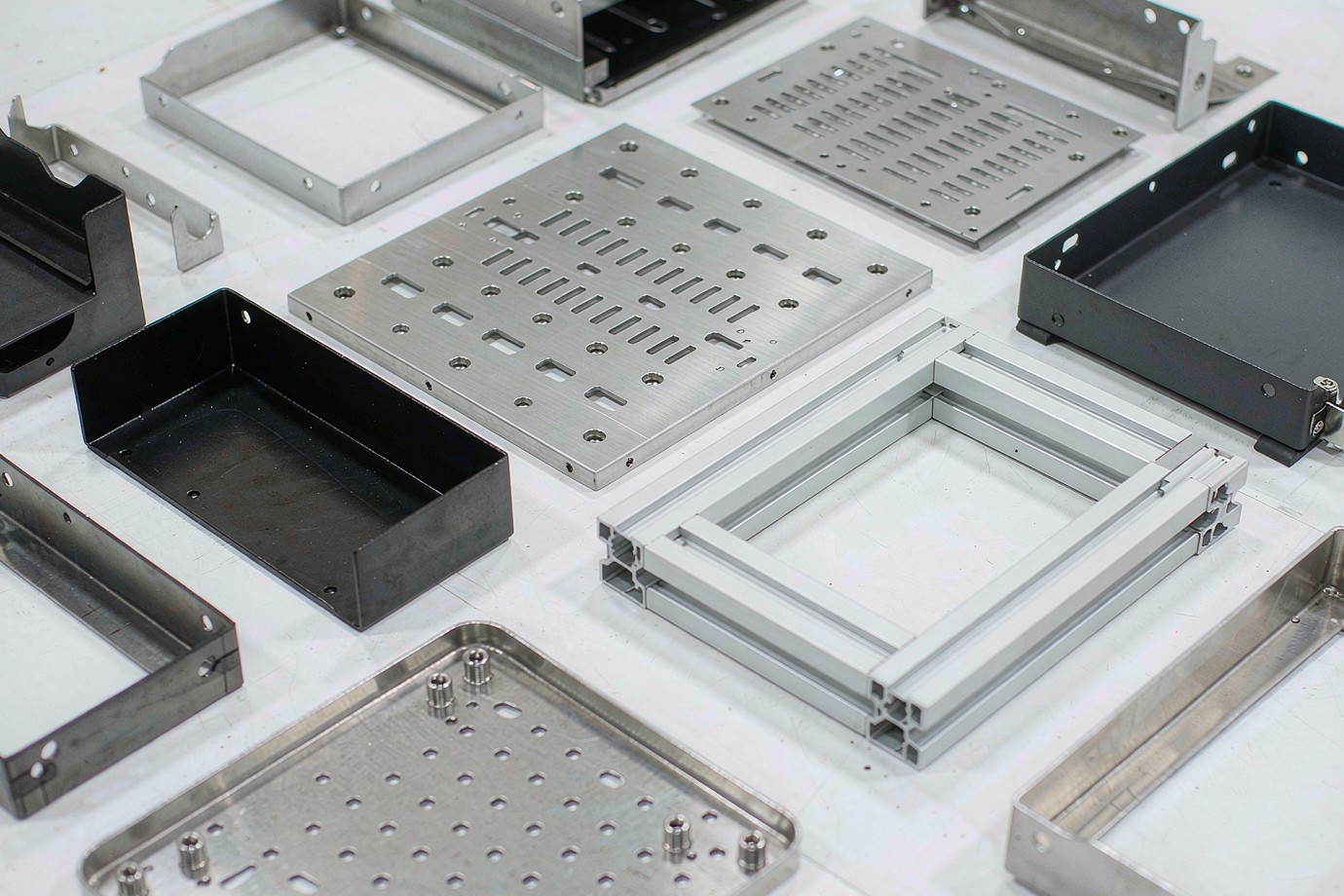
Low-volume sheet metal prototype services make custom-cut, bent, welded and finished metal parts from your CAD in quantities from a single piece up to a few hundred, without dedicated forming tooling for suitable laser-cut and CNC-bent parts, in a typical sample window of about 3–7 working days, with a dimensional inspection report, material certificate and certificate of conformity supplied per order. The work spans prototype, pilot and bridge production; the dividing line with high-volume is economic, not a fixed count.
What "Low-Volume" Means for Your Program
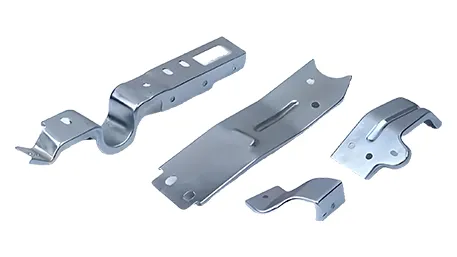
Low-volume sheet metal is the middle ground between a one-off mock-up and hard-tooled mass production. It covers prototype, pilot and bridge production — from a single first article to a few hundred or low thousands of parts per release. The defining question is economic: at what point would a dedicated forming tool (a progressive die, a weld fixture line) pay for itself? Below that point, making parts directly from CAD on shared laser, punch and press-brake equipment is faster and cheaper.
This is also where sheet metal is strongest: thin-wall enclosures, brackets, panels and covers iterate quickly, absorb design changes without re-tooling, and let you validate fit and function before committing to tooling. The trade-off is a higher per-part cost than a fully tooled run — a fair price for speed, flexibility and low risk early in a program.
From Concept to Low-Volume: The Stages
Most programs move through the same stages. Knowing which one you are in tells you what to send, what to expect, and what to pay for.
CAD review and manufacturability feedback — bend radii, hole-to-bend clearance, material choice — before the first cut.
A first article checks fit, finish and tolerance against the drawing; this is where revisions happen cheaply.
A small batch (tens) confirms the process, assembly and any inspection plan before a larger commit.
Bridge or steady low-volume supply, re-running the validated setup rather than re-quoting from zero.
Only when volume justifies it — a die or fixture is quoted and discussed, not assumed.
Validated CAD and DFM carry forward into higher volume, in-house or with a tooling partner.
Parts We Make in Low Volume
These part families are where fast, flexible sheet metal pays off most for prototype and low-volume buyers.
Housings and cases for electronics, controls and instruments — laser-cut, bent, optionally welded.
Mounting and structural brackets across aluminum and steel; iterate the geometry freely.
Front plates, covers and mounting panels with precise hole patterns and flatness control.
Sub-assemblies combining bends, welds and tapped features.
Multi-PN kits nested and scheduled together for a single assembly.
Protective and cosmetic covers where fit and finish matter more than load.
Materials for Low-Volume Sheet Metal
Material is chosen per part and sourced to ASTM, EN or your specified grade; confirm specific grades and stock per order rather than assuming all are on hand. The table below is a working guide, not an inventory promise.
| Material | Why choose it | Typical use |
|---|---|---|
| Aluminum 5052 / 6061 | Light, corrosion-resistant, easy to form and weld | Enclosures, brackets, panels |
| Cold-rolled steel (SPCC) | Low cost, good strength, easy to finish | Structural brackets, frames |
| Galvanized steel | Corrosion protection without extra coating | Outdoor and appliance parts |
| Stainless 304 / 316 | Corrosion and heat resistance, hygienic | Medical, food, marine, visible trim |
| Brass | Appearance, conductivity, machinability | Connectors, decorative, electrical |
Cutting & Forming
Short answer: the cut method follows volume, geometry and lead time. Laser cutting fits low-to-mid volume and complex contours with no tooling; CNC punching pays off at higher volume with standard features; waterjet suits thick or heat-sensitive stock.
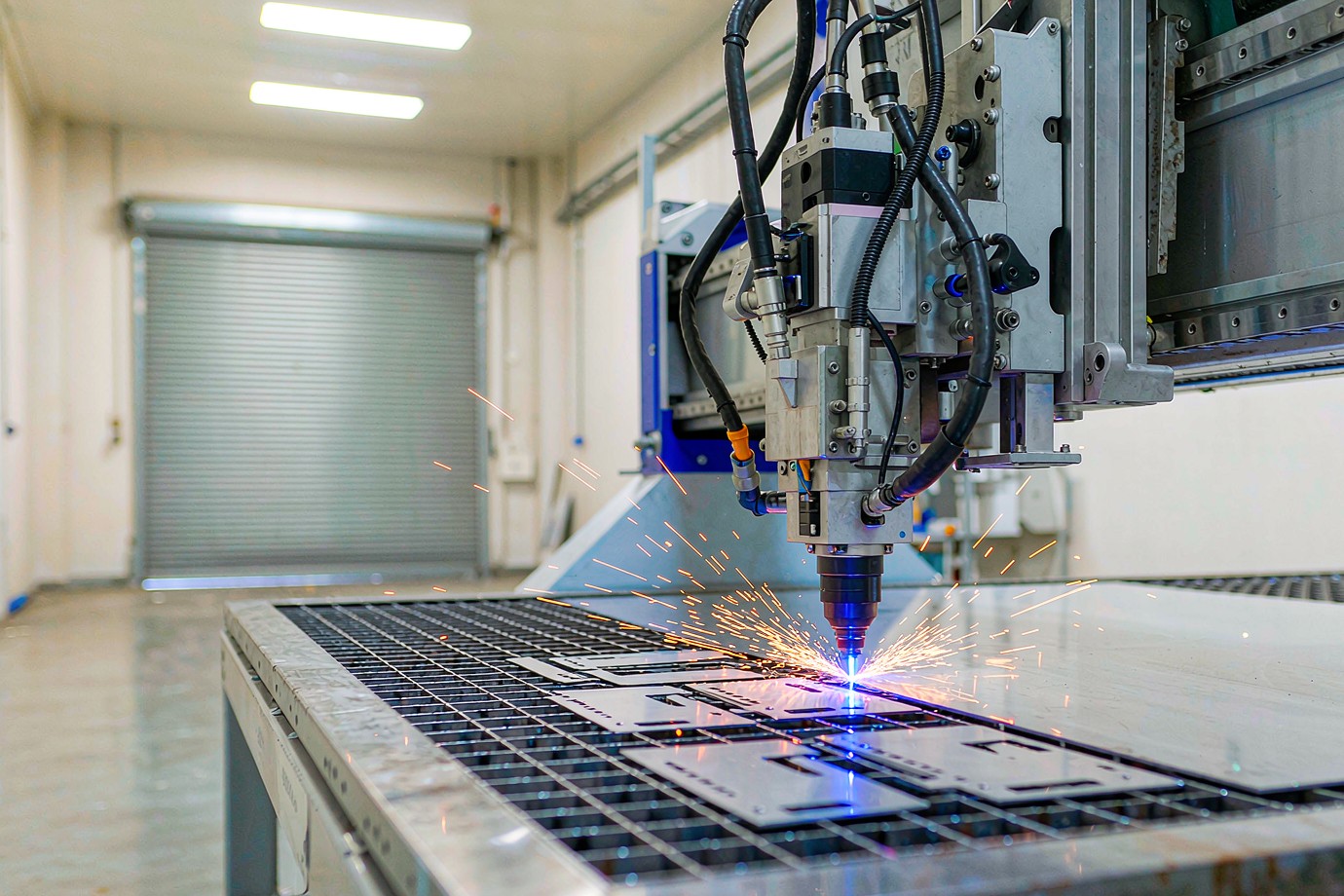
±0.1 mm edge (kerf-dependent on thickness); best for prototypes and complex profiles.
Economical at volume; forms louvers, ribs, tabs with a tool set.
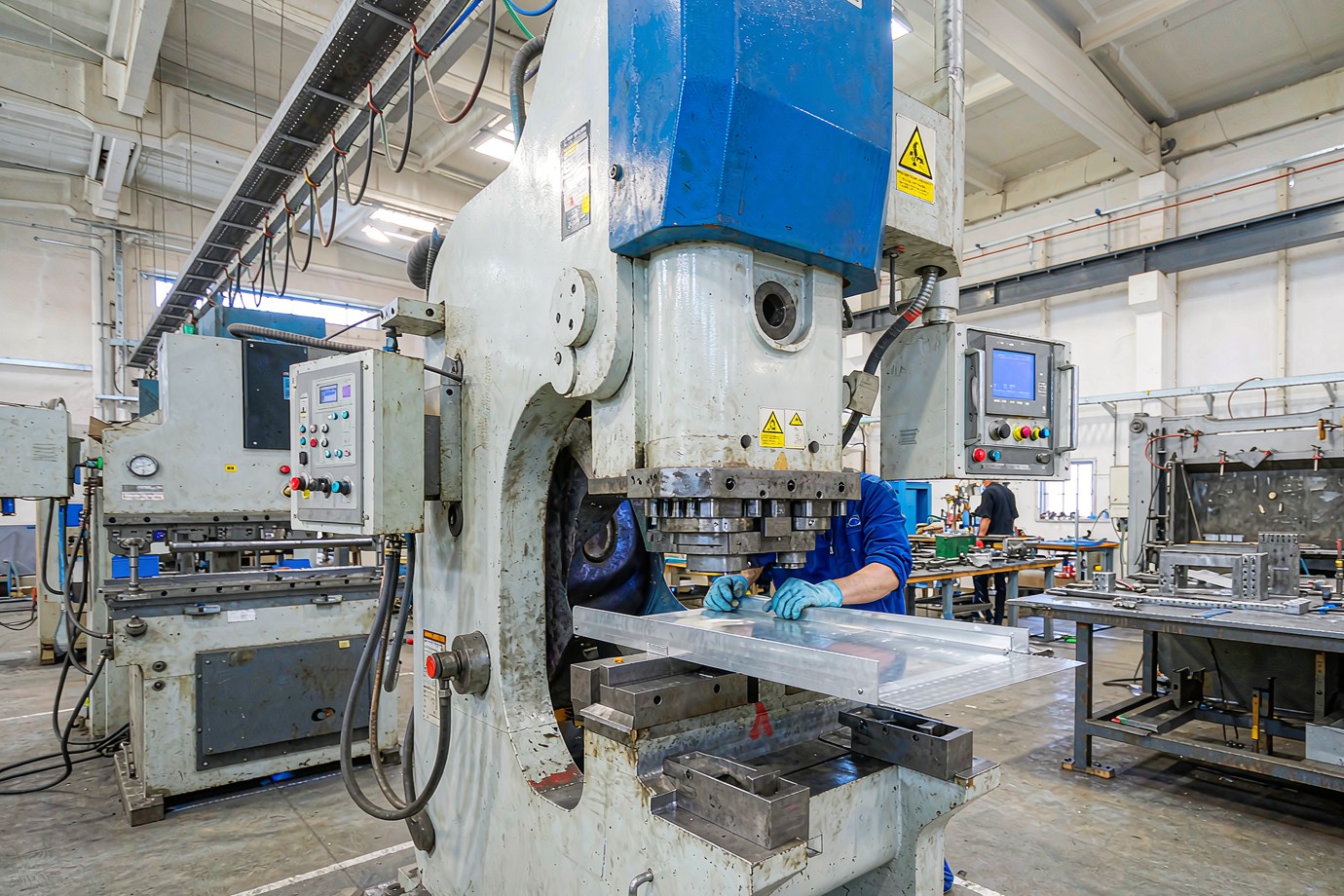
Bends from CAD with shared tooling; no dedicated die for suitable parts.
Bending & DFM
Short answer: bend quality is set in design. The minimum inside bend radius, grain direction, springback and tooling decide whether a bend is crack-free and dimensionally stable — and low-volume is forgiving because the setup is re-runnable, not a fixed die.
~1× thickness for 5052-H32; ~1.5–2× for 6061-T6 — confirmed in DFM, not assumed.
Bending across the grain reduces cracking on tight radii.
Aluminum springs back; tooling and over-bend are set per material.
Keep holes clear of the bend zone to avoid distortion.
Adequate flange supports the bend and the die.
Reliefs prevent tearing at intersections and corners.
Welding & Joining
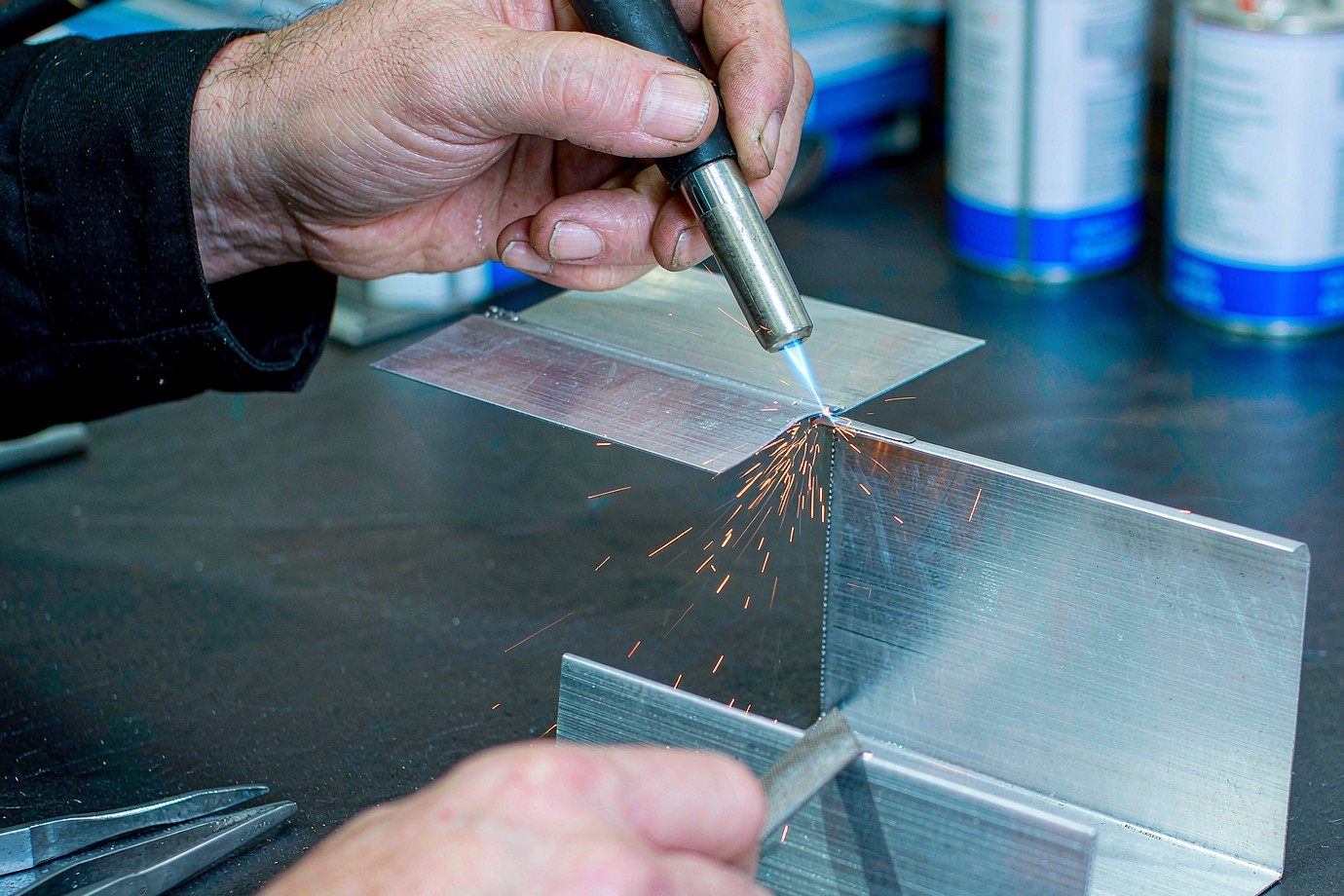
Thin sheet distorts easily, so joint design and heat control decide the outcome. TIG welding gives clean, precise seams for thin and cosmetic parts; MIG is used for faster, heavier joints. For low-volume, rivets and self-clinching fasteners are often the cheaper choice where welding would distort the part.
Precise, low-heat seams for thin enclosures and visible joints.
Higher deposition for structural and heavier brackets.
4043 or 5356 selected for alloy, color and post-anodize match.
Fixtures, balanced sequencing and controlled heat input.
Used where welding would distort or weaken the part.
Cleaning and, where needed, stress relief per the part.
Surface Finishing
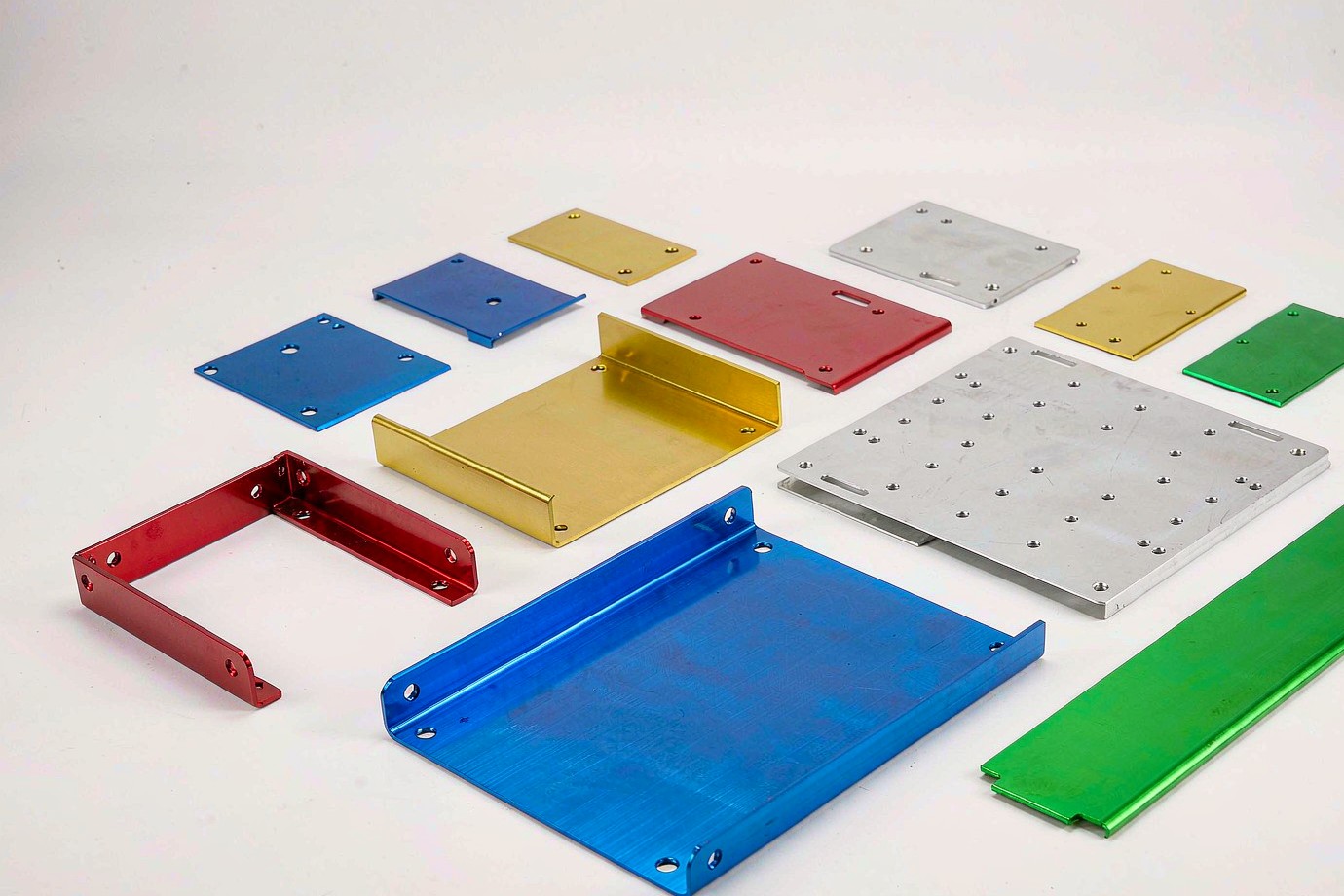
Finish is a specification, not an afterthought: it changes appearance, corrosion resistance and, for coatings, dimension. For prototypes, finish is often deferred until validation to save time — a common low-volume tactic.
Clear or colored; mostly cosmetic and corrosion-related, negligible added dimension.
Durable color film; adds a measurable thickness specified with the drawing.
Corrosion protection for steel and cosmetic plating for brass.
Uniform matte texture; cosmetic and handling-related.
Directional satin or mirror look for visible panels.
Deburred and cleaned; no coating where not required for validation.
Tolerance & Inspection
Short answer: tolerance is set per feature, not as one number. The tiers below are reference bands confirmed against the drawing and a validated process — express critical features with datums and feature control frames rather than tightening everything.
| Feature | Typical reference band | Why a buyer cares |
|---|---|---|
| Laser-cut edge | ±0.1 mm (kerf, by thickness) | Contour and fit of cut profiles. |
| General dimension | ±0.20 mm (where default or drawing applies) | Most non-critical sizes. |
| Bend angle | ±0.5° | Assembly and panel alignment. |
| Hole position | ±0.10 mm | Fastener and locating patterns. |
| Alignment hole | ±0.05 mm | Datum and stack-up control. |
| Critical interface | ±0.05–0.10 mm (qualified) | Mating and CTQ features only. |
Flatness and hole position are checked with height gauges, CMM and calibrated fixtures against the drawing datums. A caliper cannot confirm a ±0.05 mm alignment hole — the inspection method is matched to the tolerance claimed. Each order ships with a dimensional inspection report, material certificate and certificate of conformity; the quality system is ISO 9001:2015 certified, with aerospace work under AS9100-aligned and medical under ISO 13485-aligned controls.
Why High-Mix, Low-Volume Wins Here
Hard-tooling suppliers are optimized for one part at high volume. Low-volume sheet metal from CAD is optimized for many different parts at low volume — and that is exactly what prototyping and early production demand.
Best at one part, very high volume. Each new part needs its own die and lead time before the first good piece.
Same setup makes part A, B and C today. New revisions and new PN are absorbed without new tooling.
For a buyer, the practical advantages are: no tooling risk before the design is proven, the ability to change the design after the first article, mixed kits built in one order, and a supplier who scales with you instead of locking you into a die. The cost per part is higher than a fully tooled run, but the total program cost and risk are usually far lower early on.
From Prototype to Low-Volume Production
The path from a first article to steady supply should be a controlled handoff, not a new supplier search. Because the same CAD, DFM and inspection plan drive both stages, scaling up means re-running a validated setup rather than re-quoting from zero.
- Validated CAD & DFM — the drawing that passed first-article review becomes the production master.
- Fixturing decided early — any weld jig or inspection fixture built during prototyping carries forward.
- Inspection plan locked — the same datums, reports and CTQ features apply as volume grows.
- Volume-based tooling trigger — when quantity justifies a die, it is quoted and introduced without disrupting supply.
For solid or high-tolerance features in the same assembly, the same shop can also run CNC machining services; many low-volume programs mix fabricated and machined parts under one quality system.
Case Study: Mixed Low-Volume Bracket & Panel Kit
A representative job shows how the workflow maps to a real low-volume order; values are characteristic of a defined project, not a standard claim.
- Scope7 part numbers, mixed kit
- Materials5052-H32 + SPCC steel
- ProcessLaser cut + bend + TIG weld
- FinishPowder coat (steel), clear anodize (alu)
- Quantity80 sets (pilot)
- Tolerance±0.20 mm general; ±0.10 mm holes
- Lead time9 working days (pilot)
- DocsDimensional report, material cert, CoC
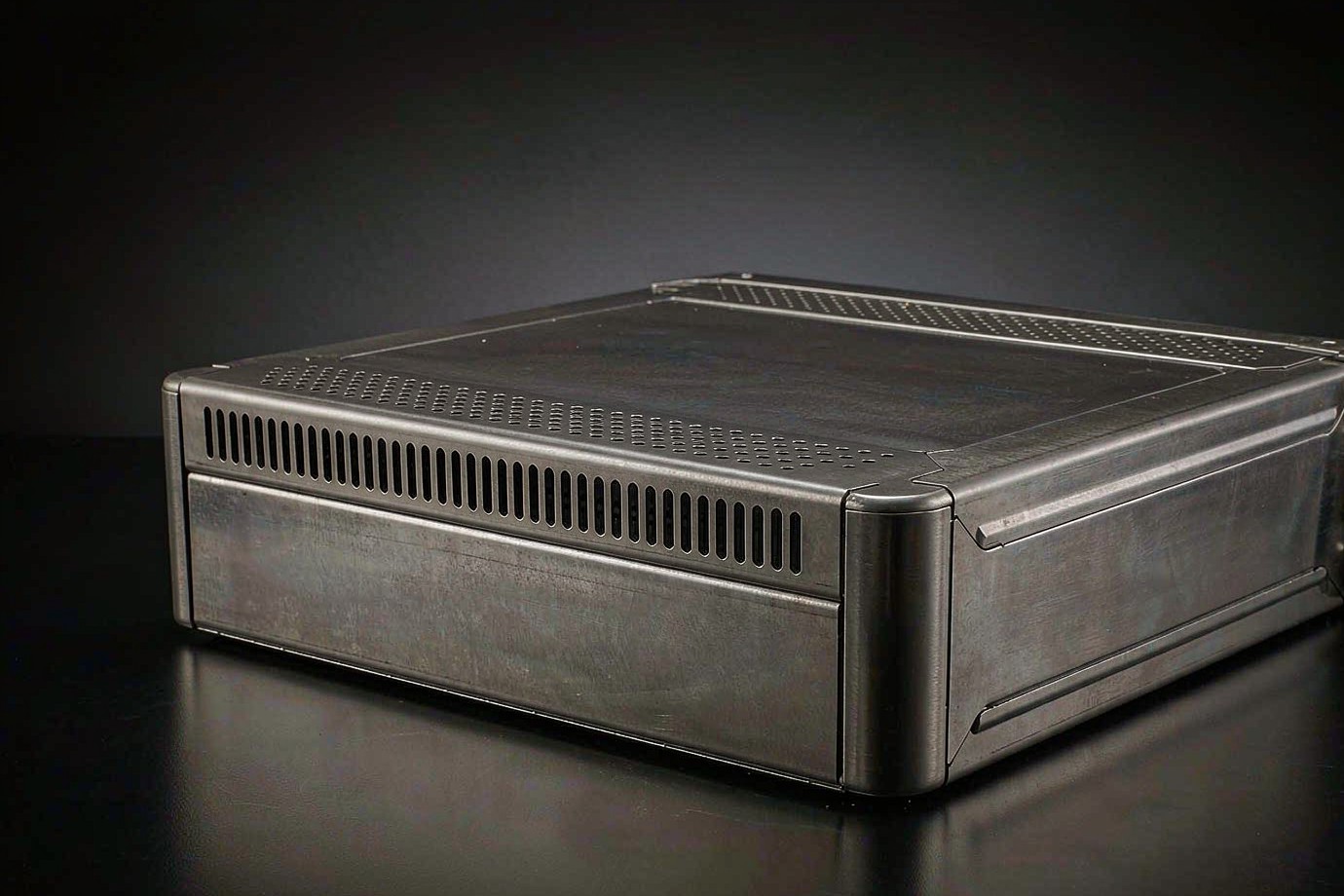
Seven part numbers were nested from one CAD package, laser-cut and bent on shared tooling with no dedicated forming dies, TIG-welded where joints needed it, then finished to two different specs. Flatness and hole position were checked against the drawing datums, the first article was inspected before the pilot batch, and the validated setup carried straight into the 80-set run. Revisions to two brackets were absorbed between pilot and production without new tooling.
Frequently Asked Questions
Do you have a minimum order quantity for sheet metal prototypes?
What counts as low-volume sheet metal work?
How fast can I get a sheet metal prototype?
Which materials can you use for low-volume sheet metal?
Can I revise the design after the first prototype?
Do I need to pay for tooling?
Can you handle multiple part numbers in one low-volume order?
What quality documents come with a prototype?
How do I move from prototype to low-volume production?
What files do you need to start a low-volume sheet metal job?
Need Low-Volume Sheet Metal Parts From Your CAD?
Send your CAD model and drawing. We can review the design for manufacturability, define the cutting, bending, welding, finishing and inspection plan, and turn a prototype in a typical 3–7 working-day window — then scale it to production when you are ready.
Upload CAD / Request a Quote →No fixed MOQ · Free DFM review · Quote typically within 24 hours
Explore Manufacturing Capabilities →