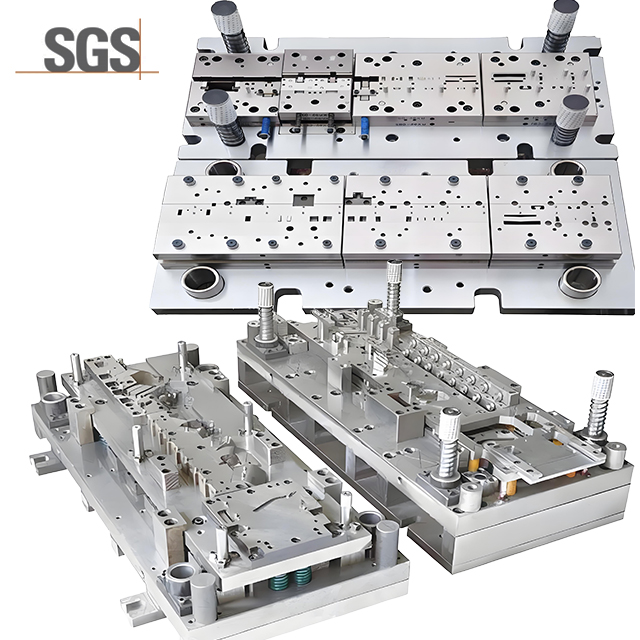
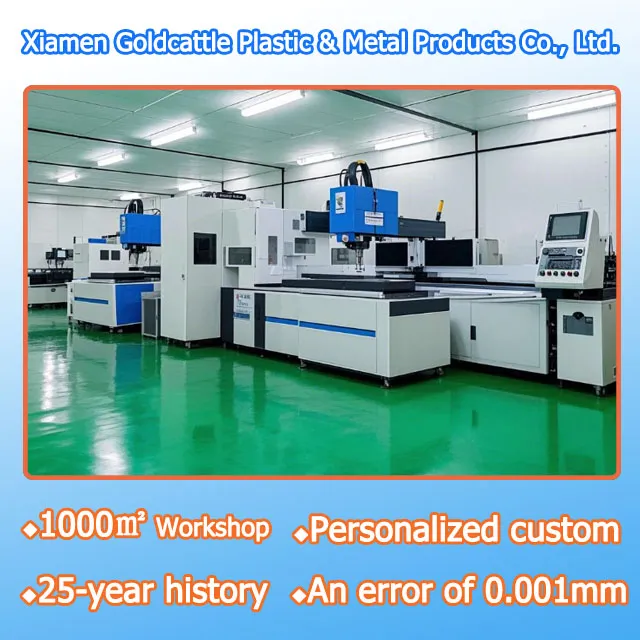
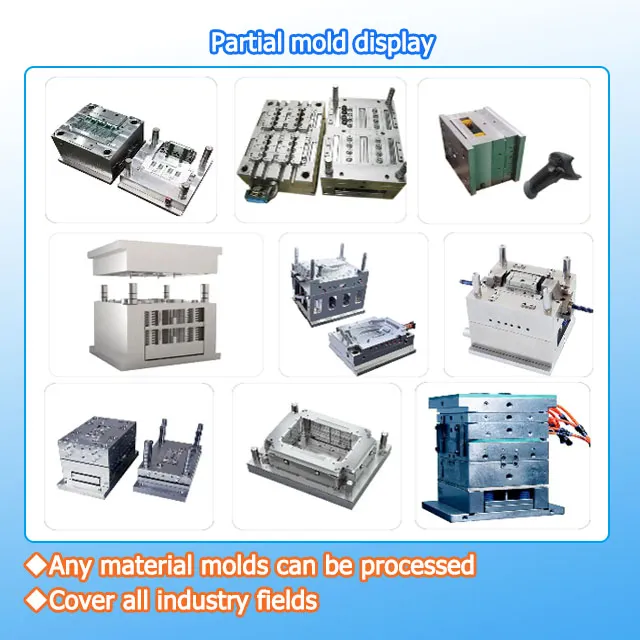
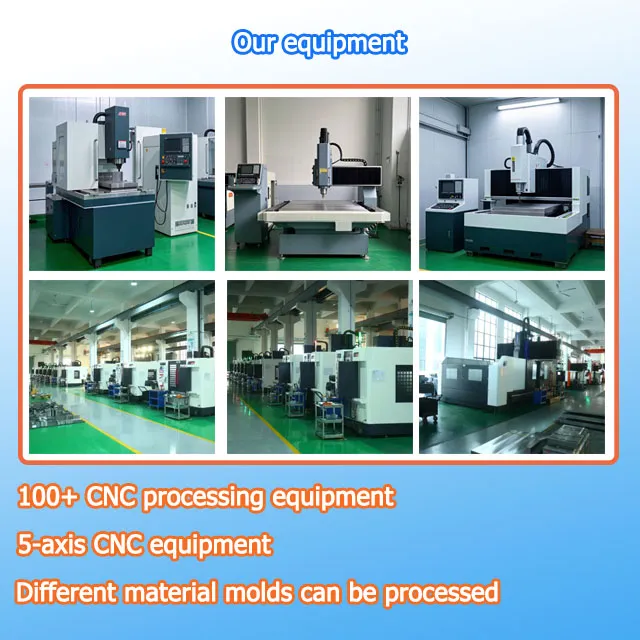
Factory Custom Plastic Injection, Miniature & Die Casting Molds
Description
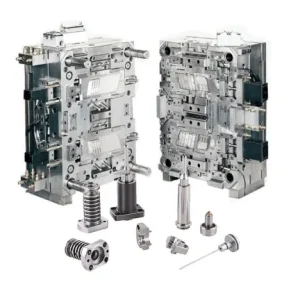
Precision Mold Manufacturing
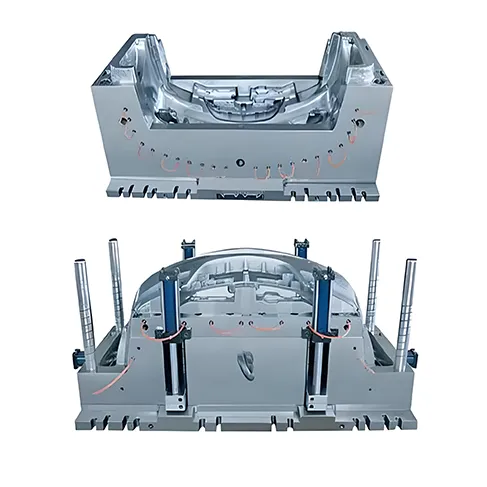
Custom Plastic Injection Mold Manufacturer | Precision Tooling & Die Casting Mold Supplier
Engineering-grade injection molds for automotive, medical, electronics, and industrial applications. From prototype tooling to high-volume production molds, we deliver precision-manufactured solutions with tolerances down to ±0.02mm.
Mold Types
- • Single Cavity
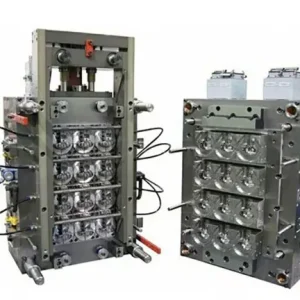
- • Multi-Cavity
- • Insert Mold
- • Prototype Mold
- • Die Casting Mold
Key Specs
- • Tolerance: ±0.02mm
- • Surface: Ra0.8μm
- • Mold Life: 50K–1M shots
- • Lead Time: 15–30 days
- • OEM/ODM Supported
Manufacturing Overview
Custom Injection Mold Manufacturing Overview
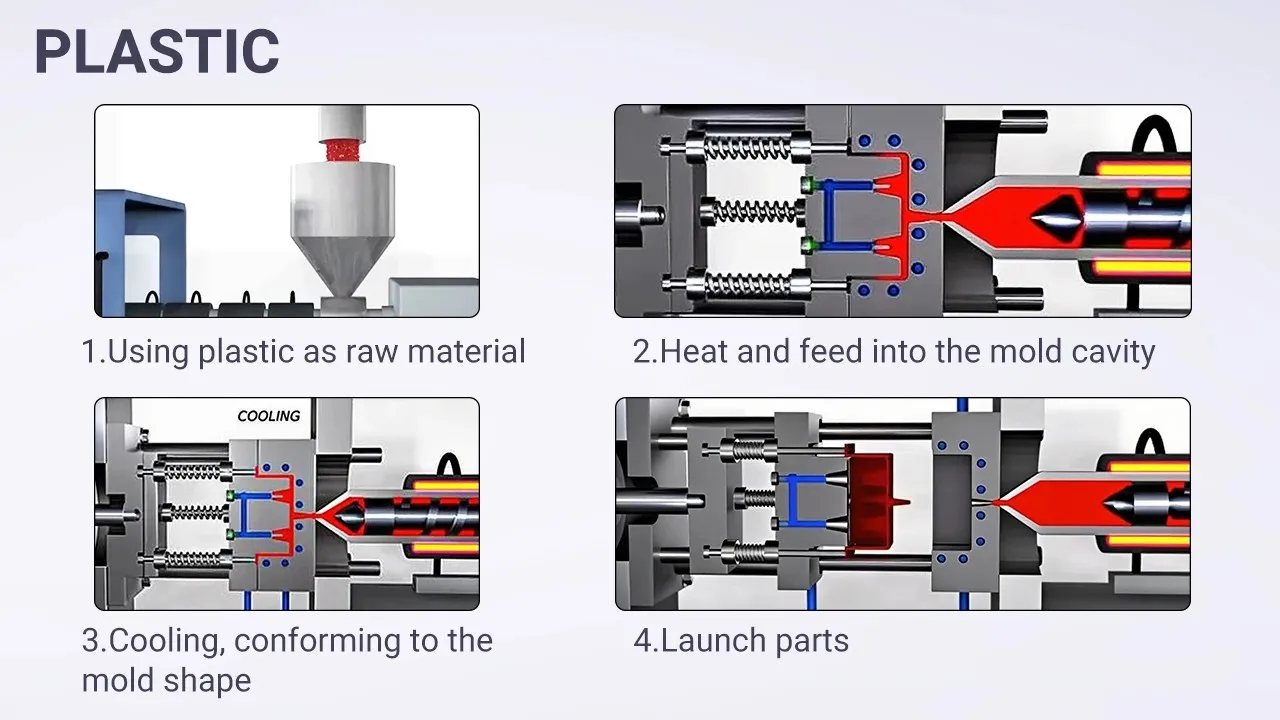
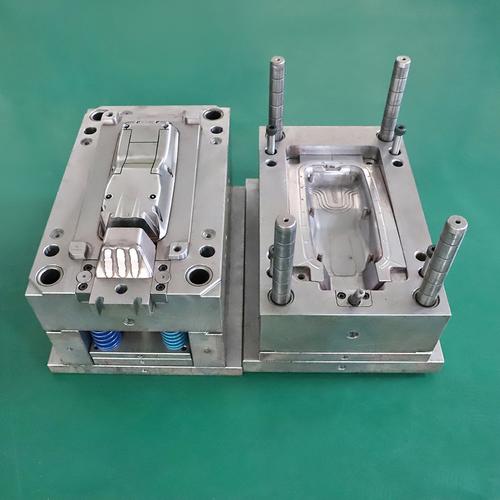
Custom injection molds are the foundation of stable, repeatable plastic part production. Our mold manufacturing service supports prototype tooling, low-volume production molds, and high-volume injection molding tools for demanding applications across automotive, electronics, medical, and industrial sectors.
At Xiamen Goldcattle, we engineer molds that balance precision, durability, and cost-efficiency. Every mold undergoes DFM analysis, CAD/CAE simulation, and multi-stage quality verification before delivery.
Key Insight: Mold steel selection directly impacts part quality, production cycle time, and tooling lifespan. Our engineering team guides clients through material selection based on production volume, part complexity, and budget constraints.
Technical Specifications
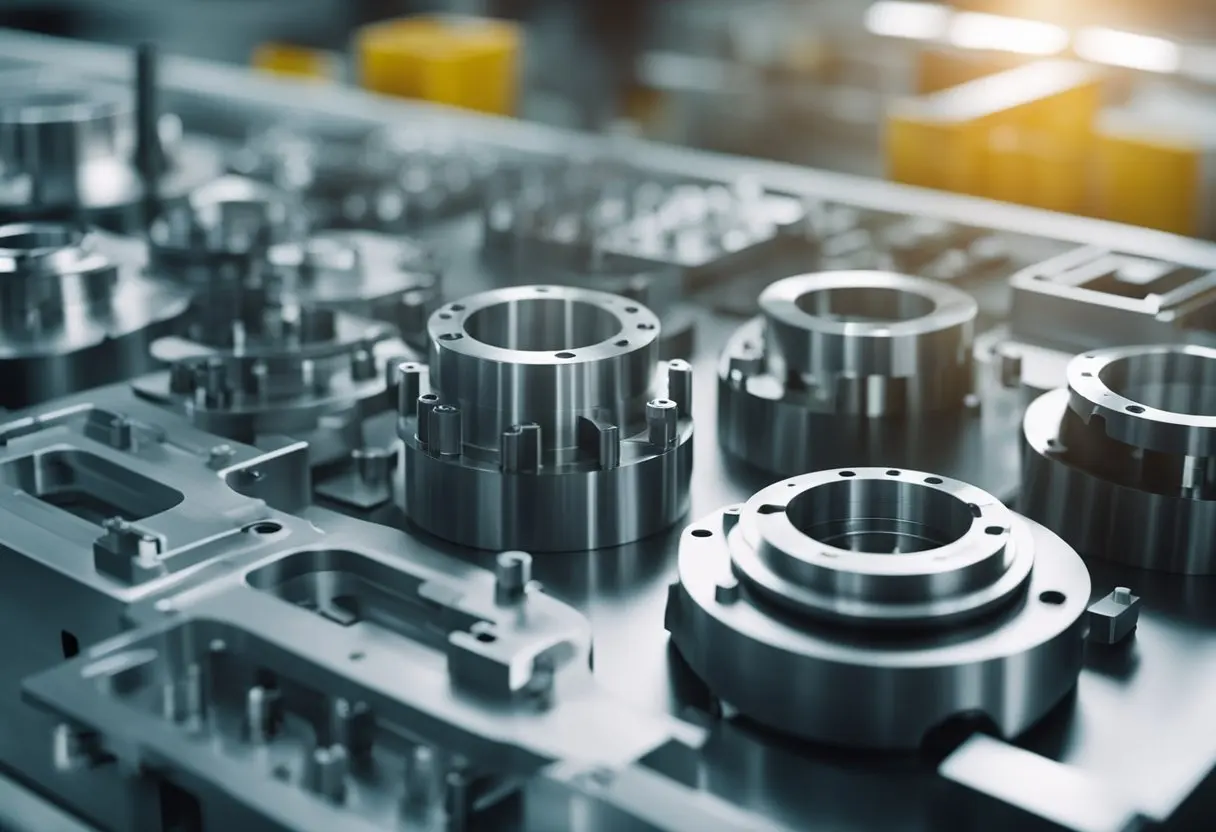
Injection Mold Manufacturing Capability
Comprehensive mold manufacturing parameters for engineering evaluation and procurement decisions.
Production Workflow
Injection Mold Manufacturing Process
Six-stage quality-controlled mold production from DFM analysis to final inspection.
DFM Analysis
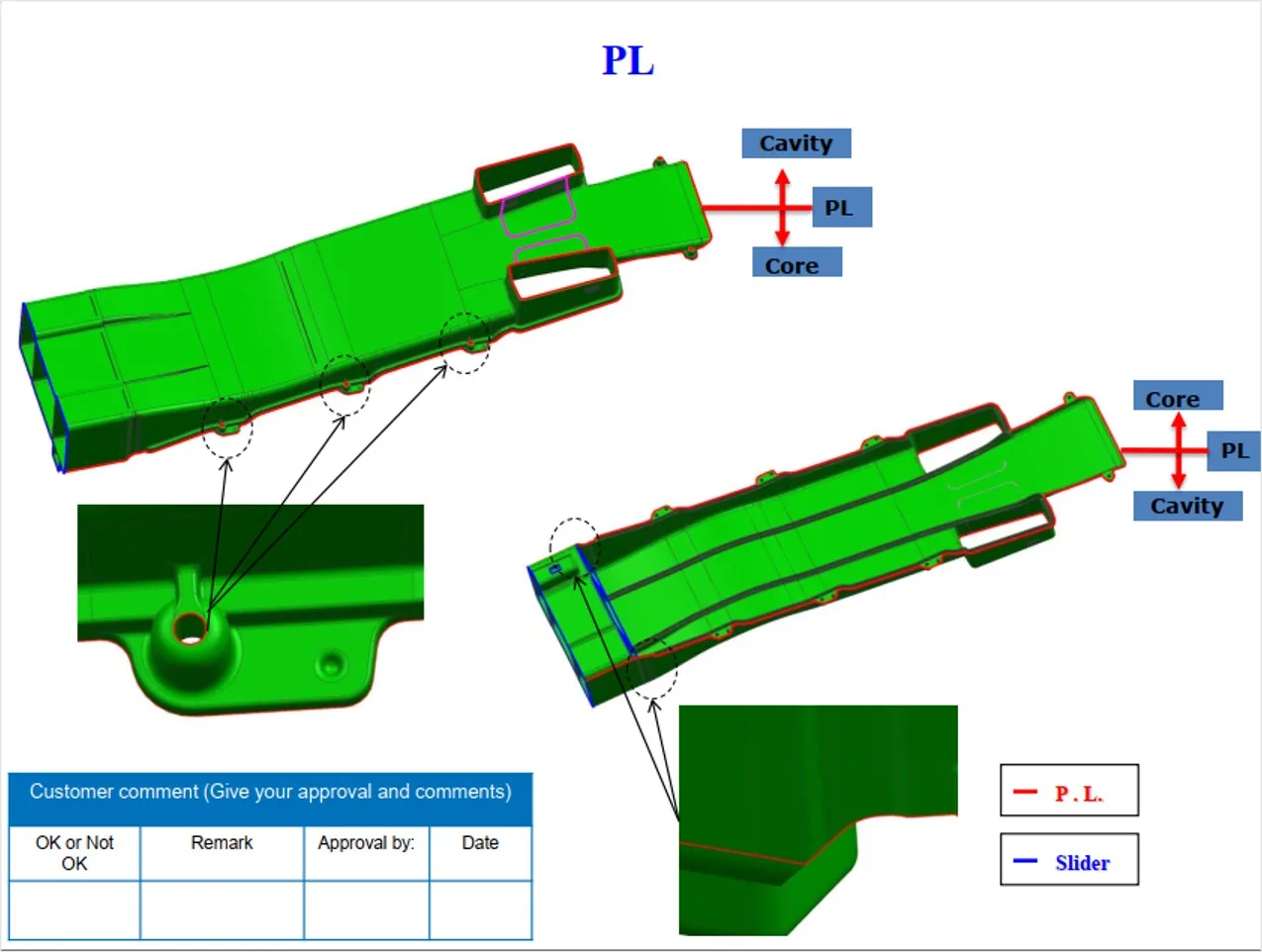
Engineering review of customer drawings focusing on wall thickness uniformity, draft angle optimization, shrinkage compensation, and mold structure feasibility. Identifies potential manufacturing issues before tool steel is cut.
Mold Design
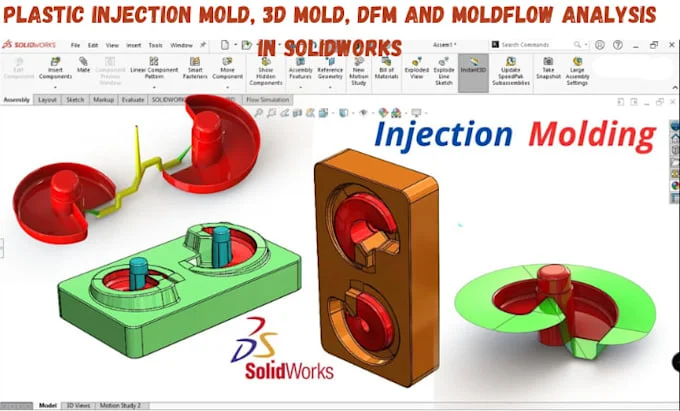
CAD modeling with full 3D assembly, followed by CAE flow simulation to optimize gate location, cooling channel layout, and warpage prediction. Design validation ensures manufacturability before CNC programming begins.
CNC Machining
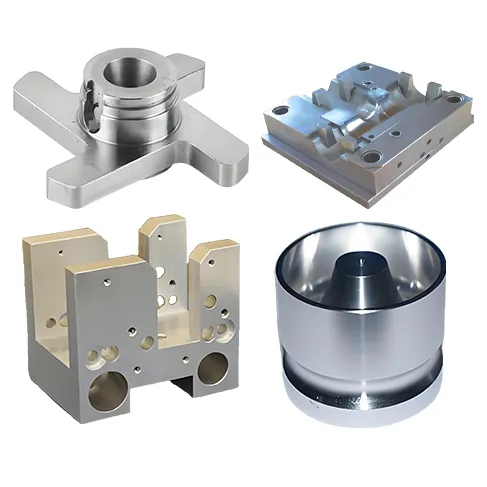
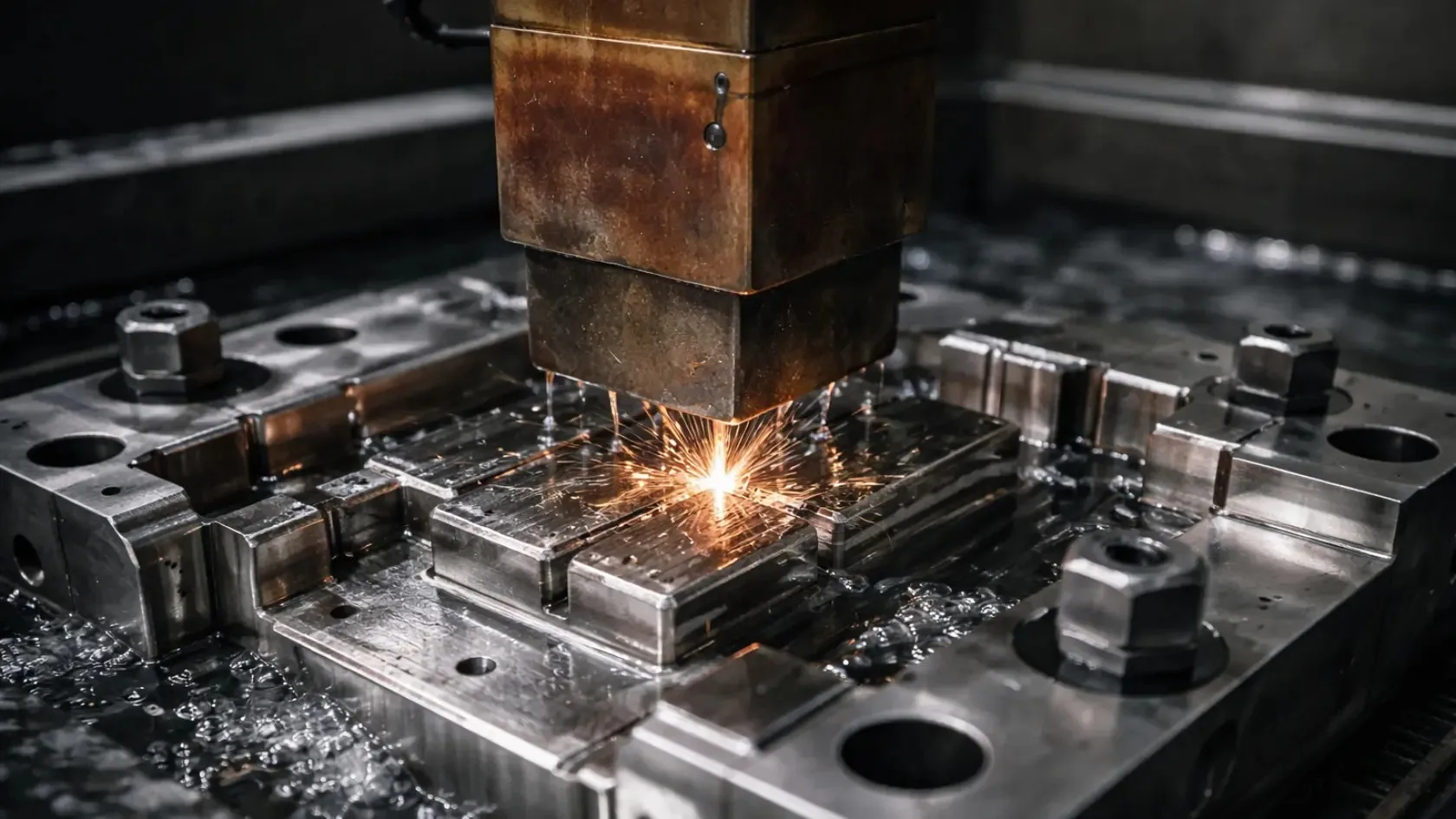
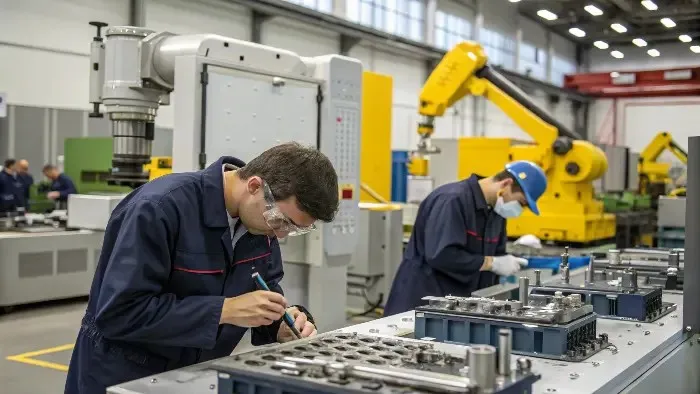
High-speed CNC milling achieves cavity accuracy within ±0.01mm. EDM and wire cutting handle complex geometries, internal corners, and fine details that milling cannot reach. Each operation follows programmed toolpaths with automated quality checks.
Mold Assembly
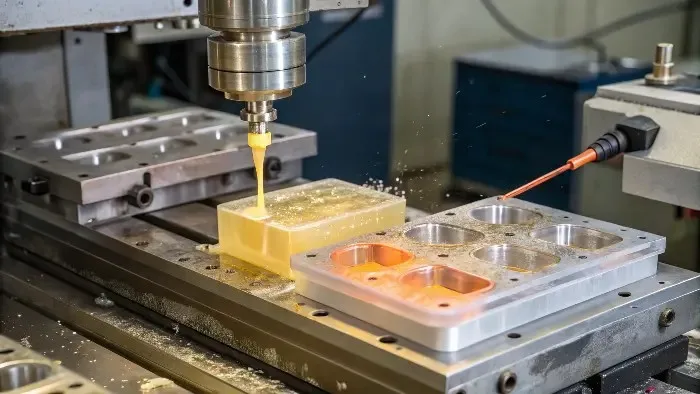
Precision fitting of cavity inserts, core components, ejector systems, and cooling circuits. Assembly technicians verify slide fit, parting line alignment, and ejector pin travel to ensure smooth operation under production conditions.
Trial Injection
First-shot validation on production-grade injection molding machines. Parameters including temperature, pressure, and cycle time are optimized. Sample parts are dimensionally checked against customer specifications before mold approval.
Final Inspection
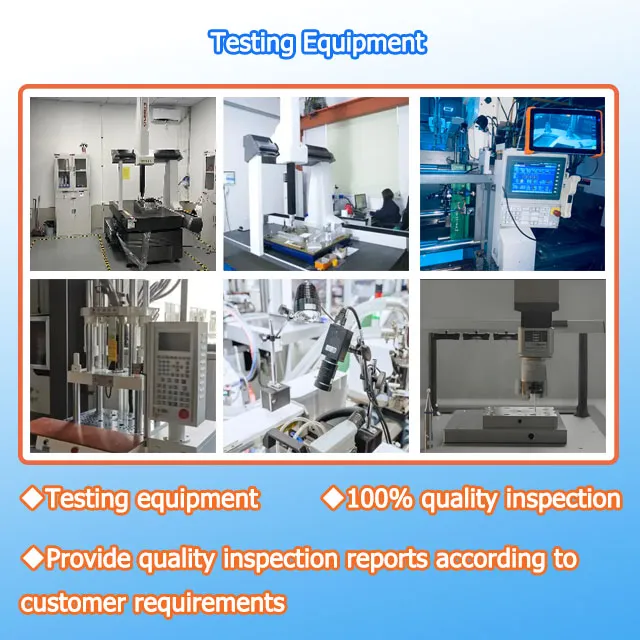
Comprehensive quality verification including CMM dimensional inspection, surface roughness measurement, and functional testing. Full inspection report with measured values accompanies every delivered mold.
Material Selection
Injection Mold Steel & Plastic Materials
Strategic material selection based on production volume, part requirements, and cost targets.
Mold Steel Grades
P20
Pre-hardened Steel
Pre-hardened to 28–32 HRC. Ideal for medium-production molds (300K–500K shots) with standard plastics. Cost-effective for prototype and bridge tooling. Good machinability reduces tooling time.
H13
Hot-work Tool Steel
Hardened to 48–52 HRC. Excellent thermal fatigue resistance for die casting molds and high-temperature injection applications. Handles aluminum and zinc alloy casting with minimal thermal cracking.
S136
Stainless Tool Steel
Mirror-polish capable with superior corrosion resistance. Recommended for medical and food-grade applications. Achieves 1M+ shots with proper maintenance. Premium grade for high-precision, long-life tooling.
NAK80
Pre-hardened Stainless
Pre-hardened to 37–43 HRC with excellent polishability. Suitable for transparent part molds (PC, PMMA) requiring optical-grade surface finish. Good balance of hardness and machinability.
718H
Improved P20 Variant
Enhanced pre-hardened steel with better polishability than standard P20. Suitable for medium-to-high production volumes with improved surface quality requirements.
SKD61
Japanese Standard
Equivalent to H13 with excellent toughness and wear resistance. Widely used for die casting molds and high-wear injection mold components in Asian manufacturing.
Technical Comparison
Mold Steel Comparison for Procurement Decisions
Side-by-side evaluation of common mold steels across key performance dimensions.
Industry Applications
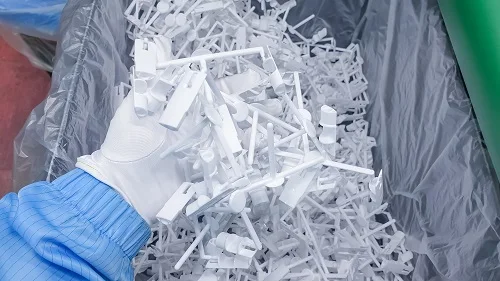
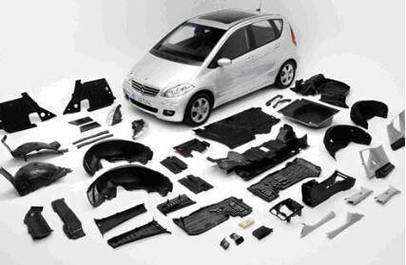
Injection Mold Applications by Industry
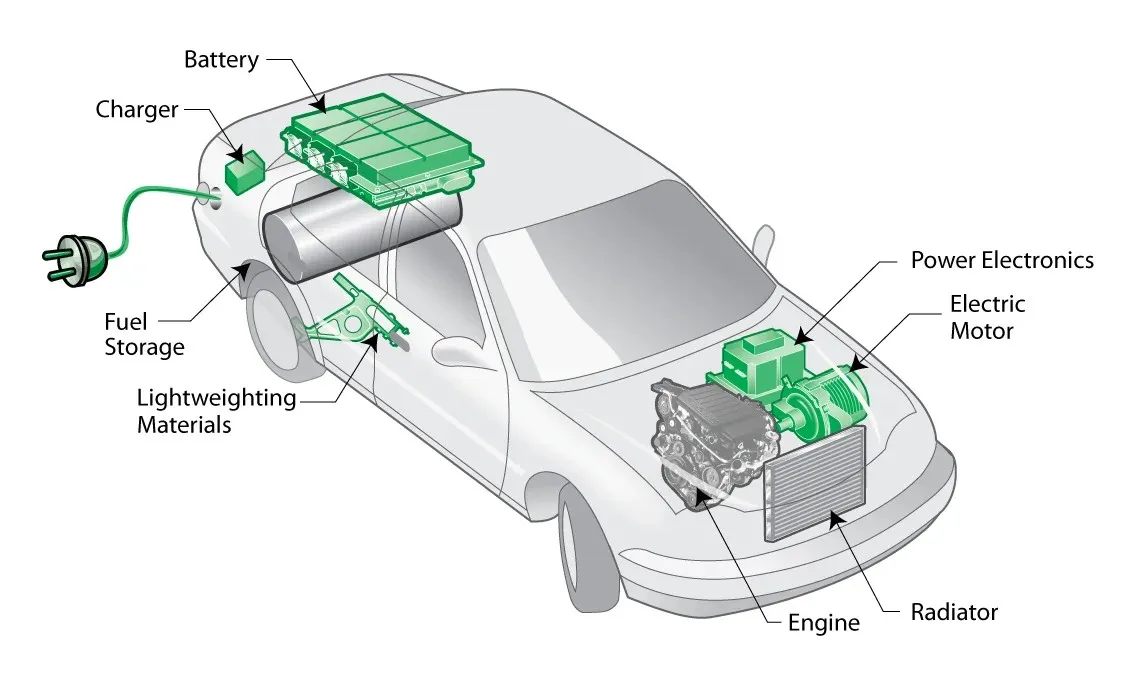
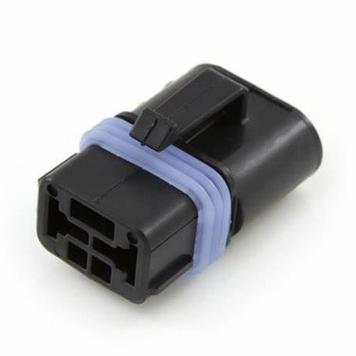
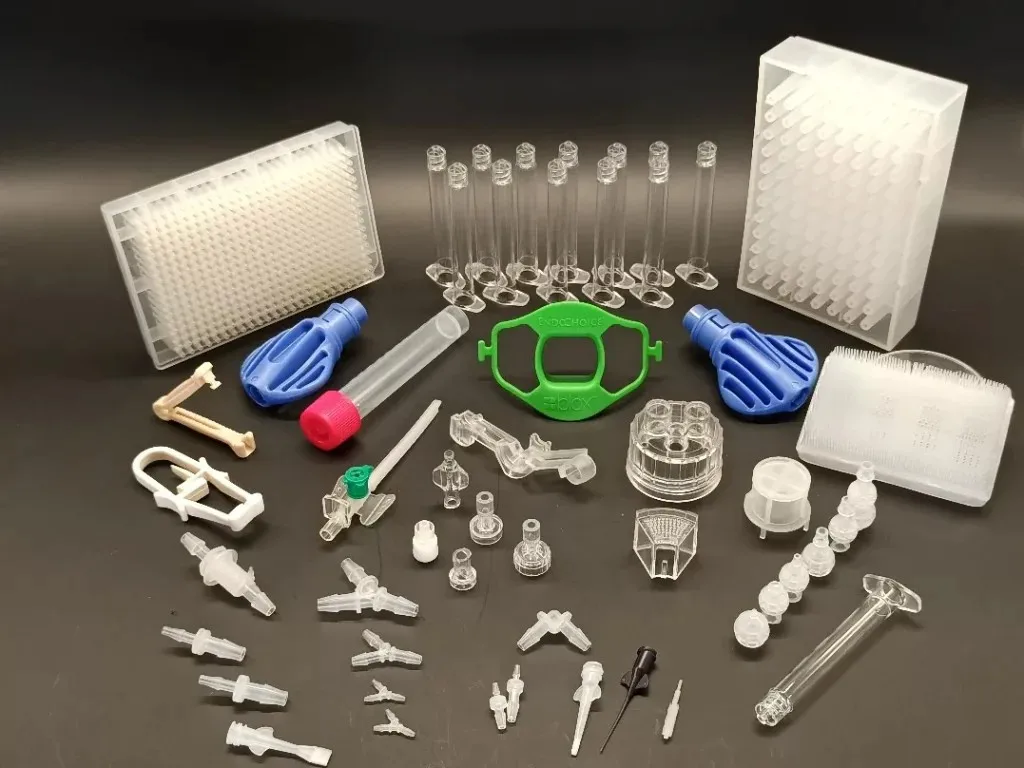
Mold solutions across automotive, electronics, medical, and consumer product sectors.
Competitive Advantages
Why Choose Our Injection Mold Manufacturing
Differentiators that matter to procurement teams and engineering departments.
Engineering-First DFM Support
Every project begins with DFM analysis that identifies wall thickness issues, draft angle problems, and undercut challenges before tooling begins. This prevents costly rework and reduces time-to-production by an average of 20%.
Flexible Production Scaling
From single-cavity prototype molds to multi-cavity production tooling. Bridge tooling options allow production ramp-up without committing to expensive hardened steel molds prematurely.
Precision Verification
CMM machines verify critical dimensions to ±0.005mm. Full dimensional reports, surface roughness, and hardness testing accompany every mold delivery.
Export Project Experience
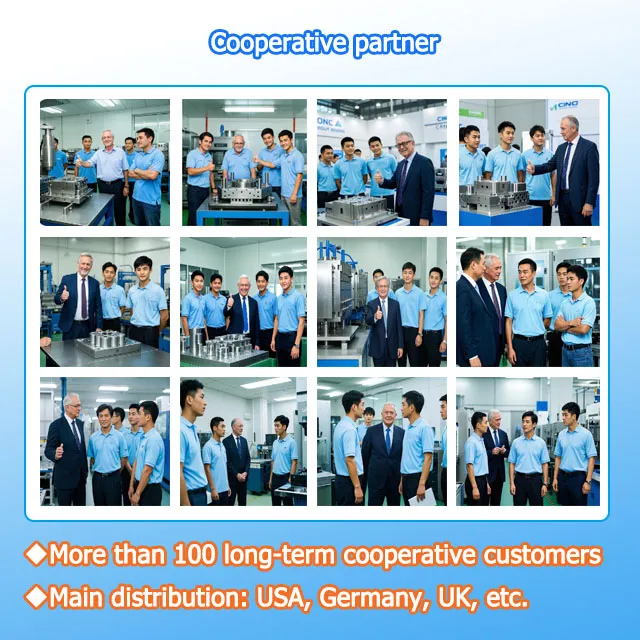
Direct experience with North American and European OEM requirements including PPAP documentation, material certifications, and traceability records. English-speaking project engineers ensure clear communication.
Project References
Injection Mold Manufacturing Case Studies
Real project outcomes demonstrating capability across different industries and requirements.
Frequently Asked Questions
Injection Mold Manufacturing FAQ
Common questions from procurement and engineering teams evaluating mold suppliers.