Custom Wear-Resistant CNC Aluminum Parts
Aluminum components for sliding, repeated contact, abrasion-sensitive and low-friction applications — engineered from alloy selection through hard anodizing to dimensional control.
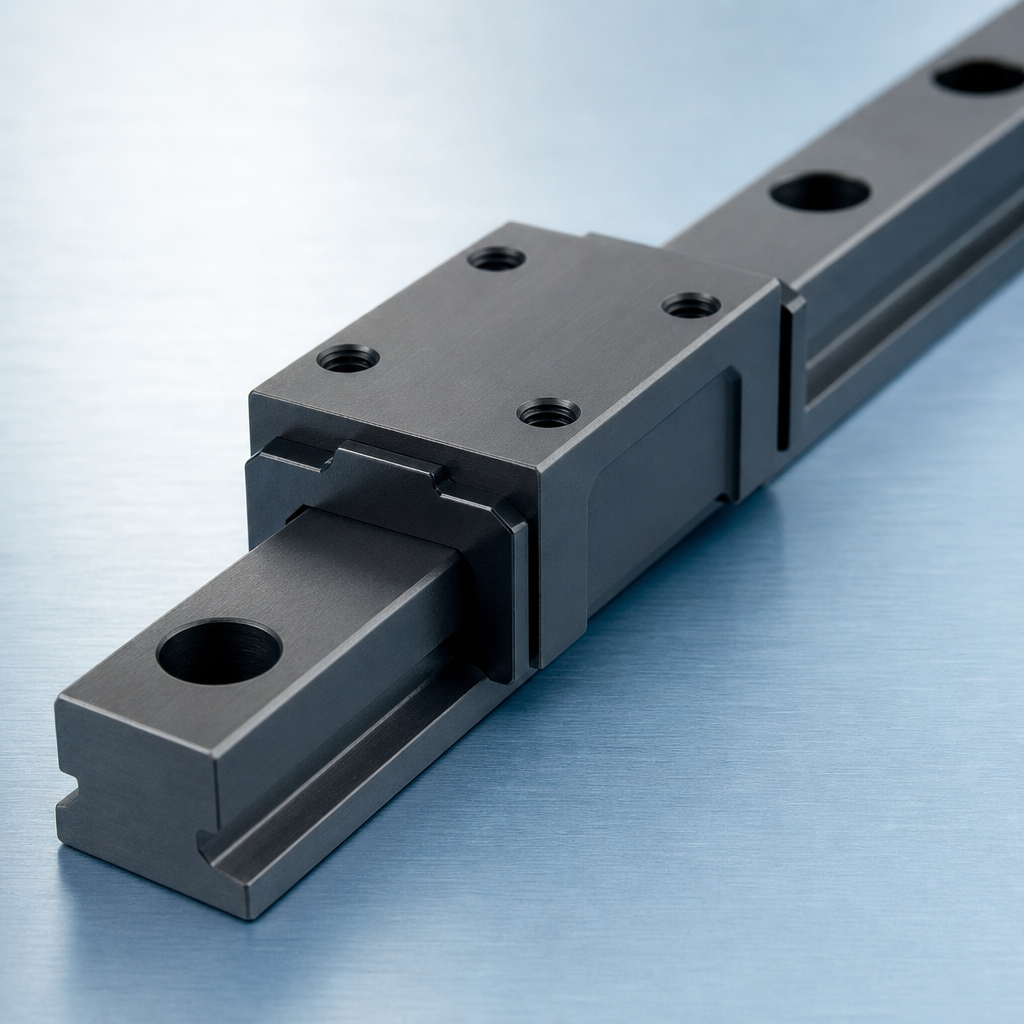
Can Aluminum Be Wear-Resistant?
Yes, but aluminum's wear performance depends strongly on the alloy, mating material, contact pressure, motion, lubrication and surface treatment. For many sliding or abrasive applications, the aluminum substrate alone is not sufficient; a properly specified hard anodized or other engineered surface may be required.
This is not a page about selecting the hardest aluminum alloy. Wear resistance in CNC-machined aluminum parts is determined by the combination of substrate alloy & temper + contact method + load & speed + surface treatment + dimensional fit + lubrication & environment.
Is Wear-Resistant Aluminum Right for Your Part?
Not every wear application should use aluminum. Matching the material to the actual wear condition prevents costly redesigns and premature failure.
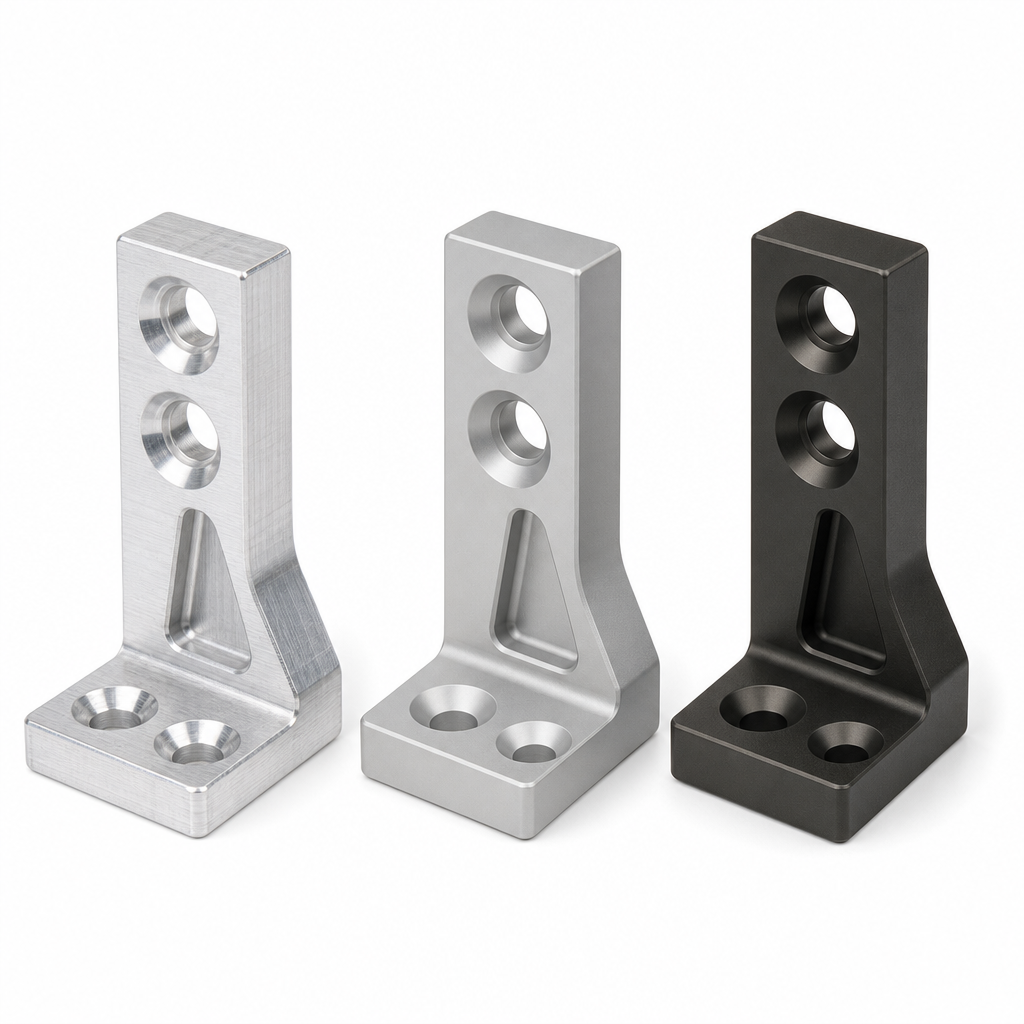
Same 6061-T6 CNC aluminum bracket — bare (left), Type II sulfuric anodized (center), Type III hard anodized (right)
| Application | Typical Concern | Possible Direction |
|---|---|---|
| Sliding contact | Adhesive / abrasive wear | Hard anodizing + proper fit + lubrication |
| Repeated assembly | Surface scratching / galling | Hard anodizing or insert / coating strategy |
| Guide surfaces | Surface wear | Hard anodized aluminum |
| Bushings / sleeves | Friction + dimensional stability | Aluminum + hardcoat or alternative material |
| Abrasive particles | Surface degradation | Harder surface or alternative substrate |
| Cosmetic contact | Scratches | Surface finish + protective coating |
| High-load metal-to-metal | Galling / deformation | Aluminum may not be appropriate — consider steel / bronze / engineered bearing materials |
What Type of Wear Does Your Aluminum Part Experience?
Identifying the wear mechanism is the first engineering step — before choosing alloy, surface treatment or machining strategy.
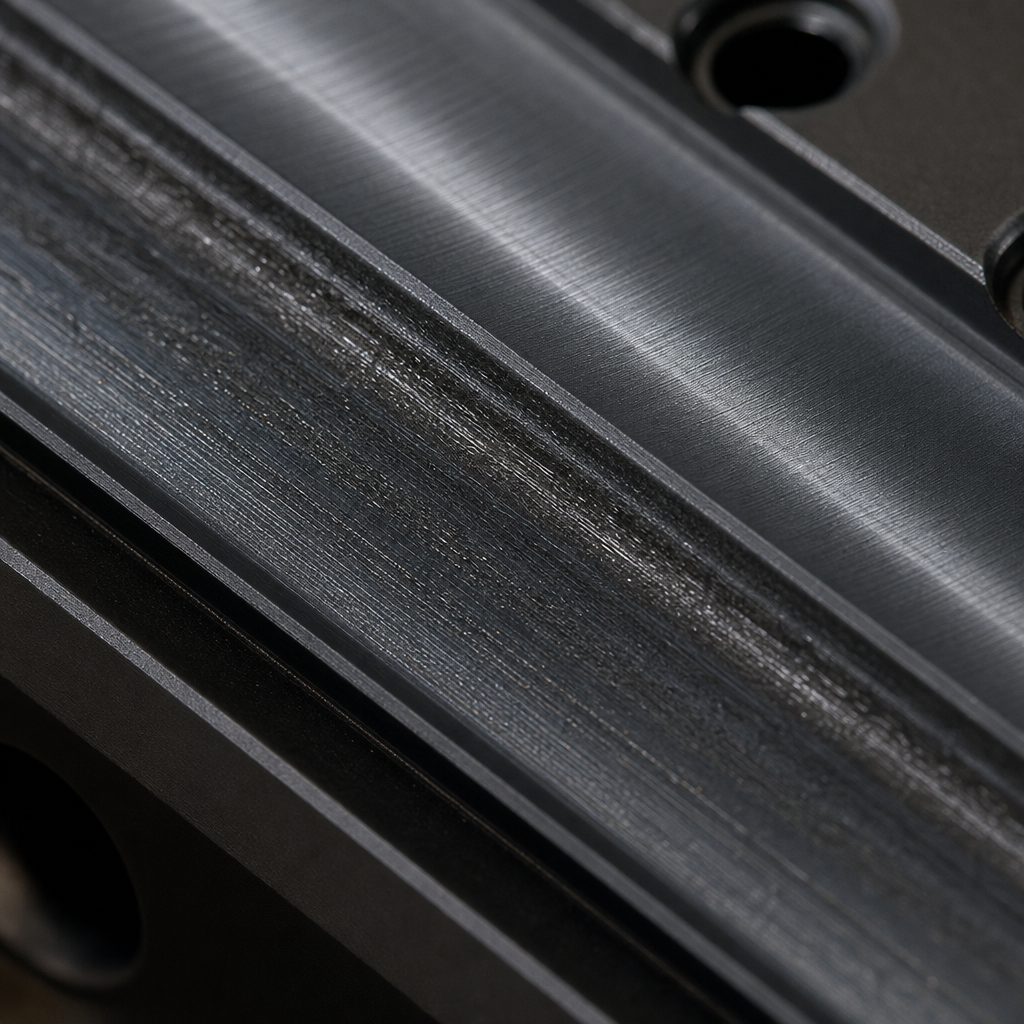
Hard anodized CNC aluminum guide surface — directional tool marks visible under raking light
Abrasive Wear
Hard particles or a harder mating surface remove material from the aluminum surface. Common in environments with dust, debris or hard counterfaces.
Surface hardness criticalAdhesive Wear
Two surfaces slide against each other and material transfers between the mating surfaces. Aluminum-on-aluminum is particularly susceptible.
Mating pair criticalFretting Wear
Small-amplitude repeated motion progressively damages contacting surfaces. Often occurs at bolted joints, press fits and clamped interfaces.
Motion amplitude criticalErosive / Particle Wear
High-speed or fluid-borne particles impact and erode the surface. Aluminum's relatively low hardness makes it vulnerable without protection.
Impact velocity criticalWhich Aluminum Alloy Is Best for Wear-Resistant CNC Parts?
There is no single "best" wear-resistant aluminum. Alloy choice depends on the combined requirements for strength, machining, surface treatment compatibility and cost.
6061-T6
~95 HBGood machinability, balanced properties, strong anodizing compatibility. Often a practical starting point for hard-anodized functional parts.
Guides, housings, machine components
6082-T6
~90 HBHigher structural strength than many general-purpose 6xxx alloys. Common in European industrial specifications.
European industrial components
7075-T6
~150 HBHigher hardness and strength than 6061. Used when substrate mechanical properties are a priority.
High-strength moving / structural components
6063
~70 HBExcellent extrusion characteristics and surface finish. Good for profile-based components requiring anodizing.
Profile-based guides / housings
6061-T6 typical hardness is ~95 HB; 7075-T6 is ~150 HB — but this does not mean 7075's wear resistance is 1.6× that of 6061. Material hardness, surface oxide layer, mating material, lubrication and contact pressure all influence actual wear behavior. Hard anodizing typically has a much greater effect on wear performance than the difference between these substrate alloys.
Bare Aluminum vs Hard-Anodized Aluminum for Wear Applications
The difference between bare and hard-anodized aluminum is not incremental — it is the difference between a surface that deforms under contact and one that resists abrasion.
Bare Aluminum
Type III Hard Anodized
Type II vs Type III Anodizing for Wear-Resistant Aluminum
MIL-PRF-8625 defines Type II as sulfuric-acid anodizing and Type III as hard anodic coatings. The distinction is not cosmetic — it is functional.
How Hard Anodizing Improves Wear Performance
Type III hard anodizing creates a ceramic-type aluminum oxide layer that is significantly harder and more abrasion-resistant than the bare substrate. The improvement is most pronounced in sliding and abrasive wear conditions.
How Hard Anodizing Affects CNC Part Dimensions
Anodizing is not dimensionally neutral. This is one of the most important — and most frequently overlooked — aspects of specifying wear-resistant aluminum parts.
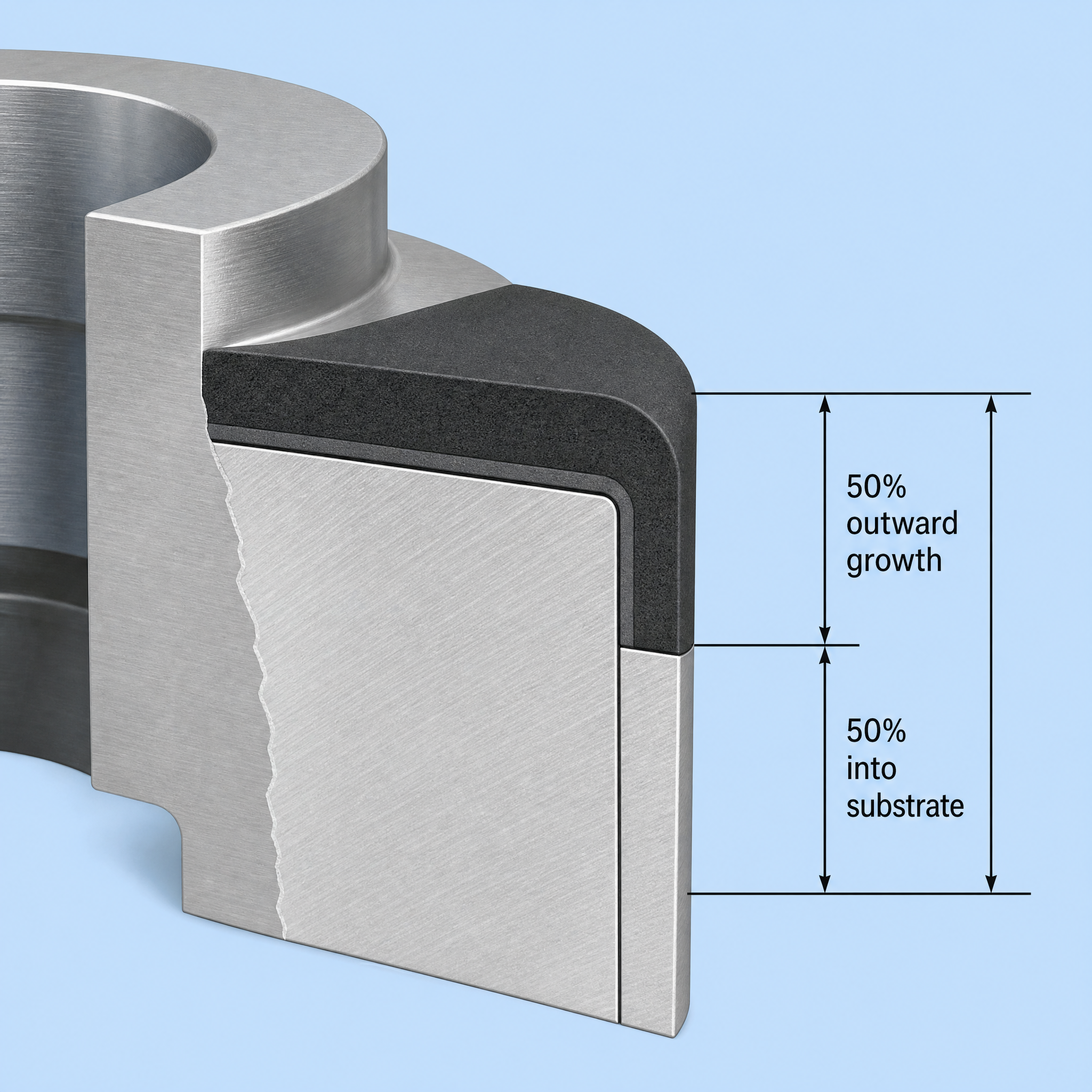
Cross-section: the anodic oxide layer grows both into the substrate and outward — changing the final dimensional envelope
Penetrates into substrate + builds outward
Coating occupies part of original surface
The anodic coating grows both into the substrate and outward from the original surface. The Aluminum Anodizers Council confirms that Type III coating simultaneously involves penetration and buildup.
Features affected by coating growth:
- Bore diameters become smaller
- Shaft diameters become larger
- Thread engagement changes
- Bearing fits tighten
- Seal groove dimensions shift
- Close mating surfaces may interfere
Hard-Anodized Bearing Bore: Decision Path
How a bearing bore is handled from final requirement through coating to inspection — a real engineering workflow, not a theoretical formula.
Define final bore requirement per drawing
Hard anodizing adds coating to bore surface
Bore diameter becomes smaller after coating
Pre-finish machining allowance compensates for coating
Masking applied if bore must remain uncoated
Final dimensional inspection confirms fit
The exact dimensional allowance should be established from the specified coating thickness and the actual finishing process — not from a generic percentage. This is a critical engineering decision, not a rule of thumb.
Wear Resistance Is Not Only About Hardness
A harder material or coating does not automatically deliver better wear performance. The entire tribological system determines the result.
Surface hardness
Surface roughness
Contact pressure
Sliding speed
Counterface material
Lubrication
Temperature
Contamination
For example: a hard anodized surface against an abrasive steel component under poor lubrication can behave very differently from the same coating in a lightly loaded sliding interface. Engineering the wear solution means engineering the whole system.
Selecting the Mating Surface
Wear is always a pair problem. The material that slides against your aluminum part matters as much as the aluminum itself.
Aluminum vs Steel
Wear behavior depends on hardness difference, surface finish and lubrication. Hard anodized aluminum against polished steel can perform well under controlled conditions.
Aluminum vs Aluminum
Potential adhesion and galling concern. Hard anodizing one or both surfaces may help, but the pair should be evaluated for the specific load and motion.
Aluminum vs Polymer
Can be appropriate for lower-load, low-friction applications depending on material pair. POM, PTFE and certain engineering plastics are common counterfaces.
Aluminum vs Abrasive Material
May require a harder surface or alternative substrate. Hard anodizing helps but may not be sufficient for severe erosive conditions.
Surface Roughness and Sliding Performance
Lower Ra is not automatically equivalent to lower wear. The relationship between surface roughness and wear is more nuanced.
Actual wear behavior depends on:
- Roughness (Ra) and waviness
- Contact material and its finish
- Lubrication regime
- Contact load and motion type
When Aluminum May Not Be the Right Wear Material
Honest engineering means knowing when aluminum is not the answer. The following situations typically require alternative materials.
| Requirement | Consider Instead |
|---|---|
| Very low friction | POM / PTFE / engineered polymer |
| High continuous sliding load | Steel / hardened steel |
| Bearing / bushing function | Bronze / engineered bearing material |
| Extreme abrasion | Hardened steel / ceramic / specialty coating |
| Low weight + moderate wear | Aluminum + hard anodizing (this page) |
Match the Surface Treatment to the Wear Mechanism
The right surface treatment follows from the wear condition — not from a preference for the hardest available coating.
| Wear Condition | Primary Concern | Possible Direction |
|---|---|---|
| Sliding | Friction + adhesive wear | Hard anodize / low-friction solution |
| Repeated contact | Surface deformation | Higher-strength alloy / hard surface |
| Abrasive particles | Material removal | Hard coating / alternative substrate |
| Light cosmetic scratching | Surface appearance | Standard anodizing / protective finish |
| High-load rolling contact | Fatigue / deformation | Aluminum may not be appropriate |
Wear-Resistant CNC Aluminum Components We Manufacture
Each component is keyed to its dominant wear mechanism — because the wear condition determines the alloy, surface treatment and dimensional strategy.
Guide Rails & Slides
Sliding / abrasive wear- Linear guide surfaces
- Machine guides
- Sliding rails
Bushings & Spacers
Friction + dimensional stability- Sliding bushings
- Alignment spacers
- Wear sleeves
Pulleys & Cams
Contact + sliding wear- Cable pulleys
- Cam profiles
- Rotary contact surfaces
Robotic Components
Repeated motion + fretting- Joint brackets
- Sliding interfaces
- Motion components
Valve & Actuator Parts
Sliding + abrasion- Valve housings
- Piston-related components
- Guide components
Fixtures & Tooling
Repeated contact- Clamping components
- Repeated-contact fixtures
- Machine tooling parts
CNC Machining Process for Wear-Resistant Aluminum Parts
From material selection through hard anodizing to final inspection — each step is a decision point for wear performance.
Material / Temper Selection
6061-T6 / 7075-T6 / 6082-T6 — verified grades
Drawing Review
Wear surface, fit, tolerance, coating requirements
CNC Machining
Milling, turning, 5-axis where required
Edge / Surface Prep
Deburring, edge break, surface preparation
Hard Anodizing
Type III per specified standard + masking
Final Inspection
Coating, dimensions, fit, surface verification
Masking Critical Wear and Assembly Features
Some surfaces need the coating for wear protection; others need controlled dimensions, electrical contact or thread engagement and should be masked.
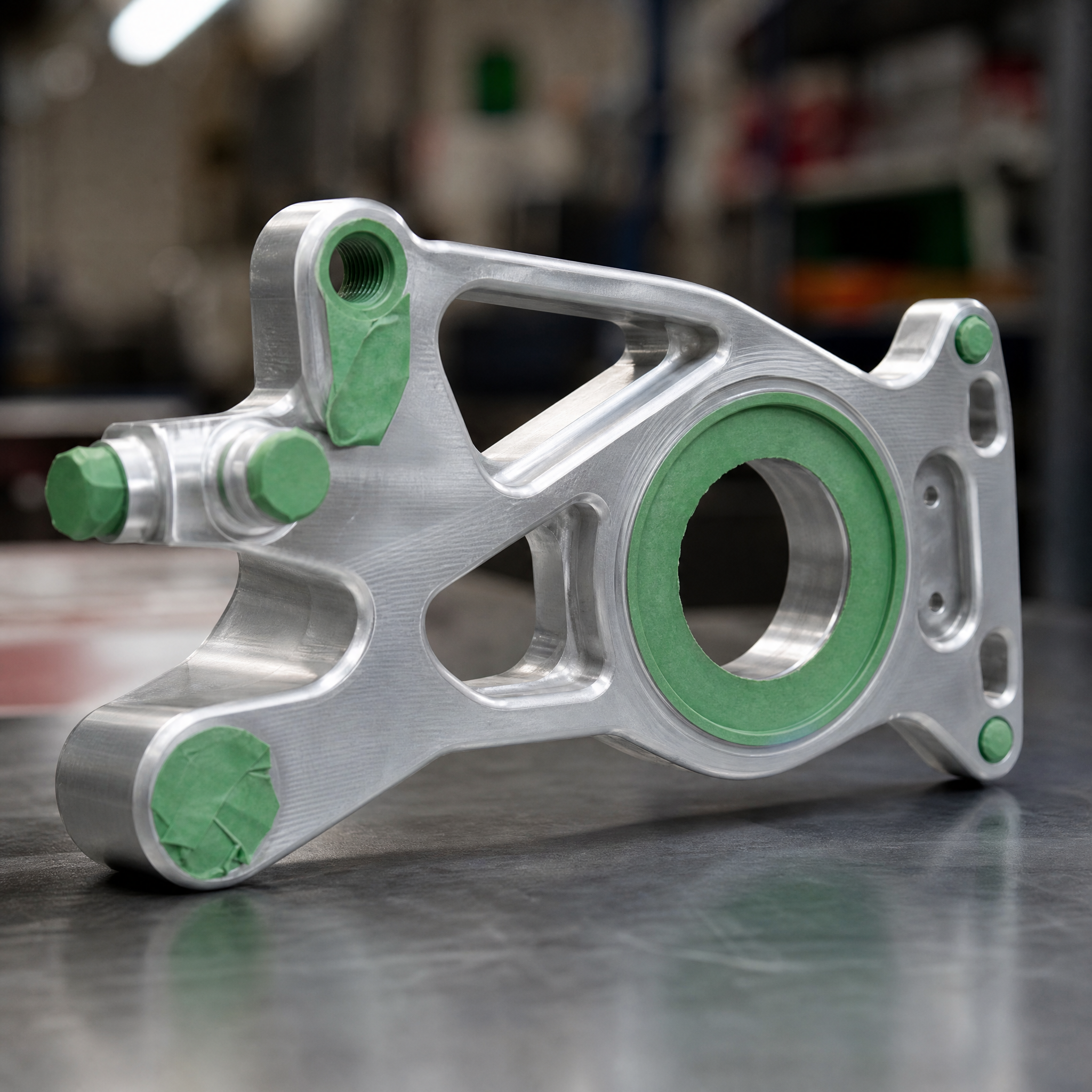
Masking applied to threads and bearing bore — exposed surfaces receive Type III hard anodizing
- Bearing bores
- Threads (internal and external)
- Grounding areas
- Seal grooves
- Precision mating faces
- Electrical contact surfaces
MIL-PRF-8625 coating requirements are controlled per drawing, purchase order or contract specification. This means the drawing should explicitly define coating type, class, thickness and masking requirements — not leave them to assumption.
Masking decisions directly affect part function: an unmasked thread may not engage; an unmasked bore may not fit its bearing. Clear drawing communication prevents costly rework.
How We Inspect Wear-Resistant Aluminum Parts
Wear-resistant parts require inspection that goes beyond general dimensional checks — coating, wear surface and fit must all be verified.
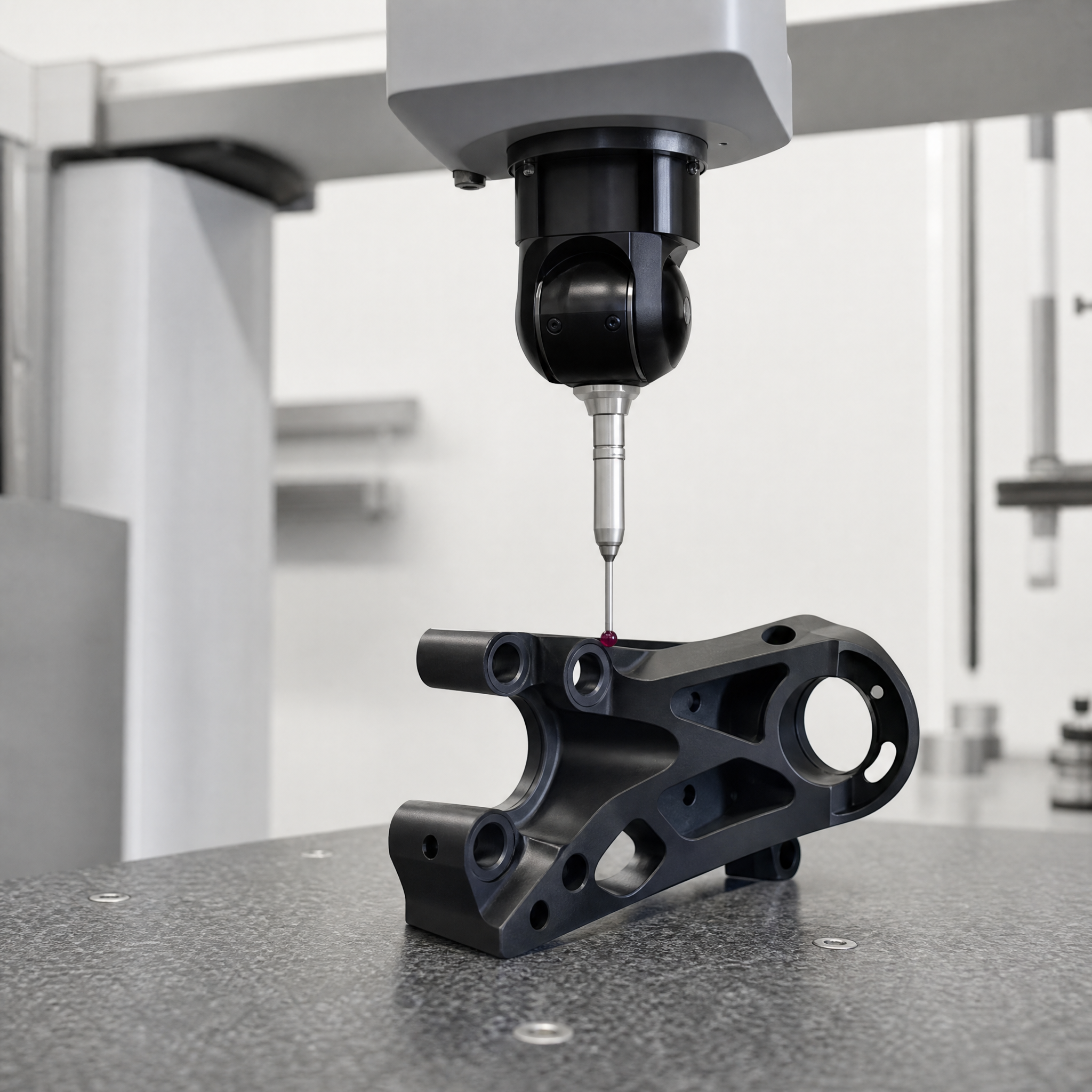
CMM dimensional verification on a hard anodized CNC aluminum part
Base Material
Alloy + temper
Machined Dimensions
Diameters, flatness, position
Coating Verification
Thickness, appearance, masking
Wear Surface
Roughness, fit, contact geometry
Documentation
Material cert, inspection, coating report
FAI performed where required. Coating report provided where specified. CMM, micrometers, thread gauges and surface roughness instruments used as needed.
How to Specify a Wear-Resistant CNC Aluminum Part on a Drawing
A complete drawing specification reduces quoting time, prevents assumptions and ensures the part performs as intended. Here is what to include.
* MIL-PRF-8625 Type III should be specified only when the customer requires hard anodizing per this standard.
What Determines the Cost of Wear-Resistant Aluminum Parts?
Wear-resistant aluminum parts carry more cost variables than standard machined aluminum — because the surface treatment, masking and post-finish inspection add processing steps.
A cheaper aluminum grade with insufficient wear performance can have a higher lifetime cost than a more expensive alloy or surface treatment if the part requires frequent replacement. Select for the actual service requirement, not just the unit price.
How to Choose a Wear-Resistant Aluminum Solution
No single answer — but a structured starting point based on your actual requirement.
| Requirement | Starting Point |
|---|---|
| Lightweight + moderate wear | 6061-T6 + suitable hard anodizing |
| High strength + moderate wear | 7075-T6 + carefully specified surface treatment |
| Profile-based wear component | 6063 / 6061 extrusion + CNC + surface treatment |
| High sliding load | Compare aluminum against steel / bronze |
| Very low friction | Consider engineering polymers (POM, PTFE) |
| Abrasive environment | Consider hard coating or alternative material |
| Tight bearing fit | Review coating + masking + post-finish dimensions |
| Corrosive + wear | Hard anodizing / alternative finish based on actual environment |
Wear-Resistant Aluminum CNC Part — Representative Component
An example of how alloy, surface treatment and dimensional control combine in a real wear-resistant component.
Linear Guide Component — Hard Anodized 6061-T6
This is a representative example. Actual project data, masking details and verified results are provided per customer engagement.
Key Engineering Questions — Answered
GEO Direct Answers
Frequently Asked Questions
Have a Wear-Critical Aluminum Part?
Send your 3D CAD model, 2D drawing, material requirement, mating-part information and wear conditions. We review the alloy, machining strategy, surface treatment, masking and critical dimensions before quotation.