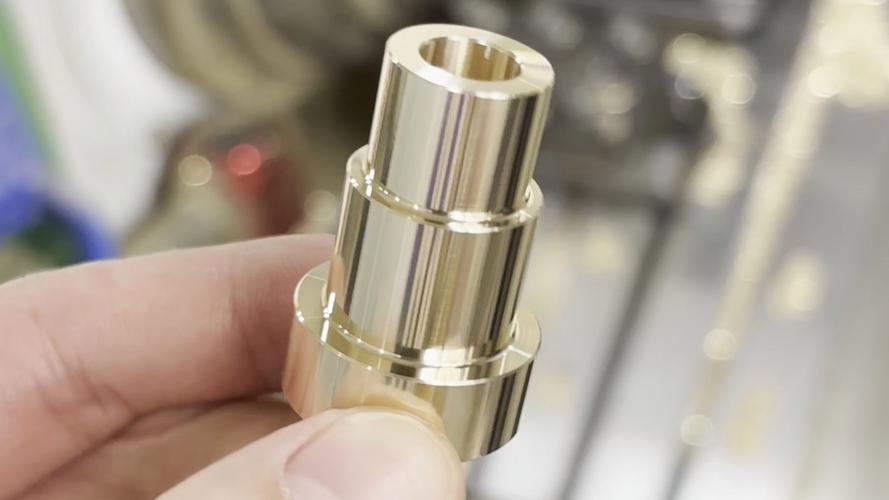
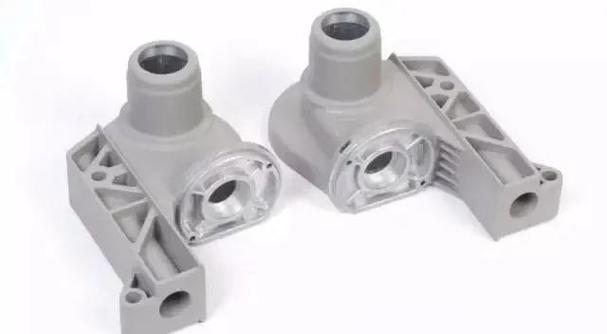
Commonly machined parts are custom precision components produced via computer numerical control (CNC) machining processes. For B2B procurement teams and engineers, these parts fall into five core categories: shaft-type parts, disc-type parts, box-type parts, plate-type parts, and complex curved surface parts. Each category has unique process requirements, material options, and tolerance standards to support applications across aerospace, automotive, electronics, and medical industries.
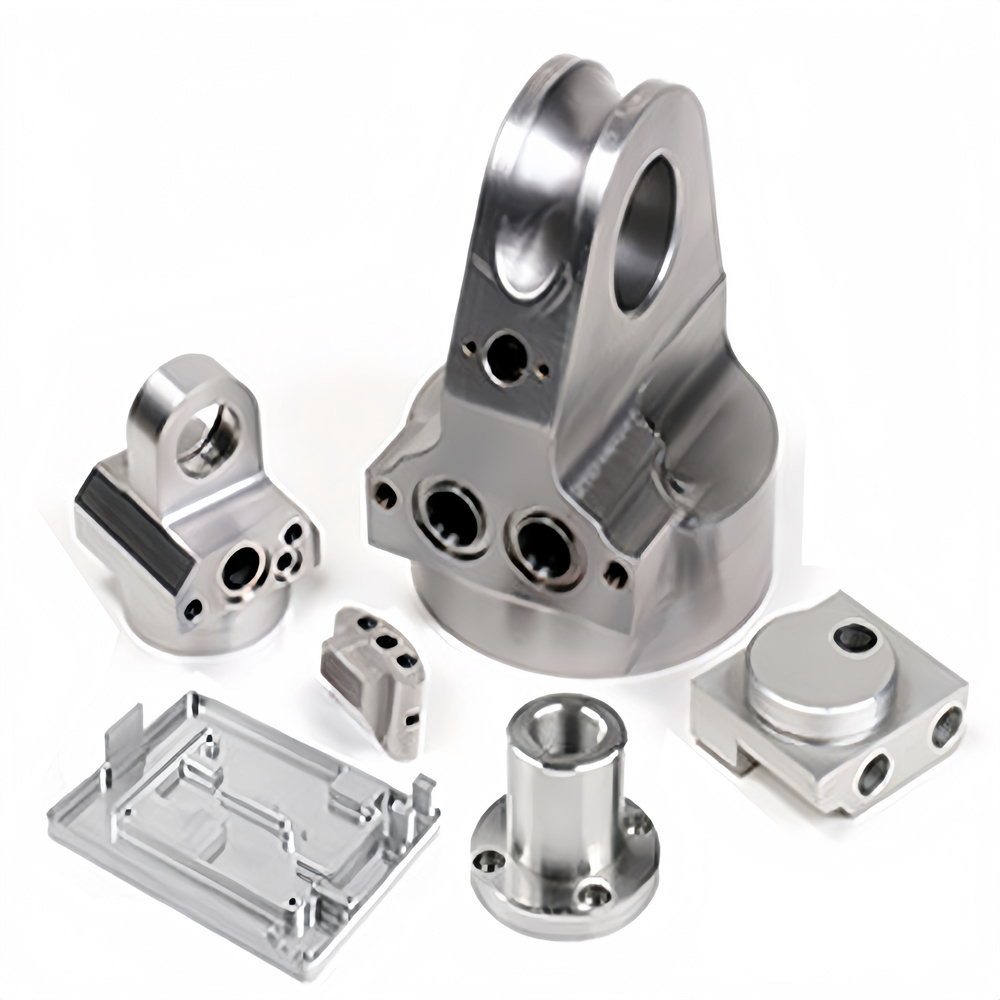
Core Types of Commonly Machined Parts
Understanding these part categories helps you quickly match your component to the right manufacturing process, avoid design flaws, and select a supplier with the right capabilities. Below is a breakdown of each type, with technical and procurement insights:
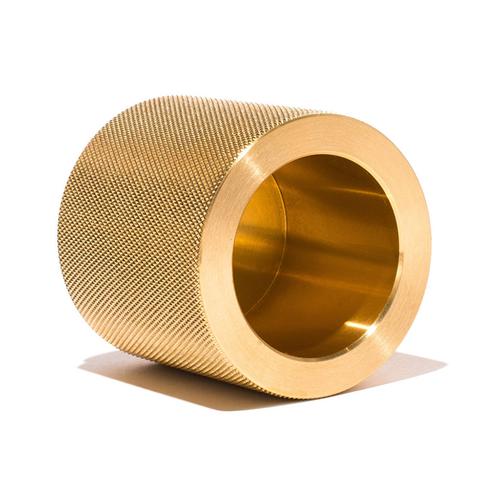
Shaft-Type Parts
Cylindrical components designed to transmit motion and power, such as motor shafts, drive shafts, pins, and bolts.
Key Requirements: High concentricity, surface finish, and rotational balance. Typically processed via turning and grinding.
Disc-Type Parts
Rotational or flat circular components, including gears, flanges, pulleys, and valve plates.
Key Requirements: End face flatness, bolt hole position accuracy, and for gears, precise tooth profile geometry.
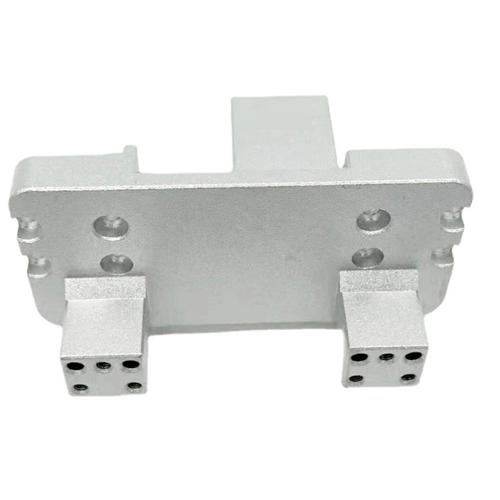
Box-Type Parts
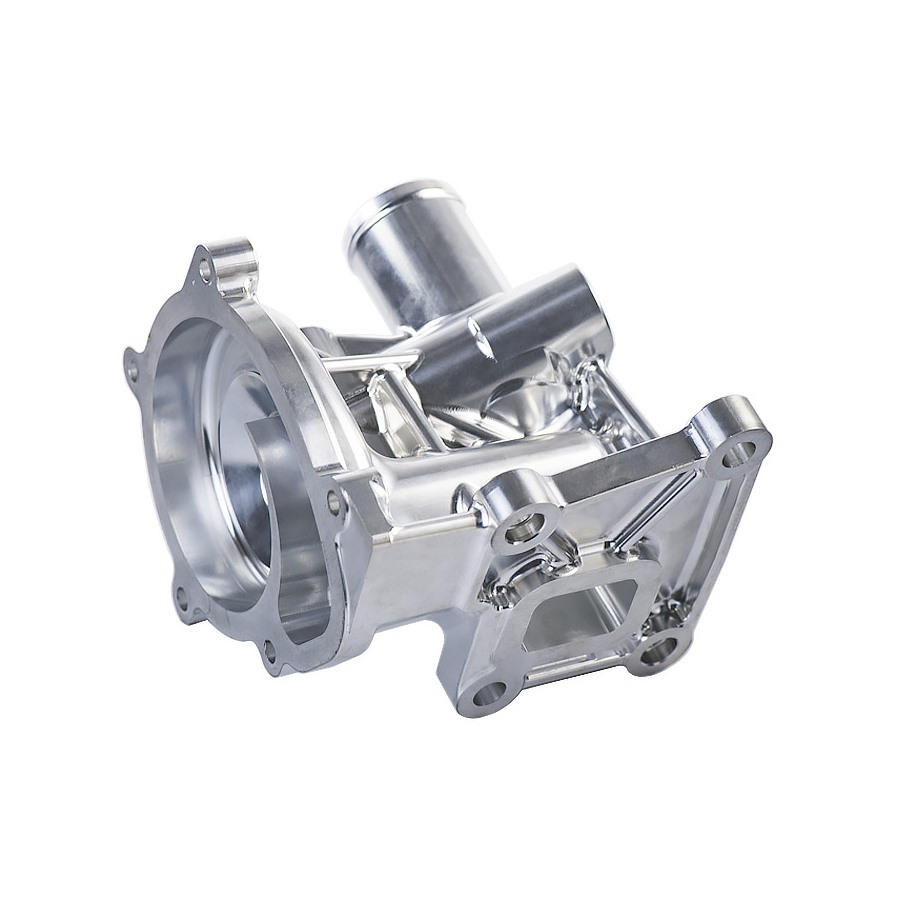
Housing or enclosure components with complex internal structures, such as engine blocks, gearbox housings, and pump bodies.
Key Requirements: Multi-hole system position accuracy, chamber dimension consistency, often requiring multi-axis machining.
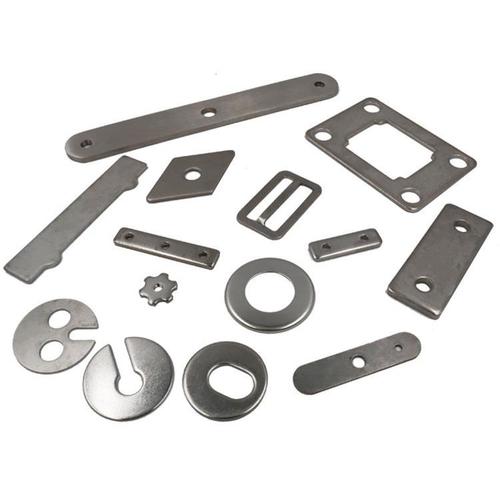
Plate-Type Parts
Flat, thin components, including heat dissipation plates, connection plates, and equipment base plates.
Key Requirements: Overall flatness, hole position accuracy, and consistent surface finish for sealing or mounting.
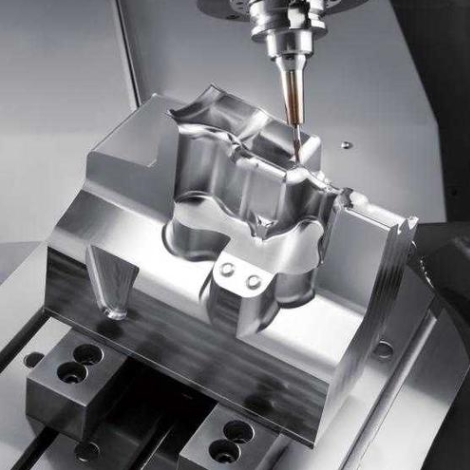
Complex Curved Surface Parts
Components with irregular 3D geometries, such as turbine blades, mold cavities, and aerospace structural parts.
Key Requirements: Precise 3D contour control, often requiring 5-axis machining to achieve accurate surface profiles.
Materials, Processes, and Tolerance Standards
Matching your part to the right process and material is critical to balancing cost, performance, and lead time. Below is a breakdown of the most common processes and their capabilities:
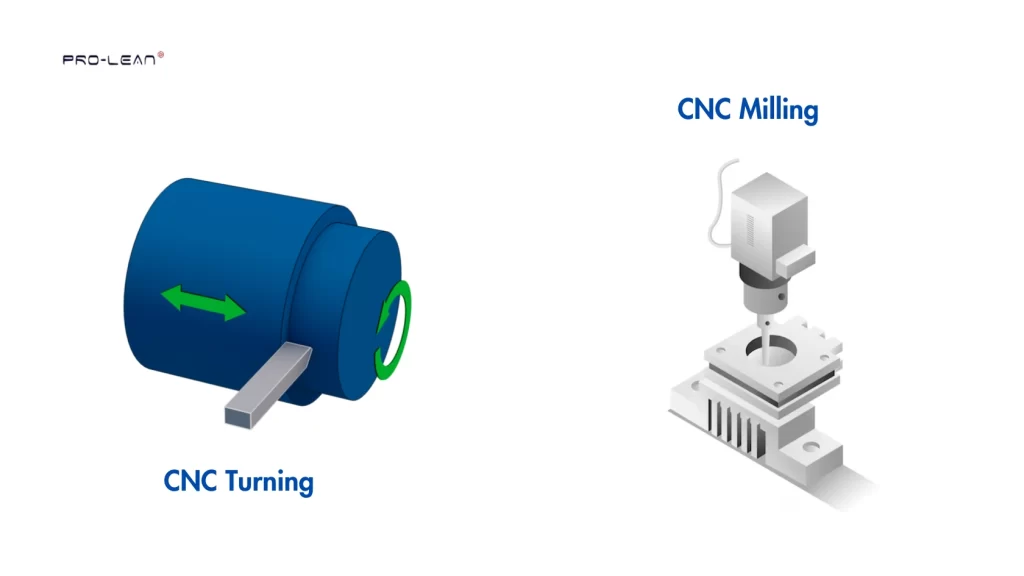
Turning vs. Milling: Choosing the Right Process
Two of the most common precision machining processes serve different part geometries and production needs:
- CNC Turning: The workpiece rotates while the cutting tool removes material. Ideal for cylindrical parts like shafts and pins, with fast cycle times for both low and high volume orders.
- CNC Milling: The cutting tool rotates while the workpiece moves along multiple axes. Perfect for prismatic parts with pockets, slots, and complex hole patterns, such as plate and box-type components.
For parts that require both cylindrical and prismatic features, we offer turn-mill combined processing to reduce setup time and improve accuracy.
Precision Tolerance Capabilities
At Goldcattle, we hold industry-leading precision to meet the most demanding application requirements. Our standard tolerance ranges are:
General Precision Machining
±0.02mm – ±0.1mm
High Precision Machining
±0.005mm – ±0.02mm
Ultra-Precision Grinding
Down to ±0.001mm
We also support full GD&T (Geometric Dimensioning and Tolerancing) inspection to ensure your parts meet form, orientation, and location requirements beyond basic linear tolerances.
Industry Applications of Machined Parts
Common machined parts power critical systems across a wide range of industries, each with unique quality and compliance requirements. Goldcattle has extensive experience serving these sectors:
Aerospace & Defense
We produce flight-critical components with strict traceability and precision requirements, including turbine blades, structural fittings, and hydraulic parts. Our 5-axis machining capabilities enable us to handle the most complex aerospace geometries.
Automotive
From prototype parts to high-volume production, we supply engine components, transmission parts, and custom automotive accessories. We support both traditional and electric vehicle (EV) manufacturing needs.
Electronics
Precision heat sinks, connector parts, and equipment housings for the electronics industry. We deliver tight tolerance parts with fine surface finishes to meet miniaturization and thermal management requirements.
Medical Devices
Biocompatible parts for surgical instruments, implantable devices, and medical equipment. We work with FDA-approved materials and maintain strict quality control to meet medical industry compliance standards.
Engineer’s Technical Insights
Beyond basic part classification, understanding the technical challenges of machining helps you design better parts and avoid costly manufacturing issues. Here are key insights from our engineering team:
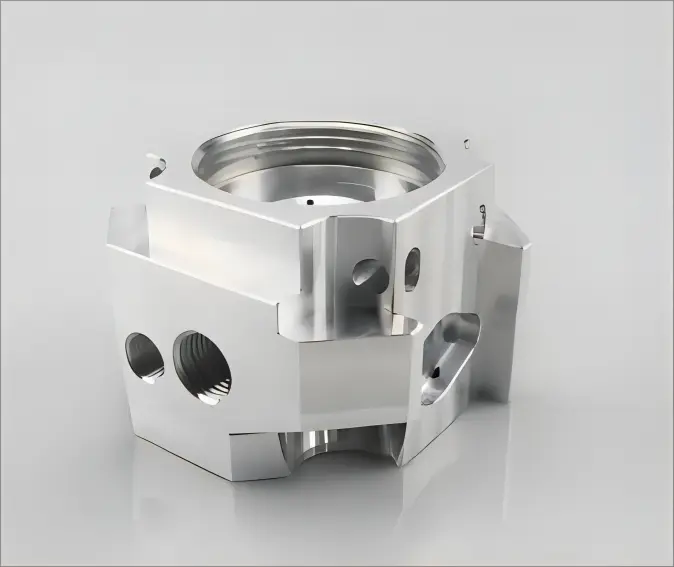
Why 5-Axis Machining Transforms Complex Part Production
Traditional 3-axis machining can only access 3 sides of a part in a single setup, requiring multiple re-fixturing steps for complex geometries. This introduces alignment errors and increases lead time.
5-axis machining allows the tool to rotate along 2 additional axes, enabling us to machine all 5 sides of a part in a single setup. This reduces setup time by up to 60%, eliminates alignment errors, and allows us to produce complex curved surfaces with unmatched precision. It’s the only viable process for many aerospace and mold components.
Why Thin-Wall Parts Are Prone to Deformation (And How We Fix It)
Thin-walled parts (walls thinner than 1.5mm for metals) are common in aerospace and electronics to reduce weight, but they face unique machining challenges:
- Cutting forces can cause the thin wall to deflect, leading to dimensional errors
- Residual stress from material processing can cause warping after machining
- Vibration during cutting can leave chatter marks on the surface
At Goldcattle, we use specialized fixturing, optimized cutting parameters, and stress relief processes to minimize deformation, ensuring thin-wall parts meet your tolerance requirements.
How Surface Treatments Affect Final Dimensions
Many buyers overlook the impact of surface treatments on final part dimensions, which can lead to out-of-tolerance parts after processing.
For example:
- Anodizing aluminum adds 0.01-0.03mm of layer thickness to the part surface
- Electroplating can add 0.005-0.02mm of thickness depending on the coating
- Painting adds even more, up to 0.1mm for thick coatings
Our engineering team accounts for these changes during the machining process, adjusting the raw part dimensions to ensure the final treated part meets your drawing requirements.
DFM Review & Supplier Selection Guide
Choosing the right supplier and optimizing your part design for manufacturability (DFM) can reduce your production cost by 20-30% and cut lead time by half. Here’s what you need to know:
What is DFM, and Why Does It Matter?
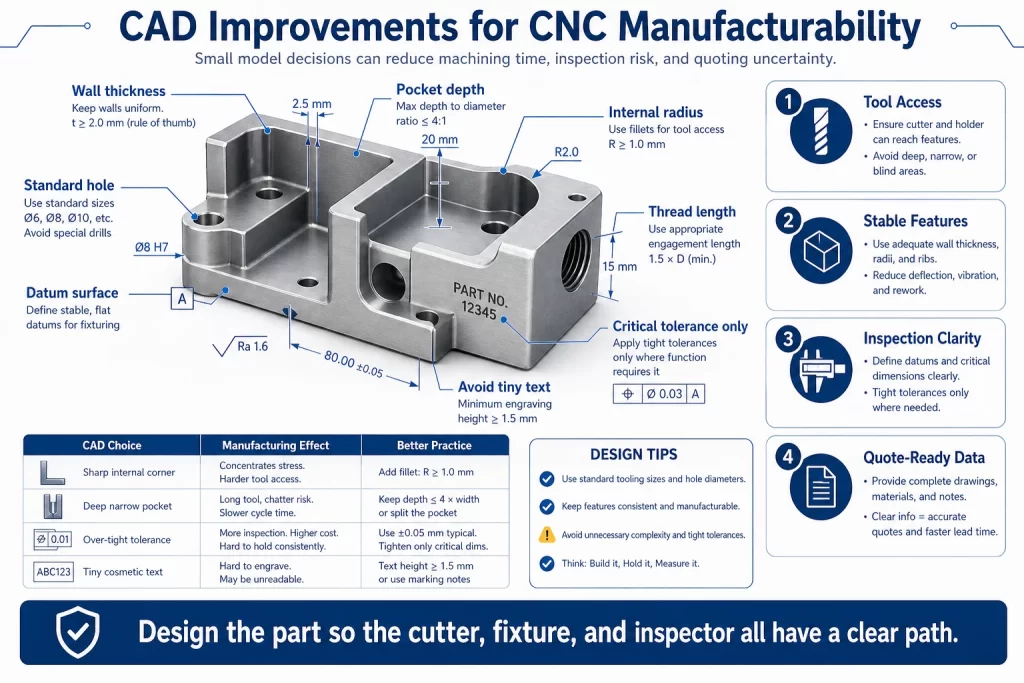
Design for Manufacturability (DFM) is the process of reviewing your part design before production to identify potential manufacturing issues, optimize features, and reduce cost and lead time.
A professional DFM review can catch issues like:
- Unnecessarily tight tolerances that increase cost
- Too-thin walls that cause deformation
- Internal corners that are too small for standard tools
- Features that require multiple setups or special tools
At Goldcattle, we offer free DFM review for all new projects, helping you optimize your design before production starts.
How to Choose the Right Machining Supplier
When sourcing custom machined parts, look for these key capabilities to ensure a smooth partnership:
Precision Capability
Can they hold the tolerance your part requires? Goldcattle delivers up to ±0.005mm precision.
Multi-Axis Capacity
Do they have 5-axis machines to handle your complex parts without multiple setups?
Flexible MOQ
We support orders from 1 prototype to 10,000+ mass production parts.
Fast Lead Time
Our standard lead time is 3-15 days, with expedited options available.
DFM Support
Do they offer free design review to help you optimize your part?
Quality Certification
ISO 9001 certified quality system to ensure consistent part quality.
Frequently Asked Questions
What parts are best suited for CNC machining?
CNC machining is ideal for custom parts that require high precision, tight tolerances, and complex geometries. This includes all the common part types we covered: shafts, gears, housings, heat sinks, and complex aerospace components. It works for both low-volume prototypes and high-volume production.
What tolerance can Goldcattle hold for machined parts?
Our standard precision machining can hold tolerances as tight as ±0.005mm for critical features. For ultra-precision applications, we can achieve down to ±0.001mm with grinding processes. We also support full GD&T inspection to meet your specific geometric requirements.
How do I know if my part design is manufacturable?
The easiest way is to send us your CAD drawing for a free DFM review. Our engineering team will review your design, identify any potential manufacturing issues, and provide suggestions to optimize your part for cost, quality, and lead time, all at no cost to you.
What is the minimum order quantity (MOQ) for custom machined parts?
We have no strict MOQ. We support orders from 1 single prototype part for testing, up to 10,000+ parts for mass production. This makes us ideal for both product development teams and large manufacturing companies.
How long does it take to get my custom machined parts?
Our standard lead time for most parts is 3-15 days, depending on part complexity and order quantity. For urgent prototype orders, we offer expedited processing that can deliver parts in as little as 3 business days.
Do you offer free DFM review for new projects?
Yes! We provide free, no-obligation DFM review for all new projects. Our engineering team will analyze your CAD design, point out any potential manufacturing issues, and suggest design optimizations to reduce cost and improve quality before you place an order.
Ready to Get Started on Your Custom Machined Parts?
Upload your CAD drawing today, and get a free DFM review + formal quote within 24 hours.