
Precision-molded ABS (Acrylonitrile Butadiene Styrene) parts for prototyping, low-volume and production runs — from material selection and DFM review through tooling, molding, finishing and inspection. If you have already decided ABS is the right material, we engineer the part and the tool to get the most out of it.
Typical engineering response within 1–2 business days · NDA available
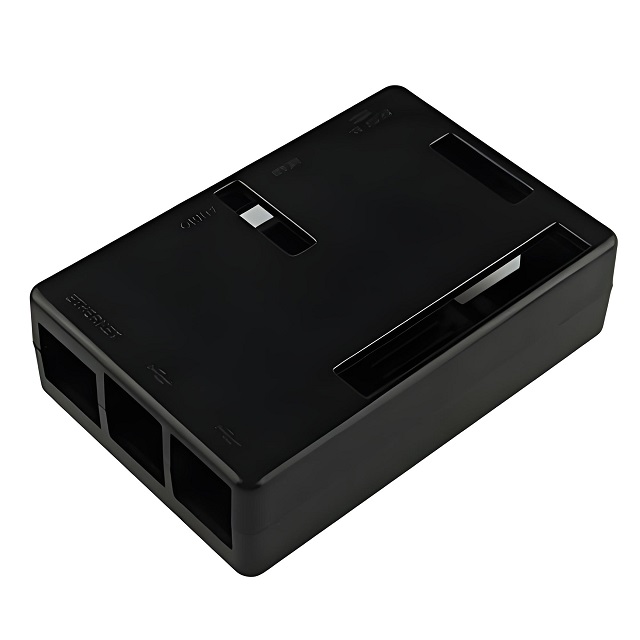
Custom ABS Plastic Molding from Material to Finished Part
This page is for buyers who have already selected ABS (or are close to it) and need a supplier who can actually mold it well — consistently, with the right surface, color and dimensional control. It is not a generic "what is ABS" material wiki, and not a generic injection-molding service page. The path here is: ABS material → molding → part design (DFM) → quality → application → quote.
ABS is an amorphous engineering thermoplastic valued for a balanced mix of impact strength, stiffness, surface finish and cost. It flows well, paints and plates cleanly, and holds detail — which is why it is everywhere from enclosures to automotive trim. The questions below are the ones a procurement engineer actually asks.
Why Choose ABS for Your Molded Part?
ABS earns its place through a practical balance, not a single headline property. These are the reasons it keeps being specified.
Strength vs stiffness
Good impact resistance with enough rigidity for structural housings and brackets without going brittle.
Excellent flow & molding
Low melt viscosity fills thin walls and fine detail; forgiving enough for complex geometry.
Superior surface quality
Takes polish, texture, paint and electroplating cleanly — ideal for visible consumer and automotive parts.
Cost-effective
A broadly available, well-understood resin with a favorable price-to-performance ratio at volume.
Holds fine features
Bosses, snap-fits, ribs and textured surfaces reproduce reliably cycle to cycle.
Blendable
Easily modified — flame-retardant, glass-filled, heat-resistant, or blended with PC for higher performance.
When ABS Is NOT the Best Choice
A credible supplier tells you when ABS will underperform. If your part lives in these conditions, we will say so and propose the alternative.
| Condition | ABS behavior | Better alternative |
|---|---|---|
| Long-term outdoor / UV exposure | Yellowing & embrittlement without stabilization | ASA · weatherable grades |
| Continuous high temperature (>~90–100 °C) | Softens / loses dimensional stability | PC · PA · PPS |
| Strong solvents / chemicals | Stress cracks with some solvents | PP · PE · PVDF |
| Open-flame / strict flammability code | Needs FR additive; base ABS burns | FR-ABS · PC/FR |
| Transparent part required | Naturally opaque | PC · PMMA · clear blends |
| Very low moisture absorption critical | Moderate absorption vs PA | POM · PBT |
Where ABS is borderline, PC/ABS blends and modified grades close most of the gap — covered in the grades section. For genuinely wrong-fit parts we will recommend the right material rather than forcing ABS.
Common ABS Grades We Mold
"ABS" is a family. We select the grade against your property, regulatory and cosmetic needs — and confirm the exact resin at quotation.
GP / Medium-impact ABS
- Balanced stiffness & cost
- Housings, enclosures, appliance bodies
- Good surface for paint/print
High-impact ABS
- Higher toughness for drops/impact
- Tool handles, protective parts
- Slightly lower stiffness
FR-ABS
- UL-rated for electronics enclosures
- Meets regulatory flammability needs
- Confirm rating per application
Heat-resistant ABS
- Higher HDT for warm environments
- Automotive interiors, lighting
- Confirm temp grade at quotation
Glass-filled ABS
- Improved stiffness & dimensional stability
- Structural brackets
- Higher wear on tooling
PC/ABS
- Higher heat & impact than ABS
- Automotive, E/E, thin-wall
- Premium balance grade
ABS Parts We Mold
Enclosures & Housings
Electronic enclosures, control boxes, equipment covers — ABS's signature application.
Automotive Trim
Interior trim, dash components, pillar covers, clips and brackets.
Appliance Parts
Housings, handles, knobs and panels for white goods.
Consumer Products
Housings, housings accessories, toy and leisure components.
Medical & Lab
Non-implant housings and device bodies (grade/regulatory confirmed per project).
Industrial Components
Brackets, guards, jigs and protective covers.
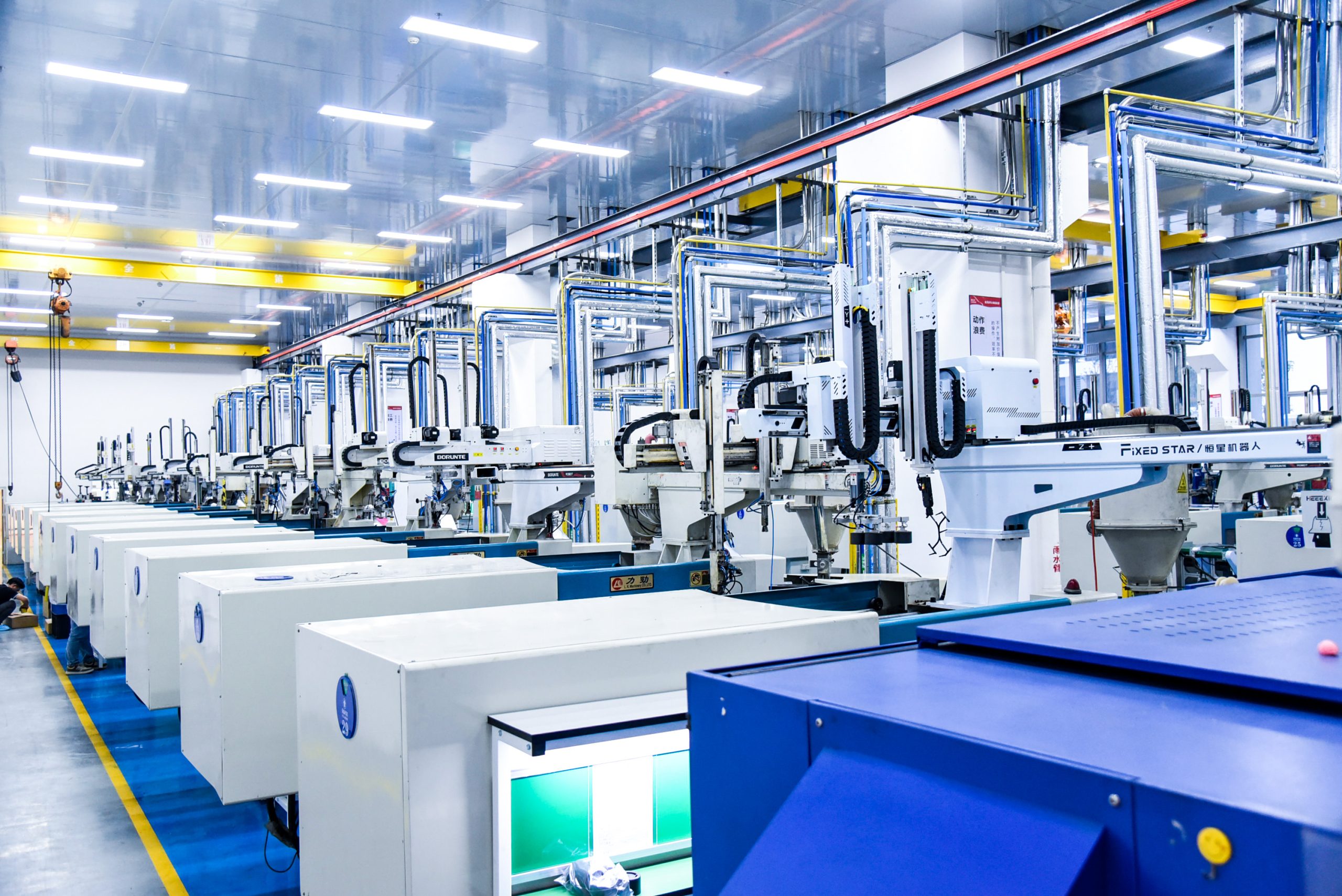
ABS Molding DFM — Design for Manufacture
ABS is forgiving, but good parts come from good DFM. We review these before tooling so the part fills cleanly, ejects without stress and holds dimensions.
Wall thickness
ABS molds best with a consistent wall — typical molded wall 1.1–3.5 mm. Keep walls uniform to avoid sink and warpage; we size them to function, not a single fixed number.
Draft angle
0.5–1° per side is a practical minimum for clean release from the mold; more for textured surfaces.
Corner & rib radii
Generous radii reduce stress concentration and sink; ribs sized to ~0.5–0.7× wall to avoid sink marks.
Bosses & holes
Designed for positioning and reinforcement; wall thickness around bosses controlled to prevent sink.
Shrinkage
ABS is amorphous with low, predictable shrinkage (~0.4–0.9%) — good dimensional repeatability. Molded-in allowances set at tooling.
Gate & ejector placement
Gate location drives fill and weld lines; ejector pins placed to avoid cosmetic faces.
ABS DFM Checklist
ABS Material Preparation & Drying
ABS is hygroscopic — absorbed moisture causes splay, silver streaks and surface defects if not dried. Proper drying before molding is a standard, non-negotiable step.
| Parameter | Typical guidance (confirm with resin datasheet) |
|---|---|
| Drying requirement | Required — dry before molding |
| Typical temperature range | ~80–90 °C (grade-dependent) |
| Typical dwell time | ~2–4 hours (resin & moisture-dependent) |
| Moisture target | Below the resin supplier's recommended limit |
ABS Injection Molding Tooling
ABS is easy on tooling, so mold design focuses on filling, cooling and finish rather than extreme wear. We build prototype, low-volume and production molds to the standard engineering path.
| Tooling aspect | What we apply for ABS |
|---|---|
| Mold type | Prototype · single/multi-cavity · 2-plate / 3-plate · hot/cold runner |
| Steel | P20 / 718 for most runs; hardened steel for high volume |
| Cooling | Balanced channels for cycle time & warpage control |
| Surface | Polished · MT-textured · SPI/VDI reference |
| Gate | Selected against part geometry & cosmetics |
The mold is the asset. See our Custom Plastic Injection Mold page for the full tooling path (DFM → steel → T1 → release), and our Injection Molding Service for running your parts in volume.
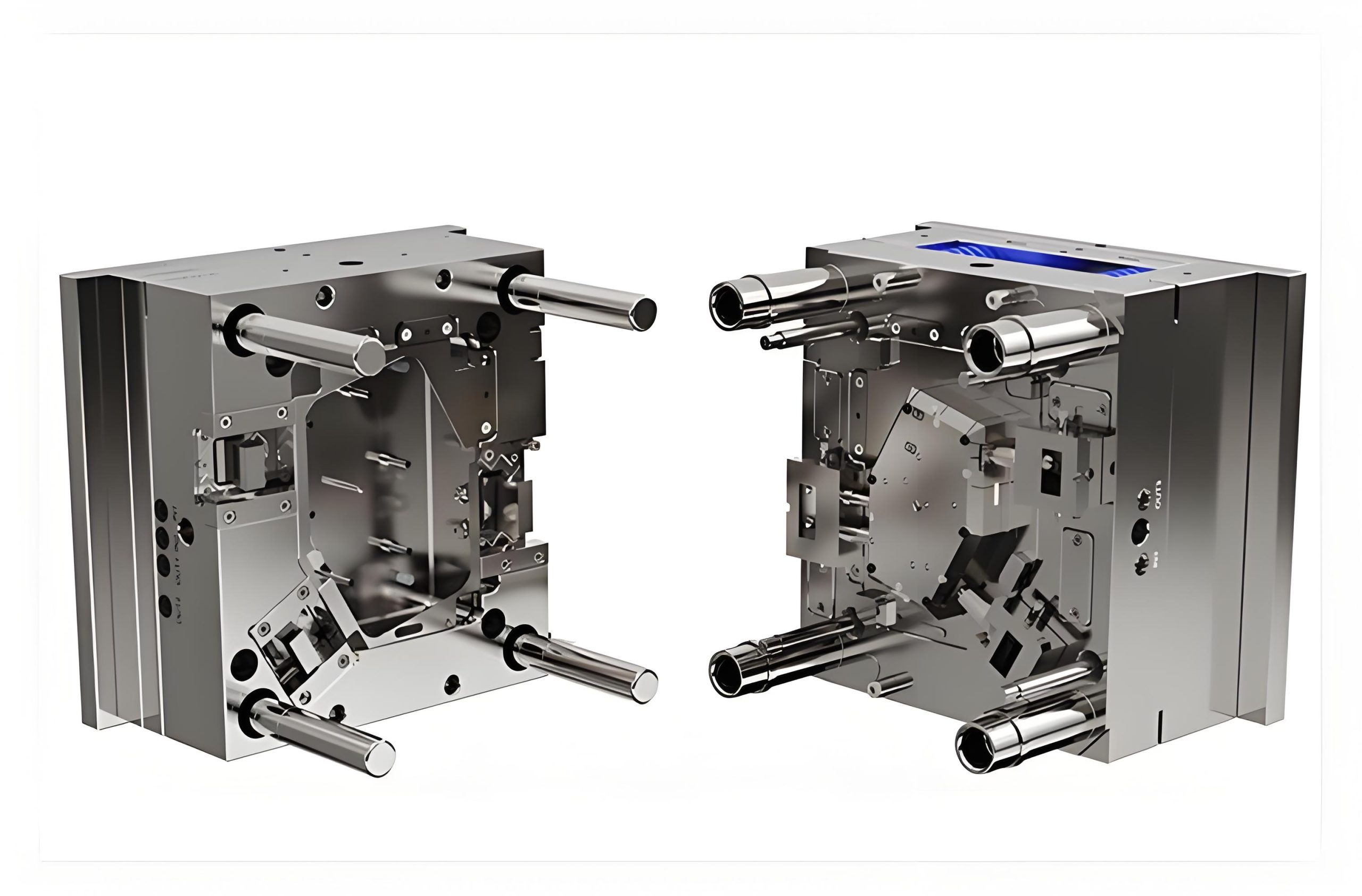
ABS Surface Finishes
ABS is one of the best resins for visible finishes. We cover the in-mold and post-mold options your part needs.
Polished / gloss
Mirror or high-gloss cavity for shiny consumer and automotive surfaces.
Textured (MT / VDI)
Matte or patterned texture hides flow marks and adds grip.
Painting / coating
ABS accepts paint and soft-touch coatings reliably.
Electroplating
Chrome/metal plating for decorative automotive & trim parts.
Printing / laser
Silk-screen, pad-print and laser marking for logos & legends.
Natural (as-molded)
Clean as-molded surface — often enough for internal parts.
ABS Color & Coloring
ABS is colored by masterbatch or pre-compounded resin, so you get consistent, spec-matched color run to run. Natural (off-white) is also available where color is added later by painting.
Standard colors
Black, white and common house colors from masterbatch.
Custom-matched
Pantone / RAL / customer sample matched per batch.
Special effects
Metallic, pearlescent and UV-stabilized color options.
ABS Shrinkage and Molded Tolerance
We do not quote injection-molded ABS at CNC-style ±0.01 mm — that is not how molded plastic behaves. ABS is amorphous with low, predictable shrinkage, giving good repeatability, but tolerance must be specified against the molding process.
| Attribute | Typical molded benchmark (confirm at quotation) |
|---|---|
| Shrinkage | ~0.4–0.9% (amorphous, grade-dependent) |
| General molded tolerance | ±0.1–0.3 mm on typical dimensions |
| Tight / critical features | Tighter only by design review & process control |
| Dimensional repeatability | Good cycle-to-cycle (low, stable shrinkage) |
Common ABS Molding Defects & How We Prevent Them
Most molding defects are designed out before steel is cut. Here is the short list and the control we apply.
| Defect | Typical cause | Prevention / control |
|---|---|---|
| Sink marks | Thick sections, poor packing | Uniform wall, rib sizing, packing pressure |
| Warpage | Differential shrinkage, cooling | Balanced cooling, gate placement, DFM |
| Weld / flow lines | Multi-gate fill, cold material | Gate design, melt temp, flow analysis |
| Splay / silver streaks | Moisture, degradation | Proper drying, barrel temp control |
| Short shots | Poor fill, thin walls | Flow analysis, gate/runner sizing |
| Burn marks | Trapped gas | Venting, injection speed |
| Dimensional drift | Process variation | Process monitoring, first-article control |
Our ABS Injection Molding Process
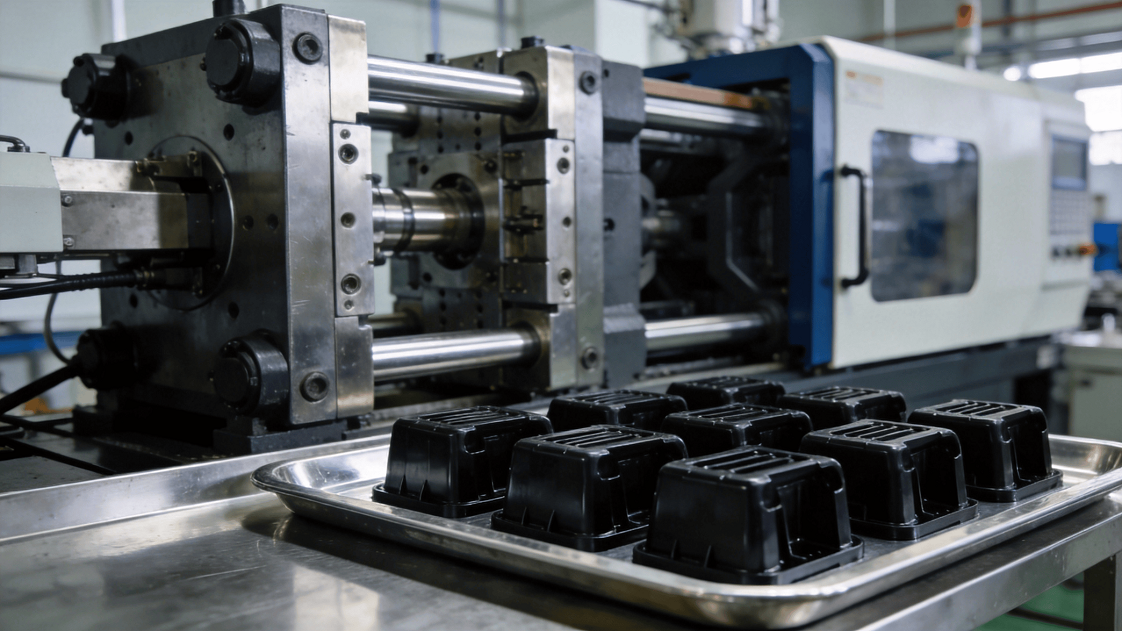
Prototype, Pilot and Production for ABS Parts
ABS is ideal for fast prototyping because the production material can be used from the first sample. We scale you from one part to volume without re-qualifying the material.
Prototype (1+ pcs)
ABS parts from prototype tooling or bridge tooling — validate fit, function and finish in the real material. MOQ 1 piece for sampling.
Pilot / low volume
Small batches to validate assembly and market before committing to hardened production tooling.
Production
Hardened multi-cavity tooling for stable, repeatable volume molding with process control.
Because the same ABS grade runs from prototype through production, your validation samples are representative of the final part — not a stand-in material.
ABS Molding Quality Control & Documentation
Dimensional
First-article (FAI) measurement vs drawing; critical dimensions tracked across runs.
Visual
Surface finish, color, flow/sink/weld checks against the approved sample.
Material
Resin grade verification and, where required, compliance documentation (RoHS, FR rating).
Process
Process parameter monitoring for repeatability on volume runs.
On request and agreed at quotation, we provide quality documentation such as PPAP (Production Part Approval Process) packages, COC (Certificate of Conformance) and FAI (First Article Inspection) reports — scoped to your program's requirement, not a generic claim.
Industries & Applications for ABS Molding
Electronics
Enclosures, connectors, covers, device housings.
Automotive
Interior trim, dash parts, clips, brackets, lighting.
Appliances
Housings, handles, knobs, panels.
Consumer
Product housings, leisure and toy components.
Medical
Non-implant device bodies (grade/regulatory confirmed).
Industrial
Guards, brackets, jigs, protective covers.
Medical and food-contact applications are quoted only where material certification and process controls are confirmed — we will not overstate compliance.
Custom ABS Molding Case Studies
Representative project profiles built on industry-benchmark parameters. Exact figures are confirmed against the actual drawing, grade and volume at quotation.
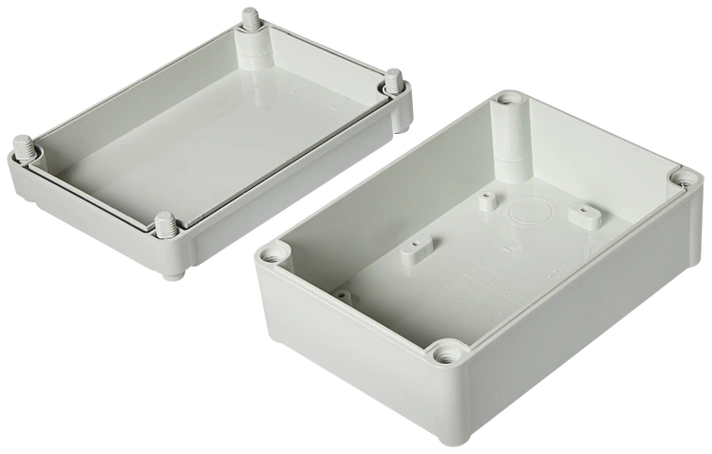
ABS Electronic Enclosure
- Material
- GP ABS (black, matte texture)
- Process
- Injection molding
- Tooling
- 2-cavity production mold
- Finish
- MT11000 texture + pad print
- Wall
- ~2.0 mm uniform
- Tolerance
- ±0.15 mm (benchmark)
- Challenge
- Thin-wall fill + sink-free bosses
- Solution
- DFM wall/rib tuning + gate placement
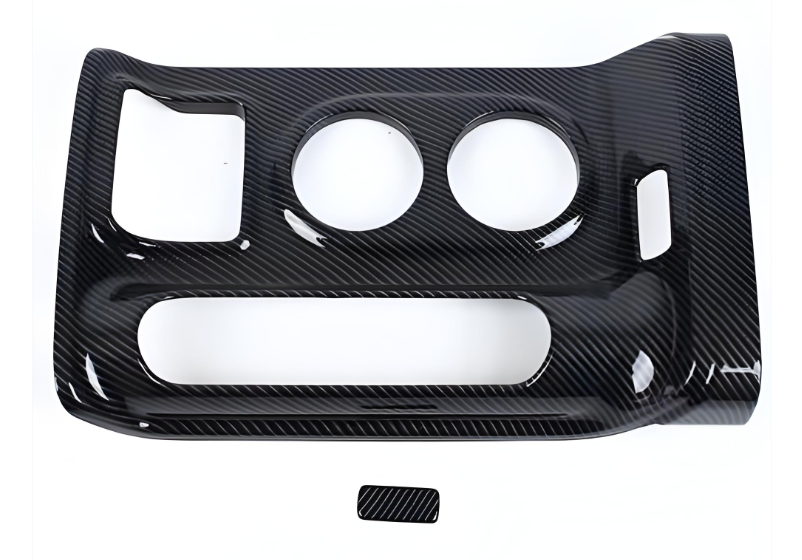
ABS Interior Trim Component
- Material
- High-impact ABS
- Process
- Injection molding
- Tooling
- 4-cavity hot-runner mold
- Finish
- Soft-touch coating
- Wall
- ~2.5 mm
- Tolerance
- ±0.2 mm (benchmark)
- Challenge
- Warpage on large flat area
- Solution
- Balanced cooling + rib structure
What Affects Custom ABS Molding Cost?
We do not quote "ABS parts from $XX/pc". Cost is engineered from the project — material, tooling, volume and finishing.
Send the CAD model, annual volume, ABS grade and finish — we return a tooling + per-part assessment.
ABS Molding Tooling and Production Lead Time
ABS tooling lead time follows our standard injection-mold path (these are our planning ranges — your part's complexity sets the real dates, confirmed at quotation).
| Project stage | Typical timeline (our benchmark) |
|---|---|
| DFM review | 2–5 business days |
| Tooling design | 5–10 days |
| Tool manufacturing | 15–35 days (aluminum); steel longer |
| First trial | 3–7 days |
| Modification | 5–10 days |
| Production (per batch) | 10–25 days after approval |
ABS vs PC/ABS vs Other Plastics
ABS is rarely the only option. This is how it compares on the properties buyers weigh — so you can confirm ABS is right, or pick the better fit.
| Property | ABS | PC/ABS | PC | PP | PA (Nylon) | POM |
|---|---|---|---|---|---|---|
| Impact strength | Good | Very good | Excellent | Moderate | Good | Good |
| Stiffness | Good | Good | High | Low–mod | High | High |
| Heat resistance | Moderate | Better | High | Moderate | High | High |
| Surface finish | Excellent | Excellent | Excellent | Fair | Fair | Good |
| Paint / plate | Excellent | Good | Good | Poor | Poor | Poor |
| Chemical resist. | Moderate | Moderate | Moderate | Excellent | Good | Good |
| Moisture absorp. | Moderate | Moderate | Low | Low | High | High |
| Cost | Low–mid | Mid | High | Low | Mid–high | Mid |
If ABS looks borderline on heat, chemicals or transparency, PC/ABS, PC or PP/PA may fit better. We help you confirm the choice — see our Injection Molding Service for the full material and process options.
What Do We Need to Quote Your ABS Part?
A project-type RFQ, not just a name/email box. Share as much as you can; the more detail, the tighter the quote.
Required
- 3D CAD model
- 2D drawing with tolerances
- Part dimensions
- Estimated annual volume
- ABS grade / property target
- Application & duty (e.g. heat, UV, chemical)
- Surface finish & color
- Project stage (concept / prototype / production)
Helpful
- Existing sample part
- Target delivery date
- Regulatory needs (RoHS / FR rating)
- Secondary operations needed
- Quality docs (PPAP / COC / FAI)
- Packaging requirements
- Assembly information
Accepted formats: STEP · STP · IGES · X_T · SolidWorks · PDF · DWG
Frequently Asked Questions
What is custom ABS plastic molding?
Custom ABS plastic molding is injection molding of parts in ABS (Acrylonitrile Butadiene Styrene) — an amorphous engineering thermoplastic — to your specific design, from tooling through molding, finishing and inspection. This page covers ABS specifically, not the generic injection-molding process.
Is this ABS injection molding or another process?
It is injection molding of ABS. We do not use compression, rotational or thermoforming for these parts — injection molding is what gives ABS its fine detail, dimensional repeatability and surface quality.
What are the main advantages of ABS for molded parts?
A practical balance of impact strength, stiffness, excellent surface finish, good flow for thin walls, and cost-effectiveness — plus it paints and plates cleanly. That is why it dominates enclosures and trim.
When should I NOT use ABS?
Avoid base ABS for long-term outdoor/UV exposure (yellows, embrittles), continuous high temperature (>~90–100 °C), strong solvents, open-flame code without FR, or transparent parts. In those cases ASA, PC, PC/ABS, PP or PA are usually better — we will tell you which.
What ABS grades can you mold?
General-purpose, high-impact, flame-retardant (FR), heat-resistant, glass-filled and PC/ABS blends. The exact grade is matched to your property, regulatory and cosmetic needs and confirmed at quotation.
Does ABS need drying before molding?
Yes — ABS is hygroscopic and must be dried before molding to avoid splay and silver streaks. We dry to the specific grade's resin datasheet specification (typical ~80–90 °C for ~2–4 hours, grade-dependent), not a single guessed number.
What tolerance can ABS molding achieve?
ABS is amorphous with low, predictable shrinkage (~0.4–0.9%), giving good repeatability. General molded tolerance is typically ±0.1–0.3 mm; tighter figures only by design review and process control. We do not quote molded ABS at CNC-style ±0.01 mm.
What wall thickness and draft are recommended for ABS?
Typical molded wall 1.1–3.5 mm with uniform thickness to avoid sink/warpage; draft 0.5–1° per side minimum (more for textured surfaces). Walls are sized to the part's function, not a fixed number.
Can ABS parts be painted or electroplated?
Yes. ABS is one of the best resins for visible finishes — paint, soft-touch coating, electroplating, printing and laser marking. Surface readiness is considered at DFM.
How much does custom ABS molding cost?
Driven by ABS grade, part size/weight, geometry, tooling (cavities/steel/runner), volume, finish, color and secondary ops — not a flat rate. Send the CAD; we return a tooling + per-part assessment.
What is the lead time for ABS tooling?
Our standard injection-mold path: DFM 2–5 days, tooling design 5–10 days, mold manufacturing 15–35 days for aluminum (steel longer), first trial 3–7 days, modification 5–10 days. Confirmed per project.
Can you provide PPAP, COC or FAI documentation?
Yes, scoped to your program's requirement and agreed at quotation — including PPAP packages, Certificate of Conformance (COC) and First Article Inspection (FAI) reports.
Can I start with a prototype in the real ABS material?
Yes. Because the same ABS grade runs from prototype through production, your samples are representative of the final part. We offer prototype, pilot and production phases with MOQ 1 piece for sampling.
ABS or PC/ABS — which should I choose?
If you need higher heat, impact or a tougher blend, PC/ABS is often the better fit while keeping good finish. If cost and surface are priorities and duty is moderate, ABS is usually enough. We help confirm against your duty.
What files do I need to request a quote?
3D CAD (STEP/STP/IGES/X_T/SolidWorks) plus a 2D PDF/DWG with tolerances, dimensions, annual volume, ABS grade/property target, finish, color and application. The more detail, the tighter the quote.
Request a Custom ABS Molding Quote
You've chosen ABS — now mold it well. Send your 3D CAD and drawing. We return a DFM read, a recommended grade, tooling approach and a project-specific cost assessment — engineered, not estimated. The mold is yours.
Explore the plastic manufacturing topic cluster
- Plastic Injection Molding Service
- Custom Plastic Injection Mold
- CNC Machining
- Manufacturing Services
Recommended Reading
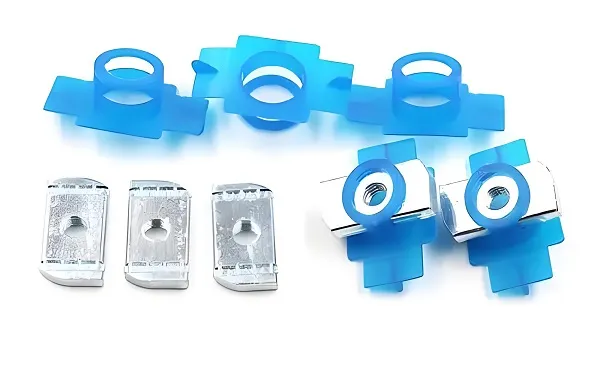
Custom Plastic Wing Nuts Process
Plastic wing nuts, also known as plastic wing nuts or plastic nuts, have a wide range of applications in several industries as they are commonly used to connect two or more…
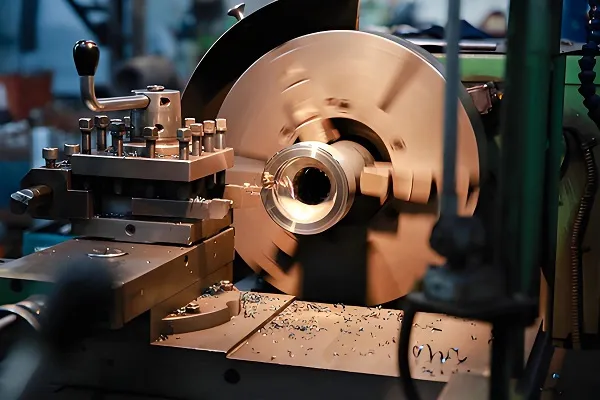
Wire Electrical Discharge Machining Services
Wire Electrical Discharge Machining (WEDM) is a non-contact machining method that utilizes fine metal wires as electrodes to remove metal materials through the high-temperature energy generated by electric spark discharge. Since its…
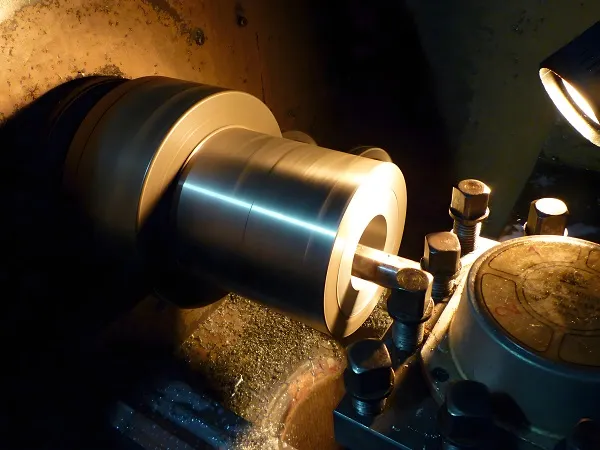
CNC machining services: a driver for manufacturing
Custom CNC Machining Services in China Precision CNC Parts From Prototype to Production Goldcattle provides CNC milling, CNC turning and 5-axis machining services for aerospace, medical, robotics and industrial…
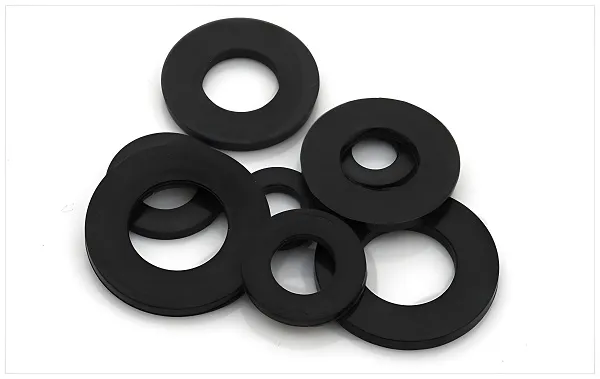
Custom Black Nylon Gaskets | PA6/PA66
Home · CNC Machining · Cam & Roller Components Motion Components Custom CNC Cam & Roller Components Custom cams, cam followers, roller followers, track rollers and camshafts manufactured to your…
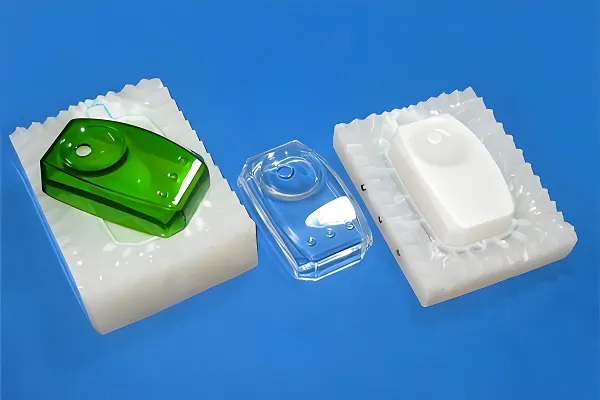
Custom Silicone and Plastic Molding
Not sure whether to choose plastic injection molding or silicone molding? With 20 years of custom molding manufacturing experience, this guide helps engineers and sourcing managers select the right material…
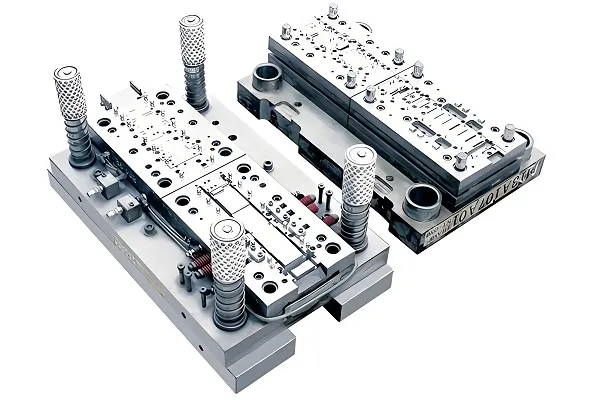
Custom Prototype Stamping Dies
A prototype stamping die is a key tool used in the manufacturing industry to produce parts or assemblies by molding raw materials, such as sheet metal, into a desired shape through the…