Custom Acetal Parts Manufacturer
CNC machining and injection molding of POM/Acetal/Delrin® components for low-friction, wear-resistant and dimensionally stable applications. Founded in 1998, we supply OEM/ODM precision plastic parts to buyers worldwide.
Accepted files: STEP, IGES, STL, DWG, DXF, PDF, JPG
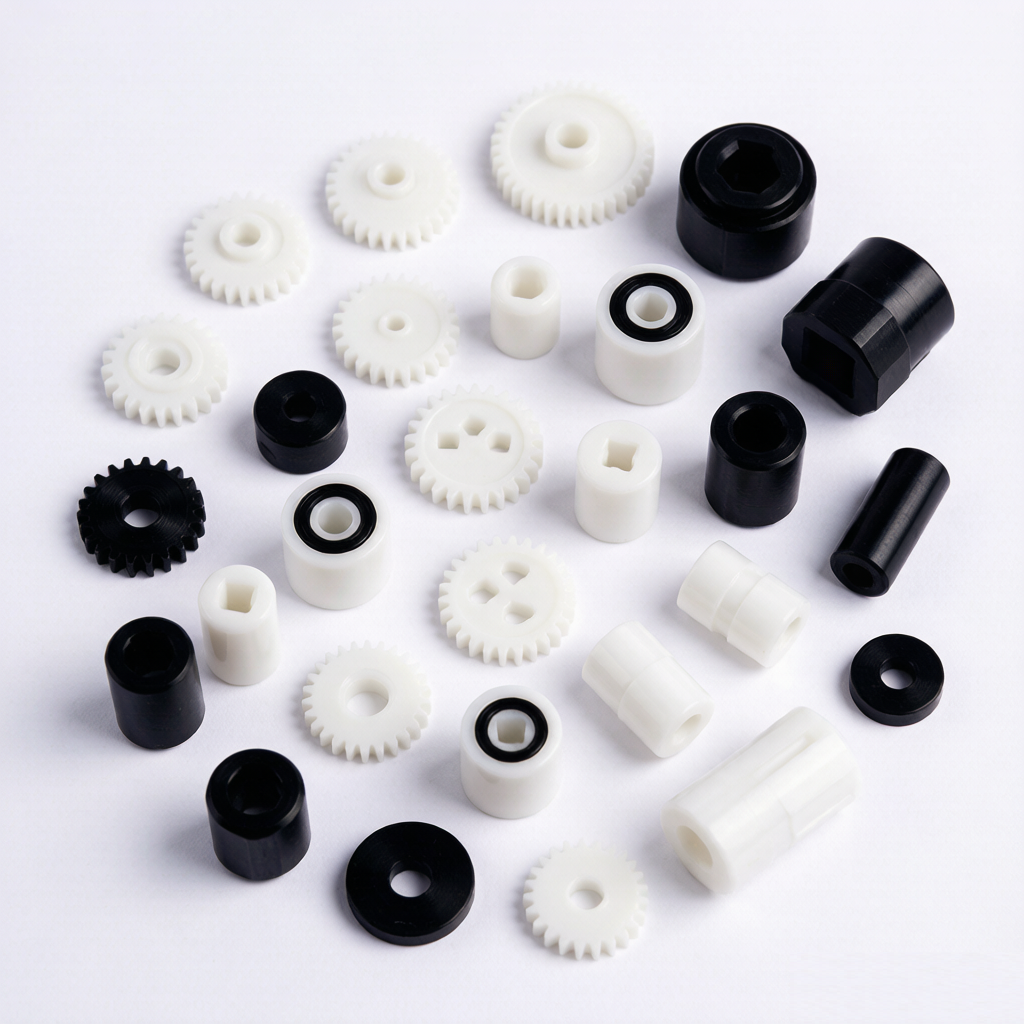 POM / Acetal / Delrin®
Custom Acetal (POM) Parts Manufacturer
We produce custom acetal parts from your 2D drawings or 3D CAD models. Our default route is CNC machining for precision, complex geometry and low-to-medium volumes; we add injection molding when annual volumes justify tooling and part design is suited to the process.
| Capability | CNC milling/turning (3, 4, 5-axis) + plastic injection molding + mold making |
|---|---|
| Materials | POM-H (homopolymer), POM-C (copolymer), Delrin®-equivalent grades; natural/white/black standard colors |
| Tolerances | Typical ±0.01 mm; tight features to ±0.005 mm where qualified |
| Equipment | 100+ machines across CNC, molding, mold making, 3D printing, die casting and sheet-metal operations |
| Inspection | CMM, optical comparators, digital micrometers/calipers, surface roughness testers |
| Files accepted | STEP, IGES, STL, DWG, DXF, PDF, JPG |
| Delivery | Prototype: 3–7 days; low-volume: 7–20 days; mass production: 15–25 days |
| MOQ | 1 piece for prototypes/samples; production MOQ confirmed per project |
Why Choose Acetal / POM for Precision Parts
Acetal (polyoxymethylene / POM) is one of the most machinable engineering thermoplastics. It combines rigidity, low moisture absorption and a low coefficient of friction in a single material family.
Low friction & self-lubricating
Low coefficient of friction against steel and itself makes POM ideal for sliding, rotating and reciprocating parts without added grease.
Excellent wear resistance
High hardness and fatigue resistance allow POM to outlast many unfilled plastics in bushings, rollers and gear applications.
Dimensional stability
Low moisture absorption means parts hold tight tolerances across humidity changes — an advantage over nylons in precision assemblies.
High stiffness & strength
High flexural modulus and tensile strength produce rigid, creep-resistant components for structural and load-bearing uses.
Chemical resistance
Good resistance to fuels, solvents, oils and many cleaning agents. Not recommended for strong acids or oxidizers.
Outstanding machinability
POM chips cleanly, holds fine detail and produces excellent surface finishes in CNC milling and turning.
Know the limitations
Acetal is notch-sensitive, can degrade with strong acids/bases, and is not inherently UV-stable. We help you choose the right grade and design to work around these constraints.
Acetal, POM, Delrin — Understanding the Names
Search terms vary by buyer and region. Here is the correct hierarchy so you can specify exactly what you need.
Acetal
The common name for polyoxymethylene (POM), a high-crystallinity engineering thermoplastic.
POM
The chemical/polymer family. Within POM there are two main grades: POM-H (homopolymer) and POM-C (copolymer).
Delrin®
A registered trademark of DuPont, used primarily for POM homopolymer products. It is a brand, not a separate polymer family.
Important: Delrin® is a registered trademark of DuPont. We supply POM-H/POM-C grades from multiple sources; we do not imply official affiliation unless a specific branded resin is requested and sourced.
POM-H vs POM-C — Acetal Grade Comparison
POM-H (homopolymer) and POM-C (copolymer) share many properties but differ in strength, toughness and process tolerance. Choose based on load, environment and processing route.
| Property / Consideration | POM-H (Homopolymer) | POM-C (Copolymer) |
|---|---|---|
| Crystallinity | Higher | Slightly lower |
| Tensile strength | Higher | Good, slightly lower than POM-H |
| Stiffness / flexural modulus | Higher | Good |
| Impact resistance | Good | Better than POM-H |
| Moisture absorption | Very low | Very low |
| Chemical resistance | Good | Slightly broader chemical resistance |
| Thermal stability | Slightly lower processing window | Better thermal stability |
| Machinability | Excellent, chips cleanly | Very good |
| Common trade names | Delrin® 150/500/900 series | Tecaform®, Hostaform®, Ultraform® |
Choose POM-H when...
- Maximum stiffness and tensile strength are required
- Precision gears, cams or load-bearing bushings
- Fine machining detail and surface finish are critical
- Delrin®-equivalent performance is specified
Choose POM-C when...
- Better impact toughness and stress-crack resistance are needed
- Broad chemical resistance is a priority
- Injection molding large or complex parts
- Thermal stability during processing matters
How to Select the Right Acetal Grade
If you are unsure which grade to specify, send us your drawing and application details. We recommend the grade based on these factors.
Load & speed
High loads and slow sliding speeds favor POM-H. Impact or shock loading may favor POM-C.
Operating temperature
Both grades suit room-temperature to moderate service. Continuous service above ~90–105 °C requires review.
Chemical exposure
List all fluids, cleaners and fuels. POM-C generally tolerates a slightly wider chemical range.
Process & volume
CNC machining works with both. Injection molding of large/complex parts is often easier with POM-C.
Color & appearance
Natural/white and black are standard. Custom colors available for molded parts; machined parts are usually natural or black.
Special grades
PTFE-filled, glass-filled, UV-stabilized and anti-static grades are available when standard grades do not meet the spec.
Custom Acetal Part Types We Manufacture
From single prototypes to production batches, we machine and mold a wide range of POM components.
Gears
Spur gears, helical gears, pinions and gear blanks for automation, appliances and light-drive systems.
Bushings & bearings
Plain bearings, flange bushings and sleeve bearings that replace brass or bronze in low-load, lubrication-free assemblies.
Rollers
Conveyor rollers, guide rollers and idler rollers with tight roundness and surface finish requirements.
Sliders & guides
Linear guide blocks, wear strips and sliding pads for packaging, automation and furniture hardware.
Pulleys & wheels
Timing pulleys, V-belt pulleys and small wheels for power transmission and material handling.
Spacers & washers
Precision spacers, shim washers and thrust washers machined to tight thickness tolerances.
Jigs & fixtures
Lightweight, non-marring fixtures and locating components for assembly and test stations.
Housings & covers
Small enclosures, end caps and protective covers for sensors, valves and electrical components.
Custom profiles
Shafts, levers, knobs, cam followers and other special geometries per your drawing.
Low-Friction & Wear-Resistant Applications
Acetal is selected when a part must slide, roll or rotate repeatedly while maintaining dimension and surface quality.
Sliding & rotating motion
- Bearings and bushings in automated equipment
- Cam followers and guide rollers
- Linear rails and slide blocks
- Door/window hardware rollers
Power transmission
- Spur and helical gears for light loads
- Timing pulleys and sprockets
- Small chain wheels
- Couplings and dog clutches
Fluid & chemical handling
- Valve seats and seals (non-severe fluids)
- Pump impellers and housings
- Spray-gun components
- Connector bodies
Structural & assembly
- Spacers and standoffs
- Insulating washers
- Knobs, handles and levers
- Fixturing and test-nest components
Manufacturing Processes — CNC Machining & Injection Molding
We match the process to your design, tolerance and volume requirements. CNC is our default for precision and flexibility; molding is added when quantities justify tooling.
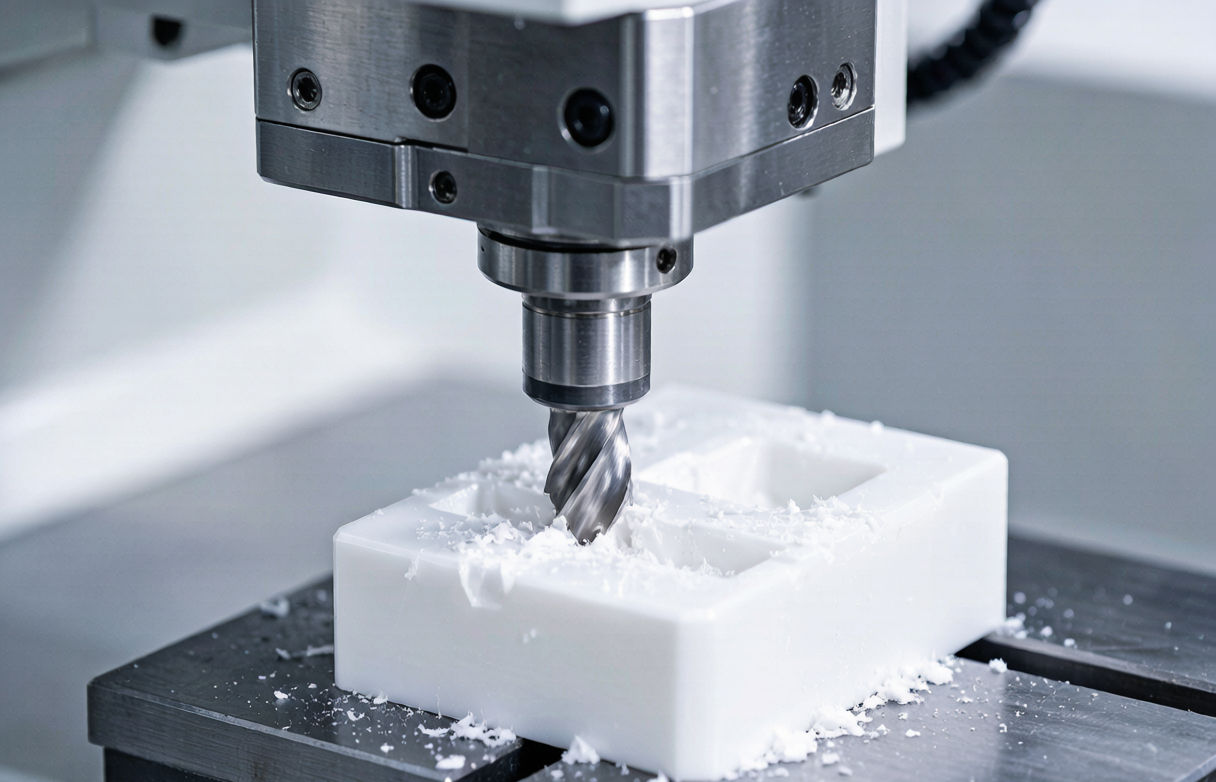
CNC Machining Acetal Parts
CNC machining is the fastest way to get precise POM parts without mold tooling. It is ideal for prototypes, tight tolerances and complex geometries.
Capabilities
- 3, 4 and 5-axis CNC milling
- CNC turning and live-tool lathes
- Tight tolerances on critical features
- Fine surface finishes and clean edges
- No mold tooling required
- Fast design iteration
Best for
- Prototypes and bridge tooling
- Low-to-medium volumes
- Gears, bushings, rollers with tight fits
- Parts requiring secondary features after molding
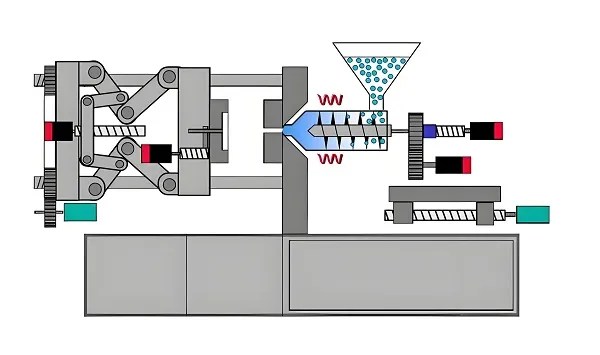
Injection Molding Acetal Parts
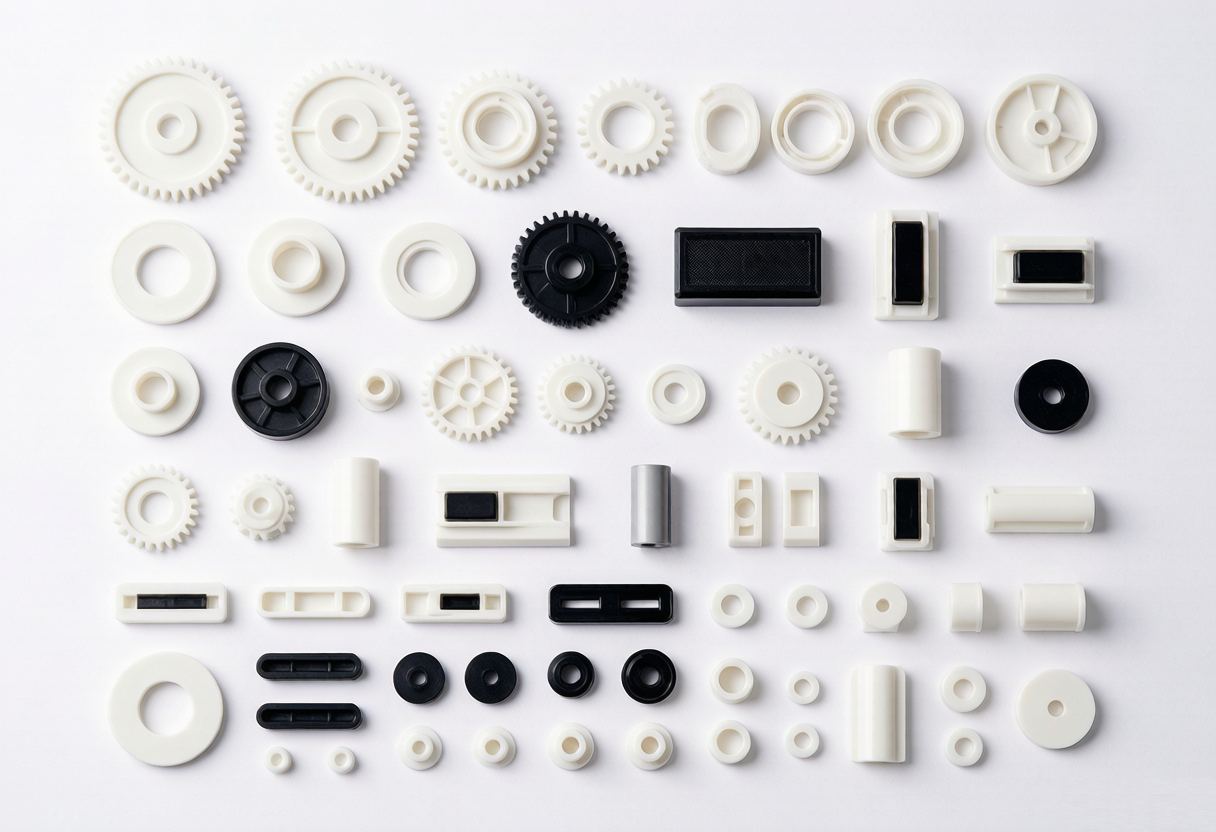
Injection molding becomes economical when annual demand reaches tens of thousands or more. We design and build molds in-house and run production on our molding floor.
Capabilities
- Custom mold design and fabrication
- POM-H and POM-C molding
- Multi-cavity tooling for high volumes
- Insert molding and overmolding where applicable
- Automated part removal and gate trimming
Best for
- High-volume production
- Complex 3D shapes with internal features
- Consistent color and surface texture
- Parts where unit cost is more critical than lead time
CNC Machining vs Injection Molding — Decision Guide
Still unsure which route fits your project? Use this comparison to start the conversation.
| Factor | CNC Machining | Injection Molding |
|---|---|---|
| Typical volume | 1 – 10,000 pieces | 5,000 – millions |
| Tooling cost | No hard tooling | Mold tooling required |
| Lead time | Days to 2 weeks | Weeks to months (including mold) |
| Tolerance | Tighter, more flexible | Good; limited by mold and shrinkage |
| Geometry | Excellent for external/complex 3D | Best for 3D shapes, undercuts need slides |
| Surface finish | As-machined to polished | Mold-textured to high-gloss |
| Design changes | Fast, no tooling change | Mold modification needed |
| Unit cost | Higher per piece | Lower per piece at volume |
Design for Manufacturing (DFM) Tips for Acetal
A few design choices make the difference between a part that machines cleanly and one that warps, cracks or needs rework.
Use generous radii
Acetal is notch-sensitive. Use internal radii at corners and undercuts to reduce stress concentration and cracking.
Control wall thickness
For molded parts, keep walls uniform (1.5–3 mm typical) and avoid thick sections that cause sink marks and voids.
Add draft for molding
0.5–1° draft per side is typical. Higher draft helps ejection and reduces part stress.
Avoid over-tight tolerances
Tolerances tighter than needed drive cost. Hold tight tolerances only on functional fits and datums.
Watch thin webs and ribs
Thin, tall ribs can warp. For machined parts, leave adequate stock; for molded parts, rib thickness ≤ 60% of wall.
Consider annealing
Stress-relief annealing may be recommended for precision-machined parts or parts exposed to chemicals during service.
Avoiding Common Acetal Machining Defects
We control these issues through tooling, feeds/speeds, fixturing and in-process inspection.
| Defect / Issue | Typical Cause | Prevention |
|---|---|---|
| Stress cracking | High residual stress, sharp internal corners, chemical exposure | Anneal before finishing; use radii; select compatible grade |
| Warping / distortion | Uneven stock removal, thin walls, moisture/heat | Balanced machining paths; stable fixturing; controlled coolant |
| Burr formation | Dull tools, incorrect feeds/speeds, exiting cuts | Sharp carbide or DLC-coated tools; optimized parameters |
| Surface chatter | Tool overhang, workholding vibration | Short tools, rigid setups, reduced depth of cut |
| Dimensional drift | Thermal expansion, aggressive cuts | Light finishing passes; temperature control; measurement between ops |
| Gate blush / sink marks (molding) | Improper gate design, thick sections, low hold pressure | DFM review, proper gate/vent design, process tuning |
Tolerances We Hold on Acetal Parts
Tolerances depend on part geometry, process and feature type. We quote realistic tolerances during DFM review rather than promising a single number for every feature.
| Tolerance Level | CNC Machining | Injection Molding |
|---|---|---|
| Typical | ±0.01 mm | ±0.05–0.1 mm (depends on shrinkage) |
| Tight | ±0.005 mm on qualified features | Tighter with precision tooling; reviewed case by case |
| Surface roughness | Ra 0.4–1.6 μm typical; finer on request | As-molded texture or high-gloss per mold finish |
Actual capability depends on part size, feature accessibility and inspection method. We identify tight features at quotation stage and confirm feasibility before cutting material.
Surface Finish Options
Choose the finish that matches the functional and cosmetic requirements of your acetal part.
As-machined
Clean machined finish with visible tool paths. Functional and cost-effective for most mechanical parts.
Fine machining / polishing
Reduced roughness for sliding surfaces, seals or aesthetic faces. Ra down to ~0.4 μm achievable on qualified features.
Bead blast / vapor polish
Uniform matte or slightly glossy surface for cosmetic covers and reduced friction surfaces.
As-molded texture
Mold-finish textures (VDI/SPI standards) for injection-molded housings and consumer-facing parts.
Deburring & edge break
Standard for all machined parts. Removes sharp edges and burrs from gears, bushings and sliding components.
Custom finish
Specific roughness callouts, laser marking, color matching or secondary coating available on request.
Acetal as a Metal Replacement
Acetal is often used to replace brass bushings, steel pins, aluminum housings and other metal parts — but only when the application conditions fit the material.
Where replacement works
- Light-load bearings and bushings
- Low-speed gears and pulleys
- Non-corrosive fluid handling components
- Insulating and non-marring fixtures
- Weight-sensitive mechanisms
Where caution is needed
- High temperatures above ~90–105 °C continuous
- High load/speed sliding without cooling
- Strong acids, oxidizers or bases
- Long-term UV exposure without stabilizer
- Applications requiring food/medical certification
We review your load, temperature, chemical and life-cycle requirements before recommending acetal over metal.
Acetal Material Properties at a Glance
Typical ranges for unfilled grades. Always confirm the datasheet for the specific grade and supplier we use for your order.
| Property | POM-H Typical | POM-C Typical | Test Method / Notes |
|---|---|---|---|
| Density | 1.41–1.43 g/cm³ | 1.41 g/cm³ | ISO 1183 |
| Tensile strength | 65–70 MPa | 60–65 MPa | ISO 527 |
| Flexural modulus | 2,800–3,100 MPa | 2,400–2,800 MPa | ISO 178 |
| Elongation at break | 25–40% | 30–50% | ISO 527 |
| Hardness (Shore D) | 85 | 80 | ISO 868 |
| Water absorption (24 h) | 0.2–0.3% | 0.2% | ISO 62 |
| Max service temperature (short term) | ~140 °C | ~140 °C | Depends on load and time |
| Max service temperature (continuous) | ~90–100 °C | ~90–105 °C | Depends on grade |
| Coefficient of friction | Low | Low | Against steel |
Values are representative of standard unfilled resins. Filled, colored or specialty grades may differ.
Quality Control & Inspection
Every acetal part is checked against your drawing before it leaves our floor. We use calibrated digital and optical instruments and keep inspection records for traceability.
Dimensional inspection
- CMM for complex geometries and tight tolerances
- Digital micrometers, calipers and height gauges
- Pin gauges, thread gauges and bore micrometers
- Optical comparator for profile features
Surface & functional checks
- Surface roughness tester
- Visual inspection for burrs, sink, flash and cracks
- Fit checks with mating parts when supplied
- First-article inspection reports on request
Industries Served
Our acetal parts are used across industrial, automotive, consumer and electronics markets worldwide.
Automotive
Gears, clips, bushings, valve components and interior mechanisms.
Automation & machinery
Rollers, guides, cam followers and pick-and-place components.
Appliances
Gear trains, knobs, levers and pump parts for household equipment.
Electronics
Insulating spacers, connectors, housings and fixture components.
Medical & lab
Non-implant instrument parts, pipette components and lab fixtures where grade permits.
Food & packaging
Conveyor components and guides where FDA/food-grade grade is selected.
Marine
Hardware and fittings resistant to moisture and salt-air environments.
General industrial
Custom wear pads, bearings, jigs and maintenance parts.
Representative Projects
Generic examples of the acetal parts we routinely produce. Customer names and trademarks are omitted.
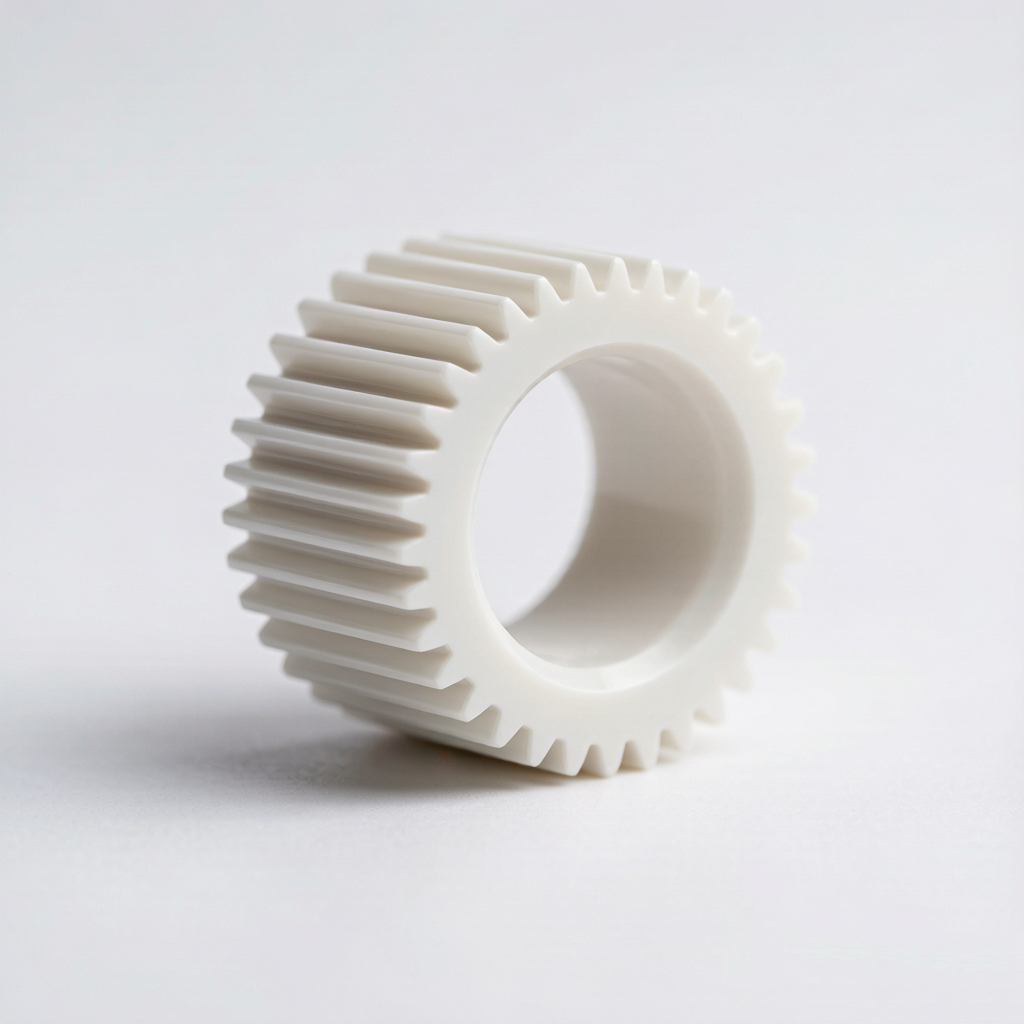
Precision gear train
Challenge: Low-noise gear set for automated sorting equipment.
Solution: CNC-machined gears from POM-H with tight tooth-profile control and polished gear flanks.
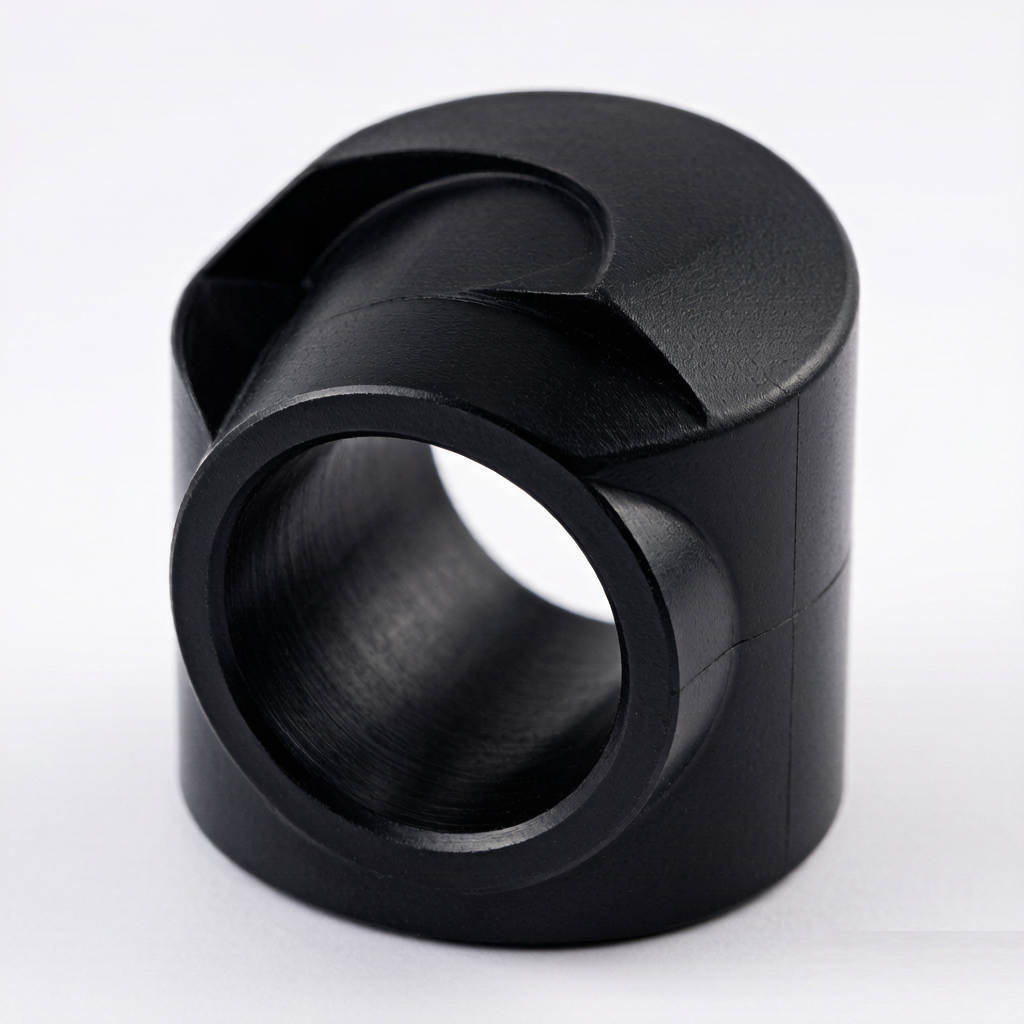
Bushing set
Challenge: Replace brass bushings in a wet environment without lubrication.
Solution: POM-C turned bushings with tight bore tolerance and chamfered edges for press fit.
Conveyor roller batch
Challenge: Lightweight, wear-resistant rollers for packaging line.
Solution: Batch-turned POM-H rollers with polished running surfaces and consistent roundness.
Cost Factors for Custom Acetal Parts
We quote each project individually. These are the main drivers that affect price.
Design & geometry
- Part size and material volume
- Number of setups required (CNC)
- Complexity of mold (injection molding)
Material grade
- POM-H vs POM-C
- Natural vs black vs custom color
- Filled or specialty grades
Tolerances & surface finish
- Tight tolerances require slower machining and more inspection
- Fine surface finishes add operations
Volume & tooling
- Low volumes favor CNC
- High volumes spread mold tooling cost
- Setup amortization per batch
Secondary operations
- Deburring, polishing, tapping
- Assembly, laser marking, packaging
Inspection & documentation
- First-article reports
- Dimensional certificates
- Material certifications
Lead Time & MOQ
We support one-off prototypes through full production. Lead time depends on process, quantity and current schedule.
| Stage | Typical Lead Time | MOQ |
|---|---|---|
| Prototype / sample | 3–7 working days | 1 piece |
| Low-volume production | 7–20 working days | Confirmed per project |
| Mass production (CNC) | 15–25 working days | Confirmed per project |
| Mass production (injection molding) | Depends on mold fabrication + approval | Confirmed after mold review |
Production MOQ is confirmed after we review your drawing, quantity and process. There is no fixed minimum — we match the batch size to your project.
Engineering RFQ Checklist & FAQ
The more detail you provide, the faster and more accurate your quote. Include these items with your inquiry.
RFQ checklist
- 3D model (STEP, IGES, STL)
- 2D drawing (DWG, DXF, PDF) with tolerances
- Material grade or application description
- Quantity (prototype, annual, lifetime)
- Surface finish requirements
- Inspection / certification requirements
- Target price and delivery window
- Mating parts or assembly context
Send to
Upload your files through our quote form. A project engineer reviews your drawing and replies with DFM feedback, material recommendation and pricing.
Frequently asked questions
What is the difference between acetal and POM?
There is no real difference — acetal is the common name for polyoxymethylene, abbreviated POM. POM is the polymer family, and acetal is the everyday term used by engineers and buyers.
Is Delrin® the same as POM?
Delrin® is a registered trademark of DuPont used primarily for POM homopolymer (POM-H). It is a brand name for a specific family of POM grades, not a separate polymer.
Should I choose POM-H or POM-C?
Choose POM-H when you need maximum stiffness, strength and machinability. Choose POM-C when you need better toughness, impact resistance and slightly broader chemical resistance. Send us your application details and we will recommend the right grade.
Can you CNC machine acetal?
Yes. Acetal/POM is one of the best engineering plastics for CNC machining. It produces clean chips, tight tolerances and excellent surface finishes.
Can you injection mold acetal parts?
Yes. We design and build molds for POM-H and POM-C injection-molded parts, including multi-cavity tooling for higher volumes.
What tolerances can you hold on acetal?
For CNC machining, typical tolerance is ±0.01 mm and tight features can reach ±0.005 mm where qualified. Injection molding tolerances depend on part size and shrinkage, usually ±0.05–0.1 mm.
What is the minimum order quantity?
We accept prototype orders from 1 piece. Production MOQ is confirmed per project based on process, part size and material.
How fast can I get a prototype?
Typical prototype lead time is 3–7 working days after drawing confirmation, depending on complexity and current load.
Can acetal replace metal parts?
Acetal can replace brass, steel or aluminum in light-load, low-speed, non-corrosive applications. It is not suitable for high temperatures, heavy loads or aggressive chemicals without careful design review.
Is acetal food-safe or medical-grade?
Standard acetal grades are not food-contact or implantable medical certified. Food-contact or medical grades are available from some suppliers; tell us the required standard and we will confirm feasibility.
Does acetal absorb water?
Acetal absorbs very little moisture compared to nylon, which is why it holds tight tolerances well in humid environments. POM-C typically absorbs slightly less than POM-H.
What colors are available?
Natural/white and black are standard for both machining and molding. Custom colors are more practical for injection-molded production volumes.
Can you add inserts or metal hardware?
Yes. We can provide press-fit inserts, threaded inserts and overmolded metal components where the design allows.
Why do acetal parts crack?
Cracking usually comes from stress concentration at sharp corners, residual machining stress, or chemical exposure. We reduce this risk through radii, annealing and grade selection.
Do you provide material certifications?
Yes. RoHS, REACH and supplier material certificates can be provided on request. Specific grade and lot traceability may depend on material source.
Can you ship internationally?
Yes. We ship to buyers worldwide and can quote DDP, DAP, FOB or EXW terms depending on your preference.
What file formats do you accept?
STEP, IGES, STL, DWG, DXF, PDF and JPG. STEP or IGES with a dimensioned PDF drawing is preferred for quoting.