Custom Plastic Components Manufacturing
One-stop sourcing from prototype to production: CNC machining, injection molding, 3D printing, mold making, DFM review and dimensional inspection for industrial, electronic, automotive and medical plastic parts. Send your CAD or drawing for a fast, engineer-reviewed quote.
Accepted files: STEP · IGES · X_T · SLDPRT · PDF (with dimensions)
| Material | ABS / PC / POM / PA (Nylon) / PEEK / PTFE / PPS / PEI and other engineering plastics |
|---|---|
| Process | CNC machining · Injection molding · 3D printing / rapid prototyping |
| Prototype | Available — typical lead time 3–7 working days |
| Low volume | Available — typical lead time 7–20 working days |
| Production | Available — typical lead time 15–25 working days |
| Tolerance | ±0.01 mm typical (CNC); ±0.005 mm on qualified features; surface finish Ra 0.4 μm available |
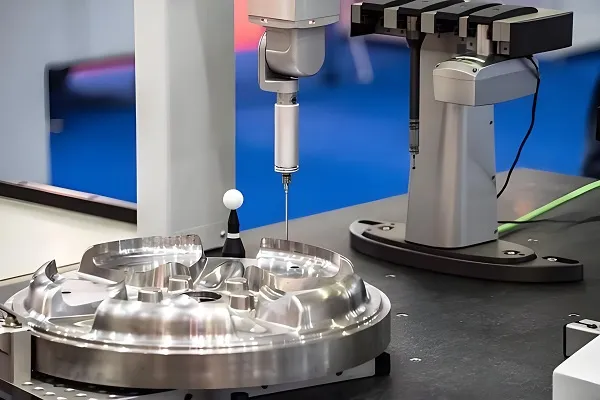
| Inspection | Dimensional inspection to drawing, including CMM and precision metrology where required |
| MOQ | 1 piece (prototypes and samples accepted) |
| Certification | ISO 9001:2015 · SGS · RoHS compliance support |
What Are Custom Plastic Components?
Custom plastic components are parts manufactured to a customer's specific geometry, material, dimensional, surface-finish and functional requirements.
They may be used as structural, protective, electrical, mechanical, sealing, guiding or cosmetic components within a larger product or system. Depending on part geometry, material, quantity and tolerance requirements, different manufacturing processes may be used.
Component → Application → Process
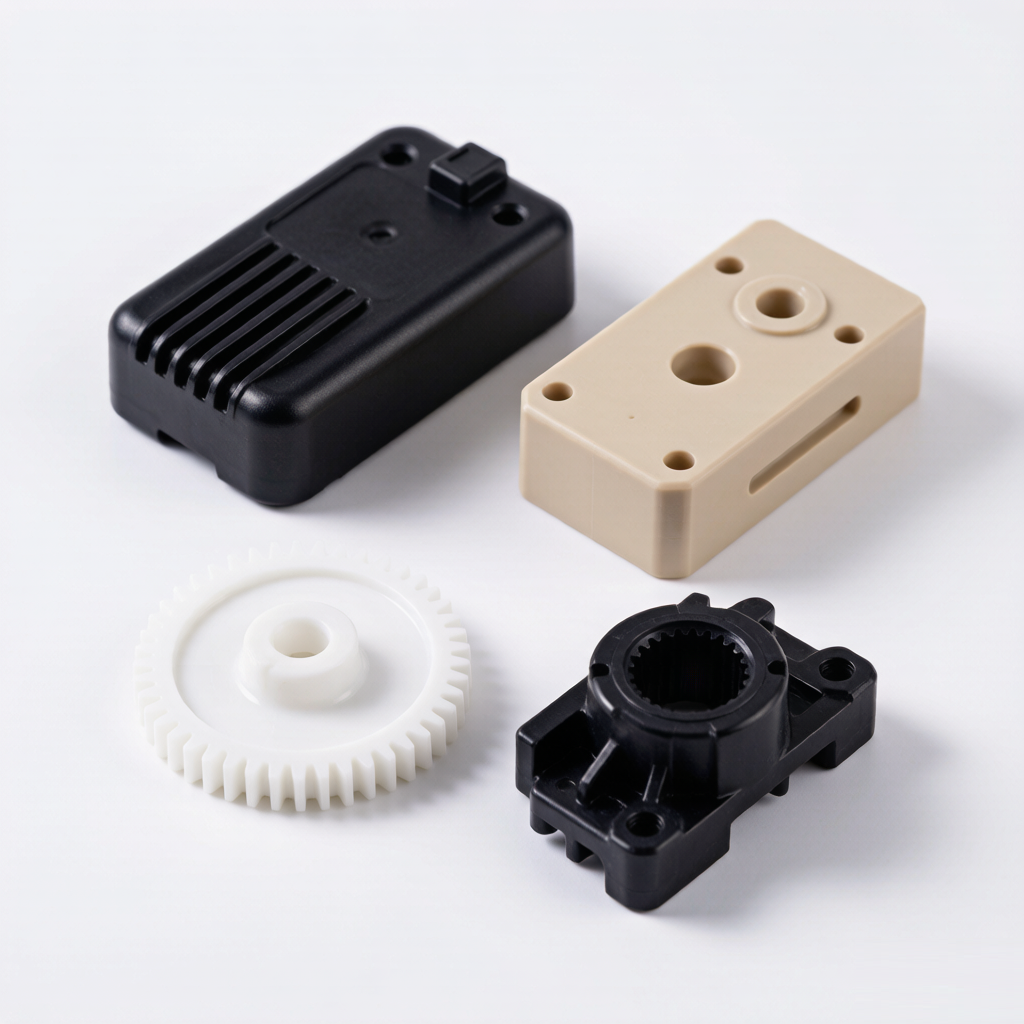
- Plastic Housing → Electronics → Injection Molding
- PEEK Insulator → Semiconductor Equipment → CNC Machining
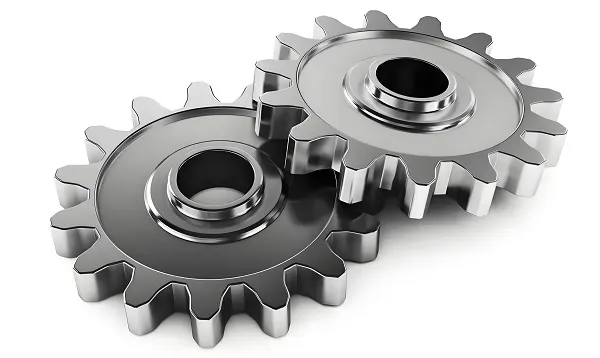
- Plastic Gear → Automation → CNC / Injection Molding
- Prototype Enclosure → Product Development → CNC / 3D Printing
Why the process matters
The same plastic part can often be made by more than one route. The right choice depends on quantity, tolerance, material and lead time — not on which machine a supplier happens to own.
One supplier, multiple routes
Because we run CNC, molding and prototyping in-house, we can recommend the route that fits your project stage rather than steering every part into a single process.
Manufacturing Processes for Custom Plastic Components
Three primary routes cover most custom plastic part requirements, from a single prototype to high-volume production.
CNC Plastic Machining
Best for prototypes, low-volume parts, tight tolerances, engineering plastics and complex geometry.
Common materials: PEEK, PTFE, POM, Nylon, PC, ABS, HDPE and other machinable plastics.
Plastic Injection Molding
Best for medium-to-high volume, repeat production, complex molded geometry and lower unit cost at volume.
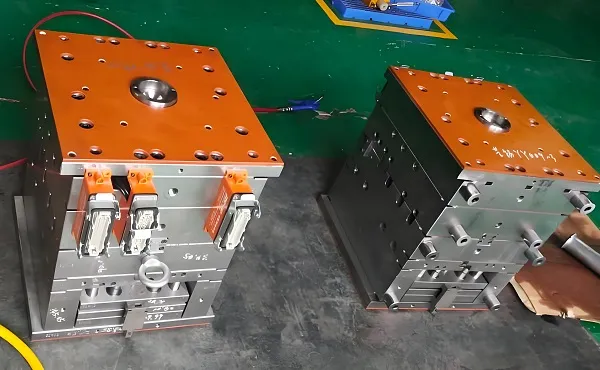
Includes mold design, DFM review, T1 sampling and production tooling.
3D Printing / Rapid Prototyping
Best for rapid prototypes, concept validation, geometry verification and early design testing.
Useful before committing to tooling or machining for design confirmation.
Which Plastic Manufacturing Process Is Right for Your Part?
Use this as a starting point. Final selection depends on geometry, material, annual volume and tolerance.
| Requirement | Recommended Process |
|---|---|
| 1–10 prototypes | 3D Printing / CNC |
| Small batch | CNC Machining |
| Tight-tolerance components | CNC Machining |
| Complex high-volume parts | Injection Molding |
| 10,000+ identical parts | Injection Molding |
| Functional prototype | CNC Machining |
| Very fast visual prototype | 3D Printing |
| Large production volume | Injection Molding |
| High-performance engineering plastic | CNC / Injection (by grade) |
Not sure which process is suitable? Send your CAD file and annual volume. Our engineers can recommend a manufacturing route based on geometry, material, quantity and tolerance requirements.
Custom Plastic Components We Manufacture
We cover a broad range of plastic part types across structural, mechanical, fluid, electrical and consumer applications.
Plastic Housings & Enclosures
Plastic Mechanical Components
Plastic Structural Components
Fluid & Sealing Components
Electrical & Insulating Components
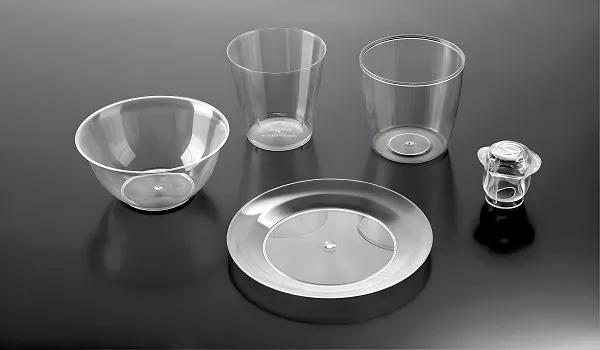
Custom Consumer Components
Plastic Materials for Custom Components
Material selection follows the application, not a fixed list. We group plastics by performance tier.
Commodity Plastics
Cost-effective for general-purpose parts.
PP · PE · PS · ABS
Engineering Plastics
Improved mechanical, thermal and dimensional performance.
PC · PA · POM · PBT · PET
High-Performance Plastics
For demanding thermal, chemical and precision requirements.
PEEK · PPS · PEI · PTFE · PVDF
| Requirement | Candidate Materials |
|---|---|
| Impact resistance | ABS · PC · Nylon (PA) |
| Low friction | POM · PTFE · UHMW-PE |
| High temperature | PEEK · PEI · PPS |
| Chemical resistance | PTFE · PVDF · PEEK |
| Electrical insulation | PEEK · PC · PA |
| Dimensional stability | POM · PEEK · selected reinforced grades |
| Low cost | PP · PE · ABS |
Final material choice is an engineering decision. Specific grade, filler, temperature, humidity, mechanical load and processing method all affect performance — a plastic label alone is not a substitute for application review.
Material Selection for Plastic Parts
Turning a requirement into a material grade is part of the service, not an extra step.
Need Help Choosing the Right Plastic?
You may only know that you need "something strong and chemical resistant." We can review your application and recommend suitable plastic grades based on mechanical strength, temperature, chemical exposure, friction, dimensional stability, electrical performance and cost.
Plastic Component Tolerances and Dimensional Control
Tolerance is defined by the function of the part, not by a generic "high precision" claim.
Dimensional Requirements
- Overall dimensions
- Hole diameter
- Wall thickness
- Mating dimensions
- Flatness
- Concentricity
- Positional requirements
Critical-to-Function Features
- Bearing seats
- Press-fit features
- Mounting holes
- Gear geometry
- Sealing surfaces
- Assembly interfaces
Typical CNC tolerance is ±0.01 mm, with ±0.005 mm achievable on qualified features; surface finish down to Ra 0.4 μm is available where the application requires it. Critical dimensions are inspected against customer drawings and agreed specifications, using CMM and precision metrology as needed.
Complex Features We Can Manufacture
Each feature maps to a concrete manufacturing solution — more useful than a list of "advanced equipment".
Undercuts
Side slider · lifter · insert
Threads
Internal threads · external threads (unscrewing core / insert / secondary machining)
Thin Walls
Process and tooling tuned for stable thin-wall molding and machining
Ribs & Bosses
Designed for strength without sink or warpage
Snap-Fits
Integral assembly features, validated for repeatable engagement
Living Hinges
Molded in compatible polypropylene-family materials
Insert-Molded Features
Metal or threaded inserts molded into the plastic body
Overmolded Components
Multi-material bonding for grip, seal or insulation
Feature feasibility depends on part geometry, material and process. Share your drawing and we will confirm the right approach.
Surface Finishes and Secondary Processes
Plastic parts often need more than a machined or molded surface to be ready for assembly.
Mold & Surface
- SPI surface finishes
- Texture
- Polishing
- Matte finish
- Glossy finish
Marking & Coating
- Painting
- Laser marking
- Pad printing
Joining & Assembly
- Ultrasonic welding
- Assembly
- Insert press
Finishing and secondary operations are scoped per part. These areas (texture, assembly, cost) also form the basis of useful long-tail pages for plastic buyers.
Custom Plastic Components from Prototype to Production
A single part is rarely the whole project. The value is supporting the component across its lifecycle.
Prototype, Low-Volume and Mass Production
Different project stages need different processes. We support all three.
Prototype
Typical goal: design validation, fit testing, functional testing.
Processes: CNC · 3D Printing · prototype tooling
Low-Volume Production
Typical goal: market testing, small batches, replacement parts, pilot production.
Processes: CNC · low-volume tooling · injection molding
Mass Production
Typical goal: repeatable production, lower unit cost, large annual volume.
Primary process: Injection molding
Quality Control for Custom Plastic Components
Quality is built into each stage, from incoming material to shipped parts.
Incoming
- Material verification
- Certificates
- Resin grade confirmation
In-Process
- Dimension checks
- Process parameters
- First-piece verification
Final Inspection
- Dimensional inspection
- Visual inspection
- Functional inspection
- Assembly check
Documentation
- Inspection report
- Dimensional report
- Material certificate
- Sample photos
- COC (available on request)
Document scope is agreed per project. Tell us which certificates or reports your procurement requires and we will confirm availability.
Industries We Serve
The same component types appear across many industries — each with its own demands.
Automotive
Brackets · housings · clips · guides · interior components
Electronics
Enclosures · connectors · switches · insulation parts
Medical
Device housings · laboratory components · precision plastic parts
Robotics & Automation
Guides · bushings · gears · protective covers
Aerospace
Lightweight structural components · insulation parts · equipment components
Semiconductor Equipment
PEEK components · chemical-resistant parts · insulation components
Custom Plastic Component Case Studies
Representative project types showing material, process, application, challenge and solution together.
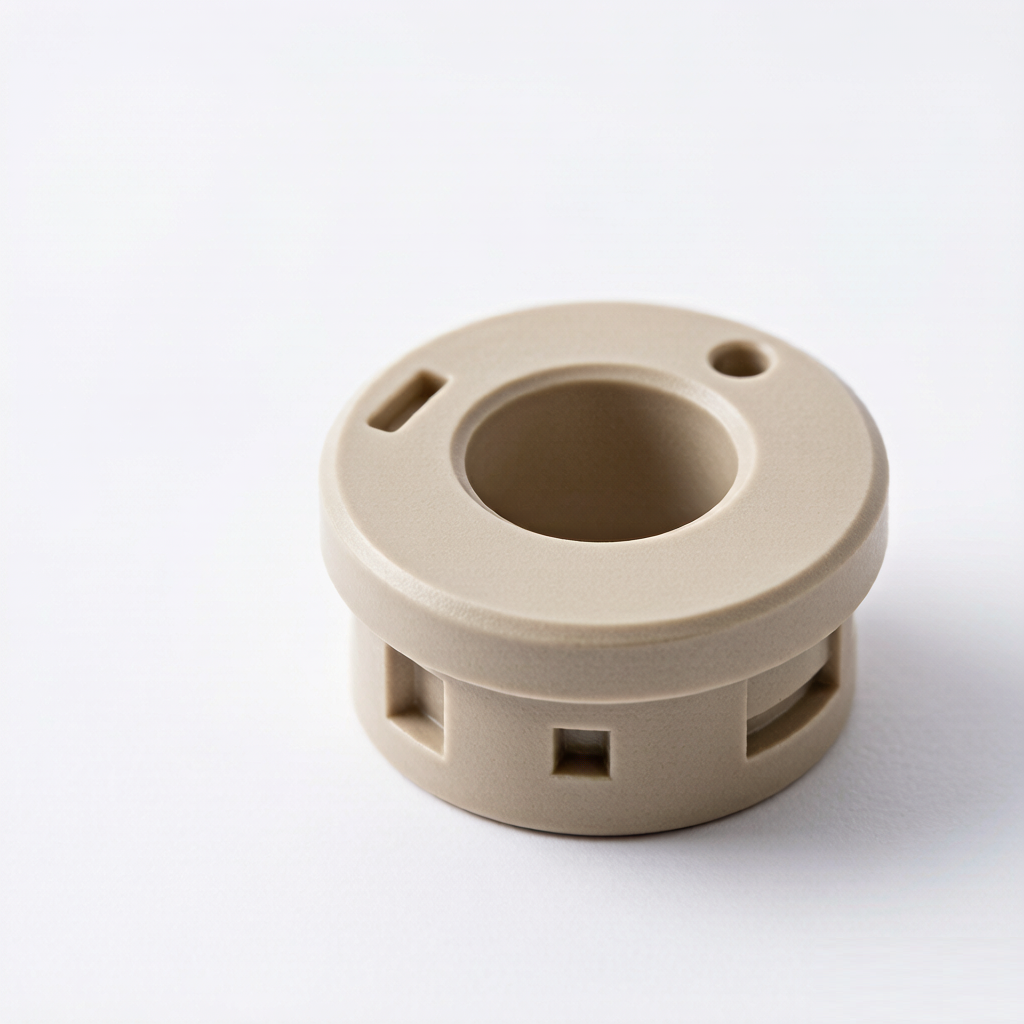
Custom PEEK Semiconductor Component
Challenge: Tight positional tolerance with chemical exposure in process equipment.
Solution: Precision CNC machining of PEEK plus dimensional inspection to drawing.
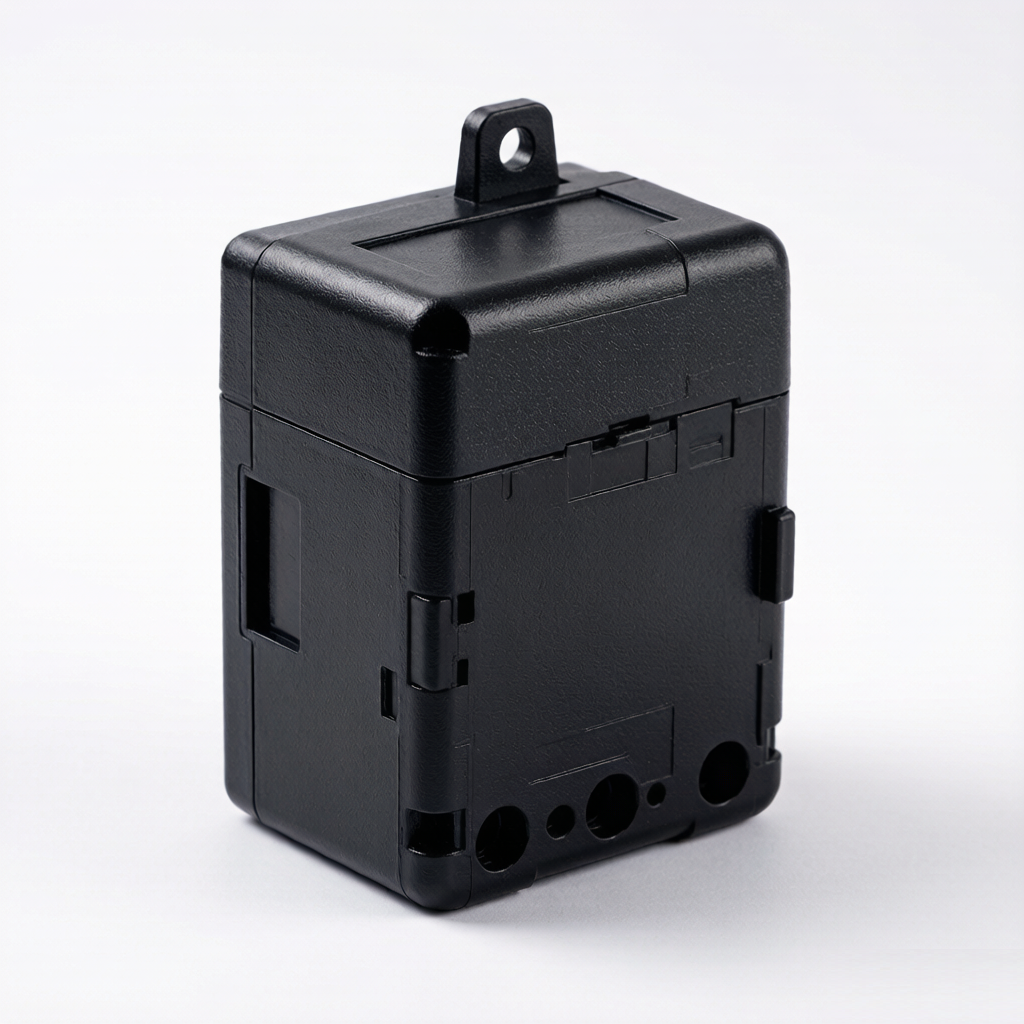
Custom ABS Electronic Housing
Challenge: Cosmetic surface quality with snap-fit assembly.
Solution: DFM optimization, textured tooling and T1 validation before production.
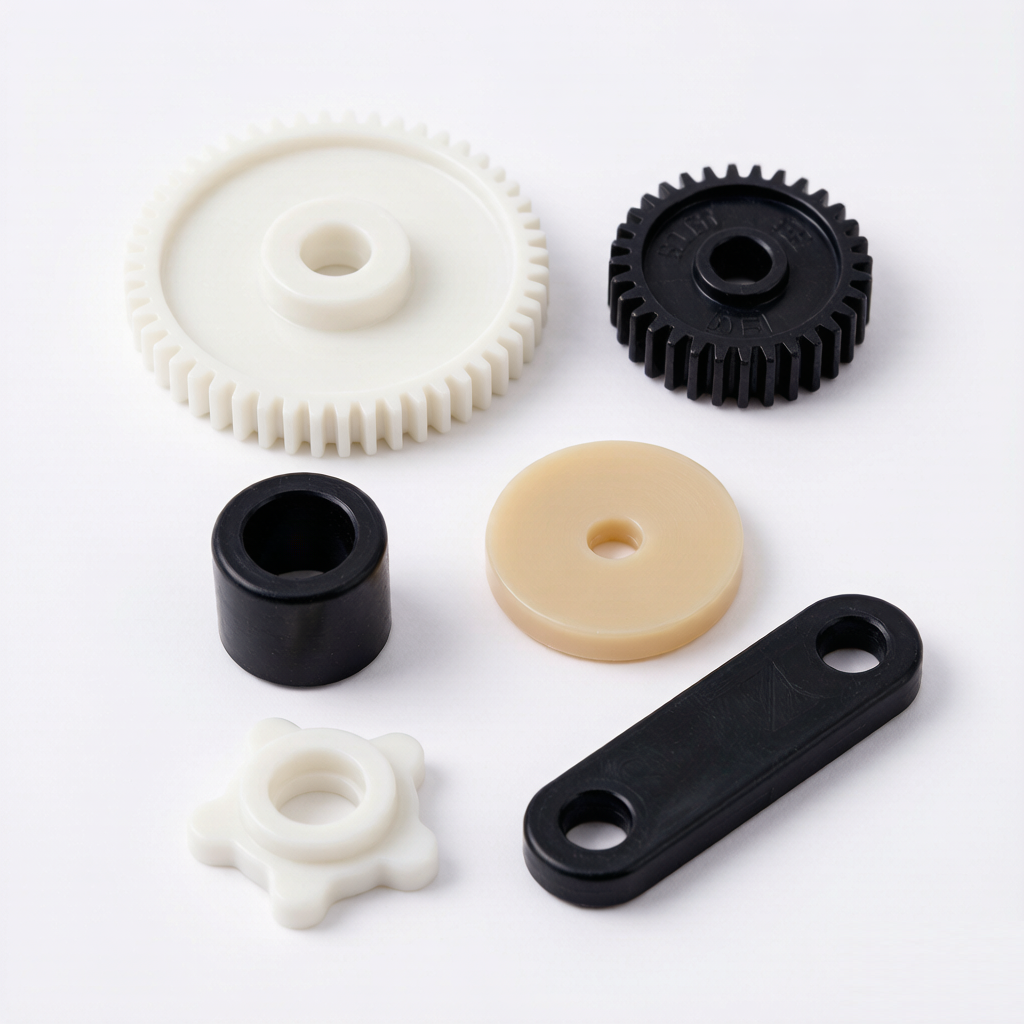
Custom Nylon Automation Gear
Challenge: Gear geometry and bore concentricity for smooth meshing.
Solution: Process selected by volume; gear geometry machined/inspected to function.
CNC Machining vs Injection Molding vs 3D Printing
A practical comparison to support the build-vs-mold decision for your plastic part.
| Factor | CNC Machining | Injection Molding | 3D Printing |
|---|---|---|---|
| Prototype | Excellent | Usually less suitable | Excellent |
| Low Volume | Excellent | Depends on tooling | Good for very small qty |
| High Volume | Higher unit cost | Excellent | Limited |
| Tooling | Minimal | Required | Not required |
| Complex Geometry | Excellent | Excellent with proper tooling | Excellent |
| Repeatability | High | Very high | Medium |
| Unit Cost at Volume | Higher | Lower | Higher |
| Design Changes | Easier | Tool modification may be required | Easiest |
What Do We Need to Quote Your Plastic Components?
Send as much as you can. The more detail, the more accurate the review and quote.
Preferred
- 3D CAD (STEP / IGES / native)
- 2D drawing with dimensions & tolerances
- Material specification
- Quantity & annual volume
- Tolerance requirements
- Surface finish
Optional
- Sample part
- Application information
- Assembly drawing
- Target price
- Target delivery date
The Custom Plastic Components Topic Cluster
This page is the commercial hub. The nodes below are planned supporting pages that expand material, process, application, tolerance, cost and lead-time topics.
Frequently Asked Questions
What plastic materials can be used for custom components?
We work with commodity plastics (PP, PE, PS, ABS), engineering plastics (PC, PA, POM, PBT, PET) and high-performance plastics (PEEK, PPS, PEI, PTFE, PVDF). Final grade is selected by application.
Can you manufacture plastic parts from our CAD drawings?
Yes. Send STEP/IGES/native CAD plus a 2D drawing with dimensions and tolerances, and we will review manufacturability and quote.
What is the best process for low-volume plastic components?
For low volumes, CNC machining is typically the fastest and most cost-effective route because it avoids tooling. Injection molding becomes advantageous as volume grows.
Should I CNC machine or injection mold my plastic part?
Use CNC for prototypes, small batches and tight tolerances; use injection molding for high-volume, repeat production where unit cost matters. We can advise based on your volume and geometry.
Can you make prototypes before production?
Yes. Prototypes are available via CNC machining, 3D printing or prototype tooling, typically within 3–7 working days depending on complexity.
What tolerances can you achieve on plastic components?
Typical CNC tolerance is ±0.01 mm, with ±0.005 mm on qualified features and surface finish down to Ra 0.4 μm where required. Feasibility depends on material and geometry.
Can you manufacture PEEK and other engineering plastics?
Yes. PEEK, PTFE, PPS, PEI and similar high-performance plastics are machined and, where suitable, molded. Material certificates can be provided.
Can you handle both prototypes and mass production?
Yes. We support the full path from a single prototype through low-volume runs to injection-molded mass production, so the process can scale with your project.
Can you inspect custom plastic components before shipment?
Yes. Inspection is performed against customer drawings, including dimensional checks, visual checks and functional or assembly checks, with reports available on request.
What information should I provide for a plastic parts quote?
Preferred: 3D CAD, 2D drawing, material spec, quantity/annual volume, tolerance and surface finish. Optional: sample, application info, assembly drawing, target price and delivery date.
Do you manufacture custom plastic components in China?
Yes. Xiamen Goldcattle is a China-based OEM/ODM manufacturer (founded 1998) supplying custom plastic and metal components to B2B customers worldwide.
Can you handle assembly and secondary operations?
Yes. We support secondary processes such as ultrasonic welding, insert press, painting, laser marking, pad printing and assembly as part of the delivered part.