
Custom rotomolded plastic products for prototypes, low-volume and production runs — from product design and DFM review through tooling, molding, trimming, assembly and quality inspection. Tell us what the part must hold, carry or enclose; we engineer the hollow, large or complex shape around it.
Typical engineering response within 1–2 business days · NDA available
Custom Rotational Molding from Design to Production
Rotational molding (rotomolding) builds hollow plastic parts by rotating a heated mold filled with resin powder around multiple axes until the material coats the cavity and fuses. It is a strong fit for large, hollow, thick-walled or complex one-piece geometries where injection or blow molding would need costly tooling or cannot reach the shape. Goldcattle runs the full project: product and DFM review, tooling, molding trials, secondary operations and inspection — so you receive a finished, inspected part, not just a mold.
This page answers the questions a buyer actually has: can my part be rotomolded, why choose it, what material, how is the tool made, how large and how accurate, what happens after molding, what does it cost, how long, and how do I request a quote.
Rotational Molding Capability Summary
All values below reflect industry benchmark capability for a mid-to-upper rotomolding supplier. Final figures are confirmed against your drawing and material at quotation.
What Is Rotational Molding?
Rotational molding is a plastic manufacturing process in which polymer resin powder is loaded into a mold, heated while the mold rotates around multiple axes, and then cooled — forming a hollow plastic part with uniform wall thickness and no internal stress from high pressure.
Why is it different?
No high-pressure injection
The mold is not subjected to injection pressure, so tooling can be lighter and less expensive than for many high-volume molding methods.
Excellent for hollow structures
Tanks, containers and enclosures are formed in one piece with no seams or weld lines along the cavity.
Complex shapes, one piece
Curves, deep draws, undercuts and integrated mounting features are practical without joining multiple parts.
Low tooling cost
For low-to-medium volumes, mold cost is typically lower than comparable injection tooling.
Variable wall thickness
Wall can be engineered thicker at load points and thinner elsewhere to save weight and material.
Suited to low/medium volume
Strong choice when annual volume does not justify the high tooling cost of injection molding.
Why Choose Custom Rotational Molding?
1 · Large hollow parts
Tanks, containers, enclosures, housings, ducts and equipment covers that would be hard or costly to build any other way.
2 · One-piece construction
Reduces joints, seams and weld lines — fewer leak paths and assembly steps.
3 · Low-cost tooling
For low-to-medium volumes, mold cost is typically lower than injection molding tooling of similar size.
4 · Complex contours
Curves, deep draws, undercuts and integrated mounting features are practical in a single part.
5 · Variable wall thickness
Thicker where the part loads, thinner where it does not — function-led, not uniform-by-default.
6 · Impact resistance
Polyethylene rotomolded parts perform well outdoors, in industry and in storage-handling use.
Is Rotational Molding Right for Your Product?
We will tell you when rotomolding is the right call — and when another process fits better. A credible supplier does not claim rotomolding is best for everything.
| Requirement | Rotational Molding |
|---|---|
| Hollow structure | Excellent |
| Large part size | Excellent |
| Low / medium volume | Excellent |
| Complex contours | Excellent |
| One-piece design | Excellent |
| Low-cost tooling | Strong advantage |
| Very thin, precision walls | Usually less suitable |
| Extremely tight tolerances | Usually less suitable than CNC |
| Very high-volume small parts | Injection molding may be better |
Rotomolding Project Qualification — a 1-minute self-check
We return a straight answer: rotomold it, or a better process for your part.
Custom Rotomolded Products We Manufacture
Tanks & Containers
Water tanks, chemical tanks, fuel tanks, storage containers.
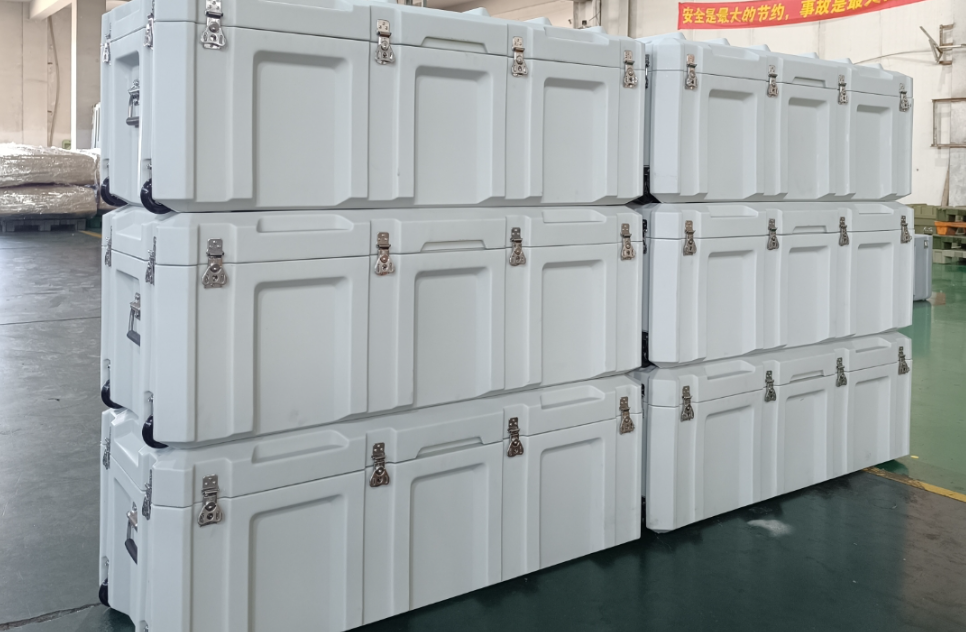
Housings & Enclosures
Equipment housings, machine enclosures, protective covers, outdoor shells.
Industrial Components
Ducts, bins, pallets, material-handling components.
Automotive / Mobility
Tanks, reservoirs, covers, protective components.
Agricultural
Chemical tanks, water tanks, equipment housings.
Recreation
Coolers, kayaks, outdoor containers, sports-equipment housings.
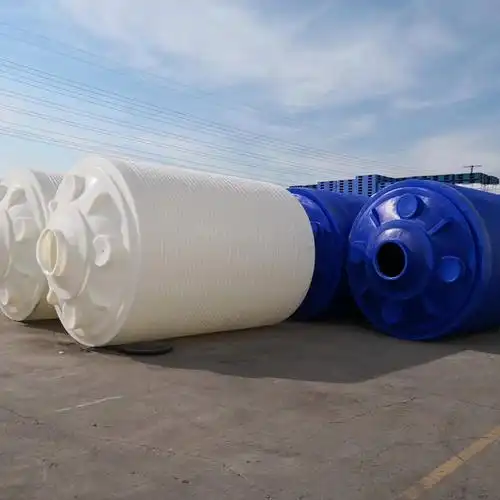
Rotational Molding Materials
Polyethylene grades are the core of rotomolding. We select the grade against your chemical, impact, stiffness and regulatory needs.
LLDPE
Linear low-density polyethylene — the workhorse: good impact, ESCR and flexibility. Used for most tanks and enclosures.
HDPE
High-density polyethylene — higher stiffness and better chemical resistance for demanding containers.
LDPE
Low-density polyethylene — for specific flexible or low-stiffness requirements.
XLPE
Cross-linked polyethylene — improved thermal and impact performance for harsh-duty parts.
PP / Nylon
Polypropylene and nylon available for higher-temperature or engineering-grade needs.
PVC Plastisol
Available for specialized soft-touch or dip-molded applications on request.
How to Choose the Right Rotomolding Material
| Requirement | Candidate grade |
|---|---|
| General-purpose durability | LLDPE |
| Chemical resistance | PE grades (HDPE for aggressive media) |
| Outdoor exposure | UV-stabilized PE |
| High impact resistance | Impact-modified PE / XLPE |
| Higher stiffness | HDPE / selected grades |
| Low-temperature use | Appropriate PE grade |
| Food-contact use | Certified applicable grade |
Final material selection depends on operating temperature, chemical exposure, impact, stiffness, UV exposure, regulatory needs and production conditions — confirmed at quotation.
Rotational Molding Design & DFM
Rotomolding has its own design rules. We review these before tooling so the part molds cleanly and meets function.
Wall thickness
Rotomolding suits relatively thick-walled hollow parts; the practical range is set by material and process. We do not lock a single "exact" number without engineering data — it is engineered to the function.
Draft & release
Adequate draft lets the part release from the mold without distortion.
Corner radii
Generous radii improve material flow and avoid thin, weak corners.
Flat areas
Large flat surfaces may need crown, ribs or structural features to resist distortion.
Ribs & bosses
Add stiffness and mounting points; sized for mold release and wall uniformity.
Inserts & threads
Metal inserts, bushings and threaded features can be molded-in or added post-mold.
Undercuts & parting line
Undercuts drive tooling feasibility; parting-line location affects appearance and sealing.
Venting & cooling
Vent placement and cooling strategy control wall distribution and cycle consistency.
Rotomold Design Checklist
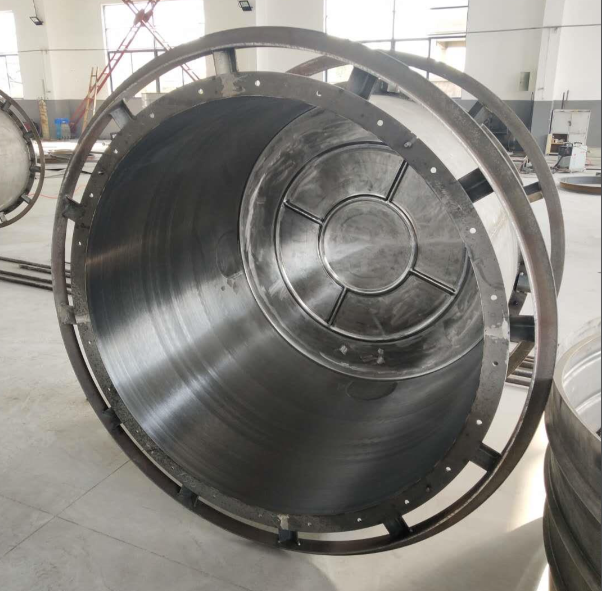
Rotational Molding Tooling
Rotomolding molds are built from fabricated steel, cast aluminum, machined aluminum or hybrid tooling. Selection depends on part geometry, volume, mold size, expected tool life and budget.
| Tooling type | Typical benefit |
|---|---|
| Cast aluminum | Lower cost, good for complex shapes |
| Machined aluminum | Precision and repeatability |
| Fabricated steel | Specific tooling requirements, longer life |
| Hybrid tooling | Specialized applications (steel inserts in aluminum, etc.) |
Our Rotomolding Tooling Process
Our Custom Rotomolding Process
Wall Thickness, Dimensions and Tolerances
Rotomolding lets wall thickness be engineered around the product's function, but thickness distribution is influenced by material loading, geometry, heating cycle, rotation and tooling design. We control it through DFM and trial tuning.
| Attribute | Typical benchmark (confirm at quotation) |
|---|---|
| Nominal wall thickness | 3–10 mm (typical 4–6 mm) |
| Max part dimension | Large format, benchmark to ~2.5 m |
| Linear tolerance | ±0.5–1.0% of dimension, min ±0.5 mm |
| Tight features | Added by CNC secondary operations |
For liquid-carrying parts we verify wall distribution by section measurement and, where required, leak or pressure testing — not a single assumed number.
Secondary Operations and Assembly
A rotomolded part is rarely the final deliverable. We offer the secondary operations your product needs — only those we actually perform, confirmed at quotation.
Trimming
Flash and gate removal to finished outline.
Drilling & CNC
Holes, mount points and tight features machined after molding.
Threading
Threads cut or inserts installed for assembly.
Welding
Plastic welding for fittings and attachments.
Insert installation
Metal inserts, bushings and tubing integrated.
Assembly
Sub-assembly and full product build.
Leak / pressure testing
Where the application requires it (e.g. tanks).
Surface finishing
Finishing and cosmetic treatment.
Labeling / graphics
Branding, labels and graphics application.
Rotational Molding Quality Control
Appearance
Surface defects, bubbles, pinholes, color consistency and contamination.
Dimensional
Overall dimensions, critical mounting dimensions, wall thickness, openings and mating surfaces.
Structural
Weld/joint integrity where applicable, insert retention, impact performance where required.
Functional
Leak testing and pressure testing for liquid-carrying parts; assembly checks.
Test scope follows the product's use — a storage tank gets leak/pressure verification; a non-pressurized enclosure does not need pressure testing.
Industries We Serve
Automotive
Fuel tanks, reservoirs, covers, protective housings.
Agriculture
Chemical tanks, water tanks, equipment components.
Industrial equipment
Machine housings, bins, ducts, protective enclosures.
Marine
Tanks, storage systems, equipment housings.
Construction
Material containers, equipment housings.
Recreation
Coolers, kayaks, outdoor products.
Medical and food-contact applications are quoted only where material certification and process controls are confirmed.
Custom Rotomolding Case Studies
Representative project profiles built on industry-benchmark parameters. Exact figures are confirmed against the actual drawing and material at quotation.
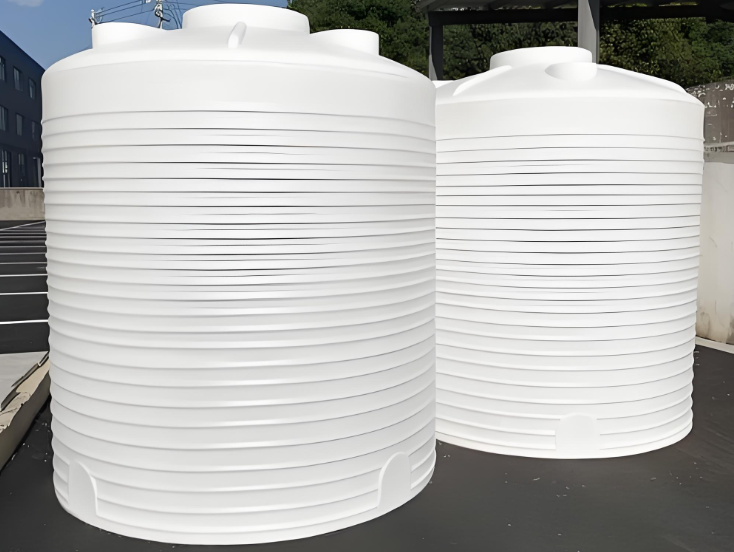
Custom Rotomolded Water Tank
- Material
- LLDPE (UV-stabilized)
- Process
- Rotational molding
- Tooling
- Aluminum mold
- Wall thickness
- ~5 mm nominal (benchmark)
- Secondary ops
- Drilling + fittings
- Inspection
- Leak test
- Challenge
- Large hollow geometry + chemical resistance
- Solution
- Custom tooling + controlled molding cycle
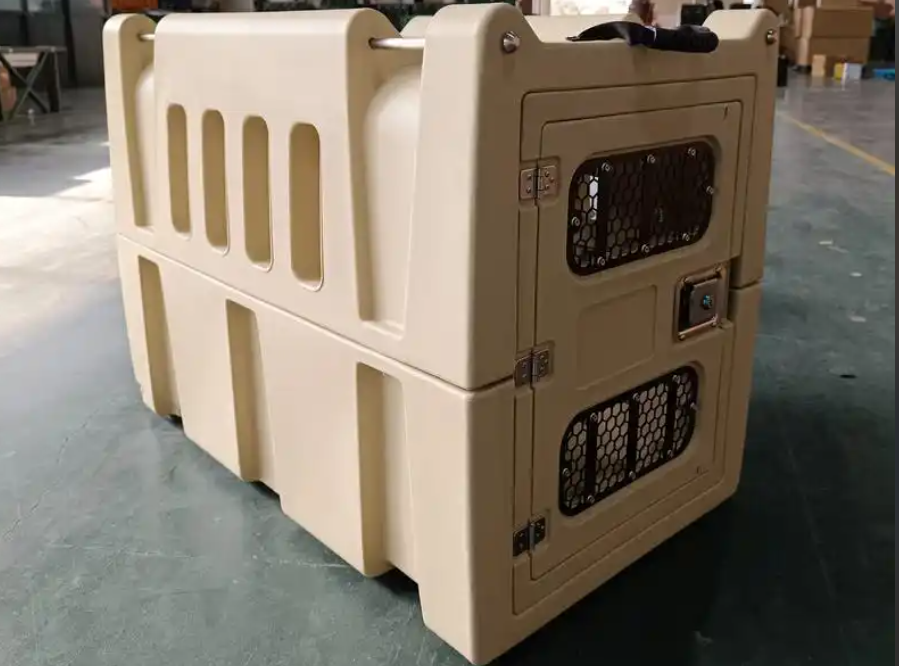
Custom Rotomolded Equipment Enclosure
- Material
- HDPE
- Process
- Rotational molding
- Tooling
- Machined aluminum
- Wall thickness
- ~4–6 mm (benchmark)
- Secondary ops
- CNC mounts + insert installation
- Inspection
- Dimensional + assembly check
- Challenge
- One-piece housing with integrated mounts
- Solution
- DFM-led tooling, post-mold CNC for tight features
What Affects Custom Rotomolding Cost?
We do not quote "rotomolding from $XX". Cost is engineered from the project, not guessed.
Send the CAD model, annual volume and material requirement for a tooling + production assessment.
Rotomolding Tooling and Production Lead Time
Rotomolding tooling lead time varies with mold material, build method and shop schedule. The ranges below are industry benchmarks; your project is confirmed at quotation.
| Project stage | Typical timeline (benchmark) |
|---|---|
| DFM review | 2–5 business days |
| Tooling design | 5–10 days |
| Tool manufacturing | 15–35 days (aluminum); steel longer |
| First trial | 3–7 days |
| Modification | 5–10 days |
| Production (per batch) | 10–25 days after approval |
Rotational Molding vs Injection Molding vs Blow Molding
| Factor | Rotational Molding | Injection Molding | Blow Molding |
|---|---|---|---|
| Large hollow parts | Excellent | Limited / complex tooling | Excellent |
| Low-volume production | Strong | Tooling can be costly | Moderate |
| Tooling cost | Relatively low | Higher | Moderate |
| Part size | Large options | Often smaller | Large options |
| Wall thickness | Flexible | Highly controlled | Process-dependent |
| Complex hollow geometry | Excellent | Advanced tooling needed | Suitable |
| Tight precision | Moderate | Excellent | Moderate |
| Very high-volume small parts | Less suitable | Excellent | Good |
| One-piece hollow parts | Excellent | Specialized designs | Excellent |
The right process depends on part size, geometry, wall thickness, volume, tolerance and tooling budget. See our Injection Molding Service and Custom Plastic Injection Mold pages for the alternatives.
What Do We Need to Quote Your Rotomolded Product?
A project-type RFQ, not just a name/email box. Share as much as you can; the more detail, the tighter the quote.
Required
- 3D CAD model
- 2D drawing with tolerances
- Part dimensions
- Estimated annual volume
- Material / resin preference
- Application & duty (e.g. chemical, outdoor)
- Project stage (concept / prototype / production / tool replacement)
Helpful
- Existing sample part
- Target delivery date
- Wall-thickness target
- Secondary operations needed
- Testing requirement (leak / pressure)
- Color & cosmetic spec
- Regulatory needs (food / medical)
Accepted formats: STEP · STP · IGES · X_T · SolidWorks · PDF · DWG
Frequently Asked Questions
What is custom rotational molding?
Rotational molding heats a resin-filled mold while rotating it on multiple axes, then cools it to form a hollow plastic part with uniform wall and no high-pressure injection.
What products are suitable for rotational molding?
Hollow, large or complex one-piece parts: tanks, containers, enclosures, housings, ducts, bins and similar. Thin precision parts or very high-volume small parts usually suit other processes.
What plastics can be used in rotomolding?
Primarily LLDPE, HDPE and LDPE, plus XLPE, polypropylene, nylon and PVC plastisol where the application requires. Grade is matched to chemical, impact, stiffness and regulatory needs.
Is rotational molding suitable for large hollow parts?
Yes — it is one of the strongest processes for large hollow geometries, typically at lower tooling cost than injection molding of similar size.
How much does a custom rotomolding mold cost?
Cost is driven by part size, geometry, tooling material (cast/machined aluminum or steel), complexity, volume and secondary operations — not a flat rate. Send the CAD; we return a tooling cost breakdown.
How long does rotomolding tooling take?
Industry benchmark: DFM 2–5 days, tooling design 5–10 days, mold manufacturing 15–35 days for aluminum (steel longer), first trial 3–7 days, modification 5–10 days. Confirmed per project.
What mold materials are available?
Cast aluminum, machined aluminum, fabricated steel and hybrid tooling. Choice depends on geometry, volume, mold size, expected tool life and budget.
What wall thickness can rotational molding achieve?
Benchmark nominal 3–10 mm, typically 4–6 mm, engineered to the part's function. Exact distribution is controlled through DFM and trial tuning.
What tolerances are possible with rotational molding?
Linear tolerance is typically ±0.5–1.0% of dimension (min ±0.5 mm). Very tight features are added by post-mold CNC machining.
Can you add threaded inserts or metal components?
Yes. Metal inserts, bushings and tubing can be molded-in or installed post-mold; threads are cut or inserted for assembly.
Can you perform trimming and assembly?
Yes. We offer trimming, drilling, CNC, welding, insert installation, assembly, leak/pressure testing, finishing and labeling — scoped to what the product needs.
Can you provide leak or pressure testing?
Yes, where the application requires it (e.g. liquid-carrying tanks). Test scope follows the product's use, not a one-size-fits-all claim.
Is rotational molding suitable for low-volume production?
Yes. For low-to-medium volumes it is often more economical than injection molding because tooling cost is lower.
What is the difference between rotomolding and injection molding?
Rotomolding uses heat + rotation with no injection pressure, ideal for large hollow one-piece parts at lower tooling cost; injection molding uses high pressure for tight tolerance, high-volume smaller parts. See our Injection Molding Service.
What files do I need to request a quote?
3D CAD (STEP/STP/IGES/X_T/SolidWorks) plus a 2D PDF/DWG with tolerances, dimensions, annual volume, material and application. The more detail, the tighter the quote.
Request a Custom Rotational Molding Quote
Send your 3D CAD and drawing. We return a DFM read, a recommended tooling approach, material and a project-specific cost assessment — engineered, not estimated. The mold is yours.
Explore the plastic manufacturing topic cluster
- Plastic Injection Molding Service
- Custom Plastic Injection Mold
- CNC Machining
- Manufacturing Services