Injection Molding Quote for Custom Plastic Parts
Submit your 3D CAD, 2D drawings and production requirements for a detailed injection molding quotation: tooling cost, per-part pricing by volume, DFM feedback, sampling plan, lead time and the quality scope included.
At a Glance
A useful injection molding quote separates tooling cost from part cost and states the mold assumptions — cavity count, mold steel, runner system and surface finish — then defines the sampling and quality scope, so two quotes can be compared on the same basis instead of as a single number. Send 3D CAD, a 2D drawing, the resin grade and your volume to receive one.
What Your Injection Molding Quote Includes
The quotes that waste a buyer's time are a mold price plus a unit price with no context. A quote that supports a sourcing decision itemizes the technical and commercial assumptions. The table below is the scope a molded-part quote should state.
| Quote item | What it should show |
|---|---|
| Mold / Tooling | Mold type, cavity count, tool material, side actions, texture, scope of trial and revision. |
| Unit price | Per-part price by quantity tier, not a single blended number. |
| Material | Exact resin grade and color assumption, with alternatives where applicable. |
| DFM | Key manufacturability concerns and how they were resolved or flagged. |
| Cycle | Estimated cycle time or the production assumption used for costing. |
| Sampling | T0 / T1 / T2 scope and what each stage delivers. |
| Lead time | Mold build + sampling + production, broken out rather than a single date. |
| Inspection | Dimensional, visual and FAI requirements, and the method (CMM, gauges). |
| Secondary operations | Printing, coating, insert molding, ultrasonic welding, assembly. |
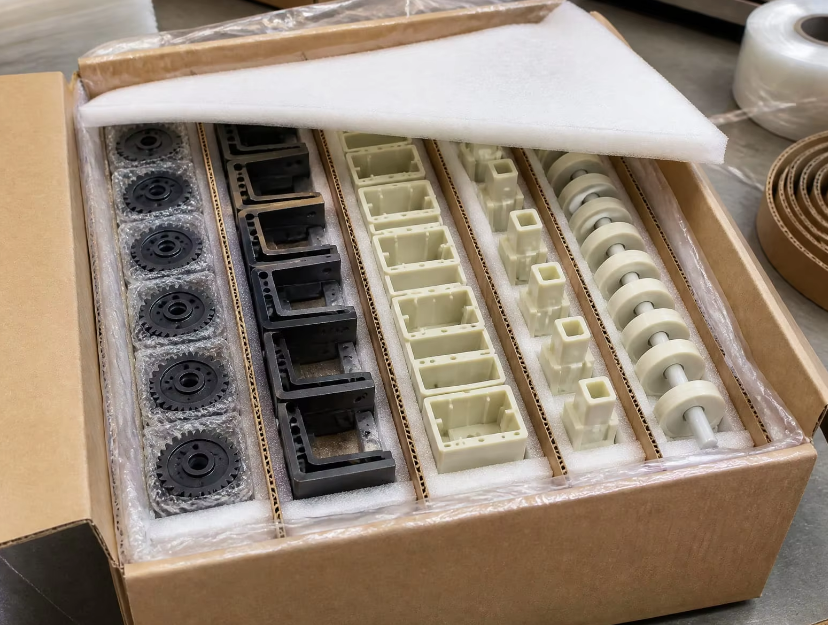
| Packaging | Standard or custom packaging, and export protection where relevant. |
| Shipping | Shipping scope and destination assumption (EXW, FOB or delivered). |
| Tool ownership | Ownership, storage, maintenance and transfer terms. |
| Quote validity | Price validity period and what would trigger a re-quote. |
| Exclusions | Items explicitly not included in the price. |
What We Need to Quote Accurately
Quote accuracy is set by input quality. The required set below is what lets a quotation move past a rough estimate to a number you can act on.
STEP, STP, IGES, X_T or native CAD. The geometry the tool and process are planned around.
Tolerances, GD&T, threads, surface finish and critical dimensions. Still required even with 3D CAD, because the CTQ and cosmetic zones live here.
Resin plus exact grade (for example PC+ABS, not just “ABS”) and color assumption.
Initial order quantity and estimated annual volume — both drive cavity strategy and tooling route.
Texture, polish, SPI/VDI reference, and which faces are cosmetic.
Which dimensions are critical, with datums and feature control frames.
The following are helpful rather than mandatory, and they reduce the number of quotation rounds: target production date, expected tool life, color, cosmetic requirements, assembly, inserts, packaging, certification, regulatory requirement, an existing mold, an existing sample, and customer-supplied resin. If you are still evaluating, state that — a quote can be scoped for a forecast rather than a fixed volume.
How an Injection Molding Quote Is Calculated
The core of any molded-part quotation is two cost buckets that behave differently. Conflating them is the main reason two quotes look impossible to compare.
Tooling is a capital investment amortized across the production volume; part cost recurs on every piece. The effective per-part cost therefore falls as volume rises, because the same tooling is spread over more parts. A quotation should show both buckets so the buyer can see where the money goes.
| Volume | Tooling impact per part | Unit cost direction |
|---|---|---|
| Prototype | High (spread over few parts) | High |
| 1,000 pcs | High | High |
| 10,000 pcs | Medium | Lower |
| 100,000 pcs | Low per part | Much lower |
Why Two Injection Molding Quotes Can Differ So Much
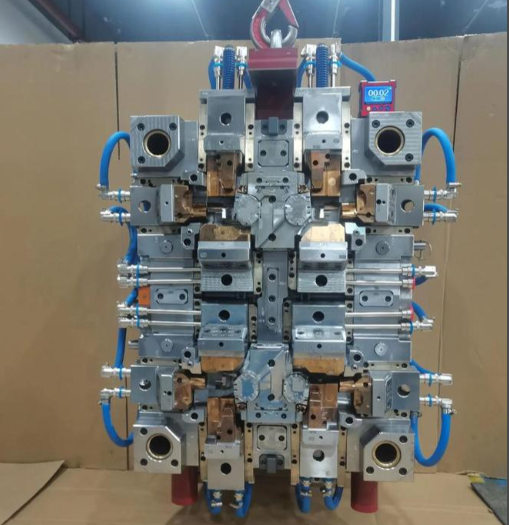
Two quotations for the same part can be far apart while both being technically valid. The gap is almost always in the tooling assumptions, not a supplier being arbitrarily expensive.
| Factor | Quote A | Quote B |
|---|---|---|
| Cavity count | 1 | 4 |
| Mold steel | P20 | H13 / S136 |
| Runner system | Cold | Hot |
| Tool life | Lower | Higher |
| Surface finish | Standard | SPI / VDI textured |
| Side actions | 1 | 3 |
| Sampling scope | T1 only | T0 / T1 / T2 |
| Inspection | Basic | FAI / CMM |
| Packaging | Standard | Custom export |
| Shipping / Incoterm | EXW | Delivered |
Quote B costs more because it builds a different tool and a different quality plan. If the program needs the higher tool life or the inspection level, Quote A is the more expensive choice over the product's life despite the lower headline number. The right comparison normalizes the assumptions first.
How to Compare Two Injection Molding Quotes
Before comparing price, confirm both quotes answer the same question. Use this normalization checklist; if an item is missing from a quote, that is itself a finding.
- Same part revision and CAD geometry?
- Same resin grade and color assumption?
- Same initial order quantity and annual volume?
- Same cavity count and cavitation strategy?
- Same mold steel and tool-life expectation?
- Same runner system (cold vs hot)?
- Same surface finish and cosmetic zones?
- Same sampling scope (T0 / T1 / T2)?
- Same inspection and FAI requirements?
- Same secondary operations?
- Same packaging and export protection?
- Same shipping terms / Incoterm and destination?
- Same mold ownership, storage and transfer terms?
Total Cost of Ownership
For EU and US buyers, the landed cost — not the unit price — is the number that matters. A complete cost picture stacks the recurring and one-time elements:
One-time; amortized over the program volume.
Design review and any tool modifications before production.
Changes made after first samples.
Resin cost at the quoted grade.
Driven by cycle time and cavitation.
Printing, coating, assembly, inserts.
Dimensional, CMM, FAI and documentation.
Standard or custom, plus export protection.
Ocean or air to destination.
Duties, handling and local delivery to your door.
A quote that stops at “mold = $X, part = $Y” leaves the buyer to discover freight, duty and inspection later. The TCO view is what a procurement team actually evaluates.
What Can Make Your Quote Higher — and How to Reduce It
Each of these is an engineering trade-off, not a markup. Understanding them lets a buyer decide where to spend and where to save.
Who Owns the Mold
A mold is a long-lived asset, and its ownership should be defined before tooling starts. For customer-funded custom tooling, the mold is your asset: it is stored, maintained and transferable per the agreed commercial terms. Drawings are shared under NDA, and ownership of tooling and designs is stated in the supply contract. Retaining physical control of the mold and first articles is a standard IP control when sourcing from China.
This page focuses on the quote; the mold-building process itself — steel selection, cavity machining, EDM, cooling and validation — is covered in the injection mold manufacturing write-up, and the full capability scope is on the custom injection molding services page.
Example Injection Molding Quote (Structure)
No two parts price the same, so the example below shows the structure of a quote rather than a figure. It demonstrates what a buyer should be able to read back from a returned quotation.
| Item | Example entry |
|---|---|
| Part | Plastic housing |
| Resin | PC+ABS |
| Initial quantity | 5,000 pcs |
| Annual volume | 50,000 pcs |
| Mold | 2-cavity steel tool |
| Runner | Hot runner |
| Tool life | Project-specific |
| Part price | Quoted by volume tier |
| Sampling | T1 included / specified |
| Inspection | Dimensional, CMM where CTQ |
| Packaging | Export standard |
| Lead time | Confirmed after DFM |
Quality Scope Included in the Quote
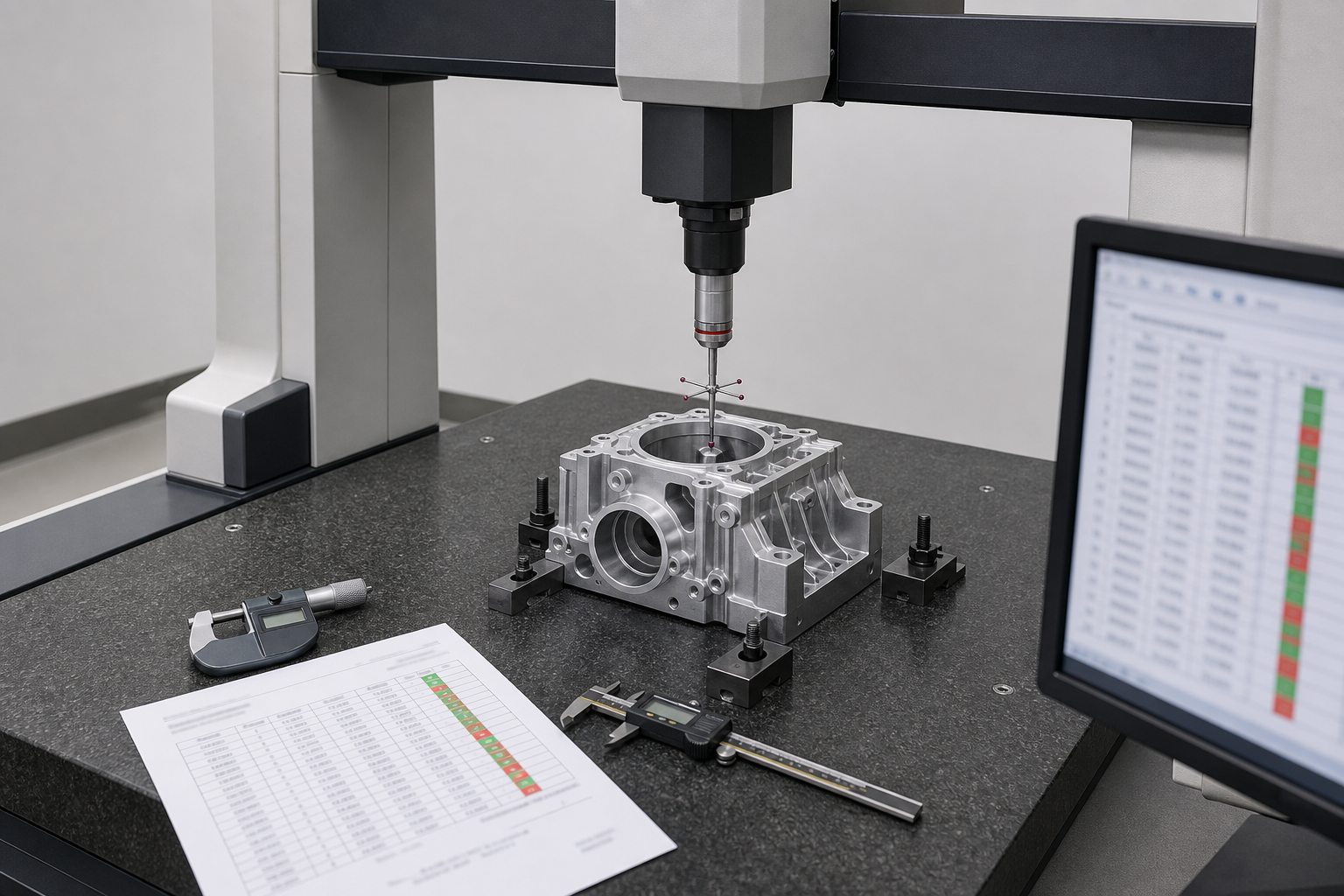
Price and quality are the same line item when the quote defines the quality scope. The quote should state which of these apply: standard dimensional inspection, critical-dimension inspection, CMM measurement (at Goldcattle, a Zeiss Prismo with ±0.0005 mm capability), FAI per AS9102 where required, material certificate, PPAP where applicable, cosmetic inspection and functional testing where required.
The quality system is ISO 9001:2015 certified; aerospace-related work is supported under AS9100-aligned and medical-related work under ISO 13485-aligned process controls. Material certificates and RoHS- or REACH-related documentation are available on request based on the selected resin and application, rather than assumed for every program.
What Happens After You Submit an RFQ
A quotation is the output of a defined chain. Knowing the steps tells a buyer whether a supplier is quoting blind or quoting from engineering review.
CAD, drawing, material and volume checked for completeness.
Draft, wall thickness, undercuts, parting line, gates, ejection and cooling reviewed.
Cavity count, steel, runner and tool structure set from volume and life.
Tooling, part price, secondary, inspection and packaging built out.
DFM, tooling, T1, approval and production sequenced.
Technical assumptions and commercial terms delivered for review.
Special RFQ Paths
Many RFQs are not “build me a mold.” Defining what is being bought up front changes the quote a buyer receives.
Tooling built and sampled, no production committed yet.
Tooling through T1/T2, with first articles for approval.
Tooling and the production run quoted together.
Review of transferred tooling for continued production, modification or repair — subject to inspection and manufacturing condition.
Run-only quotation when the tool is already owned and qualified.
Quote scoped for evaluation, with the route recommended after DFM.
Existing-mold transfer is a distinct sourcing intent: a buyer may be changing suppliers, facing long lead times, or moving production to China. The quote then covers inspection, any required modification, and resumed production rather than new tooling. Bridge (low-volume) tooling is a separate route for pre-production or uncertain forecasts, quoted with a shorter build and a higher per-part cost until a full production tool is justified.
Frequently Asked Questions
What does an injection molding quote include?
Why do two injection molding quotes for the same part differ so much?
What files do I need to send for an accurate injection molding quote?
Who owns the mold?
How is injection molding part cost calculated?
How fast can I get an injection molding quote?
Do you quote low-volume or bridge injection molding?
What quality inspection is included in the quote?
Ready to Get a Detailed Injection Molding Quote?
Send your CAD model and drawing. We can review the material and tolerances, run DFM, define the tooling strategy and quality scope, and return a quote you can compare line by line.
Upload CAD / Request a Quote →Free DFM review · Detailed quote typically within 1 business day
Explore Injection Molding Capabilities →