Laser-Cut and Bent Sheet Metal Parts
Finished formed components produced by cutting a flat sheet with a fiber laser and folding it on a press brake — built for enclosures, brackets, panels, and chassis where design flexibility matters more than the cost of hard tooling.
At a Glance
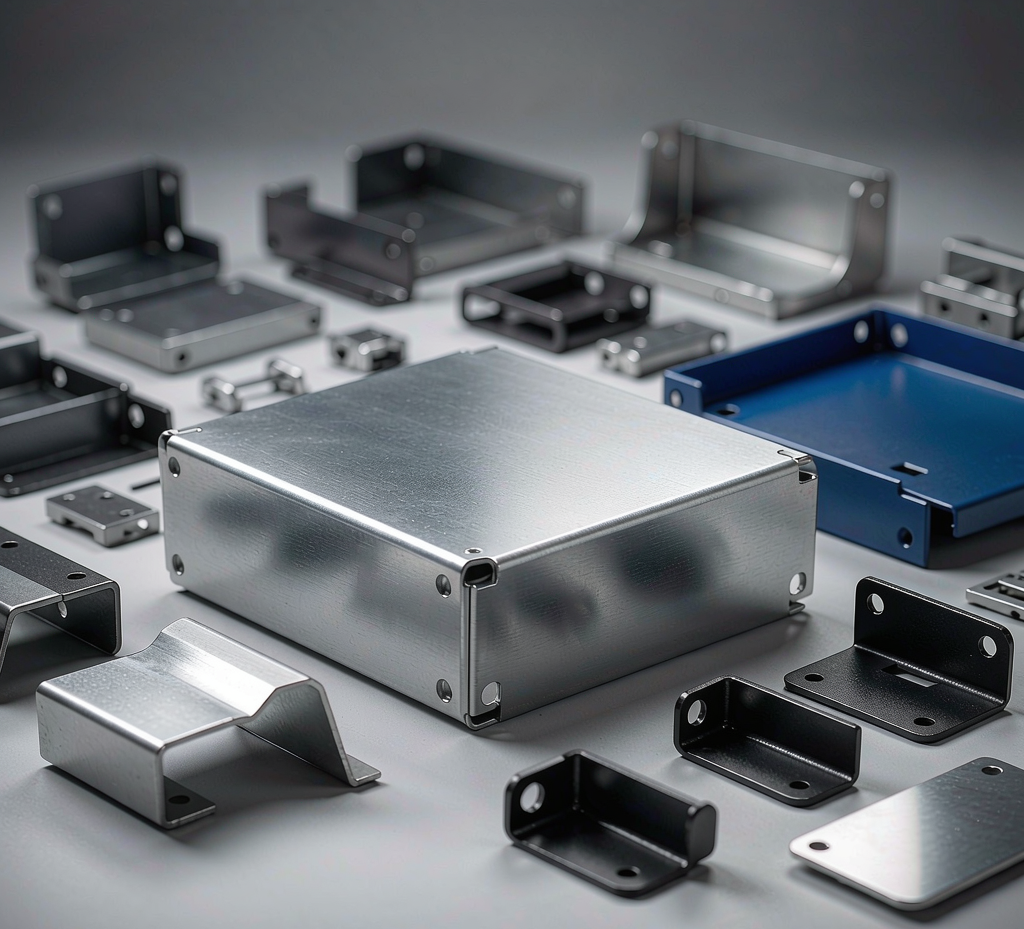
Laser-cut and bent sheet metal parts are formed components made by cutting a flat sheet with a fiber laser and folding it on a press brake. They cover enclosures, brackets, panels, and chassis in low-to-medium volumes where fast design changes and varied geometries matter more than the per-part cost of hard tooling. Tolerances are set by feature type — cut profiles and holes around ±0.1 mm, bend angles around ±0.5° — and should be confirmed for the specific material and thickness.
Capabilities
Combining laser cutting with press-brake bending turns a flat blank into a finished three-dimensional part in one linked workflow. The laser defines the outline, holes, slots, and reliefs; the brake forms flanges, tabs, and channels. Secondary operations such as welding and finishing are added afterward, so the part that ships is close to assembly-ready.
This approach fits buyers who need real parts quickly, iterate on geometry, or run modest annual volumes where investing in stamping dies is hard to justify. For the broader fabrication service — including punching, welding, and high-volume tooling — see our sheet metal fabrication services.
Fiber laser cutting
Defines contours, holes, and reliefs with a narrow kerf and clean edge.
Press-brake bending
Folds flanges, tabs, and channels to the required angles and radii.
Weld & coat
Adds welding, deburring, powder coating, or other surface treatment.
Part Types
The laser-cut-and-bent process suits any part that can be made from a flat sheet and a series of bends. Common categories include:
Enclosures & housings
Electronic boxes, equipment cabinets, and covers with folded seams and punched vent or mounting holes.
Brackets & mounts
L-shaped, Z-shaped, and gusseted supports with precise hole patterns for assembly.
Panels & plates
Front panels, back plates, and faceplates with cutouts for connectors, displays, and fasteners.
Chassis & frames
Structural bases and sub-frames where stiffness comes from formed flanges rather than added parts.
Very deep draws, closed tubes, or parts needing extreme wall thinning are better served by stamping, deep drawing, or CNC machining. Material selection and design limits are covered next.
Materials & Thickness
Laser cutting and bending are applied to common engineering sheet metals. Material grade changes how the part behaves at the bend line, so the choice affects both the minimum bend radius and springback.
Cutting thickness and bending thickness are different limits. A machine may cut a thicker sheet than it can bend accurately, and vice versa, so each operation should be checked separately for the material in question. As a practical range, laser cutting and bending are most often applied to sheet from about 0.5 mm up to several millimeters; the exact maximum depends on the material and the machine. Confirm the working range for your specific part.
For material data sheets, grades, and finishing notes, see the materials hub.
Sheet Metal Bending DFM
Good bent-part designs plan for how metal moves at the bend. A few rules reduce scrap and rework:
- Bend radius. A common minimum inside radius is about 0.8× the material thickness for aluminum; 5052 allows tighter bends than 6061, while stainless and high-strength steels need larger radii to avoid cracking.
- Hole-to-bend distance. Keep holes at least 2–3× the material thickness from the bend line; slots and notches should sit even farther away, or they will distort during forming.
- Reliefs. Add small reliefs at the ends of flanges and around tabs so the metal does not tear when folded.
- Springback. The part returns slightly after the punch lifts. Over-bending or coining controls it, but the amount depends on material and radius.
- Grain direction. For parts with bends close to the material's rolling direction, cracking risk rises; plan bend orientation on the flat pattern.
Dimensional Tolerances & Inspection
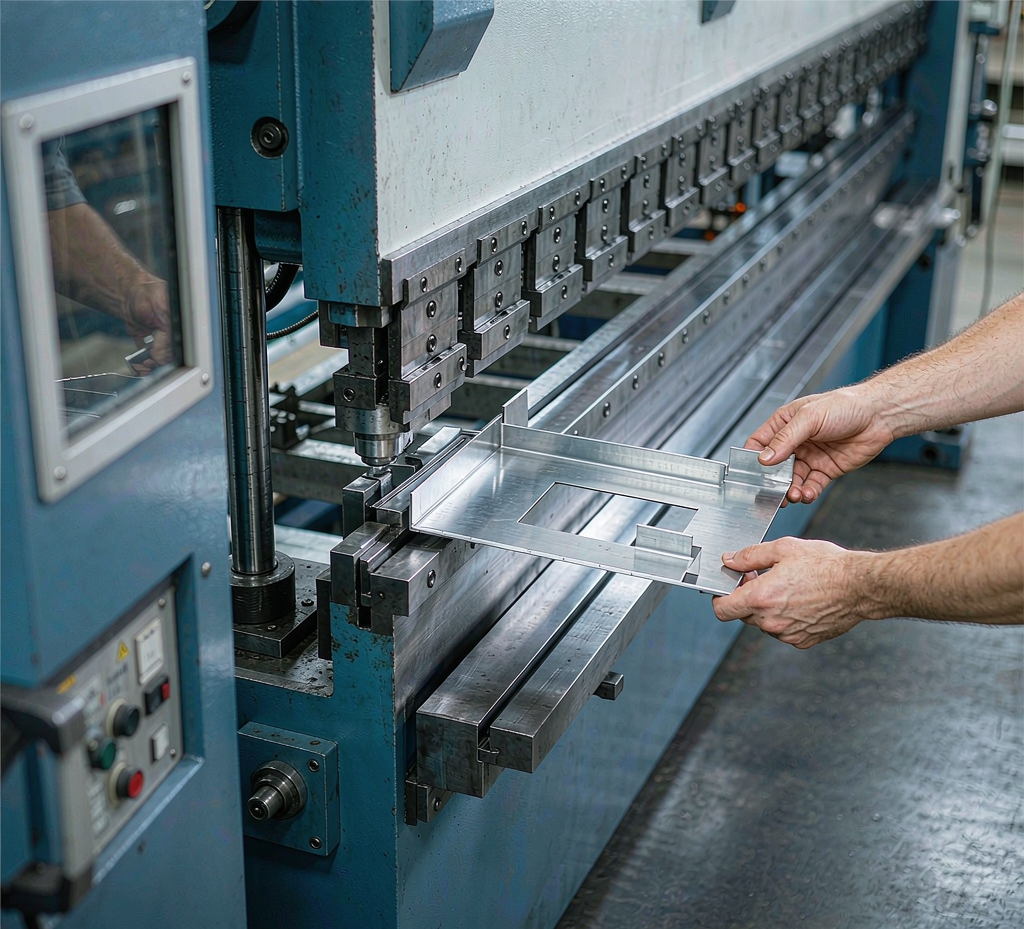
Tolerances on laser-cut and bent parts are controlled by feature type rather than applied as one blanket number. Setting them per feature keeps the part affordable while protecting the dimensions that actually matter.
Laser-cut edge quality is specified to an edge-quality class under ISO 9013:2017, which grades the cut face, burr, and heat-affected zone. Burrs are reduced by tuning parameters rather than eliminated, so a realistic edge class should be agreed up front. Inspection combines calipers, pin gauges, and coordinate measurement for critical features; first-article reports are available on request.
Secondary Processes
Most laser-cut and bent parts need at least one follow-on operation before they are usable. Common secondary steps:
- Welding. TIG, MIG, and spot welding join formed flanges into rigid assemblies.
- Deburring. Removes cut and break edges for handling safety and fit.
- Powder coating. A durable finish with a typical film thickness of 60–120 µm, available in matched colors.
- Anodizing & plating. Used on aluminum and steel for corrosion resistance and appearance.
- Inserts & hardware. Pressed-in nuts, studs, and standoffs turn a shell into a mount-ready part.
- Assembly. Sub-assembly with purchased components for a closer-to-complete shipment.
Laser+Bending vs Punching & Stamping
Choosing between laser-cut-and-bent parts and stamped or punched parts comes down to volume, geometry, and how often the design changes.
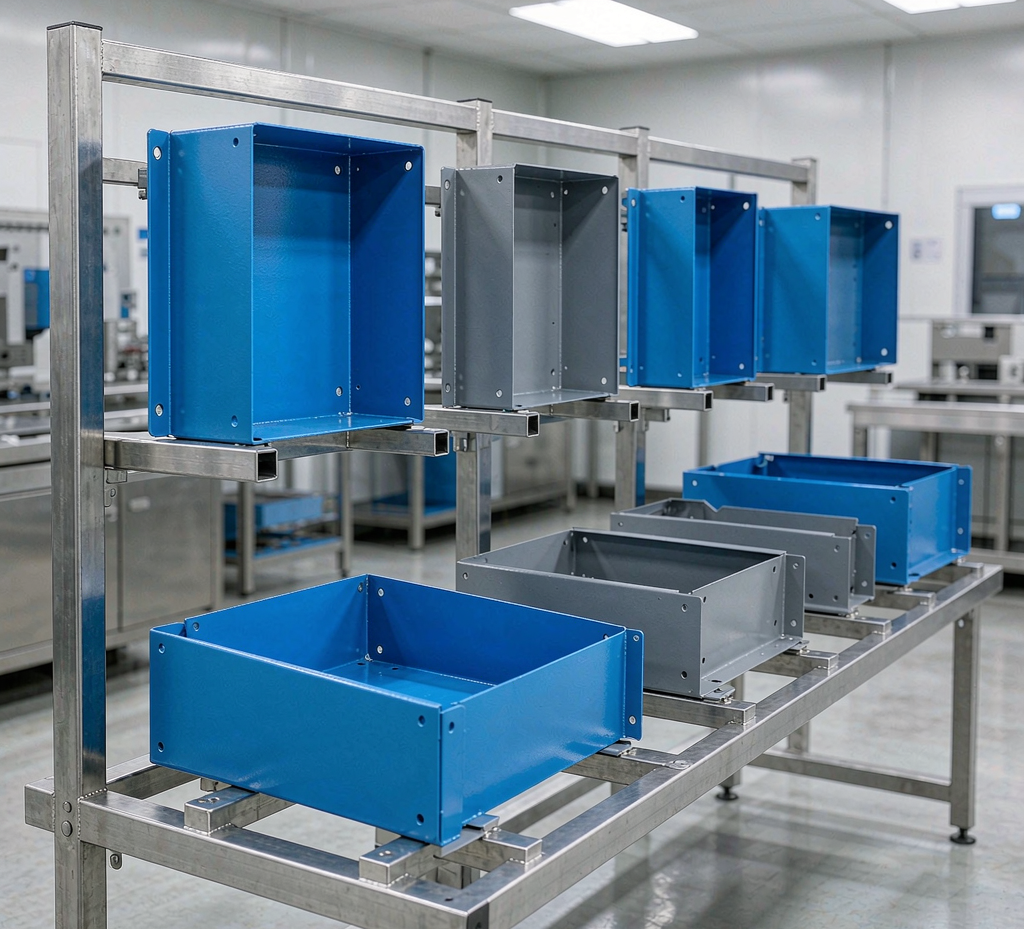
Low-to-medium volume, many variants, frequent revisions, and parts with assorted cutouts. Tooling is minimal, so setup is fast and changes are cheap.
High volume with stable geometry. A turret punch is efficient for many repeated holes; a stamping die lowers per-part cost once the tooling is amortized, but the upfront investment is significant.
For a run of a few hundred parts with several design spins, laser cutting plus bending is usually the lower-risk path. For tens of thousands of identical parts, progressive-die stamping wins on unit cost. A hybrid is also common: laser-cut the outline, then use a turret punch for high-density hole patterns.
Manufacturing Examples
These generic build types show how the process is applied. They describe part classes, not named customer programs.
- Part classElectronics enclosure
- MaterialAluminum 5052, 1.5 mm
- Forming4–6 bends
- FinishPowder coat
A folded box with punched vent slots and PEM inserts. Laser cutting defines the openings; the brake forms the seams; welding and coating complete it. Typical for control boxes and instrument housings.
- Part classMounting bracket
- MaterialCarbon steel, 2.0 mm
- FormingL / Z bends
- FinishZinc plate
A simple bent bracket with a tight hole pattern. Holes are kept clear of the bend line; the part is plated for corrosion resistance. Common in machinery and framing.
- Part classEquipment front panel
- MaterialStainless 304, 1.2 mm
- FormingShallow flanges
- FinishBrushed
A flat panel with precise cutouts for connectors and displays, plus shallow flanges for rigidity. Stainless grade chosen for a visible, hygienic surface.
Our Capabilities
Xiamen Goldcattle Plastic & Metal Products Co., Ltd. runs laser cutting and press-brake bending as part of a broader in-house sheet-metal and machining workflow. Stated equipment for sheet metal includes:
Where a part also needs milled or turned features, the same supplier can combine sheet-metal and CNC work — see CNC machining services for hybrid builds. Confirm the exact rating and working envelope for your material and thickness before quoting.
Discuss Your Formed Part
Send a drawing and we will review it for bend radius, hole-to-bend distance, and tolerances, then propose a process route.
Request a QuoteRequest a Quote
Send the following so the factory can confirm bend allowances, tolerances, and manufacturability before quoting:
- A 2D drawing or 3D model — STEP, DWG, or DXF.
- Material and grade (for example, aluminum 5052-H32).
- Sheet thickness and any bend radius requirements.
- Required finish (powder coat color, anodize, plating, or none).
- Order quantity and target lead time.
- Critical dimensions that must be tightly controlled.
Get a Formed-Part Quote
Share your drawing and volume, and we will review manufacturability, suggest DFM improvements, and return a quote with lead time.
Request a QuoteFounded in 1998 — prototype quantities from a single piece.
Frequently Asked Questions
What are laser-cut and bent sheet metal parts?
Laser-cut and bent sheet metal parts are flat metal sheets that are first cut to shape with a fiber laser and then formed into three-dimensional brackets, enclosures, panels, or chassis on a press brake. The two operations are usually combined so the customer receives a finished formed component rather than a flat blank.
What sheet metal materials can be laser cut and bent?
Common choices are aluminum (5052, 6061), carbon steel, stainless steel (304, 316), and galvanized steel. Aluminum 5052 bends more readily than 6061, so the alloy grade affects the minimum bend radius and springback. Material suitability should be confirmed for the specific thickness and finish required.
What thickness range works for laser cutting and bending?
Laser cutting and bending are typically applied to sheet from about 0.5 mm up to several millimeters, with the exact maximum depending on the material and the machine. The cut thickness capacity is not the same as the bending capacity, so thickness should be checked separately for each operation.
What tolerances can be held on laser-cut and bent parts?
Tolerances are controlled by feature type. Laser-cut profiles and hole positions are typically held around ±0.1 mm, while bend angles are held around ±0.5° under stated conditions. Dimensions measured across a bend depend on material springback and should be confirmed for the specific part.
How does laser cutting edge quality compare with other methods?
Fiber laser cutting produces a narrow kerf and a clean edge that can be specified to an edge-quality class under ISO 9013:2017. Burr height and the heat-affected zone are controlled by the cutting parameters rather than being eliminated entirely.
What is the minimum bend radius for sheet metal?
A common rule is a minimum inside bend radius of about 0.8 times the material thickness for aluminum, but the practical minimum depends on the alloy and temper. Aluminum 5052 allows tighter bends than 6061, while stainless and high-strength steels need larger radii to avoid cracking.
How far should holes be from a bend line?
As a general guideline, keep holes at least 2 to 3 times the material thickness from a bend line, and place slots or notches even farther away. Located too close, a hole will distort during forming. The exact distance should be confirmed against the part geometry.
When should I choose laser-cut and bent parts instead of stamping?
Laser cutting plus bending suits low to medium volumes, frequent design changes, and parts with varied geometries because there is little or no hard tooling. Stamping becomes more economical at very high volumes where the tooling cost can be amortized across the run.
What secondary processes follow cutting and bending?
Typical follow-on operations include welding (TIG, MIG, spot), deburring, powder coating (typical film thickness 60–120 μm), anodizing, plating, insert installation, and assembly. The surface-treatment choice depends on the material and the service environment.
What information should I provide to get a quote?
Provide a 2D drawing or 3D model (STEP, DWG, or DXF), the material and grade, thickness, required finish, order quantity, and target lead time. Drawings let the supplier confirm bend allowances, tolerances, and manufacturability before quoting.