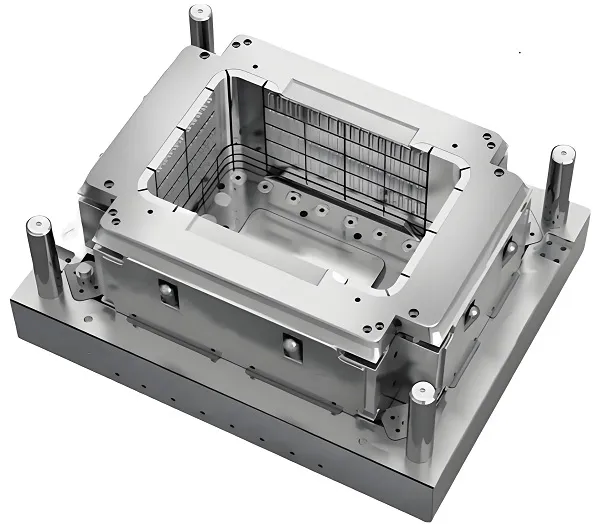
We are a build-to-print injection moulder for medical device components. Send a 3D model and drawing — you get a mouldability review, a material recommendation and a documented production route, before any steel is cut.
- ISO 9001:2015 certified quality system
- Medical process controls aligned to ISO 13485
- Mold design & build in one facility
- Lot-level traceability records
- Material certificates & documentation pack
- Prototype → validation → production route
Quotation response within 24 hours · Drawings treated as confidential · NDA available on request
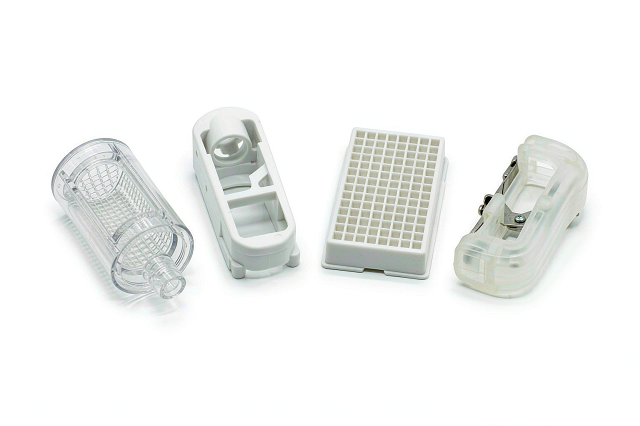
What you need to know before you send an RFQ
A short, factual summary of scope. Everything listed here is confirmed against current capability — anything project-specific is written as "confirmed per project" rather than assumed.
Medical components we manufacture
We are a contract manufacturer of components. Every part below is built to your drawing and specification — not from a catalogue.
Device Housings & Enclosures
Outer shells and covers for electronic and electromechanical medical equipment, where fit, appearance and consistency across cavities matter.
- Monitor & analyzer housings
- Handheld diagnostic device shells
- Pump and controller enclosures
- Battery and interface covers
- Snap-fit and screw-boss structures
Fluid Path & Connector Components
Parts that carry or control liquids, where dimensional consistency, gate control and material selection directly affect performance.
- Luer-type connectors and caps
- Manifold and valve bodies
- Tubing adapters & Y-connectors
- Filter housings
- Drip chamber and reservoir parts
Surgical Instrument Components
Reusable and single-use instrument parts, including components intended for repeated sterilization cycles.
- Handles & grip bodies
- Trigger and actuation parts
- Scope and camera head components
- Sterilization tray inserts
- Guide and stop components
Single-Use / Disposable Components
High-volume parts designed for one use, where cost per part, cycle time, gate vestige and packaging drive the design.
- Syringe and plunger components
- Specimen & collection parts
- Test cassette and cartridge bodies
- Pipette tips & micro components
- Protective caps and plugs
Diagnostic & Lab Consumables
Consumables for analysers and laboratory workflows, often requiring tight fit with automated handling equipment.
- Cuvette and microplate bodies
- Reagent cartridge housings
- Sample cup & rack components
- Optical window frames
- Centrifuge tube adapters
Molded Inserts & Overmolded Assemblies
Where a plastic component has to interface with metal, another polymer or an assembled sub-assembly.
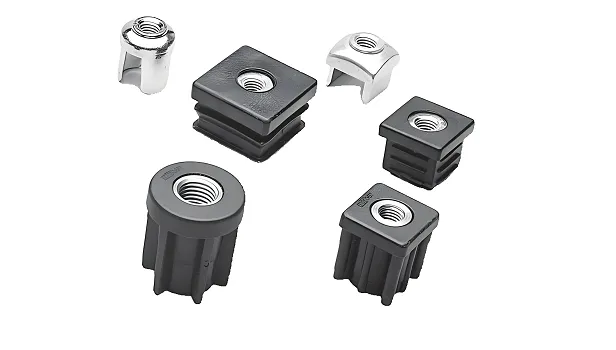
- Metal insert molded threaded bosses
- Soft-touch TPE / LSR overmolds
- Two-shot rigid + soft grips
- Sealing features with molded gaskets
- Contact and terminal carriers
Boundary of responsibility. We manufacture components to your drawing. We do not determine the intended use, the device classification, the regulatory pathway or the sterilization claim for a finished device. Those decisions belong to the device manufacturer — and they belong in your technical file, not in our quotation.
Medical molding is not "injection molding with nicer resin"
Four things change the moment a part goes into a regulated device. If a supplier cannot answer these four, the quote is not comparable.
The deliverable is documentation, not just parts
A conforming part with no record is a non-conforming part in a regulated supply chain. What you buy includes the records behind it.
- Material certificate tied to the resin lot used
- Dimensional results against the drawing, not against a sample
- Process parameters recorded and retrievable
- Certificate of conformance per shipment
Material choice becomes a regulatory input
In a medical project the resin is not just a cost line — it is part of the compliance argument for the finished device.
- Exact grade and manufacturer must be locked, not substituted
- Colour masterbatch and additives affect the compliance position
- Sterilization method constrains the material shortlist
- Regrind use is a controlled decision, not a cost saving
The process has to be repeatable, not just capable
Making one good part is easy. Making the ten-thousandth part identical — with the same material, tool and settings — is the actual requirement.
- Defined process window, not "we found settings that work"
- Tool maintenance and cavity identification
- Requalification triggers when something changes
- Capability demonstrated over a production run
Change control is part of the product
An unannounced change in resin, tool, cavity count or process is a compliance event for you. It has to be managed deliberately.
- No material substitution without notification
- Tool modification and repair recorded
- Process parameter changes documented
- Notification timeline agreed in the quality agreement
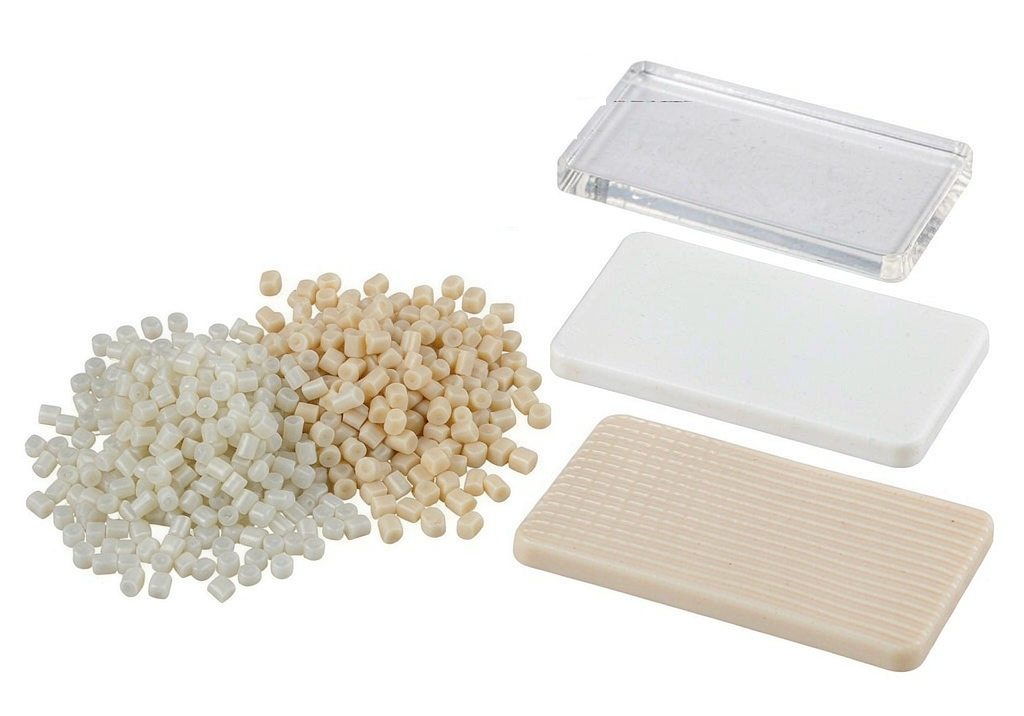
Medical-grade materials and what drives the choice
Selection is driven by sterilization method, chemical exposure, service temperature, mechanical load, contact type and regulatory expectations — not by price per kilogram or by a generic "medical grade" label.
| Material | Why it is selected | Typical medical applications | Processing notes |
|---|---|---|---|
| PP | Chemical resistance, low density, good fatigue life, widely used for gamma-sterilized single-use parts | Syringe components, connectors, specimen containers, disposable labware | Semi-crystalline; shrinkage and warpage must be modelled. Live hinge geometry is highly grade-sensitive. |
| PE (HDPE / LDPE) | Chemical inertness, toughness at low temperature, good for flexible and squeeze parts | Bottles, closures, tubing components, flexible containers | High mould shrinkage; wall uniformity matters more than in amorphous resins. |
| PC | Transparency, impact strength, dimensional stability | Transparent housings, fluid-path sight chambers, connectors | Notch-sensitive and stress-crack prone — residual stress, gate design and chemical contact must be reviewed. |
| ABS / PC-ABS | Stiff, dimensionally stable, excellent cosmetic finish and plating-free appearance | Device housings, analyzer enclosures, handheld equipment shells | PC-ABS offers better impact and heat resistance than ABS alone; check cleaning-agent compatibility. |
| POM | Low friction, high stiffness, excellent dimensional stability in precision mechanisms | Instrument mechanisms, gears, latches, dosing components | Crystalline shrinkage; tight fits need tool compensation based on measured first shots. |
| PA (Nylon) | Toughness, wear resistance; glass-filled grades for structural parts | Structural instrument parts, wear components, cable management | Hygroscopic — conditioning and post-mould dimensional behaviour must be accounted for. |
| PEEK | High temperature resistance, chemical resistance, mechanical strength retained after repeated sterilization | Surgical instrument components, sterilization tray parts, high-load structural components | High melt and mould temperatures required; gate and cooling design are critical. Not a default choice — justify it against PEI or PPSU first. |
| PEI | High heat resistance, inherent flame retardancy, transparent amber grades, repeated steam autoclavability | Reusable instrument handles, sterilization trays, endoscope components | High processing temperatures and drying discipline required; stress-cracking risk with some chemicals. |
| PSU / PPSU | Outstanding hydrolysis resistance and repeated steam sterilization performance | Fluid handling components, reusable device bodies, dental instrument parts | Requires thorough drying; high mould temperature. Significantly more expensive than commodity resins. |
| TPE | Soft-touch feel, sealing capability, co-moldable with rigid substrates | Grips, seals, gaskets, soft-touch overmolds | Bonding to substrate must be qualified for the specific grade pair before tooling. |
| LSR | Biocompatible elastomer, wide temperature range, excellent compression set | Seals, gaskets, valve membranes, soft-touch components | Requires dedicated liquid silicone tooling and dosing equipment. Route confirmed per project. |
How material selection should actually be made. Final material selection should be based on the device's intended use, contact type and duration, sterilization method, service temperature, chemical exposure, mechanical load and the applicable regulatory requirements. A material that is correct for one device can be wrong for a visually identical one.
Two claims we will not make. We do not list fixed material prices — resin pricing moves with grade, region and volume, and a stale number in a specification is worse than no number. We also do not write that any single material is "mandatory" for implantable or long-term contact applications; that is a determination for your design and regulatory team supported by biological evaluation.
Grade lock, not grade swap. Once a grade, manufacturer and colour package are approved, they are recorded in the project specification. Substitutions do not happen silently — they are raised with you and documented.
Molding processes and where each one fits
Most medical programs use more than one route across their life cycle — a fast route to get parts into testing, then a production route that holds tolerances over volume.
Prototype & Bridge Tooling
A faster, lower-cost tool — often aluminium or simplified steel — used to produce real moulded parts in the target material before production steel is committed.
Production Injection Molding
Hardened production tooling with defined cavity count, cooling and gating, running a qualified process window with recorded parameters.
Insert Molding
Metal components — threaded inserts, contacts, pins — placed in the tool and moulded into the plastic part in one cycle, removing a secondary assembly operation.
Overmolding & Two-Shot
A second material moulded onto a rigid substrate — soft-touch grip, seal or colour layer — either as a two-step overmold or in a single two-shot cycle.
Thin-Wall & Small Precision Components
Small, delicate geometries with thin sections and fine features, where fill balance, venting and ejection control decide whether the part is mouldable at all.
Mold Design & Build
Tooling designed, built, tried out and sampled in the same facility as the molding — so design intent, tool reality and process capability are developed together.
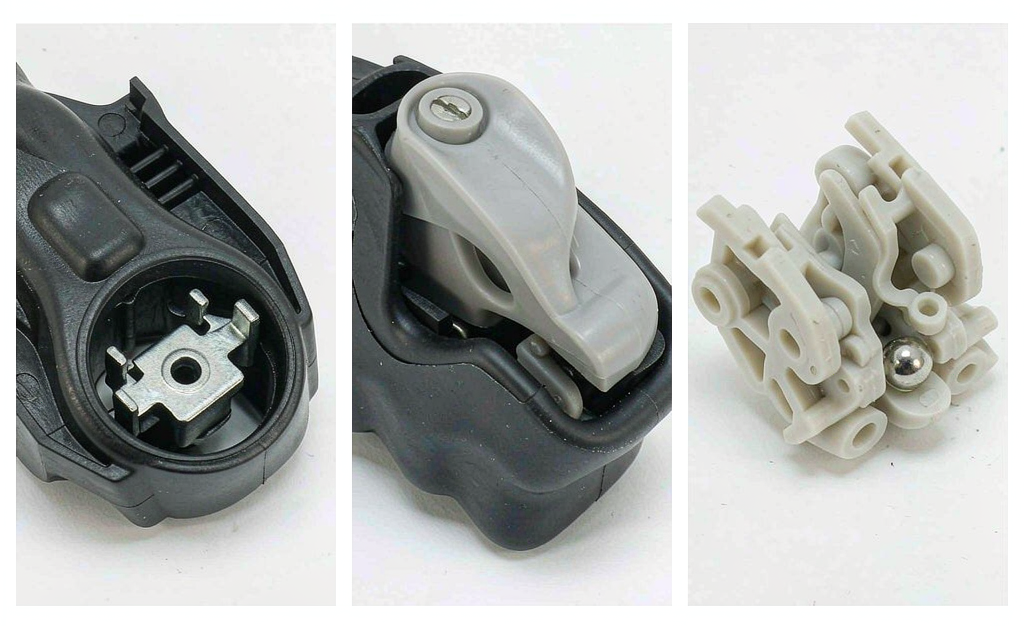
Design for medical molding: what we flag before tooling
Most medical molding problems are locked in at the drawing stage. This is the checklist we work through with you — and it is the part of the quote that actually reduces your risk.
Uniform wall thickness
Thick-to-thin transitions drive sink, warp and internal stress. Where a thick section is functionally required, we coring it out rather than accepting the sink.
Radii instead of sharp corners
Sharp internal corners concentrate stress and create fill and packing problems. Generous radii improve both mechanical performance and mouldability.
Draft & ejection
Insufficient draft causes drag marks, distortion and ejection damage. Textured surfaces need more draft, not less — confirmed against the specified texture.
Ribs & bosses
Rib thickness kept below the nominal wall to avoid sink on the cosmetic face; bosses designed with correct base radii and support where screws will load them.
Gate location & type
Gate position decides weld line placement, fill balance and where vestige remains. On medical parts it is a functional decision, not a cosmetic afterthought.
Parting line & critical features
Sealing faces, optical windows and mating dimensions should not sit on the parting line. We recommend where to shift them before the tool is designed.
Undercuts & side actions
Every side action adds cost, maintenance and a potential failure point. We identify which undercuts can be designed out at no functional loss.
Tolerance specification
Over-tolerancing a medical drawing is one of the most common cost drivers. We identify which dimensions are truly critical and which can carry standard moulding tolerance.
Cleanability & dead spaces
Recesses, blind holes and sharp internal corners trap residue. For reusable or fluid-path parts we flag geometry that cannot be effectively cleaned.
Surface finish & texture
Texture affects release, cleanability, wear and perceived quality. Specified texture is confirmed with a standard reference rather than a written description.
Medical mold development, from concept to approved samples
Tooling is the longest lead item and the hardest to change later. The sequence below is designed so the expensive decisions happen after the cheap ones have been tested.
Tooling concept & DFM
Part review, gating and cooling concept, shrinkage and tolerance assessment, cavity count recommendation based on annual volume.
Mold design & steel selection
Full 3D mold design for approval, steel grade selected for the resin, expected volume and any corrosive or abrasive fillers.
Build, tryout & sampling
Mold build, first shots (T0), dimensional check against drawing, adjustment and resampling until parts meet the inspection plan.
Approval & production release
Sample approval, documented process parameters, inspection plan and packaging specification agreed before serial runs begin.
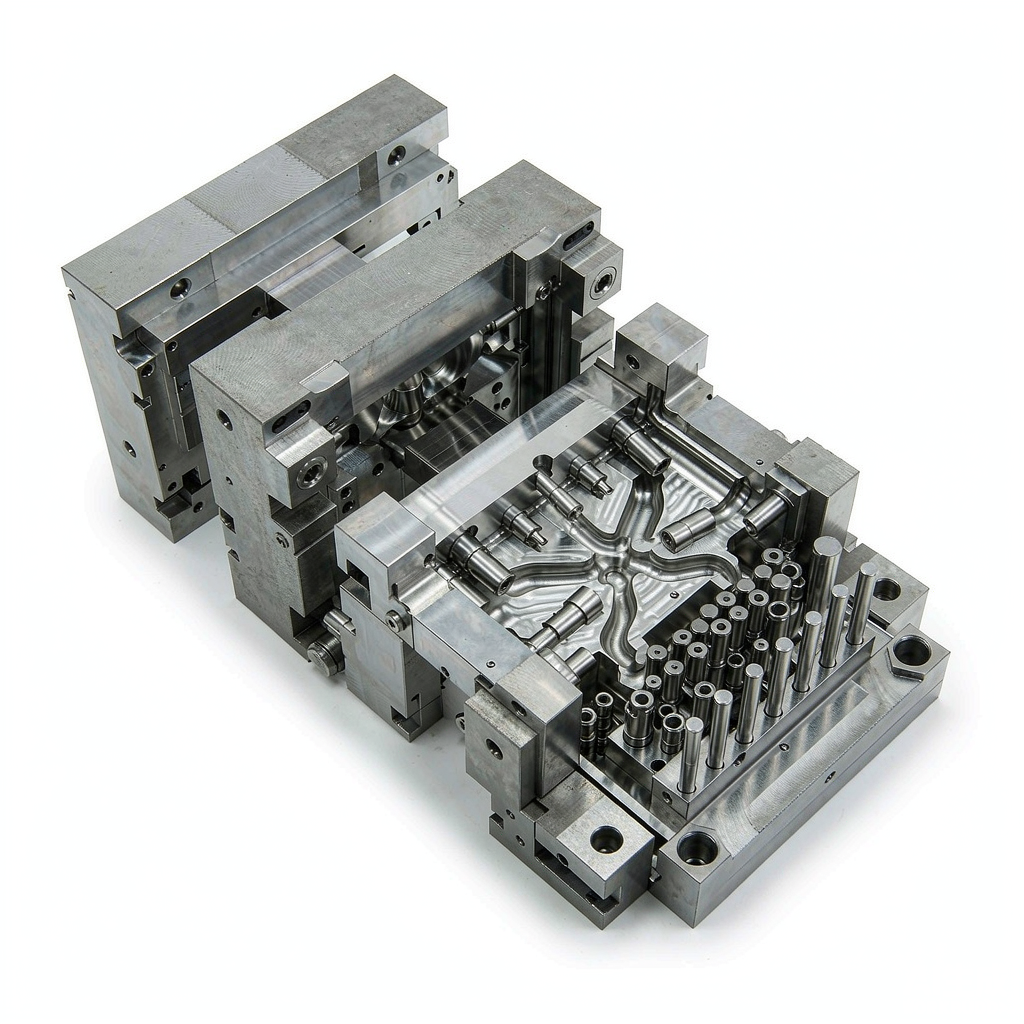
Prototype tool or production tool first?
| Decision factor | Prototype / bridge tool first | Go straight to production tool |
|---|---|---|
| Design maturity | Geometry still changing; clinical or user feedback expected | Design frozen and released |
| Material certainty | Resin shortlist not final; sterilization compatibility still being tested | Grade locked and qualified |
| Volume visibility | Demand uncertain; need parts before committing capital | Annual volume known and forecast |
| Timeline pressure | Need parts for testing now, tooling decision later | Tooling lead time fits the launch plan |
| Trade-off | Faster to first parts, lower initial cost, shorter tool life | Slower to first parts, higher initial cost, built for volume |
Tool ownership and maintenance. Customer-owned tooling is identified, stored and maintained under a recorded schedule. Cavity identification is maintained so that a dimensional issue can be traced to a specific cavity rather than to the tool as a whole.
Controlled production environment
Cleanroom requirements vary enormously between a diagnostic housing and a sterile fluid-path component. We would rather confirm the configuration against your project than publish a classification we cannot evidence.
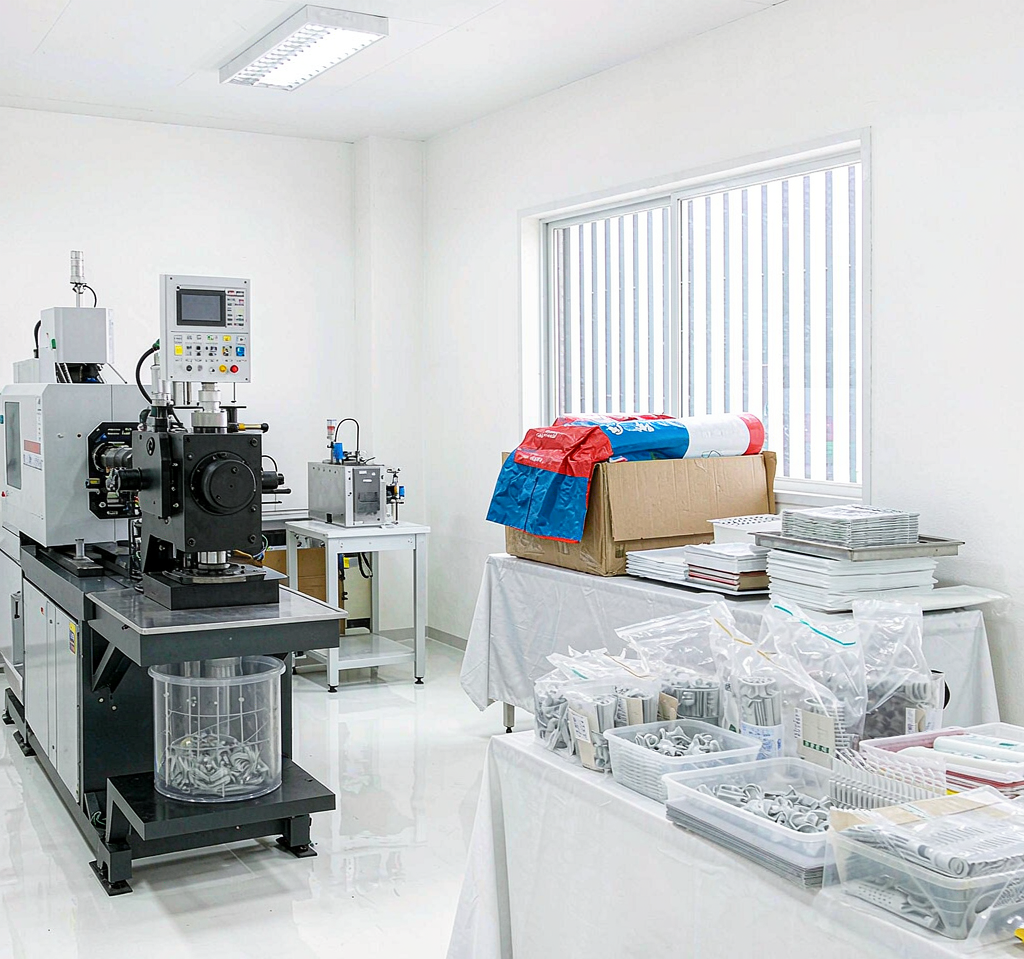
What we can state
A controlled production environment is available for medical applications. Cleanroom classification, room size and monitoring scope are confirmed according to project requirements.
What controlled environment actually controls
Particulate exposure during moulding and handling, gowning and personnel flow, material and component transfer, work-in-process protection and final packaging conditions.
What we will not do
We will not publish an ISO class number that monitoring records do not support. If your project requires moulding, assembly or packaging inside a classified cleanroom with defined particle monitoring and gowning procedures, request the current configuration and monitoring records during qualification.
Ask this during qualification. "Send me the current cleanroom configuration, the monitoring records and the gowning procedure." A supplier that answers with a document is a supplier that has one. A supplier that answers with a marketing line is describing an aspiration.
Inspection, control points and traceability
Inspection in medical molding is not a final gate — it is a chain. Each node exists so that a problem is found where it can still be traced to a cause.
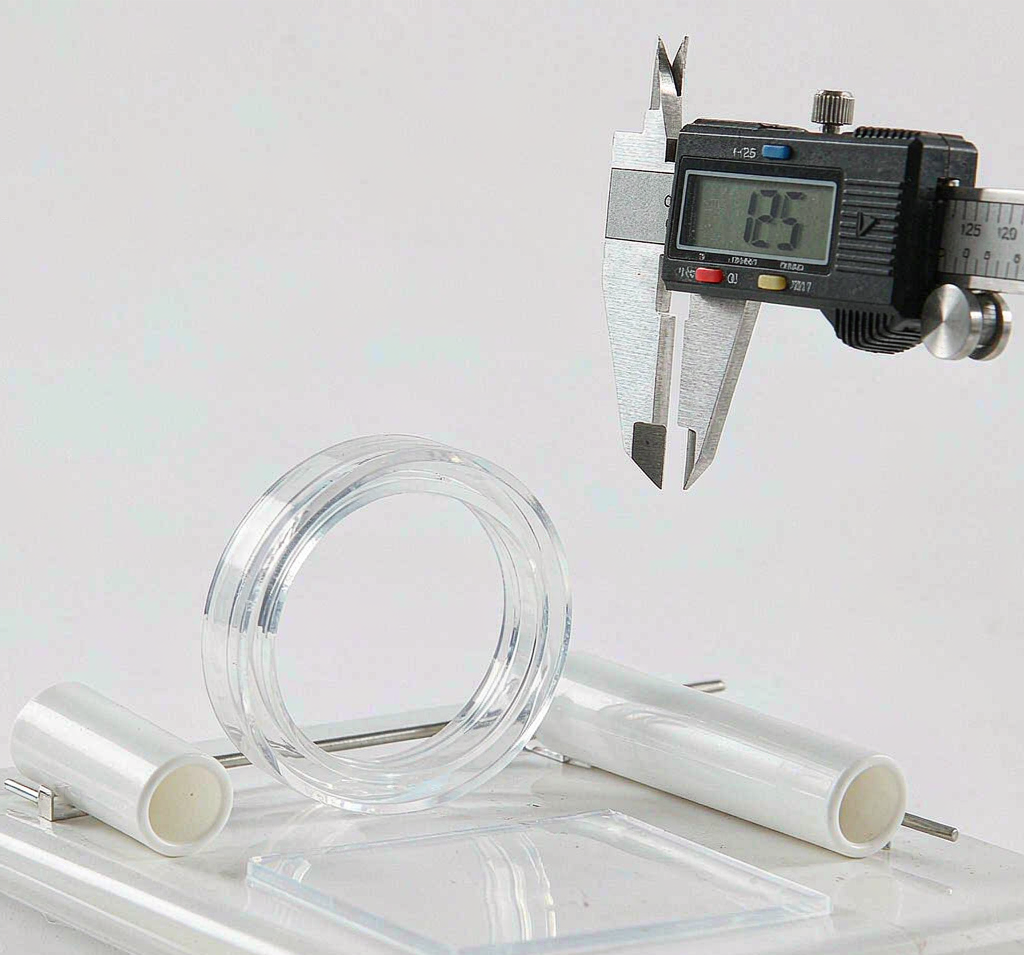
Documentation available
| Document | What it contains | Availability |
|---|---|---|
| Material certificate | Resin manufacturer certificate of analysis / compliance for the lot supplied, linked to the production record | Provided with the material supply for the lot |
| Dimensional inspection report | Measured results for drawing-defined features, against the inspection plan | Standard on medical projects; frequency agreed per project |
| First article inspection (FAI) | Full dimensional evaluation of initial parts from new or modified tooling | Provided on request or as required by the quality agreement |
| Process parameter record | Recorded molding parameters for the production run | Provided where required by the quality agreement |
| Lot traceability record | Resin lot, machine, shift and cavity logged against the lot | Standard |
| Certificate of conformance | Statement that supplied parts conform to the agreed specification | Standard with shipment |
| Change control record | Documented notification and approval trail for material, tooling or process changes | Maintained for the project |
Traceability in practice. Lot-level traceability means that if you raise a question about a shipment, we can go back to the resin lot, the machine, the shift and the cavity — not just to a date on a box.
IQ / OQ / PQ validation support
Validation is often the most misunderstood item in a medical molding quotation. Here is what each stage means in practice — and what we can actually commit to.
Question it answers: Is the equipment and tooling installed correctly and fit to run?
- Machine and auxiliary equipment identification
- Utility connections and operating ranges confirmed
- Calibration status of measuring and control instruments
- Tooling identification and installation verification
- Documentation and drawing set in place
Question it answers: Does the process produce conforming parts across the operating window, including at its edges?
- Parameter ranges explored, not just the nominal setting
- Worst-case conditions run and evaluated
- Robust process window identified and documented
- Setting limits defined for production
- Results evaluated against agreed acceptance criteria
Question it answers: Does the process consistently produce conforming parts under normal production conditions?
- Runs conducted under routine production conditions
- Adequate sample size across the run, not just at start-up
- Variation across cavities, shifts and material lots considered
- Results assessed against the inspection plan
- Conclusions documented for the manufacturer's review
Scope, honestly stated. Validation support is available according to project and customer requirements. Scope, protocols and acceptance criteria are agreed before tooling begins. Validation is not automatically included in every project, and final protocol approval and regulatory responsibility remain with the device manufacturer.
Why this matters to your launch date. Validation is a schedule item, not an afterthought. If a project needs IQ/OQ/PQ, that requirement has to be in the RFQ — retrofitting validation after tooling is built and parts are already shipping is the most expensive way to do it.
Compliance concepts, separated
Most of the misleading claims in medical molding come from merging things that are not the same. These are separate concepts with separate owners.
ISO 9001:2015 — Goldcattle holds ISO 9001:2015 certification.
ISO 13485:2016 — the quality management system standard specific to medical devices. Medical projects here run with process controls aligned to ISO 13485 requirements. We do not state ISO 13485 certification unless a current certificate with the relevant scope can be produced. If your supplier approval requires one, request the certificate and scope statement during qualification.
FDA QMSR — the Quality Management System Regulation amends 21 CFR Part 820 to incorporate ISO 13485:2016 by reference, effective February 2, 2026. QMSR obligations fall on the device manufacturer, not on a contract moulder.
EU MDR — obligations under the Medical Device Regulation sit with the manufacturer placing the device on the EU market. A component supplier supports the technical file; it does not own it.
The practical consequence for you: these requirements are increasingly flowed down through quality agreements and supplier controls, which makes documentation, traceability and change control the deciding factors in supplier selection.
FDA material compliance describes a resin meeting specific FDA requirements for its intended contact. It is not FDA approval of a device, and it is not a claim we extend to your finished product.
ISO 10993 is a device-level biological evaluation, considering contact type, duration and the finished device in its final form. Testing is carried out by or for the manufacturer, typically through an accredited laboratory.
USP Class VI is a material-level biological reactivity test category. A USP Class VI resin does not make a finished device biocompatible.
What we do: source and mould the specified medical-grade resin and provide the resin manufacturer's compliance documentation with the material.
EtO, gamma, e-beam and steam each interact differently with a polymer — affecting colour, mechanical properties, dimensional behaviour and service life. Material compatibility with the chosen method is a selection input, not a post-production check.
Sterilization validation and sterile barrier system validation are performed by the responsible party — normally the device manufacturer or the packaging responsible party. We supply the moulded parts, the material data and the production records that the validation depends on.
Statements you will not see from us. We do not describe ourselves as an "FDA approved manufacturer" or an "FDA certified medical injection moulder." We do not claim ISO 13485 certification without a current certificate and scope behind it. We do not state a cleanroom classification without monitoring records. And we do not publish fixed material prices that would be out of date before your project starts.
Each of those claims is easy to write and expensive to defend during an audit. Precise, verifiable statements survive audit; marketing lines do not.
What your supplier can and cannot handle
The clearest way to avoid problems in a medical program is to agree who owns what, in writing, before the first part is moulded.
| Item | Owner | Notes |
|---|---|---|
| Manufacturing components to your drawing | Goldcattle | Build-to-print, including material, tooling, molding and inspection. |
| DFM feedback on mouldability | Goldcattle | Wall thickness, draft, gating, parting line, tolerance and undercut review before tooling. |
| Mold design, build, tryout and sampling | Goldcattle | In-house, with mold design released to you for approval before cutting steel. |
| Dimensional inspection & reports | Goldcattle | Against drawing-defined features and the agreed inspection plan. |
| Lot traceability records | Goldcattle | Resin lot, machine, shift and cavity logged against the production record. |
| Process parameter records | Goldcattle | Recorded and retrievable where required by the quality agreement. |
| IQ / OQ / PQ execution support | Shared | Scope and protocols agreed per project. Final protocol approval remains with you. |
| Material selection | Shared | We shortlist and advise from processing and sterilization experience. Final selection and approval is yours. |
| Biological evaluation (ISO 10993) | You | Device-level evaluation. Testing performed by an accredited laboratory. We supply the documentation pack. |
| Device classification & regulatory pathway | You | Determined by intended use. Not a supplier decision. |
| FDA establishment registration & device listing | You | Obligation of the device manufacturer or specification developer. |
| EU MDR technical documentation & CE marking | You | We supply component documentation that supports your technical file. |
| Sterilization validation | You | We supply parts, material data and production records for the validation. |
| Sterile barrier system validation | You | Packaging validation performed by the responsible party. |
| Clinical evaluation & post-market surveillance | You | Outside a component supplier's scope. |
How to use this table. Send it to your regulatory or quality lead. Any row where you expected a different owner is a conversation worth having before the RFQ goes out — not after the first shipment arrives.
Representative medical molding project types
These describe typical scope and the engineering questions involved. They are anonymised project types, not named customer programs, and no performance figures are stated — results vary too much by design for a generic number to be honest.
- Part type
- Multi-cavity housing with cosmetic faces and snap-fit assembly
- Material
- PC / ABS
- What mattered
- Consistency across cavities, parting line placement away from mating faces, colour match between housing and cover
Delivered: DFM review before tooling, gating and cooling concept, sample approval against drawing, defined process window and inspection plan for release.
- Part type
- High-volume single-use connector with tight mating geometry
- Material
- PP
- What mattered
- Gate vestige control on the sealing face, fill balance across cavities, dimensional consistency on the critical interface
Delivered: Production tooling sized to annual volume, sampling and adjustment, dimensional reporting on drawing-critical features, lot traceability and certificate of conformance.
- Part type
- Reusable handle intended for repeated steam sterilization cycles
- Material
- PPSU / PEI
- What mattered
- Material behaviour across repeated sterilization, resistance to cleaning agents, avoidance of stress-concentrating geometry
Delivered: Material shortlist against the sterilization requirement, tool steel selection for high-temperature resin, drying and processing discipline, and documentation support for the customer's validation.
On published numbers. Yield percentages, particulate counts and cytotoxicity figures are specific to a device, a material, a tool and a process. We do not publish representative values for them — a number that is accurate for one project is misleading for yours. If you need projected capability data, it is developed during sampling on your actual tool and reported against your drawing.
Prototype → validation → production
One supplier across all three stages means the tooling, process and documentation developed in stage one are what production runs on in stage three.
Prototype & Feasibility
Get real parts into your hands and into test quickly, in a material as close as practical to the production intent.
- CNC machined or 3D printed samples for form and fit
- Prototype or bridge tool for parts in the target resin
- DFM review and design correction before steel
- Material shortlist narrowed against requirements
Validation Builds
Produce the parts, records and process evidence your regulatory submission and internal qualification depend on.
- Production or bridge tool parts for evaluation
- Dimensional reports against drawing
- Process window identified and documented
- IQ / OQ / PQ support where agreed in scope
Production
Repeatable output with the records, traceability and change control that a regulated supply chain expects.
- Defined process and inspection plan
- Lot-level traceability and conformance documentation
- Tool maintenance and cavity identification
- Change control and notification per agreement
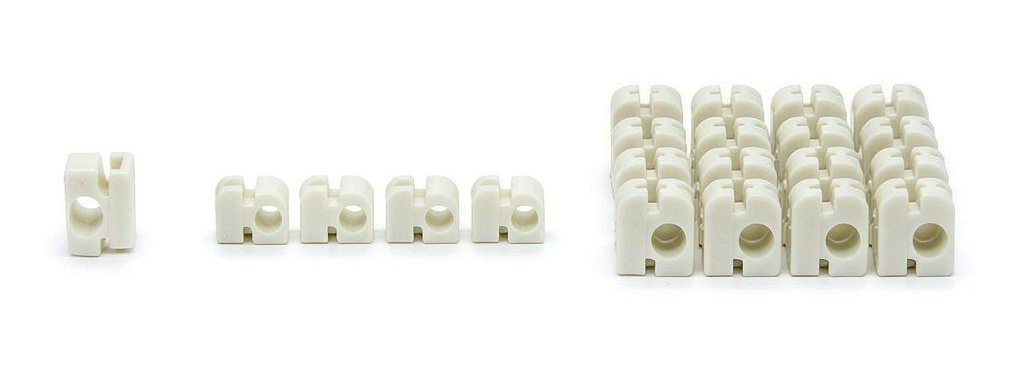
Lead time, stated plainly. Prototypes 3–7 working days, low-volume 7–20 working days, mass production 15–25 working days. These ranges start from design and drawing approval and exclude mold design, mold build, sampling and validation, which are scheduled separately and depend on tool complexity.
3D printing vs CNC machining vs injection molding
In medical programs these are not competing options — they are stages. Knowing which question each one answers keeps early decisions from becoming production problems.
| Route | What it answers | Best volume range | Material authenticity | Watch out for |
|---|---|---|---|---|
| 3D printing | Does this geometry work at all? Form, fit, ergonomics, early assembly checks | 1–50 pieces | Print resin, not production resin — mechanical and biological behaviour will differ | Validating material performance on printed parts is one of the most common early-stage errors |
| CNC machining | Does it work in the real production material, at real tolerances? | 1–100 pieces | Same stock material as production — genuine functional data | Unit cost stays high; geometry limited by tool access |
| Injection molding | Can it be made repeatably, at target cost, at volume? | Hundreds to millions | Production material, production process | Tooling lead time and capital come first — which is why DFM must precede steel |
The usual best sequence. Print or machine early parts to validate geometry, then machine in the production resin to validate material behaviour, then tool for production once the design is stable. Skipping the middle step is how programs discover a material problem after the tool is built.
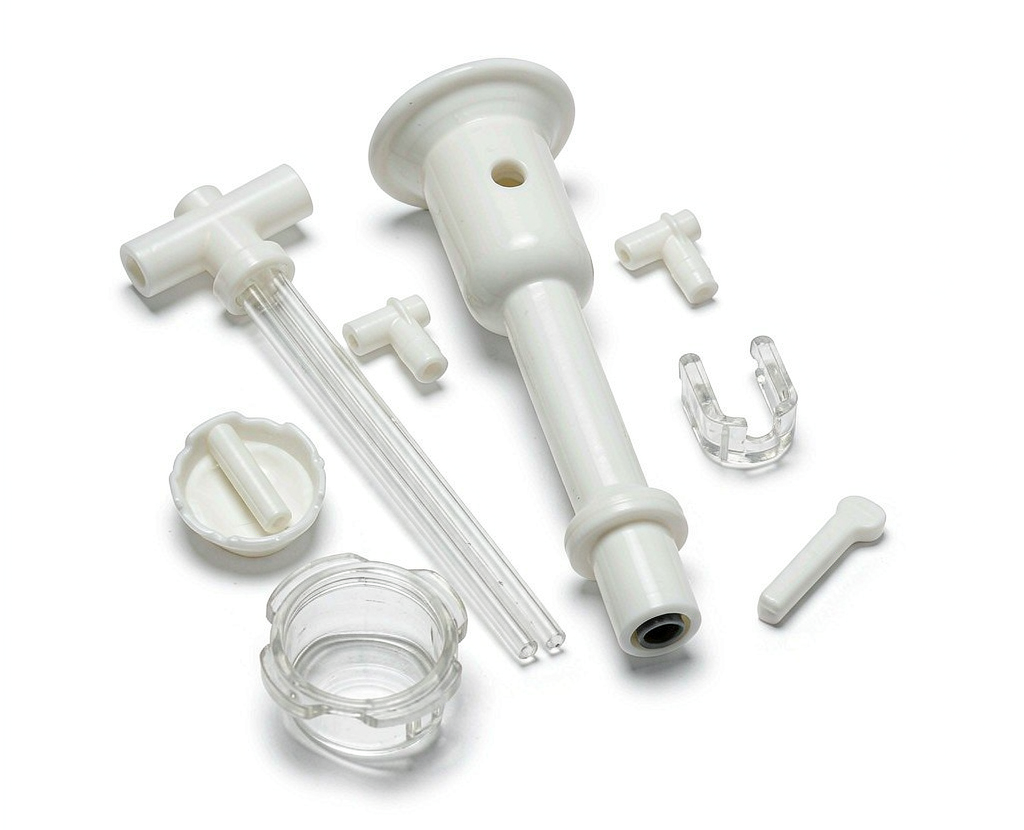
What to send for an accurate medical molding quote
A medical RFQ is different from a commercial one. These nine items let us quote scope accurately instead of padding the price against unknowns.
Questions buyers actually ask before qualifying a medical moulder
Are you ISO 13485 certified?
Goldcattle holds ISO 9001:2015 certification. Medical projects are run with process controls aligned to ISO 13485 requirements. We do not state ISO 13485 certification unless a current certificate with the relevant scope can be produced. If your supplier approval requires one, request the certificate and scope statement during qualification and we will confirm exactly what is held and what is supported.
Are you an FDA approved or FDA registered manufacturer?
No — and no credible component moulder should claim to be. FDA does not approve component moulders as medical device manufacturers. FDA establishment registration and device listing are obligations of the device manufacturer or specification developer; a contract manufacturer of components generally does not register as a device establishment. Material compliance with FDA requirements is also not the same as FDA approval of a finished device.
What is FDA QMSR, and does it change what you do?
The Quality Management System Regulation amends 21 CFR Part 820 to incorporate ISO 13485:2016 by reference, effective February 2, 2026. The obligations fall on the device manufacturer. For us, the practical effect is that customers flow down ISO 13485-aligned requirements through quality agreements and supplier controls — which puts documentation, traceability and change control at the centre of how medical projects are run.
Can you supply USP Class VI or ISO 10993 compliant materials?
We source and mould specified medical-grade resin grades and provide the resin manufacturer's compliance documentation with the material. USP Class VI is a material-level test category. ISO 10993 is a device-level biological evaluation performed by or for the device manufacturer, normally with testing by an accredited laboratory. Supplying a compliant resin is not the same as completing the biological evaluation of a device.
Do you have a cleanroom, and what class is it?
A controlled production environment is available for medical applications. Cleanroom classification, room size and monitoring scope are confirmed according to project requirements. We do not publish an ISO class number that monitoring records do not support. If your project requires moulding, assembly or packaging inside a classified cleanroom, request the current configuration and monitoring records during qualification.
Do you provide IQ, OQ and PQ?
Validation support is available according to project and customer requirements. Scope, protocols and acceptance criteria are agreed before tooling begins. Validation is not automatically included in every project, and final protocol approval and regulatory responsibility remain with the device manufacturer.
Can you mould implantable-grade PEEK?
We mould PEEK components for surgical instrument and high-load applications. Whether PEEK — or any material — is appropriate for an implantable device is a determination for your design and regulatory team, supported by the biological evaluation and the intended-use definition. We will not tell you a material is required for an application we have not evaluated with you.
Can you do prototype tooling before committing to production tooling?
Yes, and for most medical programs we recommend it. A prototype or bridge tool gets real parts in the target resin into testing while the design is still changing. It costs less and takes less time than production steel, and it de-risks the tooling decision that follows.
What is your minimum order quantity?
One piece for prototype work quoted from a 3D model, using CNC machining, 3D printing or a prototype tool. For injection molding, volumes are agreed from prototype and bridge tooling through to multi-cavity production tooling based on annual demand and part design.
What are typical lead times?
Prototypes 3–7 working days, low-volume 7–20 working days, mass production 15–25 working days. These ranges are counted from design and drawing approval and exclude mold design, mold build, sampling and validation, which are scheduled separately according to tool complexity.
Do you provide dimensional inspection reports?
Yes — results are reported against drawing-defined features and the agreed inspection plan, not against a reference sample. Frequency and sample size are agreed in the quality agreement. First article inspection is available on request or where required by your supplier approval process.
How is traceability handled?
Lot-level traceability: resin lot, machine, shift and cavity are logged against the production record. That means a question about a shipment can be traced back to a specific material lot and cavity rather than to a date on a box.
Will you sign an NDA and a quality agreement?
Yes to both. Send your NDA or request ours — drawings are treated as confidential either way. Quality agreements are where documentation scope, inspection frequency, change notification timelines and validation responsibilities get written down, and we prefer to have that conversation early.
Can you support a supplier audit?
Yes. Audits — remote or on-site — are a normal part of medical supplier qualification. We would rather be audited against what we actually do than against a claim we cannot evidence, which is the reason every compliance statement on this page is written the way it is.
Do you handle assembly, printing or packaging?
Scope is confirmed per project. Tell us what the part needs after moulding — pad printing, ultrasonic welding, assembly, bagging, labelling or cleanroom packing — and we will confirm what can be done under one purchase order and what requires a defined secondary process.
Can you help us choose the material?
Yes, as a shortlist with reasoning. Tell us the sterilization method, contact type and duration, service temperature, chemical exposure, mechanical load and volume, and we will propose candidates with the processing trade-offs spelled out. Final material selection and approval stays with your team — it belongs in your technical file.
What happens if you need to change a material, tool or process?
Changes are raised with you and documented before they are applied. No material substitution, tool modification or process parameter change happens silently. The notification timeline and approval route are defined in the quality agreement.
Where to go next
Medical programs rarely run on one process. These are the capabilities that most often sit alongside medical molding.
Send the drawing — get a scope and a risk review, not just a price
Upload your 3D model and 2D drawing. You get a mouldability review, a material shortlist with reasoning, a tooling recommendation sized to your volume, and a documented route from prototype to production.
Accepted files: STEP / STP · IGES · SLDPRT · PDF · DWG