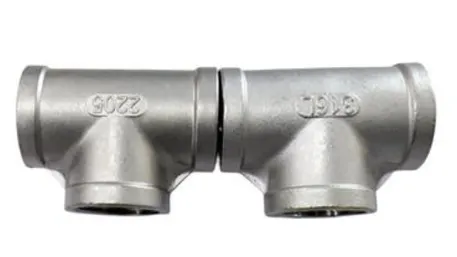
ISO 9001 · ASME B16.9
Custom Stainless Steel Pipe Caps
Industrial Piping Solutions · Corrosion-Resistant · Precision Engineered
The Goldcattle Advantage
With 26 years in precision manufacturing, Goldcattle delivers engineering-driven pipe cap solutions for oil & gas, chemical processing, water treatment, pharmaceutical, and food processing industries. From material selection and CNC machining to pressure testing and CMM inspection, we produce custom stainless steel pipe caps that meet ASME B16.9, ASTM A403, and ISO 9001 standards.
Pipe Cap Capability Snapshot
Materials:304 / 316 / 321 / Duplex SS
Manufacturing:CNC Machining & Fabrication
Tolerance:±0.003mm
Standards:ASME B16.9 · ASTM A403
MOQ:From Prototype to Production
Common Piping Challenges We Help Solve
Engineering problems that demand high-quality pipe cap solutions — and how we address them.
🧪 Corrosion Failure
Problem: Piping systems exposed to corrosive media degrade prematurely. Solution: 316 stainless steel with molybdenum content (2–3%) delivers superior resistance to pitting and crevice corrosion. Result: Extended service life in chemical and marine environments.
💨 Pressure Leakage
Problem: Leaks at pipe terminations compromise system integrity. Solution: Precision CNC machining with ±0.003mm tolerance ensures a perfect seal. Result: Zero-leak performance in high-pressure applications up to 3000 psi.
📐 Non-Standard Pipe Dimensions
Problem: Off-the-shelf caps don’t fit custom pipe sizes. Solution: Full OEM customization from 1/2″ to 48″ diameter. Result: Perfect fit for specialized piping systems.
🌡️ High-Temperature Degradation
Problem: Caps fail under sustained high temperatures. Solution: 321 stainless steel with titanium stabilization provides excellent resistance to intergranular corrosion at elevated temperatures. Result: Reliable performance in power generation and industrial furnace applications.
Stainless Steel Material Selection Guide
Select the right stainless steel alloy for your application environment, pressure, and temperature requirements.
| Alloy | Corrosion Resistance | Tensile Strength | Max Service Temp | PREN* | Best Application |
|---|---|---|---|---|---|
| 304 | Good | ≥515 MPa | ~870°C | ~18 | Food processing, general industrial |
| 316 | Excellent | ≥485 MPa | ~870°C | 23–25 | Chemical, marine, oil & gas |
| 321 | Good (high-temp) | ~515 MPa | ~900°C | ~18 | Power generation, exhaust systems |
| Duplex 2205 | Superior | ~655 MPa | ~315°C | ~35 | Offshore, chemical, high-chloride |
* PREN (Pitting Resistance Equivalent Number) measures resistance to chloride-induced pitting. Higher values indicate superior corrosion resistance. 316 contains 2–3% molybdenum, which significantly improves resistance to pitting and crevice corrosion.
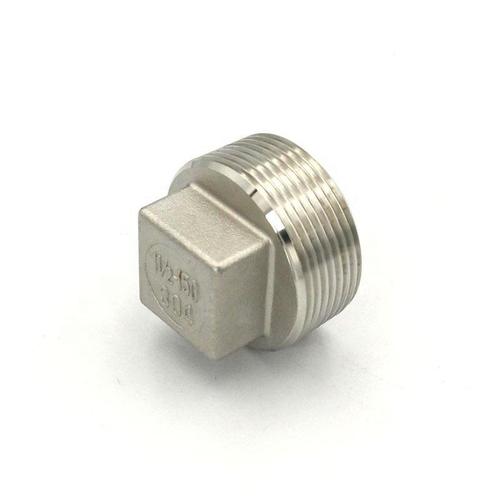
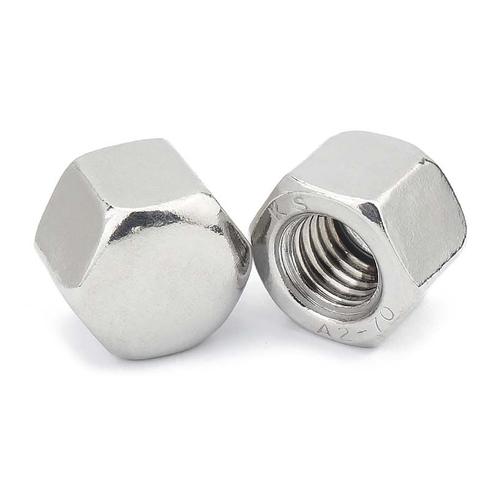
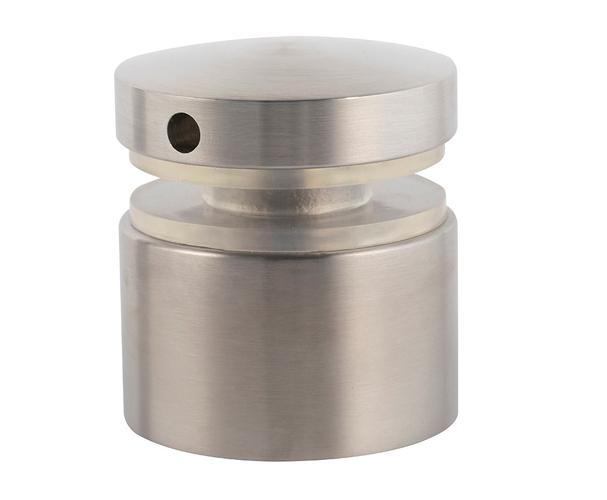
304 vs. 316 vs. 321: Which Stainless Steel Pipe Cap Do You Need?
Understanding the trade-offs helps you select the optimal alloy for your application.
| Factor | 304 | 316 | 321 |
|---|---|---|---|
| Corrosion Resistance | Good (general) | Excellent (chlorides, chemicals) | Good (intergranular) |
| Key Alloying Element | 18% Cr, 8% Ni | + 2–3% Mo | + Titanium |
| Chloride Resistance | Limited | Superior | Good |
| High-Temp Performance | Good | Better (oxidation) | Excellent |
| Relative Cost | Lowest | Medium | Highest |
| Typical Use | Food, general industry | Marine, chemical, oil & gas | Power, furnaces |
* 316 is the upgrade when chlorides, marine environments, or aggressive chemicals are present. 321 is selected for sustained high-temperature applications above ~400°C.
Technical Specifications & Manufacturing Parameters
Precision engineering data that define our pipe cap manufacturing capability.
| Parameter | Specification | Key Insight |
|---|---|---|
| Dimensional Tolerance | ±0.003mm | Ensures perfect fit on pipe ends, minimizes leak risk |
| Repeat Positioning | ±0.005mm | Consistent quality across production batches |
| Diameter Range | 1/2″ – 48″ (21.3 – 1219mm) | Seamless and welded options available |
| Wall Thickness | SCH 5S – XXS | Custom thickness available for specific pressure ratings |
| Surface Finish | Ra0.4 – 3.2μm (mirror finish optional) | Smooth finish reduces debris accumulation, facilitates cleaning |
| Pressure Testing | Up to 3000 psi | Hydrostatic and pneumatic testing available |
| CMM Inspection | Accuracy: 2μm | Full dimensional verification with material certificates |
* All parameters verified through in-process monitoring and CMM inspection. ASME B16.9 and ASTM A403 compliant.
Production Process & Critical Control Points
From raw material to finished pipe cap — every stage is engineered for precision and quality.
Raw Material Inspection
Spectroscopic analysis verifies chemical composition. Hardness, tensile, and microstructure testing performed.
Key insight: Material integrity determines final cap performance — 100% incoming inspection.
Design & CAM Programming
CAD/CAM software generates toolpaths. 5-axis simulation validates complex geometries.
Key insight: DFM review identifies potential issues before machining begins.
CNC Turning & Milling
5-axis CNC machining with closed-loop linear scales. Beveled edges, threaded, or domed configurations.
Key insight: Single-setup capability reduces errors from ±0.015mm to ±0.005mm.
Surface Finishing
CNC-controlled polishing, electroplating, or passivation treatments.
Key insight: Passivation removes surface contaminants and improves the natural protective oxide layer.
Quality Inspection
CMM dimensional inspection, pressure testing, leak-detection tests.
Key insight: 100% inspection of critical dimensions ensures zero-defect delivery.
Packaging & Delivery
Protective packaging prevents surface damage. Full traceability with material certificates.
Key insight: Lead time: 3–5 days for simple designs, 7–10 days for complex.
Industry Applications
Custom stainless steel pipe caps engineered for demanding applications across global industries.
Oil & Gas
Pipeline termination, offshore platforms
Chemical Processing
Corrosive media containment
Water Treatment
Process pipelines, distribution systems
Food & Beverage
Hygienic sanitary systems
Pharmaceutical
Purity-critical systems
Power Generation
High-temperature systems
Common Engineering Challenges & Solutions
Real manufacturing problems we have solved for global OEM clients.
Cause: Heat-induced deformation during welding. Solution: Optimized bevel geometry and controlled welding parameters.
Cause: Insufficient wall thickness or material strength. Solution: Design verification and pressure testing up to 3000 psi.
Cause: Material selection mismatch with environment. Solution: 316 stainless steel for chloride-rich environments; Duplex for superior performance.
Cause: Improper handling or cleaning. Solution: Passivation removes surface contaminants and restores the protective oxide layer.
Case Studies: Real OEM Projects
How Goldcattle delivered custom stainless steel pipe cap solutions for global clients.
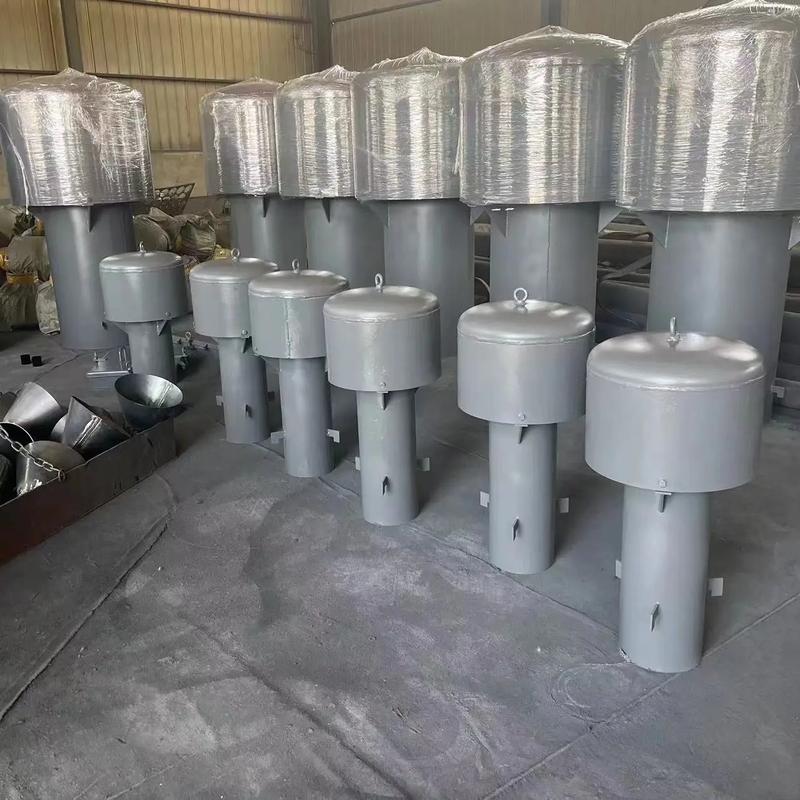 Offshore Oil & Gas Pipeline
Material: 316 Stainless Steel
Challenge: Harsh marine environment with high-pressure conditions.
Result: Zero-leak performance, reduced maintenance costs.
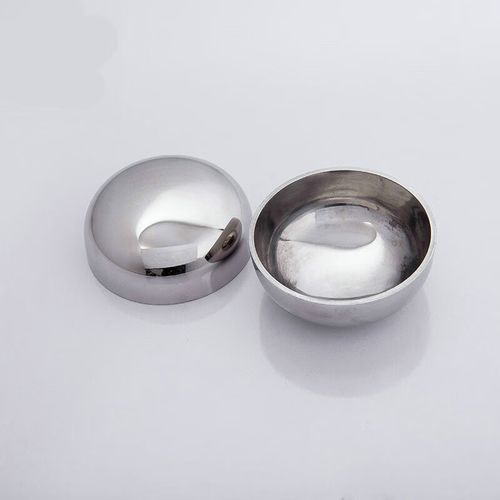 Pharmaceutical Production Facility
Material: 304 Stainless Steel
Challenge: Strict hygiene and purity requirements.
Result: Polished surface finish, reduced contamination risk.
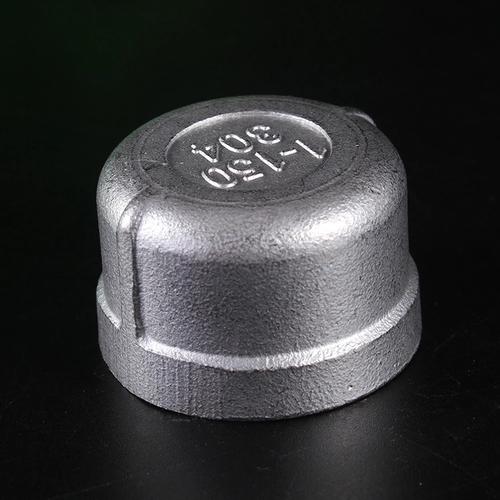 Chemical Processing High-Temperature System
Material: 321 Stainless Steel
Challenge: Sustained high-temperature exposure with corrosive media.
Result: Titanium-stabilized alloy prevented intergranular corrosion.
Pipe Cap Selection Decision Tree
Quickly identify the right material and specification for your pipe cap application.
→ 304 stainless steel
→ 316 stainless steel (2–3% Mo)
→ 321 stainless steel (titanium-stabilized)
→ Duplex 2205 (PREN ~35)
Frequently Asked Questions
Common questions from engineers, procurement professionals, and piping system designers.
Precision: ±0.003mm
Standards: ASME B16.9 · ASTM A403
MOQ: From Prototype
Certified: ISO 9001