CNC Material Cost Guide
What Is the Cheapest Metal to CNC? A Practical Cost Comparison
Compare 6061 aluminum, 1018 steel, brass and stainless steel by raw material price, machinability, tool wear and total part cost — because the cheapest material is rarely the cheapest finished part.
- 1 pcMOQ for prototypes
- 3–7 daysPrototype lead time
- 6Core processes in-house
Quick Answer
There is no single cheapest CNC metal for every project. The lowest total cost depends on material price, machinability, part geometry, order quantity, tolerance and finishing requirements.
1018 carbon steel usually has the lower raw-material price per kilogram, while 6061-T6 aluminum is often the more cost-effective choice for CNC machining because it cuts faster, needs less cutting force and is widely stocked.
For most prototypes and low-volume parts, 6061-T6 aluminum is a strong cost-performance option. For simple, heavy-duty parts where weight does not matter, low-carbon steel can deliver the lower finished-part cost.
What Does "Cheapest" Mean in CNC Machining?
When buyers ask for the cheapest CNC metal, they usually mean the lowest finished-part price. But the material with the lowest price per kilogram is rarely the lowest-cost finished part. A dense steel bar may cost less per kilogram than aluminum, yet it removes more slowly, wears tools faster and ships heavier.
Density is the part buyers forget. Steel is roughly three times denser than aluminum, so a part cut from steel consumes far more kilograms for the same finished volume — a cost that a price-per-kilogram comparison completely hides. A lighter, faster-cutting alloy can offset a higher material price through lower machining time.
The useful question is not "which metal is cheapest?" but "which metal gives the lowest total manufacturing cost for this specific part, in this quantity, with these requirements?" That shift in framing is what separates a procurement decision from a material ranking.
Common Myths That Make Material Choice Expensive
Myth 6061 aluminum is always the cheapest metal to CNC.
Reality 6061 is often the most cost-effective choice for general work, but it is not universally cheapest. Simple, heavy steel parts can cost less overall.
Myth The cheapest material produces the cheapest part.
Reality The finished price also includes setup, programming, machining time, tooling, finishing and inspection — often the larger share.
Myth Steel is always cheaper than aluminum.
Reality Steel is cheaper per kilogram, but its density and slower cutting can make a complex part more expensive than an aluminum equivalent.
Myth A higher grade is always better value.
Reality Defaulting to 7075 or titanium adds cost and machining difficulty when the function does not require it. Match the grade to the job.
What Actually Determines CNC Machining Cost?
Total part cost is the sum of every step from stock to inspected component. Treat it as a formula, not a single number:
Total CNC Part Cost
Total Cost = Material + Setup + Programming + Machining Time + Tooling + Finishing + Inspection + Scrap / Risk
Material Cost
Material price is only the first term. Steel is typically lower cost per kilogram but has higher density, so a given part consumes more kilograms. Aluminum costs more per kilogram but is roughly one-third the density, so the same part uses less material by weight — and it cuts faster. A buyer who compares only price per kilogram misses the larger picture.
Machining Time
For complex parts, machining time is usually the largest cost driver. It is set by material machinability, cut volume, feature count and tolerances. A material that machines significantly faster can save more than its higher raw price, especially at low and medium volumes.
Tool Wear
Abrasive or high-strength materials shorten tool life and add tool-change and replacement cost. Softer, free-machining alloys keep tooling cost low and reduce unplanned stops on the machine.
Setup & Programming
Setup and programming are largely fixed costs. They barely move the price of a single part but fall sharply as quantity rises, which is why high-volume economics differ from prototype economics.
Material Waste
A finished 300 g part may start from 1 kg, 2 kg or 5 kg of stock. The purchased stock size, not the final mass, drives material cost. A cheaper material with poor utilization can cost more than a slightly dearer material that starts closer to the final shape.
Finishing
Some metals need corrosion protection or decorative finishes; others are stable as-machined. Finishing adds both cost and lead time, and it is easy to overlook when ranking raw material price.
Inspection
Tighter tolerances and regulated industries add measurement and documentation. This is a small but real term in the total, and it grows with complexity and certification needs.
Cheapest Metals for CNC Machining Compared
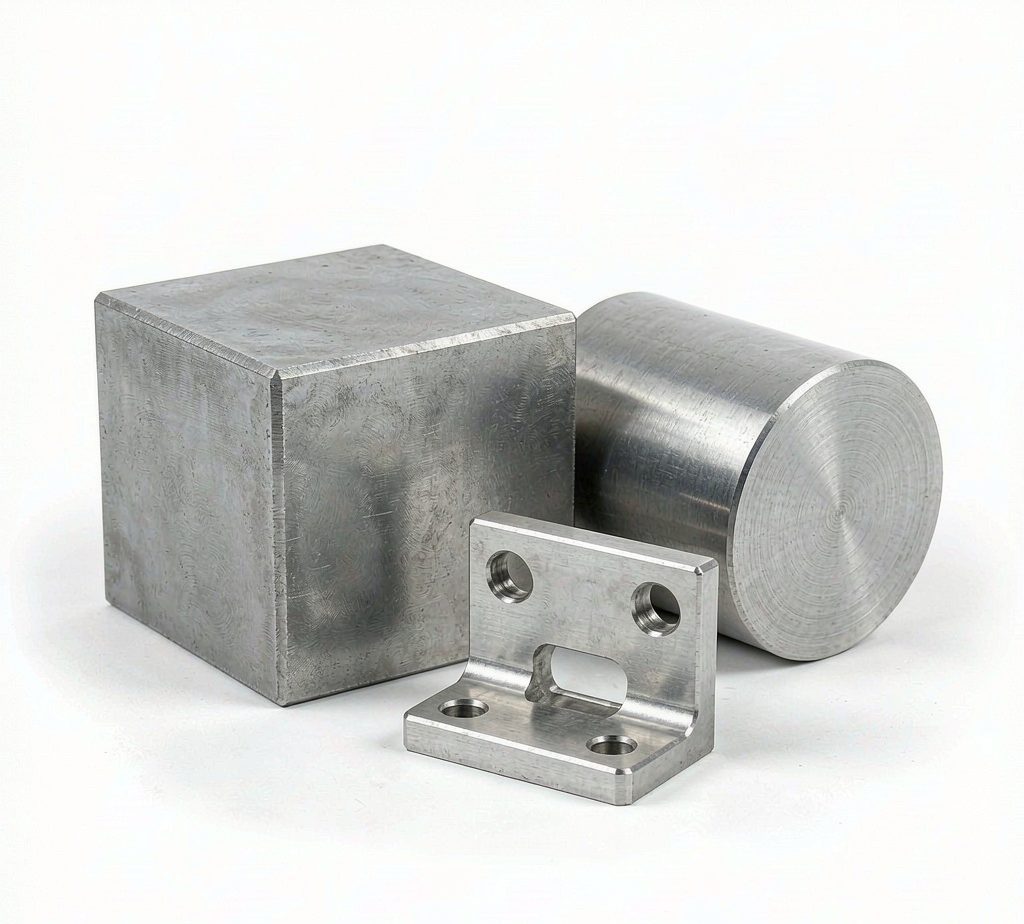
The gallery and table below use relative levels, not fixed prices, because material cost moves with grade, stock size, region and date. Use them to compare behavior, then validate with a quote.
6061-T6 Aluminum
Often the most cost-effective for general CNC work
- Raw materialLow–Medium
- MachinabilityExcellent
- Typical part costLow
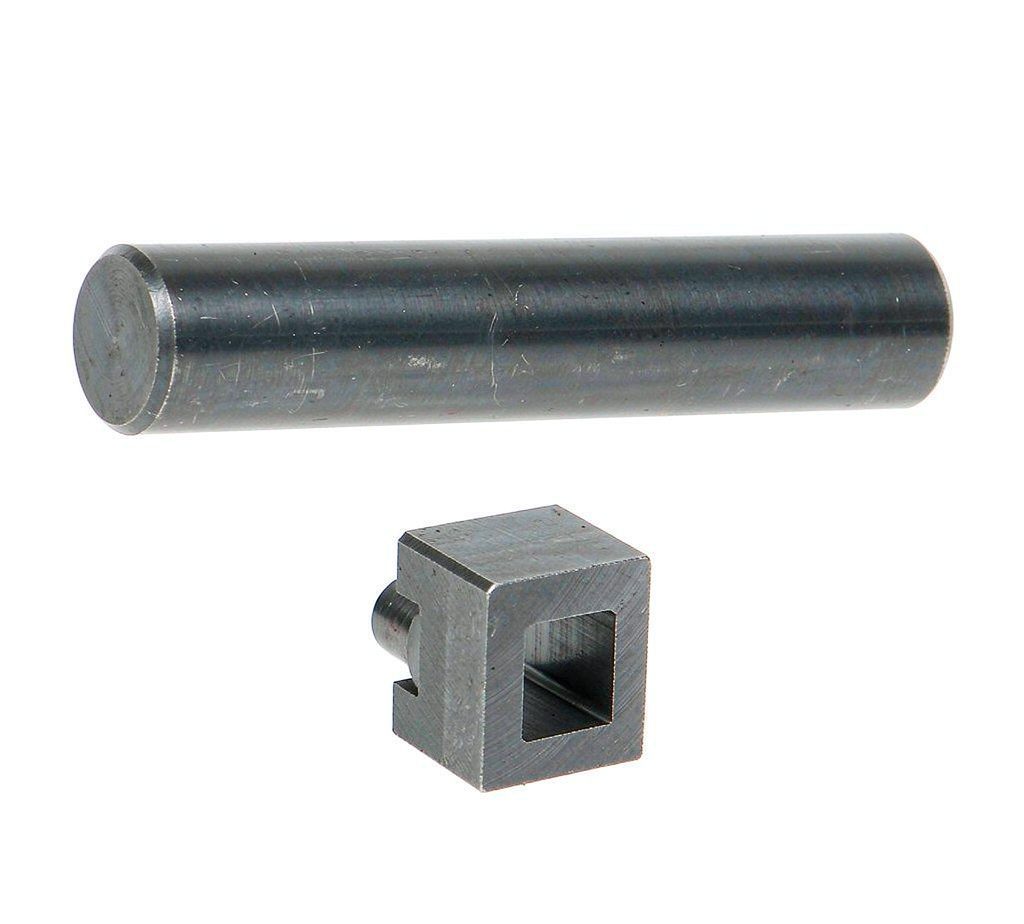
1018 Carbon Steel
Lowest raw-material price for simple parts
- Raw materialLow
- MachinabilityGood
- Typical part costLow–Medium
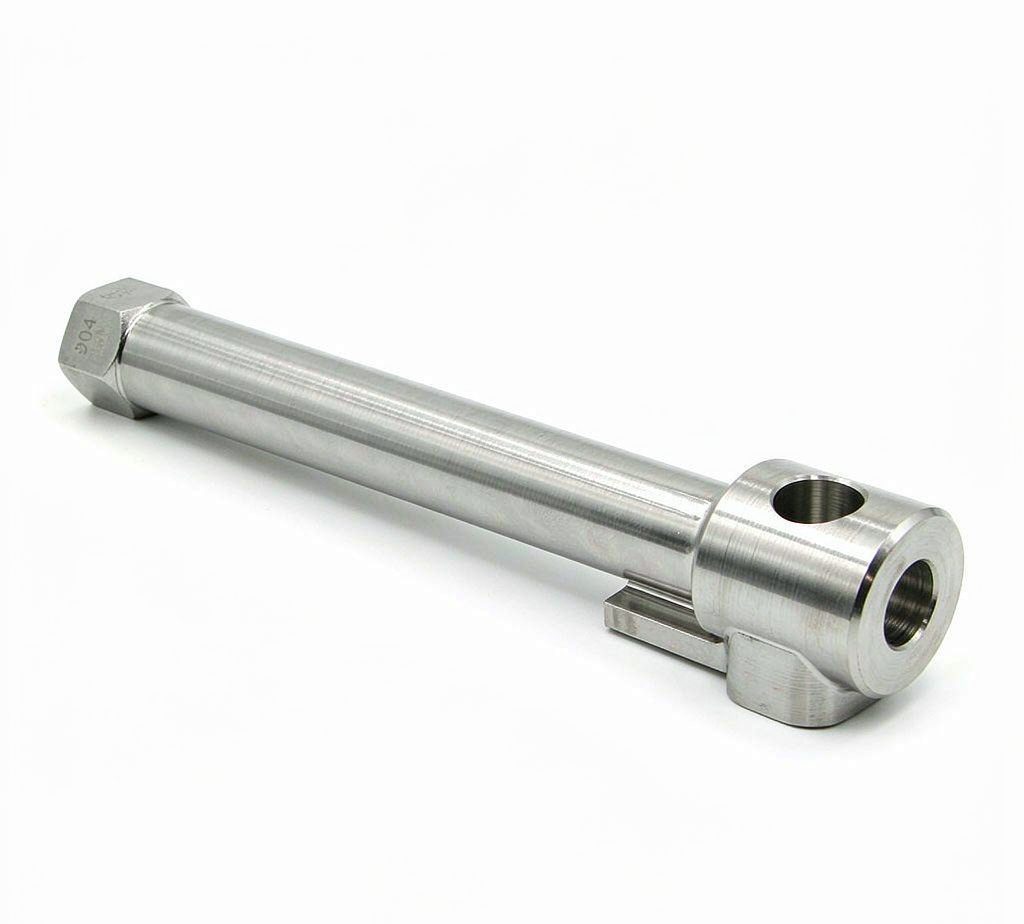
304 Stainless Steel
Corrosion resistance where lifecycle matters
- Raw materialMedium
- MachinabilityModerate
- Typical part costMedium–High
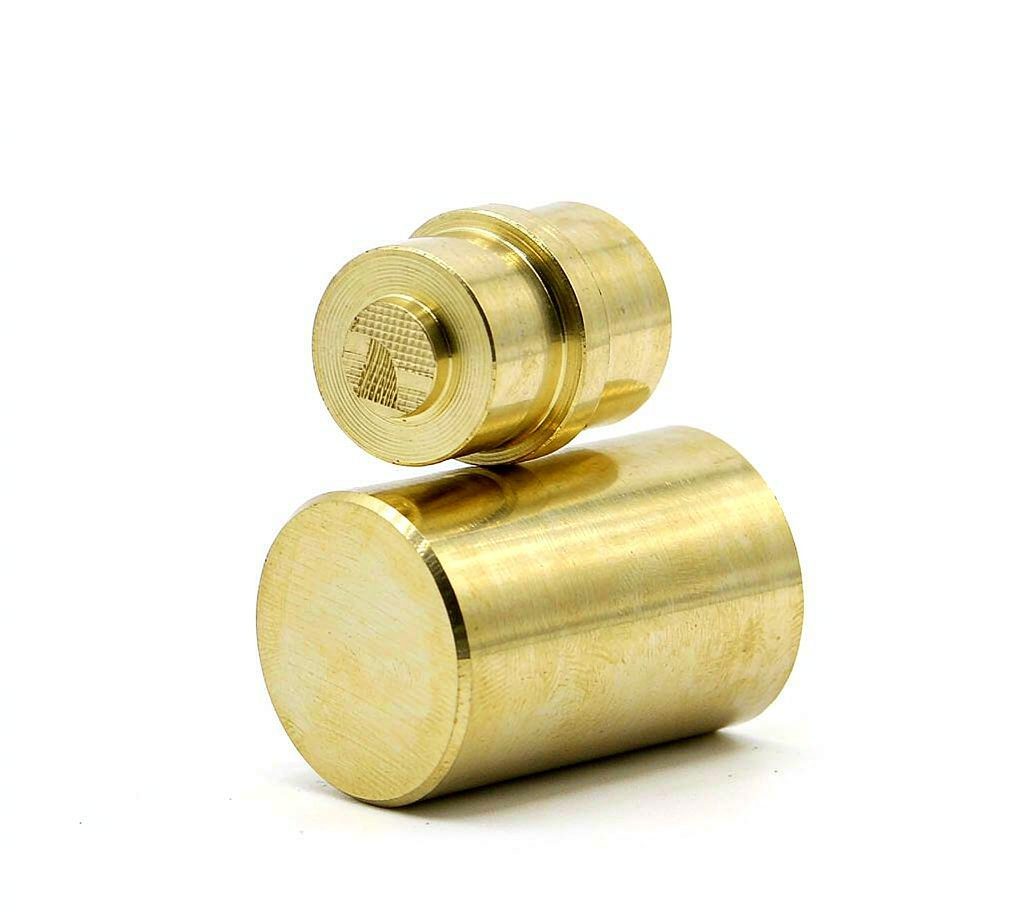
C360 Brass
Excellent machinability for small precision parts
- Raw materialMedium–High
- MachinabilityExcellent
- Typical part costMedium
| Material | Raw Material Cost | Machinability | Typical CNC Cost | Best For |
|---|---|---|---|---|
| 6061-T6 Aluminum | Low–Medium | Excellent | Low | Prototypes, brackets, housings |
| 1018 Carbon Steel | Low | Good | Low–Medium | Simple structural parts |
| C360 Brass | Medium–High | Excellent | Medium | Small precision parts |
| 304 Stainless Steel | Medium | Moderate | Medium–High | Corrosion-resistant components |
| 7075-T6 Aluminum | Medium | Excellent | Medium | High-strength lightweight parts |
| 316L Stainless Steel | Medium–High | Moderate | High | Medical, marine, chemical |
| Titanium Grade 5 | High | Difficult | High | Aerospace, medical |
6061 Aluminum vs 1018 Steel: Which Is Cheaper to CNC?
This is the comparison most buyers actually face. The honest answer is "it depends on the part."
1018 Carbon Steel
- Low material price per kilogram
- High strength and stiffness
- Widely available in many stock shapes
1018 — the trade-offs
- Heavier, so more kilograms per part
- Slower cutting, longer cycle time
- Higher tool load and more tool wear
- Often needs corrosion protection
6061-T6 Aluminum
- Lightweight, roughly one-third the density
- Fast cutting, low tool wear
- Easy to finish, widely stocked
6061 — the trade-offs
- Higher material cost per kilogram
- Lower strength and stiffness than steel
Rule of thumb: for a simple steel plate, steel is often cheaper. For a complex machined enclosure with many features, aluminum is often cheaper overall because machining time and tool wear dominate. A deeper look at aluminum vs steel CNC machining helps when the part sits between these extremes.
What Is the Cheapest CNC Metal for Different Part Types?
Sourcing questions usually arrive framed by part type, so map the material choice to the job in front of you:
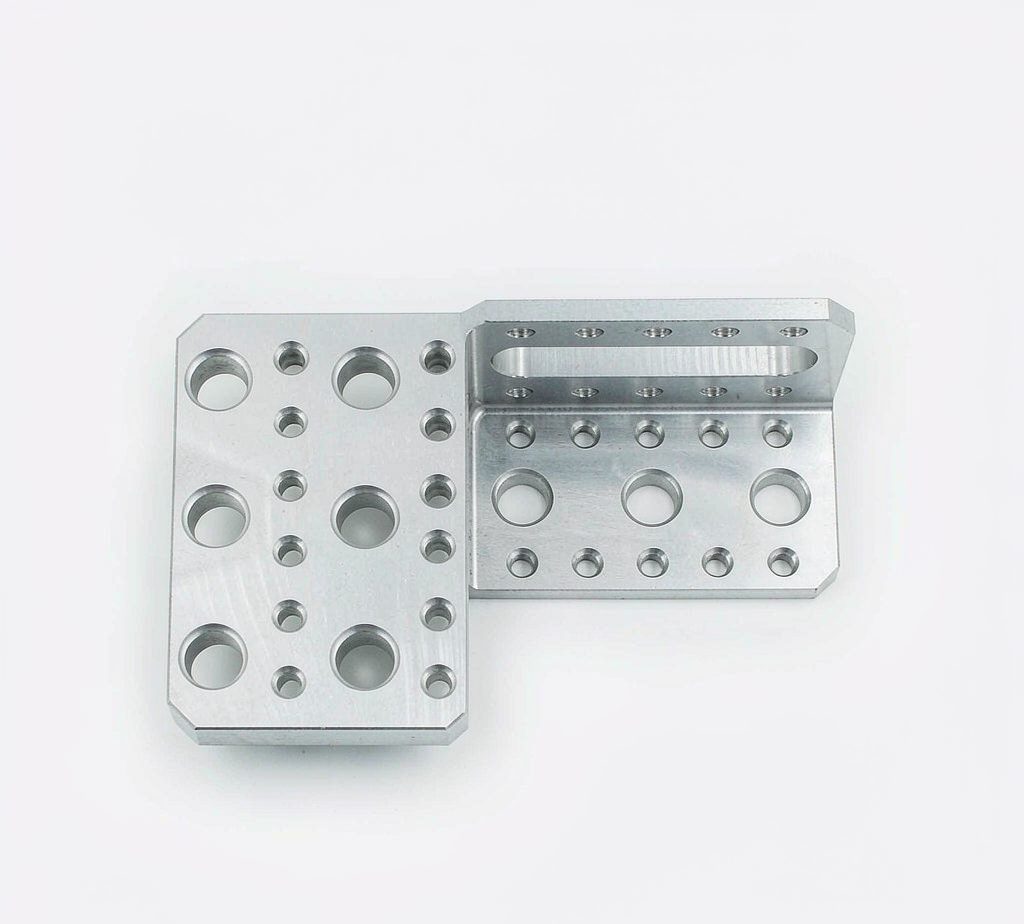
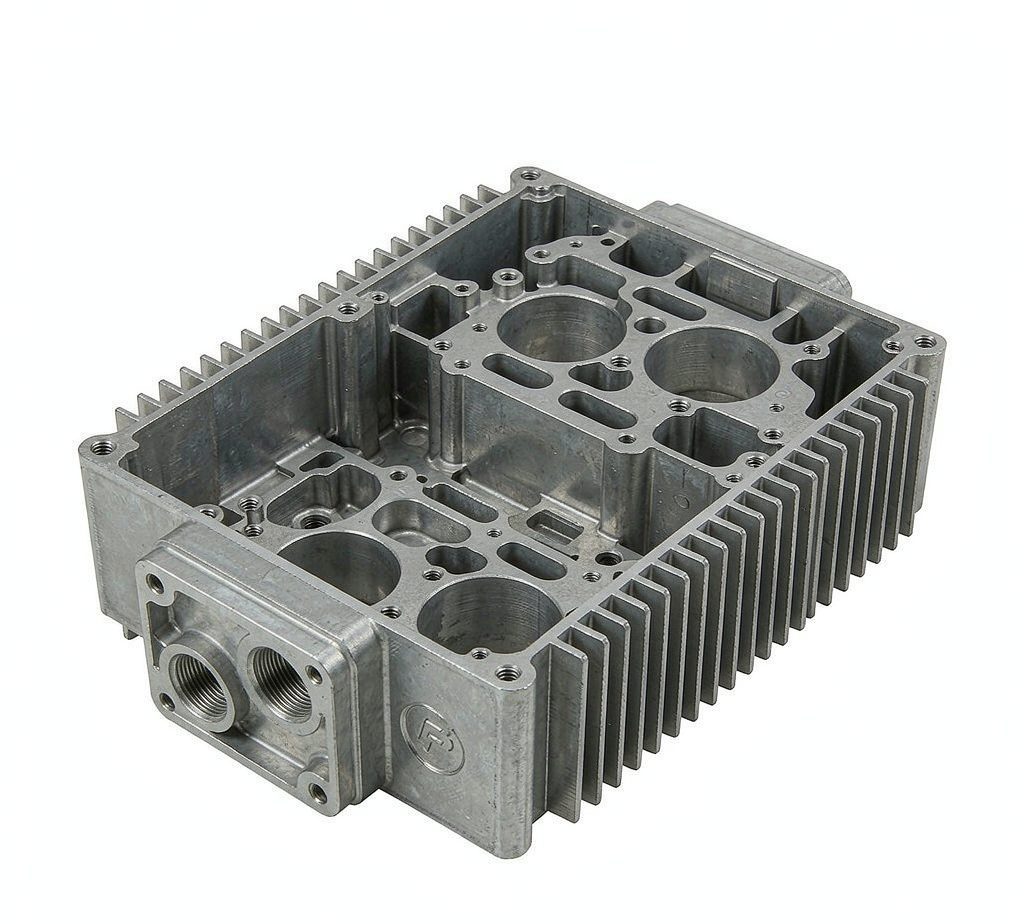
| Part Type | Usually Cost-Effective Material | Why |
|---|---|---|
| Electronics enclosure | 6061 Aluminum | Easy machining + low weight |
| Simple structural bracket | 1018 Steel | Low material cost + strength |
| Small turned connector | Brass | Excellent machinability |
| Lightweight bracket | 6061 Aluminum | Low density |
| High-strength lightweight part | 7075 Aluminum | Stronger without steel weight |
| Corrosion-resistant part | 304 Stainless | Better lifecycle value |
| Marine part | 316L Stainless | Chloride resistance |
| Medical component | 316L / Titanium | Performance requirements outweigh raw cost |
For corrosion-sensitive work, review our stainless steel CNC machining capabilities. Brass and aluminum bracket examples are covered in our custom CNC aluminum brackets work.
How Order Quantity Changes the Cheapest Material
Prototype: 1–10 pcs
Machining time and setup dominate, so machinability matters most. 6061 aluminum is usually the pragmatic pick.
Low Volume: 10–100 pcs
Material price starts to matter, but cycle time is still significant. The gap between materials narrows.
Production: 100–10,000+ pcs
Cycle time, tooling life, scrap, material yield, automation and stock availability all shape the winner.
How to Reduce CNC Cost Without Changing Material
Much of the savings on a CNC part comes from design, not material choice. Seven high-impact moves:
Example: How Material Choice Changes Total CNC Cost
The following is an illustrative example, not an actual quote. Part: an aluminum-style electronics bracket, 100 pcs, 3-axis milling, standard tolerance, no special finishing.
6061 Aluminum
| Raw material | Medium |
| Machining time | Lower |
| Tool wear | Lower |
| Shipping weight | Lower |
| Finishing | Easy as-machined |
| Overall cost | Often competitive |
1018 Steel
| Raw material | Low |
| Machining time | Higher |
| Tool wear | Higher |
| Shipping weight | Higher |
| Finishing | May need corrosion protection |
| Overall cost | Depends on geometry |
Cost figures are illustrative unless otherwise stated. Actual pricing depends on material grade, stock size, geometry, tolerance, quantity, machining time, finishing and inspection.
The correct material cannot be selected from material price alone. The winning option is the one that minimizes total manufacturing cost while still meeting functional requirements.
How to Choose the Right Low-Cost CNC Material
A simple sequence keeps the decision grounded:
- Define function first — load, environment, weight limit, appearance.
- Rank the cost drivers — is this part machining-time-bound or material-bound?
- Match the material — pick the grade that meets function with the least total cost.
- Get a DFM review — a short engineering review often finds savings that a material swap cannot.
Browse the full materials overview or our CNC machining service guide for deeper background before requesting a quote.
Frequently Asked Questions
What is the cheapest metal to CNC?
There is no universal cheapest metal. 1018 carbon steel often has the lower raw-material price per kilogram, while 6061-T6 aluminum is frequently the more cost-effective choice for CNC machining because it is easier and faster to machine. The right answer depends on geometry, quantity and requirements.
Is aluminum cheaper to CNC than steel?
Often, but not always. Aluminum's higher material price per kilogram can be offset by faster machining and lower tool wear. Simple, heavy-duty steel parts can still be cheaper overall.
Is 6061 aluminum the cheapest CNC material?
It is often one of the most cost-effective choices for general-purpose CNC machining, especially prototypes and low-volume parts, but the answer depends on part geometry, order quantity and finishing requirements.
What is the cheapest metal for CNC prototypes?
6061-T6 aluminum is often a practical choice for prototypes because it is widely stocked and easy to machine, which keeps setup and machining time low for early design iterations.
What is the cheapest steel for CNC machining?
Low-carbon steels such as 1018 are commonly considered economical choices for simple machined components, where material price and strength matter more than machinability.
Does material price or machining time matter more?
For complex parts, machining time can have a larger impact than raw material cost. For simple parts with high material usage, material cost may represent a larger share of the total.
How can I get the lowest CNC machining price?
Use a material that fits the application, standard tolerances, simple setups, standard hole and thread sizes and efficient stock dimensions. A supplier DFM review can identify further cost reductions before production.
Need Help Choosing the Most Cost-Effective CNC Material?
Send us your drawing and requirements. Our engineering team can review the design and recommend a material and process combination based on total manufacturing cost — not material price alone.
- CAD drawing or 3D model
- Required quantity
- Application and environment
- Target tolerance
- Surface finish requirements