CNC Plastic Machining Prototypes – Fast, High-Precision Custom Parts
We provide CNC plastic machining prototype services for fast, accurate, and functional parts to support your product development process, covering EVT, DVT, and PVT project stages with no minimum order requirement.
- ✓ Lead time: as fast as 3–5 days
- ✓ Precision tolerance: ±0.05mm
- ✓ Engineering materials: ABS, POM, Nylon, PC, PEEK
- ✓ No tooling cost, ideal for prototypes and small batches
What is CNC Plastic Prototyping
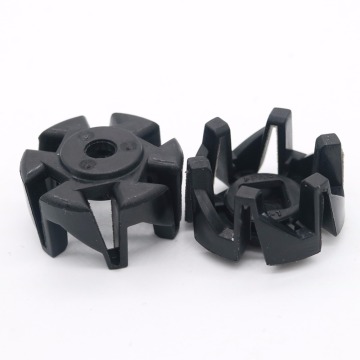
CNC plastic prototyping is a subtractive manufacturing process that cuts custom parts from solid blocks of engineering plastic using computer-controlled milling machines. This process produces precise, functional parts using real production-grade materials, allowing you to fully test your design before moving to mass production, ensuring your prototype performs exactly like your final product.
Unlike additive processes, CNC machining produces parts with isotropic material properties, matching the full mechanical performance of production parts. It requires no custom tooling, enabling fast turnaround for low-volume runs and rapid design iterations, making it perfect for teams that need to validate functional performance quickly.
CNC Machining vs 3D Printing vs Injection Molding
Choosing the right process for your project depends on your volume, precision requirements, and project stage. Here is a detailed comparison to help you select the best option for your current phase:
| Feature | CNC Machining | 3D Printing | Injection Molding |
|---|---|---|---|
| Turnaround Speed | Fast (3-5 days) | Very fast (1-3 days) | Slow (2-4 weeks + tooling) |
| Precision | High (±0.05mm) | Medium (±0.1mm) | High (±0.05mm) |
| Low Volume Cost | Low | Low | High (tooling cost) |
| Material Properties | Isotropic, production-grade | Layered, anisotropic | Isotropic, production-grade |
| Best Use Case | Functional prototypes, small batches | Concept models, visual prototypes | Mass production |
Plastic Materials for CNC Prototypes
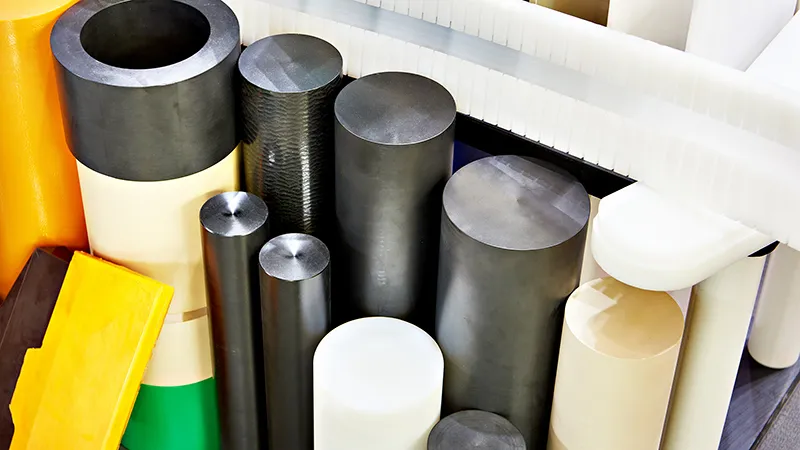
We work with a full range of engineering plastics to match your functional requirements, using production-grade materials to ensure your prototypes perform exactly like your final parts, supporting all your testing needs:
ABS
General purpose structural plastic, good impact resistance, ideal for housings and enclosures.
POM (Delrin)
High precision, low friction, excellent dimensional stability for gears and bearings.
Nylon
Wear resistant, good mechanical strength, suitable for functional moving parts.
PC
High impact resistance, transparent option, ideal for optical components and covers.
PEEK
High temperature resistance, high strength, for medical and industrial high-performance parts.
PMMA
Optical grade transparent plastic, perfect for light guides and display components.
CNC Plastic Machining Capabilities
| Precision Tolerance | ±0.05mm standard, ±0.02mm for critical dimensions |
| Maximum Part Size | Up to 500x500x200mm, supporting large enclosure parts |
| Machining Equipment | 3-axis, 4-axis, and 5-axis CNC milling machines |
| Batch Range | 1 to 1000 pieces, supporting prototyping to low-volume production |
| Surface Finishing | Polishing, sanding, painting, laser marking, silk printing, and custom finishing options |
From Prototype to Production
CAD Review
DFM analysis and design validation
Material Selection
Select the right plastic for your needs
CNC Machining
Precision milling of your custom part
Finishing
Custom surface treatment as required
Inspection
Quality check and dimensional verification
CNC Plastic Prototype Cost Factors
The cost of your CNC plastic prototype depends on several key factors that we evaluate during the quoting process. Understanding these factors can help you optimize your design for cost efficiency:
- • Geometry Complexity: Parts with complex features, undercuts, or tight internal corners require more machining time and specialized operations.
- • Tolerance Requirements: Tighter precision requirements require more careful machining and inspection, which can affect cost.
- • Material Selection: Standard materials like ABS are more cost-effective, while high-performance materials like PEEK have higher material costs.
- • Order Quantity: Higher volumes allow for machine optimization and reduced per-unit cost, making CNC cost-effective for small production runs.
Cost reduction tips: Simplify internal corner radii, use standard tolerance requirements where possible, and combine multiple parts into a single order to reduce setup costs.
Applications
🏥
Medical Prototypes
Device components and testing parts
📱
Electronic Housings
Custom enclosures and structural parts
🚗
Automotive Parts
Interior and functional test components
🏭
Industrial Components
Equipment parts and automation components
Prototype Projects
Frequently Asked Questions
What tolerance can CNC plastic machining achieve?
We can achieve standard tolerances of ±0.05mm for most plastic parts, with the capability to reach ±0.02mm for critical dimensions on high-precision projects, supporting tight assembly requirements.
How fast can you deliver plastic prototypes?
Our standard lead time for CNC plastic prototypes is 3-5 days, with expedited options available for urgent projects that require faster turnaround, supporting your tight development schedules.
Is CNC machining better than 3D printing for prototypes?
It depends on your needs. CNC machining is better for functional testing, as it uses real production materials with isotropic properties, while 3D printing is faster for concept models. CNC also offers better precision for assembly testing.
What plastic materials do you support?
We support a full range of engineering plastics including ABS, POM, Nylon, PC, PEEK, PMMA, PP, and PEI, allowing us to match the material requirements of your project, whether standard or high-performance.
Get a CNC Plastic Prototype Quote
Upload your CAD file and tell us about your project, and our engineering team will provide a detailed quote and DFM review within 24 hours.