Data Center Liquid Cooling Components for OEM Manufacturers
Custom CNC-machined and fabricated components for data center liquid cooling equipment, supporting OEM projects from engineering review and prototyping to repeatable production. We make parts to your drawings, not complete cooling systems.
At a glance
On this page
Overview
Capabilities
Quality & sourcing
Custom Components for Liquid Cooling Systems
Data center liquid cooling components are the parts used in direct-to-chip and rack cooling systems: cold plate structures, coolant manifolds, distribution blocks, pump and valve housings, rack brackets, CDU enclosures and mounting hardware. They can be made from aluminum, stainless steel, copper or engineering plastics, depending on the part's function and whether it touches coolant.
We group the parts by engineering risk, not by a single "we make everything" claim. Tier A parts are our core. Tier B parts can be reviewed when the fluid and test requirements are clear. Tier C parts need specialist validation that we do not claim.
Tier A — core structural and non-wetted parts
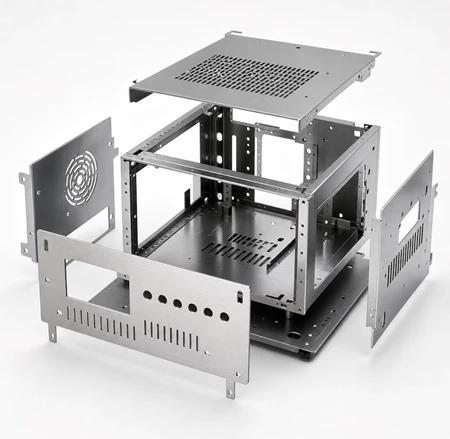
CDU enclosures
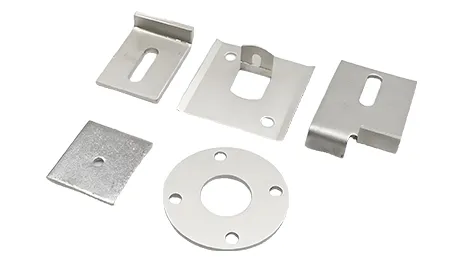
Chassis, panels, frames and covers made by sheet metal fabrication and CNC machining.
Rack mounting hardware
Brackets, support plates and mounting plates for server rack and cooling equipment.
Equipment housings
Machined aluminum housings and protective covers for non-pressure parts.
Sensor brackets
Mounting parts and holders for sensors and small components in the cooling loop.
Tier B — conditional, needs engineering review
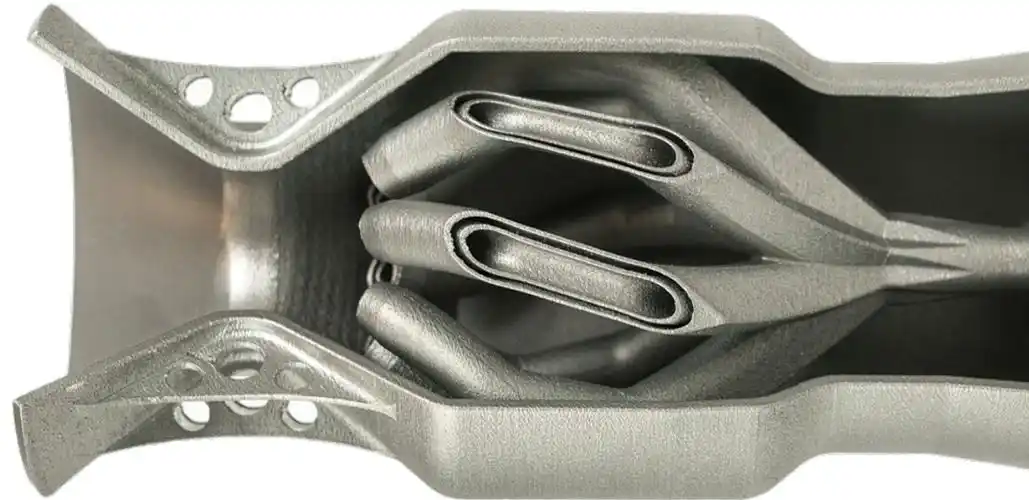
Manifold blocks
Coolant distribution blocks with internal passages, ports and sealing faces.
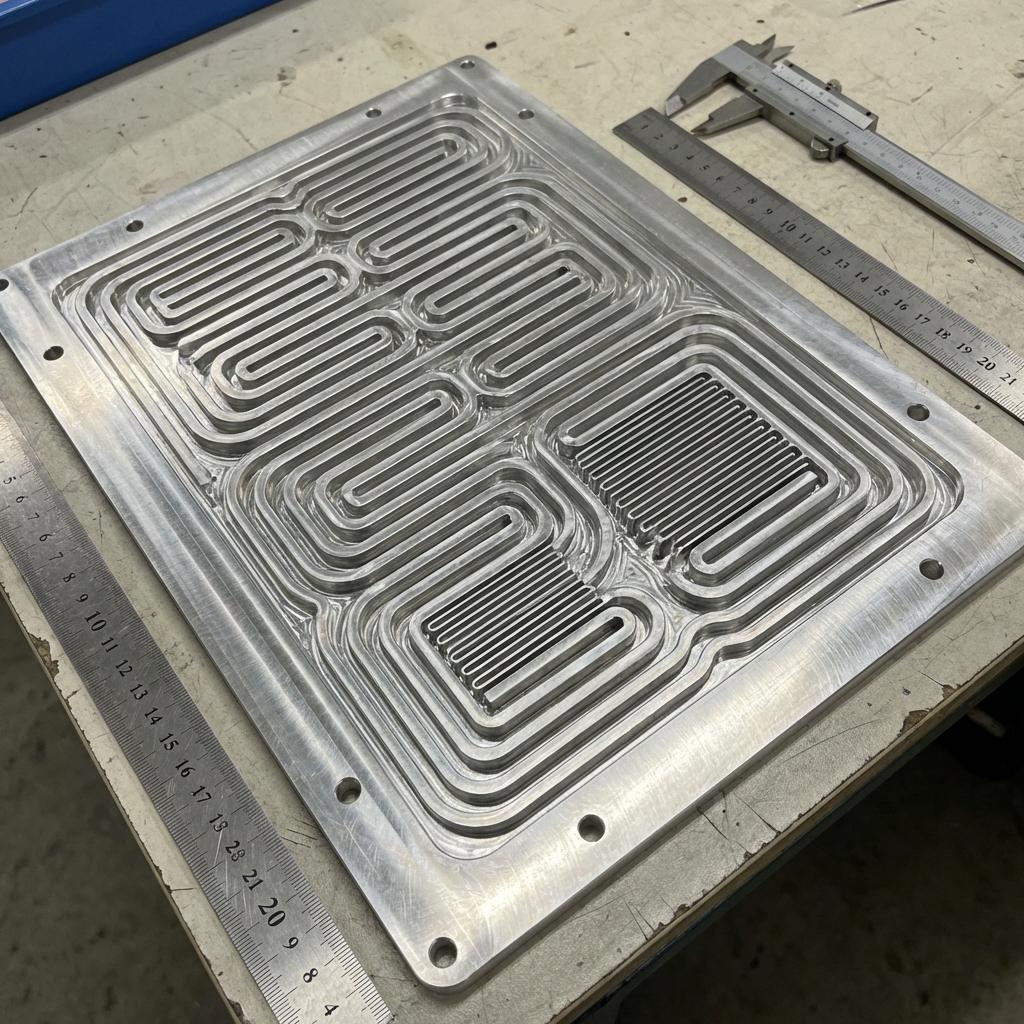
Cold plate structures
Base and cover plates machined to a customer-defined design. Not complete thermal cold plates.
Port & adapter blocks
Fluid interface blocks and connection structures with threaded ports.
Pump & valve housings
Machined bodies and covers where material and sealing requirements are defined.
Why the split matters: manifold blocks, port blocks and cold plate parts can be fluid-boundary or wetted parts. They are not the same as ordinary aluminum housings. We review wetted status, coolant, sealing method and inspection responsibility before confirming scope.
Tier C — not a current offer
Quick disconnects
Specialist sealing and mating technology is outside our current scope.
Validated GPU cold plates
Full thermal design and performance validation are not claimed.
Complete CDUs
We make components for CDUs, not complete cooling distribution units.
Components Across Direct-to-Chip Systems
A liquid cooling loop runs from the chip to the facility. Different parts sit at each level, and the requirements change with the level. This page mainly serves single-phase direct-to-chip equipment. Two-phase, immersion and rear-door cooling are separate designs with different requirements.
Swipe the table to see all columns.
| Level | Typical components | Our scope |
|---|---|---|
| Chip level | Cold plate base, cover, interface structure | Conditional — machined parts to drawing |
| Server level | Port blocks, adapter blocks, brackets, tube mounts | Conditional / structural parts |
| Rack level | Rack manifolds, distribution blocks, mounting plates | Conditional / structural parts |
| Facility level | CDU panels, pump and valve housing parts | Structural and machined components |
| Structural | Frames, guards, covers, mounting hardware | Core capability |
We do not design the cooling loop. Flow, pressure and thermal requirements come from your system design. Our job is to manufacture the parts to the approved drawing and inspection requirements.
Higher-density computing is driving more liquid cooling in data centers, and equipment makers need reliable supply of the parts that go into these systems. This page focuses on the components we can make for that supply chain, not on market estimates.
Precision CNC & Multi-Process Manufacturing
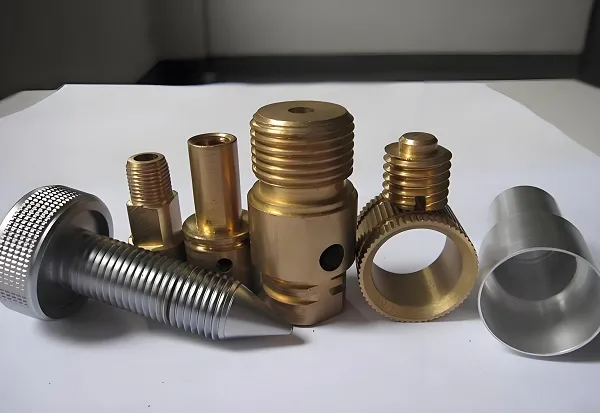
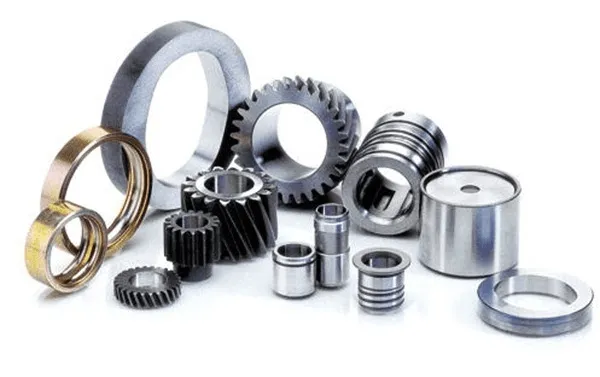
Parts for liquid cooling equipment are made by CNC milling, CNC turning, multi-axis machining, sheet metal cutting and bending, injection molding and surface finishing. The right route depends on the part shape, material, tolerance, volume and whether it forms a wetted or pressure boundary.
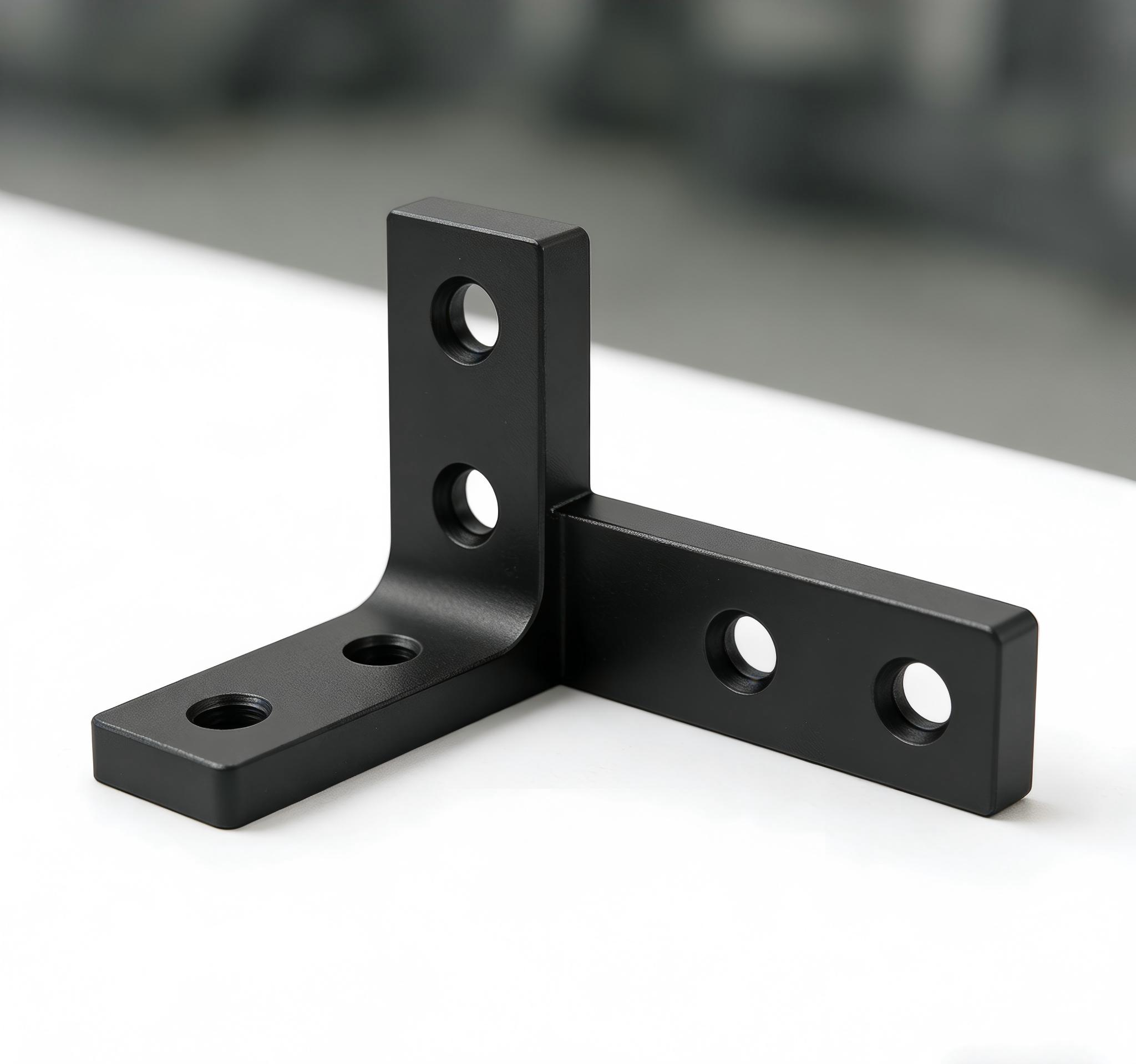
3/4/5-axis CNC
Machined blocks, housings, port structures and complex interfaces.
CNC turning
Round and threaded parts, sleeves and connection structures.
Sheet metal
Laser cutting, bending, welding and finishing for CDU panels and frames.
Injection molding
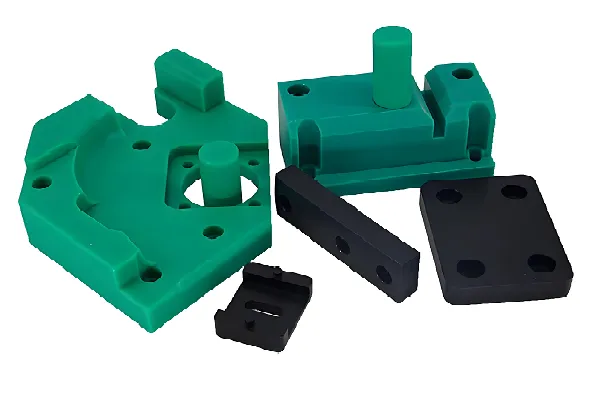
Non-pressure plastic covers, guards and insulating parts.
Surface finishing
Anodizing, passivation, plating and coating selected per material and use.
Assembly
Simple component assembly and packaging where the drawing calls for it.
All six core processes — CNC machining, injection molding, mold making, 3D printing, die casting and sheet metal fabrication — are performed in-house under one quality system. The process route is chosen per part, not applied as a fixed package.
Material Selection for Liquid Cooling Parts
Material choice follows the coolant, temperature, pressure and corrosion risk. A material certificate for a raw alloy does not replace a fluid compatibility review. For parts that touch coolant, the material and surface treatment are confirmed per project.
Swipe the table to see all columns.
| Material | Typical use | What is reviewed |
|---|---|---|
| Aluminum 6061-T6 | Manifolds, housings, structures | Coolant compatibility, surface treatment, corrosion |
| Aluminum 5052 | Panels, enclosures, formed parts | Strength, forming, surface treatment |
| Stainless steel 304 | Brackets, housings, structures | Coolant and environment compatibility |
| Stainless steel 316L | Wetted structures and connectors | Welding, surface finish, medium compatibility |
| Brass | Selected connection and mechanical parts | Coolant compatibility |
| Copper | Selected thermal parts | Machining, joining, galvanic corrosion |
| PEEK / PA / PPS | Insulating or structural parts | Temperature, pressure, fluid compatibility |
Important: aluminum and copper are not assumed compatible in the same wetted loop. Their combination can create a galvanic corrosion risk. The material system must be reviewed against coolant chemistry, inhibitors and the system design. We do not claim large copper-block cold plate machining and validation as a standard capability.
For related reading on materials, see our materials overview and aluminum alloy CNC machining page.
Design & Engineering Considerations
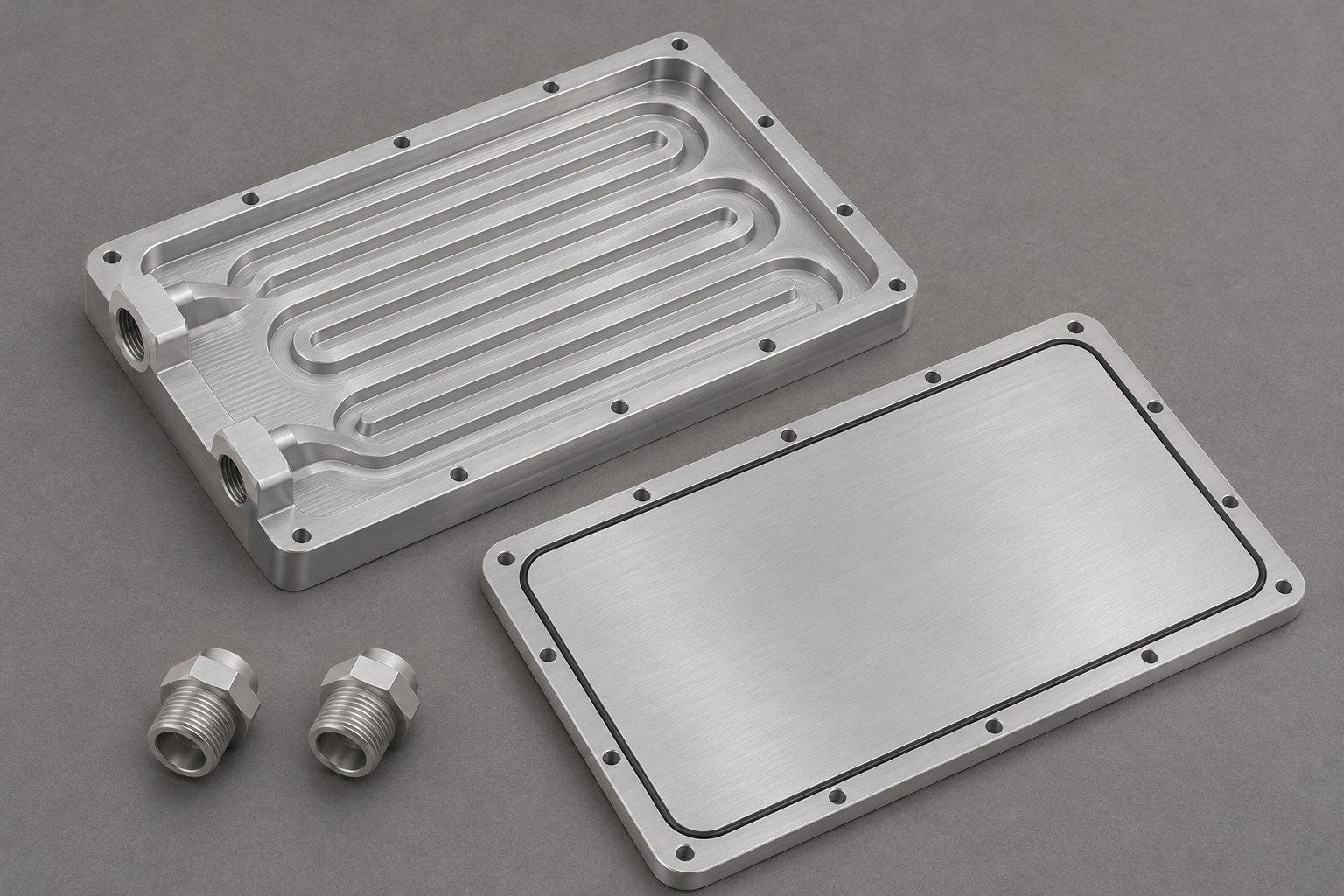
Liquid cooling parts are judged by more than outline size. Engineers review the features that affect flow, sealing and assembly. We look at these items during drawing review so problems are raised before production.
Swipe the table to see all columns.
| Review item | Why it matters |
|---|---|
| Channel geometry | Passage size, shape and machining access |
| Wall thickness | Material left between a passage and the outside |
| Port design | Thread, position and connection interface |
| Seal groove | O-ring groove size and surface quality |
| Mounting surface | Flatness, roughness and datum reference |
| Internal deburring | Removing burrs and residue from passages |
| Material selection | Compatibility with coolant and temperature |
| Manufacturing method | CNC, joining, welding and finishing route |
Change control: flow channels, wall thickness and port dimensions come from the system design. A machining supplier must not change them based on part appearance. Any change that affects thermal or fluid safety is approved by you or your system engineer first.
Quality Inspection & Component Validation
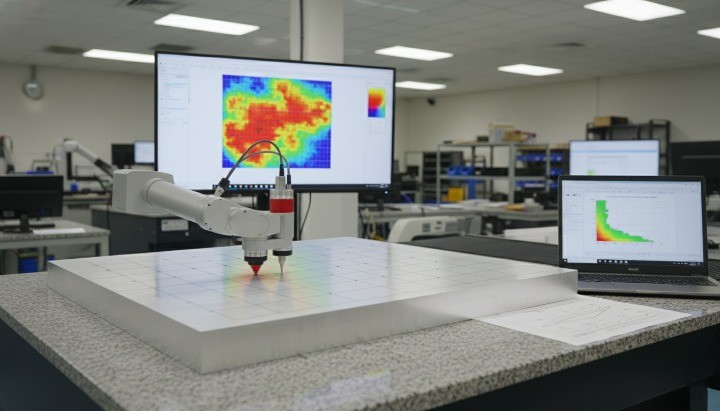
We separate two things that are often confused: production inspection and product design validation. A dimensional report on a machined part does not prove that a fluid component is sealed or pressure-safe.
Dimensional & manufacturing inspection
CMM measurement
Key dimensions and geometric tolerances against the approved drawing.
Surface finish
Roughness of sealing faces and contact surfaces as specified.
Thread inspection
Thread and connection interface checks where required.
First article
FAI against the drawing before a production batch is released.
Liquid-cooling-specific validation
Leak testing
Method, acceptance limit and responsibility are agreed per project. We do not offer helium leak testing as a standard service.
Pressure testing
Review of proof or hydrostatic test needs against your specification.
Flow testing
Flow and pressure-drop checks only where agreed and within current capability.
Cleanliness
Internal deburring, chip removal, flushing and clean packing per your limits.
Where a test is outside our own equipment, we discuss third-party testing and make the scope, sample responsibility and report source clear. We do not describe external testing as our own in-house capability, and we do not promise "100% leak-free" without an agreed test method.
From OEM Drawing to Production Parts
- RFQ review: part type, drawing, material and wetted status.
- DFM review: features, interfaces, tolerance and manufacturability.
- Material approval: grade, certificate and surface treatment.
- Prototype: sample for fit and function checks where needed.
- First article inspection against the approved drawing.
- Production: batch manufacture under the agreed revision.
- Final inspection and clean packaging.
Revision control: for repeat work we confirm the drawing revision and first article record before the next batch. Engineering changes are reviewed with you before they are built.
Sourcing Custom Liquid Cooling Components from China
Buyers in the US and Europe usually screen suppliers on more than unit price. For liquid cooling parts, the risk is integration failure, not just a bad dimension. These are the points worth checking.
Swipe the table to see all columns.
| What to check | Why it matters |
|---|---|
| Material certificates | Traceable grade and batch for the specified material |
| Dimensional reports | Evidence that critical features meet the drawing |
| Process control | Stable results across prototypes and repeat batches |
| Leak-test responsibility | Who performs it, to what method and acceptance limit |
| Quality documents | FAI, inspection scope and report format |
| Long-term supply | Repeat orders, drawing control and continuity |
| Engineering communication | Clear review in English before and during production |
Related Manufacturing Experience
We do not present unrelated parts as data center liquid cooling projects. The work below is related manufacturing experience in the same processes and materials used for cooling equipment components.
Machined valve bodies
Precision fluid-interface parts with threaded ports and sealing faces. See our valve body work.
Cold plate components
CNC machined cold plate structures. See our cold plate page for scope and images.
Sheet metal enclosures
Cut, bent and finished equipment housings. See our sheet metal capability.
These are related process examples, not verified data center liquid cooling case studies. Real liquid cooling project evidence will be added only when a project and its records exist.
Request a Custom Component Quote
Send the CAD model and 2D drawing, part type, material grade, whether the part is wetted, coolant type, operating temperature and pressure, flow requirements where relevant, surface finish, connection standard, annual volume and any inspection or FAI requirements. For fluid parts, the operating conditions matter as much as the geometry.
Drawing & model
STEP / IGES / Parasolid model plus a 2D PDF or DWG drawing with revision.
Part & material
Part type, material grade, quantity and whether the part touches coolant.
Operating conditions
Coolant type, temperature, operating pressure, flow and allowed pressure drop.
Quality scope
Surface finish, connection standard, leak or FAI requirements and annual volume.
Manufacturing scope
Machined component, fabricated assembly, component assembly, or complete part with agreed testing.
Design status
Production-ready, prototype drawing, DFM support required, or new development.
Test responsibility
Customer-defined, supplier testing, third-party, or not yet defined.
Ready for an engineering review? Use the button below and include as much of the above as you have. If some details are not fixed, tell us and we will list the open points.
Frequently Asked Questions
What are data center liquid cooling components?
They are the parts used in direct-to-chip and rack cooling systems: cold plate structures, coolant manifolds, distribution blocks, pump and valve housings, quick-connect interfaces, rack brackets, CDU enclosures and mounting hardware. They can be made from aluminum, stainless steel, copper or engineering plastics, depending on the part's function and whether it touches coolant.
Does Goldcattle manufacture complete CDUs or cold plates?
No. We make custom components and structures to customer drawings, not complete CDUs, pump sets or validated cold plates. We can produce cold plate base and cover parts, manifold blocks and equipment housings when the design, material and inspection requirements are defined by the customer.
Which cooling parts can you CNC machine?
Typical machined parts include distribution blocks, port and adapter blocks, manifold bodies, cold plate base and cover plates, pump and valve housings, sensor brackets and mounting blocks. Flow passages, sealing faces and interface threads are reviewed from the drawing before we confirm a process.
Can you make parts that touch coolant?
Yes, when the wetted status, coolant type, material grade and surface treatment are defined. We review material compatibility per project. We do not state that all aluminum or copper parts are suitable for every coolant, and aluminum and copper are not assumed compatible in the same wetted loop.
What materials are used for liquid cooling components?
Common choices include aluminum grades such as 6061-T6 and 5052, stainless steel 304 and 316L, brass, copper for selected thermal parts, and engineering plastics such as PEEK, PA and PPS for specific insulating or structural parts. Material choice depends on coolant chemistry, corrosion risk, temperature and pressure.
Do you perform leak and pressure testing?
We provide dimensional and manufacturing inspection. Leak, pressure, flow and cleanliness testing are agreed per project based on the customer's specification and our current equipment. We do not claim helium leak detection or full flow verification as standard, and we distinguish production inspection from product design validation.
How are liquid cooling manifolds manufactured?
Manifold blocks are typically CNC machined from aluminum or stainless steel, with internal passages, port threads and sealing surfaces finished to the drawing. Key controls include passage geometry, wall thickness, port accuracy, internal deburring and cleanliness. Pressure-related requirements are reviewed before quoting.
What should I send when requesting a quote?
Send the CAD model and 2D drawing, part type, material grade, whether the part is wetted, coolant type, operating temperature and pressure, flow requirements where relevant, surface finish, connection standard, annual volume and any inspection or FAI requirements.
Do you supply rack brackets and CDU enclosures?
Yes. These are core structural parts for us. We make rack mounting brackets, support plates, CDU panels, frames, equipment covers and mounting hardware by CNC machining and sheet metal fabrication. Non-pressure structures are our main focus in this area.
Can you support prototyping and repeat production?
Yes. We review the drawing, confirm material and critical features, make samples for approval and then follow the approved revision for repeat batches. Drawing revision and first article approval are checked before repeat production.
Send your cooling component drawing
Share the drawing, part type, material and operating conditions. We will review the part, confirm the manufacturing scope and come back with questions or a quote. Components and structures only; not complete cooling systems.
Drawing-based manufacturing · Prototype to repeat production · Xiamen Goldcattle Plastic & Metal Products Co., Ltd.