Custom High-Strength Plastic Injection-Molded Components
Goldcattle manufactures custom injection-molded plastic components for applications that need mechanical strength, stiffness, impact resistance or dimensional stability. The right resin depends on how the part is used — we review your geometry, loading, environment, material requirements and volume to assess suitable materials and manufacturing feasibility, from selection and DFM through tooling and sampled production.
At a Glance
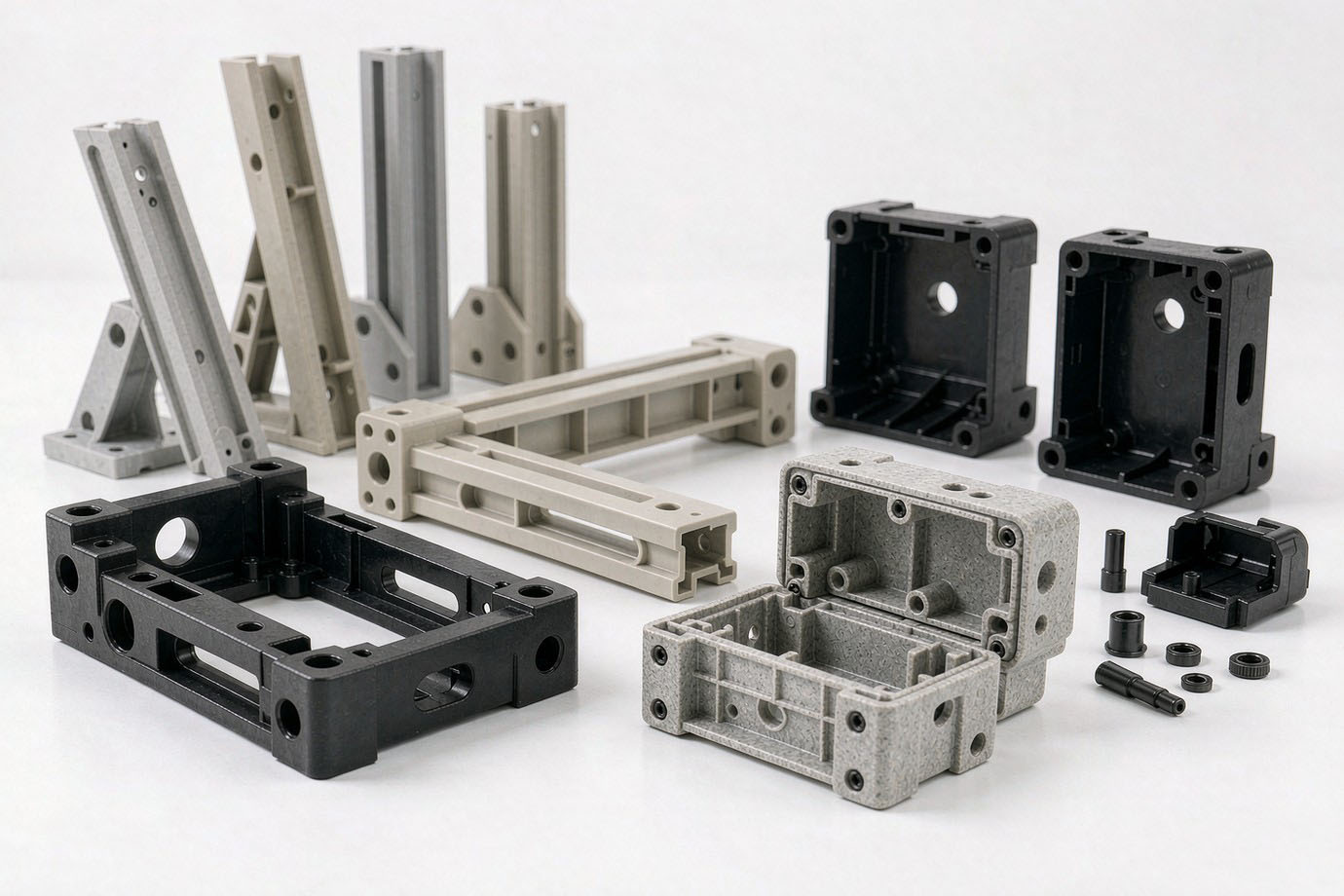
If you need a high-strength or load-bearing plastic component, the practical path is to send the 2D/3D drawing, the resin or target properties, the loading and mounting conditions, the operating environment and the estimated volume. We review the part for moldability and strength risk, compare candidate materials, plan or build the tool, mold trial samples, inspect them against the approved drawing, then release production. There is no single "strongest plastic" for every case — strength, stiffness, impact and long-term load are different requirements, and the choice is confirmed per your project, not assumed.
Components We Mold
We quote and mold to your drawing rather than to a fixed catalogue of parts. The categories below are how buyers usually specify a structural plastic component; each carries different load, stiffness and dimensional requirements that we confirm against the drawing and the function.
Load-Bearing Brackets
Mounting brackets and supports that transfer force between assemblies — designed around bosses, ribs and wall balance, not just material choice.
Equipment Structures
Frames, housings and support shells where stiffness and dimensional stability matter as much as surface finish.
Mountings & Bases
Vibration-isolating and fixing bases where fastening points and creep under sustained load are the main concerns.
Connector Housings
Structural connector and terminal housings needing dimensional control and impact resistance at the locking features.
Clips & Retainers
Snap-fit clips and retainers where the snap geometry and material toughness set the service life.
Guards & Covers
Machine guards and protective covers where rigidity, impact resistance and secure fixing are the priority.
Material Selection for Strength
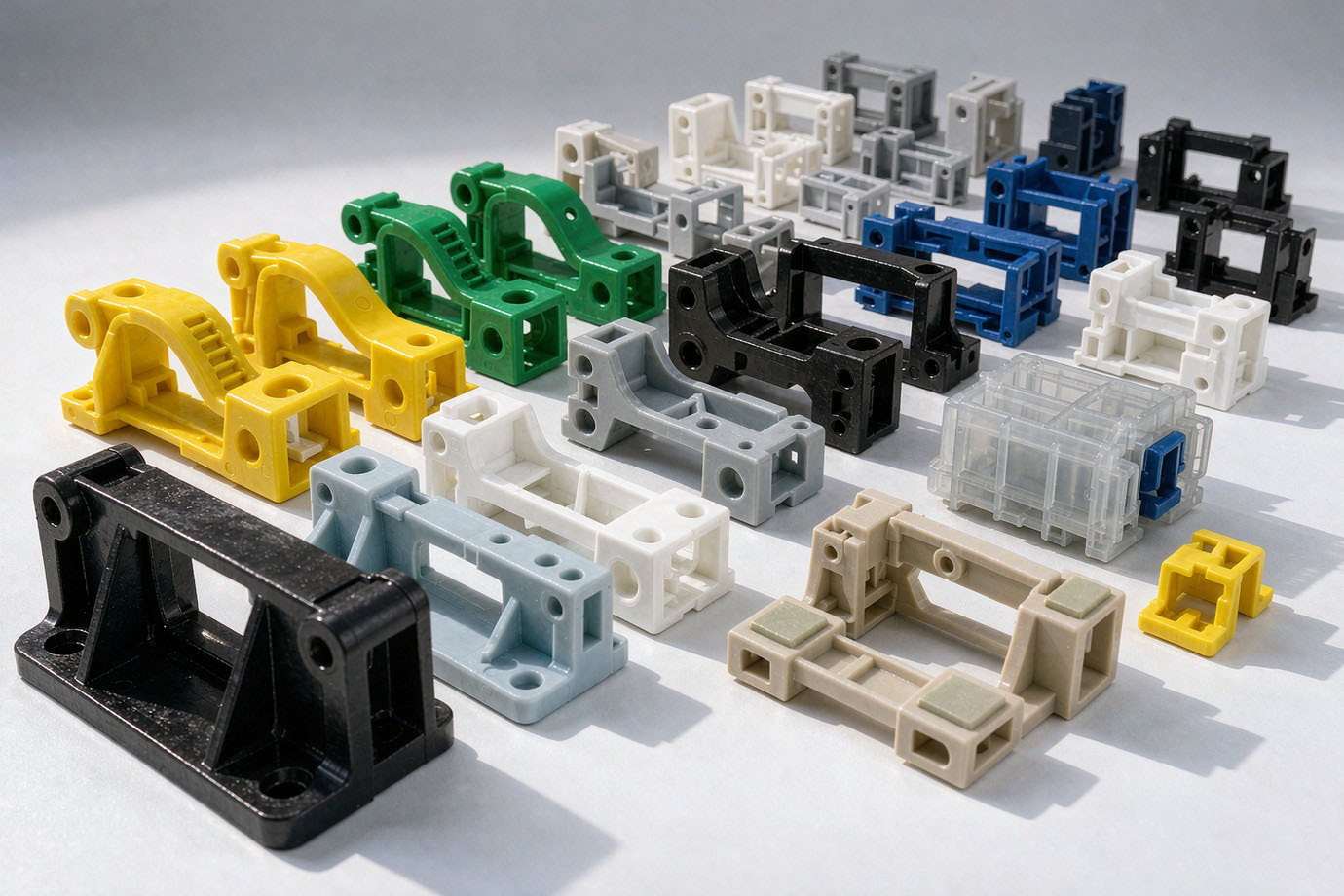
A strong resin does not automatically make a strong part, and no single material covers every load case. The table below is a screening framework to move from requirement to candidate — it is not a commitment that every listed grade is stocked. Final suitability is assessed against the actual component and its operating conditions, and any grade not yet confirmed in production is removed before publication.
| Material candidate | Best evaluated for | Key considerations |
|---|---|---|
| PA6 / PA66 (Nylon) | General mechanical parts needing a balance of strength and toughness | Moisture absorption can affect dimensions and properties; confirm conditioned-state behaviour |
| Glass-Filled PA | Structural parts needing higher stiffness and strength, and higher heat-deflection resistance | Fiber orientation, reduced toughness in some impacts, and shrinkage / warpage need design control |
| Glass-Filled PBT | Selected structural, electrical and industrial parts needing dimensional stability | Specific grade, humidity exposure and processing window to be confirmed |
| PC | Parts where impact toughness and structural integrity are important | Chemical stress-crack risk, temperature and design limits to be checked |
| PEEK / PPS | Combined high mechanical demand with elevated temperature or chemical exposure | Higher material and processing cost, and a tighter process window |
The same requirement is often met by more than one material. For a decision-oriented reference across the resins we work with, see our materials page. When the priority is extreme temperature, chemical resistance and mechanical performance together, the dedicated PEEK injection molding services page covers that process. When low friction, wear resistance or precise fit is the primary need rather than structural load, the custom acetal parts page is the better entry point.
Five performance requirements, not one "strength"
Buyers often ask for "high strength" before the load case is fixed. These are different properties and must be judged with the grade, temperature, humidity, stress direction and test method — one tensile number does not stand in for a full engineering evaluation.
| Property | What it represents | What the buyer usually must confirm |
|---|---|---|
| Tensile strength | Resistance to tensile stress | Whether pull, connection points and local forces are met |
| Stiffness / modulus | Resistance to elastic deflection | Whether the part deflects too far under load |
| Impact strength | Resistance to sudden or fast loading | Whether it cracks on drop, collision or instantaneous load |
| Creep resistance | Resistance to deformation under sustained stress over time | Whether it deforms under long-term clamping or load |
| Fatigue resistance | Resistance to repeated or cyclic loading | Whether it holds function under vibration or periodic force |
Structural Design & DFM
Part geometry affects the finished strength as much as the resin. During a design-for-manufacturing review, the points below are engineering judgments we apply — each one changes how a load is carried or where a weakness can appear.
Wall Thickness & Transitions
Avoid abrupt thickness changes that drive uneven cooling, sink marks or residual stress; balance walls so the part fills evenly.
Ribs & Gussets
Add supported stiffness without over-thickening the base wall, keeping rib thickness proportional to avoid sink.
Corner Radii
Avoid sharp internal corners that concentrate stress; a generous radius spreads load and improves mold filling.
Load Paths & Mounting
Evaluate bosses, fasteners, clips and other features that transfer force; locate them where the section can carry it.
Fiber Orientation
For reinforced resins, consider how flow direction affects strength and dimensional change across the part.
Weld Lines & Warpage
Review where flow fronts meet near loaded features, and how gate location, cooling and geometry drive shrinkage.
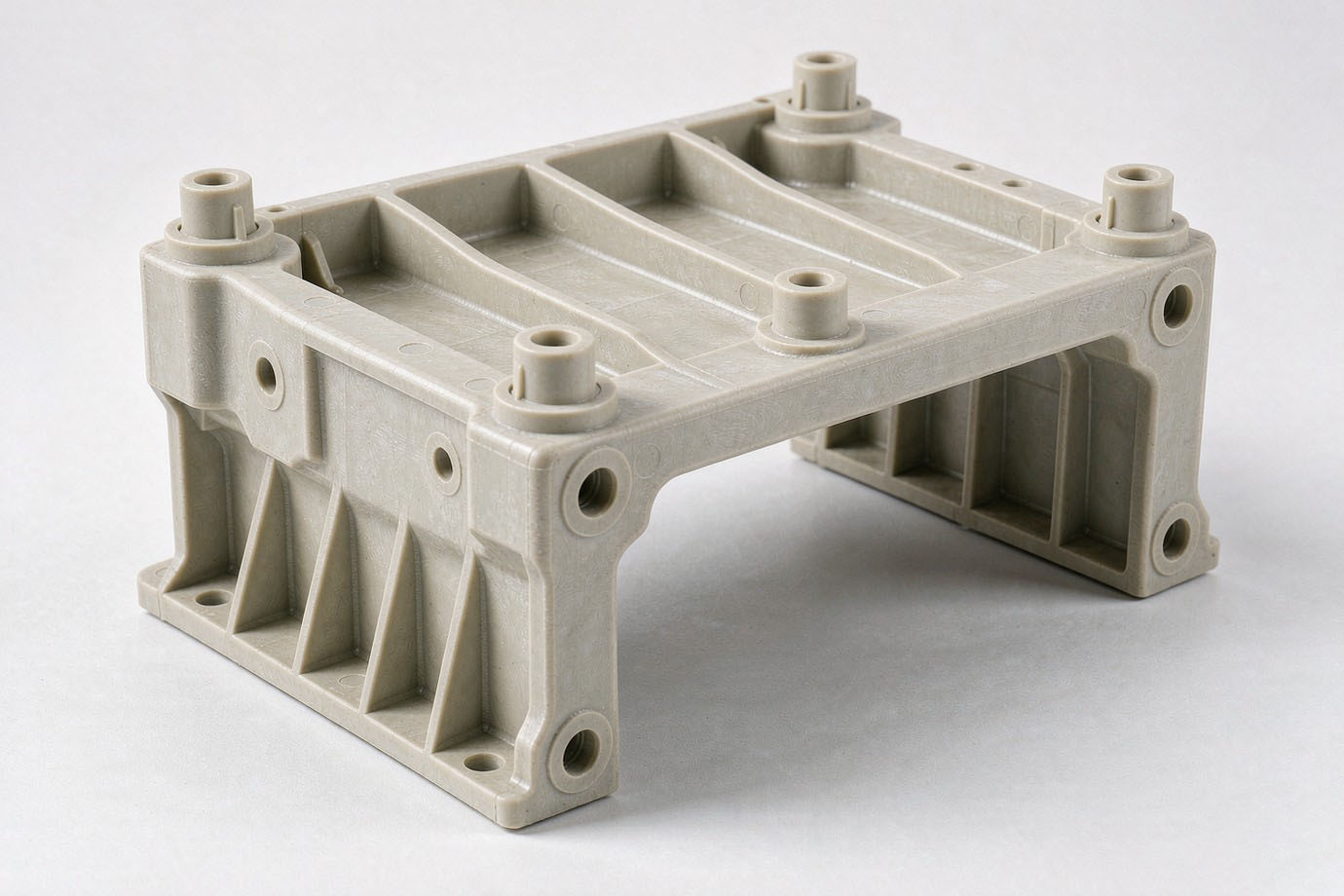
Tooling is planned from geometry, resin, expected life and volume — see our injection molding services page for the broader tooling and production scope.
Manufacturing & Quality
A reliable result begins with agreed functional and dimensional requirements, then a controlled build. The steps below apply whether the part is a bracket or a housing; we inspect against the drawing and the agreed acceptance criteria rather than against adjectives.
Requirement Review
Evaluate the drawings, operating conditions, critical dimensions and production quantities.
Material & DFM Assessment
Compare candidate resins and identify design features that affect strength, filling, shrinkage or warpage.
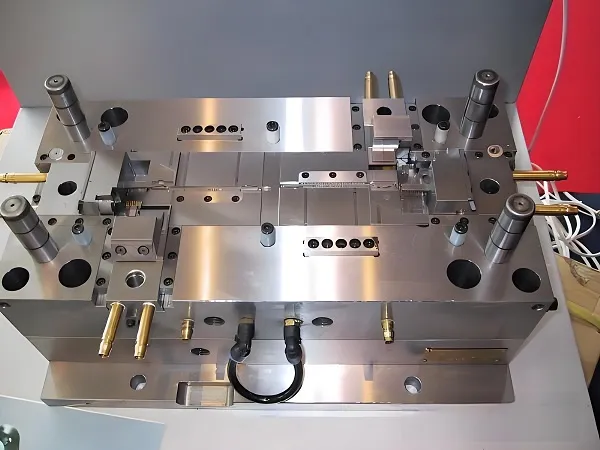
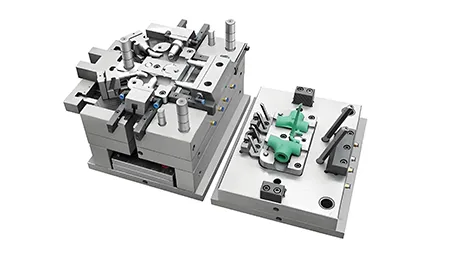
Mold Design & Build
Develop the tooling around the selected material, geometry and production requirements.
Trial & Sample Review
Mold trial samples and inspect them against the approved drawing and agreed acceptance criteria.
Validation & Release
Where required, arrange additional mechanical, thermal or environmental checks before production approval.
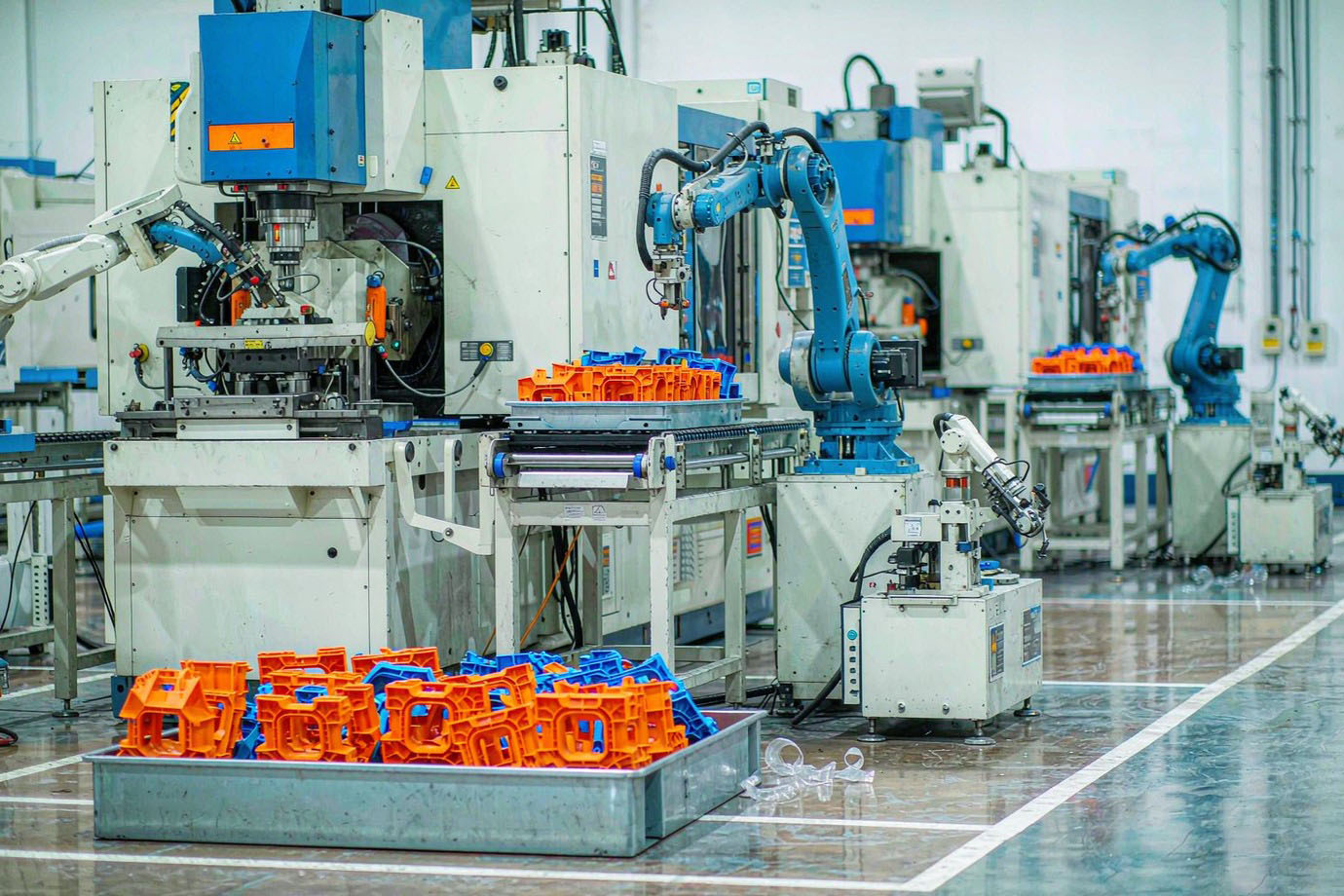
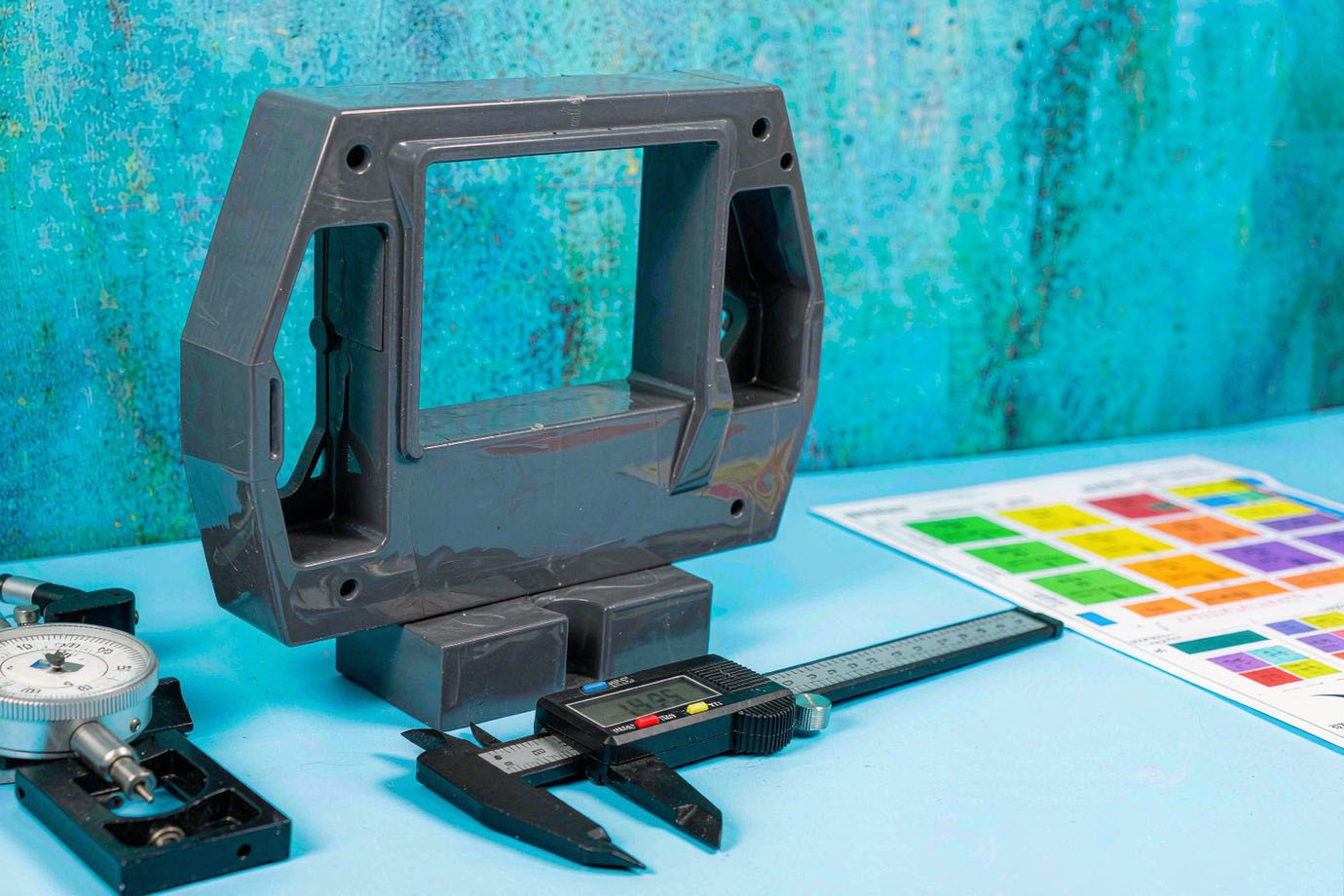
Depending on project scope and available inspection capability, the quality documentation may include dimensional inspection reports, material documentation and application-specific test results. The quotation states which tests and records are included rather than assuming every project requires the same package. Material datasheet values are a starting point; the actual part is validated against its operating conditions.
Applications by Industry
High-strength injection-molded plastics are considered where mechanical performance, weight, design integration or corrosion resistance make them a suitable alternative to metal or other materials. The suitability of each component depends on the grade, geometry, environment and validation needs.
Industrial Equipment
Brackets, guards and support structures on machinery where rigidity and impact resistance are specified.
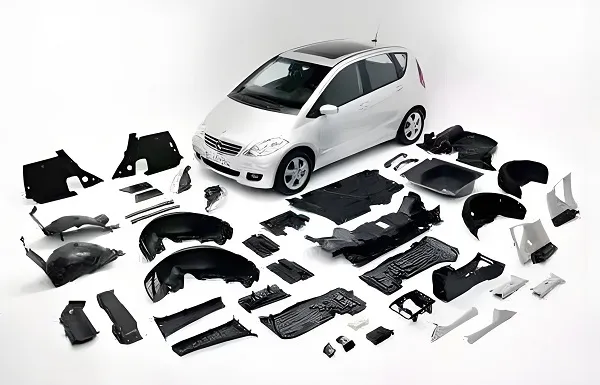
Automotive & Transport
Non-safety structural clips, housings and mounts where weight and corrosion resistance are valued.
Electrical & Electronic
Structural connector housings and enclosures needing dimensional control and impact resistance.
Appliances & Devices
Load-bearing frames and fixing parts inside equipment, balancing stiffness with assembly needs.
Cost & Volume
The cost of a high-strength component is driven by three things buyers can influence early: the tool, the resin and the validation scope. We state which of these apply to your project rather than quoting a generic number.
Tooling Investment
Mold design and build set the upfront cost; a tool planned for the material and life required avoids rework later.
Reinforced-Resin Cost
Glass-filled and high-performance grades cost more than commodity resins; the grade is chosen by the load case, not by default.
Trial Molding
First articles verify fit, strength risk and process before volume — a small cost that prevents a wrong production run.
Unit Price & Target Volume
Per-part price improves with quantity once the tool and process are settled; we quote against your target volume.
Request a Quote
For an engineering review and project-specific quotation, send the items below. If you have not selected a material, describe the part's function and operating conditions — we can identify the material and design questions to resolve before tooling is committed. Letting buyers choose "need engineer to recommend material" avoids losing a valuable inquiry to a forced material dropdown.
What to send for a high-strength plastic quote
Required fields let us scope the project; optional fields sharpen the estimate.
Note: drawings are handled under NDA on request. We respond with a moldability and strength review and a project-specific quotation — not a generic price list. You can also open our injection molding quote page.
FAQ
What is the strongest plastic for injection molding?
Is glass-filled nylon stronger than unfilled nylon?
How do I choose a plastic for a load-bearing component?
How can I improve the strength of an injection-molded part?
Can you manufacture high-strength parts from a CAD drawing?
How do I validate a high-strength molded plastic component?
What are typical lead times and minimum order for high-strength parts?
What information is required for a high-strength plastic quote?
Ready to review your high-strength plastic component?
Send the drawing, the resin or target, the load and environment. We will return a moldability and strength review and a project-specific quotation scoped to your part — not a one-size-fits-all number.
Request a Custom Parts Quote Explore all injection molding servicesXiamen Goldcattle Plastic & Metal Products Co., Ltd. — Founded in 1998 · ISO 9001:2015 certified · OEM/ODM build-to-print.