Home Appliance Plastic Injection Molding for Housings, Functional Parts and Appearance Components
Appliance parts are judged on four things: fit, appearance, durability and compliance. This page shows how each is engineered and controlled — polymer choice, DFM, tooling, molding, assembly and documentation — so you can assess a supplier against your program rather than a capability brochure.
At a Glance
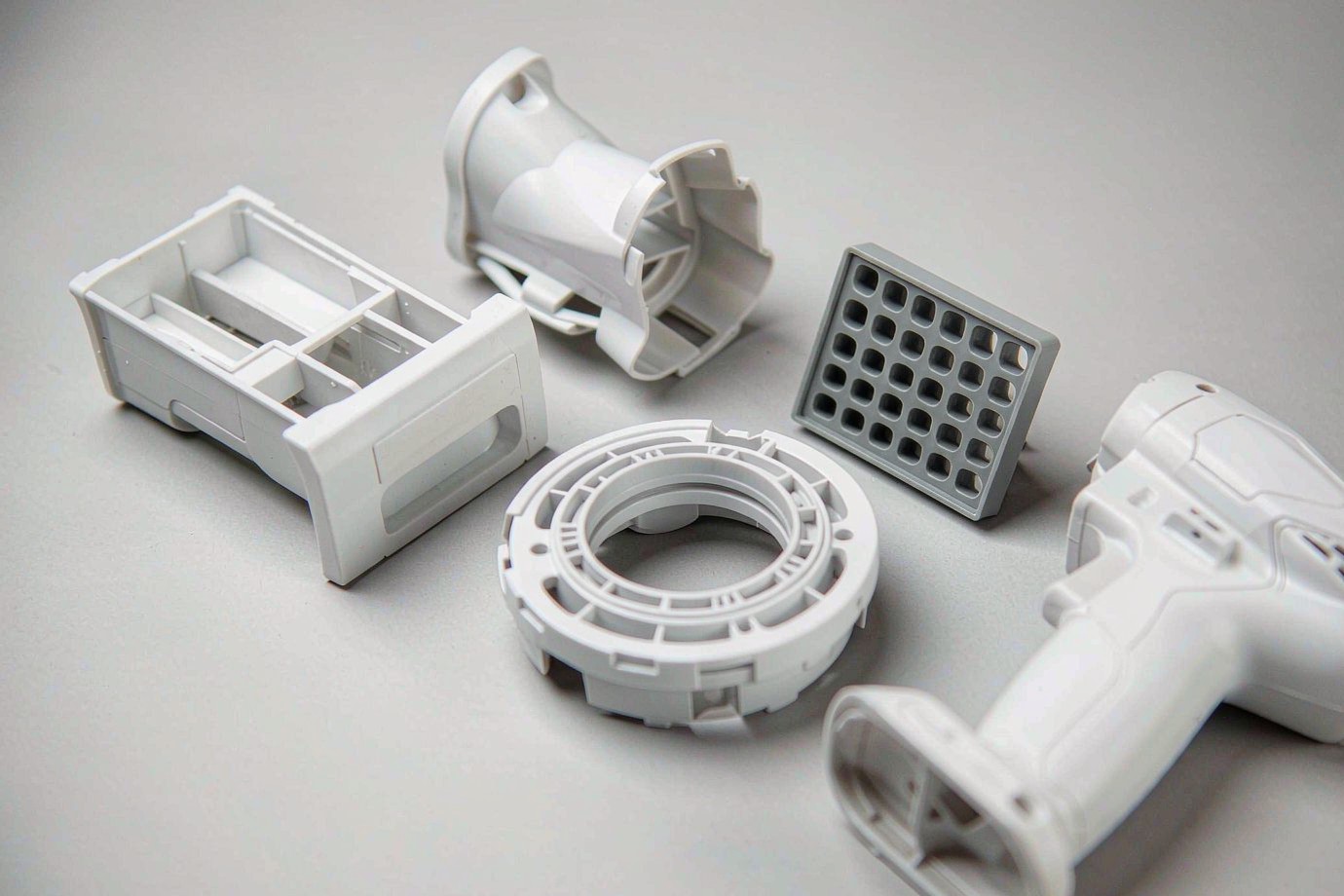
Home appliance plastic injection molding is a chain of decisions, not a single process: which polymer, which tool and cavitation, where the gate sits, how the part cools, what cosmetic standard applies, and which compliance route the OEM requires. A supplier is credible when it can explain and document those decisions for your part — not when it lists machine tonnage. The sections below follow that chain in the order it affects cost, tool life and part quality.
What Appliance Parts Actually Demand
Appliance programs rarely fail because a molder "cannot mold plastic." They fail at the interfaces: a housing that warps out of assembly, a panel with a visible weld line, a clip that relaxes after cycling, or a part that misses a flammability requirement. Organizing the work by part function makes those interfaces explicit before the tool is cut.
| Part family | Typical polymers | What the buyer should specify | Common failure mode |
|---|---|---|---|
| Structural housings & frames | ABS, PC/ABS, PP+GF, PA+GF | Rib and boss layout, warp limit, assembly datums | Warpage, sink over bosses, weak snap-fits |
| Cosmetic / appearance parts | ABS, PC/ABS, PC | Texture (MT/VDI), gloss, color, weld-line location | Flow marks, weld lines, color drift |
| Fluid & chemical-contact parts | PP, POM, PBT | Chemical compatibility, sealing surface, creep | Stress cracking, swelling, seal leak |
| Motion & wear parts | POM, PA, PBT | Wear rate, friction, fatigue, tolerance | Wear, creep, tooth breakage |
| Electrical & thermal parts | PBT, PA, PC (FR grades) | Flammability class, CTI, RTI, glow-wire | Insufficient flame rating, tracking |
| Assembly & fastening parts | ABS, PC/ABS, POM, PA | Snap-fit geometry, living hinge, tolerance stack | Snap breakage, hinge fatigue, loose fit |
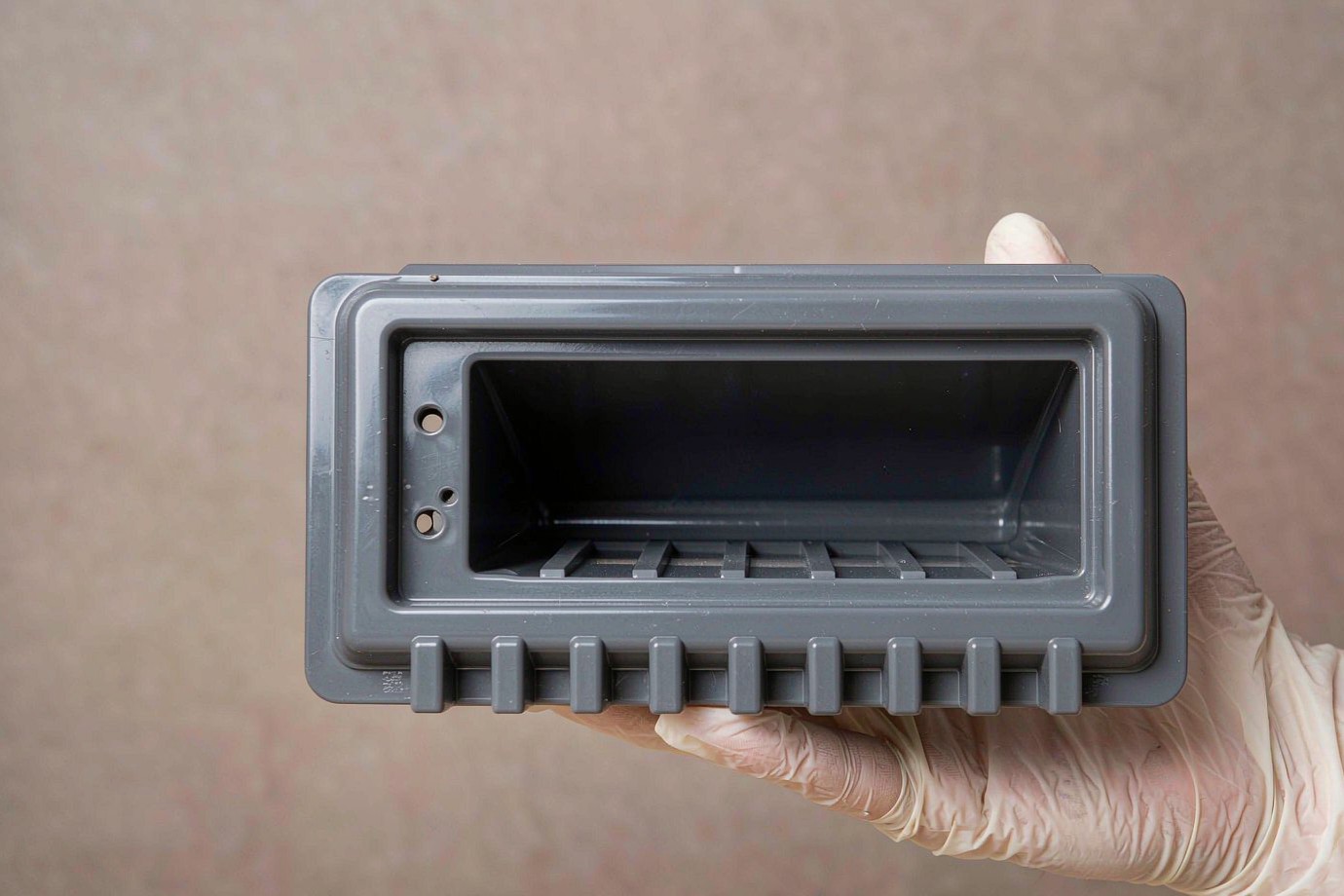
Read the table as a checklist, not a catalogue. A part can sit in two families at once — a transparent control window is both cosmetic and electrical — and the stricter requirement governs the material and the process.
Material Selection for Appliance Parts
Polymer choice is set by the part's job, not by price alone. The families below are the ones most often used in appliance work; each carries a trade-off that shows up later if it is ignored. Final selection is confirmed at grade level against the supplier data sheet and the OEM specification.
| Polymer | Typical appliance use | Strengths | Watch-outs |
|---|---|---|---|
| ABS | Housings, cosmetic panels, trim | Good finish, easy to mold, cost | Limited heat and chemical resistance |
| PC/ABS | Control panels, structural-cosmetic parts | Toughness, heat and finish balance | Drying, cost, notch sensitivity |
| PP | Detergent drawers, tanks, food-contact parts | Chemical resistance, living hinge | Low stiffness, higher shrinkage |
| PA6 / PA66 (incl. GF) | Structural and heat-exposed brackets | Strength, heat, wear | Moisture uptake, warpage |
| POM | Gears, cams, latches, slides | Wear, low friction, fatigue | Poor bonding, shrinkage, acids |
| PBT | Connectors, bobbins, electrical housings | Electrical properties, heat, dimensional stability | Hydrolysis, drying |
| PC | Transparent windows, lenses, light covers | Clarity, impact | Stress cracking, drying |
| TPE / TPU | Grips, seals (often overmolded) | Soft touch, sealing | Bonding to substrate |
DFM for Appliance Parts
Most appliance-part cost and risk are fixed during design. DFM review targets the features that decide whether a part molds cleanly, assembles repeatably and survives its service life.
Uniform walls with gradual transitions avoid sink and warp; a sudden change in section is where both start.
Rib-to-wall ratio and boss wall thickness control sink on the cosmetic face directly opposite.
Adequate draft eases ejection; shutoffs define where parting-line flash is allowed to appear.
Geometry, material and gate location decide whether a snap survives assembly and a hinge survives cycling.
Gate position sets where weld lines form; on cosmetic parts it decides whether a mark is hidden or visible.
Cooling layout and packing drive dimensional stability, especially on long, thin housings.
Metal inserts and soft-touch overmolds add steps and their own tolerance stack; they are reviewed as separate decisions.
Tolerance follows polymer shrinkage, part size and feature; it is not one number for the whole part.
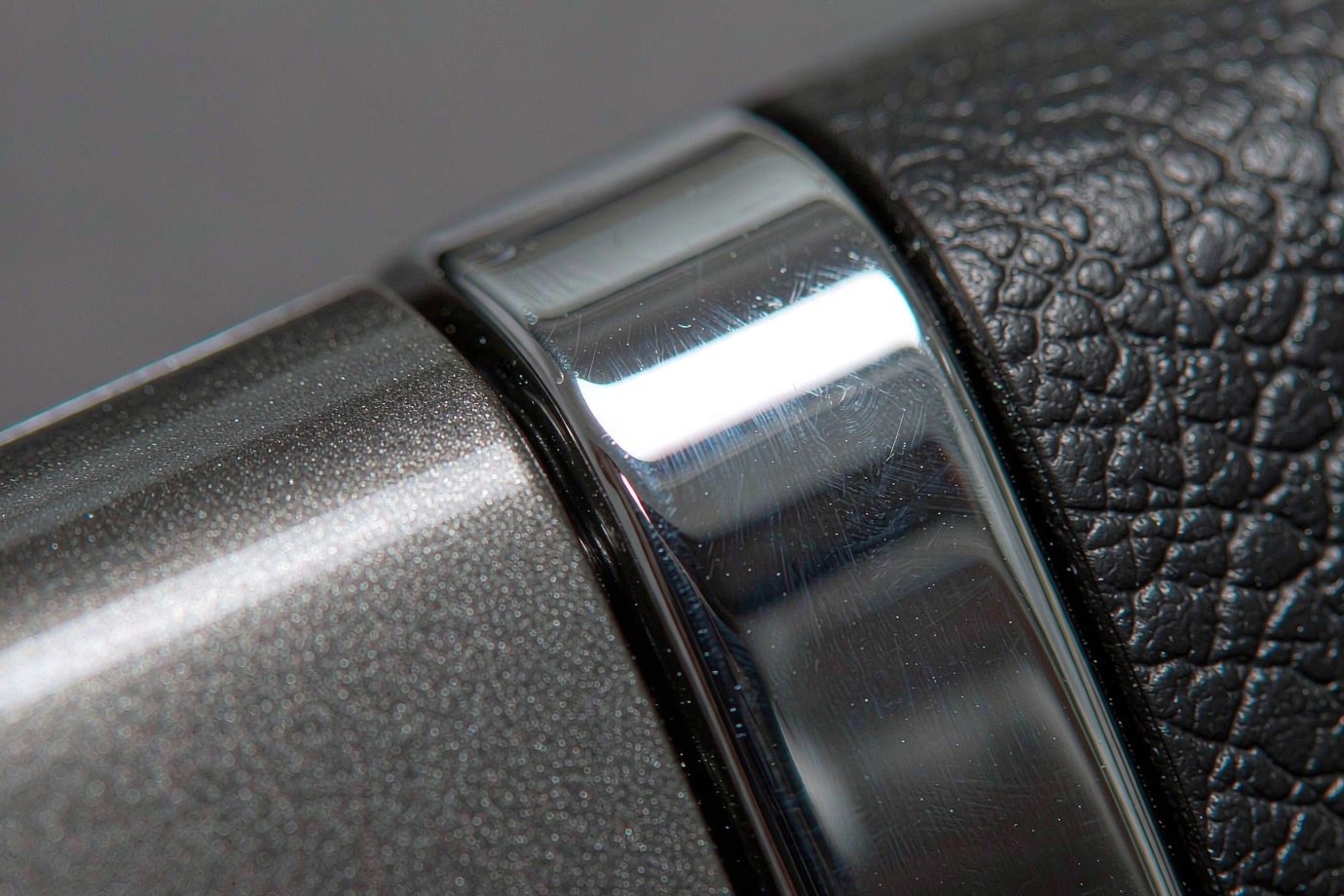
Appearance, Color and Surface
On visible appliance parts, appearance is a specification, not a preference. It should be written down and agreed on a physical sample before the tool is cut, because texture, gloss and color are all set into the tool and the process.
Mold texture (MT/VDI or the customer standard) is cut into the tool. It also hides flow marks and changes the measured gloss.
Gloss is measured and specified. It interacts with texture and polymer, so it is fixed together with the texture standard.
Color is matched to a master (Pantone/RAL or a physical chip) and held with masterbatch and process control. First-shot color and production color must be reconciled.
Flow lines, weld marks, silver streaks, sink and gate blush are defined by a limit sample, not by adjectives.
Tooling and Molding
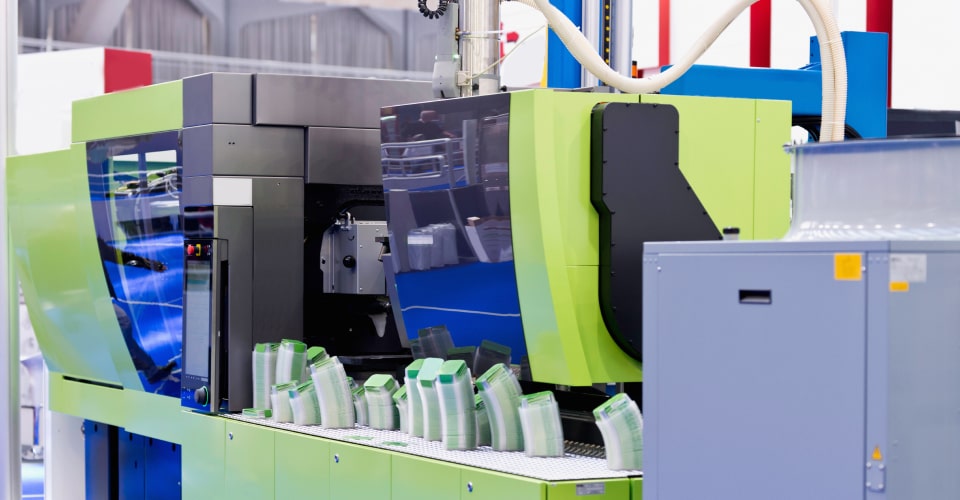
The tool and the molding window decide cycle time, consistency and cosmetic quality. For appliance programs the practical questions are cavitation, tool material, gate and cooling layout, and how the process is held stable across a long run.
Aluminum or soft steel, low cavitation. Fast, for form, fit and function and early cosmetic direction.
Production-like geometry in a lower-cost tool, used to start pilot builds before the final tool is ready.
Hardened steel such as P20/H13 class, multi-cavity for volume, built for the program life.
Hot-runner versus cold-runner, plus gate type and location, set cosmetic quality and material waste.
Well-placed or conformal cooling shortens the cycle and reduces warp; ejection marks are placed off cosmetic faces.
Machine size is chosen from projected area and clamp force for the part, not from a headline machine count.
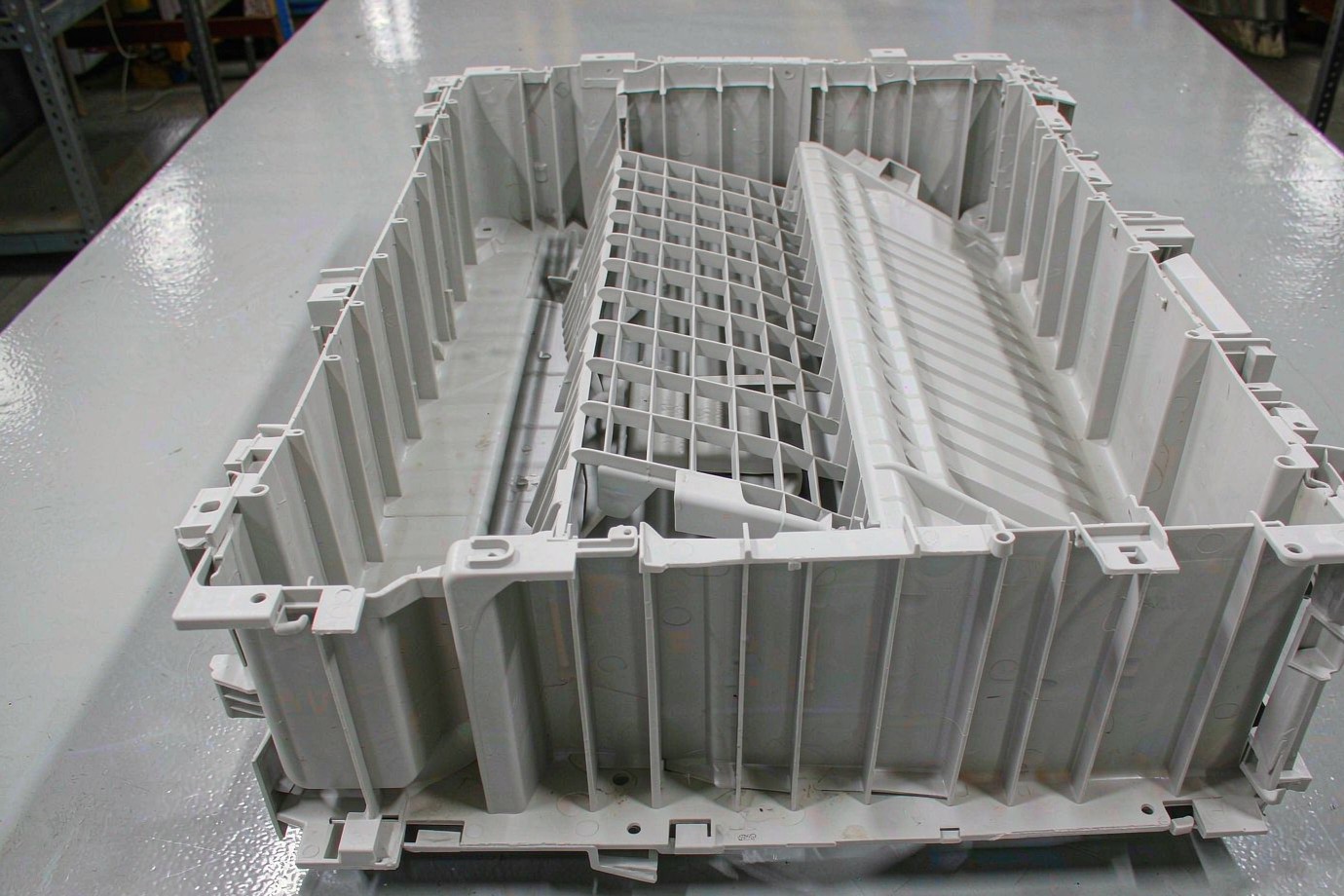
Tool building is where a molder's real capability shows: gate and cooling layout, steel choice for the program life and cavitation matched to volume are visible in the quote, not in a machine list. For the tooling-specific view — steel selection, cavitation and tool life — see custom plastic injection mold.
Quality and Compliance
Appliance buyers need parts that pass dimensional and material requirements and come with the paperwork to prove it. The distinction that matters: the molder supplies parts and supporting documentation; the OEM holds the appliance certification.
| Requirement | What it covers | Who holds it | Evidence you can request |
|---|---|---|---|
| UL 94 | Flammability rating of a plastic grade at a given thickness | The grade (UL yellow card) | Yellow-card extract, grade data sheet |
| IEC 60335-1 | Appliance safety — design and construction | OEM / certifier | Material data, CTI, glow-wire data where required |
| RoHS | Restricted substances in electrical and electronic equipment | Molder declaration, per grade | Declaration plus test report (e.g. SGS) |
| REACH | SVHC and substance restrictions | Molder declaration, per grade | Substance declaration |
| ISO 9001:2015 | Quality management system | Goldcattle (certified body) | Certificate on request |
CMM and gauges against the drawing, with first-article inspection and dimensional reports.
RoHS and REACH declarations per grade, with test reports such as SGS available on request.
UL 94 rating and CTI/RTI belong to the specific grade and thickness, confirmed by the UL yellow card; glow-wire data supplied where the OEM's IEC 60335-1 assessment requires it.
Lot, material certificate and cavity record link a shipped part back to its material and tool.
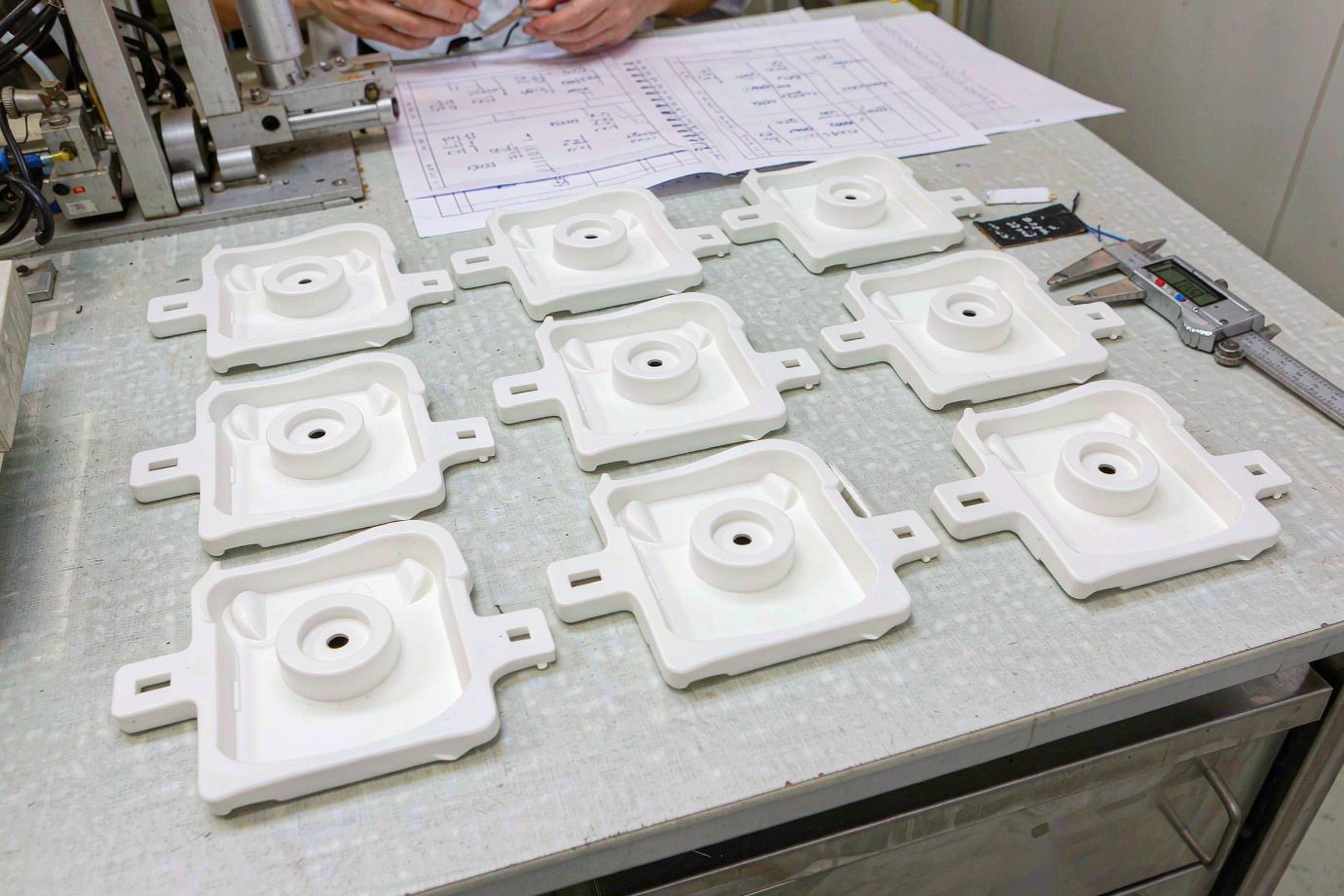
From Prototype to Production
The same part can be made four ways depending on stage. Knowing what changes at each step keeps expectations, cost and validation aligned.
Soft tool, low cavitation. Confirms form, fit and function, and sets early cosmetic direction.
First shots from the production-intent tool: dimensional and cosmetic review, process window set, limit sample agreed.
Small production-like batches for assembly trials, packaging and documentation before mass release.
Production tool, stable process, in-process inspection and packaging.
What Drives the Cost of an Appliance Part
Part price is set by a chain of factors. The polymer is only one of them, and often not the largest.
- Part size and projected area — drives machine tonnage and cycle time.
- Cavitation and tool complexity — more cavities lower piece cost but raise tool cost.
- Polymer grade and color — engineering and flame-retardant grades and matched color cost more than commodity grades.
- Cosmetic level — texture, gloss and limit-sample tightness add inspection and scrap risk.
- Tolerance and inspection burden — tighter features require more process control and measurement.
- Annual volume and tool amortization — the same part is priced differently at 5,000 and 500,000 pieces.
- Secondary operations and assembly — inserts, overmolds and sub-assembly add steps and fixtures.
- Packaging and logistics — bulk versus kitted, and destination.
Where These Parts Are Used
The same molding disciplines apply across appliance segments; what changes is the balance of structural, cosmetic and compliance requirements.
Washers, dryers, refrigerators and dishwashers: housings, liners, drawers and trim.
Mixers, kettles and coffee machines: housings, controls and food-contact parts.
Vacuum housings, brush parts and dust cups.
Fan housings, grilles and filter frames.
Housings, handles and battery interfaces with the same structural and cosmetic demands.
Clips, brackets and insert-molded parts supplied as assemblies.
Procurement FAQ
Can you mold home appliance parts to my drawing and cosmetic standard?
Which polymers do you mold for appliances?
Can you supply UL 94 V-0 or flame-retardant appliance parts?
How do you support IEC 60335-1, RoHS and REACH?
What cosmetic standard can you hold on visible appliance parts?
Can you do insert molding and overmolding for appliance parts?
What are typical lead times?
How is warpage controlled on large housings?
Do you assemble appliance sub-assemblies?
What should I send to get a quote?
Request a Quote
Send what you have. Missing items are confirmed during DFM review rather than blocking the first conversation, and a grade recommendation is provided where the drawing does not fix the polymer.
What to include with your RFQ
Required items let us quote accurately; optional items shorten the review.
Note: Drawings and models are handled under NDA on request. For a step-by-step guide to what a complete molding quote contains, see injection molding quote.
Have an Appliance Part That Needs to Mold Right the First Time?
Send your CAD, drawing and cosmetic requirement. We will review material, DFM, tooling and the compliance route, and return a quote with the assumptions stated.
Upload CAD / Request a Quote →Free DFM review · Quote typically within 24 hours