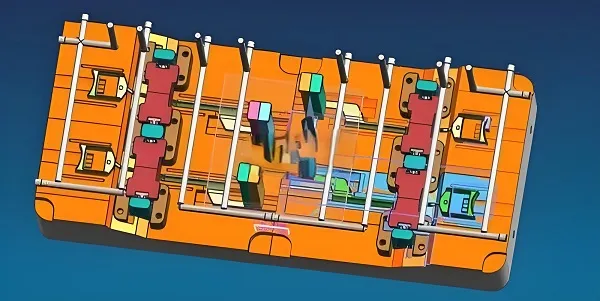
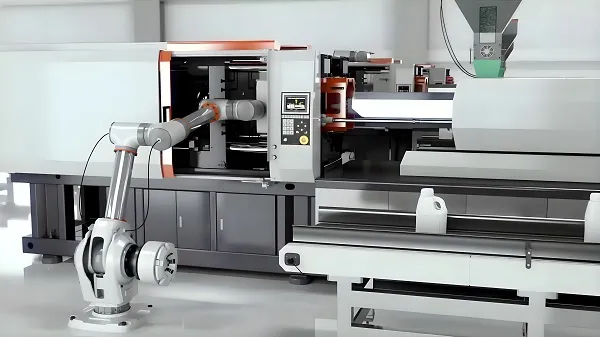
Injection Molding Technology Trends: Smart, Sustainable & Advanced Molding
This is not a list of buzzwords. It is a 2026 outlook that separates what is actually running in production from what is still experimental — and explains, for each change, what it means for your mold, your material, your quality, your cost and your sourcing decisions.
Injection Molding Trends at a Glance: 2026
The single most useful framing is maturity. A trend that is "established" changes how you should qualify a supplier today; a trend that is "emerging" changes what you should watch. The table below is the map for the rest of this guide.
| Trend | Maturity | What is changing | Buyer impact |
|---|---|---|---|
| AI-assisted process control | Emerging → Practical | Parameter monitoring & optimization | More consistent production |
| Smart manufacturing | Mainstreaming | Connected machines + production data | Better visibility & traceability |
| Automation & robotics | Mainstream | Part handling, inserts, inspection | Repeatability / labor efficiency |
| Digital twins & simulation | Growing | Predictive fill / warpage analysis | Fewer trial iterations |
| Physical foaming | Growing | Lightweight parts / material efficiency | Lower weight, potential savings |
| Multi-material / two-shot | Established & expanding | Part integration | Fewer assemblies |
| Recycled / bio-based resins | Growing | More circular material options | Sustainability requirements |
| Electrification & energy efficiency | Growing | Electric machines, process efficiency | Lower operating energy |
| Additive tooling (conformal) | Growing | Conformal cooling / rapid tooling | Faster tooling, thermal control |
| Regionalization & ESI | Growing | Earlier engineering collaboration | Supply-chain resilience |
What Is No Longer a "Future Trend"?
Before listing what is new, it helps to retire a few items that have quietly become baseline capability. Treating them as novelties undersells your supplier and confuses the buyer.
Automation
Robotic part removal and downstream handling are increasingly expected for repetitive operations, not a differentiator. Kaysun's 2026 analysis frames automation as new table-stakes rather than a nice-to-have.
IIoT and production data
Machine and process data are increasingly part of day-to-day production management. The question is no longer "will factories connect?" but "what becomes visible, and to whom?"
Mold simulation
Simulation used before steel cutting to evaluate filling, cooling and warpage risk is now normal engineering practice for serious tooling — not a futuristic add-on.
Digital process monitoring
Cavity-pressure sensing and per-cycle process windows appear on the agendas of specialist events such as the SPE Injection Molding Innovation Summit, signaling mainstream engineering interest rather than lab curiosity.
Design of experiments
Structured DoE for process setup is standard for qualified molders, not a research activity. It is how robust windows are found instead of guessed.
In-process quality checks
Vision and dimensional checks at or near the press are common on demanding programs. "We inspect" is no longer a selling point; "how and when" is.
AI-Assisted Injection Molding Moves From Hype to Process Support
AI in molding is most useful where it sits on top of good data: it finds patterns a operator would miss and recommends adjustments faster than a shift report. It is far less useful as a black box that is expected to replace engineering.
Where AI adds value
- Process anomaly detection across cycles
- Parameter recommendations from historical windows
- Quality prediction from process signatures
- Predictive maintenance on wear items
- Analysis of large process-data sets for drift
Where AI still needs human expertise
- Resin preparation, drying and handling
- Mold design and cooling strategy
- Tooling engineering and steel decisions
- Interpreting abnormal material behavior
- Judging whether a part is actually capable
The reason AI sits at "emerging → practical" rather than "mainstream" is mundane: a model is only as good as the data fed to it, and injection molding data are noisy. Melt history, regrind ratio, ambient humidity, screw wear and even the last purge all move the process. A useful AI layer therefore starts with disciplined data capture and a stable process window — it amplifies a well-run cell, it does not rescue a chaotic one.
Smart Manufacturing Becomes a Production Infrastructure
Smart manufacturing is not "the factory has IoT." It is the chain that turns a machine signal into a decision a customer can trust. The technology is IIoT, connectivity, real-time data, dashboards, OEE and MES — but the outcome is visibility.
Early trend analyses already placed IIoT, automation and machine data at the center of future molding; 2026 writing pairs that data with AI-assisted analysis. The buyer takeaway is simple: ask what information becomes visible to you, not whether a dashboard exists.
Automation Expands Beyond Part Removal
The shallow version of this trend is "more robots." The useful version is reducing variability across the entire cell — because the bottleneck is often not the press itself.
Machine tending
Loading, unloading and changeover support.
Insert loading
Placing metal or molded inserts before close.
Part removal
The original use; now baseline for repeat runs.
Vision inspection
At- or near-press checking of defects.
Degating
Removing runners/sprue automatically.
Assembly & packing
Downstream operations inside the cell.
Digital Twins and Mold Simulation Move Earlier
A digital twin in molding is usually a simulation of fill, pack, cooling and warpage checked against real process and part data. The shift is using it before steel is cut, when changes are nearly free.
Fill
Flow balance and weld-line risk.
Pack
Shrinkage and sink control.
Cooling
Cycle time and warpage.
Gate & layout
Placement decisions, validated.
SPE's 2026 agenda treats digital twin, warpage prediction, DOE and cavity-pressure sensing as working engineering topics. This is exactly where an Injection Mold Design Guide and a mold manufacturing partner connect: simulation only pays off if the tool is built to act on it.
One caveat worth stating plainly: a simulation is only as faithful as its inputs. Shrinkage, fill and warpage predictions depend on accurate material data, representative process settings and a mesh fine enough to catch the feature that matters. A pretty fill plot on the wrong resin is worse than no plot — which is why the value is in the decision it changes, not the image it produces.
Conformal Cooling and Additively Manufactured Tooling
Conventional tooling uses straight drilled channels that cannot follow a curved cavity. Additive manufacturing lets the cooling channel follow the geometry, so temperature is more uniform where it matters.
What changes
- More uniform cavity temperature
- Potential cycle-time reduction
- Better warpage control
- Improved thermal balance on difficult parts
Where it makes sense — and where it may not
It earns its cost on complex geometry, hot spots, high-volume parts and cycle-time-sensitive production. For simple, low-volume or cost-sensitive tools, straight cooling is often the right economic answer. The honest framing is "when does it pay back," not "is it advanced."
Physical Foaming & Lightweight Injection Molding
Physical foaming injects a supercritical gas such as N₂ or CO₂ to create a microcellular structure. CHINAPLAS 2026 coverage lists it among the leading directions, with the industry focus moving from "just recycle" to weight reduction, material savings, energy efficiency and process stability.
What it offers
- Lower part weight
- Reduced material use per part
- Potential warpage and sink improvement on thick sections
- Stiffer-feeling parts from core structure
What to check first
- Surface requirements — foamed skin can differ from solid
- Geometry and resin compatibility
- Mold venting and gas handling
- Whether the weight saving justifies the process
Part Integration Through Multi-Material Molding
Two-shot molding, overmolding and insert molding are expanding because they change the product architecture: one molded component replaces several parts and an assembly step.
Two-shot
Two resins in one cycle, one tool.
Overmolding
Soft layer onto a rigid substrate.
Insert molding
Metal or molded insert captured in plastic.
Hard-soft
Grips, seals, tactile surfaces.
The driver is fewer assembly steps, integrated functions and better product feel — not simply new equipment. CHINAPLAS 2026 also lists multi-component molding among the core technical directions, which matches what product teams actually ask for.
What it demands from mold design is often understated: a second shot needs its own gate, runner and clamping strategy, a bond line that the resin pair actually adheres to, and a first-shot geometry that holds position under the second injection pressure. Get those wrong and the integration advantage turns into a scrap problem — so multi-material is as much a tooling discipline as a machine capability.
Recycled, Bio-Based & Lower-Impact Materials
"Green plastic is popular" is not a manufacturing statement. The real question is what recycled or bio-based content does to the process window, and what documentation the buyer receives.
PCR / PIR
Post-consumer / post-industrial feedstock.
Chemically recycled
Depolymerized and re-polymerized streams.
Bio-based
Renewable-content polymers.
Lightweighting
Less material per function.
What changes for the molder
- Wider variation between lots
- Contamination and odor risk
- Narrower, less forgiving process window
- Stronger incoming-material checks
What buyers should require
- Resin grade and recycled-content statement
- Relevant material documentation
- Agreed appearance and property limits
- A qualified, validated process window
Electric Injection Molding and Energy Efficiency
All-electric machines can offer real advantages in repeatability, energy use and clean process control. The honest statement is that the benefit depends on the application and equipment configuration — not that electric is always better.
Repeatability
Tighter, servo-controlled motion.
Energy
Lower idle and cycle energy on suitable parts.
Environment
Cleaner, lower-noise cell.
Micro Injection Molding & Precision Manufacturing
Micro molding serves medical, electronics, micro-gears, connectors and miniature components where tolerances are tight and features are small. The performance claim must be earned, not stated as a number.
Injection Mold Suppliers Are Involved Earlier
Kaysun's 2026 analysis lists early supplier involvement as a trend in its own right. The old model hands a finished CAD to a supplier who builds the mold; the newer model brings the molder in at concept, where the expensive decisions are still cheap to change.
This matches the workflow Goldcattle already runs — DFM → mold flow → tooling → T0/T1 — so the trend is also a description of how a capable supplier should already work, not a future promise.
Which Injection Molding Trends Are Ready for Production?
The single most useful view is maturity against real use. The spectrum below places each technology on a scale from established to experimental; the table beneath it is the actionable version.
| Technology | Status in 2026 | Typical use |
|---|---|---|
| Robotics | Mainstream | Part handling, inserts, inspection |
| IIoT | Mainstreaming | Machine monitoring & data |
| Process AI | Emerging / Practical | Optimization, anomaly detection |
| Digital twin | Growing | Mold / process simulation |
| Conformal cooling | Growing | Complex / high-volume molds |
| Two-shot | Established | Integrated components |
| Physical foaming | Growing | Lightweight parts |
| PCR / recycled resin | Growing | Sustainability-driven programs |
| All-electric machines | Mainstreaming | Efficient, repeatable molding |
| Micro-molding | Established niche | Medical / electronics |
| Autonomous molding | Emerging | Advanced environments |
What These Trends Mean for Injection Molding Buyers
The point of a trend guide is to change what you ask a supplier. The right questions target evidence, not vocabulary.
| Trend | Don't just ask | Ask instead |
|---|---|---|
| AI | "Do you use AI?" | "How is process data monitored and used to control quality?" |
| Automation | "Do you have robots?" | "Which production steps are automated?" |
| Sustainability | "Do you use recycled plastic?" | "Can you provide resin grade, recycled content and documentation?" |
| Digital twin | "Do you use Moldflow?" | "At what stage is simulation used, and what decision did it change?" |
| Conformal cooling | "Do you do conformal?" | "Where did simulation show it pays back on my part?" |
| ESI | "Can you build my mold?" | "Can you review my design before steel is cut?" |
Notice the pattern: every good question asks for evidence and process, not a yes-or-no on a technology label. A supplier that can answer these concretely is further along than one with a longer trend list on the homepage.
How New Injection Technologies Affect Cost
Most of these technologies raise upfront cost and lower operating or unit cost — the opposite of a simple "newer = cheaper." The table shows where each earns its keep.
| Technology | Upfront cost | Operating impact | Best fit |
|---|---|---|---|
| Automation | Higher | Lower labor variation | Stable volume |
| Hot runner | Higher | Lower material waste | High volume |
| Conformal cooling | Higher tooling | Potential cycle reduction | Complex / high volume |
| Two-shot | Higher tooling | Lower assembly | Integrated parts |
| AI monitoring | System investment | Process visibility | Repeat production |
| Recycled resin | Material-dependent | Quality control may rise | Sustainability programs |
Which Injection Molding Trends Are Still Overhyped?
A trustworthy outlook says what has not arrived. These are the claims to treat with caution in 2026.
Fully autonomous molding
Still depends on process stability, data quality, sensor quality, resin consistency and engineering knowledge. It is a direction, not a shipped default.
AI without good process data
Without consistent historical and live data, AI is not magic. The model is only as trustworthy as the process behind it.
Sustainability without trade-off analysis
Recycled content is not automatically better for a given part. The resin, the process window and the requirement decide.
3D-printed inserts for every mold
Additive tooling is excellent for conformal cooling and rapid iterations, but not the economical answer for every tool. Match it to the problem.
Technology Trends by Industry
Trends do not float in the air; they land on specific parts. The table maps the technologies that create the most value per application.
| Application | Relevant technology |
|---|---|
| Automotive | Lightweighting, multi-material, automation |
| Medical | Micro molding, precision control, traceability |
| Electronics | Thin-wall, micro molding, high-speed automation |
| Packaging | Thin-wall, fast cycle, automation |
| Industrial | High-performance resins, insert molding |
| Consumer products | Multi-material, texture, recycled materials |
| EV components | Lightweighting, thermal management, large-part molding |
Automotive
Weight and integration drive two-shot and foaming.
Medical
Precision and documentation dominate over novelty.
Electronics
Thin-wall and speed; micro features where needed.
Packaging
Cycle time and automation are the lever.
Industrial
Resin performance and insert integration.
Consumer
Feel, texture and sustainable content.
Injection Molding Technology Outlook: 2026–2028
The credible horizon splits cleanly into what is already landing and what remains a research direction. Avoiding "prediction fiction" means dating the claim.
Next 1–3 years (high confidence)
- AI-assisted process control in more shops
- Broader automation across the cell
- Simulation used earlier and more often
- Recycled and bio-based content in more programs
- Energy optimization as standard
- Integrated in-press inspection
Longer term (watch, don't bet)
- Autonomous molding in selected environments
- Deeper, loop-closed digital twins
- Advanced material systems
- Closer coupling of simulation and live data
Frequently Asked Questions
What are the biggest injection molding technology trends in 2026?
The trends with the most production traction are AI-assisted process monitoring, connected smart manufacturing, automation beyond part removal, mold simulation before steel cutting, conformal cooling, physical foaming, multi-material and two-shot molding, recycled and bio-based resins, all-electric machines and earlier supplier involvement. The useful question is which has reached production maturity for your part.
Is AI actually being used in injection molding?
Yes, mainly as process support: anomaly detection, parameter recommendation, quality prediction and predictive maintenance on top of real process data. It does not replace resin preparation, mold design, cooling design or engineering judgment, and it is only as good as the data and process stability behind it.
How is automation changing injection molding?
Automation is expanding from simple part removal to insert loading, in-mold handling, vision inspection, degating, downstream assembly and packing. The point is reducing variability across the whole production cell, not just putting a robot next to the press.
What is a digital twin in injection molding?
A simulation model of fill, pack, cooling and warpage compared against real process and part data. Used early, it helps place gates, balance cooling and predict warpage before steel is cut, reducing trial iterations.
What is conformal cooling and why does it matter?
Conformal cooling uses channels that follow the cavity contour instead of straight drilled holes, giving more uniform temperature control. It matters most for complex geometry, hot spots and high-volume parts where cycle time and warpage dominate cost; for simple low-volume tools it may not pay back.
What is physical foaming injection molding?
It injects a supercritical gas such as N₂ or CO₂ to create a microcellular structure, reducing weight and often material use. It is not right for every part — geometry, resin, surface requirements and mold design decide whether it is practical, and surface finish can be affected.
Is two-shot molding becoming more common?
Yes. Two-shot, overmolding and insert molding are expanding because they integrate functions and reduce assembly steps — hard-soft combinations, seals, grips and multi-color parts. The driver is product architecture, not just new equipment.
How are recycled plastics affecting injection molding?
Recycled, bio-based and lower-impact resins are moving into design decisions. The real manufacturing issue is variation, contamination and a narrower processing window, so mold design, process control and incoming material documentation matter more than the sustainability label alone.
Are all-electric injection molding machines more efficient?
All-electric machines can offer advantages in repeatability, energy use and clean process control for suitable applications, but the benefit depends on the part, resin and equipment configuration. They are not automatically better for every job, especially very large or high-tonnage ones.
What technologies are most valuable for high-volume production?
For stable high volume the highest-value technologies are automation across the cell, consistent process monitoring, hot runners, conformal cooling where cycle time matters, and validated two-shot or multi-material tooling that removes assembly. The payback comes from reduced variation and labor, not from novelty.
Which injection molding trends matter most to buyers?
Buyers should focus less on supplier buzzwords and more on evidence: how process data are monitored and acted on, which steps are automated, what material documentation is available, and at what stage simulation is used. Those answers reveal production maturity better than a trend list.
Will AI replace injection molding engineers?
Not in the foreseeable production horizon. AI supports parameter optimization and anomaly detection, but mold design, resin behavior, cooling strategy, tooling engineering and process knowledge still depend on engineers. The likely outcome is engineers supported by better data, not replaced by it.
What should buyers ask an injection molding supplier in 2026?
Ask how process data are collected and used to control quality, which production steps are automated, whether simulation is run before steel cutting and what it changed, and whether recycled-content resin comes with grade and documentation. Also ask how early in development the supplier can be involved.
Discuss Your Next Injection Molding Project
Bring your CAD and production requirement. We can review which 2026 technologies actually apply to your part — simulation before steel, conformal cooling where it pays, multi-material integration, and recycled-content qualification — instead of quoting a trend you do not need.
Xiamen Goldcattle Plastic & Metal Products Co., Ltd. — Founded in 1998 — designs, builds and runs injection molds and molded parts for international B2B programs, with DFM, mold flow and T0/T1 validation.