
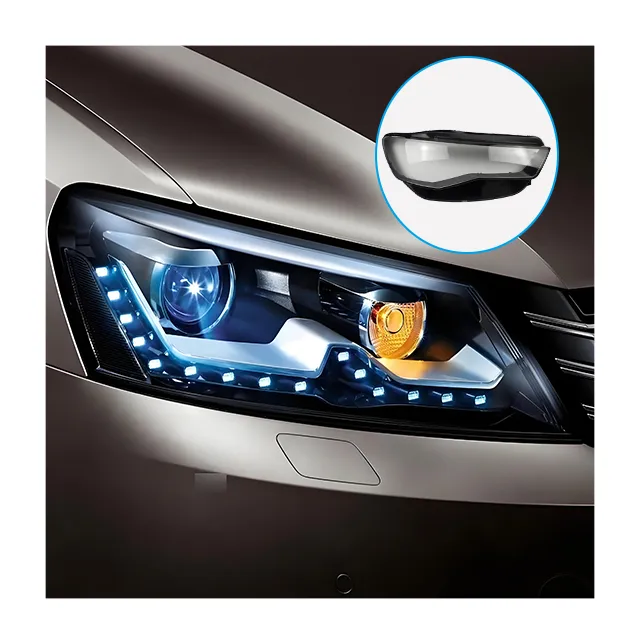
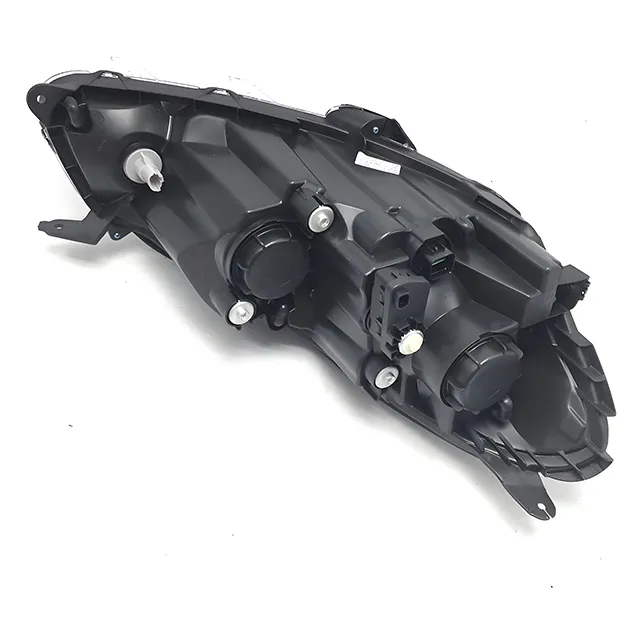
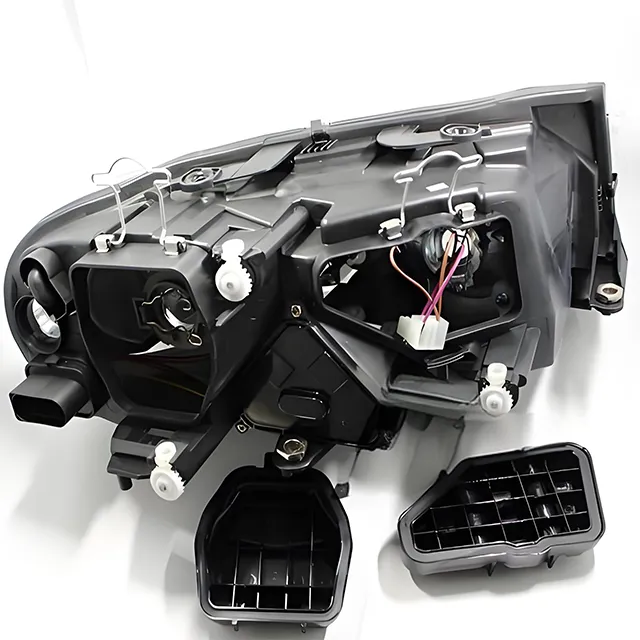
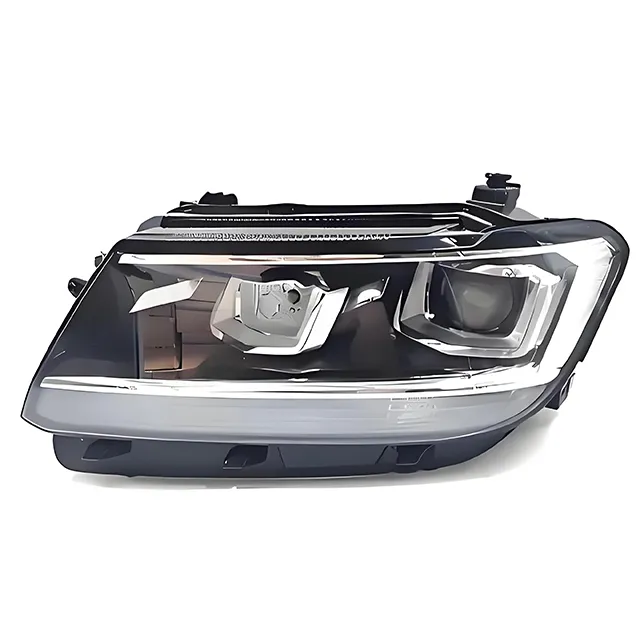
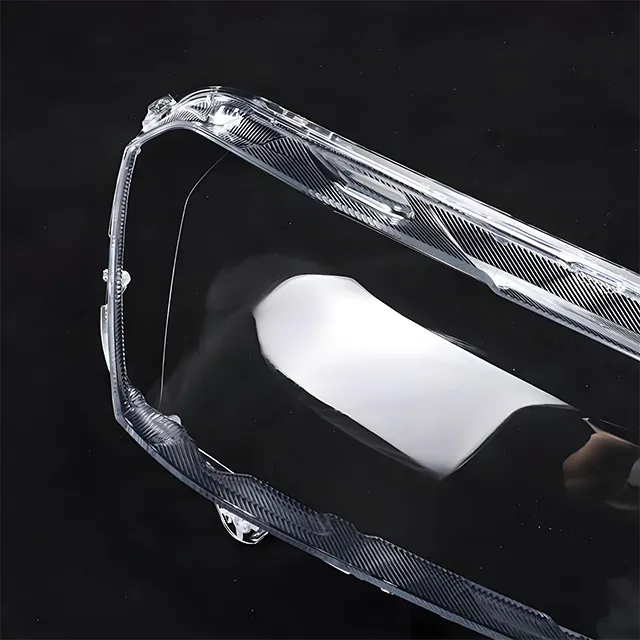
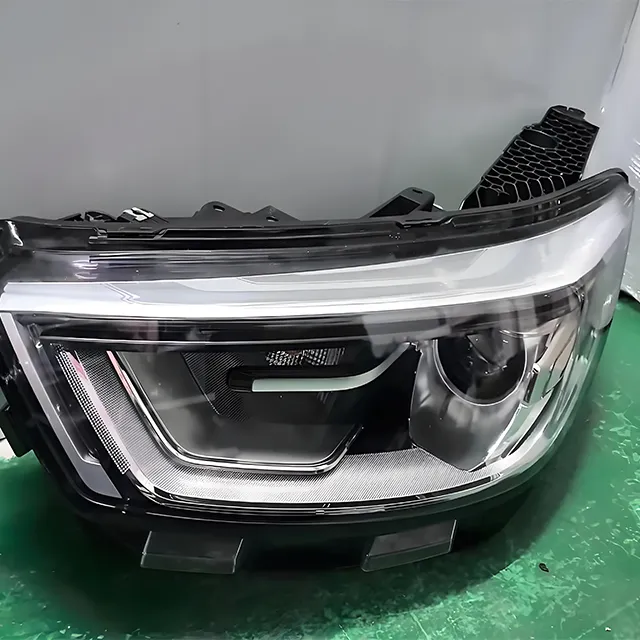
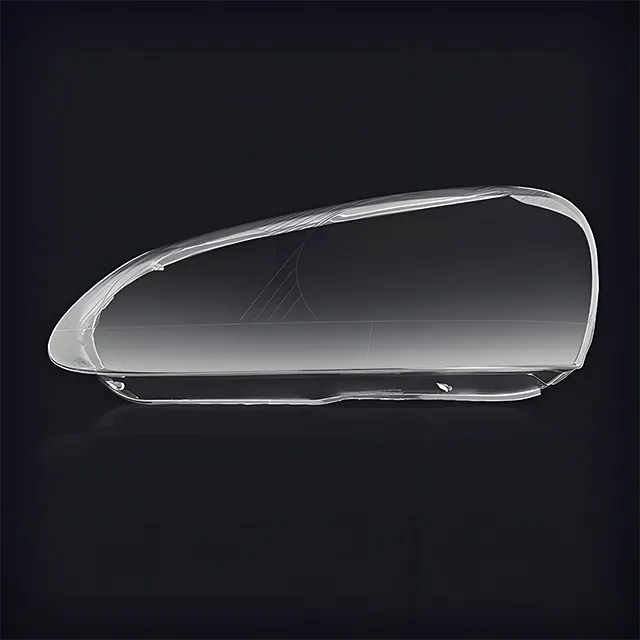
Custom Car Headlight Housing Manufacturer | PC Transparent Injection Molding
Place of Origin : Fujian, China
Brand Name : JSD
Model Number : IMP-31
Plastic Modling Type : injection
Product name : Customized auto headlight plastic parts
Material : ABS/PA66/PP/PC/PMMA/PSU/PCTG/TPE/TPU/PBT ETC.
Color : White
Size : Customer Size
Application : Automotive
Drawing Format : 2D/(PDF/CAD)3D(IGES/STEP)
Service : Customized OEM
Certification : ISO9001
Type : OEM Parts
MOQ : 1 Piece
Description
Custom Car Headlight Housing Manufacturer
Injection-molded transparent housings in optical-grade PC & PMMA, plus die-cast aluminum brackets for LED modules — engineered, tooled, molded and finished in one plant.
Sourcing a headlight housing is rarely just "molding a plastic box"
A headlight housing has to hold the lens, reflector and LED module in exact optical alignment, seal against water and dust, survive UV and LED heat for years — then be produced in the tens of thousands without drifting. Most suppliers can mold or paint or build a mold. Few own all of it under one roof, which is where fit, seal and volume problems start.
Optical alignment
The lens, reflector and module must register within tight windows. We treat the sealing face and datum structure as the critical characteristics from day one.
Sealing & durability
Condensation inside a headlight is a warranty nightmare. Gasket grooves, parting lines and wall control decide whether you get IP67 or a returns pile.
Scale without drift
Automotive runs are high-volume. Consistency across 100k–1M parts matters more than a perfect first article — that is a process problem, not just a molding problem.
What we actually manufacture for headlight programs
A "headlight housing" is usually a family of parts. We cover the plastic and metal components of that family — each with its own material and process logic.
Full plastic housing
The main body that snaps/seals around the lens and reflector. Typically optical-grade PC or PBT/ASA, often with a molded-in gasket groove.
Reflector & bezel
Reflector shells (vacuum-metalized) and decorative bezels (class-A painted). Cosmetic and optical surfaces are both our responsibility.
Lens frame / retaining ring
The structural ring that clamps the polycarbonate or glass lens. Dimensional stability and flat sealing face are the priority.
LED heatsink bracket
Die-cast ADC12 aluminum bracket that pulls heat off the LED module. This is a metal part, not molded plastic — different process, same program.
Overmolded seal carrier
Housing with a TPE/TPU gasket overmolded in a second shot for a built-in, leak-path-free seal.
Multi-material assemblies
Housing + bracket + fasteners joined and functionally checked before shipment, so you receive a sub-assembly, not loose parts.
Injection molding vs die casting — which part of the headlight?
Unlike a CNC part where the question is "3-axis or 5-axis", a headlight program's question is "which process for which component". We run both in-house, so the choice is driven by the part, not by what a single shop happens to own.
Injection molding — the plastic body
- Use for: housing, reflector, bezel, lens frame, seal carrier.
- Materials: PC, PMMA, PBT/ASA, PP-T20, ABS/PC, with TPE/TPU overmold.
- Why: lowest unit cost at volume, complex geometry in one shot, optical-grade surfaces.
- Trade-off: needs a mold (upfront tooling); tolerance limited by shrinkage & warpage.
Die casting — the metal bracket
- Use for: LED heatsink bracket, structural mounts, EMI shields.
- Materials: ADC12 / A380 aluminum, occasionally zinc alloys.
- Why: conducts heat, holds threads/bosses, rigid under vibration.
- Trade-off: also tooled; secondary CNC often needed for sealing/optic-facing faces.
Material library for headlight components
Material choice decides optical clarity, heat resistance and whether the part warps. Below is what we run, the numbers that matter to a lighting buyer, and the failure mode we watch for each.
Polycarbonate (PC)
Best all-rounder for the housing: high impact, heat to ~130°C, UV-stabilized grades available. Preferred where LED heat and road debris are concerns.
HousingLens frameReflector shell
Watch: prone to scratch/yellowing without a hard-coat; sensitive to some solvents.
PMMA (Acrylic)
Highest clarity and best weatherability — the classic lens material. More brittle than PC, lower heat limit (~110°C).
LensOptical covers
Watch: scratches and cracks under impact; not for high-power LED lenses without care.
PBT / ASA (blends)
Heat- and UV-stable structural plastics for bezels and non-optical housings. ASA keeps color under sun; PBT resists creep at the module-mount bosses.
BezelStructural housingOutdoor trim
Watch: lower optical clarity — never for the light path.
ABS/PC blend & PP-T20
Rigid, dimensionally stable, cost-effective for brackets and non-critical shells. PP-T20 (20% talc) adds stiffness and heat deflection.
Inner bracketsHousings (cost)
Watch: not optical; verify UV stability for exterior use.
Die-cast ADC12 aluminum
The LED heatsink bracket. Conducts heat away from the module, holds threaded bosses, rigid under vibration. Often CNC-finished on sealing faces.
HeatsinkMountsEMI shield
Watch: porosity at thin sections; plan draft and ejector location early.
TPE / TPU (overmold)
Soft gasket material molded in a second shot onto the housing for a built-in seal — removes a separate gasket and its leak path.
Overmold sealVibration pads
Watch: bonding to substrate; gate & cure need validation.
Tooling & mold — we build it in-house
For a molded part, the mold is the product. Because mold manufacturing is one of our six in-house processes, tooling, trial and correction stay under our own roof — no finger-pointing between a molder and an outside toolshop.
Mold lead time
Typically 15–25 days. Simple tools 10–15 days; complex multi-cavity optical molds 30+ days with progress updates.
Mold life
500,000 – 1,000,000 shots depending on steel grade, geometry and abrasive filler. We spec steel to your volumes.
Mold ownership
Tooling is yours. We can hold it, maintain it, or transfer it — terms agreed up front, no lock-in.
Prototype before tool
Need to check fit fast? We 3D-print (SLA/SLS) a representative part from your STEP before cutting steel.
DFM rules we apply to every headlight housing
Most headlight failures are designed in, not molded in. These are the calls we make with you at the drawing stage.
Wall thickness
Keep sections uniform (typically 1.5–3.0 mm). Sudden thick-to-thin transitions cause sink marks and warpage that throw off the lens seat.
Gate location
Gate away from the optical zone and the sealing face. A gate scar or weld line across the light path is a reject — we simulate fill to place it safely.
Parting line & witness
The parting line lands where it will not sit on a seal or a visible cosmetic face. Flash tolerance is agreed before tooling.
Sealing-face flatness
The gasket groove and lens seat are designed as the controlling features — flatness and datum referenced, not left to shrinkage.
Overmold & two-shot
For built-in seals, substrate and TPE are selected for bond; gate and cure validated so the gasket does not delaminate.
Bosses & mounts
Module-mount bosses get enough wall and local ribbing to avoid sink while holding the LED position under heat cycling.
Tolerances & sealing — stated honestly
Molded plastic behaves differently from machined metal. Here is what we can hold on a headlight housing, by feature type — not a single headline number.
| Feature | Typical achievable | How we hold it |
|---|---|---|
| General molded body dimensions | ±0.10 mm | Tool steel control + process window + first-article validation |
| Precision features (bosses, clips) | ±0.05 mm | Tight gate/process control, SPC on critical dims |
| Critical small features / post-machined inserts | ±0.02–0.03 mm | Secondary CNC on sealing/optic-facing faces |
| Sealing-face flatness / lens seat | per your GD&T | Datum-referenced, measured on CMM, not left to shrinkage |
Sealing target
Designed for IP67 / IP6K9K class performance via gasket groove, parting-line and overmold control. We validate against your ingress spec, not a generic claim.
Optical alignment
Lens seat, reflector seat and module boss located from a single datum chain so the light path stays true across the run.
GD&T on drawings
Send GD&T and we work to it: position, profile and flatness on sealing/optic faces are treated as critical characteristics.
Surface finishes & secondary operations
A headlight part is rarely "done" at demold. The finish is what makes it optical, cosmetic or weatherproof — and we manage it as part of the program.
UV hard-coat (PC)
Anti-scratch, anti-yellowing coating for polycarbonate housings and lenses exposed to sun and grit.
Class-A painting
Body-color or black-texture paint on bezels and trims, matched to your standard with controlled film thickness.
Vacuum metallization
Aluminum coating on reflector shells for the reflective layer — the classic headlight reflector finish.
Chrome / decorative plating
For bright trims and rings where a mirror look is specified.
Anti-fog / hydrophobic
Lens treatments that resist fogging and water spotting for consistent beam performance.
Assembly & marking
Bracket + housing + fasteners joined and functionally checked; laser marking or print per your spec.
Quality & automotive readiness
We are built as a vertically integrated OEM/ODM plant, so quality is controlled at every handoff rather than outsourced and hoped for.
Certifications we hold
ISO 9001:2015SGS · SZIN2409001808ML09_ENRoHS · TQT7737B1373ECRmbond · XMML24030283_EN
National High-Tech Enterprise; 26 years; 100+ in-house machines; 99.8% on-time delivery.
Automotive program support
We provide PPAP documentation, IMDS material data, full material traceability, and CoC with each lot. Dimensional and optical reports are available per your AQL.
Equipment & production capacity
Headlight programs live or die on volume consistency. Our 100+ in-house machines span the full process chain for this product family.
Injection presses
50T – 1600T clamping force within our in-house base — from small bezels to large multi-cavity housings.
Die-casting
Aluminum casting for LED heatsink brackets and structural mounts, with in-house CNC finishing.
Mold & tool room
CNC + EDM tooling for mold fabrication and maintenance — tooling stays under our control.
Volume
1,000 to 1,000,000+ units per program, with automation for repeatability at scale.
Representative headlight programs
Three anonymized programs (client identifiers withheld; available under NDA) that show the range of what we run.
Lead time, MOQ & indicative price
Molded parts have two cost phases — tooling (once) and unit (per part). Here is how we structure it.
Tooling lead time
Mold 15–25 days (simple 10–15; complex optical 30+). 3D-printed fit prototypes available sooner.
Production lead time
After mold approval & sample sign-off: 15–25 days for the first shipment; repeats on a committed schedule.
MOQ
We support bridge/prototype volumes via existing or modified tooling. For a new dedicated mold, the economic case starts around low thousands — we'll tell you the break-even honestly.
Indicative unit price (production volume, ex-works)
US$1.00 – $25.00 / unit
Simple small PC/PP parts sit near the low end; large multi-cavity, tight-tolerance or heavily-finished housings sit higher. Tooling is separate (typically US$3,000–$30,000 depending on cavities, steel and complexity) and amortizes across the run. Figures are a 2026 market-based budget anchor, not a firm quote — final price follows your drawing, volume, material and finish.
Volume breaks cost 40–70%DFM reduces toolingMulti-part programs share setup
How to request a quote
The more your files specify, the tighter our number. Send what you have — we close the gaps in engineering review.
Accepted file formats
STEP / STPIGESX_T (Parasolid)STL2D PDFDWG / DXF
Prefer a native 3D model + a 2D drawing that calls out datums, sealing faces and critical tolerances.
What helps most
Target volume (drives tooling strategy), the environment (temp, UV, ingress), and any existing samples or competitor parts for benchmarking.
Ready to scope your headlight housing?
Send your drawing and we'll return DFM feedback and a tooling + unit quote — typically within 1–2 working days.