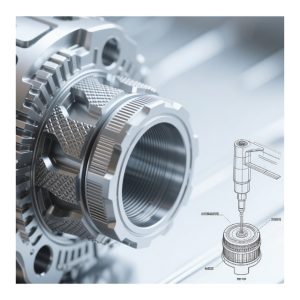
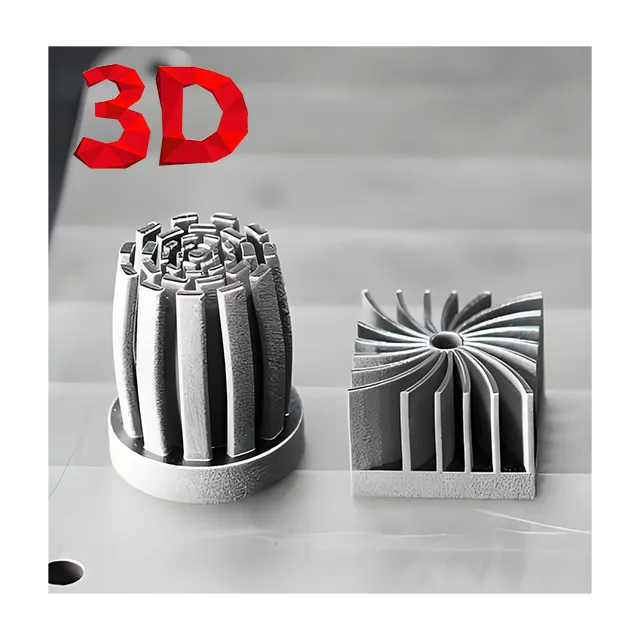
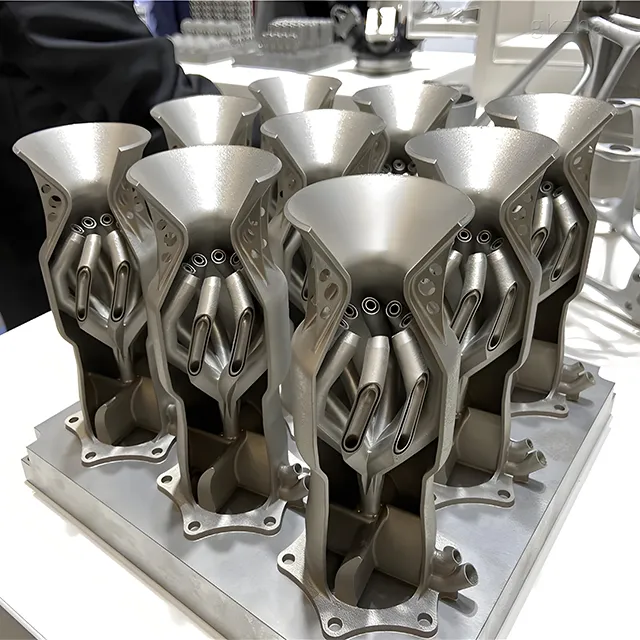
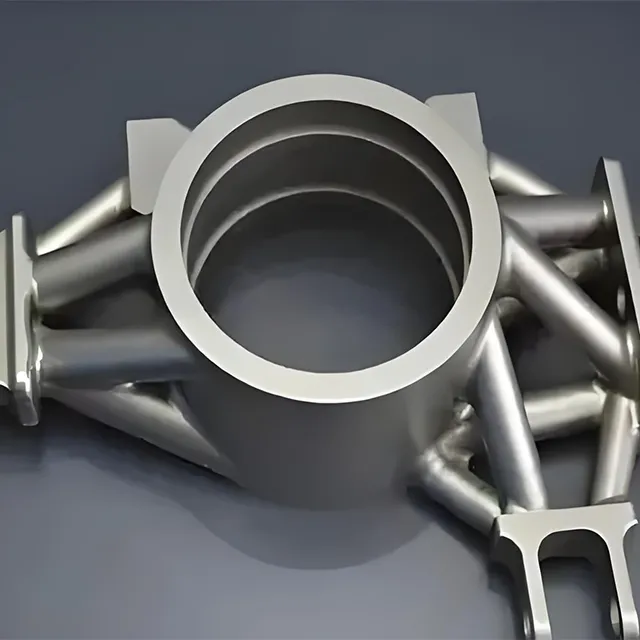
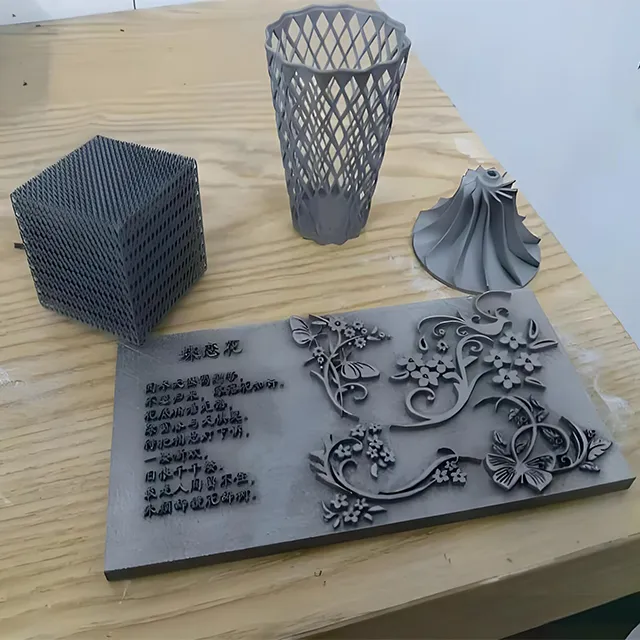
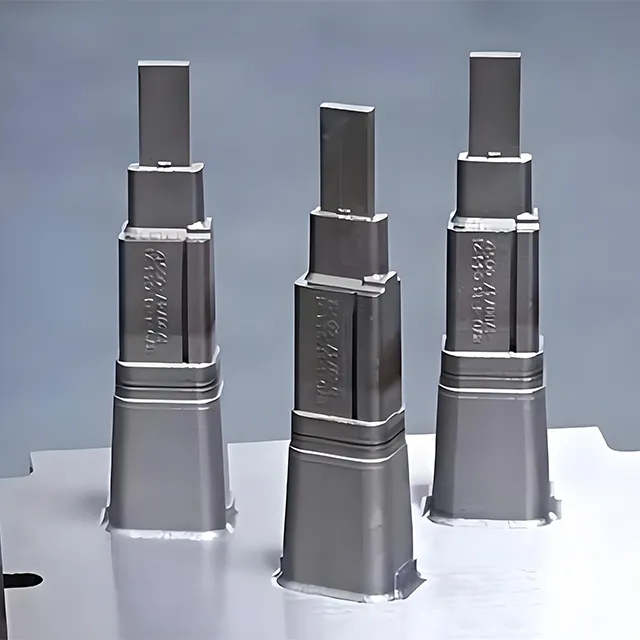
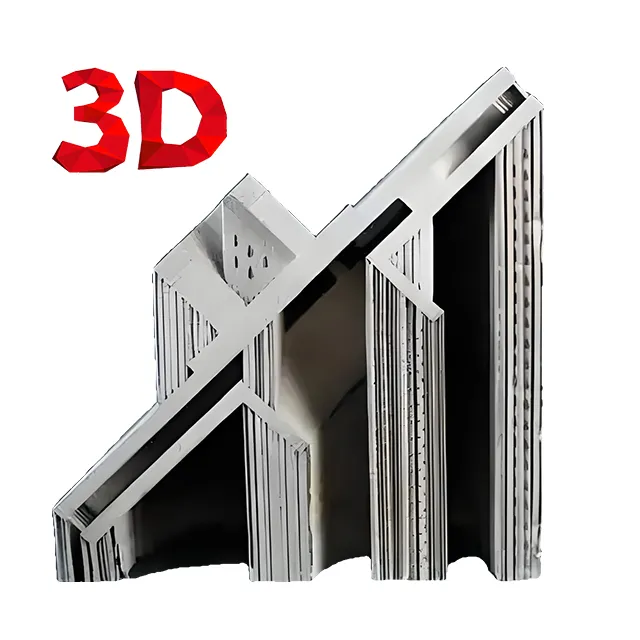
Custom 3D printing Stainless Steel Industrial Manufacture
Place of Origin : Fujian, China
Type : Other Machining Services
Micro Machining or Not : Micro Machining
Model Number : 3D-24
Brand Name : JSD
Product name : Custom 3D Printed Stainless Steel Industrial
Material : Steel
Surface treatment : Painting\Powder Coating\Plating\Polishing
Service : 3D Printed
Color : Customized Color
Size : Customer Size
Tolerance : 0.01- +/-0.005mm
Drawing Format : 2D/(PDF/CAD/DWG/DXF)3D(IGES/STEP/VDA)
MOQ : 1 Piece
Description
Manufacturing Capability
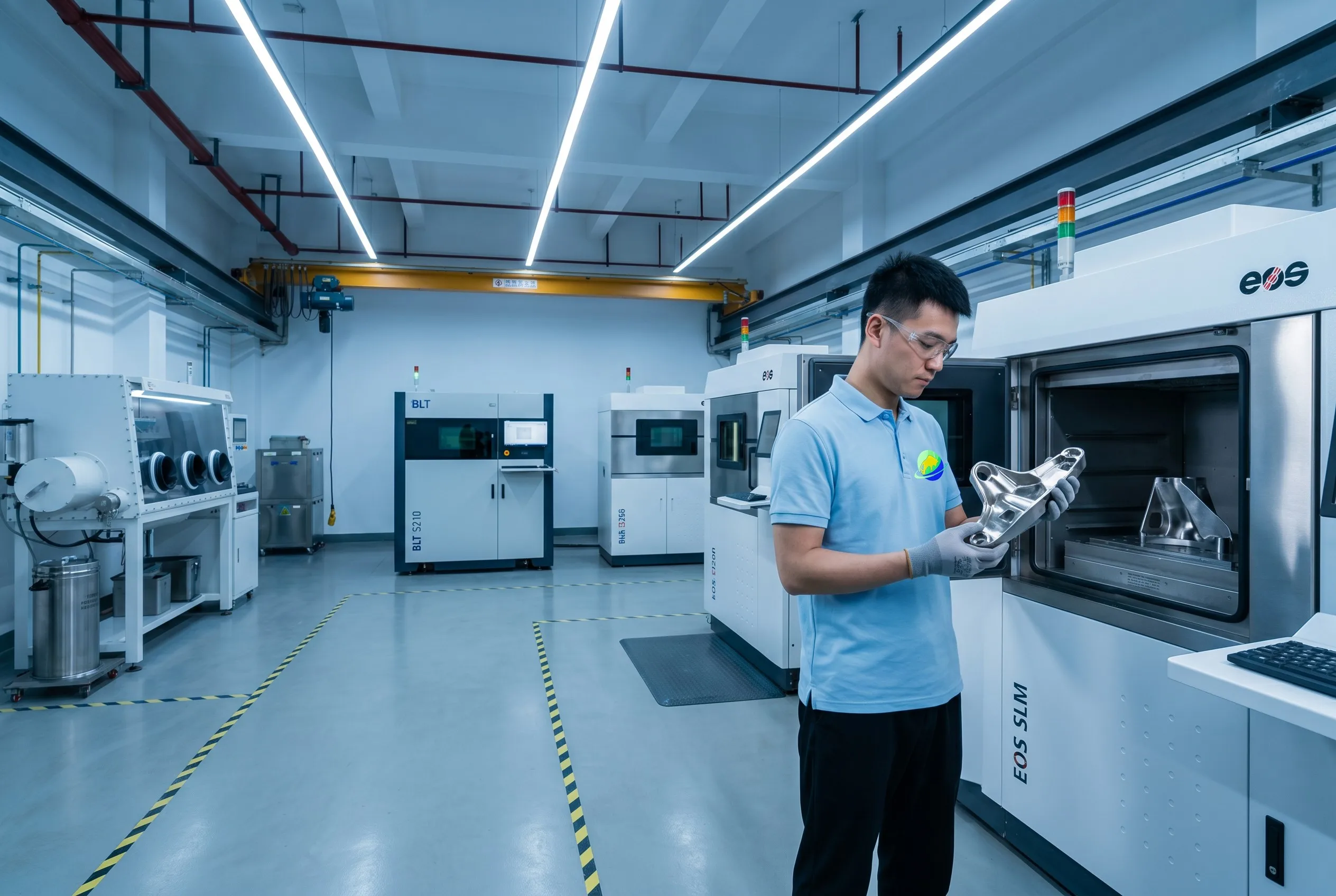
XiaMen Goldcattle operates industrial metal additive manufacturing systems configured for stainless steel, nickel alloy, and titanium production. Every build undergoes machine calibration verification, powder lot tracking, and post-process CMM dimensional validation.
Technology
SLM & DMLS
Selective Laser Melting and Direct Metal Laser Sintering for near-full-density metal parts. Layer thickness 20–40 μm.
Tolerance
Precision
Standard ±0.05 mm. Critical dimensions ±0.02 mm after CNC finish machining. Surface roughness Ra 6.3 as-printed, Ra 3.2 post-machined.
Build Volume
Max Part Size
280 × 280 × 350 mm (BLT S210). Larger assemblies via segmented printing and welding.
| Parameter | Specification | Notes |
|---|---|---|
| Technology | SLM / DMLS | Laser powder-bed fusion, near-full density |
| Layer Thickness | 20 μm, 30 μm, 40 μm | Selectable per part complexity |
| Dimensional Tolerance | ±0.05 mm standard | ±0.02 mm after CNC finish |
| Surface Roughness | Ra 6.3 (as-printed) | Ra 3.2 after CNC machining |
| Max Build Size | 280 × 280 × 350 mm | BLT S210 build envelope |
| Density | ≥99.5% | Near-full density, porosity controlled |
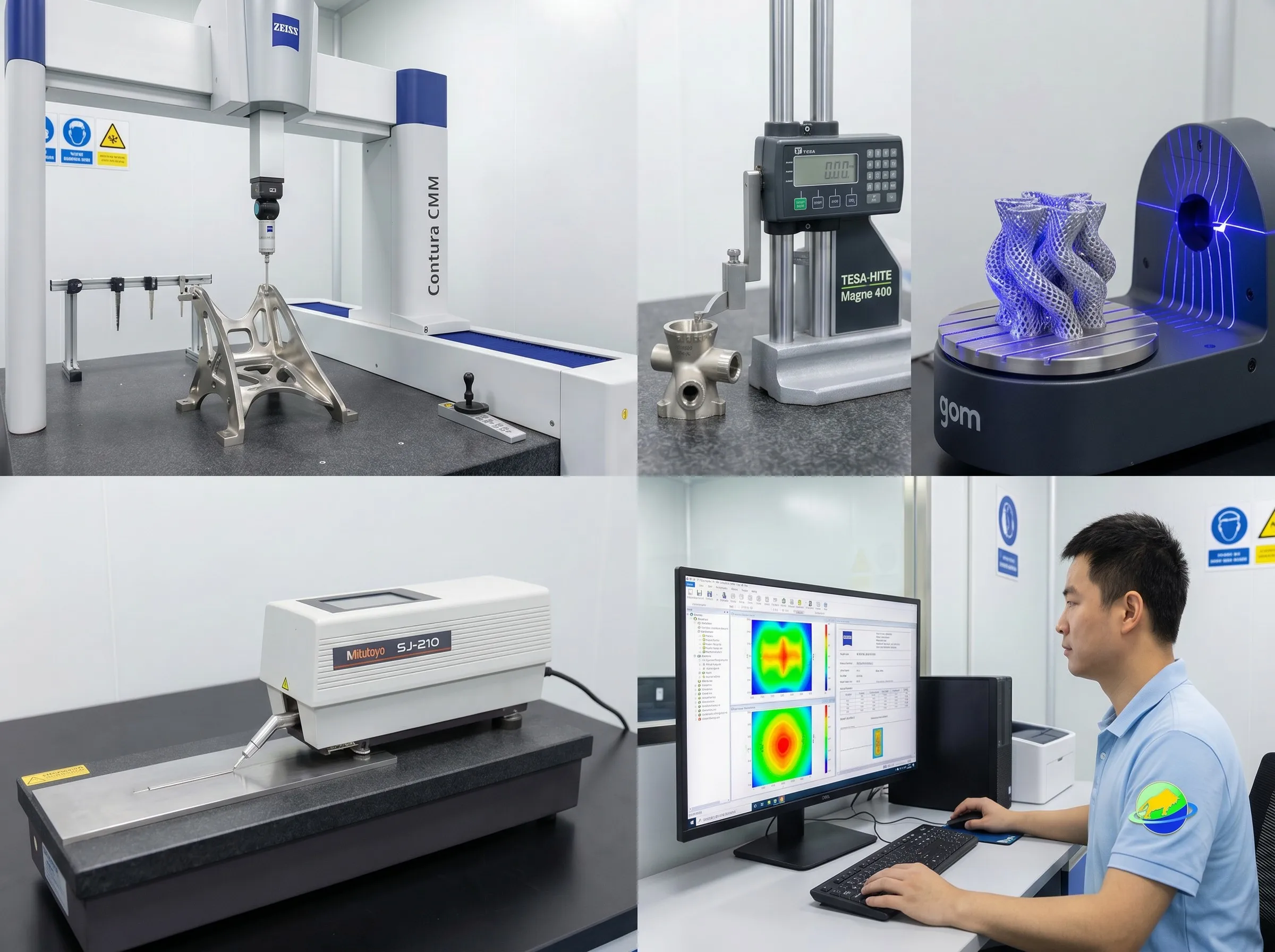
| Inspection | CMM / Height Gauge / 3D Scanner | Full dimensional report available |
| Delivery | Prototype & Mass Production | 1-piece prototype to 500+ batch |
Available Stainless Steel Materials
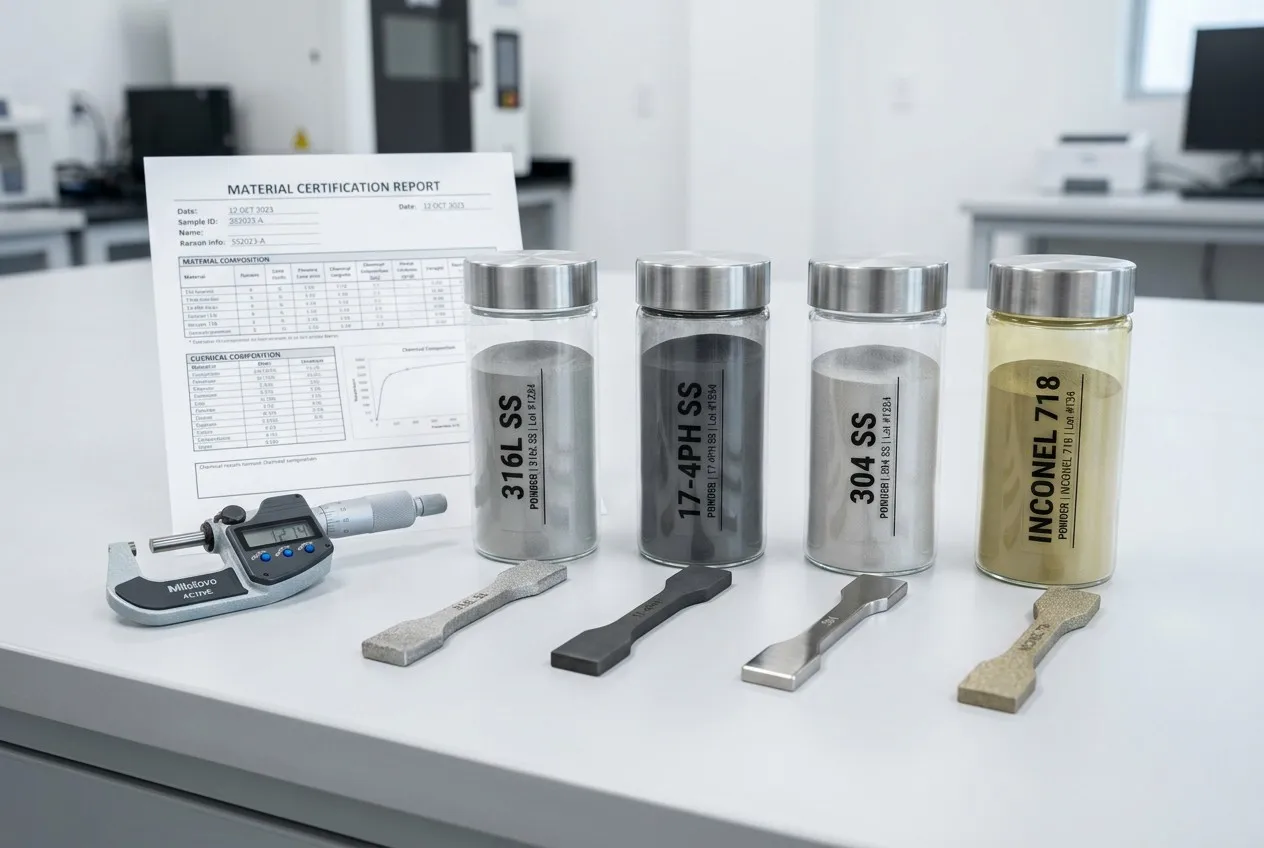
We stock certified metal powders for the most commonly specified stainless steel and nickel alloys in industrial additive manufacturing. Material certificates and lot traceability available on request.
| Material | Key Feature | Density | Primary Applications |
|---|---|---|---|
| 316L | Excellent corrosion resistance, weldable | 7.99 g/cm³ | Marine, chemical processing, food equipment, medical |
| 17-4PH | High strength after precipitation hardening | 7.78 g/cm³ | Mechanical components, defense, aerospace fixtures |
| 304 | General-purpose, cost-effective | 7.93 g/cm³ | Industrial enclosures, brackets, general hardware |
| 15-5PH | High hardness, toughness | 7.78 g/cm³ | Defense, tooling, high-stress mechanical parts |
| Inconel 718 | High-temperature, creep resistance | 8.19 g/cm³ | Turbine components, energy, oil & gas |
| Ti6Al4V | Lightweight, biocompatible | 4.43 g/cm³ | Surgical implants, aerospace structural parts |
Material selection shortcuts: Corrosion-prone environment → 316L. High mechanical load → 17-4PH. Budget-sensitive → 304. Medical or aerospace → Ti6Al4V. Extreme temperature → Inconel 718. All powders are certified with lot traceability.
Supported Metal 3D Printing Technologies
Our production floor integrates additive manufacturing with conventional subtractive processes, enabling complex geometries that would be impossible or impractical through machining or casting alone.
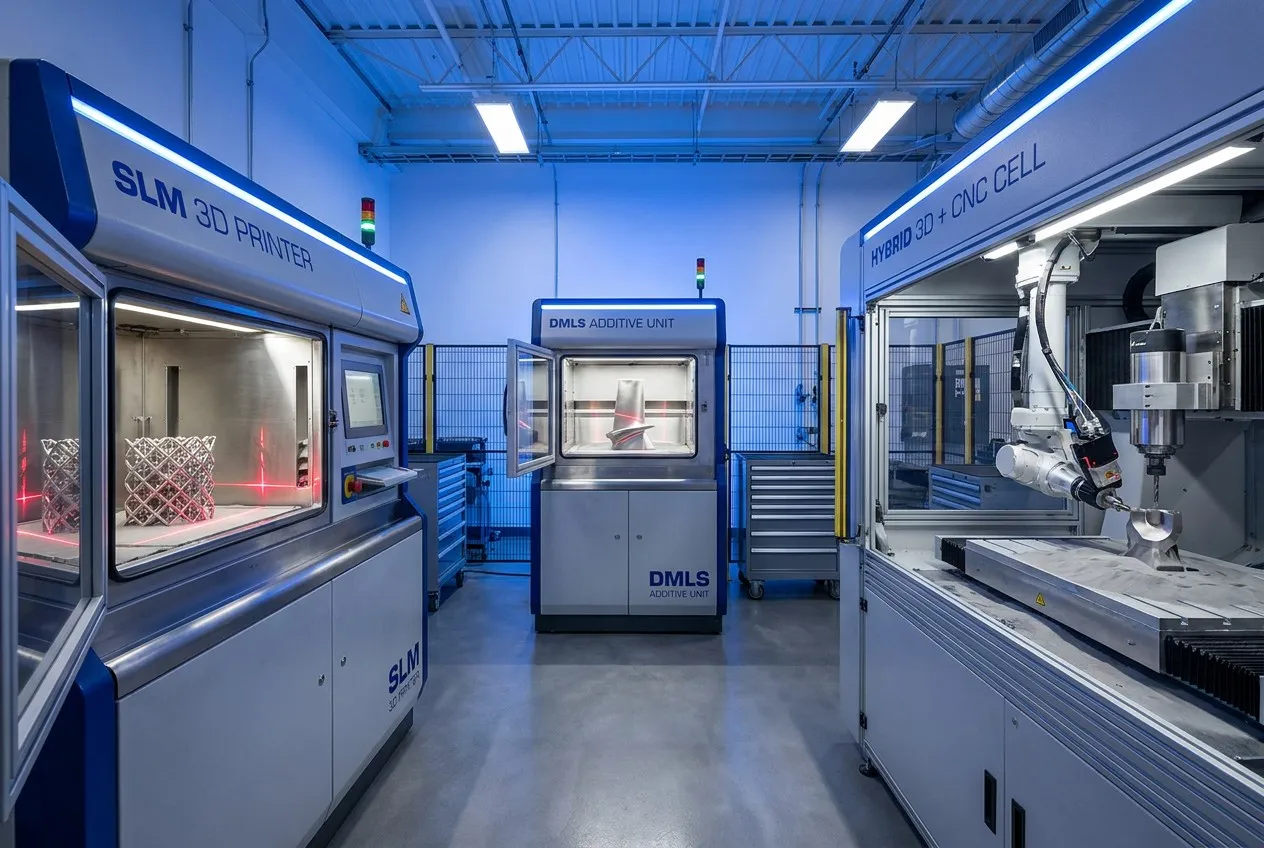
SLM
Selective Laser Melting. High-power laser fully melts metal powder, producing near-net-shape components at ≥99.5% density. Ideal for functional metal parts requiring structural integrity.
DMLS
Direct Metal Laser Sintering. Slightly lower energy density than SLM, enabling a broader alloy range including cobalt-chrome and nickel superalloys for medical and energy applications.
CNC Finish
Post-printing 5-axis CNC machining on critical surfaces — holes, threads, mating faces — achieving ±0.02 mm tolerance where additive alone cannot meet specification.
Heat Treatment
Stress relief, solution annealing, and precipitation hardening per material specification. HIP available for critical structural and medical components.
Typical Applications
Stainless steel additive manufacturing serves industries where complex geometry, corrosion resistance, or short lead times make conventional methods impractical.
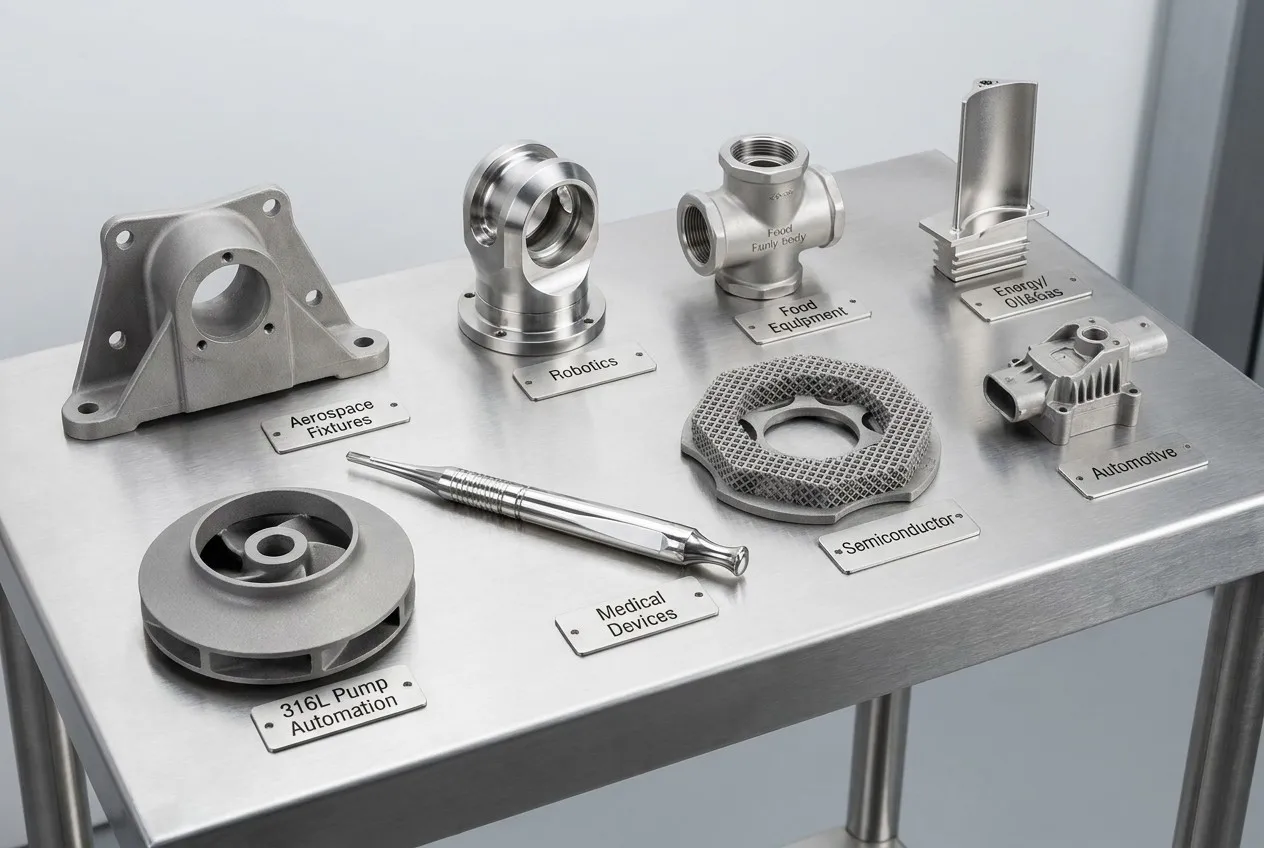
Industrial Automation
Custom brackets, sensor housings, cable routing fixtures
Medical Devices
Surgical tool handles, biocompatible fixtures, sterilization trays
Aerospace Fixtures
Mounting brackets, lightweight structural nodes, heat exchangers
Robotics
Joint housings, gripper components, integrated cable channels
Food Equipment
Corrosion-proof valve bodies, pump impellers, processing nozzles
Semiconductor
Wafer carriers, ESD-safe enclosures, cleanroom fixtures
Energy / Oil & Gas
Turbine blade prototypes, corrosion-resistant manifolds
Automotive
Sensor housings, cooling channels, prototype engine brackets
Industrial Machinery
Custom tooling, wear-resistant inserts, replacement parts
Defense
High-hardness 15-5PH components, armor test coupons
Design Guidelines
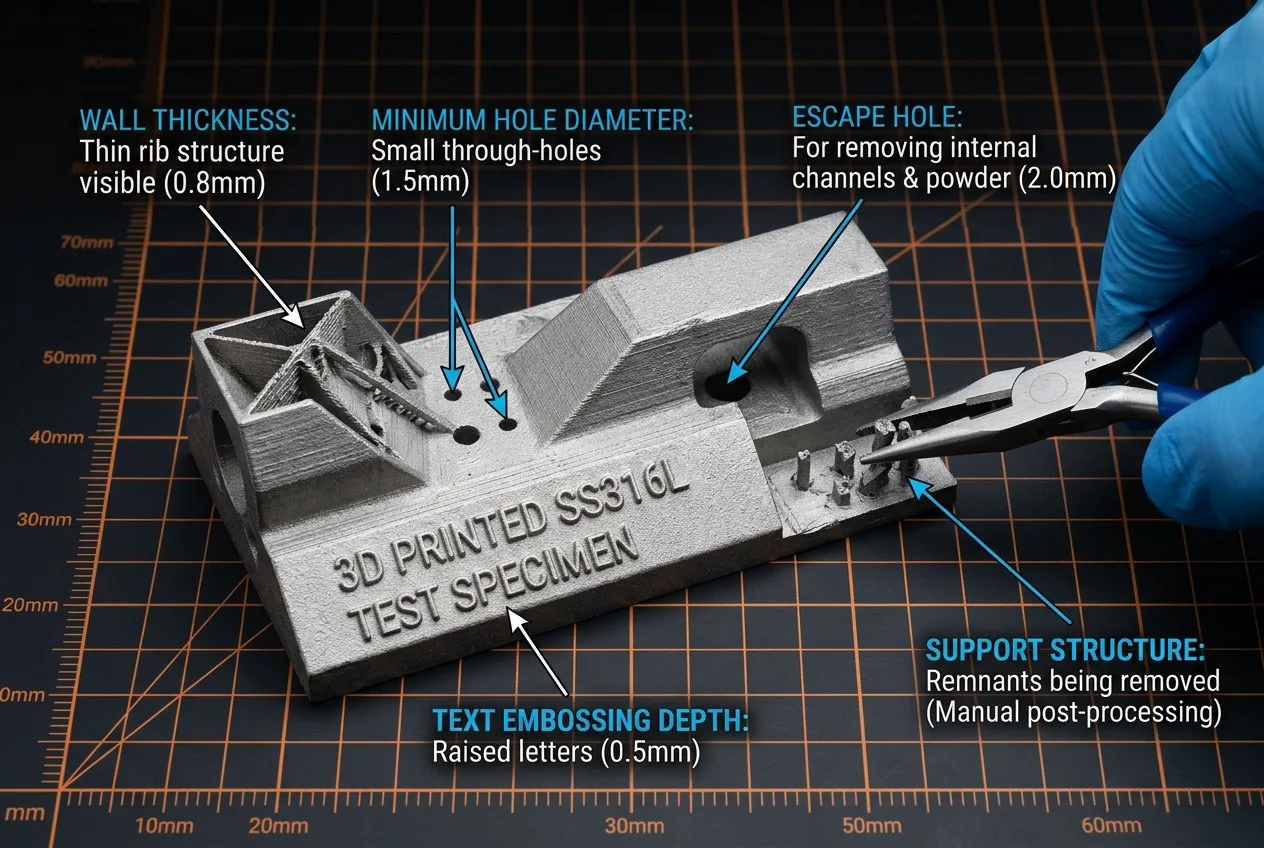
Understanding additive manufacturing constraints before design submission reduces DFM revisions and lead time. The values below represent practical limits for stainless steel SLM/DMLS production.
| Parameter | Minimum | Recommended | Notes |
|---|---|---|---|
| Wall Thickness | 0.4 mm | 0.8–1.5 mm | Thinner walls risk distortion during thermal cycles |
| Hole Diameter | 0.5 mm | ≥1.0 mm | Small holes may close partially; drill post-print |
| Text Depth | 0.2 mm | 0.3–0.5 mm | Embossed or engraved; font size ≥3 mm |
| Max Part Size | — | 280×280×350 mm | BLT S210 envelope; larger via segmenting |
| Escape Hole | 2.0 mm | 3–5 mm | For removing internal powder from hollow structures |
| Machining Allowance | 0.2 mm | 0.3–0.5 mm | Extra stock on surfaces requiring CNC finish |
| Tolerance (CNC) | ±0.02 mm | ±0.05 mm | On machined faces only; as-printed ±0.1 mm |
Surface Finishing Options
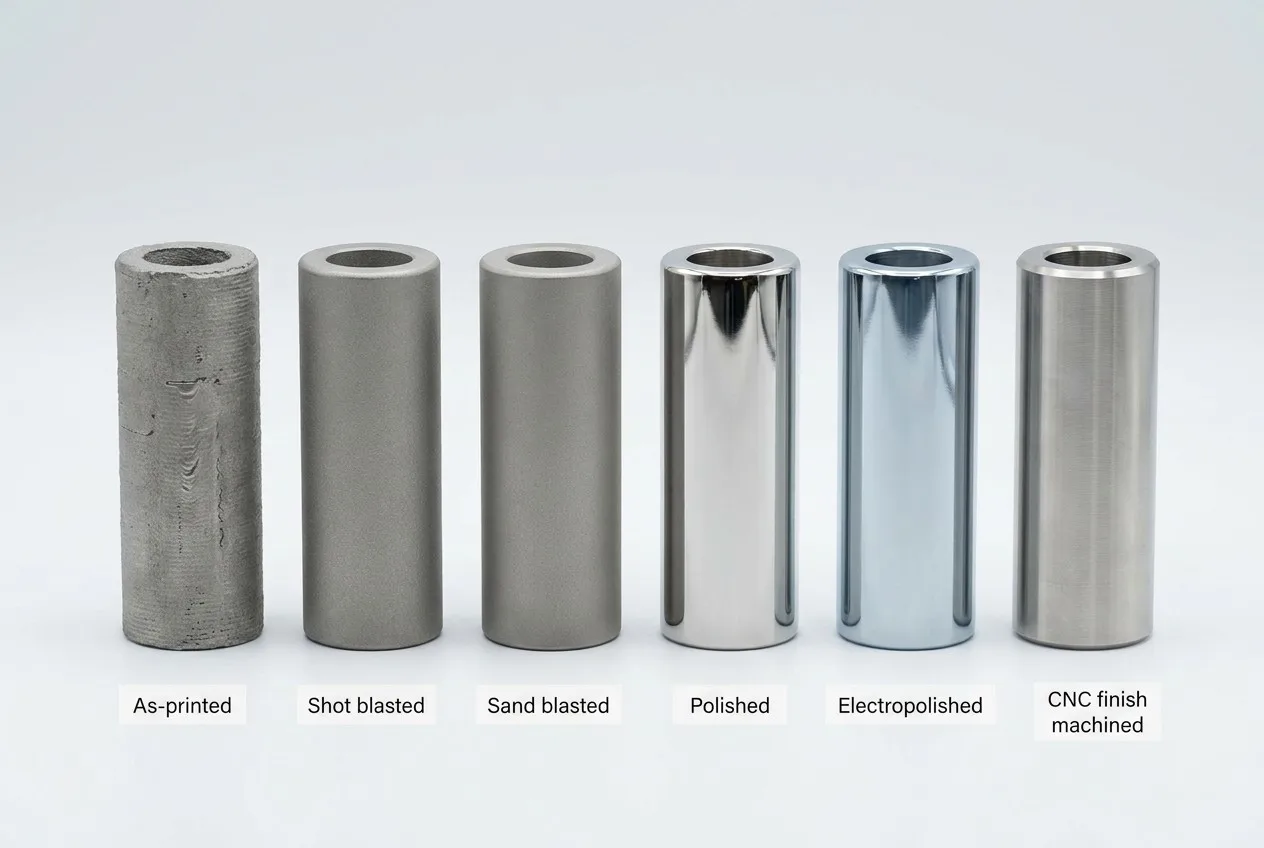
As-printed metal parts exhibit visible laser scan tracks and a matte surface. Goldcattle offers a full range of post-processing to meet functional and aesthetic requirements.
As-Printed
Ra 6.3–10. Visible scan tracks. Suitable for internal or non-critical surfaces.
Shot Blasting
Ra 3.2–6.3. Uniform matte finish. Standard for most functional parts.
Polishing
Ra ≤1.6. Mirror-like for aesthetic or sanitary requirements (food, medical).
Electropolishing
Ra ≤0.8. Superior corrosion resistance and cleanliness. Common for medical and food-grade parts.
CNC Finish
±0.02 mm on critical faces. Threads, mating surfaces, precision bores.
Passivation
ASTM A967. Enhances chromium oxide layer for maximum corrosion resistance.
Powder Coating
Durable colored finish for outdoor or branded enclosures.
Laser Marking
Permanent part number, lot code, or logo engraving on finished surface.
Sand Blasting
Ra 2.5–4. Finer than shot blasting, suitable for visible surfaces.
Painting
Custom color matching for consumer-facing or branded components.
Manufacturing Workflow
Every custom stainless steel 3D printed order follows a controlled 10-step process from inquiry to delivery, with quality checkpoints at each stage.
Quotation within 24 hours of file submission. Prototype lead time 5–10 business days depending on geometry and finishing scope.
Quality Control
Quality is embedded at every process stage — from incoming powder verification to final dimensional audit. Inspection reports accompany every shipment.
STEP 1
Powder Inspection
Particle size distribution, chemistry certificate, moisture content verification per lot.
STEP 2
Machine Calibration
Laser power, scan speed, and oxygen level verified before each build session.
STEP 3
Build Monitoring
In-process camera and melt pool monitoring for defect detection during printing.
STEP 4
Stress Relief
Mandatory thermal stress relief per AMS or ASTM standards before support removal.
STEP 5
CMM Inspection
Full dimensional report via Zeiss CMM. Deviation maps provided for critical features.
STEP 6
Thread Gauge
Go/No-Go verification for all machined threads per ISO or ASME specification.
STEP 7
Surface Inspection
Visual and roughness probe check against specified Ra target on finished surfaces.
STEP 8
Packaging Audit
Export-grade packaging with moisture barrier, foam cushioning, and labeling verification.
Case Studies
Real production examples demonstrating how metal additive manufacturing solves geometry, lead time, and cost challenges that conventional methods cannot address.
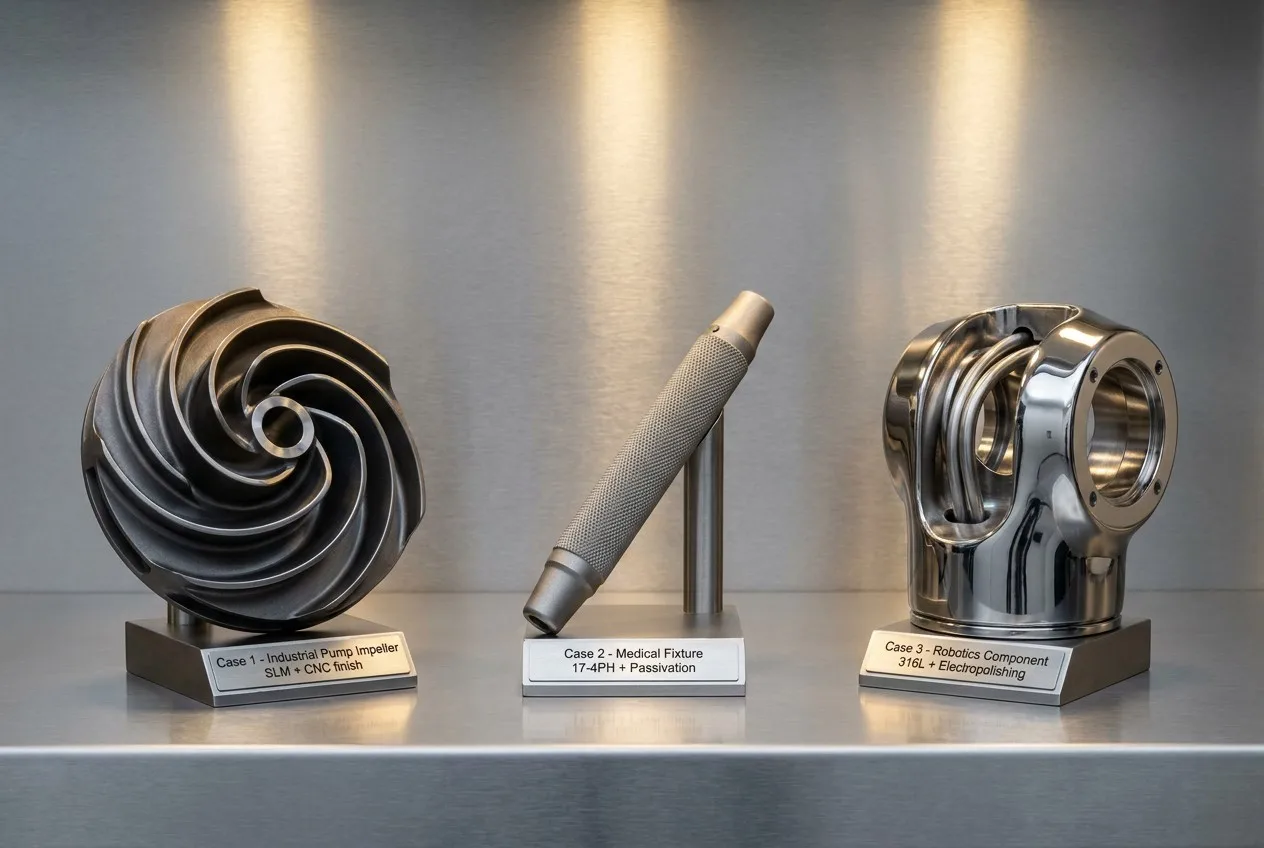
CASE 1
316L Pump Impeller
Problem: Complex curved blade geometry impossible to machine from solid. Investment casting lead time 6–8 weeks.
Solution: SLM printing in 316L + CNC finish on hub bore and shaft seat + passivation for corrosion resistance.
Result: Weight optimized 38% vs. cast equivalent. Delivered in 8 business days. Passed salt spray test 720 hours.
CASE 2
17-4PH Medical Fixture
Problem: Surgical instrument handle requiring integrated grip texture and sterile-cleanable surface. Machining could not produce the ergonomic contour.
Solution: DMLS in 17-4PH + H900 precipitation hardening + electropolishing for biocompatible surface finish.
Result: HRC 40+ hardness achieved. Surface Ra ≤0.8 after electropolishing. 5-piece prototype batch delivered in 7 days.
CASE 3
316L Robotics Joint Housing
Problem: Integrated internal cable routing channels and mounting bolt holes in one monolithic housing. Multi-part assembly was bulky and unreliable.
Solution: SLM in 316L + CNC thread cutting on 4 mounting bosses + shot blasting exterior + passivation.
Result: Part count reduced from 5 to 1. Assembly weight reduced 42%. CMM report confirmed ±0.03 mm on all critical bores.
Process Comparison
Choosing the right manufacturing method depends on geometry complexity, production volume, tolerance requirements, and lead time constraints.
| Process | Best For | Complexity | Lead Time | Volume |
|---|---|---|---|---|
| SLM / DMLS | Functional metal parts with internal features | Very High | 5–10 days | 1–500 |
| CNC Machining | Simple to moderate metal parts, tight tolerance | Low–Medium | 3–7 days | 1–1000 |
| Investment Casting | Complex external shapes, larger parts | High | 4–8 weeks | 50–5000 |
| Sand Casting | Large volume, simple geometry | Low | 6–12 weeks | 100+ |
Goldcattle advantage: We operate both additive and subtractive processes on the same production floor. When your part needs SLM for complex internal features and CNC for critical mating surfaces, we deliver both in one controlled workflow — no vendor handoff, no coordinate misalignment.
Why Choose Goldcattle
XiaMen Goldcattle Plastic & Metal Products Co., Ltd. combines metal additive manufacturing with conventional CNC machining, heat treatment, and surface finishing under one roof. Buyers from 40+ countries rely on our engineering-first approach for custom stainless steel components.
✓ Engineering DFM review before every production order
✓ Material certificates with lot traceability (316L, 17-4PH, Inconel 718)
✓ CMM inspection reports with dimensional deviation maps
✓ CNC machining after printing for ±0.02 mm critical surfaces
✓ Small batch (1 piece) through production volume (500+)
✓ Export packaging with moisture barrier and foam cushioning
✓ Quotation within 24 hours of file submission
✓ STEP, STL, IGES, SolidWorks file formats accepted
Frequently Asked Questions
What file formats do you accept?
STEP, STL, IGES, and SolidWorks (.sldprt) files. We also accept 2D drawings (PDF/DWG) as reference alongside 3D models. Our engineering team reviews every submission for manufacturability before quoting.
What tolerance can you achieve on printed parts?
As-printed: ±0.1 mm on most dimensions. After CNC finish machining on critical surfaces: ±0.02 mm. Surface roughness improves from Ra 6.3 (as-printed) to Ra 3.2 (machined) or Ra ≤0.8 (electropolished).
Can printed parts be CNC machined?
Yes. This is standard practice for functional metal parts. We add 0.3–0.5 mm machining allowance on surfaces that require tighter tolerance, threads, or smooth mating faces, then finish-machine on our 5-axis CNC center after stress relief.
Do you provide material certificates?
Yes. Every powder lot is tracked from receipt through finished part. Material certificates (chemistry, particle size, density) are available on request. We also provide CMM dimensional reports and surface roughness measurements.
What is the typical lead time?
Quotation within 24 hours. Prototype: 5–10 business days depending on geometry complexity and finishing scope. Small batch (10–50 pcs): 10–15 days. Production volume quoted per project with scheduled delivery milestones.
Can you produce low-volume production runs?
Yes. SLM/DMLS is inherently suited to volumes from 1 to 500 pieces without tooling investment. For higher volumes, we evaluate whether binder jetting or casting becomes more cost-effective and advise accordingly.
Do you offer DFM optimization?
Yes. Our engineers review every file for orientation, support strategy, wall thickness compliance, and machining allowance allocation before production. We flag potential issues and suggest modifications to reduce cost and improve yield.
How much does metal 3D printing cost?
Cost depends on part volume, material choice, layer thickness, post-processing scope, and order quantity. Upload your 3D file for an itemized quotation covering printing, heat treatment, machining, finishing, and inspection.
How do you inspect printed parts?
Zeiss CMM for full dimensional verification, 3D laser scanner for complex geometry comparison to CAD, thread gauges for machined holes, surface roughness probes, and visual inspection. Deviation maps provided with every shipment.
What industries use stainless steel 3D printing?
Industrial automation, medical devices, aerospace, robotics, food processing equipment, semiconductor manufacturing, energy and oil & gas, automotive, defense, and general industrial machinery. Any sector requiring complex geometry, corrosion resistance, or short lead time for custom metal parts.
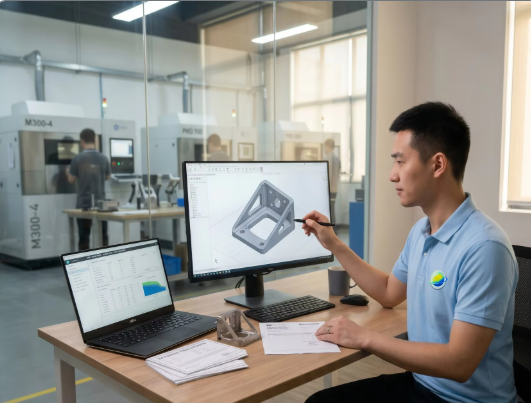
Need Custom Stainless Steel 3D Printed Parts?
Upload your STEP, STL, or CAD files today. Our engineering team will review manufacturability and provide an itemized quotation within 24 hours.
✓ Material Recommendation
✓ Prototype & Production
STEP / STL / IGES / SolidWorks accepted • Response within 24 hours