


Custom Eco Cosmetic Caps & Lids | PCR & Mono
| Parameter | Options / Definition |
|---|---|
| Closure type | Screw cap · Flip-top · Disc-top · Jar lid · Decorative overcap |
| Process | Injection moulding (in-house, ISO 9001:2015) |
| Neck finish | 20/410 · 24/410 · 28/410 (per bottle/jar drawing) |
| Material | PP · HDPE · LDPE · PCR PP · PCR PE (ABS/POM/PEEK excluded) |
| Sealing | Plug · Land · Liner · Gasket / ring |
| Colour & surface | Pantone / customer ref; Gloss · Matte · Frosted |
| Decoration | Emboss/deboss · Print · Coating (if process confirmed) |
| Eco options | PCR content · Mono-material · Lightweighting (documented) |
| Tooling | Prototype/soft · Production steel · Multi-cavity · Family |
| Inspection | Dimensional · Torque · Leak · FAI (ASTM D7860 ref.) |
| MOQ | Confirmed at RFQ (geometry/mould/resin/volume based) |
| Lead time | Enquiry → DFM → Tooling → Trial → Validation → Production |
| Applications | Skincare · Hair care · Body care · Beauty packaging |
Description
Custom Injection-Molded Cosmetic Caps & Lids
Plastic closures developed around your bottle or jar interface, sealing requirement, formulation contact, appearance specification and production volume. Made to drawing, with the mould built for the closure you actually need.
A cosmetic cap is not an independent plastic part. It is one half of a packaging interface. This page deals with that interface: how a neck finish is matched, where the seal is formed, what a living hinge has to survive, which resin can sit against a given formulation, and what has to be measured on the assembled package before a production run is released. It does not repeat general injection molding process information, and it does not duplicate our dedicated tamper-evident closure page.
Send a 2D drawing, a STEP or IGES model, or a physical sample. Include the bottle neck drawing whenever it exists. Files are handled under our standard confidentiality procedure; an NDA can be arranged before exchange.
01 · Interface
Match the real bottle
Thread, neck finish and sealing land are reviewed together with the container drawing, not against a cap-only dimension.
02 · Function
Verify the assembly
Fit, torque, leakage and repeated opening are checked on the assembled package with the intended formulation.
03 · Brand
Approve the appearance
Colour, gloss level, texture and logo placement are signed off on representative samples before release.
04 · Evidence
Document the material
Resin grade, recycled content and decoration processes are stated only where documentation supports them.
What This Page Covers, and the Specification Set We Work To
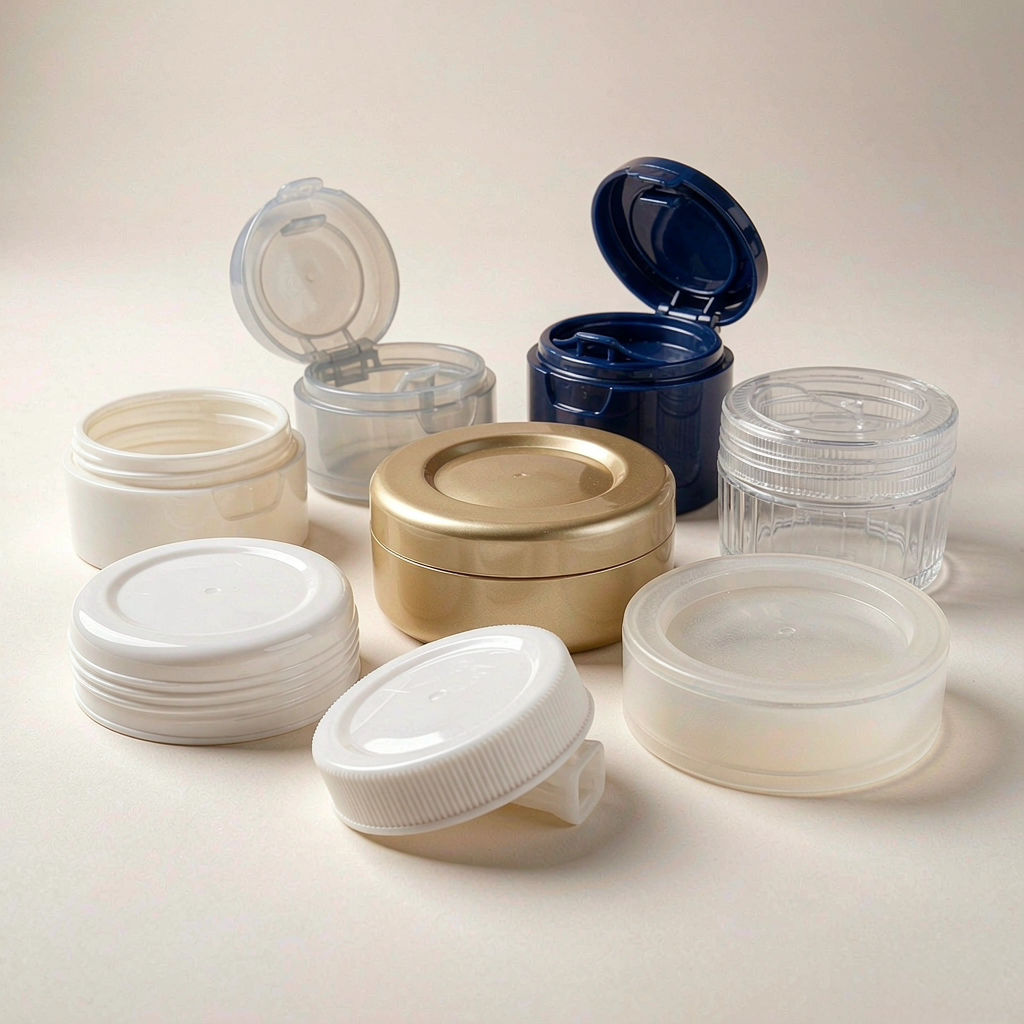
Custom injection-molded cosmetic caps and lids are plastic closures manufactured to a specific container interface and brand requirement, rather than selected from a fixed catalogue. Screw caps, flip-top closures, disc-top closures and jar lids are the main development directions; each project is defined by the mating neck, the sealing method, the resin, the appearance and the volume.
Three boundaries keep this page useful. First, general molding capability, machine ranges and broad material lists belong on our injection molding services page and are not repeated here. Second, breakaway bands, bridge geometry and first-opening evidence are covered on our tamper-evident closure molding page; this page treats tamper features as an optional interface requirement, not as its own subject. Third, the closure categories below are development directions we can assess from a drawing. They are not a statement that every listed type is a stocked product with an existing mould.
Closure specification set
Buyers often ask what has to be fixed before a quote is meaningful. The table below is the specification set we review. Values are taken from your drawing, your container and your packaging process; where a value cannot be set at the start of a project, it is confirmed in writing at engineering review rather than filled with an assumption.
| Specification | How it is defined | Why it matters |
|---|---|---|
| Closure type | Screw cap, flip-top, disc-top, jar lid or other, as per drawing | Determines the mould concept, the hinge or thread geometry and the assembly method |
| Neck finish | Customer bottle or jar specification, or reference sample | Controls thread diameter, pitch, engagement and the sealing interface |
| Cap diameter and height | As per drawing, with critical characteristics marked | Sets the visual proportion, the grip surface and the clearance on the filling line |
| Internal thread | Matched to the neck finish; profile and engagement confirmed at review | Governs application torque, removal torque and thread stripping risk |
| Sealing method | Plug seal, land seal, liner system or other, selected with the container | Determines where the sealing contact is formed and which dimensions are critical |
| Dispensing orifice | Where applicable, per formulation viscosity and dosing requirement | Controls flow, dripping and the amount of product left on the closure |
| Tamper feature | Optional, subject to design and to the dedicated closure page | Adds a band, bridge or retention feature that changes demoulding |
| Resin grade | Customer specified or recommended; confirmed with documentation | Affects stiffness, hinge life, shrinkage, colour and formulation contact |
| Colour and surface | Customer colour reference plus approved appearance sample | Part of the brand identity; needs a defined approval method |
| Decoration | Confirmed printing, coating or marking process for the project | Only listed where the process and supplier are established |
| Recycled content | Subject to resin availability and supplier documentation | Requires traceable material evidence, not a general claim |
| Inspection scope | Agreed dimensional, functional and documentation requirements | Defines the first article, in-process checks and release criteria |
| Production route | Prototype, low volume or mass production | Sets the tooling type, cavity count and unit cost structure |
Scope of what we confirm
Xiamen Goldcattle Plastic & Metal Products Co., Ltd. confirms the moulded closure against the agreed drawing and the agreed assembly test: dimensions, thread fit, appearance and documented functional checks. We do not certify the shelf life of your formulation, the compatibility of a filled package under every distribution condition, or the regulatory classification of your finished cosmetic product. Those responsibilities and the corresponding test plans are defined in writing before quotation.
Closure Types We Evaluate
Different formulations, container shapes and dispensing habits call for different closures. The three directions marked as primary development focus are the ones we would normally start from when a brand brings a new cap project. The remaining structures are assessed against the drawing and the packaging requirement rather than presented as available stock.
Cosmetic Screw Caps
Threaded closures for bottles and jars. The internal thread, cap height, sealing land and any liner seat are set by the neck finish. Grip texture and skirt geometry are cosmetic decisions, but thread engagement is not.
- Internal thread profile and engagement
- Sealing land or plug geometry
- Application and removal torque window
Flip-Top Caps
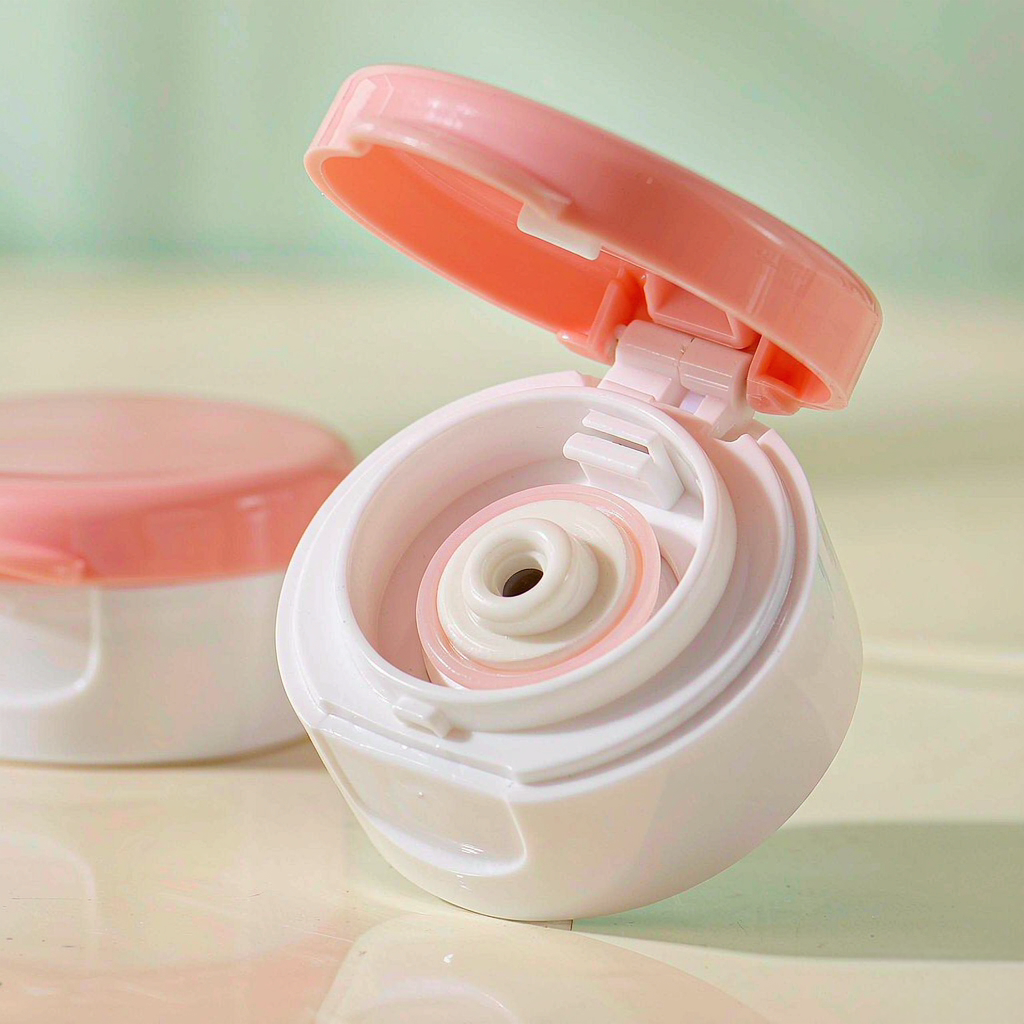
One-handed closures for lotions, cleansers and hair care. The living hinge is the critical feature: its thin section, radii and melt flow direction decide how many open-close cycles the part survives.
- Hinge thin section and corner radii
- Snap latch and closure feedback
- Orifice size and inner plug seal
Cosmetic Jar Lids
Wide-diameter lids for creams, masks and body care. Fit with the jar neck, flatness of the sealing face, skirt appearance and repeated-use retention dominate the design.
- Jar neck fit and closure retention
- Sealing face flatness
- Warpage control on a broad flat surface
Disc-Top Closures
Press-operated dispensing for controlled product access. Press area, orifice geometry, closing seal and formulation viscosity are reviewed together.
Decorative Overcaps
Outer covers that protect an inner closure and carry the brand appearance. Snap features, wall thickness and the interface with the primary cap define the tooling.
Tamper-Evident Closures
Breakaway bands and bridge geometry are covered in detail on our tamper-evident closure molding page. Here they are treated as an optional requirement that affects demoulding and assembly.
How to read this classification. It is a way to describe the drawing you are sending, not a catalogue. Send the closure geometry you need and we will assess it against the neck interface, the sealing concept and the tooling route. A structure not listed here can still be reviewed from a drawing.
Bottle Neck Compatibility: Design the Cap Around the Container
The single most common failure in a closure project is a cap that measures correctly on its own but performs badly on the bottle. Neck finish, thread profile, engagement length and sealing surface form one interface, and they have to be reviewed as one set of dimensions.
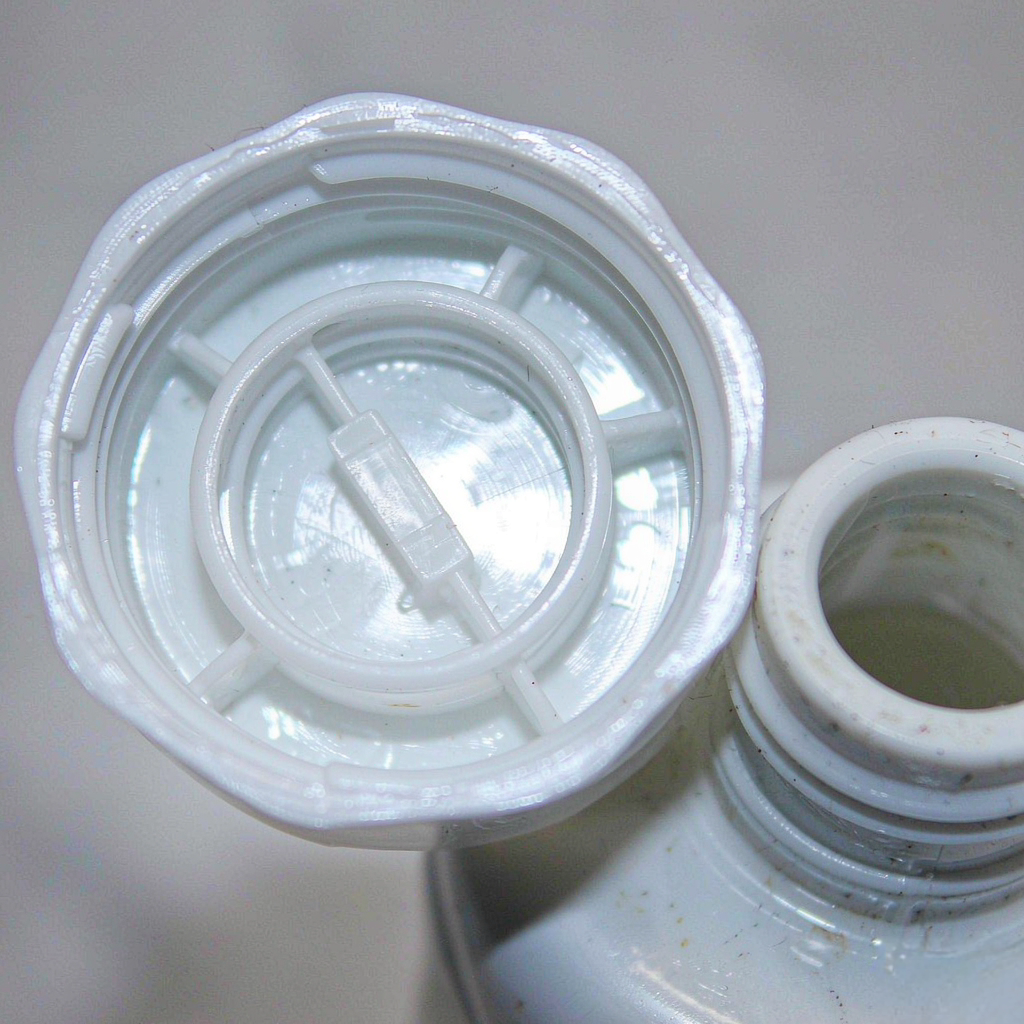
Interface details we review
- Neck finish designation and the actual drawn dimensions behind it
- Thread diameter, profile, pitch and start including the run-out at both ends
- Thread engagement length and the resulting axial position of the cap
- Cap inner diameter and skirt clearance relative to the neck and any shoulder
- Sealing land or bore that the plug or liner will contact
- Closure height and its effect on the fill line, labelling and shelf presence
- Application torque used by the capping equipment, and the removal torque the consumer will feel
- Tamper band position where a band is required
| Interface feature | What can go wrong | How it is checked |
|---|---|---|
| Thread fit | Too tight for the capping head, or too loose to hold torque after transport | Trial assembly on the real bottle plus application and removal torque measurement |
| Engagement length | Cap bottoms out before the seal compresses, or sits visibly high | Assembly stack review against the neck drawing |
| Sealing land | Flatness or surface defect creates a leak path | Dimensional check of the land plus assembled leakage test |
| Inner diameter | Interference with the neck shoulder or with a tamper bead | Cross-section review and fit trial with the reference sample |
| Closure height | Conflicts with the label, the outer carton or the filling line | Assembly drawing approval before tooling release |
On industry neck designations. Formats such as 20/410, 24/410 and 28/410 are widely referenced neck finish designations in the packaging industry. We cite them as examples of how a neck is specified, not as a list of standard moulds, stocked caps or sizes we can ship immediately. A 24/410 and a 24/415 are not interchangeable. The correct specification for your project comes from your bottle drawing or a physical bottle sample.
If you already have the bottle. Send the neck drawing or several physical bottle samples with the cap enquiry. If the bottle and cap are being developed together, say so at the first enquiry; the neck geometry can then be reviewed before either mould is committed.
Sealing Systems: Where the Contact Actually Happens
Leakage is a system property. It depends on the neck, the cap, the sealing element, the torque applied on the filling line and the formulation inside the package. A closure design that ignores any one of these can pass a dimensional inspection and still fail in transit.
| Sealing configuration | Where the seal forms | Design consequence |
|---|---|---|
| Plug seal | A molded inner spigot enters the bottle neck bore | Bore diameter, spigot diameter and insertion depth become critical dimensions; sensitive to neck tolerance |
| Land seal | The flat inner face of the cap compresses against the neck rim | Land flatness, rim condition and the torque window control the result |
| Liner seal | A separate liner or gasket is retained inside the cap | Liner seat geometry, retention and liner material must be specified; adds a component to the assembly |
| Gasket or ring seal | An elastic element compresses at a defined interface | Compression range and recovery behaviour matter, especially after repeated opening |
| Induction seal | A foil liner is bonded to the container mouth after filling | This is a separate sealing process on the packaging line, not a function created by injection molding the cap |
Residue at the thread
Lotion or cream left on the thread can change the removal torque over time and make the closure look contaminated. Orifice geometry, product viscosity and the way the consumer closes the pack all contribute.
Evaporation and weight loss
Formulations containing alcohol or volatile fragrance place more demand on the seal and on the resin. A water-based test is not a substitute for testing with the real product.
Back-off after distribution
Vibration and temperature cycling can reduce the retained torque. Application torque, thread friction and the resin all influence retention, so a representative assembled pack should be conditioned and checked.
Seal loss after repeated opening
A closure that seals on first fill may not seal after fifty openings. Liner compression, hinge wear and land damage are the usual causes, and they are checked in the agreed cycle test.
What we do not claim
A dimensionally conforming cap is not by itself a leak-proof package. We do not state that a given sealing configuration will work with every formulation, bottle material or distribution condition. The test method, sample size, conditioning and acceptance criteria are agreed with your packaging team before production approval, and the test uses the intended container and the intended product.
Opening Experience, Living Hinges and Dispensing
For a beauty brand the closure is part of the product experience. Opening force, the sound and feel of the snap, one-handed use and controlled dispensing are engineering variables with measurable consequences, not styling language.
Flip-top engineering
A living hinge is a thin, integrally molded web that flexes repeatedly. Its performance comes from the resin, the web thickness, the radius at each end of the web, the direction of melt flow through that region and the position of the gate. A sharp corner at the hinge root concentrates stress; a gate placed so that the weld line crosses the hinge creates a weak plane.
During mould design we review the thin section, the transition radii, the gate location relative to the hinge, the snap feature that holds the lid closed, and whether the part needs to be flexed after demoulding. The required open-close cycle count and the test method belong in the specification; we do not quote a universal life figure that would apply to every geometry and resin.
| Function | Design variable | What is verified |
|---|---|---|
| Easy opening | Finger recess, skirt texture, lid lift tab and removal torque | Opening force on the assembled bottle, checked against the agreed range |
| Hinge durability | Web thickness, radii, gate position, PP grade and orientation | Repeated open-close cycling with a defined inspection point |
| Snap feedback | Latch interference, lead-in angle and material stiffness | Closing force and audible or tactile confirmation on representative parts |
| One-handed use | Lid opening angle, stability of the open lid, container grip | Handling trial with the filled or weighted container |
| Controlled dispensing | Orifice diameter, land length, product viscosity | Dose consistency and dripping behaviour with the real formulation |
| Repeated use | Liner compression, land wear, hinge fatigue | Seal retention and appearance after the agreed cycle count |
For disc-top closures the emphasis shifts to the press area, the disc return behaviour, the orifice and the closing seal. For screw caps it shifts to the torque window and the feel of the thread. We select the relevant checks from the closure type in your drawing rather than applying one checklist to every cap.
Material Compatibility With the Cosmetic Formulation
A closure is in long-term contact with the product. Oils, surfactants, alcohols, fragrances, acids and preservative systems can affect the appearance, dimensions, stress-cracking resistance, odour and sealing behaviour of a plastic part. Naming PP or PE is the start of that evaluation, not the conclusion of it.
Identify the resin
Fix the actual grade and supplier, not just the polymer family.
Record the formulation
Capture the ingredient classes, fill temperature and expected shelf conditions.
Review contact risks
Check stress cracking, swelling, colour shift, odour transfer and seal effect.
Test the assembly
Use the real bottle, real cap and real product, not a substitute liquid.
Agree conditions
Define temperature, duration, storage orientation and acceptance criteria.
This applies across skincare, hair care and body care: lotions, shampoos, conditioners, facial cleansers, body washes, creams, serums, sunscreens and styling products each place a different combination of demands on the closure. A high-oil cream, an alcohol-rich serum and a surfactant-heavy cleanser should not be assumed to behave the same way against the same resin.
Where the responsibility sits
We select and process the resin against the information you provide and the test plan we agree. We do not certify that a resin is compatible with every cosmetic formulation, and we cannot evaluate formulation contact without information about the product. Where a brand requires its own compatibility study, migration testing or regulatory documentation, the scope, laboratory and acceptance criteria are defined before quotation.
Resin Selection for Cosmetic Closures
Closure grades are chosen for stiffness, flexibility, hinge behaviour, shrinkage, sealing geometry, appearance and documented availability. We keep the material discussion focused on the resin families that are actually relevant to a cosmetic cap; listing every engineering plastic we can mold would make the page less useful, not more.
| Material | Typical closure direction | Engineering consideration |
|---|---|---|
| PP | Screw caps, flip-top caps, disc-top closures | Stiffness and living-hinge fatigue; shrinkage control on threaded features; weld line position near the hinge |
| HDPE | Caps and closures needing toughness | Impact resistance, chemical resistance, thread fit and stress-cracking behaviour under load |
| LDPE | Flexible components and compressible sealing elements | Flexibility and compression recovery; dimensional stability of a soft sealing interface |
| PCR PP | Closures with a documented recycled-content target | Batch consistency, melt flow, colour and odour variation, mechanical performance and traceability |
| PCR PE | PE-based closures with a documented recycled-content target | Resin source, property retention, appearance and compatibility with the sealing geometry |
Why PP dominates flip-tops
A living hinge needs a material that can flex repeatedly without whitening or cracking. PP is the usual starting point, but the specific grade, the web geometry and the mould flow path have to be considered together.
Why thread fit dominates screw caps
Shrinkage and stiffness influence how the internal thread holds application torque. A resin change after tooling release can move the torque window even when every measured dimension stays within tolerance.
Why PCR needs more review
Recycled resin introduces batch-to-batch variation in melt flow, colour and odour. Grade, supplier documentation and an agreed validation plan come before any recycled-content figure is stated.
Specific grades, additives, colour masterbatch and any required material certificates are confirmed against your drawing and the packaging classification at engineering review. Thin-wall sections of a closure add their own constraints; see our thin-wall injection molding page for that process background.
Sustainable Design Options, Stated Precisely
We do not use an unqualified environmental claim as a product description. A closure can be designed to reduce material use, to use a documented recycled resin, or to separate more cleanly in a recycling stream. Each of those is a specific, verifiable design decision with its own evidence requirement.
Wording matters in this category. The US FTC Green Guides caution against broad, unqualified general environmental benefit claims. EU Regulation (EU) 2025/40, the Packaging and Packaging Waste Regulation, applies from August 2026 and introduces phased requirements relating to design for recycling and recycled content. Which category, percentage and date apply to a particular closure depends on the complete packaging classification and on the implementing acts. For cosmetic packaging, contact-sensitive classifications are relevant. We therefore state recycled content and recyclability only where the resin documentation and the packaging classification support the statement.
Option 01
PCR resin integration
Buyer value: reduces the use of virgin resin where a suitable grade exists. Evidence needed: resin grade, recycled-content percentage, supplier documentation, material traceability, colour specification and the agreed performance validation. No percentage is quoted without that file.
Option 02
Mono-material design
Buyer value: fewer material types to separate at end of life. Evidence needed: a documented material composition for the cap, liner, insert and any decoration, plus a review of whether the components stay together or separate in the target stream.
Option 03
Lightweighting
Buyer value: lower resin mass per closure. Evidence needed: a before-and-after part weight from the drawing or weighed samples, with the sealing, torque and drop requirements still demonstrated on the lighter design.
Option 04
Recyclability-oriented design
Buyer value: fewer features that obstruct sorting or separation. Evidence needed: review of mixed-material parts, metal springs, inseparable non-plastic decoration, dense additives and the relationship between cap and bottle material in the intended recycling system.
| Design decision | What it changes in the mould | What has to be re-validated |
|---|---|---|
| PCR resin | Flow length, gate sizing, shrinkage allowance and colour control | Dimensions, torque, appearance consistency, odour and mechanical performance |
| Thinner walls | Flow ratio, cooling layout, ejection area and warpage control | Sealing flatness, thread retention, drop behaviour and warp on broad lids |
| Removing a liner | Plug or land geometry becomes the primary seal | Leakage, removal torque and repeated opening on the assembled package |
| Removing metal parts | Snap features or an integral hinge replace a separate component | Hinge life, closing feedback and assembly on the filling line |
Claim boundary
We do not describe a closure as eco-friendly, biodegradable, compostable or carbon neutral as a general product claim. We do not state a fixed PCR percentage applicable to all cosmetic caps. If your packaging brief has a recycled-content or design-for-recycling target, send it with the enquiry; the achievable figure, the supporting documents and the validation plan are agreed per project before any statement appears on a specification sheet.
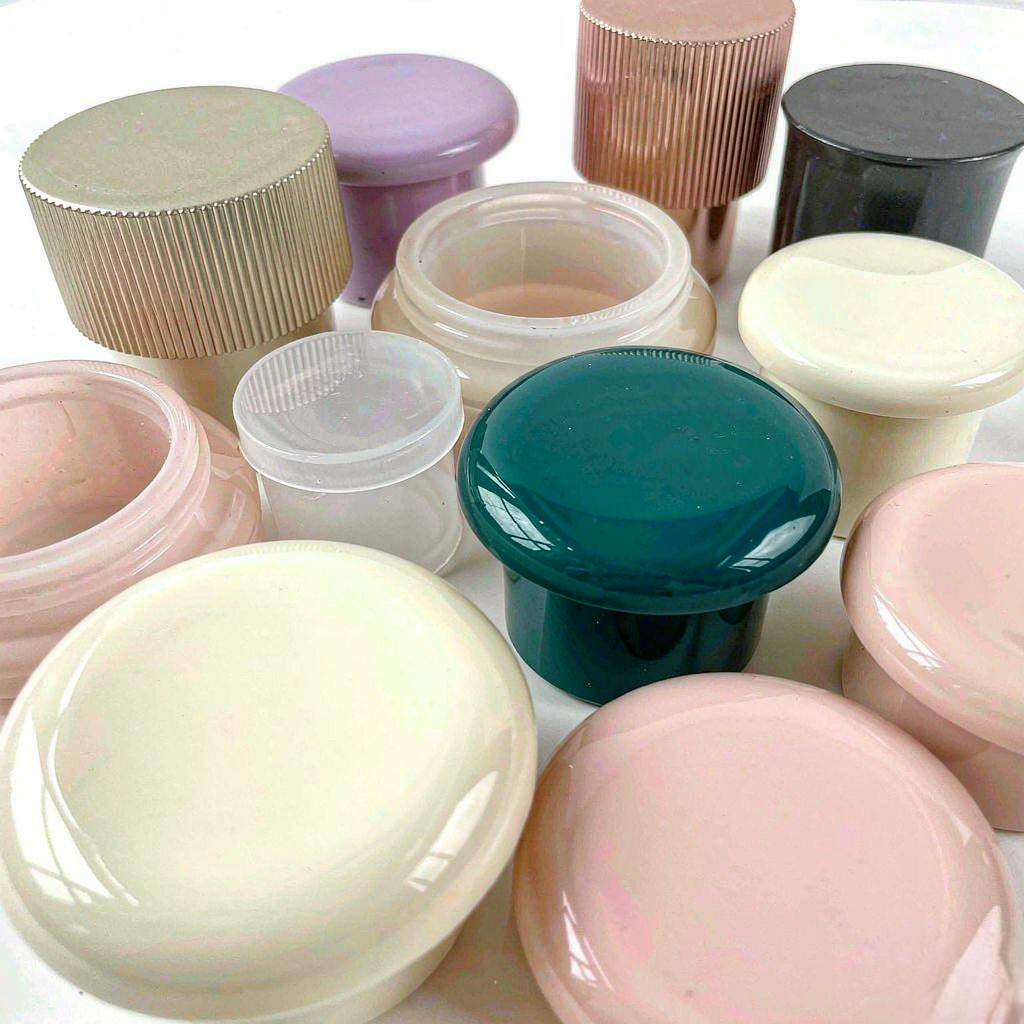
Colour, Texture and Brand Decoration
For a beauty brand the cap carries the brand as much as the bottle does. Appearance requirements belong in the engineering review, because a finish changes the mould surface, the resin, the ejection layout and the approval method.
| Attribute | How it is specified |
|---|---|
| Colour | Customer colour reference or Pantone target, approved on a molded sample rather than on a screen |
| Surface | Gloss, matte or frosted, defined by an agreed appearance sample and a mould surface texture |
| Texture | Smooth, ribbed or a defined grained pattern, with the draft angle reviewed for demoulding |
| Branding | Embossed or debossed detail designed into the tool, with wall thickness checked behind the feature |
| Decoration | Printing, coating or other finishing only where the process and supplier are confirmed for the project |
Metallic-looking effects, soft-touch coatings and high-gloss surfaces are often requested. They are also the finishes most likely to need a separate process step and a different approval method. We do not list every decorative technique used in the packaging industry as an in-house capability; the decoration route is agreed against your sample, the resin and the required durability before the mould is released.
Approval sequence. Colour and texture are reviewed on molded plaques or first trial parts, then on representative closures from the intended tool. A colour that looks correct on a flat chip can read differently on a ribbed skirt, so the approval sample should use the real geometry and the real surface.
Custom Mold Development for Small Closures
Caps are small, high-volume, tightly toleranced parts. Most of the cost and most of the quality risk are decided in the mould, not at the molding machine. Thread formation, hinge geometry, gate position, cooling balance and demoulding have to be resolved before steel is cut.
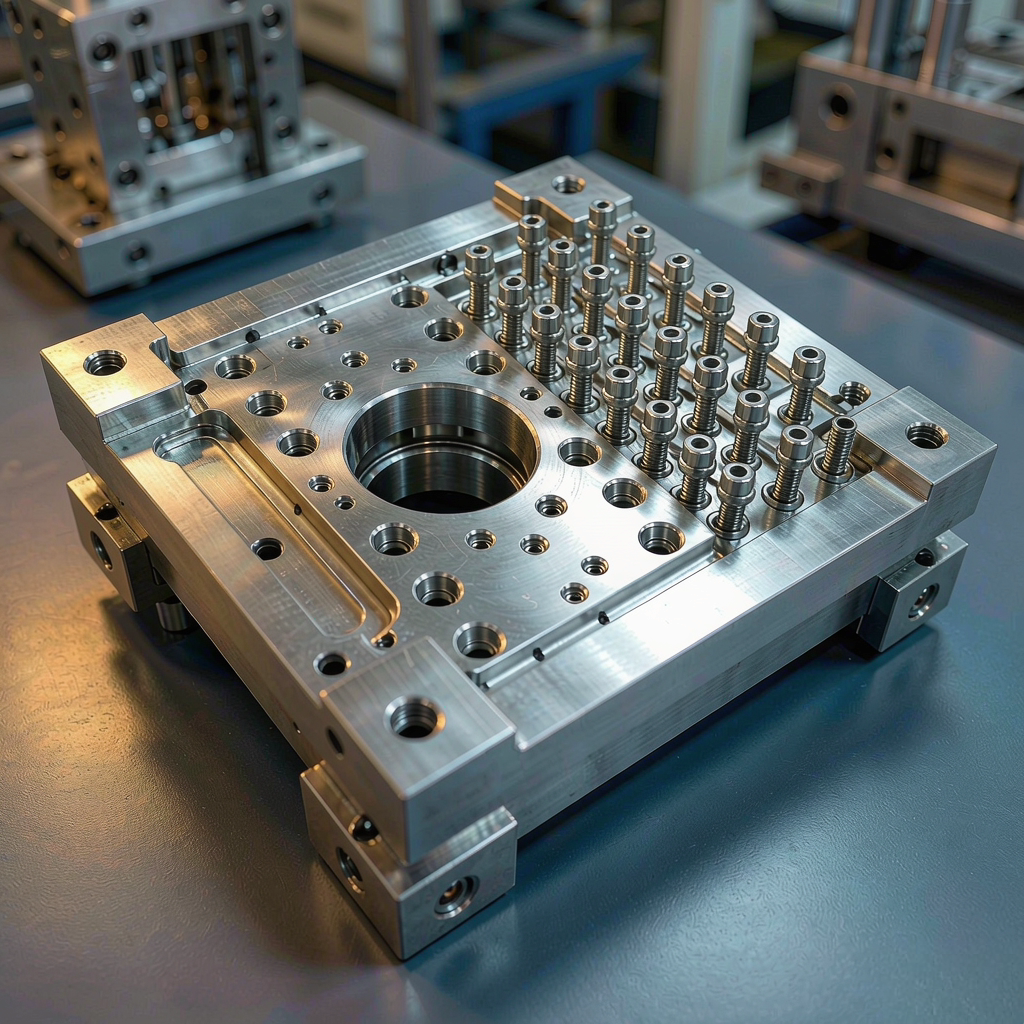
Mould engineering checklist
- Thread-forming cores and the demoulding method, whether unscrewing, collapsible core or stripped thread
- Living hinge geometry and the gate position relative to the hinge web
- Gate type and location so that weld lines do not cross the hinge or the sealing land
- Cooling layout to hold flatness on broad jar lids and roundness on threaded skirts
- Cavity balance so that every cavity fills and packs the same way
- Ejection placed where it will not mark a visible surface or distort a thin wall
- Shrinkage allowance set against the chosen resin and confirmed at trial
| Tooling route | Where it fits | What it does not settle |
|---|---|---|
| Prototype or soft tooling | Structure trials, colour studies, early package fit checks and small sample runs | Not a substitute for production validation of cavity balance and long-run stability |
| Production steel mould | Repeat orders and ongoing production | Cavity count and cycle time still come from a tooling and capacity assessment |
| Multi-cavity tooling | Higher volumes where the tooling investment is justified by demand | Requires flow balance and a plan for cavity-identification and traceability |
| Family tooling | Several related components produced together | Needs a production balance review where the parts differ in size or volume |
Numbers we do not quote up front
We do not promise a cavity count, a cycle time or a unit price from a cap diameter and an annual volume alone. Those figures follow a tooling review that includes the part geometry, the resin, the runner system, the demoulding method and the equipment available for the project. Prototype and production quotes are issued separately because the setup and inspection scope differ.
Dimensional Inspection and Functional Validation

Two inspection layers are needed. The first confirms that the molded part matches the drawing. The second confirms that the cap, bottle, sealing element and product work together. A release decision should use both.
Torque retention test approaches used in the packaging industry, such as the continuous-thread closure torque retention method described in ASTM D7860, can inform a test plan. They are not a universal pass criterion for every cosmetic closure: the method, the sample size, the conditioning and the acceptance limits have to match your neck finish, your capping equipment and your distribution conditions.
| Check | What it establishes |
|---|---|
| Cap diameter, height and skirt | Conformance to the drawing and compatibility with the filling line |
| Internal thread dimensions | Thread form and engagement on the specified neck |
| Bottle neck fit and assembly | Interference, bottoming-out and cap seating height on the real container |
| Application torque | The setting used by the capping head and its effect on the seal |
| Removal torque | The force the consumer experiences on first and later openings |
| Leakage resistance | Behaviour of the assembled package under the agreed conditions |
| Hinge and snap durability | Open-close performance against the agreed cycle count |
| Closure retention | Resistance to back-off after conditioning and handling |
| Visual appearance | Colour consistency, sink marks, flash, weld lines and surface defects |
| Material verification | Resin grade and documentation against the agreed specification |
First-article inspection, dimensional reports and the format of functional test records are agreed before production. For new packaging, representative samples should be evaluated with the intended bottle, the intended formulation and the intended filling process before approval — not with a substitute liquid or a different container.
Where These Closures Are Used
Creams and treatments
Jar lids, screw caps and dispensing closures for creams, masks, moisturizers and serums, where sealing and appearance both carry weight.
Shampoo and conditioner
Flip-top and disc-top closures sized for higher-viscosity products and frequent one-handed use in wet environments.
Wash and lotion
Larger-diameter closures where grip, controlled dispensing and residue control influence the consumer experience.
Brand-led components
Overcaps and decorative closures developed around the container geometry, the colour reference and the retail presentation.
The application determines which of the checks above are critical. A cream jar lid is dominated by flatness, fit and appearance; a shampoo flip-top is dominated by hinge life and dispensing. We scope the inspection plan from the application rather than issuing one generic report for every closure.
From Closure Design to Production
Enquiry package
Cap drawing or model, bottle neck drawing or sample, formulation, colour, volume and documentation needs.
Engineering review
Geometry, neck interface, sealing method, resin, appearance and inspection scope reviewed together.
DFM and tooling plan
Gate, hinge, thread core, cooling, ejection and cavity strategy proposed, with open issues listed.
Mould build
Prototype or production tool built to the agreed drawing revision and appearance specification.
Trial and samples
First parts measured, assembled on the real container and reviewed against the appearance sample.
Functional validation
Torque, leakage, hinge cycling and retention checked to the agreed method and acceptance limits.
Sample approval
Dimensions, colour, finish and test records signed off before production release.
Production
Agreed in-process checks, inspection records, packing and shipment against the confirmed plan.
Drawing revisions after tooling release are the main source of delay in closure projects. The neck interface, sealing geometry, resin and colour reference are the four items worth freezing before steel is cut.
Questions Procurement Teams Ask Before Releasing an Enquiry
Can a cap really be designed from a bottle drawing alone?
It can be started from a bottle neck drawing, and it should be. The drawing gives the thread form, engagement and sealing land that the cap has to match. A physical sample is still valuable, because neck tolerance, rim condition and capping behaviour are easier to judge on the real container. Where the bottle is still in development, the neck and cap should be reviewed as one interface before either tool is committed.
Evidence to send: neck drawing with the finish designation, thread detail, sealing surface callout and several physical bottle samples where available.
Related: injection molding services for the wider process background.
Why does a dimensionally correct cap still leak?
Because the seal is formed between two parts, not inside one. Thread fit, sealing land flatness, application torque, liner compression and the behaviour of the formulation all contribute. A cap can be within tolerance on every measured dimension and still leave a leak path if the torque window is wrong or the land is distorted.
Practical check: assemble representative caps on the real bottles, apply the intended torque, condition the packs and run the agreed leakage test with the real product.
What makes a PCR closure different from a standard one?
The resin is variable in ways a virgin grade usually is not: melt flow, colour, odour and mechanical properties can move between lots. A PCR project therefore needs a defined grade, supplier documentation, a stated recycled-content figure and a validation plan before the material is quoted as a specification rather than as an intention.
Practical check: agree the documentation set and the appearance and performance limits on trial parts before approving production resin.
Which closure is right for a high-viscosity cream?
A wide-mouth jar lid or a large-orifice dispensing closure is usually evaluated, but viscosity alone does not decide. The dosing habit, the required seal after repeated opening, the filling temperature and the brand appearance all shape the choice. The orifice and sealing geometry should be reviewed against the real formulation rather than against a generic product category.
What should be frozen before the mould is released?
Four items: the neck interface, the sealing geometry, the resin grade and the approved colour and surface reference. Each one affects the tool. Changing the thread after cutting a thread core, or changing the resin after shrinkage allowances are set, is what turns a straightforward project into a rework cycle.
Send the Closure and the Container Together
The most useful enquiry includes both halves of the interface. If you already have a bottle drawing or a physical sample, attach it with the cap drawing. If the container is still being developed, tell us at the first enquiry so the neck geometry can be reviewed before tooling.
Our engineering team reviews the neck match, sealing method, resin, appearance, tooling approach and inspection scope, then confirms what is achievable in writing before a price is issued.
What to include in the enquiry
Closure type — screw cap, flip-top, disc-top, jar lid or other
Bottle neck specification or a physical bottle sample
Cap drawing or 3D model with critical characteristics marked
Application and formulation class, including fill temperature if relevant
Resin requirement and any material documentation need
Sealing method — plug, land, liner or to be determined
Colour reference and required surface finish
Decoration — embossing, printing or coating requirements
Sustainability target — recycled content, mono-material or lightweighting
First order quantity and projected annual volume
Inspection scope — first article, dimensional report, functional tests
Container status — bottle drawing, physical sample, both in development, or help needed to match an existing system
Frequently Asked Questions
Can you manufacture custom cosmetic caps from drawings?
Yes. We evaluate closure projects from 2D drawings, 3D CAD models in STEP or IGES, or a physical reference sample. The mating bottle or jar neck specification should be supplied at the same time, because thread geometry, sealing surfaces and closure height are defined against the container rather than against a standalone cap. Engineering review covers geometry, resin, sealing method, appearance and inspection scope before a quotation is issued.
How do I match a plastic cap to an existing cosmetic bottle neck?
Send the bottle neck drawing or a physical bottle sample. The neck finish, thread diameter and profile, thread engagement length, sealing land, cap inner diameter and closure height are then reviewed together. Industry neck finish designations such as 20/410, 24/410 and 28/410 are commonly referenced formats, not a list of standard moulds or stocked products we hold. Non-standard necks are assessed from the drawing and the reference sample.
What is the difference between a plug seal and a liner seal?
A plug seal uses a molded inner spigot that fits inside the bottle neck bore, while a land seal compresses a flat cap surface against the neck rim. A liner seal introduces a separate gasket or liner component into the cap. Each places the sealing contact in a different location and demands different dimensional control. The choice depends on the container, the formulation and the filling process, and the assembled package should be tested with the intended product.
Which materials are suitable for cosmetic plastic caps?
PP is commonly considered for screw caps, flip-top closures and dispensing components because of its stiffness and living-hinge behaviour. HDPE and LDPE are evaluated where flexibility, impact resistance or compressible sealing is required. The final resin grade depends on the closure structure, formulation contact, sealing geometry, appearance and documented availability. We do not treat engineering resins such as ABS, POM or PEEK as equivalent choices for a standard cosmetic cap.
Can PCR plastic be used for cosmetic closures?
PCR PP and PCR PE can be evaluated when a suitable resin grade and supporting supplier documentation are available. Recycled content, colour consistency, melt flow, odour, mechanical performance and dimensional stability are reviewed before approval, and the achievable content is confirmed in writing with evidence. We do not state a fixed recycled-content percentage or claim a general environmental benefit without material documentation and a defined packaging classification.
Can you manufacture flip-top cosmetic caps?
Flip-top designs can be assessed from the hinge geometry, material flexibility, snap feature, dispensing orifice and required opening and closing performance. The living hinge thin section, corner radii, gate position and melt flow direction are reviewed during mould design, because they govern hinge fatigue life. The agreed cycle count and test method are set at engineering review rather than assumed from a catalogue.
Can cosmetic caps be customized with Pantone colors and logos?
Customer-specified colours, gloss, matte and frosted surfaces, ribbed textures and embossed or debossed markings can be evaluated against the resin and the mould design. Printing, coating and metallised effects are assessed only where the process and supplier are confirmed for the project. Colour matching, surface appearance and logo placement are approved on representative samples before production release.
How are cosmetic caps tested for leakage?
Leakage resistance is verified on the assembled cap and container, not on the cap alone. The test plan is agreed around the bottle neck, the closure, the application torque, the actual formulation and the intended storage and distribution conditions. A cap that measures correctly can still leak if the thread fit, sealing land or torque window is wrong. Test method, sample size and acceptance criteria are defined before production approval.
What is the MOQ for custom injection-molded cosmetic caps?
Minimum order quantity is set by part geometry, mould type, cavity configuration, resin and expected annual demand, and is confirmed at quotation. Prototype or soft tooling and production steel tooling are quoted separately because setup, inspection scope and unit cost differ. Tell us the intended sample quantity and the projected repeat volume at the first enquiry so the process plan can be defined once.
What information should I send when requesting a cosmetic cap quotation?
Send the cap drawing or 3D model, the mating bottle neck specification or a physical bottle sample, the intended formulation and application, resin requirements, colour and surface finish, sealing method, expected first order quantity and annual volume, and any sustainability, inspection or documentation requirements. If the bottle is still being developed, say so early, because the cap and neck should be designed as one interface.
Related Capability Pages
This page covers cosmetic closures as a packaging interface. For the wider process background and for tamper-evident structures, see the pages below.