




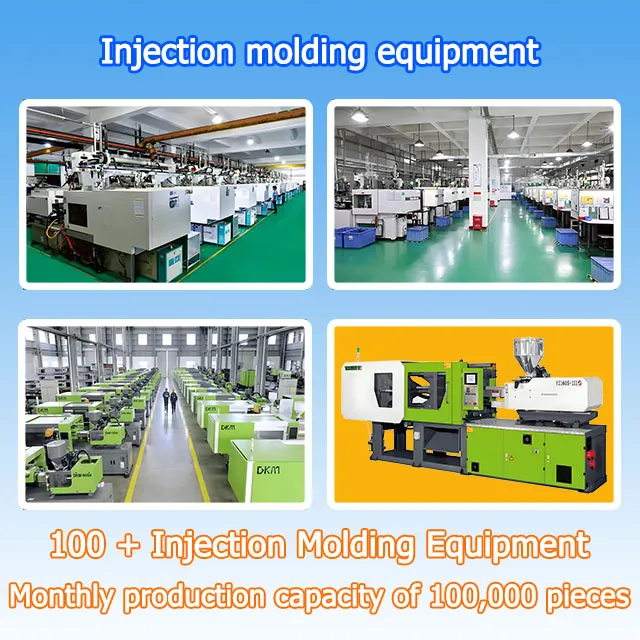

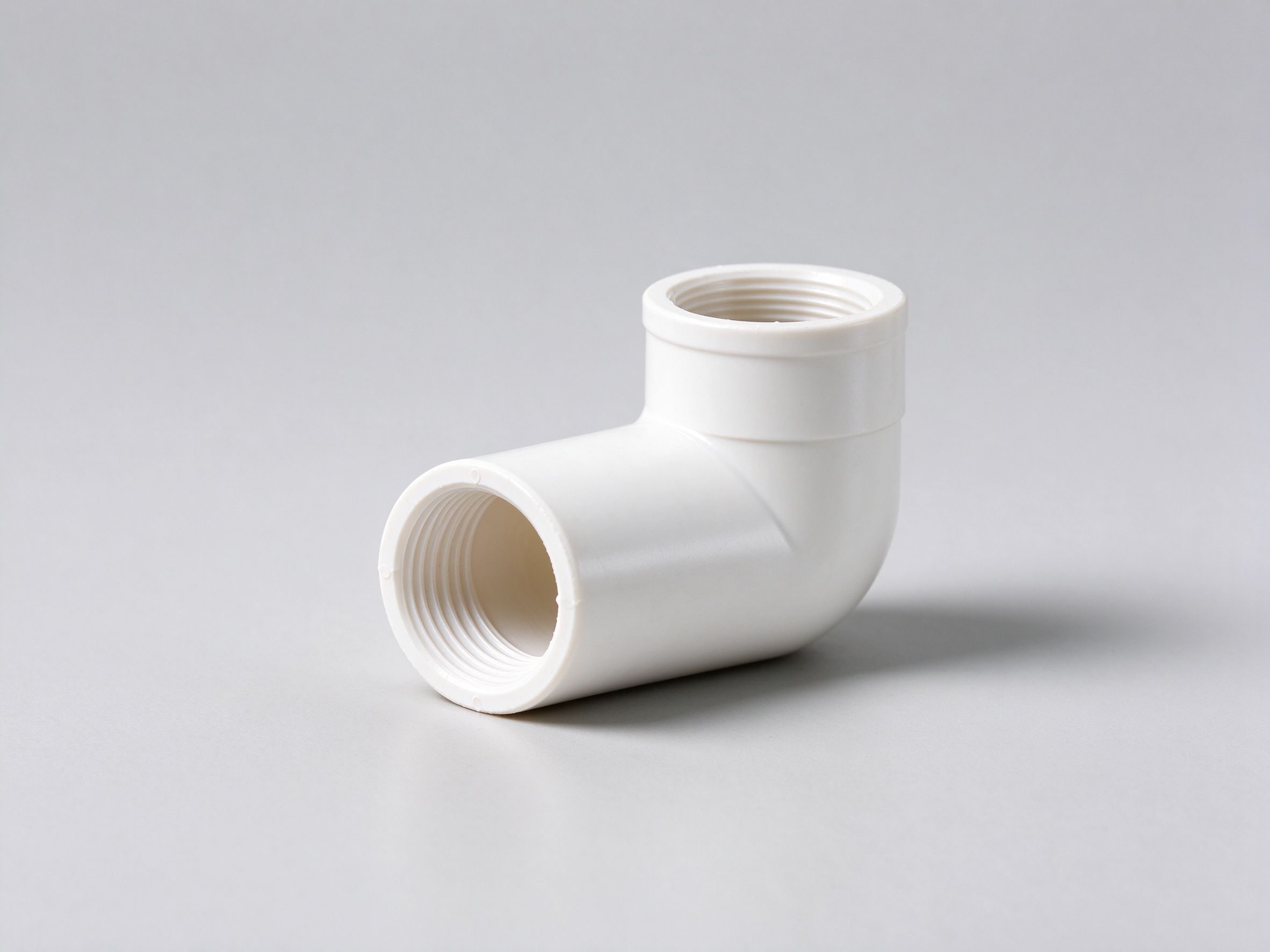
Custom PVC Threaded Elbow | NPT, R/Rp & G
| Attribute Category | Attribute Details |
|---|---|
| Processing Service | Moulding (Injection Molding) |
| Place of Origin | Fujian, China |
| Brand Name | JSD |
| Model | IMP-235 |
| Plastic Molding Type | Injection |
| Product Name | Custom Plastic Pipe Fittings |
| Material | ABS/PA66/PP/PC/PMMA/PSU/PCTG/TPE/TPU/PBT, etc. |
| Color | Custom Color |
| Size | Customizable Size |
| Service | Customized OEM |
| Shape | Customized Shapes |
| Drawing Format | 2D/(PDF/CAD), 3D(IGES/STEP) |
| Certification | ISO9001 |
| Logo | Customized Logo |
| Minimum Order Quantity | 1 Piece |
| Sales Unit | Single item |
| Single Package Size | 8X8X3 cm |
| Single Gross Weight | 0.350 KG |
| Delivery Time | 1-1000 pieces: 31 days; >1000 pieces: Negotiable |
| Customization Options | Color (MOQ: 1000 pcs), Size (MOQ: 1000 pcs), Hardness (MOQ: 1000 pcs), Characteristics (MOQ: 1000 pcs) |
Description
Custom PVC Threaded Elbow Fittings
Elbows molded against your drawing, with the thread system, the angle between the two port axes, the end configuration and the resin agreed before a mold is cut. The engineering review starts with one question: will this thread still seal after the wall section, the shrink behavior and the core draft have all been formed?
Thread systems NPT and NPSC, R / Rp / Rc, G, or a thread called out on your drawing
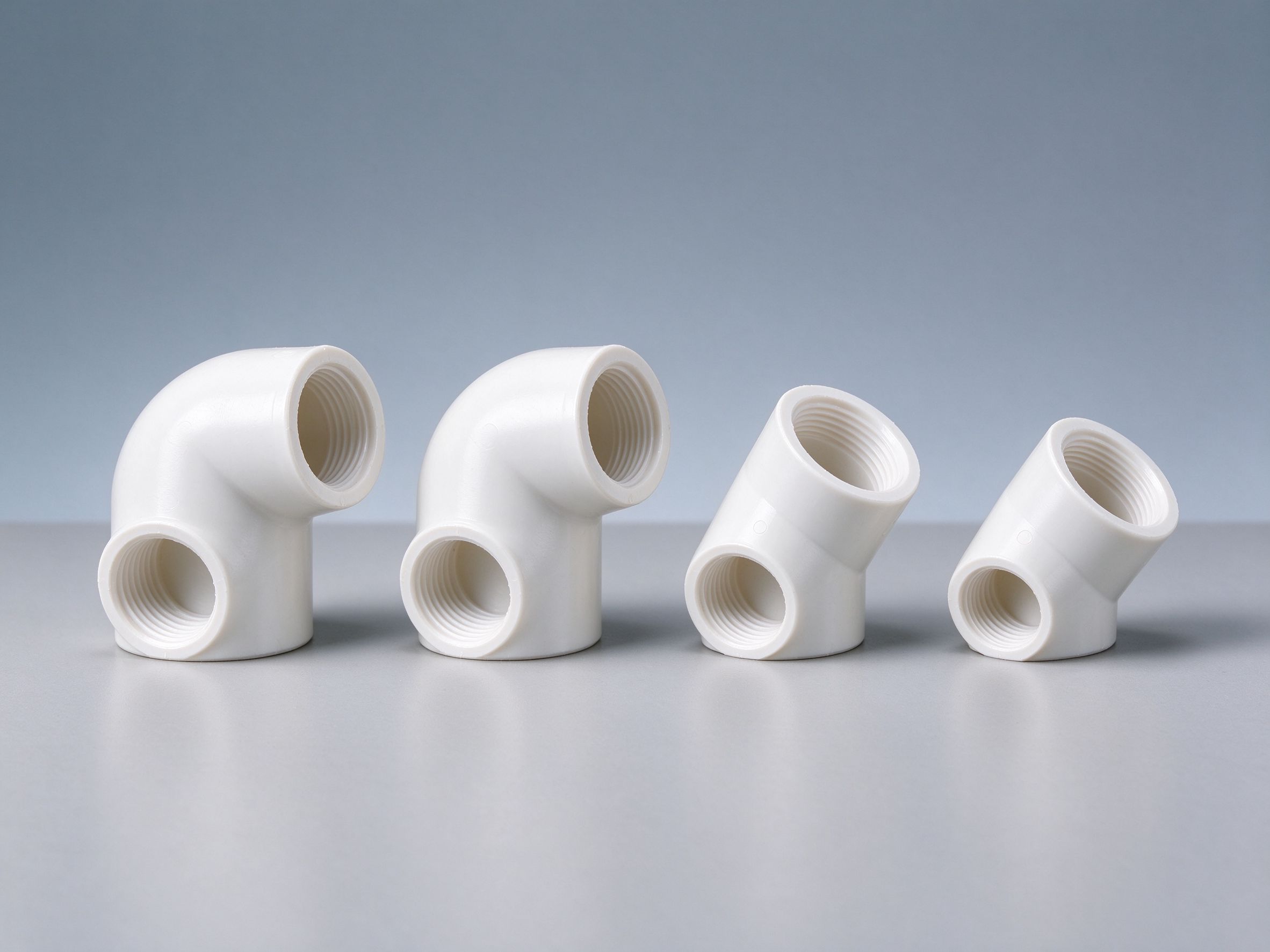
Angle and ends 45°, 90° or a fixed angle; female, male, socket or reducing combinations
Resin PVC-U, CPVC, ABS, PP, PA66 or POM, chosen against the actual service media
Six inputs fix the price and the tool
A threaded elbow is one of the smallest parts on a bill of materials and one of the fastest ways to stop a line. Before we can quote, six items have to be settled. Each of them changes either the mold, the cycle time or the inspection plan, so a quote built without them is only a guess.
What the two ends can be
There is no standard body in this product line. The angle and both end forms come off the drawing. The table below shows the combinations we review most often and the molding consequence of each, because that consequence is where most custom elbow projects lose time.
| End combination | Where it is used | Molding consequence |
|---|---|---|
| FPT × FPT | Two female ports, the most common threaded elbow in repair and equipment work | Two thread cores on intersecting axes. Their coaxiality and their individual runout decide whether a mating nipple seats without cocking. |
| MPT × MPT | Two male ports, used where the elbow threads into two female connections | The external thread is cut by the cavity, so ejection needs rotation, collapsing splits or a pulled insert. Parting line placement becomes the visible quality issue. |
| FPT × Socket | One threaded port, one solvent-weld socket. Common in PVC-U pressure lines | The socket depth and the interference fit are separate from the thread. Both features have to hold dimension after shrink, and they pull in different directions. |
| MPT × Socket | Thread into a female fitting, solvent-weld onto pipe | Combines external-thread ejection with a deep core at the socket end. Tool layout is usually the deciding cost item. |
| Reducing threaded | Two different nominal sizes on one body | The wall transition between the two bores is the thinnest section and the last place to freeze. Sink and void risk sit there, not at the ports. |
| Specified angle | A fixed angle other than 45° or 90°, set by the routing on the drawing | The angle is built into the core axes. It cannot be trimmed after molding, so the tool has to be correct on the first cut. |
Angles are normally 45° or 90°, and any other fixed angle is feasible when the drawing defines it and the tool can carry the core axes. Angle tolerance is quoted as an angular value on the drawing, not as a linear allowance at the port face.
The specification sheet is the drawing
Values are not published as a catalogue because none of them are fixed. Every row below is defined by the approved drawing and the agreed resin, and the quotation restates those values so that nothing is assumed at the tool build stage.
| Item | Definition |
|---|---|
| Product type | Threaded elbow, injection molded, one piece |
| Nominal size | Defined by drawing, inch or metric |
| Elbow angle | 45°, 90° or a specified fixed angle |
| Connection ends | Female, male, socket or reducing, per drawing |
| Thread system | NPT, NPSC, R, Rp, Rc, G or specified; one system named on the drawing |
| Thread engagement | Defined by drawing or by the referenced thread standard |
| Center-to-end | Defined by drawing, measured from the port face to the opposite axis |
| Wall thickness | Defined by drawing at the crotch, the body run and the threaded end |
| Resin | Selected from the material table, grade confirmed at quotation |
| Color | Matched to a supplied sample or to an agreed reference; masterbatch based |
| Surface | As molded. Secondary finishing, where required, is arranged through a qualified partner |
| Tolerance | Per drawing, feature by feature. No blanket tolerance applies to thread, bore and wall together |
| Packing | Bulk carton or bagged, by agreement |
A single tolerance figure cannot cover a thread flank, a bore diameter and a wall section at the same time. They are formed by different surfaces of the tool and they are measured with different instruments, so each is quoted against its own feature on the drawing.
D: outside diameter at the port. C: center-to-end. L: thread length. T: wall thickness. Symbols are defined by the drawing and carry no default numbers here.
NPT, R/Rp and G are three different joints
This is the section that most often decides whether a shipment is accepted. A thread that looks right on a caliper can still leak, because the systems below seal by different means and do not interchange at matching nominal sizes.
| System | Reference | How the joint seals | Typical market |
|---|---|---|---|
| NPT | ASME B1.20.1 | Taper on taper. The flanks interfere as the joint is tightened and the seal is completed by a compatible thread sealant. | North America |
| NPSC | ASME B1.20.1 | Straight internal thread that mates with a tapered external thread. It is a connection thread, not a pressure-seal thread on its own. | North America |
| R / Rp / Rc | ISO 7-1 | The thread pair itself forms the pressure seal. R is the external taper, Rp the internal parallel, Rc the internal taper. | Europe |
| G | ISO 228-1 | Parallel thread. The thread does not seal; sealing is done at a gasket face or by an O-ring arrangement. | Europe |
There is no such single thing as a BSP thread that covers R, Rp and G. Naming the standard, the nominal size and the thread type on the drawing is the only way to keep the first article and the tenth order identical.
NPT and R threads are close enough in appearance that they are sometimes forced together. The result is a joint that passes a visual check and weeps under pressure, because the pitch diameters and the taper do not match. Threads from two different systems should never be paired to solve a shortage.
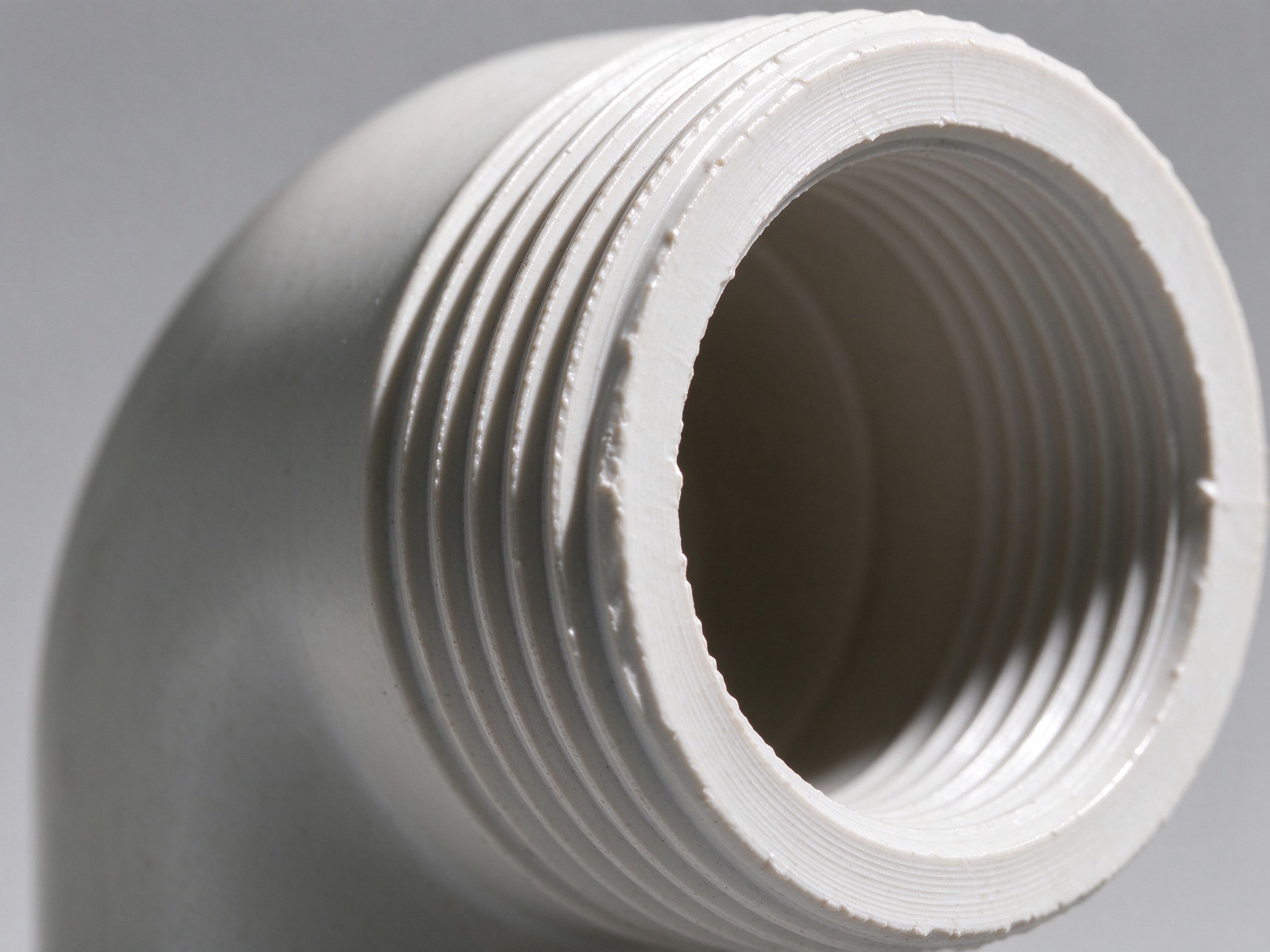
A plastic male thread threaded into a metal female port concentrates stress at the first engaged turns. Engagement length, sealant choice and tightening torque all matter more than they do in a plastic-to-plastic joint, and over-tightening can split the wall before any leak appears. A common field practice is hand-tight plus one to two turns, always following the sealant supplier's instruction for the specific pair.
The resin follows the media, not the catalogue
PVC-U is the entry point for water and pool work, but it is not the right answer for hot water, for many solvents or for a fitting that has to survive repeated wrench torque. The table compares the six resins we mold most often for threaded bodies.
| Resin | Where it fits | Behavior as temperature rises | Watch at molding |
|---|---|---|---|
| PVC-U | Cold and ambient water, irrigation, pool circulation, many dilute chemical lines | Strength falls steadily with temperature, so the pressure the joint can hold has to be derated rather than quoted flat | Narrow melt window, high shear sensitivity, and a thread root that cracks if the core is pulled too hot |
| CPVC | Hot water and several corrosive services above the PVC-U range | Holds useful strength higher than PVC-U, with its own derating curve | Higher melt temperature and tighter process window; color and regrind control are less forgiving |
| ABS | Drainage, general industrial piping, equipment connections where impact matters | Drops off earlier than PVC-U and is not a hot-water choice | Good flow, but solvent resistance is poor and residual stress shows as crazing |
| PP | Chemical transfer, washdown lines, parts that see repeated flexing | Better retained strength at moderate temperatures than PVC-U | Lower stiffness means the wall has to be thicker for the same thread load, which changes the tool |
| PA66 | Structural connections on equipment, where a fitting is part of the machine | Mechanical properties hold well, but moisture uptake shifts dimensions over time | Hygroscopic shrinkage; thread gauges have to be read against conditioned parts, not fresh ones |
| POM | Precision bores, repeated assembly, parts needing low friction and stable dimensions | Stable across a moderate range, with a sharp fall at the upper end | Low shrink but notch sensitive; gate and weld line placement decide thread strength |
No resin in this table is a universal substitute for another. PVC-U and CPVC differ in service temperature and in chemical tolerance, and switching between them changes both the derating and the tool. The grade and the color reference are confirmed during quotation.
A pressure figure without conditions is not a rating
A threaded joint carries pressure through four things at once: the resin, the wall section, the engaged thread length and the temperature of the fluid. Change any one of them and the number that was valid yesterday no longer describes the part.
PVC and CPVC piping products are not for compressed air or gas distribution. Thermoplastic pipe and fittings store energy under compression and fragment on failure, which is why the product standards for this family address pressurized liquids rather than gases. Requests for air or gas service are declined rather than quoted with a caveat.
The thread core is the whole project
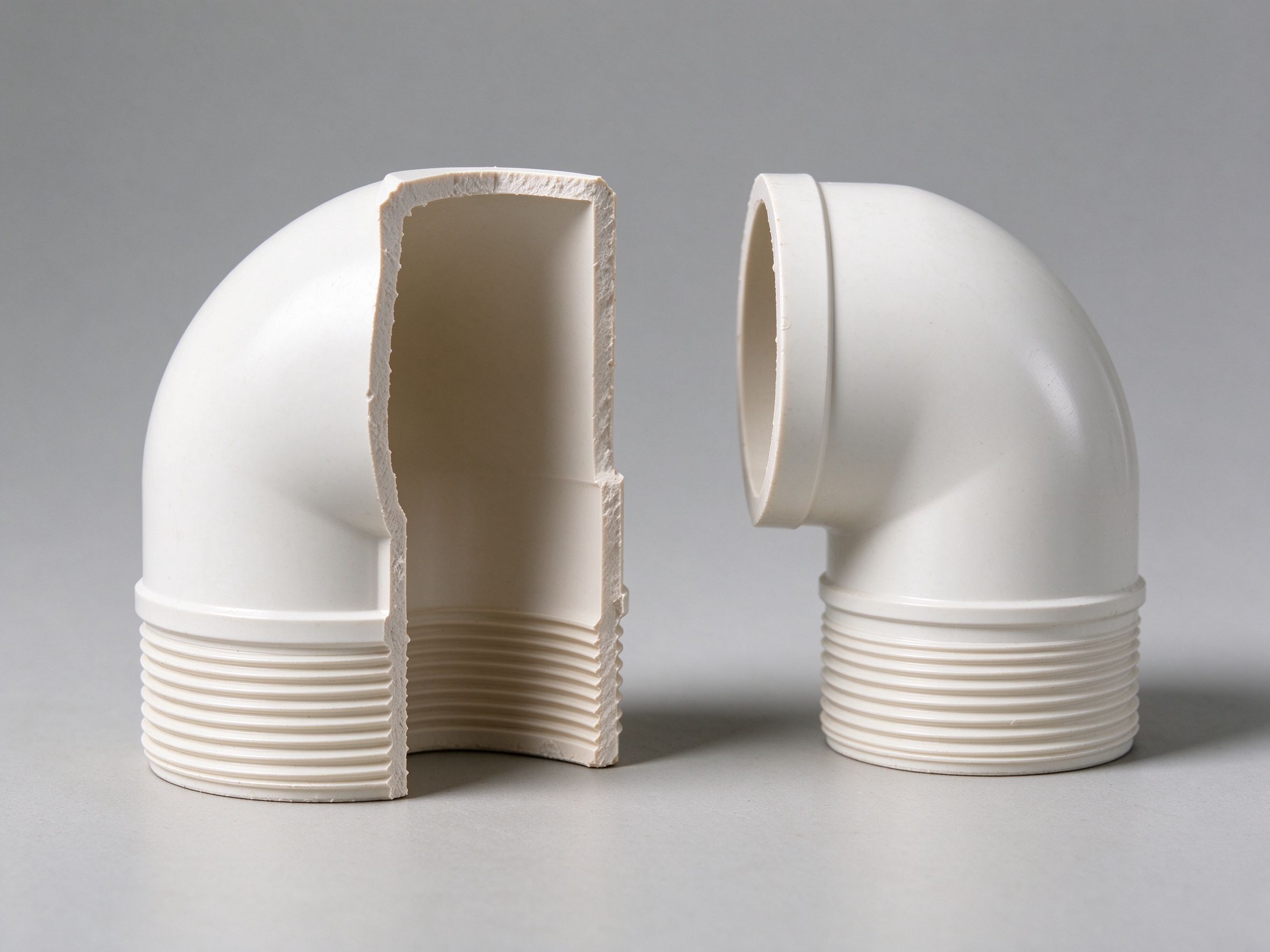
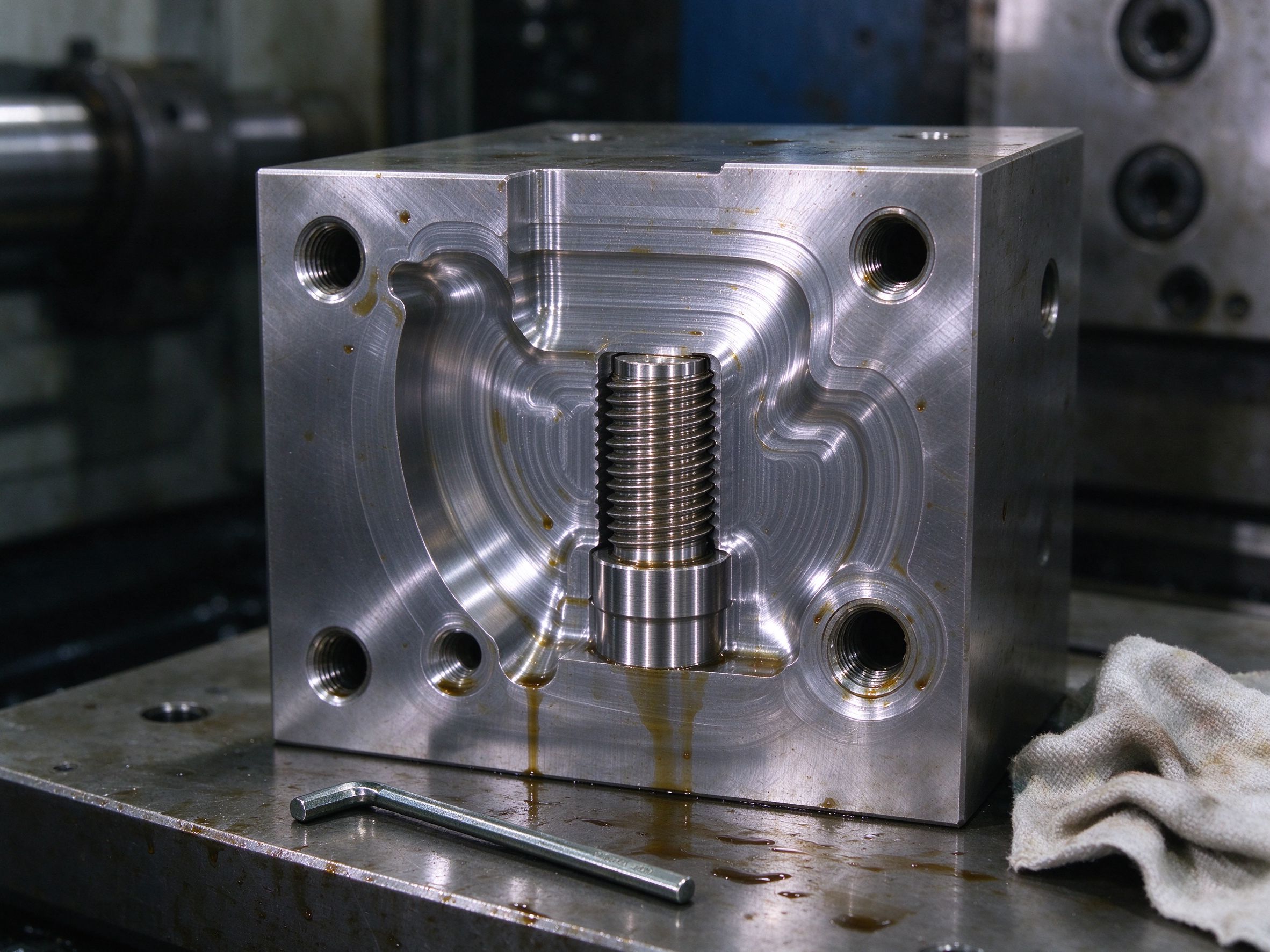
Everything else on a threaded elbow is a fairly ordinary hydraulic shape. The thread core is not. It sets the ejection method, the cycle, the parting line and the first place a crack will appear in the field.
| Feature | What it controls |
|---|---|
| Core ejection | Rotation, collapsing split or a pulled insert, chosen by thread form, turn count and annual volume |
| Gate position | Must stay off the thread and off the pressure-bearing wall at the crotch |
| Weld line | Placed away from the thread root, where it would act as a crack starter |
| Shrink | Compensated in the core diameter and pitch so the cooled part gauges correctly |
| Parting line | Set where flash can be removed without touching the sealing flank |
| Cooling | Balanced between the thick crotch and the thinner threaded end to avoid sink |
| Cavity count | Follows annual demand and the acceptable tool investment per part |
A tool that produces a dimensionally correct elbow and a tool that produces one which survives a wrench are not always the same tool. Core material, cooling layout and ejection method are reviewed against the tightening torque the joint will see.
Threads are gauged, not eyeballed
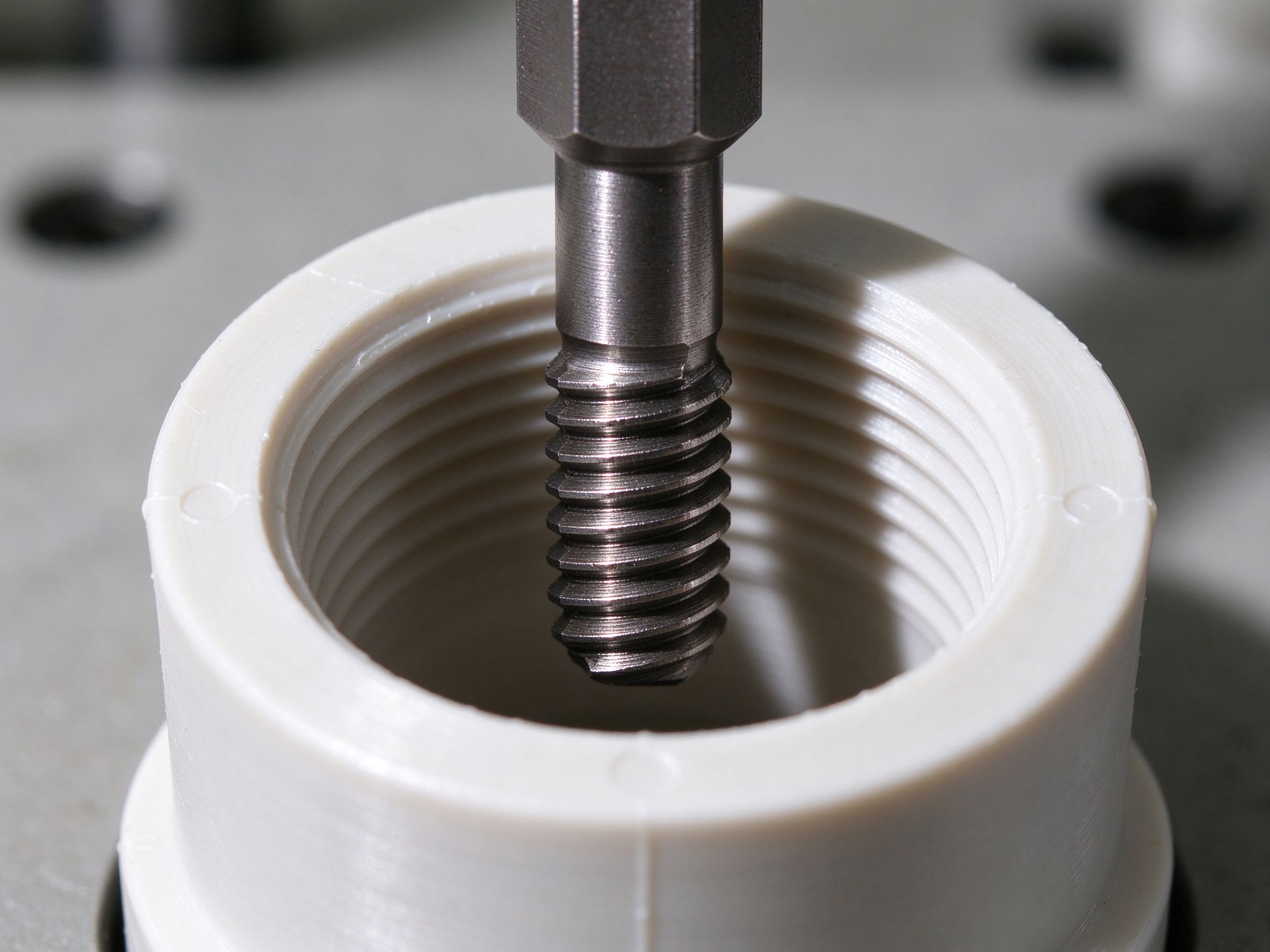
A thread that looks complete can still be short, tight at the root or out of phase with its mating part. The inspection plan below is what we agree per project; the values come from the drawing, not from this page.
| Check | Method |
|---|---|
| Thread form and size | Go / no-go plug or ring gauges for the specified system |
| Thread length | Gauge depth and a measured thread length against drawing |
| Thread engagement | Trial assembly with the mating component or a reference gauge |
| Center-to-end | Caliper or CMM, measured to the opposite axis |
| Coaxiality of two ports | CMM where two threaded ends share an axis requirement |
| Wall thickness | Section measurement on a cut sample, or ultrasonic where agreed |
| Roundness and runout | CMM on the port and on the body |
| Visual | Flash, sink, short shot, thread start condition |
| Pressure and leak | To the agreed test specification, where the part is pressure service |
| Assembly trial | Fit with the customer's pipe, nipple or gasket |
Inspection frequency, sample size and the accept criterion are written into the purchase specification. A first article report and a dimensional report can be supplied when the project calls for them.
Where a threaded elbow earns its place
A threaded elbow is chosen when a joint has to come apart again: for service, for a pump change, for a line that is assembled on site rather than welded in a shop. The five settings below are the ones we review most often.

Standards a project may need to meet
The list below is a reference for specification writing. It is not a statement that every item has been certified for this product. Which standards apply is decided by the project, the market and the end use.
| Standard | Scope |
|---|---|
| ASTM D1784 | Classification of rigid PVC and CPVC compounds by cell class |
| ASTM D2464 | Threaded Schedule 80 PVC fittings, where that product family applies |
| ASTM F1498 | Tapered pipe threads for thermoplastic fittings |
| ISO 1452-3 | Fittings for PVC-U pressure piping systems, including test requirements |
| ISO 7-1 | Pipe threads where pressure tightness is achieved on the thread |
| ISO 228-1 | Parallel pipe threads where pressure tightness is not achieved on the thread |
| NSF/ANSI 14 | Plastic piping system components and related materials |
| NSF/ANSI/CAN 61 | Drinking water system components, health effects |
| NSF/ANSI 372 | Lead content in drinking water system components |
Xiamen Goldcattle operates a quality management system certified to ISO 9001:2015. That is a system certification and it is not a product approval for a pressure fitting or for potable water service. A fitting is described as NSF listed or as approved for drinking water only when a specific product listing exists for the specific item, and such a listing is confirmed in writing before it appears in a quotation.
From drawing to repeat order
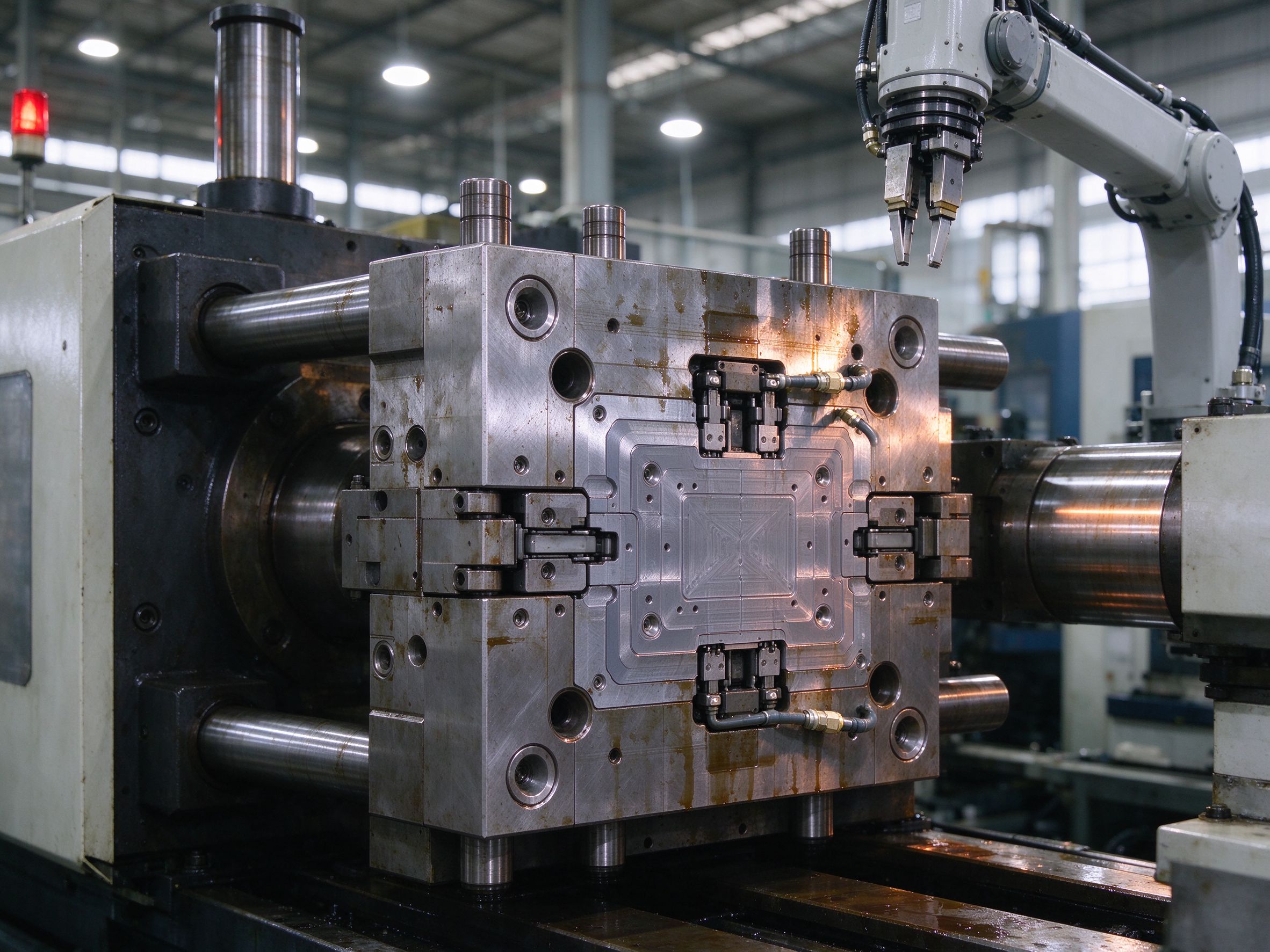
Most of the risk in a custom elbow sits before the first shot, in the review of the drawing and the resin. The five stages below are the sequence we follow, and each one has a defined output rather than a verbal approval.
Why trial and production are two stages
A new thread core rarely gauges correctly on the first shot. Shrink pulls the pitch and the diameter, cooling imbalance distorts the port, and the ejection method leaves its mark on the thread start. Those three effects are corrected on the tool or in the process, and the correction has to be measured before it can be trusted.
The trial run exists to fix the process, not to produce saleable volume. Once the settings, the gauge result and the assembly fit are recorded, production runs against that baseline and the next order starts from the same numbers.
-
01
Drawing review
Thread system, angle, end forms, wall sections and the tolerances that drive assembly are read against the intended service. Open points are listed back to you in writing.
-
02
Resin and DFM
Resin is fixed against media and temperature. The part is checked for wall transitions, draft, core access and the ejection method the thread demands.
-
03
Tool build
Core axes, cavity count, gate and cooling are set. Thread core material and ejection are chosen for the torque the joint will see in service.
-
04
Trial and validation
First article is gauged, measured and assembled with the mating part. Process settings are recorded before the run is released.
-
05
Production and repeat
Inspection frequency, packing and documentation are held on the approved specification so that the next order runs against the same baseline.
Three quantity paths, three different decisions
| Path | What it is for | What it needs |
|---|---|---|
| Sample or trial | Proving the fit, the thread and the resin before committing to a tool | An existing tool, or a trial tool quoted separately |
| Tool development | A new geometry, a new thread or a new angle that no current tool covers | Approved drawing, resin, annual volume and the tool budget |
| Production | Repeat supply against the frozen specification | Approved first article, packing agreement and the inspection plan |
Quantities are quoted per project rather than published as a fixed minimum. Tool cost, cavity count and inspection effort move together, so the break point differs between a one-cavity trial tool and a multi-cavity production tool.
What to send with an enquiry
- A dimensioned drawing or a 3D model, STEP or IGES preferred
- The thread system by standard and nominal size, not by the words "standard thread"
- The resin, or the fluid and temperature if the resin is still open
- Working pressure and whether the part is pressure service
- The mating component, so engagement can be checked rather than assumed
- Annual quantity and whether a trial run comes first
- Color reference, packing method and any documentation requirement
Threaded elbow FAQ
What is a PVC threaded elbow fitting?
It is a one-piece molded fitting that changes the direction of a pipe run and connects through threads rather than solvent welding. Both ports carry a thread, and the body turns the flow through a fixed angle, usually 45 or 90 degrees. Threaded ends let the joint be taken apart for service, which is why they appear on pump rooms, filter skids and equipment connections. The thread system, the angle and the wall section are all product-specific and should be stated on the drawing rather than assumed from the material name.
Can the elbow angle and end connections be customized?
Yes. The angle and both ends come from the drawing, so a project can specify 45 degrees, 90 degrees or another fixed angle, with female, male, socket or reducing ends in any combination. The limit is tooling rather than concept: each thread orientation needs a core that can be ejected, and an unusual angle may require a purpose-built core layout. Feasibility is confirmed after the drawing review, before a tool is cut.
What is the difference between NPT, R/Rp and G threads?
They are different joint designs, not different names for one thread. NPT is a North American taper thread under ASME B1.20.1, sealing by flank interference plus a compatible sealant. R and Rp come from ISO 7-1, where the thread pair itself forms the pressure seal, R being the external taper and Rp the internal parallel form. G is a parallel thread under ISO 228-1 that does not seal on the thread at all and relies on a gasket face. Nominal sizes do not interchange between these systems.
Which thread standard should I specify for a North American project?
Name the system on the drawing and add the reference: NPT to ASME B1.20.1 for a tapered pressure joint, or NPSC where a straight internal connection thread is required to mate with a tapered male end. Do not write BSP or standard pipe thread, because the supplier then has to guess, and a guessed thread is the most common cause of a rejected first article. If the mating part already exists, send its thread specification along with the drawing.
Can a PVC threaded elbow connect to a metal pipe?
It can, when the thread systems match and the joint is assembled with the right sealant and the right torque. The risk is mechanical rather than chemical: a metal female port is stiffer than the plastic male thread, so the first engaged turns take a concentrated load and over-tightening can split the wall before any leak shows. Engagement length, sealant compatibility and tightening practice should be agreed for the specific pair. A common field practice is hand-tight plus one to two turns, following the sealant supplier's instruction.
What pressure can a PVC threaded elbow handle?
There is no single figure that applies to the product family. The allowable pressure depends on the resin, the wall thickness at the threaded end, the engaged thread length and the service temperature, and it falls as temperature rises. A rating is therefore written for a specific geometry and a specific condition, and it is supported by a test plan agreed with the buyer. A burst test result describes one test condition and does not become the working pressure.
Are PVC threaded fittings suitable for chemical lines?
Only after the fluid is named. PVC-U resists many dilute acids and bases at ambient temperature and is a poor choice for several solvents, and CPVC extends the temperature range at higher cost. Concentration and temperature change the answer, so a request should state the chemical, its concentration and the working temperature. A resin recommendation is then made against published chemical resistance data for that grade, not against the generic material name.
Do your fittings carry an NSF listing for drinking water?
No blanket certification is claimed. A fitting may only be described as NSF listed or approved for potable water when a product listing exists for that specific item, and Goldcattle confirms any such listing in writing before it appears in a quotation. What can be stated today is that the company operates a quality management system certified to ISO 9001:2015. That is a system certificate, not a product approval, and the two should not be presented as equivalent.
How is thread quality checked before shipment?
With gauges, not with a visual pass. Go and no-go plug or ring gauges are used for the specified thread system, thread length is measured against the drawing, and engagement is proven by trial assembly with the mating component or a reference gauge. Port position, center-to-end and coaxiality are measured where the drawing requires them, and wall thickness is checked on a section. Pressure service parts also follow the hydrostatic or leak test agreed in the purchase specification.
What do you need to quote a custom threaded elbow?
A dimensioned drawing or a STEP model, the thread system by standard and nominal size, the resin or the fluid and temperature that will decide it, the working pressure, the mating component and the annual quantity. Color reference, packing method and documentation requirements complete the picture. With those inputs the quotation can state the tool path, the inspection plan and the unit price against a defined part rather than a description.
What is the minimum order quantity?
It is quoted per project. A trial quantity that runs on an existing tool, a new tool development and a repeat production order carry different economics, because tool cost, cavity count and inspection effort move together. Sending the annual demand with the drawing lets the quotation propose a cavity count and a break point that make sense for that volume, instead of applying one published minimum to every project.
Send the drawing, not a description
A threaded elbow is quoted from its thread, its angle and its wall section. Attach the drawing and the mating part, and the review can start with the points that decide whether the tool works first time.
Request a quotation- Drawing: dimensioned PDF, STEP or IGES
- Thread: system, standard and nominal size
- Service: fluid, temperature and working pressure
- Volume: annual demand and whether a trial comes first
Manufacturing since 1998. Quality management system certified to ISO 9001:2015. Product performance statements on this page describe design considerations and are confirmed per project against the approved drawing, the selected resin and the agreed test plan.