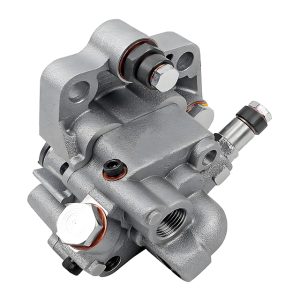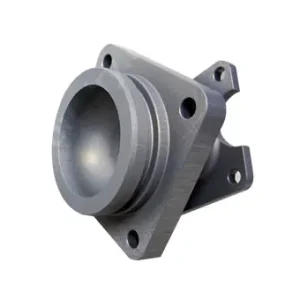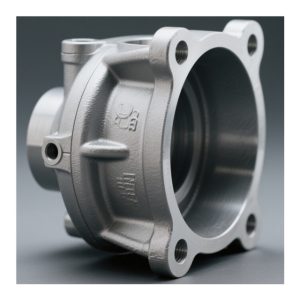
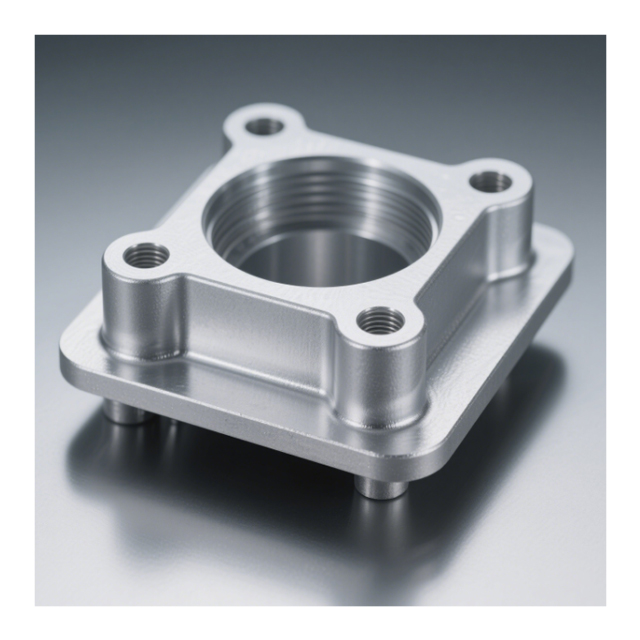
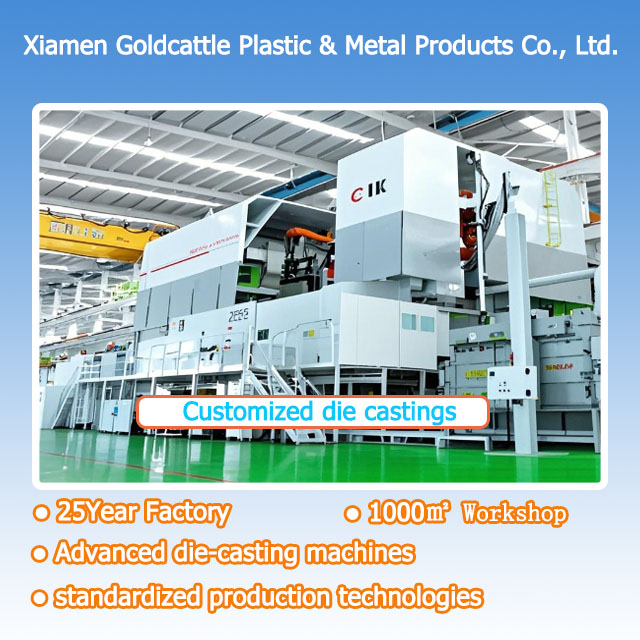
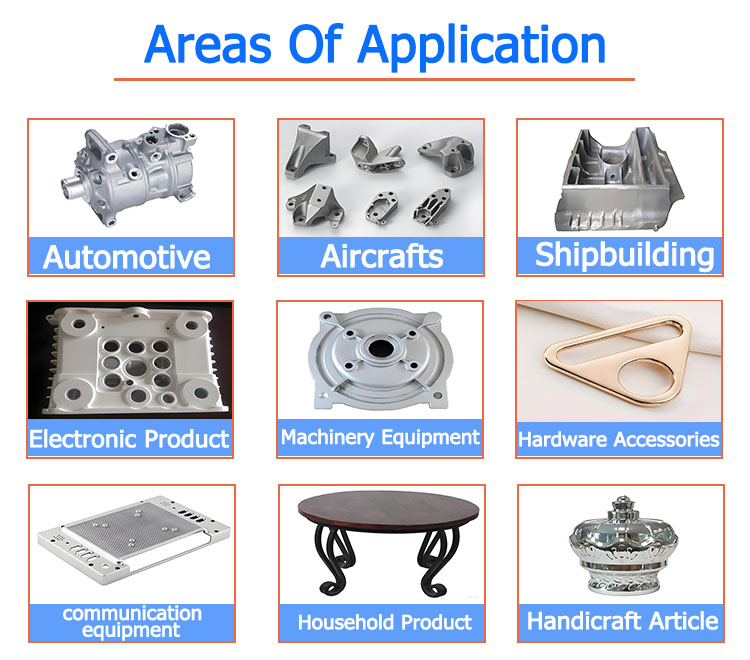
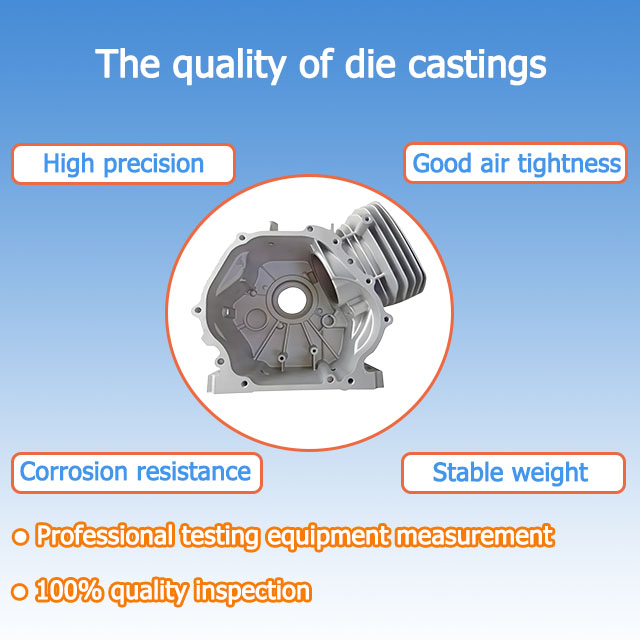
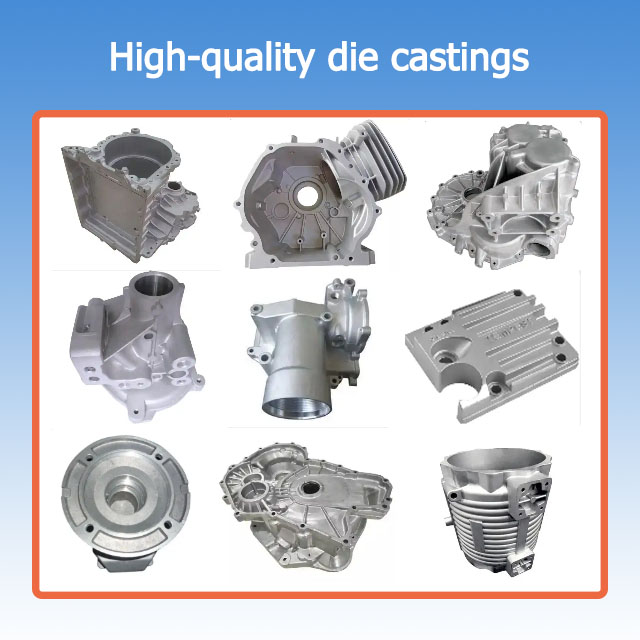
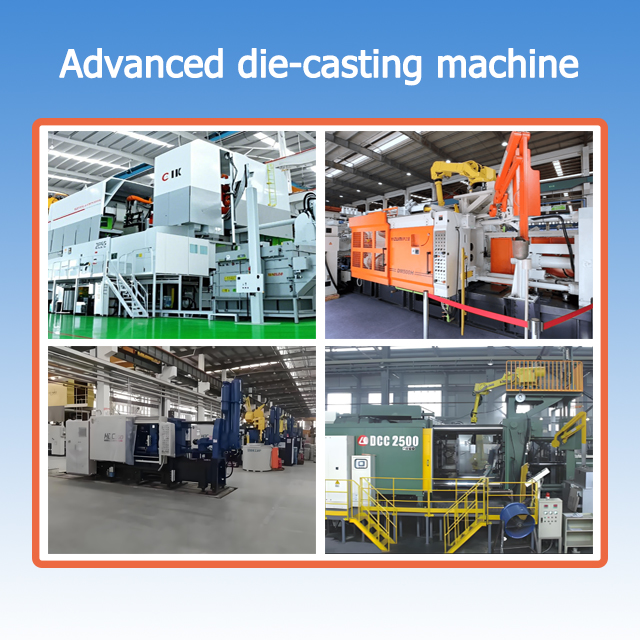
Customized aerospace aluminum alloy die – castings
Processing materials: Aviation – grade aluminum alloys are used (such as A380, A356, ZL104, etc.).
Characteristics: High corrosion resistance, adaptable to complex aviation environments such as high humidity and salt spray.
Processes: High – pressure die – casting (with pressure up to over 1000 bar) or vacuum die – casting processes are adopted.
Accuracy: The tolerance grade can reach CT6 – CT8 (GB/T 6414), and the surface roughness is Ra≤3.2μm.
Customization: Full – process customization services from drawing design, mold development to mass production are supported.
Standards: Comply with AMS 2771 (heat treatment of aluminum alloys), ASTM B179 (die – casting standards) and AS9100 aviation quality management system.
Description
Aerospace Aluminum Alloy Die Casting Manufacturer – Precision Lightweight Components
We provide aerospace aluminum alloy die casting solutions for lightweight, high-strength components that meet the stringent requirements of the aviation and defense industries.
- ✓ Aerospace-grade alloys: A356, A380, AlSi10Mg
- ✓ Precision tolerance: ±0.05–0.1mm
- ✓ Complex geometries with thin-wall structures
- ✓ Full process: casting + CNC machining + surface finishing
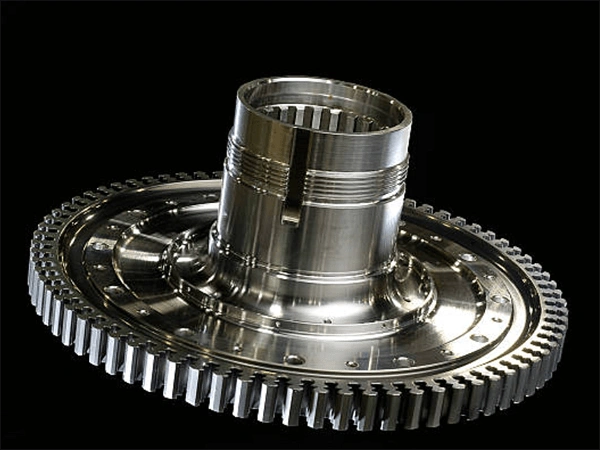
What is Aerospace Aluminum Die Casting
Aerospace aluminum die casting is a high-precision manufacturing process that injects molten aluminum alloy into a hardened steel mold under high pressure. This process enables the production of complex, lightweight components with consistent dimensional accuracy, which is critical for aerospace applications.
This manufacturing method allows for the creation of intricate geometric structures that would be difficult or costly to produce with other methods. It also supports lightweight design optimization, helping to reduce overall aircraft weight while maintaining the required structural strength and durability.
The process delivers high repeatability, making it suitable for both medium and high volume production runs of aerospace components, ensuring consistent quality across all parts.
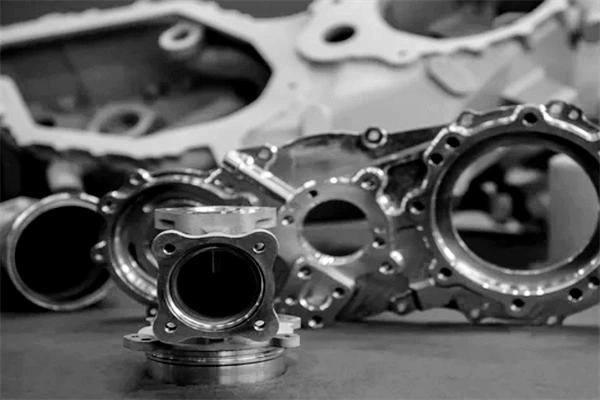
Aerospace Casting vs Machining: How to Choose
When selecting a manufacturing process for your aerospace components, it is important to evaluate the tradeoffs between different methods based on your specific requirements:
| Feature | Die Casting | CNC Machining | Investment Casting |
|---|---|---|---|
| Complexity | High | Medium | High |
| Cost | Low (mass production) | High | Medium |
| Precision | Medium-High | Very High | High |
| Best Use Case | Lightweight structures, medium-high volume | High-precision low-volume parts | Complex low-volume components |
Aerospace Aluminum Alloys
We work with a range of aerospace-grade aluminum alloys to meet different performance requirements for your components:
A356
Offers excellent lightweight properties combined with good corrosion resistance. It is widely used for aerospace components that require a balance of strength and weight, with good castability for complex shapes.
7075
A high-strength aluminum alloy with excellent mechanical properties, ideal for structural aerospace components that need to withstand high stress and load conditions. It can be heat treated to achieve maximum strength.
AlSi10Mg
Provides good thermal performance and dimensional stability. This alloy is suitable for components that need to handle temperature variations, with good castability for thin-wall structures.
Manufacturing Capabilities
| Tolerance | ±0.05–0.1mm |
| Wall Thickness | Thin-wall casting capability down to 1.5mm |
| Primary Process | High Pressure Die Casting (HPDC) |
| Secondary Operations | 5-axis CNC machining, heat treatment (T6) |
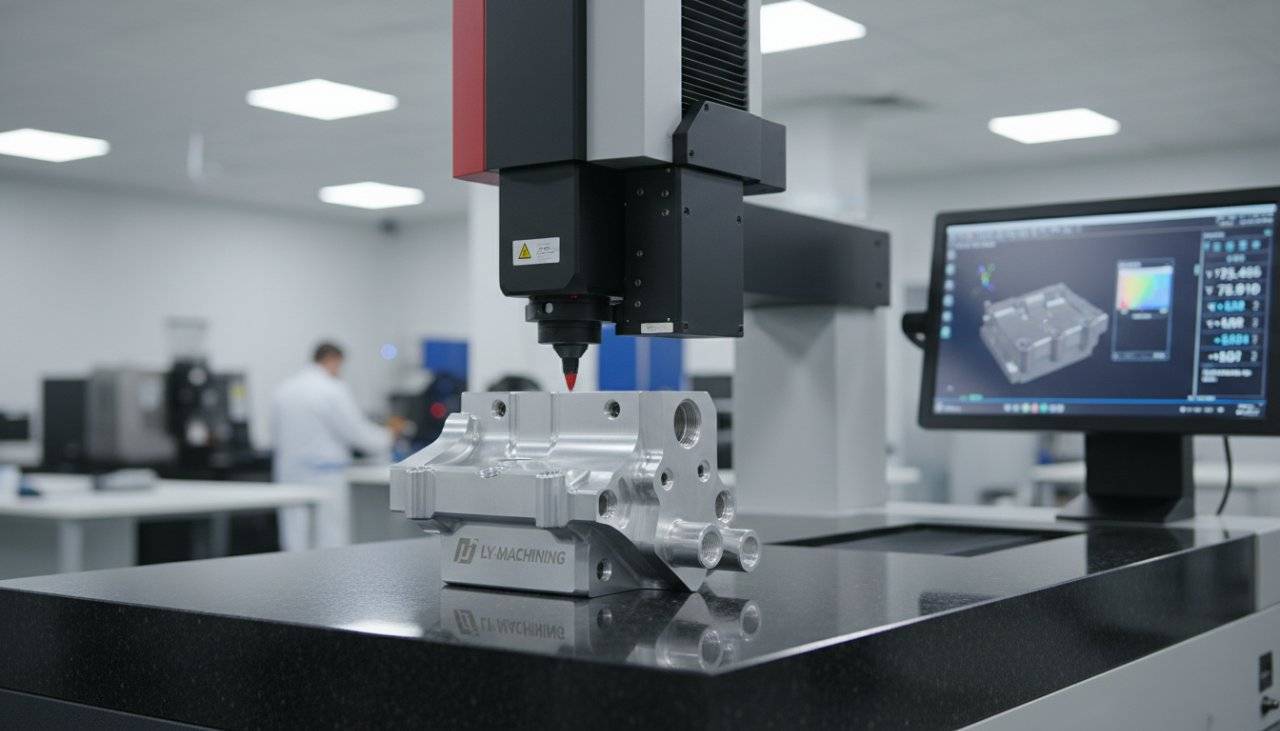
| Inspection | CMM measurement, X-ray inspection, material testing |
Quality & Certification
Our manufacturing processes adhere to the strict quality standards required for the aerospace industry. We maintain comprehensive quality management systems to ensure every component meets your specifications.
- ✓ AS9100D certified quality management system
- ✓ ISO 9001 certified processes
- ✓ Full material and process traceability
- ✓ Material certification with every batch
- ✓ First Article Inspection (FAI) documentation
Engineering & DFM Support
Our engineering team provides comprehensive support to optimize your component design for manufacturability, helping to reduce costs and improve performance:
Lightweight Design Optimization
We work with your team to optimize part geometry to reduce weight while maintaining the required structural strength, supporting overall aircraft weight reduction goals.
Mold Flow Analysis
Our team conducts mold flow simulation to identify potential manufacturing issues before production, ensuring smooth casting process and reducing defects.
Cost Reduction Solutions
We provide design for manufacturability (DFM) feedback to help reduce production costs, minimize material waste, and streamline the manufacturing process.
Applications
Our aerospace aluminum die casting components are used in a wide range of aircraft and aerospace applications:
✈
Aircraft Housings
🔩
Structural Brackets
⚙
Pump Housings
📦
Electronic Enclosures
Cost of Aerospace Die Casting
The cost structure of aerospace aluminum die casting is designed to provide value for medium to high volume production:
- • Initial mold investment: The upfront cost of the steel mold is a one-time investment, which is amortized over the production run.
- • Per-unit cost: For medium to high volume production, the per-unit cost is significantly lower than machining, as the high-speed casting process reduces labor and material waste.
- • Assembly cost reduction: Die casting allows for the integration of multiple features into a single component, reducing the need for assembly of multiple parts and lowering overall system costs.
Aerospace Projects
Frequently Asked Questions
What alloys are used in aerospace die casting?
We commonly use A356, 7075, and AlSi10Mg aluminum alloys for aerospace applications, each selected based on the specific strength, corrosion resistance, and thermal requirements of the component.
What tolerance can be achieved for aerospace die casting parts?
We can achieve precision tolerances of ±0.05–0.1mm for die cast parts, with additional CNC machining available for even tighter tolerances on critical dimensions.
Is die casting suitable for aerospace parts?
Yes, die casting is widely used for aerospace components when properly controlled. It provides the ability to produce complex, lightweight parts with consistent quality, making it ideal for many aerospace applications when combined with proper quality control and certification.
Do you provide material certification for aerospace parts?
Yes, we provide full material certification with every batch of aerospace parts, including test reports, traceability documentation, and First Article Inspection (FAI) reports as required.
Request an Aerospace Die Casting Quote
Upload your CAD file and tell us about your project, and our engineering team will provide a detailed quote and engineering review within 24 hours.