

High-Temp Stainless Fittings | 310S/321/347 CNC
Place of Origin : XiaMen, China
Type : Broaching, DRILLING, Etching / Chemical Machining, Laser Machining, Milling, Other Machining Services, Turning, Wire EDM, Rapid Prototyping
Micro Machining or Not : Micro Machining
Model Number : CNC-10
Brand Name : High End OEM Service
Materials Avaliable : stainless steel,Aluminum, Copper
Manufacture Processing : External/Internal/Thread Turning Tool, Tooling/Molding Stamping,
Surface Treatment : Anodizing, Sandblasting, etc,
Quality control : 100% Inspection Berore Shipment
Facility Certificates : ISO9001:2015/IATF6949/ROHS/SMETA/ISO14001
Accept Drawing : PDF file,JPG,2D file,3D file,etc
Industrial Experience: 25+ Years
MOQ : Small Orders Accepted
OEM Service : Support Full Customizing
Processing Tolerance : +/- 0.05mm
Description
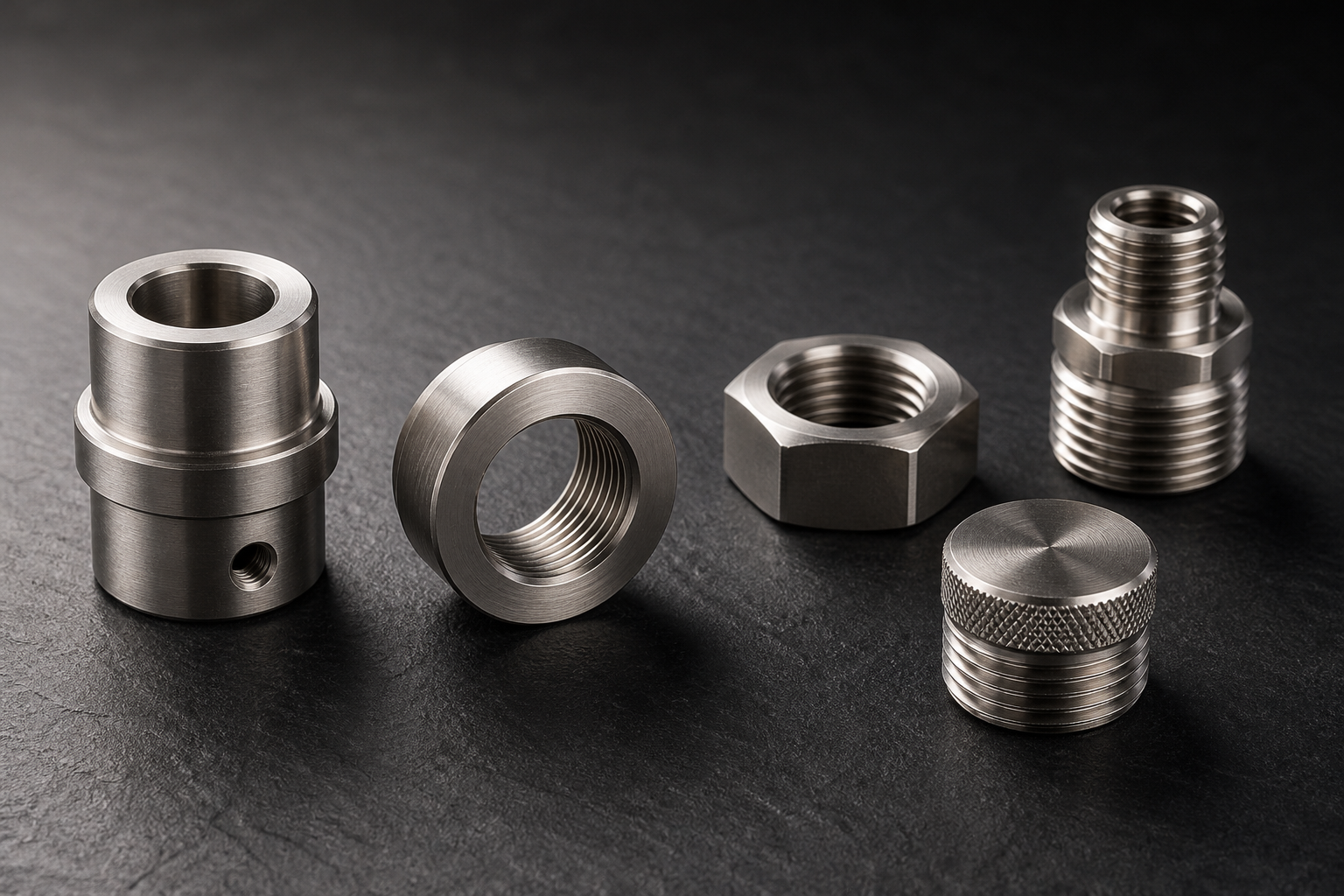 Model CNC-10 · made to drawing
CNC Turning · Austenitic Stainless
Custom Stainless Steel Fittings for High-Temperature Service
Turned union bodies, threaded bushings, collars and adaptors in austenitic stainless steel — specified by grade and by the temperature the part actually sees, because "high temperature" is not one number and 800 °C is not a property of stainless steel.
- The grade sets the temperature ceiling; the drawing sets everything else
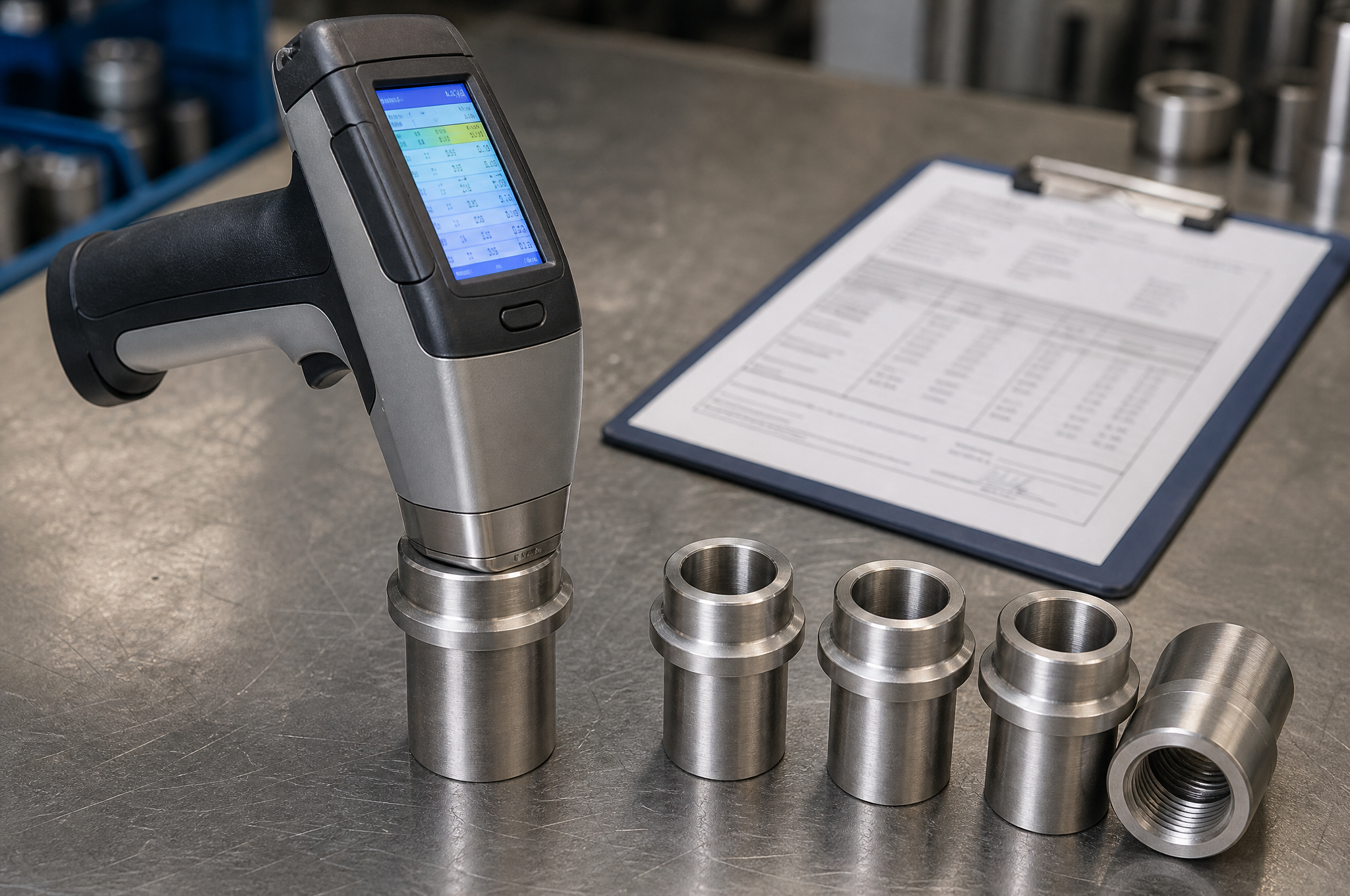
- Positive material identification on every lot, because 304 and 316 look identical once turned
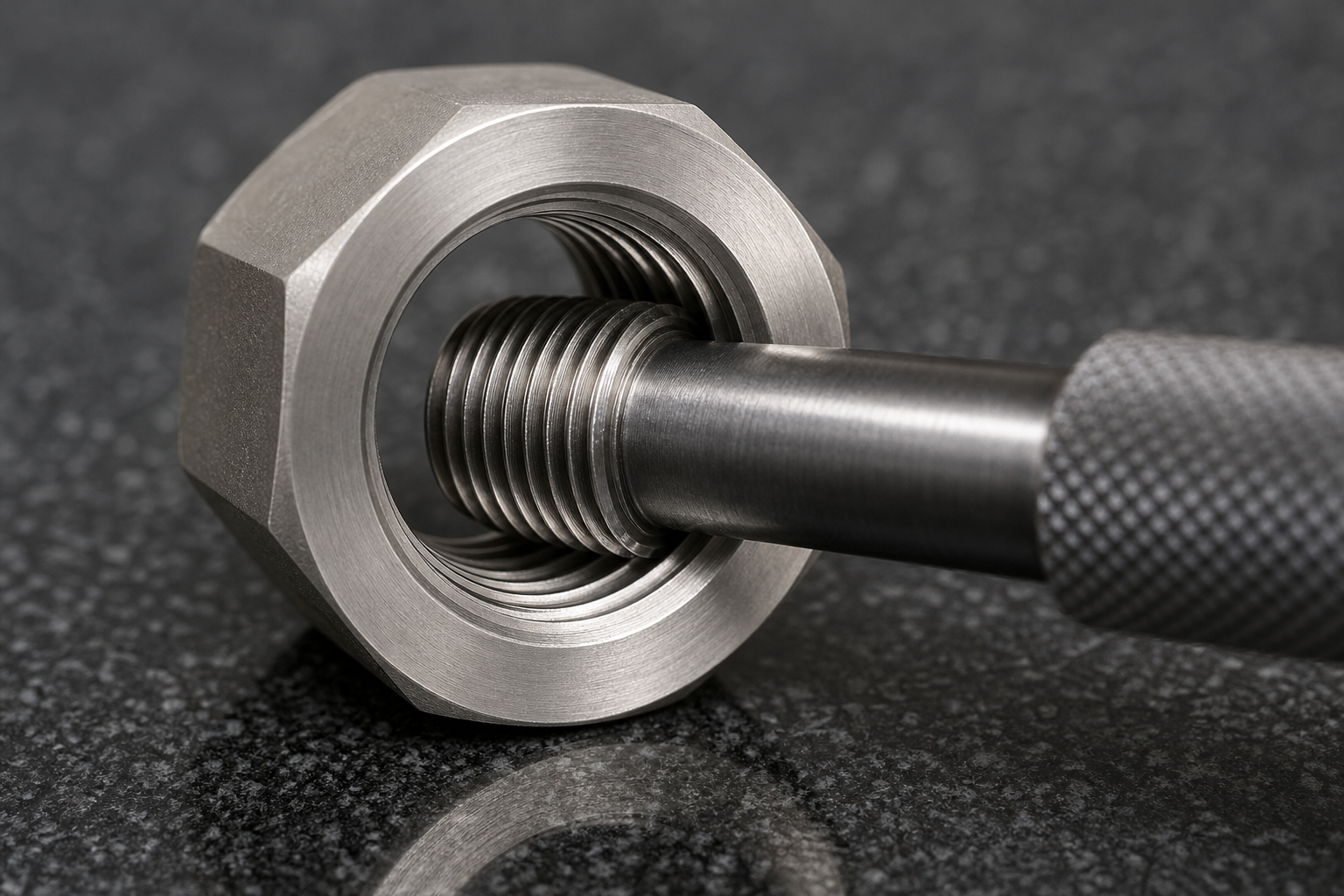
- Threads cut and gauged, not tapped and hoped for
What this page is about
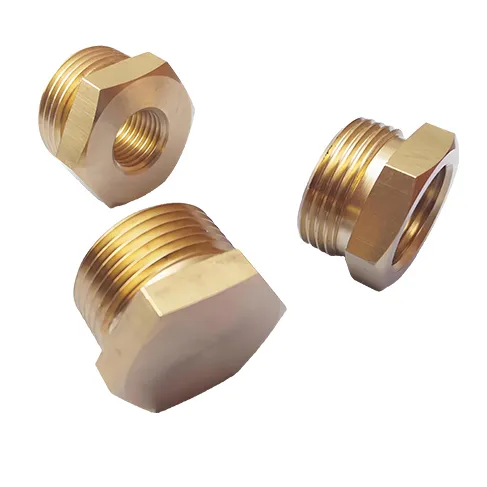
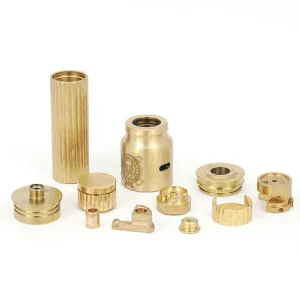
These are turned stainless fittings: bodies, bushings, collars and adaptors cut from bar, threaded and passivated. What makes them a distinct product is not the shape — it is that they are usually bought for a hot, oxidising or corrosive line, and that requirement is carried by the grade rather than by the machining.
What you can specify
- Grade, and the service temperature and atmosphere it has to survive
- Thread form, class, hand and the length of engagement
- Body geometry: bore, wall, collar position, hex or round, cross-holes
- Seal interface: cone, flat face, O-ring groove, or weld preparation
- Surface: as-machined, pickled and passivated, glass bead, electropolished
- Documentation: mill certificate, PMI, dimensional report, dye penetrant
What this page will not claim
- A pressure rating for the fitting on its own — pressure belongs to the assembled joint
- A blanket 800 °C figure for "stainless steel"
- A code stamp or pressure-vessel certification that has not been specified
- Aerospace or automotive release, which needs a qualification route of its own
- Test data that was not produced on the parts you are buying
The distinction matters commercially. A buyer sourcing a fitting for a furnace line is not really comparing machine shops; they are deciding whether the supplier understands that the failure will happen at temperature, in the thread, after a few hundred cycles — not on the day the part is inspected. The sections below are arranged around that.
Specification: what is fixed and what the drawing decides
A product page that lists "material: stainless steel" and "tolerance: ±0.05 mm" has told the buyer nothing they can quote against. The table separates what is a standing capability from what is set per order.
| Parameter | Value | Basis |
|---|---|---|
| Product type | Turned fittings: union bodies, threaded bushings, collars and backnuts, adaptors, reducing bushings, caps and plugs | Fixed |
| Material | Austenitic stainless steel: 304 / 304L, 316 / 316L, 321, 347, 310S | Drawing |
| Stock form | Round bar, sawn and turned; hex bar where the body is hex | Fixed |
| Thread form | Metric, BSPP, BSPT, NPT, UN — single-point, milled or tapped | Drawing |
| General tolerance | ±0.05 mm | Fixed |
| Critical features | ±0.02 mm where the geometry and the process support it | Drawing |
| Surface finish | As-machined, pickled and passivated, glass bead, electropolished | Drawing |
| Service temperature | Set by the grade, the atmosphere and the load — see the grade table | Drawing |
| Pressure rating | Not stated for the part alone; it is a joint property | Fixed |
| Material documentation | EN 10204 3.1 mill certificate on request, matched to the heat | Fixed |
| Verification | Dimensional report, thread GO/NO-GO, positive material identification | Fixed |
| Additional testing | Dye penetrant, hardness, surface roughness, third-party inspection | Drawing |
| Drawing formats | STEP, IGES, DWG, DXF, PDF | Fixed |
| Order quantity | From one piece for a prototype or fit check; production against the drawing | Fixed |
| Quality system | ISO 9001:2015 | Fixed |
| Trade terms | EXW, FOB or CIF | Fixed |
The 800 °C question: what the number is missing
"Withstands up to 800 °C" is a sentence that can be true and still mislead. Before it means anything for a fitting, three qualifiers have to be attached: which grade, for how long, and carrying what load.
| The claim | What it leaves out | What to ask instead |
|---|---|---|
| "Resists oxidation to 800 °C" | Which grade, and whether the service is continuous or cyclic. Cycling spalls the oxide scale that continuous service merely grows | What grade, and is the part held hot or cycled between hot and cold? |
| "Maintains strength at 800 °C" | The load. At that temperature the design is limited by creep, not by tensile strength, and a threaded joint relaxes its preload over time | What sustained load, and over what life? |
| "High-temperature alloy" | Any designation at all, and therefore any way to check it | Which UNS or EN grade, against which mill certificate? |
| "Corrosion resistant" | The environment. Chlorides, sulphur and reducing atmospheres each defeat a different grade | What gas or liquid, at what concentration and temperature? |
What happens to austenitic stainless at 800 °C is not mysterious: the protective chromium oxide layer grows faster, the metal loses a large part of its room-temperature strength, and any sustained load starts producing creep. On a fitting, the consequence is specific. The thread is the first feature to notice, because a thread carries load through a small contact area and depends on elastic preload to stay tight.
Which grade for which temperature band
Grade selection for heat is a different exercise from grade selection for corrosion. The bands below are the published oxidation behaviour of the common austenitic grades — a starting point for the conversation, not a service rating for a finished part.
| Grade | Why it is chosen | Where it stops |
|---|---|---|
| 304 / 304L 1.4301 / 1.4307 | The default. Adequate oxidation resistance for many moderate-temperature duties, widely stocked, cheapest of the family | Strength falls steeply above roughly 500 °C; sensitises in the 425–815 °C band, so a welded or long-soaked part is at risk of intergranular attack |
| 316 / 316L 1.4404 | Molybdenum improves chloride and general corrosion resistance; the sensible choice where the duty is both warm and wet | The molybdenum does not buy creep strength. For heat alone it is not an upgrade on 304 |
| 321 1.4541 | Titanium-stabilised specifically for service in the 425–815 °C band; the carbide formers are tied up, so sensitisation is avoided | Not intended for continuous service far above that band; still a creep-limited material under load |
| 347 1.4550 | Niobium-stabilised, the same purpose as 321, often preferred where welding is extensive or the duty is slightly hotter | Same ceiling as 321. Availability is narrower than 321 in bar |
| 310S 1.4845 | 25Cr-20Ni. The grade normally quoted when the duty is near or above 1000 °C, because the higher chromium and nickel hold the oxide layer | Lower room-temperature strength, higher cost, and it forms sigma phase on very long exposure in the 600–900 °C range |
| 2205 duplex 1.4462 | Excellent choice for strength and chloride stress corrosion at ambient and warm temperatures | Not a heat grade. It embrittles above roughly 300 °C and should not be specified for an 800 °C duty at all |
| 17-4PH 1.4542 | High strength where the part also has to carry mechanical load | Strength falls away well before 500 °C; it is the wrong answer for a sustained hot duty despite being the strongest name in the list |
Two of these choices are counter-intuitive enough to be worth stating plainly. Duplex is the strongest and most corrosion-resistant grade in the table and is disqualified by temperature alone. And 316, which buyers often reach for as the "better" stainless, is not better in heat — it is better in chlorides. On a dry furnace duty, specifying 316 instead of 321 spends money and solves nothing.
How these fittings actually fail
A hot fitting rarely fails by breaking on installation. It fails months later, at a feature, by a mechanism that was set at the specification stage. Six mechanisms cover most of it.
| Mechanism | What it looks like | What prevents it |
|---|---|---|
| Creep and preload relaxation | The joint that was leak-tight at commissioning weeps after weeks at temperature; the thread has not stripped, it has stretched | Design for the hot load, not the cold one; specify a grade with creep data at the duty; re-torque procedures where the design allows |
| Sensitisation | Intergranular corrosion in or beside a weld after service in the 425–815 °C band, in 304 or 316 | A stabilised grade (321, 347) or a low-carbon grade where the duty allows; control of weld heat input |
| Sigma phase | Loss of toughness and cracking after very long exposure in the 600–900 °C range, particularly in high-chromium grades | Grade choice against the actual life, and recognition that "withstands" and "survives for the plant life" are different claims |
| Scale growth and spallation | A dull, thickening oxide that flakes on thermal cycling; flakes become contamination downstream | A grade with more chromium and nickel for the temperature, and fewer cycles if the process allows |
| Galling and seizure | The thread will not come apart at maintenance, or tears on assembly before it is ever hot | Dissimilar or hardened mating material, a solid-film lubricant rated for the temperature, or a plated thread |
| Differential expansion | The stainless fitting grows more than the carbon-steel body it is screwed into, and either loses preload or yields the thread | Clearance and engagement length calculated at the operating temperature, not at 20 °C |
| Thermal fatigue | Cracks at a section change — a collar, a cross-hole, a thread run-out — after repeated heating and cooling | Generous radii at section changes; avoid a sharp transition between a thin wall and a collar |
The pattern is consistent: the features that fail are the ones with a stress concentration or a load path, and those are exactly the features a drawing can protect. A generous radius at the base of a collar costs nothing. A crack that starts there costs a shutdown.
Threads and seals above 250 °C
At room temperature a fitting is a thread plus an elastomer. Above about 250 °C the elastomer is gone and the thread is a liability, so both halves of the joint have to be re-decided.
The seal
Common elastomer seals have upper limits far below a furnace duty, and PTFE-based seals are not far behind them. What remains is a metal-to-metal joint — a cone or a spherical seat — a graphite-based seal, or a welded connection. That is a design decision, not an accessory, because a cone seat changes the body geometry and the machining sequence.
If the drawing shows an O-ring groove but the duty is 600 °C, the drawing has a defect that no machine shop can fix by holding a tighter tolerance.
The thread
Austenitic stainless galls against itself. At ambient temperature an anti-seize compound usually covers for it; at temperature the carrier burns away and leaves the solids, which may or may not still lubricate. The alternatives are a solid-film lubricant specified for the temperature, a silver or nickel plated thread, or a deliberate hardness difference between the two mating parts.
Clearance is the other half. A thread cut to a nominal fit at 20 °C closes up as the part heats, and a stainless male thread in a stainless female thread with no allowance for expansion can seize solidly enough to shear on removal.
Part types
Six turning families cover most of what is bought under this description. They are quoted from a drawing rather than from a catalogue, so the list is a starting point for the conversation, not a stock range.
Union body
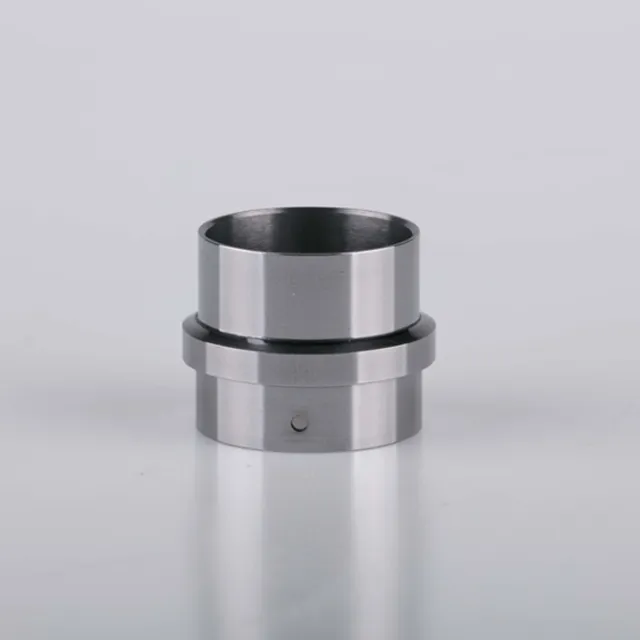
A turned body with a mid collar and a through bore, often with a cross-hole for a pin or a spanner. The collar sets the assembly height and takes the seating load.
Decided by: bore concentricity to thread, collar squareness, cross-hole position
Threaded bushing
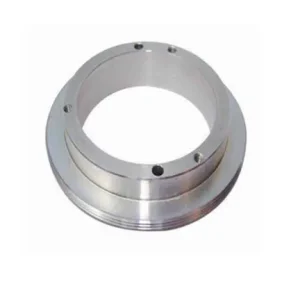
An internally threaded collar with a wide plain face, used to adapt a thread or to seat a mating part against a face. The face is the functional surface, not the outside diameter.
Decided by: thread class, face squareness to thread axis, wall thickness
Backnut / locknut
A hex or round nut that pulls a component up against a panel or a boss. Thin walls and fine threads make it a heat-treatment-free but tolerance-sensitive part.
Decided by: across-flats, thread start, face flatness
Reducing adaptor
Two different thread sizes in one body, with a stepped bore. The step is where the flow changes and where the wall is thinnest.
Decided by: alignment of the two threads, minimum wall at the step
Cap and plug
A threaded closure with a sealing face and often a hex or knurl for removal. At temperature, removal is the requirement that matters.
Decided by: seal geometry, removal feature, plating or lubricant
Weld-preparation adaptor
A turned fitting that ends in a bevel or a socket rather than a thread, for a welded connection where a threaded joint is not acceptable.
Decided by: bevel angle and land, bore alignment, grade compatibility with the pipe
Inspection: what is checked and what it proves
For a hot stainless fitting, the inspection that matters most is not dimensional. It is the check that the material is the grade on the drawing — because a turned 304 part and a turned 316 part are indistinguishable by eye.
| Check | Method | What it proves |
|---|---|---|
| Material grade | Positive material identification on the finished parts, cross-checked to the heat on the mill certificate | That the part is the grade specified — the only defence against a mixed bar rack |
| Thread | GO/NO-GO gauges, or thread measurement for critical classes | That the thread will assemble and hold, not merely that it looks cut |
| Dimensions | Micrometer, bore gauges, height gauge, CMM for position and concentricity | That the drawing was met on the features that carry function |
| Surface integrity | Visual and, where specified, dye penetrant | That there is no tool mark, lap or crack at a stress concentration |
| Hardness | Portable or bench tester, on request | That the bar was supplied in the condition assumed by the design |
| Passivation | Process control plus, where required, a test for free iron | That the surface is clean of contamination rather than merely shiny |
| Documentation | EN 10204 3.1 mill certificate, dimensional report, PMI record | That the claims are traceable to a heat and to a measurement |
Where the scope stops
A product page that implies it can do everything is answered with silence by an experienced buyer. This is what is outside the scope of a standard order, and what has to be arranged if it is needed.
Not included by default
- A pressure-vessel code stamp or a design appraisal — these follow the code the buyer nominates
- Aerospace or automotive release, PPAP or first-article packages to those standards
- Third-party witness inspection, unless it is arranged at quotation
- Coating beyond pickling, passivation and the platings quoted for the part
- Cast or forged bodies — these are turned from bar
Arranged when specified
- Dye penetrant or hardness testing with a recorded result
- Material certificates traced to the heat, and to the parts
- Full dimensional inspection on a stated sample size
- Subcontracted plating or passivation with its own documentation
- Assembly with mating parts, if they are supplied to the same project
The value of stating this is not modesty. It is that the buyer can see which requirements need to be on the enquiry rather than assumed, and a quotation can be built that does not quietly omit them.
Ordering, sampling and lead time
Turned fittings carry no dedicated tooling in most cases, which is why small quantities are practical: the setup is soft jaws and a program, not a mould.
| Item | How it works |
|---|---|
| Minimum quantity | One piece for a prototype or a fit check. Production quantities are quoted against the drawing and the annual demand |
| Sample | A first-off from the same program and the same bar as the run, so the sample represents the parts rather than a special effort |
| Lead time | Quoted per part. As published ranges on the machining pages: a few days for simple prototypes, two to three weeks for low-volume runs, longer for multi-operation parts or subcontracted finishing |
| Repeat orders | Program and setup are retained, so a reorder does not re-negotiate the interpretation of the drawing |
| Packing | Thread protectors and individual bagging where the thread or the sealing face is critical; carton or crate per the buyer's requirement |
| Trade terms | EXW, FOB or CIF |
| Drawing formats | STEP, IGES, DWG, DXF, PDF |
Questions buyers ask before ordering
The five that decide whether a fitting is right for the duty, and the five that decide whether the order runs smoothly.
Can these fittings really run at 800 °C?
Not as a general claim. 800 °C is a grade-and-duration statement: the austenitic grades normally quoted for that band are the stabilised and high-nickel ones, and the load has to be low because creep, not tensile strength, governs the design. Which grade is acceptable depends on the atmosphere, the cycle pattern, the load and the life you need.
Which stainless grade should I specify for a hot fitting?
Below about 400 °C, 304 or 316 is usually adequate and the choice is about corrosion rather than heat. Between roughly 425 and 815 °C, the stabilised grades 321 and 347 avoid the sensitisation that affects 304 and 316. Near and above 1000 °C, a 25Cr-20Ni grade such as 310S is the normal starting point.
Why does a stainless thread seize at temperature?
Austenitic stainless galls against itself, and the anti-seize that helps at room temperature often burns off. The practical fixes are a dissimilar or harder mating material, a solid-film lubricant that survives the temperature, or a plated thread — plus enough clearance for differential expansion.
What seals a fitting above 250 °C?
Not an elastomer. Above roughly 200 to 250 °C the common elastomers are outside their range, so the joint becomes metal-to-metal, conical, or welded, or uses a graphite-based seal. The seal type has to be decided with the temperature, not after it.
How is the material grade verified?
By positive material identification on the finished parts, checked against the mill certificate for the heat. Grade mix-up is the dominant failure mode on stainless assemblies, because 304 and 316 look identical once machined.
What thread forms can you machine?
Metric, BSPP, BSPT, NPT and unified threads, cut by single-point turning, thread milling or tapping, and verified with GO/NO-GO gauges. Non-standard and left-hand threads are quoted from the drawing.
Is the fitting pressure rated?
Pressure is a property of the assembled joint — thread engagement, seal type, mating material, wall thickness and temperature — not of the fitting alone, so no standalone rating is published here. Where a code rating is required, the applicable code and its documentation should be stated on the enquiry.
What documents come with the parts?
A dimensional report, thread gauge results, the mill certificate for the heat on request, and the positive material identification record. Dye penetrant or hardness checks are added where the drawing or the application calls for them.
What is the minimum order?
One piece for a prototype or a fit check; production quantities are quoted against the drawing and the annual demand. Small orders are accepted, and the tooling is normally limited to soft jaws and a program rather than a dedicated die.
What should I send for a quotation?
The drawing with thread callouts, the grade or the service temperature and atmosphere, the mating part, the seal type, critical dimensions, quantity, any pressure or code requirement, and the documentation you need with the shipment.
Send the drawing and the duty
The grade cannot be settled from the shape alone. Send the drawing with the temperature, the atmosphere and the load, and the reply will name the grade it implies, the thread and seal decisions that follow, and the features that need their own tolerance.
Request a Fitting QuoteSTEP or DWG, thread callouts, temperature and atmosphere, load, quantity and documentation
How this page was written. The grade and temperature statements describe the published oxidation and sensitisation behaviour of the named austenitic grades; they are not a service rating for a finished part, which depends on atmosphere, load, cycles and life. No pressure rating, test result, certification or service life is asserted for the product itself. Only ISO 9001:2015 is stated as a facility certificate; any further certificate is confirmed at quotation.