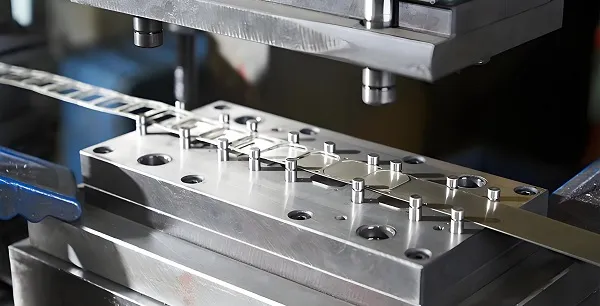
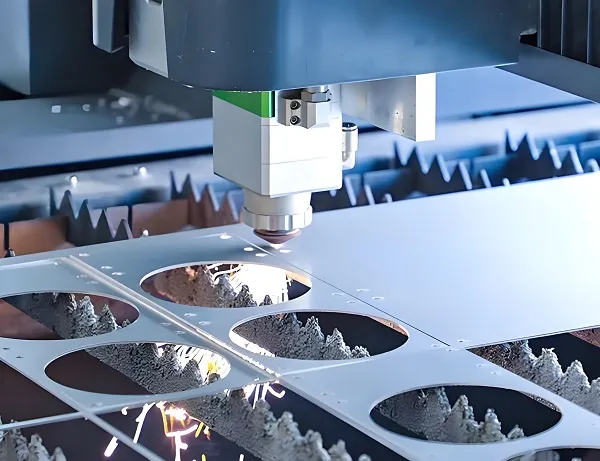
Compare 6061, 7075, 2024, 5052, 6063 and 6082 by machinability, strength, corrosion resistance, cost, finishing and application — and choose the right alloy for your CNC part.
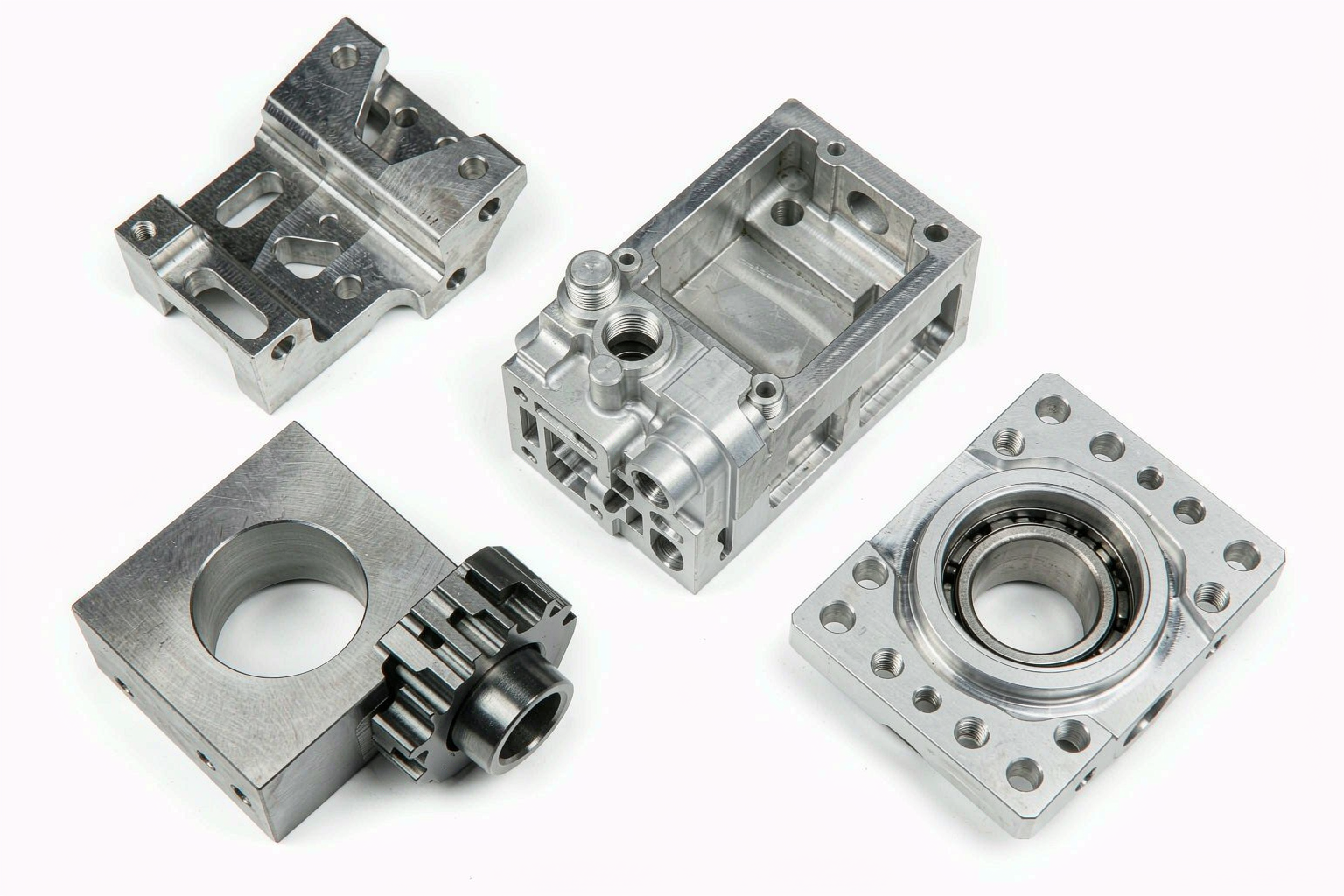
Best Aluminum Alloy by Application
Before comparing numbers, find your application. This table routes you to the right starting point, then you can read the deeper comparison below.
| Application Need | Best Starting Choice | Why |
|---|---|---|
| General CNC parts | 6061-T6 | Balanced performance, easy to machine and finish |
| Lightweight high-strength parts | 7075-T6 | High strength-to-weight ratio |
| Aerospace fatigue applications | 2024 | High strength and fatigue performance |
| Marine environment | 5052 / 5083 | Corrosion resistance |
| Cosmetic components | 6063 | Surface and appearance characteristics |
| Structural industrial parts | 6082 | Strength plus good machinability |
6061 vs 7075: Which Is Better for CNC Machining?
This is the most-searched aluminum CNC comparison — and the one where "better" depends entirely on the part. The data below is typical reference values for the -T6 condition; confirm exact figures against the applied material specification.
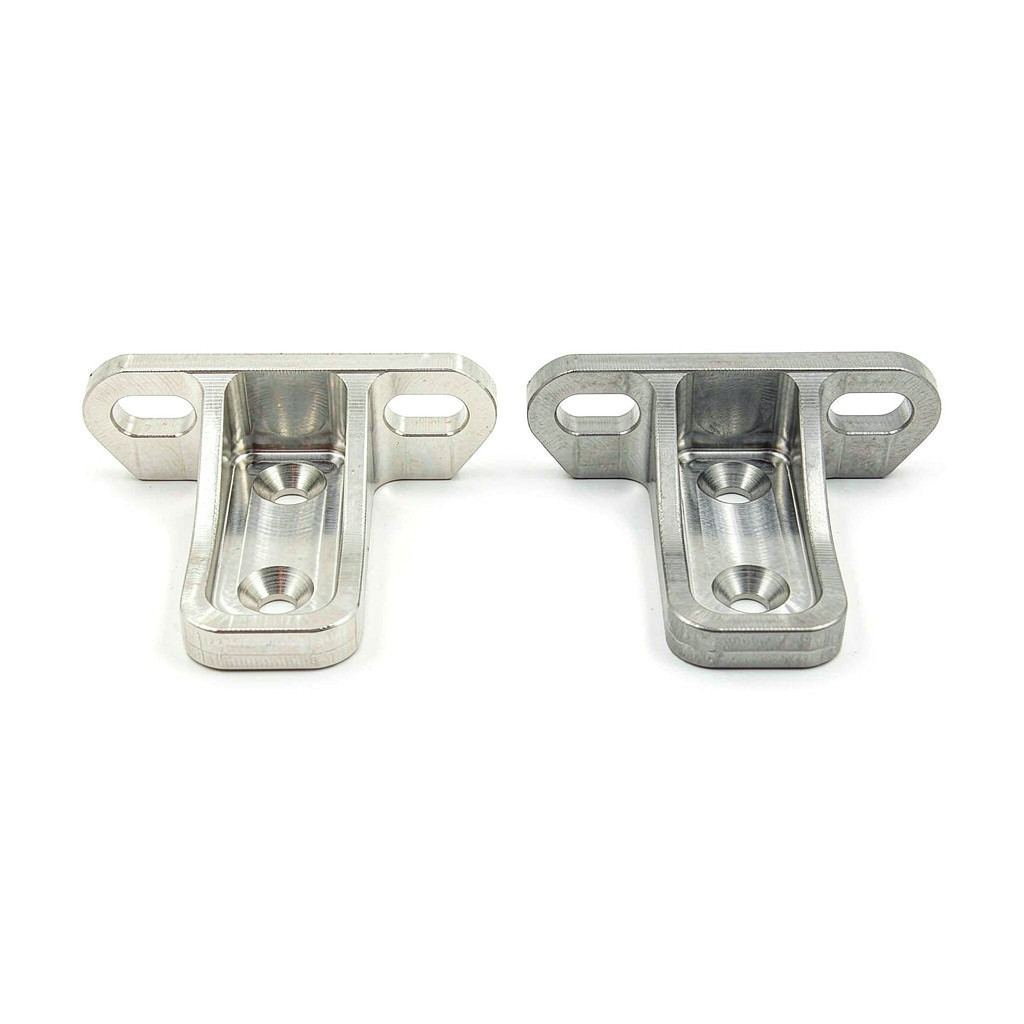
Read the table as a trade-off, not a ranking
7075 is roughly 80% stronger in tensile and yield than 6061, but it surrenders corrosion resistance, weldability and machining ease — and it costs more. For a general bracket that never sees high load, that extra strength is unused cost.
- 6061-T6: ~310 MPa tensile, ~276 MPa yield.
- 7075-T6: ~572 MPa tensile, ~503 MPa yield.
- Both anodize; 7075 appearance may differ.
| Property | 6061-T6 | 7075-T6 |
|---|---|---|
| Tensile strength | ~310 MPa | ~572 MPa |
| Yield strength | ~276 MPa | ~503 MPa |
| Density | ~2.70 g/cm³ | ~2.81 g/cm³ |
| Machinability | Excellent | Good |
| Corrosion resistance | Good–Excellent | Lower |
| Weldability | Good | Poor |
| Anodizing | Very good | Good; finish/color may differ |
| Cost | Lower | Higher |
| Typical use | General industrial | Aerospace / high-load |
Key takeaway: 7075 is stronger, but stronger does not automatically mean better. Specify it only when the design needs its strength-to-weight advantage.
Why 7075 Is Not Always the Better Choice
Choosing 7075 when 6061 would do adds cost and manufacturing friction without improving the part's function.
Load is low, corrosion resistance matters, welding is required, cost must be controlled, easier machining helps, or volume is high.
Lower corrosion resistance, poor weldability, harder machining, higher material and tooling cost, and more careful finishing.
Do not specify 7075 simply because its strength is higher than 6061. Match the alloy to the actual requirement.
Does Aluminum Temper Matter for CNC Machining?
Yes — and this is where many drawings go wrong. Buyers specify both the alloy and the temper, because the same alloy changes dramatically with condition.
The -T6 temper is solution-heat-treated and artificially aged, giving high strength. The -O (annealed) condition is soft, formable and weaker. A 6061-O part will not behave like 6061-T6.
-T651 adds stress-relief by stretching after aging, which reduces residual stress and distortion during machining — important for precision and thin-wall parts.
| Designation | Meaning |
|---|---|
| 6061-T6 | Solution heat-treated and artificially aged |
| 7075-T6 | Solution heat-treated and artificially aged |
| 7075-T651 | T6 plus stress relief by stretching |
| 2024-T3 / T351 | Solution heat-treated, cold-worked / stress-relieved |
| 5052-H32 | Strain-hardened, quarter-hard temper |
The same aluminum alloy can have significantly different mechanical properties depending on temper and processing condition. Always specify alloy + temper together.
Which Aluminum Alloys Are Easiest to CNC Machine?
Machinability affects tool wear, cycle time and surface quality. We describe it qualitatively rather than with single numeric ratings, because machinability percentages depend on the reference baseline.
| Alloy | CNC Machinability | Main Consideration |
|---|---|---|
| 6061 | Excellent | Good all-around choice, low tool wear |
| 7075 | Good | More strength and tool-load considerations |
| 2024 | Good–Moderate | Material and finish trade-offs |
| 5052 | Moderate | More ductile, forming-oriented |
| 6063 | Excellent | Good for finish-sensitive parts |
| 6082 | Good | Structural applications |
We avoid fixed "9/10 vs 7/10" machinability scores because the rating baseline differs between sources and numbers cannot be compared directly without stating the reference.
Which Aluminum Alloy Is Strongest?
Among the commonly CNC-machined alloys discussed here, 7075-T6 is typically the strongest mainstream choice, with 2024 close behind on fatigue.
Highest tensile/yield of the group (~572 / ~503 MPa). Best for high-load structures.
High strength with excellent fatigue performance; common in aerospace skins and structures.
Strong enough for most general parts but not in the same band as 7075/2024.
But: highest strength ≠ best material. Fatigue, corrosion, weldability, cost, machinability and availability all weigh in.
Which Aluminum Alloy Has the Best Corrosion Resistance?
Best choice for corrosive and marine environments; widely used in marine and welded structures.
Good general corrosion resistance for most indoor and outdoor industrial use.
Needs more careful surface protection in aggressive or marine environments.
Which Aluminum Alloy Is Best for Anodizing?
Anodizing is one of the most common CNC finishes. The alloy affects both how well it anodizes and how consistent the appearance is.
| Alloy | Anodizing Consideration |
|---|---|
| 6061 | Excellent general choice |
| 7075 | Can be anodized; appearance may differ |
| 6063 | Very good cosmetic / anodizing characteristics |
| 2024 | Requires appropriate finishing / protection |
| 5052 | Good for corrosion-focused applications |
If cosmetic anodizing is critical, specify the alloy and the desired appearance — not simply "anodized aluminum."
Which Aluminum Alloy Is Most Cost-Effective?
Raw material price is only one part of finished-part cost. Tool wear, cycle time, scrap risk, finishing and inspection all move the total.
| Alloy | Relative Material Cost | CNC Cost Consideration |
|---|---|---|
| 6061 | $ | Low — easy to machine, low scrap risk |
| 6063 | $ | Low |
| 5052 | $$ | Moderate |
| 6082 | $$ | Moderate |
| 2024 | $$–$$$ | Application dependent |
| 7075 | $$$ | Higher material and tooling cost |
We do not publish fixed prices because material and machining cost depend on market, geometry and volume. The cheapest raw material does not always produce the lowest finished-part cost.
Choose Aluminum by Operating Environment
| Environment | Recommended Starting Point |
|---|---|
| Indoor industrial | 6061 |
| Outdoor | 6061 / suitable corrosion protection |
| Marine | 5052 / 5083 |
| High-load aerospace | 7075 / 2024 depending on design |
| Automotive | 6061 / 7075 depending on component |
| Electronics enclosure | 6061 / 6063 |
| Heat sink | 6063 / application-specific grades |
Do not read "5052 is always best for marine" as absolute — combine corrosion, structure, welding and machining method in the decision.
Which Aluminum Is Best for Tight-Tolerance CNC Parts?
Material grade is only one factor in holding tight tolerances. Alloy choice alone does not guarantee ±0.005 mm.
Part size, geometry, wall thickness, heat generation, residual stress, workholding, machining sequence and thermal stability all matter as much as the alloy.
There is no aluminum alloy that guarantees ±0.005 mm simply because of the material grade. It is achieved through process control and inspection.
Which Aluminum Is Best for Thin-Wall CNC Machining?
Thin walls deflect and distort easily. Alloy and machining strategy must be evaluated together.
Higher-strength alloys resist deflection but are harder to cut.
Stress-relieved stock (e.g. 7075-T651) reduces post-machining distortion.
Vacuum fixtures, sharp tools and light passes control deformation.
Do not reduce the decision to "6061 is best for thin walls" — evaluate alloy and process as one system.
Which Aluminum Is Best for Large CNC Machined Parts?
At large size, material condition and stress relief can matter as much as alloy selection.
After significant material removal, 7075 and 6061 plate can behave differently. Stress-relieved stock and stable fixturing reduce post-machining movement.
Plate availability, flatness, thickness and post-machining deformation should be confirmed against the geometry and tolerance.
Aluminum Alloy Recommendations by Industry
Starting points by sector. Actual supply of each grade should be confirmed against Goldcattle's current material list on your RFQ.
7075 / 2024 / 7050
6061 / 7075 / 6082
6061 / 7075
6061 / 6063
5052 / 5083
6063 / conductivity grades
6061
7075
What Happens If You Choose the Wrong Aluminum Alloy?
Unnecessary cost and strength, plus corrosion and finishing trade-offs the part never needed.
Insufficient load capacity, possible deformation or fatigue/performance failure under load.
Machinability is less attractive and deformation / burr control need more attention.
Poor environmental performance in corrosive service without proper finishing.
Material selection should start with function, not alloy popularity.
How Should You Specify Aluminum on a CNC Drawing?
"Aluminum 6061" is not enough. Specify the full material callout so the supplier quotes and machines to the same requirement.
Example: 6061-T6 per specified ASTM / EN material standard, anodized. Or 7075-T6 / T651, with required certification.
- Alloy
- Temper
- Material standard
- Surface finish / heat treatment
- Material certificate requirement
Specific standards should follow the customer drawing and project requirement. We confirm the exact callout on RFQ.
Aluminum Material Certification and Traceability
European and North American buyers care more about provable traceability than marketing claims. A typical flow:
Certified aluminum stock received
Logged on intake
Material cert issued (e.g. EN 10204 3.1)
Machined with batch records
Dimensional & cert verification
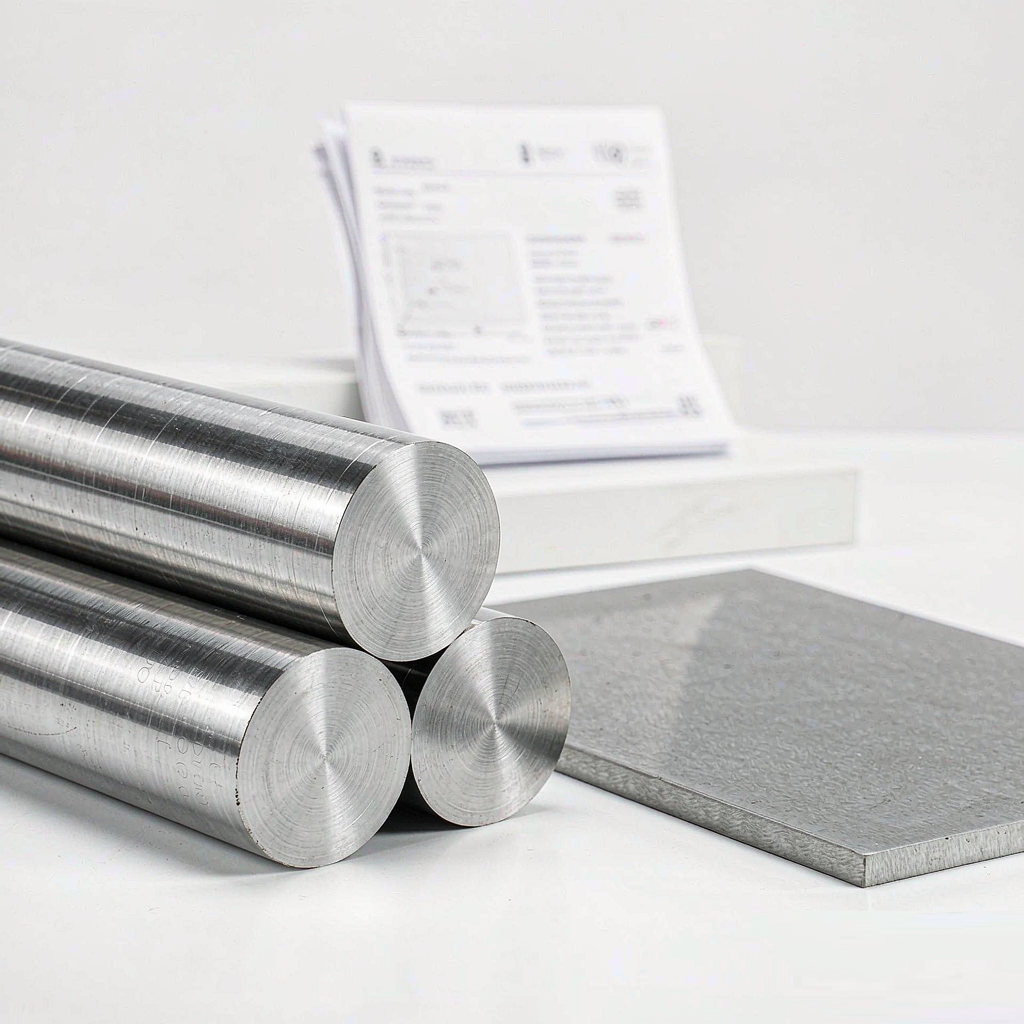
Ask for the certificate, not the slogan
Material certificates and lot-level traceability are what serious procurement teams verify. Confirm the required certificate level and standard on your RFQ so the supply chain is auditable from stock to finished part.
Aluminum CNC Machining Case Studies
Generic capability statements tell you little. Each case below follows Requirement → Material Decision → Manufacturing → Inspection → Result.
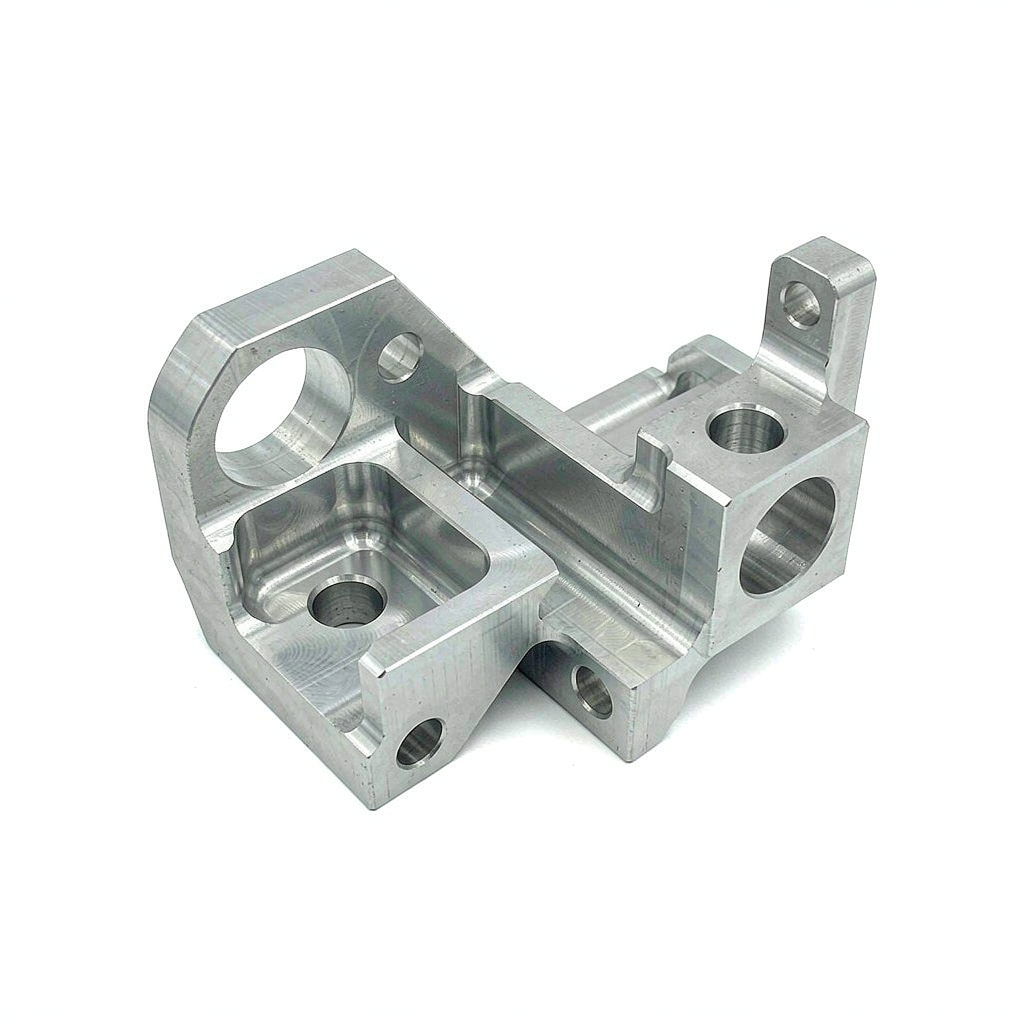
High strength-to-weight requirement, complex pockets, 5-axis machining of critical dimensions, surface treatment and CMM inspection.
General-purpose enclosure with thin walls, anodized finish, tight cosmetic requirements and dimensional inspection.
Larger industrial component where plate condition, flatness and dimensional control after machining were the focus.
Cases illustrate typical capability. Specific grades, tempers and inspections are confirmed per project and drawing.
How to Choose an Aluminum Alloy in 5 Questions
Work through these in order. The first "yes" that fits usually points to your starting alloy.
Yes → 7075 / 2024
Yes → 5052 / 5083 / 6061
Yes → 6061
Yes → 6061 / 6063 depending on geometry and finish
→ Engineer review required. Upload your drawing and we recommend the alloy based on load, environment, machining difficulty, finish and cost.
Buyer Decision Tree
Is strong corrosion needed?
Is weight critical?
Aluminum CNC Machining at Goldcattle
Representative capability for aluminum programs. Each item is confirmed against the specific part, grade and requirement on RFQ — not assumed for every alloy and every part.
| Aluminum grades | 6061 / 7075 / 2024 / 5052 / 5083 / 6063 / 6082* |
| CNC milling | 3 / 4 / 5-axis |
| CNC turning | Available |
| Tight tolerance | Down to ±0.005 mm on qualified features* |
| Surface finish | Anodizing / blasting / polishing / powder coating* |
| Material traceability | EN 10204 3.1 material certificate* |
| Inspection | CMM / dimensional inspection* |
| Volume | Prototypes → low volume → mass production |
*Capability is project- and grade-dependent. Confirm exact grades, tempers, tolerances and certificates on your RFQ.
FAQ
Send us your drawing. We recommend the alloy and temper based on load, environment, machining difficulty, finish and cost — and quote the finished part, not just the material.
Related Guides & Process Pages
Deeper per-alloy detail and data sheets.
When machining aluminum beats casting.
Low-volume production decision guide.
What to verify before you order.
From CAD to validated aluminum parts.
Goldcattle's aluminum CNC capabilities.