CNC Machining vs 3D Printing for Low-Volume Production
A practical decision guide for prototypes, bridge production and low-volume end-use parts.
For low-volume production, CNC machining is generally preferred when parts require tight tolerances, strong isotropic mechanical properties, machined surfaces or production-grade metals. 3D printing is often more economical for complex geometries, highly customized parts, rapid iterations and very small quantities, especially when avoiding tooling or setup costs matters. The best choice depends on material, geometry, quantity, tolerance, surface finish and end-use requirements.
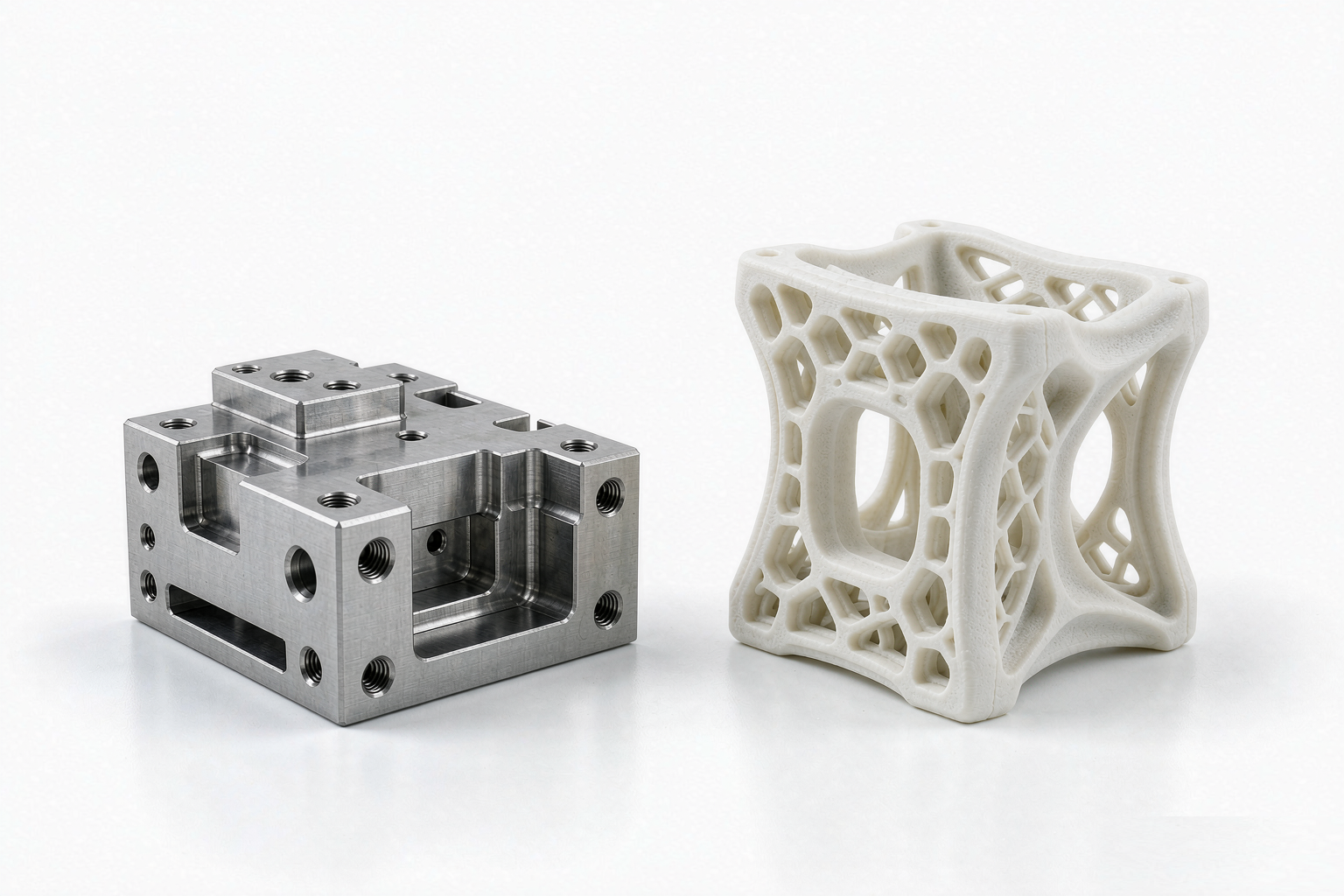
Quick Answer: CNC or 3D Printing?
Choose CNC machining when:
- Tolerance is tight
- Metal is required
- Surface finish matters
- Part strength matters
- Holes and threads must be precise
- Functional production parts are needed
- Geometry is reasonably machinable
Choose 3D printing when:
- Quantity is very low
- Design changes frequently
- Geometry is difficult to machine
- Internal channels are important
- Part consolidation matters
- Tooling must be avoided
- Speed of iteration is critical
Low volume does not automatically mean 3D printing. The right process depends on the complete set of requirements, not just quantity.
Low-Volume Decision Matrix
| Requirement | CNC Machining | 3D Printing |
|---|---|---|
| 1–5 parts | ✅ | ✅ |
| 5–20 parts | ✅ | ✅ |
| 20–100 parts | ✅ | ✅ |
| 100–500 parts | ✅ | ⚠️ Compare |
| No tooling | ✅ | ✅ |
| Fastest iteration | ✅ | ✅ |
| Complex internal geometry | ⚠️ | ✅ |
| Tight dimensional tolerance | ✅ | ⚠️ |
| Metal end-use parts | ✅ | ✅* |
| Plastic prototype | ✅ | ✅ |
| Production-grade surface | ✅ | ⚠️ Post-processing |
| Design changes | ✅ | ✅ |
| Functional prototype | ✅ | ✅ |
| High-strength isotropic parts | ✅ | ⚠️ Process-dependent |
| Large solid metal parts | ✅ | ⚠️ |
| Custom one-off geometries | ✅ | ✅ |
* Metal 3D printing depends on the specific additive technology, such as SLM / DMLS / metal binder jetting, and the part requirements.
CNC Machining vs 3D Printing at a Glance
| Factor | CNC Machining | 3D Printing |
|---|---|---|
| Process type | Subtractive | Additive |
| Starting material | Billet, bar, plate | Filament, resin, powder |
| Tooling / setup | Fixture and CAM setup | Build plate and slicing |
| Initial cost | Low to moderate | Low to moderate |
| Unit cost trend | Relatively stable | Stable; material-driven |
| Dimensional accuracy | Excellent | Technology-dependent |
| Material range | Very broad | Broad and growing |
| Design changes | Easy | Easy |
| Geometric freedom | Limited by tool access | Very high |
| Surface finish | Production-grade | Layered; often post-processed |
| Mechanical properties | Predictable bulk properties | Process-dependent, anisotropic possible |
What Determines the Best Process for Low-Volume Production?
Quantity is only one variable. The same low-volume quantity can lead to different process choices depending on the part.
Simple aluminum bracket
Geometry is simple and tolerances matter. → CNC machining
Complex nylon manifold
Internal channels and organic shape. → 3D printing
316L precision valve
Tight bore, threads and sealing face. → CNC machining
Titanium lattice component
High geometric complexity. → Metal additive manufacturing
The right manufacturing process depends on volume + geometry + material + tolerance + function.
CNC Machining vs 3D Printing Cost for Low-Volume Production
Neither process has a fixed unit price. The total project cost depends on the cost structure of each route.
CNC Cost Structure
- Material
- Machine setup
- Programming
- Machining time
- Tooling / tooling consumption
- Finishing
- Inspection
3D Printing Cost Structure
- Material
- Machine time
- Build setup
- Support structures
- Post-processing
- Machine occupancy
- Inspection
CNC tends to have higher preparation and machining costs for geometrically complex parts, while 3D printing can eliminate much of the dedicated setup associated with subtractive machining. But printed parts may require significant post-processing, support removal and finishing.
How Production Quantity Changes the Cost
The cost relationship between CNC and 3D printing changes with geometry and process. The chart below shows two representative scenarios.
Scenario A: Simple metal part
For a simple, machinable metal part, CNC often has the lower total project cost once setup is spread across the batch.
Scenario B: Complex polymer geometry
For a highly complex geometry, 3D printing can remain the lower-cost route even at higher quantities because it avoids extensive machining time.
These curves are illustrative. The real crossover must be calculated for each specific part, material and batch size.
How to Calculate the CNC vs 3D Printing Break-Even Point
Use the following formulas to estimate the crossover quantity for a specific part.
CNC total cost
Setup + Quantity × Unit Cost
3D printing total cost
Setup + Quantity × Unit Cost
Break-even quantity
Tooling / Setup Difference ÷ Unit Cost Difference
Worked example
- CNC unit cost: $12 / pc
- 3D printing unit cost: $6 / pc
- CNC setup: $600
- 3D printing setup + post-processing: $300
Setup difference = $600 − $300 = $300
Unit cost difference = $12 − $6 = $6
Break-even ≈ $300 ÷ $6 = 50 parts
This is an example only. Actual process economics require a drawing-based review and real quotes.
Which 3D Printing Technology Are You Comparing With CNC?
Do not treat 3D printing as a single process. The comparison changes with the technology.
FDM / FFF
Extrudes thermoplastic filament. Best for quick, low-cost prototypes and larger plastic parts where fine surface finish is less critical.
SLA / MSLA
Cures liquid resin with light. Ideal for fine detail, cosmetic prototypes and small features requiring smooth surfaces.
SLS
Fuses polymer powder. Suits functional parts, complex geometries and builds that do not require extensive support structures.
SLM / DMLS
Fuses metal powder with a laser. Used for low-volume metal components, complex internal channels and part consolidation.
Goldcattle supports the technologies that match its actual equipment and qualified supplier base. Always confirm available processes for your specific material and tolerance requirements.
CNC Machining vs 3D Printing Tolerances
| Requirement | CNC Machining | 3D Printing |
|---|---|---|
| Tight dimensional control | ✅ | ⚠️ |
| Fine holes | ✅ | ⚠️ |
| Threads | ✅ | ⚠️ |
| Bearing fits | ✅ | ⚠️ |
| Complex organic surfaces | ✅ / ⚠️ | ✅ |
| Flatness | ✅ | ⚠️ |
| Small detailed features | ✅ | ✅* |
3D printing dimensional accuracy depends heavily on the printing technology, orientation, material, build parameters and post-processing. Do not assume a universal accuracy value for all additive processes. For precision features, CNC machining or a hybrid CNC-finishing step is often required.
CNC Machining vs 3D Printing: Material Selection
| Material / Category | CNC | 3D Printing |
|---|---|---|
| Aluminum | ✅ | ✅* |
| Stainless steel | ✅ | ✅* |
| Titanium | ✅ | ✅* |
| Brass | ✅ | ⚠️ |
| PEEK | ✅ | ✅* |
| Nylon | ✅ | ✅ |
| ABS | ✅ | ✅ |
| PC | ✅ | ✅ |
| PLA | ✅ | ✅ |
| Carbon-fiber-filled polymers | ⚠️ | ✅* |
Material availability alone is not enough. The material's process-specific mechanical and thermal properties must also match the application.
CNC vs 3D Printing: Strength and Durability
CNC machining
Parts are machined from solid billet, bar or plate. Mechanical properties are generally closer to the documented bulk-material values because the material starts as a fully dense, homogenous stock.
3D printing
Mechanical performance can be affected by layer orientation, infill strategy, porosity, build direction, bonding between layers and any post-build heat treatment.
For mechanically demanding end-use components, CNC may offer more predictable bulk-material properties, while advanced metal additive processes can also produce production-grade parts when properly qualified.
CNC Machining vs 3D Printing Surface Finish
| Requirement | CNC Machining | 3D Printing |
|---|---|---|
| Machined finish | ✅ | ❌ |
| Visible layer-free surface | ✅ | ⚠️ Post-processing |
| Fine cosmetic finish | ✅ | ✅* |
| Internal surface quality | ✅ / process-dependent | ⚠️ |
| Brushed / anodized metal | ✅ | ✅* |
| Mold-like texture | ❌ | ❌ / post-process |
3D printed parts can often be improved through sanding, bead blasting, vapor smoothing, machining, polishing or coating. The important comparison is not the raw print surface but the finished-part surface.
Which Process Handles Complex Geometry Better?
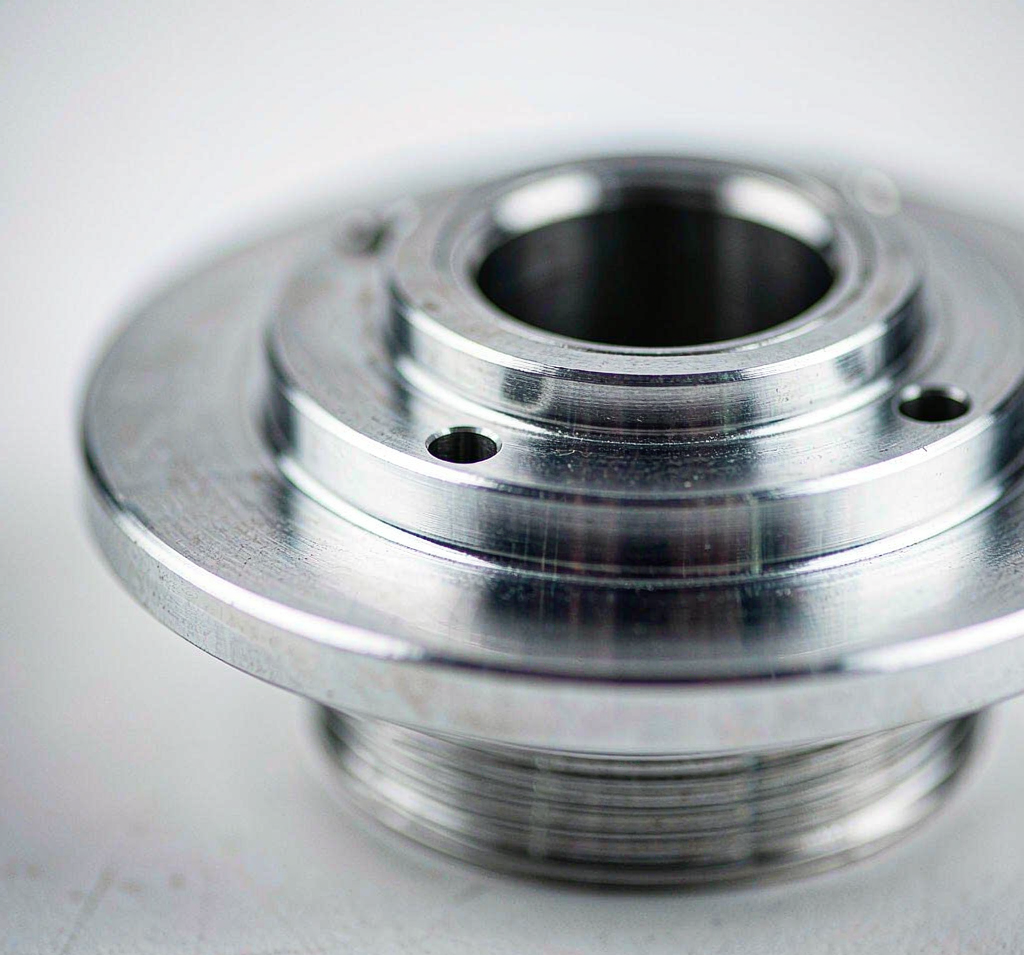
CNC machining is strong for
- Precise holes
- Pockets and planar surfaces
- Shafts and threads
- Precision interfaces
Limits: tool access, internal cavities, deep enclosed channels, highly organic shapes.
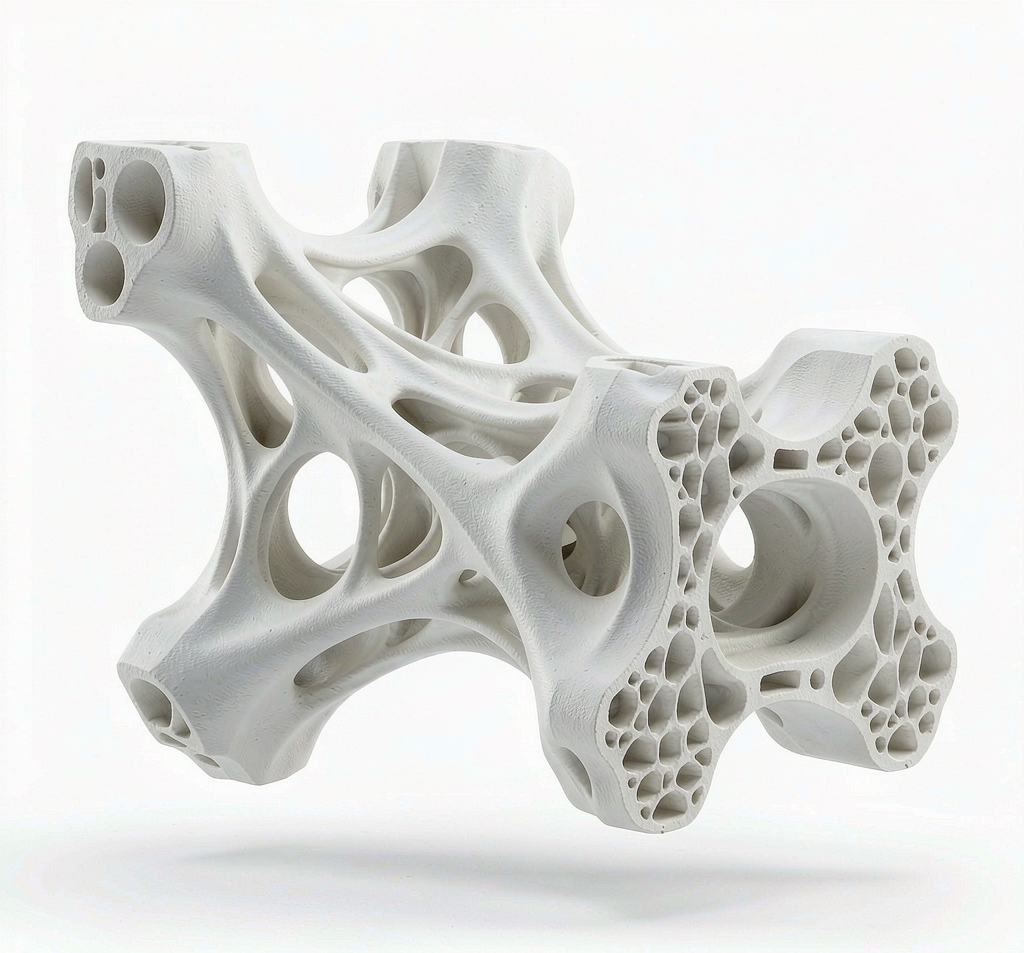
3D printing is strong for
- Lattice structures
- Topology optimization
- Organic shapes
- Internal channels
- Part consolidation
- Hollow structures
3D printing often wins when geometric complexity is high but volume is low.
CNC vs 3D Printing for Design Changes
| Situation | Better choice |
|---|---|
| Daily CAD changes | 3D printing |
| Weekly engineering validation | 3D printing / CNC |
| Tight functional prototype | CNC |
| Final design already approved | Compare production route |
| Many prototype revisions | 3D printing |
| Final metal component | CNC often stronger choice |
CNC is generally change-friendly because a CAD update leads to a new toolpath. 3D printing is also change-friendly because it only requires new slicing. Both processes support rapid iteration; the difference appears when the part needs metal, tight tolerance or functional validation.
CNC Machining vs 3D Printing Lead Time
CNC workflow
- CAD
- CAM
- Setup
- Machining
- Inspection
3D printing workflow
- CAD
- Slicing
- Build
- Support removal
- Post-processing
- Inspection
3D printing can offer a faster path to highly complex prototypes, while CNC can be faster for simple, accessible geometries because it avoids print-specific post-processing. Avoid quoting fixed day ranges; real lead time depends on part complexity, material availability and current shop loading.
Don't Compare Printing and CNC Without Post-Processing
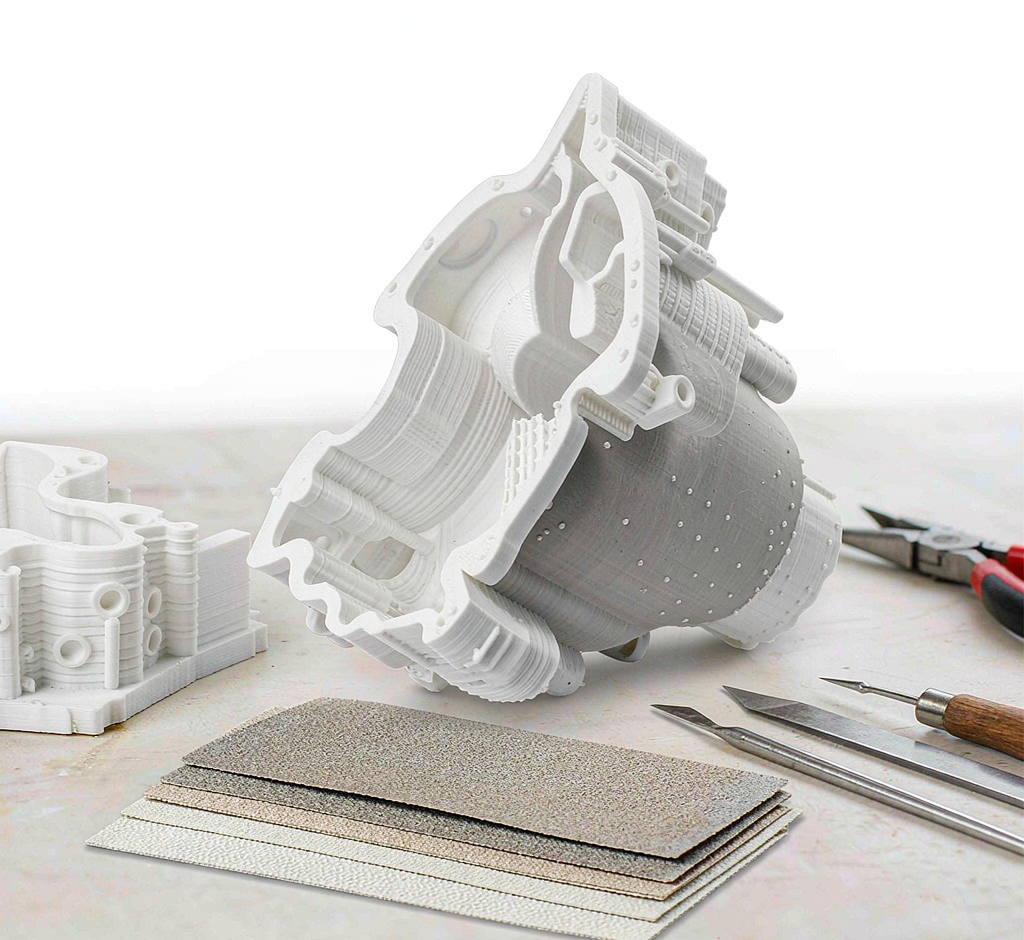
3D printing may require
- Support removal
- Sanding
- Machining
- Polishing
- Heat treatment
- Deburring
- Coating
CNC may require
- Deburring
- Anodizing
- Plating
- Polishing
- Heat treatment
Compare finished-part cost, not just machine output cost. Post-processing can significantly change the economics of both routes.
Is the Part a Prototype or a Production Part?
Prototype only
3D printing is often attractive for form and fit checks.
Functional prototype
CNC or advanced 3D printing depending on load, tolerance and material.
Bridge production
CNC or 3D printing depending on volume and qualification requirements.
Low-volume end-use
CNC is often attractive for precision metal components; advanced additive may be ideal for complex geometries.
When Is CNC Machining Better Than 3D Printing?
When Is 3D Printing Better Than CNC Machining?
When CNC Machining and 3D Printing Work Together
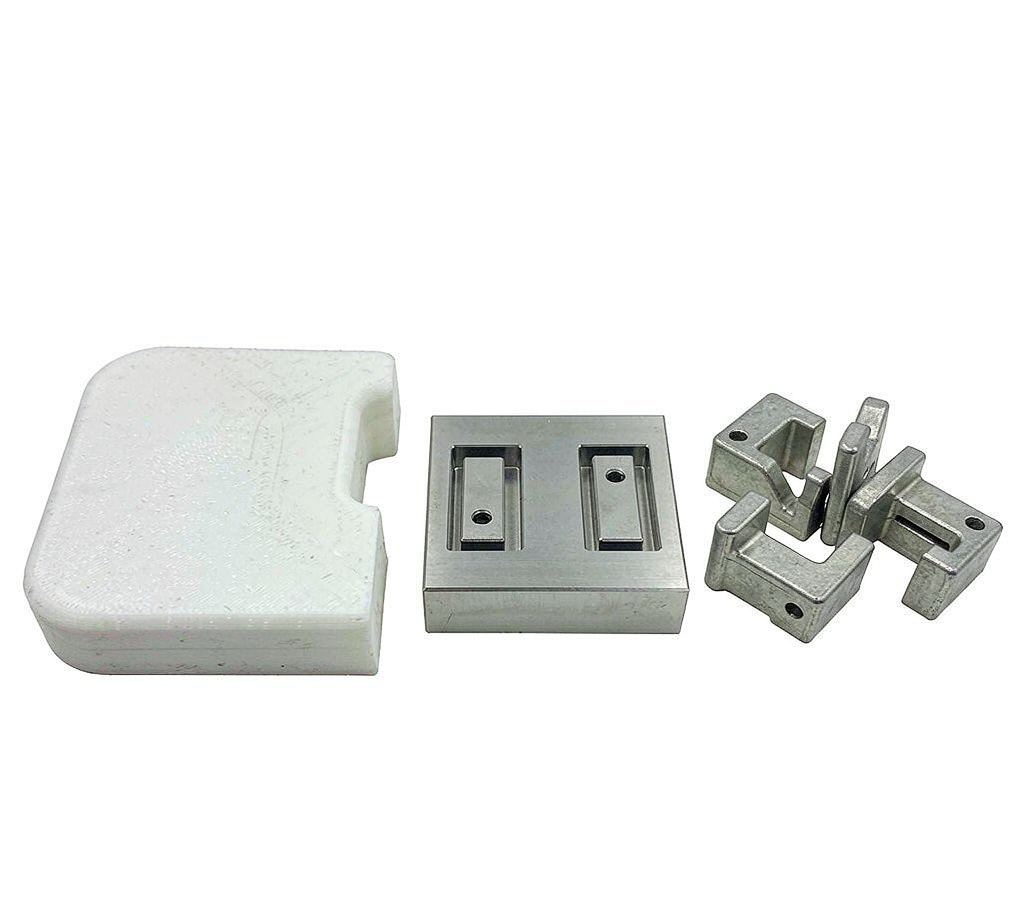
For many product-development programs, the most efficient path is 3D printing for early geometry validation, CNC machining for precision and functional validation, and the final production process selected after design and volume stabilize.
CNC vs 3D Printing by Production Volume
| Quantity | CNC | 3D Printing | Recommended approach |
|---|---|---|---|
| 1 | ✅ | ✅ | Depends on geometry |
| 5 | ✅ | ✅ | Compare material + complexity |
| 10 | ✅ | ✅ | CNC for precision / print for complexity |
| 25 | ✅ | ✅ | Project specific |
| 50 | ✅ | ✅ | Cost comparison |
| 100 | ✅ | ✅ | Strongly compare finished-part cost |
| 250 | ✅ | ⚠️ | CNC often increasingly attractive |
| 500 | ✅ | ⚠️ | Depends heavily on technology/material |
These ranges are screening guidelines, not universal break-even rules.
Real-World Low-Volume Manufacturing Examples
Example 1 — 10 aluminum brackets
Material: 6061 | Quantity: 10 | Geometry: Simple | Tolerance: ±0.01 mm critical
→ CNC machining
Example 2 — 10 complex nylon manifolds
Quantity: 10 | Geometry: Internal channels + organic shape
→ SLS / suitable additive process
Example 3 — 25 316L precision components
Quantity: 25 | Features: Tight bore, threads, sealing face
→ CNC machining
Example 4 — 20 complex titanium lattice components
Quantity: 20 | Geometry: High complexity
→ Metal additive manufacturing
Actual process selection requires drawing and application review.
CNC vs 3D Printing Decision Scorecard
Rate each requirement for your part. Higher score does not automatically mean the correct choice; functional requirements always take priority over the score.
| Requirement | CNC Score | 3D Printing Score |
|---|---|---|
| Tight tolerance | 5 | 3 |
| Complex geometry | 3 | 5 |
| Low quantity | 4 | 5 |
| Metal strength | 5 | 4 |
| Surface finish | 5 | 3 |
| Design changes | 4 | 5 |
| Production scalability | 5 | 4 |
| No tooling | 5 | 5 |
What Should You Ask a CNC or 3D Printing Supplier?
| Question | Why it matters |
|---|---|
| What process are you using? | Technology affects properties |
| What material grade? | Avoid generic material claims |
| What tolerances can you hold? | Confirms capability |
| How are dimensions inspected? | Quality evidence |
| What post-processing is included? | Finished-part cost |
| Can you provide inspection reports? | Verification |
| What is the repeatability? | Low-volume consistency |
| What happens when design changes? | Prototype flexibility |
| Can you scale production later? | Supplier continuity |
Why Choose Goldcattle for Low-Volume Manufacturing?
We do not just sell CNC machining or 3D printing. We help you select the appropriate manufacturing route based on volume, material, geometry, tolerance and total cost.
Goldcattle provides CNC machining and 3D printing under one engineering workflow, supported by inspection, finishing and logistics coordination. When your volume grows, we can also help you transition to die casting or injection molding for higher-volume production.
Frequently Asked Questions
Is CNC machining cheaper than 3D printing for low-volume production?
It depends on geometry, material and quantity. 3D printing can be more economical for very low quantities of complex geometries because it avoids dedicated tooling. CNC machining can be more cost-effective for simple metal parts or when tight tolerances and production-grade surfaces are required.
Is 3D printing better for low-volume production?
3D printing is often a strong option for very low quantities, rapid iterations and complex geometries. However, low volume alone does not automatically make 3D printing the best choice.
What is the cheapest manufacturing process for 10 parts?
For 10 simple metal brackets, CNC may be cheapest. For 10 complex polymer housings with internal channels, 3D printing may be cheaper. Send the drawing for a process-specific quote.
Should I CNC machine or 3D print my prototype?
Choose 3D printing for fast form-and-fit checks and complex shapes. Choose CNC when the prototype must validate tolerances, threads, material properties or functional loads.
Is CNC better for metal low-volume parts?
Often yes, when tight tolerances, machined surfaces and predictable bulk-material properties are required. Metal 3D printing is also viable for complex geometries when properly qualified.
Is 3D printing cheaper for complex geometries?
Generally yes. As geometric complexity increases, CNC machining time and fixture requirements can grow faster than 3D printing build time.
What quantity makes CNC machining more economical?
There is no universal threshold. For simple machinable geometries, CNC can be competitive from very low quantities. For complex parts, 3D printing may remain attractive to higher volumes.
Which process has tighter tolerances?
CNC machining generally provides tighter and more predictable dimensional control. 3D printing accuracy depends on technology, orientation, material and post-processing.
Which process produces stronger parts?
CNC parts machined from solid stock typically have predictable isotropic bulk properties. 3D printed part strength depends on layer bonding, orientation and process parameters.
Can 3D printed parts be CNC machined?
Yes. Many parts are printed near-net shape and then CNC machined to achieve precision features, smooth surfaces or threaded holes.
Can CNC and 3D printing be used together?
Yes. A common workflow is 3D printing for early geometry validation, CNC for precision and material validation, and the final production process selected after design stabilizes.
Can I start with 3D printing and move to CNC production?
Yes. This is a practical path when geometry is uncertain early in development and precision requirements become clearer later.
Which process has a shorter lead time?
3D printing is often faster for complex prototypes. CNC can be faster for simple, accessible geometries because it avoids print-specific post-processing.
Does 3D printing require tooling?
3D printing does not require a dedicated die or mold, but it does require build plate setup, supports and slicing preparation.
Which process produces less material waste?
3D printing can reduce material removal for certain geometries, but real material efficiency depends on the printing process, support requirements and nesting strategy. CNC waste can often be recycled.
What is the difference between FDM, SLA, SLS and metal 3D printing?
FDM extrudes filament for quick plastic prototypes. SLA cures resin for fine detail. SLS fuses polymer powder for functional complex parts. SLM/DMLS fuses metal powder for low-volume metal components.
Not Sure Whether CNC Machining or 3D Printing Is Right for Your Part?
Send us your CAD file, drawing, annual volume and target quantity. Our engineers can compare the two processes and recommend the more economical manufacturing route.
Accepted files: STEP, STP, IGES, X_T, DWG, PDF, JPG, PNG
Prototype to low-volume production, one engineering workflow.