CNC Surface Finishing Services for Precision Machined Parts
We provide coordinated surface finishing for CNC machined parts, from as-machined surfaces to anodizing, hard anodizing, bead blasting, polishing, brushing, passivation, electropolishing, plating, powder coating and other application-specific treatments. The right finish depends on the base material, corrosion environment, wear requirements, appearance, dimensional requirements and applicable specification.
CNC Surface Finishing Capabilities at a Glance
The matrix below matches each finish to the materials it suits, the job it does, and how it affects dimensions. It is the starting point for specifying a finish — not a finish catalog. Use it together with the selection framework and the material compatibility matrix further down.
| Finish | Best For | Common Materials | Main Benefit | Dimensional Impact |
|---|---|---|---|---|
| As Machined | Functional / internal parts | Most materials | Lowest cost | Minimal |
| Bead Blasting | Uniform matte appearance | Aluminum / steel / stainless | Cosmetic + texture | Can alter surface texture |
| Anodizing (Type II) | Corrosion + color (aluminum) | Aluminum | Protection + appearance | Coating adds thickness |
| Hard Anodizing (Type III) | Wear resistance | Aluminum | Harder surface | More dimensional impact |
| Brushing | Cosmetic metal surfaces | Stainless / aluminum | Directional satin appearance | Low |
| Polishing | Smooth / reflective surface | Stainless / aluminum / brass | Appearance + smoothness | Material removal |
| Passivation | Corrosion resistance | Stainless steel | Surface cleanliness / corrosion resistance | Very low |
| Electropolishing | Smooth stainless surfaces | Stainless steel | Cleanability + corrosion performance | Material removal |
| Powder Coating | Durable colored coating | Aluminum / steel | Protection + color | Coating thickness |
| Electroless Nickel | Wear / corrosion | Steel / aluminum / others* | Functional coating | Coating thickness |
| Zinc Plating | Corrosion protection | Steel | Sacrificial protection | Coating thickness |
| Black Oxide | Black appearance + mild protection | Steel | Low-reflective finish | Low |
| PVD | Wear / appearance | Various metals* | Hard decorative coating | Usually low |
* Specific material compatibility depends on the actual process and should be confirmed against the project. The right match is material + function + finish + specification, not the longest finish list.
What Is the Difference Between Surface Roughness, Surface Treatment and Cosmetic Finish?
Procurement teams often use these three terms interchangeably. They are not the same, and mixing them up is the most common cause of a finish that does not match expectations. State all three separately on the drawing.
Surface Roughness
How rough or smooth the actual surface is — a measurable property of the machined or treated surface.
e.g. Ra 0.8 µmSurface Treatment / Coating
A process that adds, converts or removes surface material — changes corrosion, wear or appearance.
e.g. AnodizingCosmetic Appearance
How the finished part looks — color, uniformity, grain direction, scratch limits, under defined light.
e.g. Black anodized, uniform matte, no visible scratches"Anodized black" is not a roughness specification. "Bead blasted" is not a roughness specification. Roughness comes from machining or polishing; treatment and appearance come from the finishing step. The final result is the combination of both. Our CNC Machining RFQ Guide explains how to separate surface roughness, surface treatment and cosmetic acceptance in one request.
How to Choose the Right Surface Finish
Work through these six steps in order. The answer is rarely "the best finish" — it is the finish that fits your material, function and dimensions.
Base material
What is the part made from?
Surface function
What must the surface do?
Appearance
How should it look?
Critical dimension
Any bore, thread, seal or mating face?
Roughness
What Ra / Rz is required?
Specification
Any standard to meet?
If a critical dimension exists, decide up front whether the finish adds or removes material — that drives machining allowance and masking, not a last-minute note.
As-Machined Finish
As-machined is not "no finish." It is a defined condition: the CNC-produced surface is left without a subsequent coating or decorative treatment. Tool marks are normally visible and the roughness depends on the machining process.
Advantage: Lowest finishing cost — no extra process, lead time or risk.
Consideration: Tool marks are normally visible; roughness varies with tool, feed and pass. As-machined roughness is typically in a reference range such as Ra 1.6–6.3 µm, but treat that as a planning range, not a guarantee for every CNC surface — confirm the achievable Ra for your geometry and toolpath.
For many functional parts, as-machined is the correct, economical choice. Specify a roughness only where surface texture affects function; otherwise leave it as-machined and save cost.
Anodizing for CNC Aluminum Parts
Anodizing is an electrochemical conversion of the aluminum surface into a controlled oxide layer. It is the most common finish for aluminum CNC parts because it adds corrosion resistance and accepts color. There are two families buyers should know.
Type II Anodizing
Best for cosmetic parts, corrosion resistance, consumer and electronics products, brackets and housings. Type II gives a decorative, corrosion-protective coating and accepts a broad color range.
Type III Hard Anodizing
Best for wear resistance, sliding parts, and aerospace / industrial components. Type III (hard coat) produces a thicker, harder layer with stronger wear performance, at a larger dimensional impact and a more limited color range.
| Requirement | Type II | Type III (Hard) |
|---|---|---|
| Appearance | Excellent | Good |
| Color options | Broad | More limited |
| Corrosion protection | Good | Excellent |
| Wear resistance | Good | Excellent |
| Coating thickness | Lower | Higher |
| Tight dimensional fit | Account for coating | Account for carefully |
Type III is not "always better." Select Type III when wear resistance and coating thickness justify the cost and dimensional allowance. Where color consistency and appearance lead, Type II is usually the right call. Anodizing adds thickness to all surfaces — critical bores and threads should be masked or machined undersize.
Will Surface Finishing Change Part Dimensions?
Yes. Some processes add material, some remove material, and some change only the surface condition. Critical mating dimensions should be reviewed before finishing, so the machine allowance and masking are planned in.
Stating "surface finish does not affect dimensions" is incorrect for many processes. Build the finish into the tolerance stack-up: machine undersize where a coating is added, mask where coating must not enter.
Stainless Steel Passivation
Passivation chemically treats cleaned stainless steel to promote its protective passive surface condition and improve corrosion resistance. It is a surface-conditioning step, not a coating — so dimensional change is minimal.
ASTM A967 / A967M covers chemical passivation treatments for stainless steel parts and the confirmation tests used to verify the result. Where your drawing or purchase order specifies ASTM A967, we review the applicable class and confirmation test and plan production and inspection accordingly. Confirm the required class and test at quotation — we do not claim blanket "ASTM A967 compliance" unless the specific class and test are part of the agreed process.
Passivation is most often paired with machined 316L / 304 parts for marine, medical, food and chemical service. See our Stainless Steel CNC Machining page for material and application context.
Electropolishing vs Mechanical Polishing
Both make stainless steel smoother, but they are different processes with different purposes. Confusing them leads to the wrong spec.
| Mechanical Polishing | Electropolishing | |
|---|---|---|
| Process | Mechanical abrasion | Electrochemical removal |
| Main goal | Smooth / shiny appearance | Smooth + cleanable surface |
| Stainless steel | ✅ | ✅ |
| Removes material | Yes | Yes |
| Typical use | Cosmetic | Medical / hygienic / precision |
| Surface treatment type | Mechanical | Electrochemical |
Electropolishing removes a thin surface layer electrochemically to improve smoothness, cleanability and corrosion performance — it is not simply "making stainless shine." It is the common choice for hygienic and medical stainless surfaces.
Bead Blasting / Media Blasting
Bead blasting propels a fine media at the part to produce a uniform matte or satin texture. Buyers should think about three things, not just "matte."
Appearance
Uniform matte / satin texture across the part.
Function
Can mask minor machining marks and give consistent texture.
Risk
Edges and dimensions can be affected by media, pressure and exposure.
Masking of critical bores, threads and mating surfaces should be specified where needed, so blasting does not change a feature that must stay to size.
Brushed / Satin Finish
Brushing produces a directional grain. For EU / US customers the deciding detail is usually grain direction, not merely "brushing available."
Brushing suits stainless steel enclosures, consumer products, electronics, and kitchen / appliance parts. Specify the grain direction on the drawing — consistent orientation across visible faces is what reads as a quality brushed finish. Scratch direction, visible orientation and edge condition should be part of the cosmetic acceptance note.
Polishing and Buffing
Do not stop at "polishing." Where surface function depends on roughness, specify the Ra — polishing with no roughness target is not a controllable specification.
Reflective or near-mirror surfaces are achievable on stainless, aluminum and brass, but the actual result depends on the material, geometry and polishing route. A reference capability such as Ra 0.025–0.4 µm can be quoted for suitable parts, but state it as a target to confirm against your geometry — not a universal guarantee for every polished feature.
Electroplating and Electroless Plating
Plating adds a metal coating for corrosion, wear or appearance. Each type has a different job; all share one rule — the coating thickness, substrate, masking and post-treatment must be specified with the process.
Electroless Nickel Plating
For wear, corrosion, a uniform-thickness functional coating and build-up of dimension. Deposits evenly, which helps on complex shapes.
Zinc Plating
Mainly for steel corrosion protection — a sacrificial layer that slows rust.
Nickel Plating
Balances corrosion, wear and appearance.
Chrome Plating
Mostly decorative, with wear and hardness benefits where specified.
All coatings add thickness and change dimensions. Critical features should be masked or machined to allow for the deposit.
Powder Coating
Powder coating gives a durable, colored, corrosion-resistant layer suited to outdoor and industrial use.
The key buyer point: powder coating is relatively thick compared with many anodizing or conversion processes, so dimensional interfaces may require masking or post-processing. Design the allowance for the coating thickness, or plan to mask and re-machine interfaces.
Black Oxide
Black oxide gives carbon and alloy steel a black, low-reflective appearance with relatively small dimensional change.
Black oxide itself provides limited corrosion protection and is often supplemented by oil or another protective treatment. Do not specify it as "corrosion resistant" on its own — pair it with the right post-treatment and environment.
Chemical Conversion Coating / Alodine
Chemical conversion coatings are common on aluminum where a balance of corrosion resistance and electrical conductivity is needed — including aerospace-related applications.
This is a professional search term EU / US buyers use, and a different choice from anodizing where conductivity must be preserved. Confirm applicability and the exact specification for your project.
PVD and Other Functional Coatings
PVD (physical vapor deposition) and similar processes apply a hard, thin functional or decorative coating to suitable metals — used for wear resistance and appearance.
These coatings are usually low in dimensional impact but material- and geometry-specific. Treat them as a qualified, application-specific option rather than a default finish, and confirm compatibility with the base material.
Which Surface Finish Works With Which Material?
This is the table to bookmark. It matches each finish to the materials it suits. Build the finish from your actual material and process chain — do not assume any finish works on any material.
| Finish | Aluminum | Stainless | Steel | Brass / Copper | Titanium |
|---|---|---|---|---|---|
| As Machined | ✅ | ✅ | ✅ | ✅ | ✅ |
| Anodizing | ✅ | — | — | — | Limited* |
| Hard Anodizing | ✅ | — | — | — | Limited* |
| Bead Blasting | ✅ | ✅ | ✅ | ✅ | ✅ |
| Polishing | ✅ | ✅ | ✅ | ✅ | ✅ |
| Brushing | ✅ | ✅ | ✅ | ✅ | ✅ |
| Passivation | — | ✅ | — | — | — |
| Electropolishing | — | ✅ | Limited* | — | — |
| Black Oxide | — | Limited* | ✅ | — | — |
| Powder Coating | ✅ | ✅ | ✅ | Limited* | Limited* |
| Electroless Nickel | ✅* | ✅* | ✅ | ✅* | ✅* |
Confirm the exact compatibility against your material grade and process chain. This table reflects a typical finishing capability, not a universal guarantee for every alloy.
Which Surface Finish Is Best for Your Application?
Start from the problem, not the finish name. Match the need to the finish.
| Application | Recommended Finish |
|---|---|
| Electronics housings | Anodizing / powder coating |
| Aerospace aluminum | Anodizing / conversion coating* |
| Medical stainless steel | Passivation / electropolishing |
| Marine parts | Anodizing / passivation / suitable plating |
| Industrial wear parts | Hard anodizing / electroless nickel |
| Consumer products | Brushing / polishing / anodizing |
| Machine fixtures | As-machined / black oxide |
| Outdoor equipment | Powder coating / suitable anodizing |
* Specific standard depends on the project requirement. Pair the application with the material and the dimensional constraints before locking the finish.
Surface Roughness: Ra, Rz and Specification
Do not specify "smooth surface" alone. Use a measurable roughness requirement when surface texture affects function.
Ra
Arithmetic average roughness — the most common single parameter buyers see on drawings. Easy to quote, but it is only one number for the surface.
Rz
Average maximum height of the profile — captures peak-to-valley variation. Useful when scratches or chip seals matter more than the average.
ISO 21920-1:2021 and ISO 21920-2:2021 define surface texture indication and parameters. Specify surface texture per the applicable drawing standard / ISO 21920 rather than an undefined "smooth." Typical planning ranges we work to:
These are reference capabilities, not a guarantee for every feature. Material, geometry and the polishing or machining route set the achievable value — confirm Ra / Rz against your drawing.
Masking Critical Features During Surface Finishing
A finish that enters a bore, thread or seal face can scrap an otherwise good part. Specify masking on the drawing where coating or treatment must not reach.
- Threads
- Bearing bores
- Sealing surfaces
- Electrical contact areas
- Datum features
- Press-fit surfaces
Masking adds a step and a cost, but it is far cheaper than a rejected batch. Call out masked features explicitly rather than assuming the finisher will know.
Coating Thickness and Dimensional Control
Each process handles dimensions differently, and that must be planned before finishing.
Identify critical dimensions before finishing so machining allowance and masking can be planned. That is the difference between a finish page and a finish capability page.
Cosmetic Requirements and Color Control
"No scratches" is not a spec. Define what cosmetic acceptance means, and for color, name the reference.
For production cosmetic parts, define the color reference, allowable variation, surface texture and inspection lighting where color consistency is critical. Naming only "Black / Red / Blue" leaves too much undefined.
Surface Finish Quality Control
Different finishes are verified differently. The flow below is the typical path; the checks applied depend on the finish and the inspection plan.
* Thickness and roughness checks are applied per the agreed inspection plan, not "100% on every part" by default. Tell us which checks you need documented.
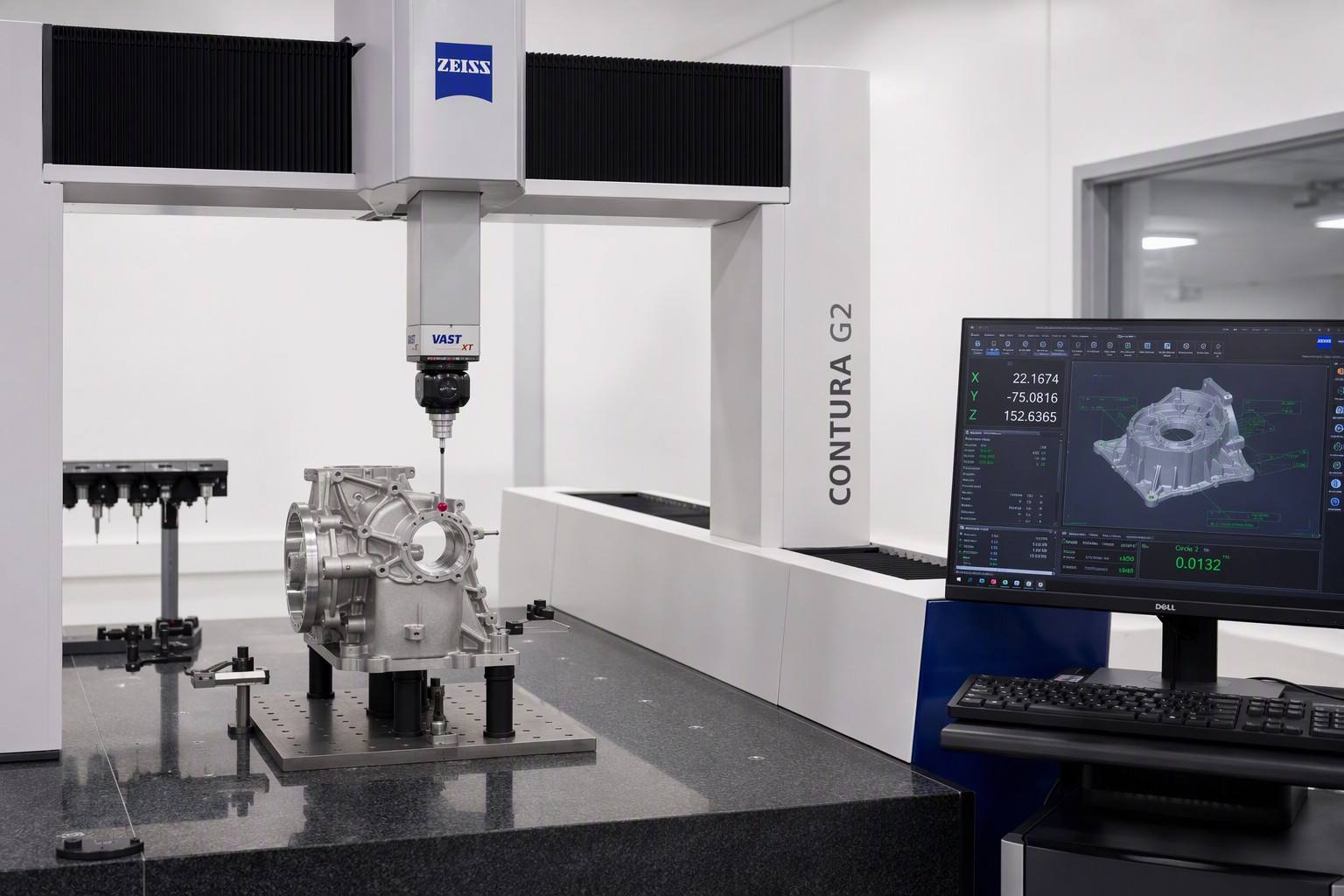
Surface Finish Inspection and Documentation
What can be documented per finish. Ask for the records you need in the RFQ — coating thickness, roughness, color and dimensional reports are all possible where specified.
| Finish | Possible QC Check |
|---|---|
| Anodizing | Color / appearance / thickness |
| Hard anodizing | Thickness / hardness / appearance |
| Plating | Thickness / adhesion / appearance |
| Powder coating | Thickness / adhesion / appearance / color |
| Passivation | Process documentation / applicable test |
| Electropolishing | Appearance / roughness / cleanliness |
| Polishing | Ra / appearance |
| Bead blasting | Texture / appearance |
| Brushing | Grain direction / appearance |
"Possible" means the check is available where the inspection plan requires it — we do not claim every item is inspected on every order by default.
CNC Machining + Surface Finishing in One Workflow
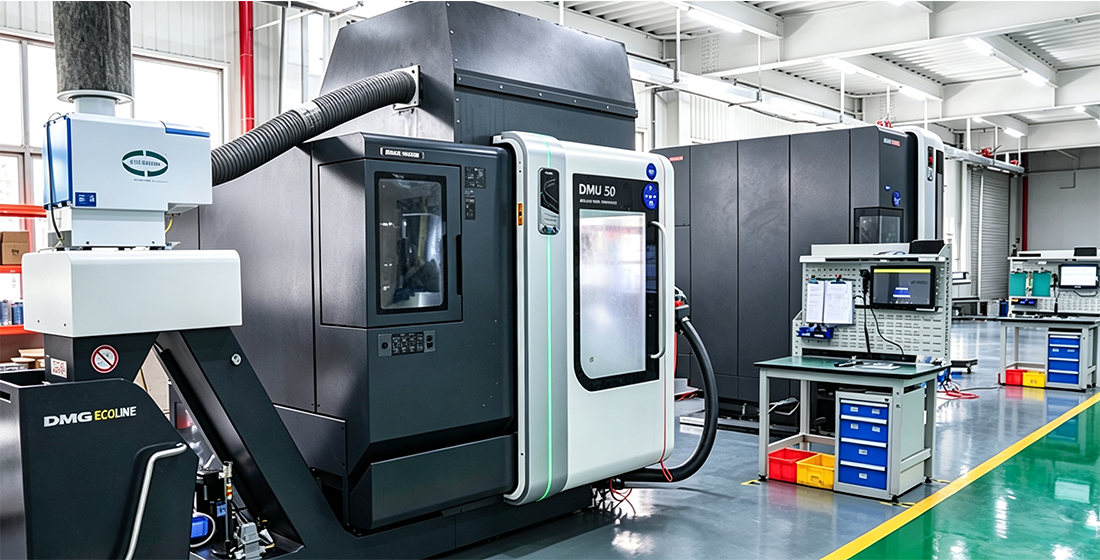
Instead of managing separate machining and finishing vendors, the finished-part requirement can run through one manufacturing workflow.
Coordinating machining and finishing in one workflow reduces hand-off risk and makes the finish accountable to the same drawing as the part. See our Materials Hub for material selection that feeds into finishing.
Surface Finishing Case Studies
Real combinations of material, finish and verification — the proof behind "we can finish it."
Consumer / electronics enclosure
Fluid / medical-grade part
High-strength structural part
Wear / corrosion part
How Much Does CNC Surface Finishing Cost?
Finishing cost is driven by the part and the spec, not a flat "$/piece." A poor finish choice costs more in rework and rejection than the finish itself.
| Cost driver | What changes the price |
|---|---|
| Part size / area | More surface = more process |
| Batch quantity | Rack / minimum charge applies |
| Masking | Adds labor per feature |
| Color | Custom Pantone / RAL vs standard |
| Coating thickness | Tighter tolerance = more control |
| Inspection | Thickness / roughness / report |
| Special spec | ASTM / ISO / customer standard |
Illustrative cost drivers only, not a market price. The finishing itself may be inexpensive next to the cost of poor selection, rework or cosmetic rejection — specify the finish, not just a name.
What Should You Specify in a Surface Finishing RFQ?
A finish RFQ is only as good as what you put in it. Give us these so we can quote accurately.
- Base Material — e.g. 6061-T6, 316L, alloy steel.
- Surface Finish — e.g. Type II anodizing, not just "anodizing."
- Color — e.g. Black, with Pantone / RAL reference where it matters.
- Coating Thickness — state if required; otherwise we propose per spec.
- Surface Roughness — e.g. Ra 1.6 µm, with Ra / Rz and measurement reference.
- Cosmetic Requirement — e.g. no visible scratches on exposed surfaces, under stated light.
- Masking — e.g. no coating on Ø10 H7 bore.
- Standard — e.g. ASTM A967, ISO 21920, customer drawing standard.
- Inspection — color / thickness / roughness / dimensional report as needed.
This splits roughness, treatment and cosmetic exactly as our CNC Machining RFQ Guide recommends — the same logic, applied to finishing.
CNC Surface Finishing Capabilities at Goldcattle
Goldcattle is a one-stop OEM/ODM custom manufacturer (Founded in 1998) machining metals and engineering plastics from prototype to production. The lists below show what we run routinely by material family.
Aluminum
Stainless Steel
Steel
Brass / Copper
Process control
years of OEM/ODM experience across six processes, with in-house production and 24-hour engineering response.
In-house vs qualified partner
CNC machining is performed in-house. Some finishing processes are completed through our qualified finishing network and managed to the project specification. Where a finish is done externally, we still own the result against your drawing.
Transparency beats pretending everything is in-house — EU / US buyers verify supply chains during supplier audits.
* Specific material compatibility and process availability should be confirmed against your grade and project. We would rather confirm the exact finish than promise a long list we cannot verify.
Frequently Asked Questions
What surface finishes are available for CNC machined parts?
What is the best finish for aluminum CNC parts?
What is the difference between anodizing and powder coating?
What is the difference between Type II and Type III anodizing?
Can stainless steel CNC parts be anodized?
What is the best finish for stainless steel?
What is the difference between passivation and electropolishing?
Does anodizing change dimensions?
Does plating change dimensions?
What Ra can CNC machining achieve?
What is the difference between Ra and Rz?
Can you mask threads and precision bores during finishing?
Can you match a specific Pantone or RAL color?
Can you provide coating thickness reports?
Can you provide surface roughness reports?
Can you provide material certificates?
Can you provide inspection reports?
Can CNC machining and surface finishing be handled by one supplier?
What surface finish is best for corrosion resistance?
What surface finish is best for wear resistance?
How should I specify a CNC surface finish in an RFQ?
Request a CNC Surface Finishing Quote
Tell us the material, the function the surface must perform, the appearance you need and any critical dimensions. We will match the finish to the material and spec, plan masking and dimensional control, and quote it as a finished part.