Custom Durable Plastic Parts for Household Products
Build-to-print injection-molded components for household goods and durable consumer products — storage, kitchen, bathroom and functional parts reviewed for material, structure, tooling and durability against the real use environment. Send the drawing and operating conditions; we evaluate manufacturability, tooling and quality before quoting.
At a Glance
Quick Answer
Custom durable household plastic parts are not defined by one tougher resin. They are defined by matching the material and the molded structure to the actual use environment — drop and impact, repeated opening, cleaning chemicals, load, humidity and appearance — then proving the result with drawings, samples and an agreed inspection plan. We manufacture to your drawing or sample, run DFM and tooling review up front, and scale from prototypes to repeat production under one ISO 9001:2015 quality system. Large white-goods internal components are handled on a separate appliance-parts page; this page covers general housewares and durable consumer parts.
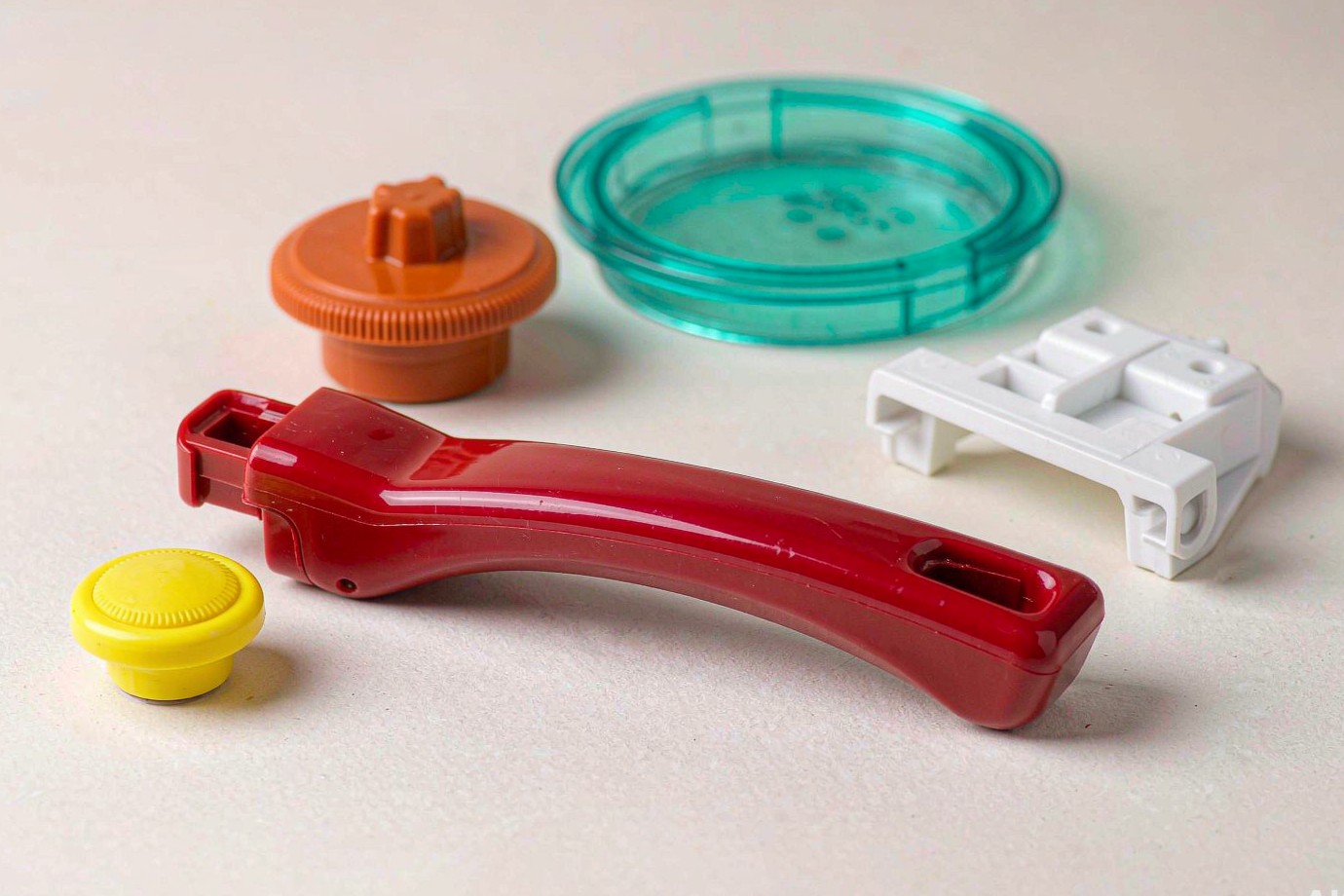
Household Plastic Parts We Manufacture
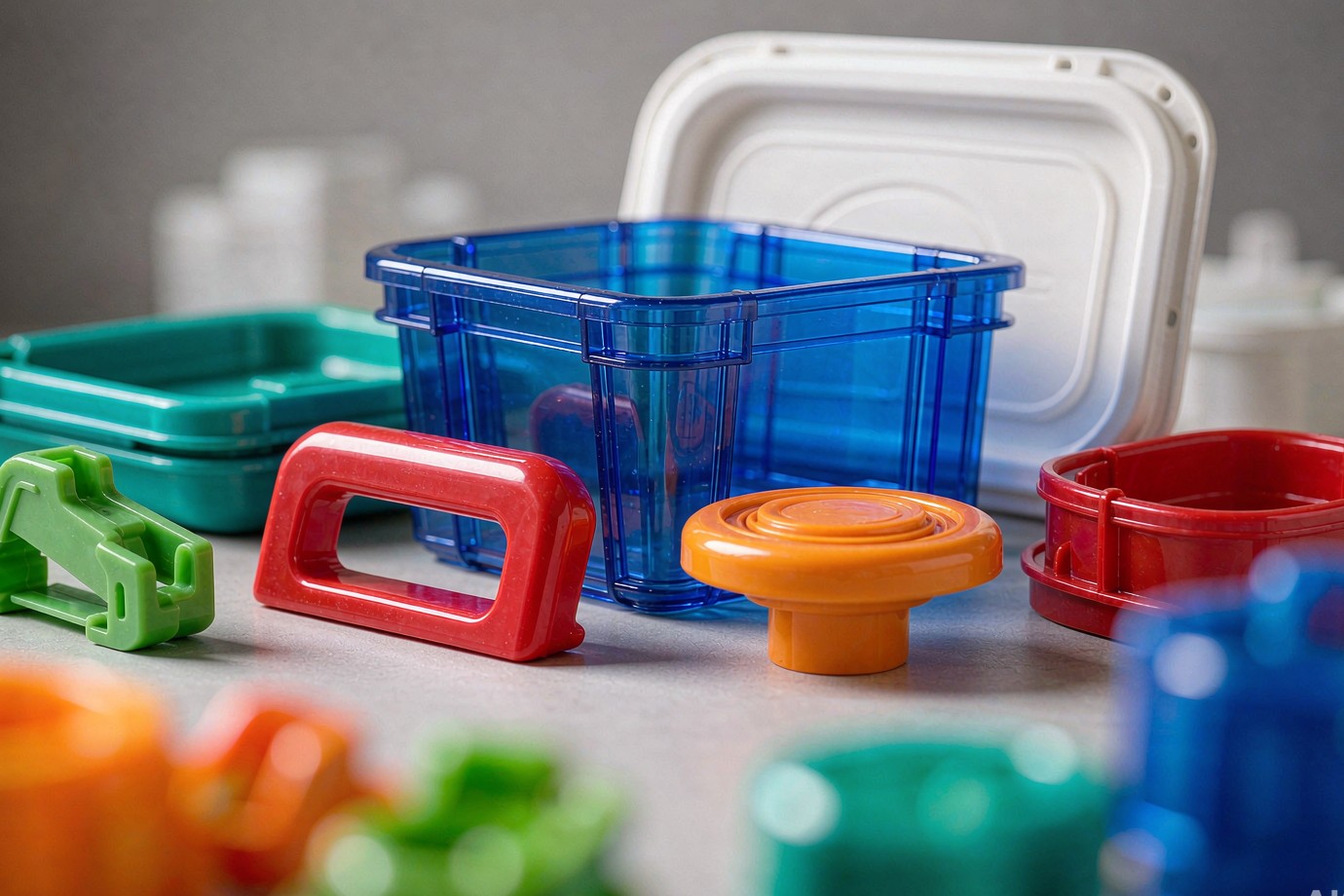
We produce custom injection-molded parts for household goods and durable consumer products, organized by the use condition each group must survive. Categories below describe the work we review and quote; each project is confirmed against your drawing, material and volume.
Storage & Organization Components
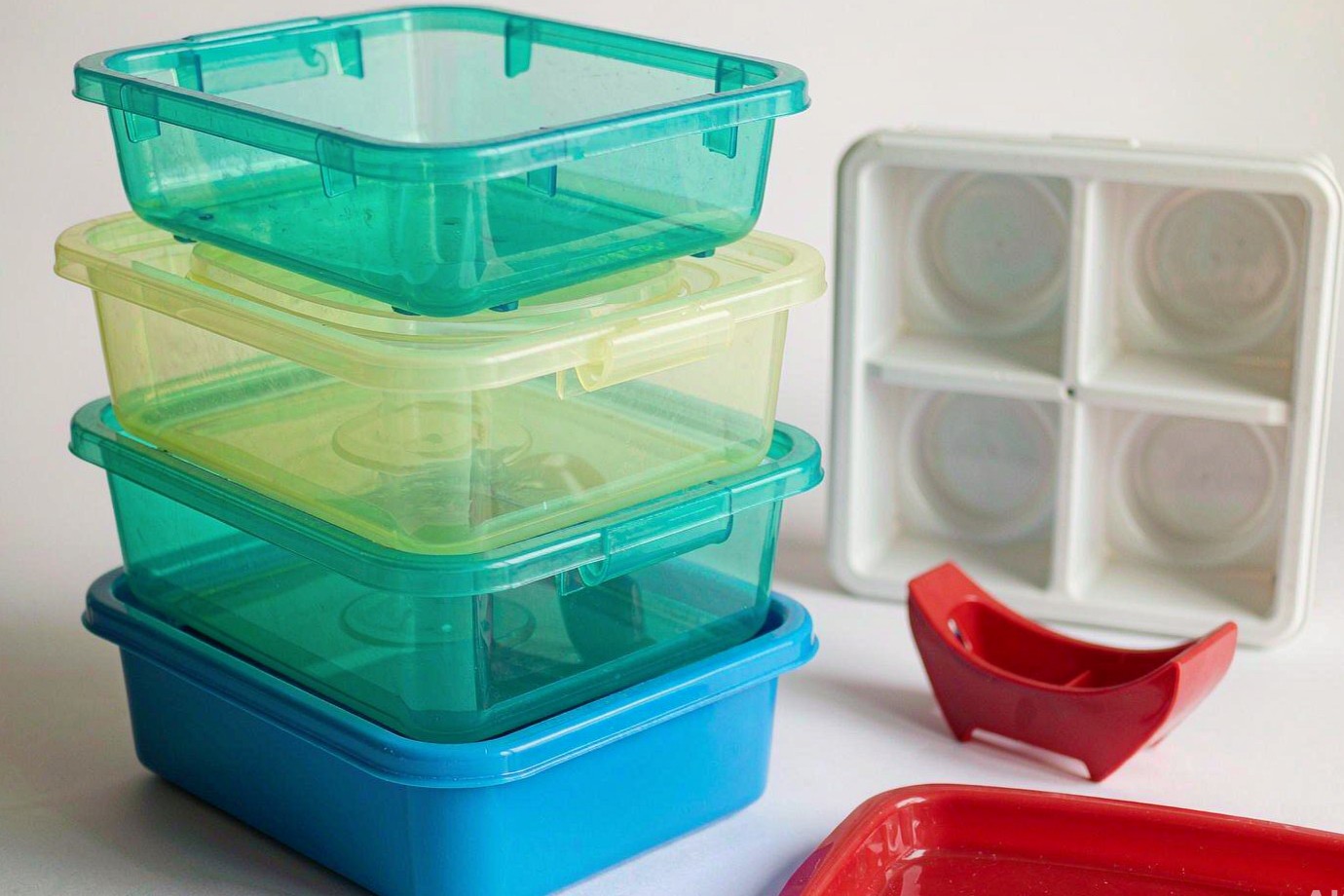
Bins, trays, lids, dividers, clips and rack parts. The main concerns are stacking load, impact on drop, clip life through repeated use, warpage, dimensional fit across the set and long-term reuse.
Kitchen & Household Components
Handles, knobs, covers, supports and brackets. Concerns are touch feel, cleanability, repeated handling, color consistency and assembly with metal or other plastic parts.
Bathroom & Cleaning Components
Caddies, cleaning-tool grips, caps, connectors and product housings. The environment is damp, often with cleaners and repeated force, so surface condition and assembly stability matter.
Durable Functional Components
Grips, buttons, covers, latches, connectors, clips and other moving or load-bearing parts. These need repeated-cycle resistance, impact strength, fit dimensions and material matched to sliding or mating surfaces.
What Makes a Household Plastic Part Durable?
"Durable" is not a fixed property of a resin. For a buyer it means the part keeps doing its job — function, fit and appearance — across the expected use environment and service life. The table below turns a vague durability request into the conditions a quote and a validation plan can act on.
| Use environment or function | What the buyer worries about | Engineering factors to address |
|---|---|---|
| Daily handling, drop or bump | Cracking, chipped corners, permanent deformation | Resin toughness, part structure, wall transition, stress concentration, impact test |
| Repeated opening and assembly | Clip, hinge or cover loosening or breaking | Clip geometry, fatigue behavior, strain level, grade, cycle validation |
| Cleaner, detergent or grease contact | Stress cracking, discoloration, swell, surface damage | Specific chemical, concentration, temperature, contact time, material compatibility |
| Load or long-term clamping | Creep, loosening, dimensional change | Load, duration, temperature, ribs and connection structure |
| Damp, thermal change or outdoor use | Warpage, embrittlement, aging, assembly drift | Moisture uptake, thermal expansion, UV exposure, temperature cycle, real condition |
| Long-term appearance | Scratch, gloss change, color shift, visible molding defect | Resin and color masterbatch, mold texture, gate, cooling, appearance accept limit |
We do not apply one universal test list to every part. The right approach is to identify the real risks first, then select the applicable material data, inspection method or use-condition check.
Material Selection for Durability
Material choice is decided from the duty, not from the generic name. The same resin family can behave very differently by grade, filler and processing. The table lists where each direction is evaluated and what to check before committing.
| Material direction | Where it is evaluated | Limits to confirm |
|---|---|---|
| ABS | Housings, knobs, decorative panels, everyday components | Temperature, specific cleaners, UV exposure, impact, surface requirement |
| PP | Bins, lids, some hinges, cost-sensitive components | Shrink, warpage, stiffness, low-temperature impact, bonding to other materials |
| PC / PC-ABS | Housings and functional parts needing impact or heat resistance | Grade, chemical stress cracking, thick-wall molding quality, cost, appearance |
| PA / glass-filled PA | Load-bearing brackets, mechanical parts, higher-stress parts | Moisture uptake, dimensional change, fiber orientation, warpage, mold wear |
| POM | Gears, sliding parts, repeated-motion functions | Mating surface, lubrication, chemical compatibility, shrink, actual wear duty |
| TPE / TPU | Soft-touch grips, cushions, flexible regions | Hardness, resilience, wear, bonding to substrate, overmolding need |
| Transparent PC, PMMA | Viewing windows, clear covers, decorative parts | Scratch, brittleness, chemical contact, optical need, surface defect |
These are evaluation directions, not a substitute for the data sheet of a named grade and a part validation. The specific resin, filler, additive, processing condition and application are confirmed at quotation. For a broader resin overview, see our materials guide.
Design for Manufacturability and Failure Prevention
Most durability problems are designed in before the mold is cut. DFM review covers wall thickness, ribs, screw bosses, clips, parting line, gate and ejection, and how each affects sink, warpage, weld lines and assembly fit.
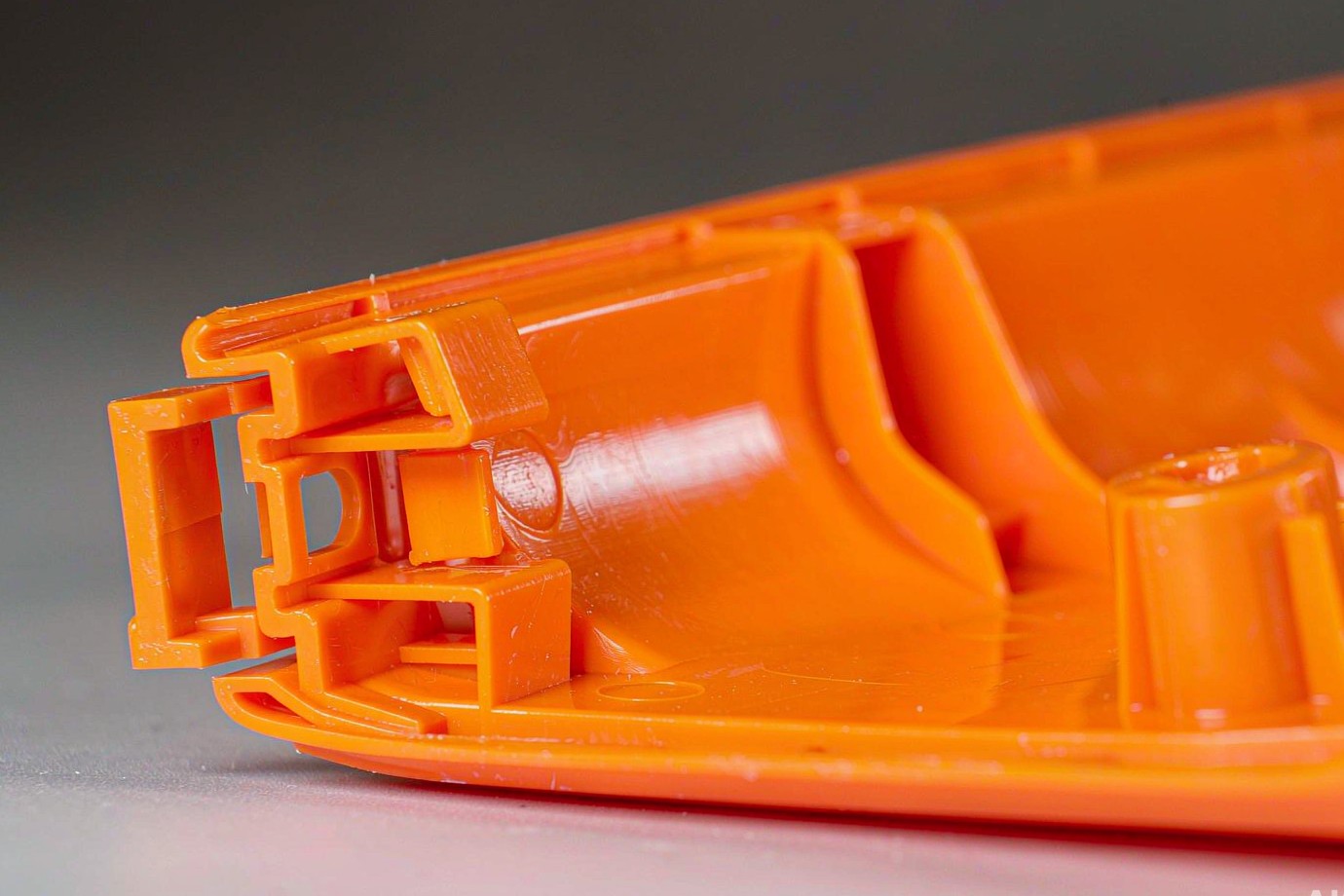
| Common failure | What design and molding can do |
|---|---|
| Cracking or sink at wall transition | Review uniform wall, transition radii, gate position and cooling |
| Clip breaking after repeated use | Check strain concentration, clip geometry, grade fatigue, real cycle need |
| Screw boss cracking or loosening | Optimize boss, rib, assembly method and fastening requirement |
| Warpage causing assembly drift | Check shrink difference, rib layout, gate and cooling; verify key dimensions |
| Surface crazing or color shift from cleaners | Define the contacting chemical and real cleaning condition before material fix |
| Batch color, gloss or texture mismatch | Lock resin grade, masterbatch, mold texture, sample and appearance check |
These steps help identify risk and set a sensible DFM and validation plan. They are not a promise that every defect is removed; the result depends on the part, the material and the agreed acceptance criteria.
Tooling, Production Volume and Cost
Cost is a project calculation, not a fixed per-part price. It is shaped by mold structure, cavity count, cycle time, material, finishing, secondary assembly and packaging, and by how stable the design and volume are.
| Cost driver | What it affects | How we handle it |
|---|---|---|
| Mold structure & cavities | Tooling investment, unit cost, lead time | Proposed from part complexity and target volume |
| Cycle & material | Per-part cost, scrap, weight | Reviewed against grade, wall and cavity balance |
| Finishing & assembly | Handling, labor, unit cost | Defined per project; kept only where needed |
| Volume & reorder | Tool amortization, batch size | Prototype, trial and production split by project |
| Packaging & protection | Delivery condition, repeat-order stability | Set to protect approved parts in transit |
We do not publish a single unit price or minimum order that applies to every part. Tooling and unit cost are quoted from the drawing, material, volume and quality requirements. For mold development detail, see our custom plastic injection mold page.
Quality Control and Durability Validation
Quality is planned to the part. For visible consumer parts, appearance is itself a specification: color standard or physical chip, surface texture and gloss, accept limits for gate, weld line, sink and flow mark, and inspection split between visible and non-visible faces.
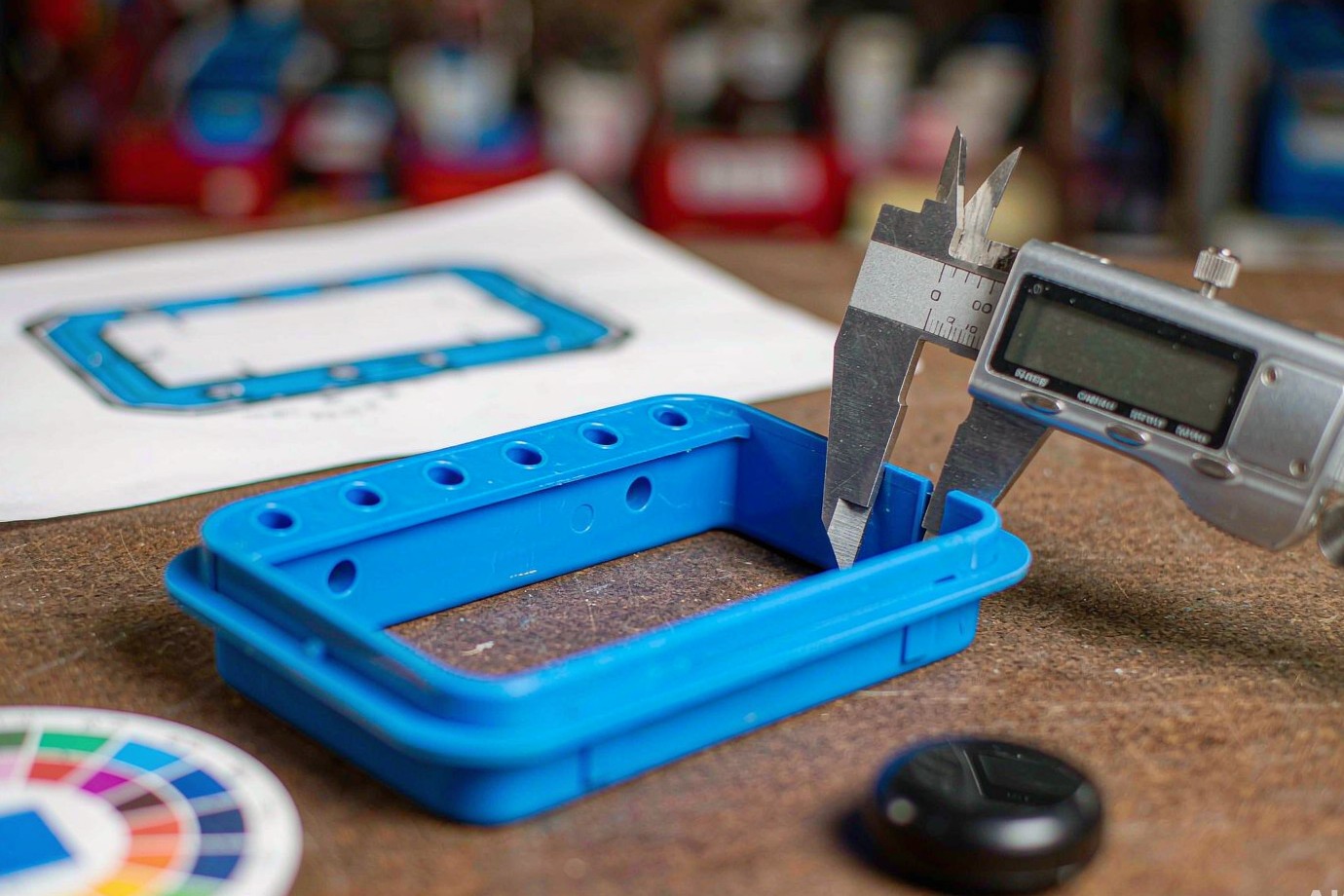
Where a project requires durability evidence, the test conditions are defined with you: load, speed, cycle, temperature, lubrication, humidity and the judgment criteria. We report measured results for the agreed plan rather than a generic rating, and we do not claim a validation we have not performed.
Food-contact handling. If a part stores, prepares or contacts food, we treat it as a per-project compliance check. You confirm the application and the target market requirement; we confirm the specific resin grade and the documentation needed. We do not label every PP, ABS or other resin as generally approved — suitability depends on the grade, the contact condition and the applicable regulation.
Real Applications and Engineering Examples
The strongest evidence is a documented project: use environment, the durability requirement, material and structure evaluation, the mold and production approach, the inspection method, and the result achieved. Where a project can be shared with authorization, we present it that way.
Example — repeat-order storage clip (project evidence)
| Field | What we can document |
|---|---|
| Use environment | Repeated opening on a storage lid, indoor household use |
| Durability requirement | Defined cycle target provided by the customer at quotation |
| Evaluation | Clip geometry, strain check, grade selection from the duty |
| Mold & production | Multi-cavity tool, sampled first article, agreed cavity checks |
| Inspection | Key dimensions, clip function, visible-face appearance per sample |
| Result | Released against the agreed baseline; exact figures shared under NDA |
Case details are shared with customer authorization. We do not publish lifecycle percentages or test counts we cannot substantiate.
RFQ Checklist and FAQ
A good quote starts with the real use conditions. Send what you have; we help complete the missing items during engineering review.
Information useful for a quote
- Drawing: 2D or 3D CAD file, or a sample where a drawing is not yet ready
- Material: resin or target properties, grade, color and finish
- Use environment: impact, temperature, cleaner or detergent, humidity, exposure
- Function: load, cycle, mating parts, assembly method
- Quality: key dimensions, tolerances, appearance limits
- Volume: prototype, trial, annual demand, reorder plan, target lead time
- Tooling: cavity preference, mold ownership, expected mold life
Where can I source durable household plastic parts?
We manufacture custom injection-molded components for household products and durable consumer goods — storage, kitchen, bathroom and functional parts — reviewed for material, structure, tooling and durability against the real use environment. Send a drawing or sample and the use conditions, and we assess manufacturability, tooling and quality before quoting.
Which plastic is best for durable household products?
There is no single best resin. ABS suits housings and knobs; PP for bins, lids and cost-sensitive parts; PC or PC-ABS where impact or heat matters; PA or glass-filled PA for loaded functions; POM for sliding parts; TPE or TPU for soft-touch areas. The choice depends on impact, heat, cleaning chemicals, load, appearance and cost, and the specific grade is confirmed at quotation.
How can I make injection-molded household parts last longer?
Durability comes from matching material to the actual environment and designing for molding: uniform wall thickness, correctly sized ribs and bosses, snap fits within strain limits, gate and cooling to control warpage, and a validation plan for the real failure modes. We review these in DFM before tooling.
Can you manufacture custom household plastic parts from drawings?
Yes. We work from 2D or 3D CAD, or from a physical sample. Review covers material, wall, ribs, bosses, clips, parting line, gate, tolerances and assembly, then tooling, samples and production. Missing information is completed during engineering evaluation.
How do I prevent plastic household parts from cracking?
Cracking usually traces to stress at section changes, material incompatibility with a cleaner, over-strained snap fits, poor weld-line placement or assembly mismatch. We address it through uniform wall, rounded transitions, correct material selection, defined chemical-exposure conditions and inspection of critical dimensions.
How do I keep plastic parts consistent across repeat orders?
Consistency is managed as a project: approved drawing and revision, locked resin grade and masterbatch, first-article and key-dimension checks, mold maintenance record, and agreed appearance with a signed sample. Repeat orders are produced and inspected against the approved baseline.
What information is required for an injection molding quote?
Provide the drawing, resin or target properties, estimated volume and annual demand, color and appearance, key dimensions and tolerances, the use environment, and any durability expectation. A drawing plus the main use conditions is enough to start.
Do you handle food-contact household plastic parts?
Food-contact status is handled per project, not as a blanket claim. We confirm the application, the target market requirement, the specific resin grade and the documentation needed. We do not label every resin as generally approved; suitability depends on grade, contact condition and regulation.
Request a Household Part Quote
Send the drawing and the main use conditions. We review manufacturability, material, tooling and quality, then return a quotation scoped to your project. For complete injection-molding capability, see our injection molding services.
For large white-goods internal components (refrigerator, washer, dishwasher), see our white-goods plastic components page. For general custom plastic parts across industries, see custom plastic components.